Tamkaliks Celebration
Wallowa, Wallowa County, Oregon. Three-day celebration of Nez Perce culture, community, and homecoming; July.
Details

- Where
- 70956 Whiskey Creek Road, Wallowa, OR 70956. Directions
- When
- Last held July 17–19, 2026; next year’s date not yet stated.
- Getting there
- From Lewiston drive OR-82 18 miles through Lostine to Wallowa, then hard right onto Whiskey Creek Rd before downtown; cross the railroad tracks to the Homeland entrance on the left.
- Fees
- Camping and dancer registration is free.
- Hours
- Sunday: 9:00 AM Walasit Service at the Wallowa Longhouse.
- Access
- Designated campsites for tent and car camping, RVs, horse trailers, and tipi camping. Seasonal showers and year-round pit toilets are available.
- Walk-in or reserve
- Camping and dancer registration are free, and all drums are welcome.
- Phone
- 541.886.3101
- Website
- wallowanezperce.org
- Established
- 1990.
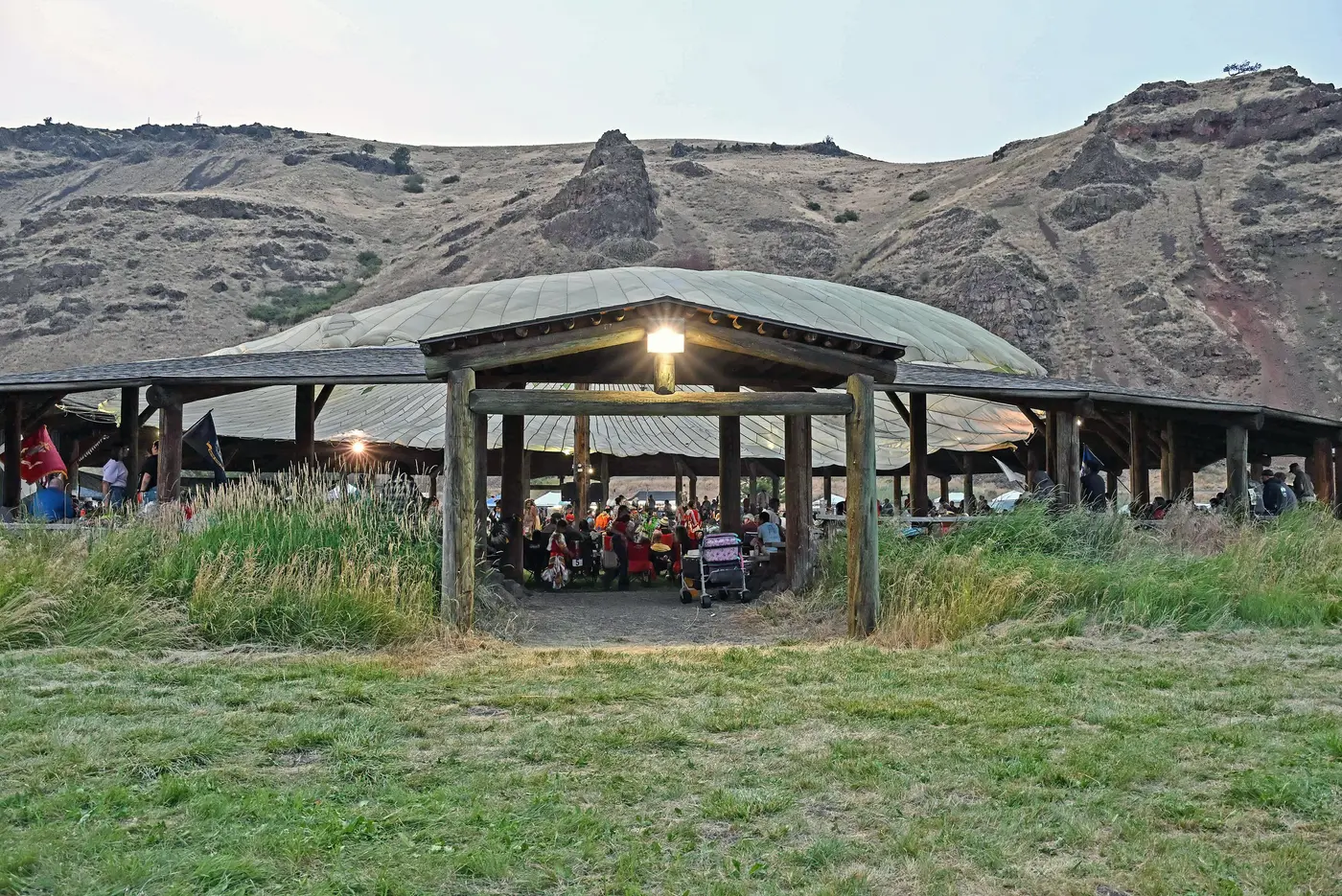
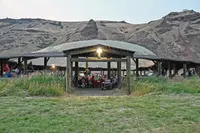
Each July a row of tipis goes up along the Wallowa River at the edge of the town of Wallowa, in Wallowa County, Oregon, and for three days the drums of the Dance Arbor carry across the bottomland. This is Tamkaliks, a powwow and homecoming for the descendants of the Wallowa Band Nez Perce. In the organizers’ words, the Homeland becomes “a place of reunion for descendants of the original inhabitants of waláwa, the Wallowa country.” The grounds are 320 acres kept open to the public by the Nez Perce Wallowa Homeland, which calls itself “a place-based nonprofit non-tribal organization opening the trail home.” The land runs from river frontage and bottomland up to rimrock bluffs and grassy uplands, with the mountains in view. The Arbor has shaded seating for hundreds. A longhouse stands on the grounds. A string of historic steel-truss footbridges crosses the river to town, and the organizers note that “all the comforts of town are just a quick walk across the river.”
Camping is free and open to everyone, first come, first served, with no registration. There are sites for tents and cars, RVs, horse trailers, and tipis, along with seasonal showers and pit toilets. Many families have camped in the same places for generations. The organizers ask other campers to be courteous when elders or long-standing families return to their old spots. Terry Crenshaw, a co-founder, described the riverbank in a 2017 account: “Along the river the participants camp during the powwow, many setting up teepees. The sight of teepees along the river after many years’ absence is awe inspiring.”
Grand Entry in the Arbor
The 2026 celebration ran July 17 to 19. Friday evening at seven brought roll call, Nez Perce Plateau social dancing, and games. Saturday opened at nine in the morning with memorials and a horse procession. Grand Entry and contest dancing followed at one, a dinner break at five, and at seven more contest dancing, the Veterans Honor Dance, and dance specials hosted by families. The 2019 edition had Thomas Morningowl and Fred Hill as masters of ceremonies, and an Owl Dance special carried $1,000 in prize money.
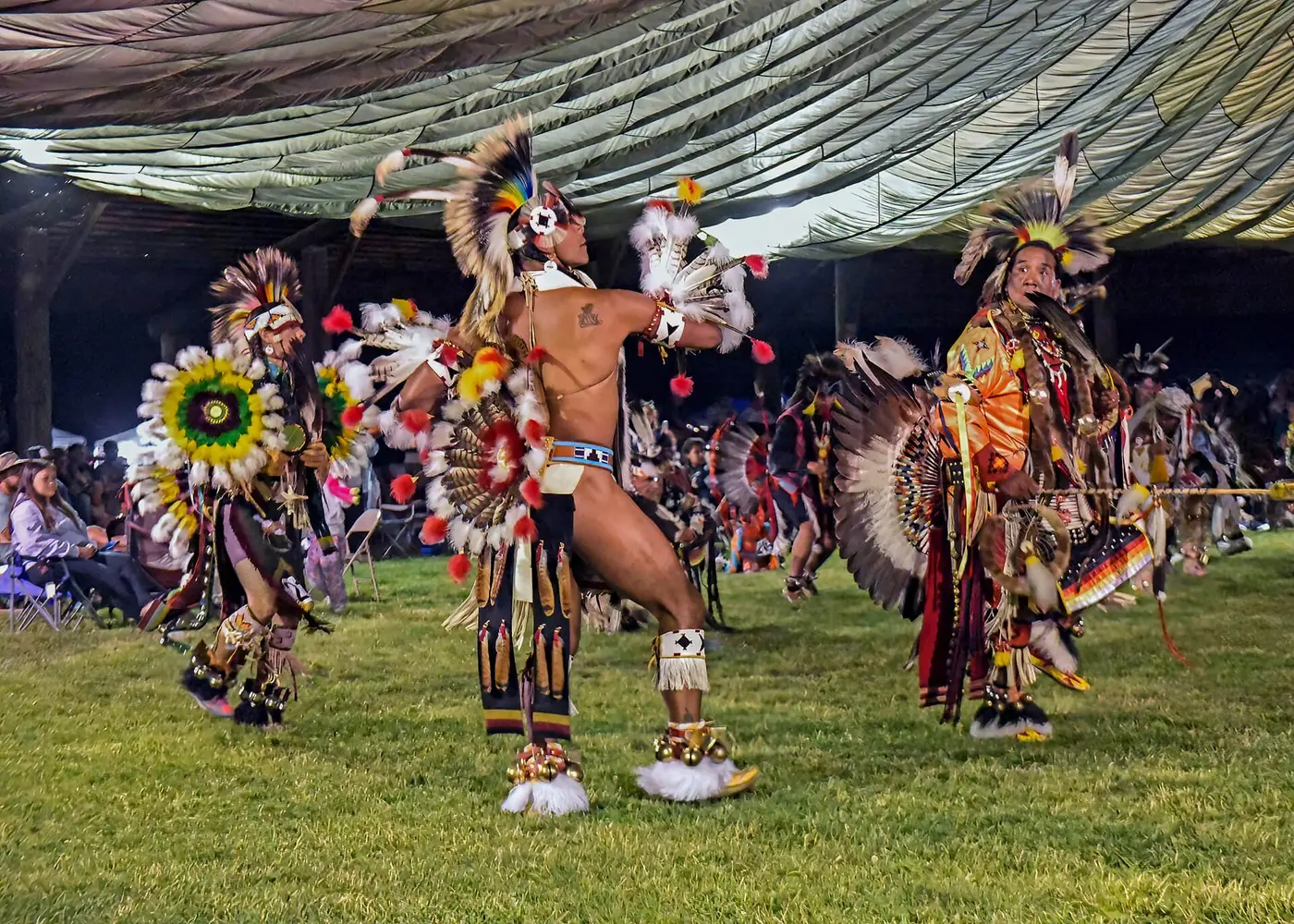
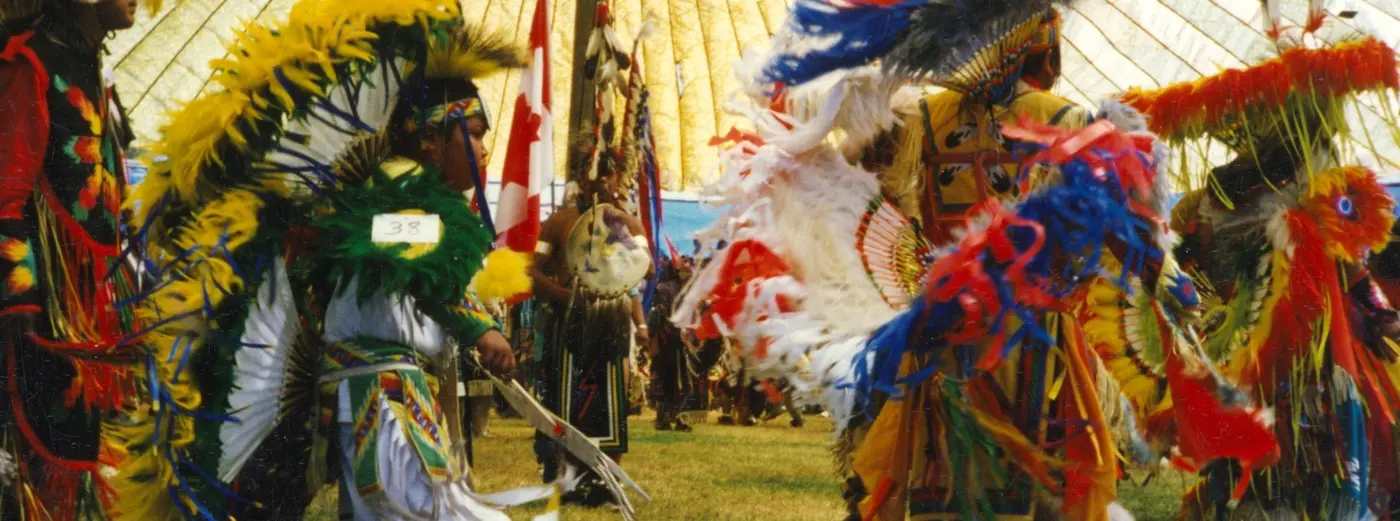
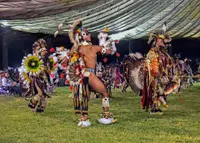
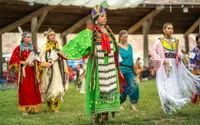
Every dance session begins with a Grand Entry. The flag bearers lead the dancers into the Arbor carrying the Eagle Staff, the American flag, the Canadian flag, and often the MIA-POW flag. The honor usually goes to a veteran, a respected traditional dancer, or an elder. Everyone stands. Men remove their hats unless the hat carries an eagle feather. A flag song honors the staff and flags, an elder usually offers a prayer, and a victory song is sung while the staff and flags are set in their standards.
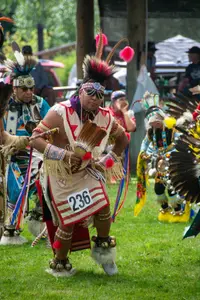
In the contests, dancers compete with each other and with the drum. A drum group may sing a trick song full of surprise stops, and the best dancers know the songs well enough to land on every one. Judges score footwork, rhythm, agility, and demeanor, and they look at regalia for care and upkeep. A dancer who loses a piece of regalia may be disqualified, or may withdraw. The Whipman and Whipwoman direct the floor.
The categories each have their own songs and dress:
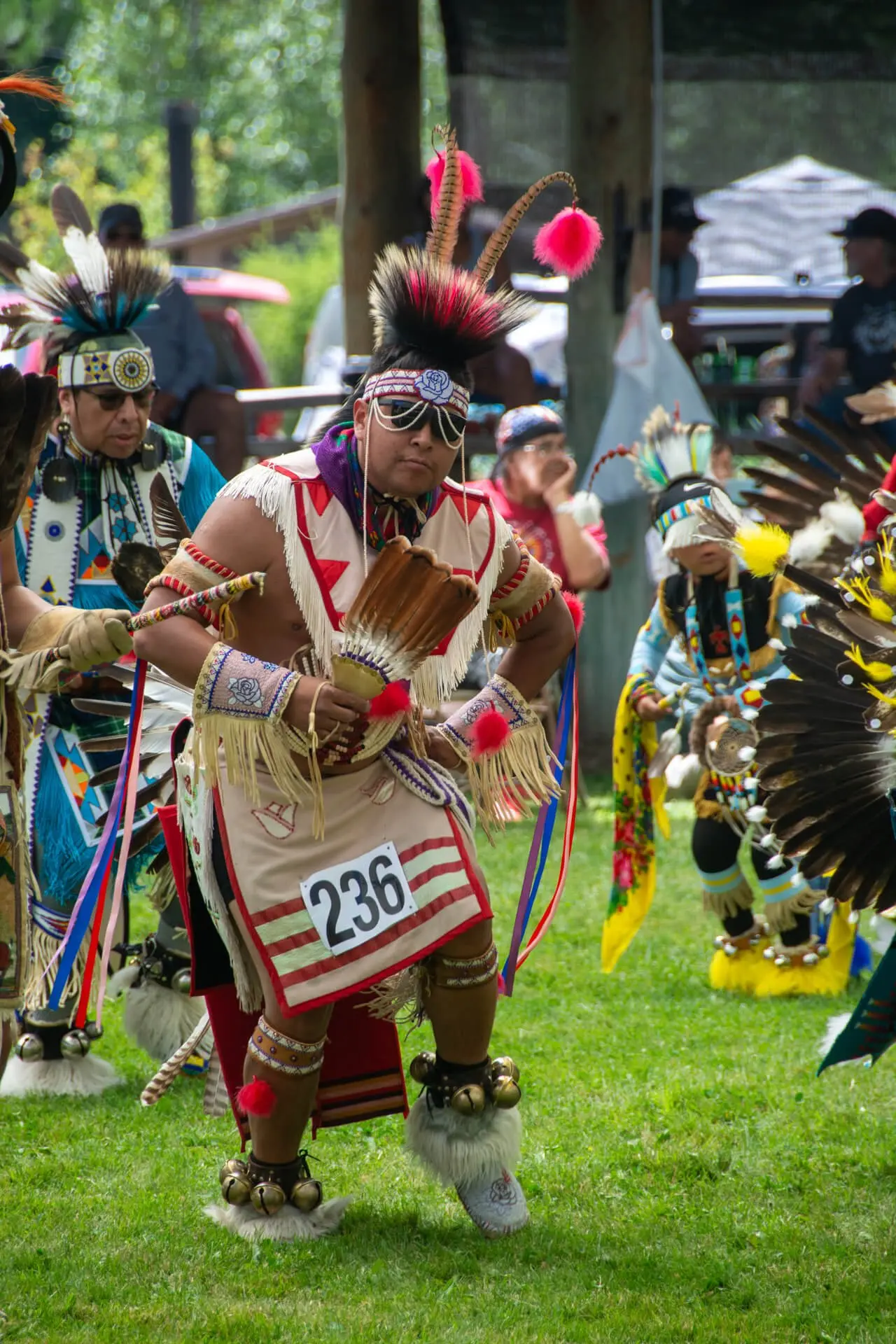
- Men’s Traditional. Dancers wear breechcloths, feather bustles, and porcupine and deer hair roaches. In the Crow Hop they move slowly and deliberately, like a hopping crow. The Sneak Up acts out tracking enemies or game. In the Duck and Dive, hard drumbeats stand for cannon fire and the dancers duck together.
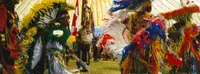
- Men’s Fast and Fancy. This contest, with beadwork, ribbons, sheep bells, and dance sticks, began in the 1950s. It spread with the pan-Indian powwows that followed World War II, Korea, and federal relocation of Indians to cities.
- Grass Dance. Dancers wear heavy fringe and no bustle, and their moves recall the flattening of prairie grass for a camp.
- Women’s Fancy Shawl. The spinning and leaping steps imitate butterflies.
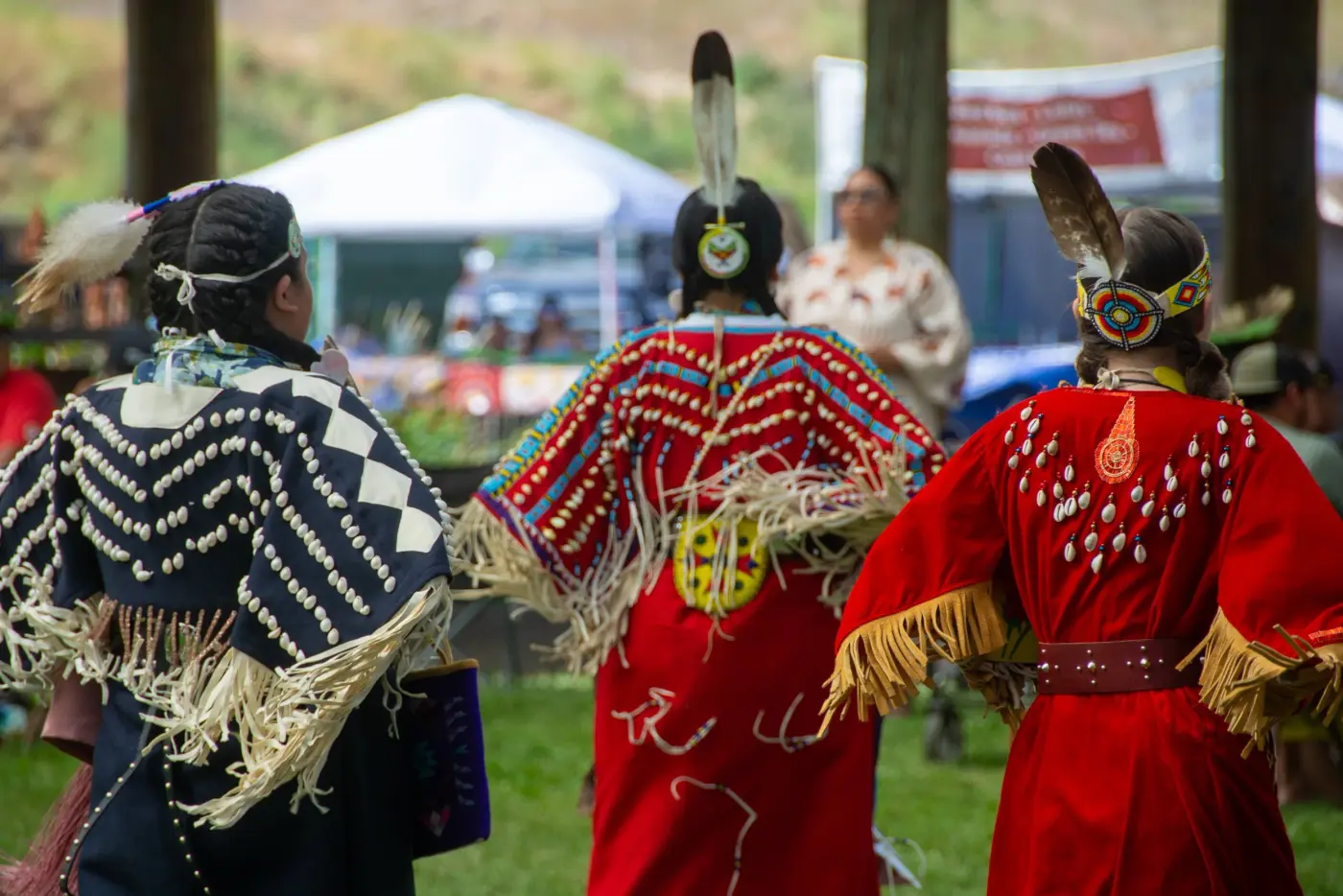
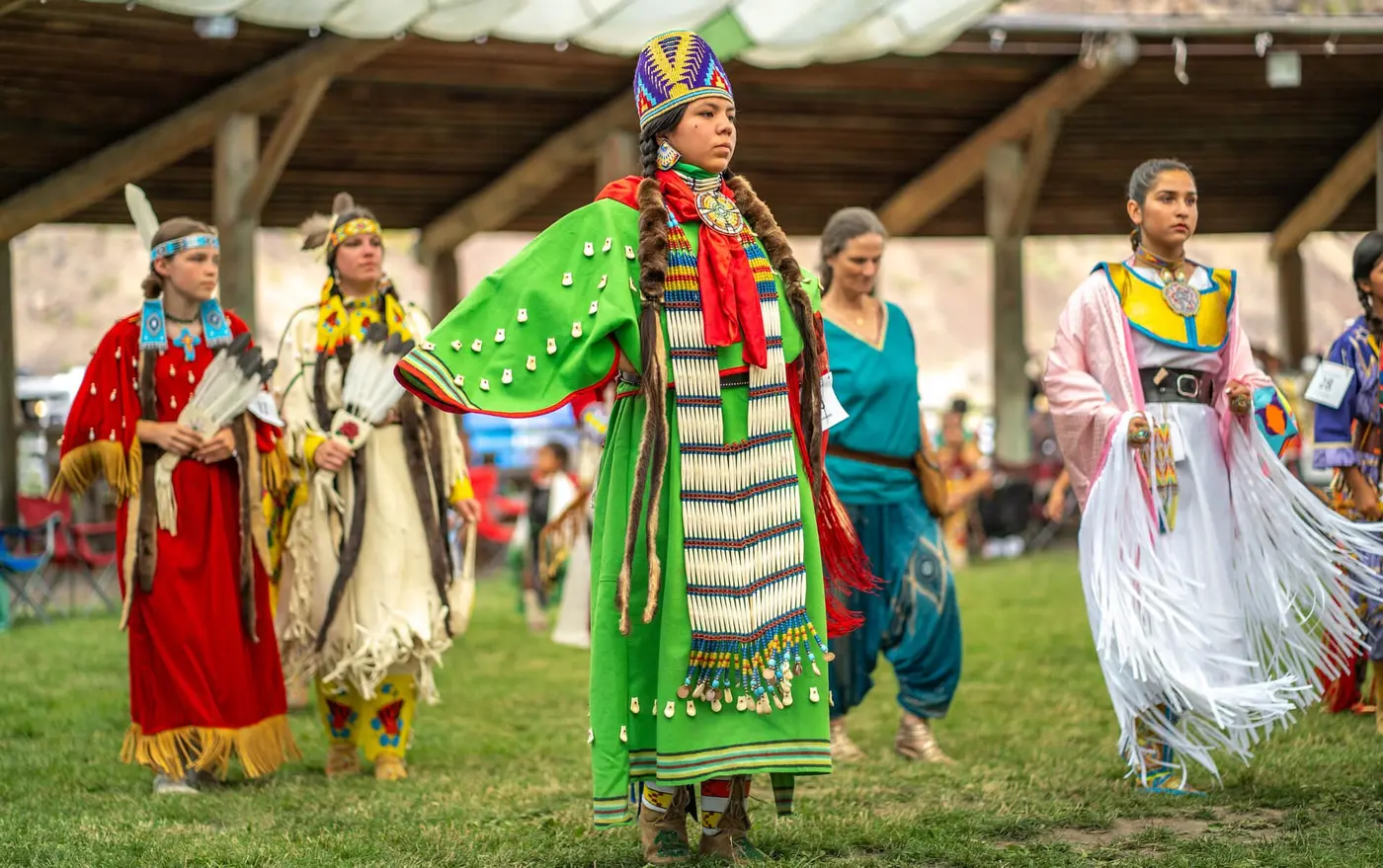
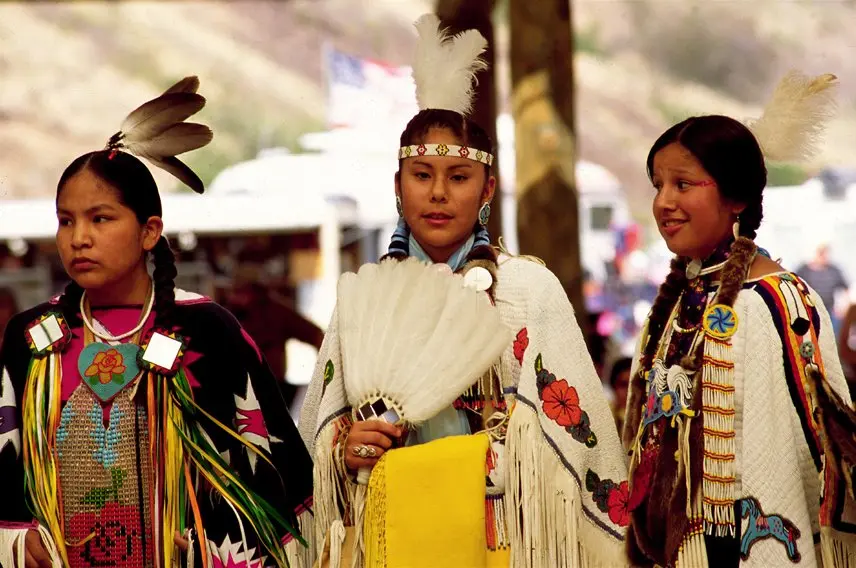
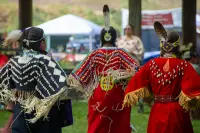
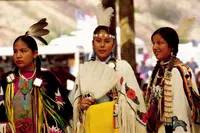
- Women and Girls Traditional. Plateau dresses may be buckskin, wool, or velvet, worked with dentalia, cowry or abalone shells, elk teeth, and beads. They have shorter fringe and more flared skirts than Plains dresses. The organizers’ program notes say that Plateau women historically kept time standing at the edge of the dance area. War dancing by women became more common after World War II, when many women veterans came home.
- Women’s Jingle Dress. The dresses are hung with rolled snuff-can or baking-powder lids. The program traces the dress to 1920, when a medicine man was told in a dream to make one to heal his ill granddaughter.
When an eagle feather or a piece of fluff falls to the ground, everything stops until a veteran retrieves it ceremonially. The organizers explain that the feather stands for a fallen warrior. At other times the floor opens to everyone for the circle dance, a dance of friendship in which three songs are sung in a row.
The organizers publish an etiquette card, compiled by Jeanine Gordon of Whitman College, an enrolled member of the Confederated Tribes of the Umatilla Indian Reservation and a descendant of Old Chief Joseph and Peo Peo Mox Mox. Chairs inside the circle belong to dancers, their families, and elders. A blanket or shawl draped over a seat marks it as taken. Visitors walk around the circle, never across it. Photographs from outside the circle are generally allowed, except when the emcee asks otherwise. Anyone 55 or older goes first in any line. The event is alcohol- and drug-free, and only service dogs are allowed.
Food and craft vendors set up outside the Arbor. Crenshaw counted 20 to 25 concessionaires in 2017. Winners and drums are paid in cash, and all drums are welcome. Each year’s big raffle prizes include a buffalo hide and a Pendleton blanket. In 2026 a separate raffle offered a Winchester Model 1886 saddle ring carbine in .45-70 with a hand-beaded deer-hide scabbard made by Jacy Sohappy. Tamkaliks shirts change design every year and often sell out. The 2026 shirt was blue.
Salmon, elk, and buffalo on Sunday
Sunday begins at nine in the morning with the walasit service in the Wallowa Longhouse. The Oregon Encyclopedia and a 2019 listing call it the Washat service. At half past twelve the Friendship Potluck is laid out in the Dance Arbor, and visitors are asked to bring a dish.
Crenshaw’s 2017 account describes the meal. “The Native American community provides salmon, deer and elk, a local rancher provides buffalo and locals bring potluck dishes. For the deer and elk a group of Indians come early and exercise their treaty rights by hunting for the game for the feast. A local committee prepares the fish and game.” He added, “At last year’s feast we fed over 600 people. We have speeches, songs, and prayers at the feast.” The Oregon Encyclopedia puts attendance at about 450 people a year.
At two the dancers line up for a last Grand Entry, followed by the contest finals and the awards.
From the school gym to the Homeland
The celebration began in 1990. The City of Wallowa invited Taz Conner, a descendant of Old Chief Joseph (Tuekakas), to help plan some kind of Native American festival. A 2019 account says the planners decided a friendship potluck and powwow would be most fitting. The event was called the Wallowa Band Nez Perce Pow Wow and Friendship Potluck; the Oregon Encyclopedia gives the last words as “Friendship Feast.” The present organizers describe the founders as Wallowa community members and Nez Perce descendants together. They call that first gathering “a long-overdue reunion for the dispersed Nez Perce people and a celebration for all.” The powwow was held in the high school gym and the potluck on the school grounds, with about fifty participants.
By the third year it had outgrown the gym and moved outdoors. The Oregon Encyclopedia says it went to a five-acre site donated by a local farmer. In 1995 the Wallowa Band Nez Perce Trail Interpretive Center was formed as a nonprofit, and it came to own the Homeland Project property. In 1998 the celebration moved there and took the name Tamkaliks, a nimiipuu word meaning “from where you can see the mountains.” The 2019 account says that ten to fifteen local volunteers met almost year-round to plan it. During the weekend itself, forty to fifty local people and ten to twelve Native Americans worked to put it on. The Oregon Encyclopedia says the organizers are a standing committee of local volunteers, many of them founders, along with Native Americans from the Wallowa Valley and the three Nez Perce reservations.
“As time goes on we have had more and more contact between the locals and Indians,” Crenshaw said in 2017, “and we are beginning to see true friendships form because of this event.”
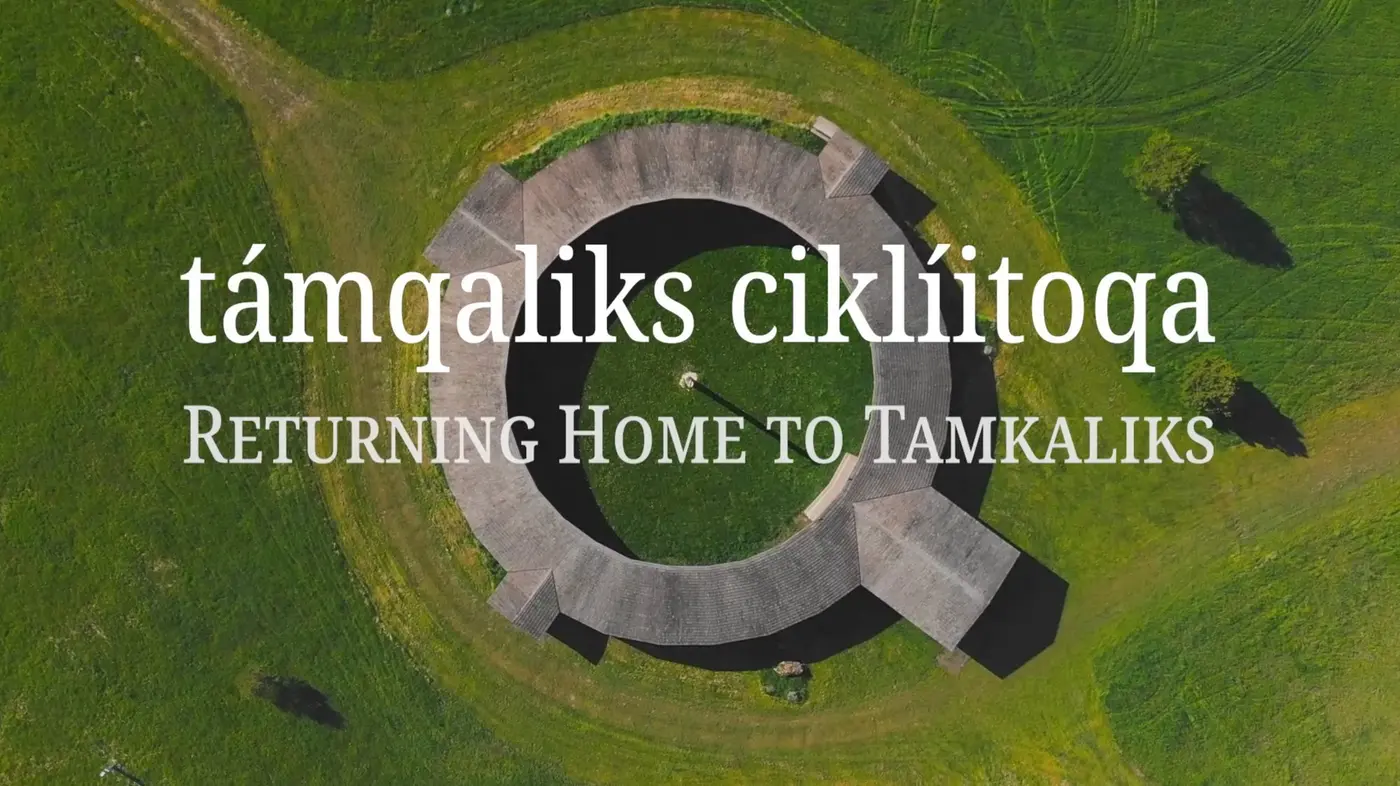
The organizers place the gathering in a longer history. They write that the 1883 Code of Indian Offenses made many Native ceremonies, powwows and dances among them, illegal under U.S. law. People kept gathering in secret until the prohibitions were lifted in the 1930s. A short documentary, History in the Making: A Tamkaliks Film Project, follows what its makers call “The Return.” It credits Earl “Taz” Conner as the curator of the idea and traces the event from the 1990 powwow to 2022, when people came together again after three years apart during the pandemic. One of the celebration’s scholarships now carries the names of Taz Conner and Terry Crenshaw.
The 2026 poster, program, and shirts featured tiwíiteqis, Old Chief Joseph, to mark the 100th anniversary of his reburial and memorial dedication at Wallowa Lake.
Notable Events
- 1990In its first year, 1990, the Celebration Powwow was held in the high school gym and the potluck on the school grounds with about fifty participants. crazycrow.com
- 1995The Wallowa Band Nez Perce Trail Interpretive Center, a nonprofit created in 1995, owns the Homeland Project property where the festival now takes place. oregonencyclopedia.org
- 1998In 1998, the event was renamed Tamkaliks, which means "from where you can see the mountains" in Nez Perce, and moved to the Homeland Project property which is owned by the Wallowa Band Nez Perce Trail Interpretive Center, a nonprofit created in 1995. oregonencyclopedia.org
People
- Terry Crenshaw, Tamkaliks Co-Founder.
- Taz Conner, Invited by the City of Wallowa in 1990 to help plan a Native American festival.
Sources
- wallowanezperce.org/tamkaliks-celebration
- wallowanezperce.org/visit-us
- wallowanezperce.org/calendar
- wallowanezperce.org/calendar/tamkaliks
- wallowanezperce.org/s/PRES-PowwowEtiquette-Info-Card.pdf
- facebook.com/nezpercewallowahomeland
- instagram.com/nezpercewallowahomeland
- oregonencyclopedia.org/articles/tamkaliks_celebration__friendship_feast
- ictnews.org/archive/support-traditional-nez-perce-culture-tamkaliks-celebration
- crazycrow.com/site/event/nez-perce-tamkaliks-celebration-powwow-friendship-potluck