Sonoran Glass School
Tucson, Pima County, Arizona. Nonprofit educational organization.
Details

- Where
- 633 W 18th Street, Tucson, AZ 85701. Directions
- When
- Pumpkin Fiesta runs Fridays and Saturdays 9am-5pm October 16-31.
- Season
- Year-round; closed El Tour (November 22), Thanksgiving Day, Christmas Day, Boxing Day, and New Year's Day.
- Getting there
- From Interstate I-10 West take Exit 259 (29th-22nd Street) and stay on the northbound frontage road along the east side of the interstate. Once past the 22nd Street traffic light stay on the frontage road and turn right on 18th Street. From I-10 East take Exit 259 (22nd Street), turn left onto 22nd from the off-ramp, get into the left turn lane in the freeway underpass, turn left to head north on the frontage road, then turn right on 18th Street. From Downtown Tucson drive south on Stone Avenue, turn right on 18th Street; the school is at the west end of 18th Street on the left before it dead-ends into the freeway.
- Fees
- Studio rentals available; Hot Shop $50, Flame Shop $20, Cold Shop $20, Warm Shop $15.
- Hours
- Open every week Monday through Saturday 9am-5pm.
- Access
- Free parking in front of the school. The four studios are the Hot Shop, Warm Shop, Flame Shop, and Cold Shop.
- Walk-in or reserve
- Reservations are required for the Make-Your-Own Pumpkin Experience.
- Phone
- (520) 884-7814
- Website
- sonoranglass.org
- Managed by
- Sonoran Glass School.
- Established
- 2001.
West 18th Street runs west from Stone Avenue, south of downtown Tucson, and stops at the freeway. The last building on the left before the dead end, number 633, is the Sonoran Glass School. It is a nonprofit housed in a former tire station in Barrio Santa Rosa, one of the city’s oldest barrios. Parking is free out front. On most working days, visitors who drop in can watch staff artists making pieces for the retail gallery. The school asks that they call ahead to be sure a shop is running.
The rooms are hot. Coolers sit on the roof over the glassblowing and flameworking studios. In September 2026 the school wrote that they were probably as old as the school itself, that they had struggled through the past year, and that the inside thermometer “often registers 90+ degrees.” It began raising $20,000 to replace them in its 2026–2027 fiscal year.
Four shops and a 400-pound furnace
The building holds four studios, each for a different way of working glass.
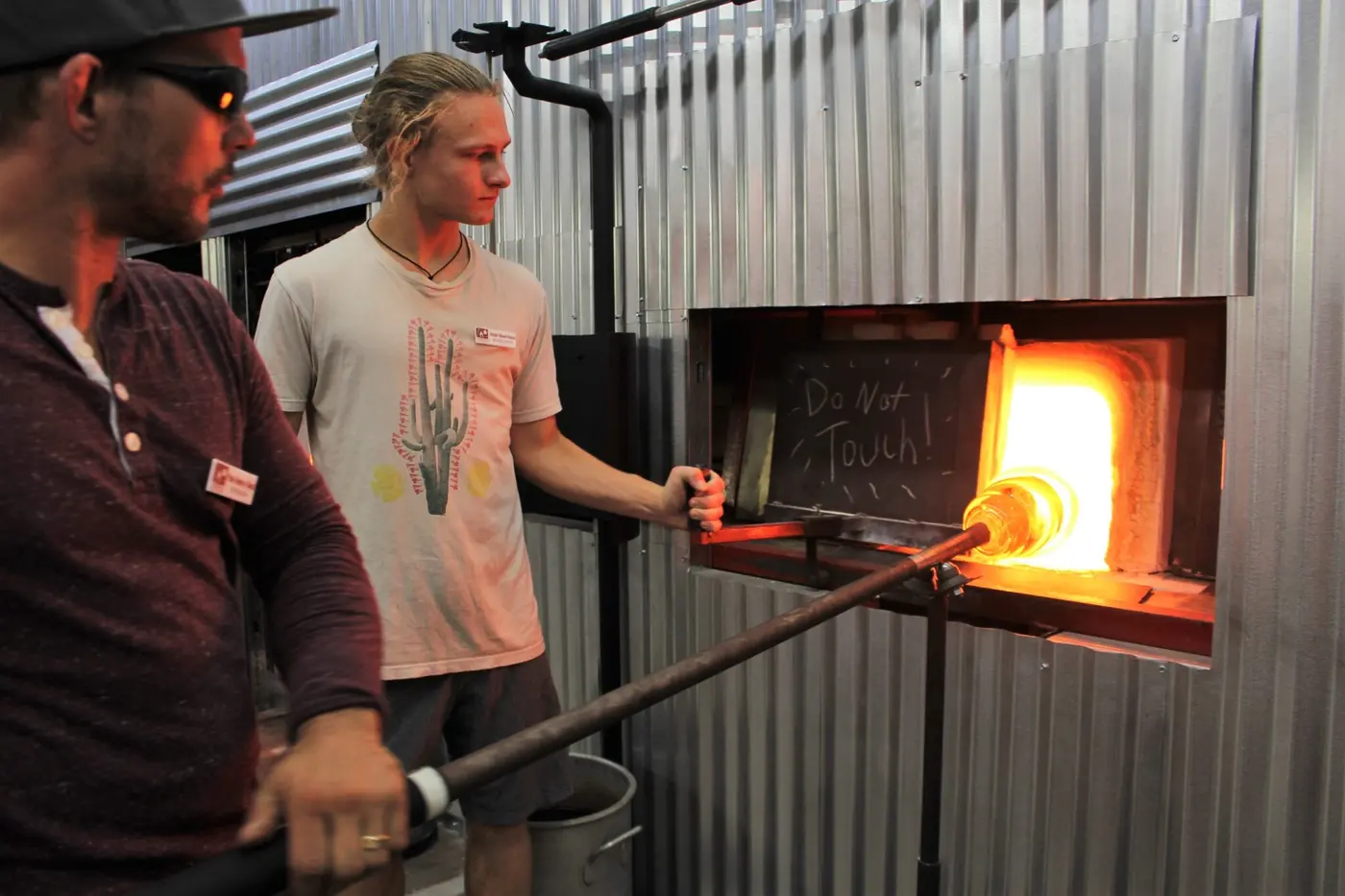
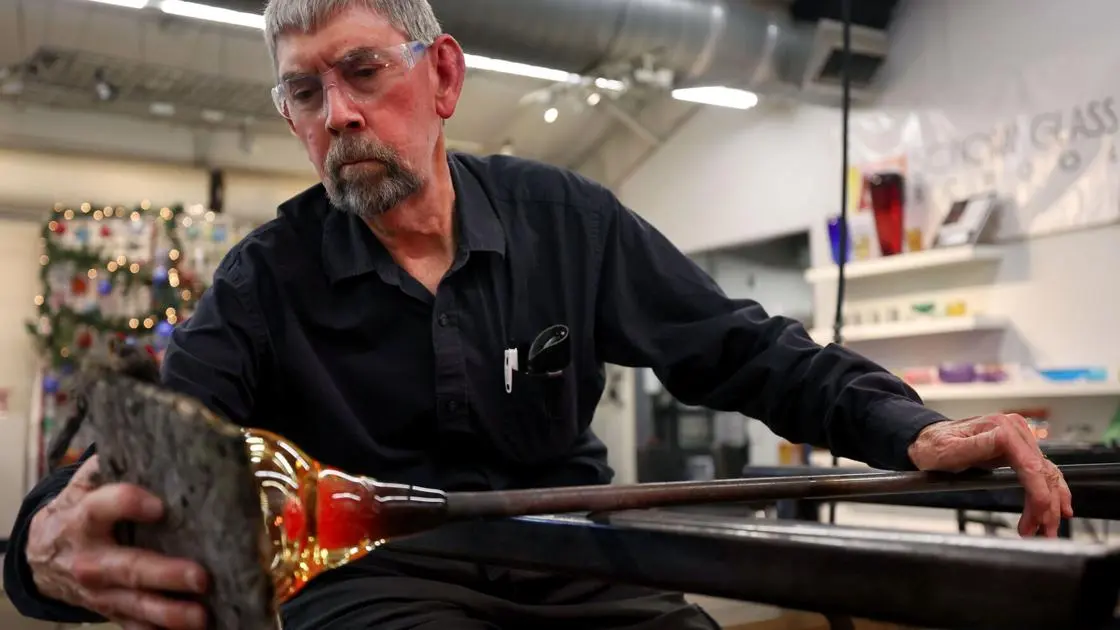
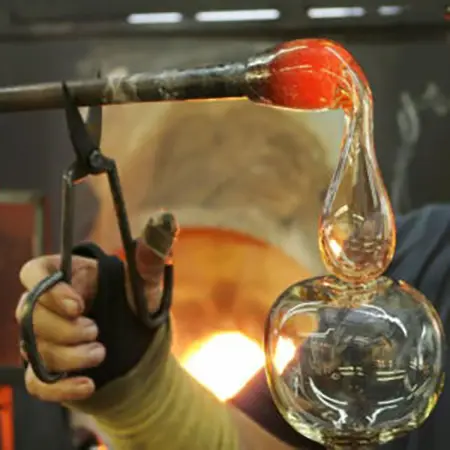
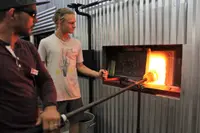
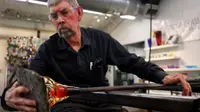
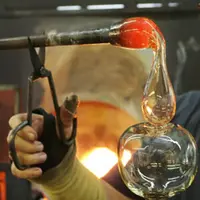
The Hot Shop. The Hub furnace holds about 400 pounds of molten glass when full and runs between 1,900 and 2,300 degrees Fahrenheit. Glass usually comes out to be worked at about 2,075. The city supplies the natural gas that fuels it, and an electric blower forces in air to make the flame burn hotter. Four glory holes reheat the work at three benches: two of 12 inches, one of 19, and one of 26. The school also keeps a color furnace and melts many of its own colors, including the one used in its Make-Your-Own sessions.
The shop answers the common questions plainly:
- Blowing glass is difficult, and learning it usually takes a year or more of regular practice.
- Burns happen on occasion, mostly from hot tools rather than hot glass.
- Very hot glass is soft enough that gentle puffs of air inflate a bubble.
- The minimum age is 12.
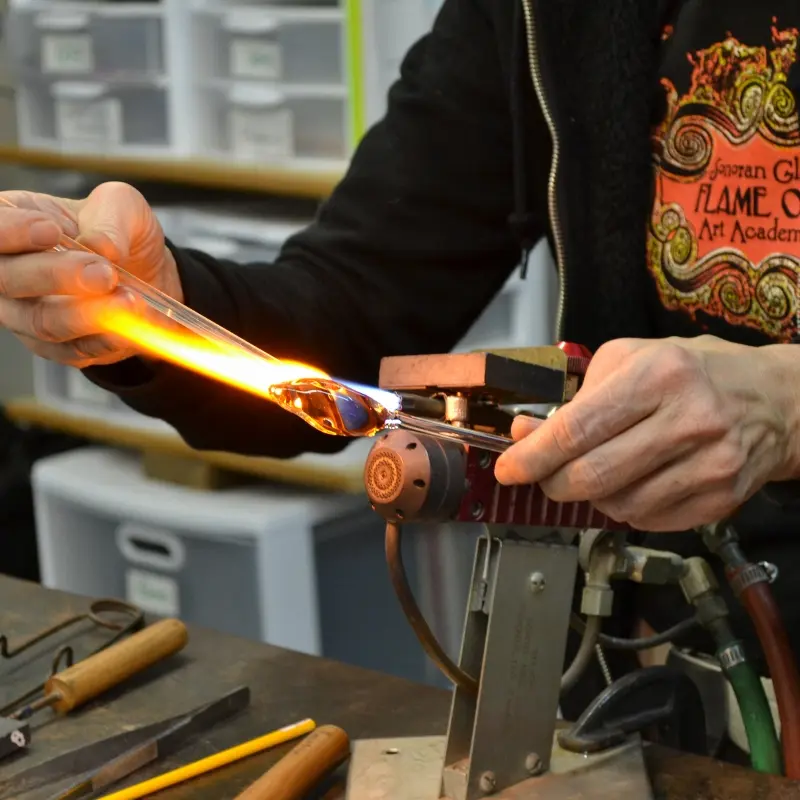
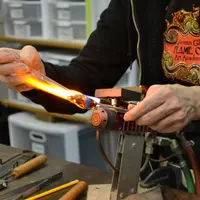
The Flame Shop. Here the work is done at the torch, on eight Nortel Redmax burners and two Bethlehem torches, an Alpha and a Bravo. Students melt rods of one of two kinds of glass:
- soft glass, used for beads since the fifth century B.C.;
- borosilicate, the clear hard glass of the original Pyrex and of laboratory test tubes.
According to the shop’s own page, a torchworked piece can be “as big as a person or as small and detailed as a fly.”
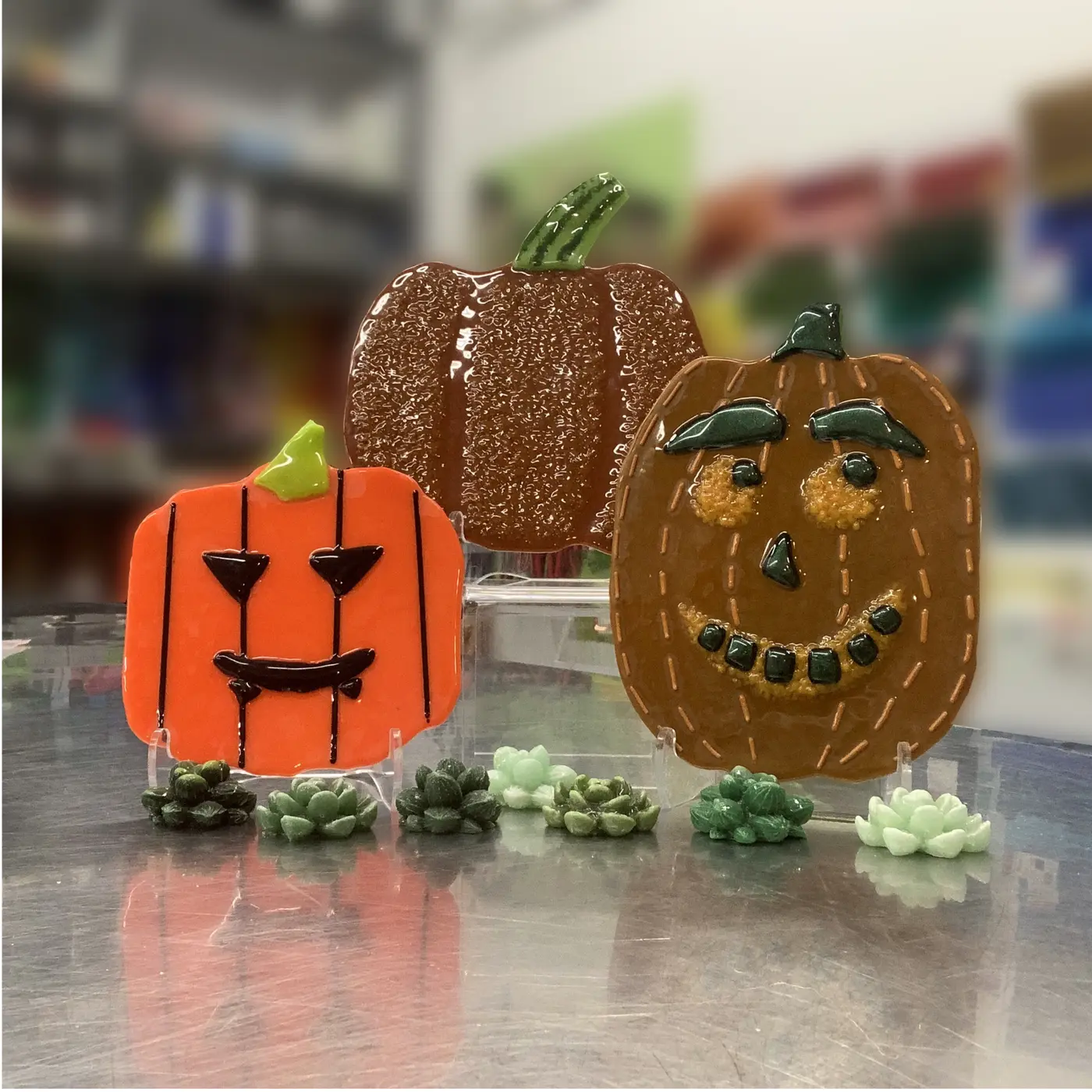
The Warm Shop. This studio works with sheet glass: cutting, kiln fusing and slumping, stained glass, casting, and mosaic. It has four large tables, an outdoor workspace, two bathtub kilns, and two Denver kilns, the larger measuring 30 by 58 inches.
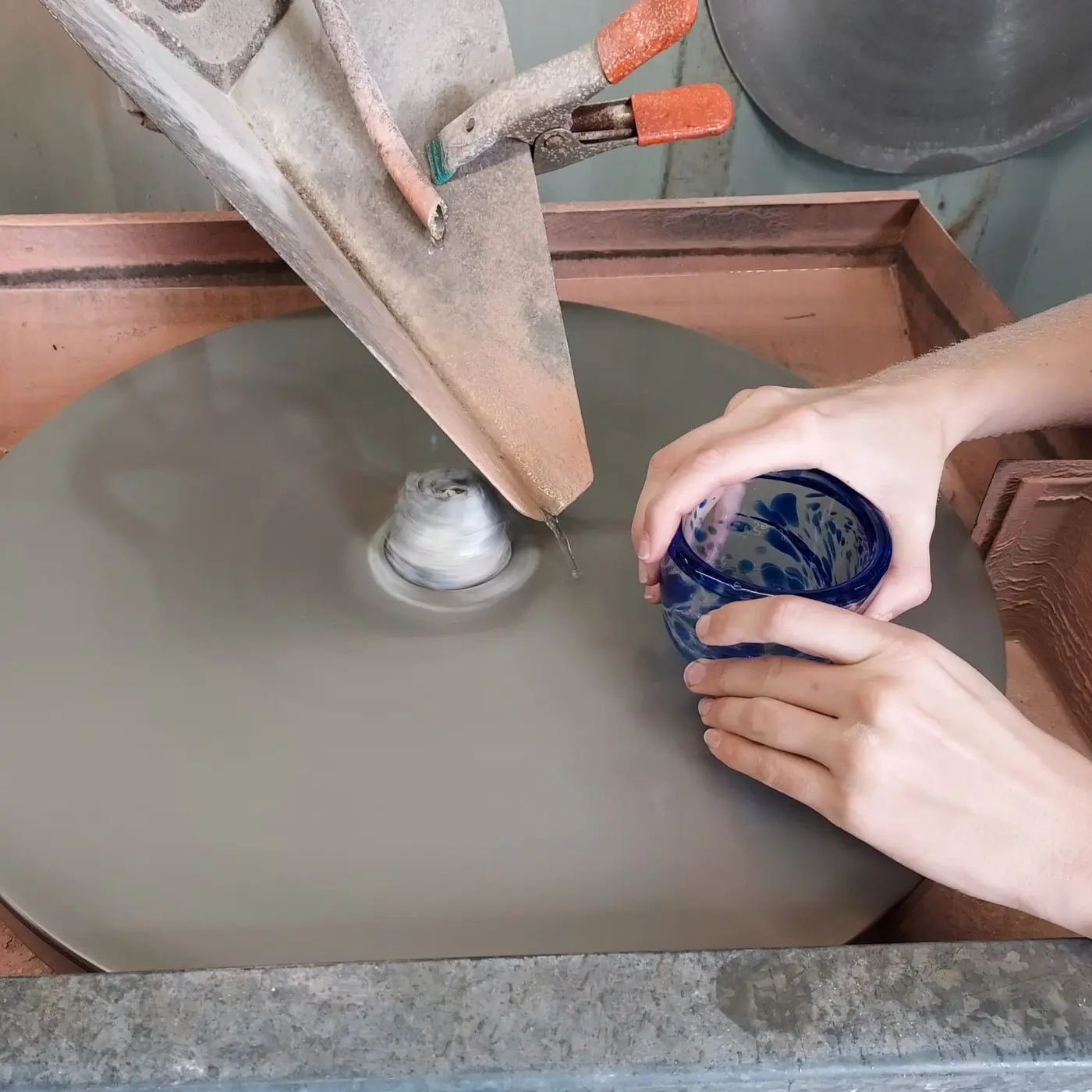
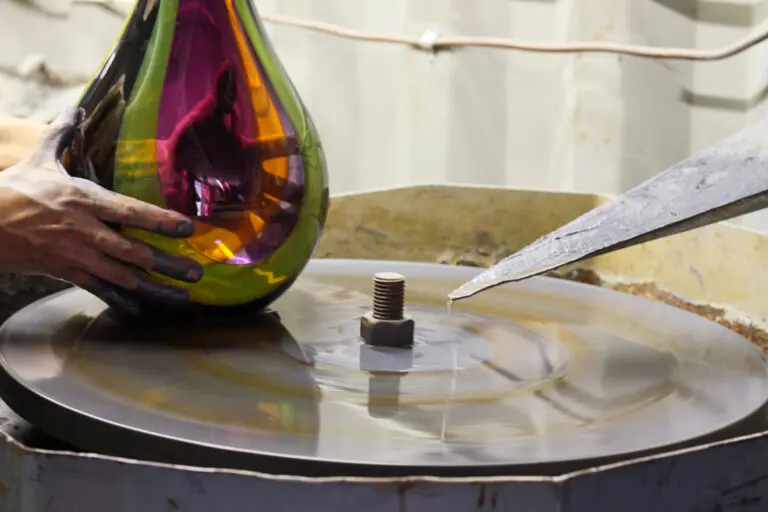
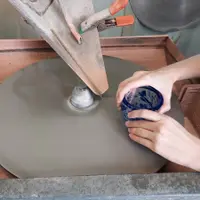
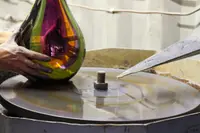
The Cold Shop. Glass is worked here after it has cooled. The equipment includes a belt sander 106 inches long, a single-arbor grinding lathe, lap wheels of 20 and 24 inches, wet and ring saws, and a large sandblaster.
Classes range from a single guided project to the semester-long Furnace Glassblowing course, which in fall 2026 ran 20 sessions over three months. Qualified artists can rent each shop by the session. Through partnerships with the University of Arizona and Pima Community College, the school has offered furnace glassblowing for college credit.
Jason Marstall manages the Hot Shop. He grew up in Nogales and took a glassblowing class while attending the University of Arizona. “I was obsessed!” he has said. Executive director Debra Ruzinsky likens his role as the school’s gaffer to that of an orchestra conductor, directing the team around the piece. Brian Jacobson runs the Flame Shop.
Paul Anders-Stout has worked in glass since 1999. Arizona Highways named him director of shops, and Ruzinsky calls him associate director. He described the craft to the magazine this way: “It’s complicated; it’s imaginative. It’s one of the few crafts that require a really broad skill set. So, you have to have some understanding of physics and chemistry and light physical activity.”
Pumpkins, date nights, and a breaking auction
The 2026 fall season opened on September 10 with a free Fall Kickoff from 5 to 8 p.m. It offered:
- demonstrations in torchworking, glassblowing, and fusing;
- the Quesadillas and More food truck;
- music and a raffle;
- the Break It or Buy It auction, at which pieces that draw no bids are broken in front of the crowd.
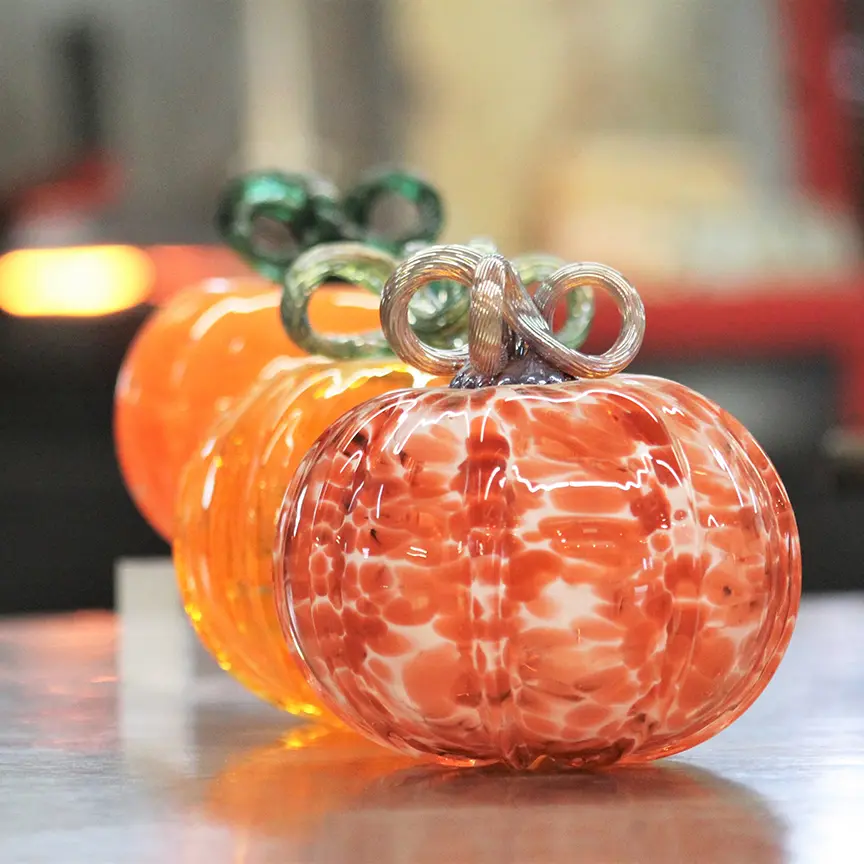
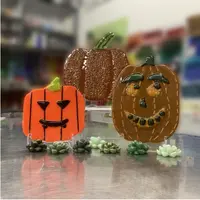
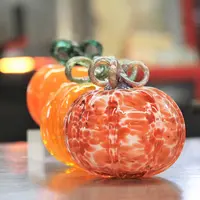
The Pumpkin Fiesta follows in October. In 2026 it runs Fridays and Saturdays, 9 a.m. to 5 p.m., October 16 through 31. School artists start blowing pumpkins in early September, in every color, shape, texture, and size, and set them out as a pumpkin patch for visitors to wander. Glassblowing demonstrations are free. In the Make-Your-Own Pumpkin Experience, a visitor picks colors and design elements and works with a staff artist to make a pumpkin. Reservations are required, and the school says people come year after year to add to their collections. The fiesta also includes a free Halloween party. Its proceeds pay for the school’s free and reduced-cost programs for young people and underserved communities in Tucson.
Friday Date Night runs every other Friday from September through November. It pairs two people, whether friends, partners, or family, on a guided project such as blown tumblers or, on October 23, a hollow pumpkin. The school says the finished work is ready a week later, “just in time for the second date.”
Visiting artists arrive through winter and spring for five-day workshops, each closing with a free public lecture and demonstration. The 2026 season had support from the Art Alliance for Contemporary Glass. It brought:
- Jason Christian, a member of Dale Chihuly’s boathouse team;
- Shane Fero, a flameworker for 50 years;
- Dan Hoffman, known for some of the smallest borosilicate glass pieces in existence.
The roster posted for the coming season lists two more:
- Marc Barreda, who teaches at the KABK in The Hague and spends his summers as a commercial salmon fisherman in Alaska;
- Bandhu Dunham, who began teaching himself lampwork in high school in 1975 and is set to lead a workshop on borosilicate sculptures that move.
From a Tastee-Freez to a tire station
The school traces its line to Tom Philabaum. He began his art education at the Toledo Museum of Art School in the late 1950s. His own biography notes that around the same time, Harvey Littleton, whom it calls the father of the studio glass movement, was running his first experiments on a small furnace built in that school’s parking lot.
Philabaum came to glass through clay. A ceramics instructor suggested blown glass to complete his slab forms and sent him to Madison, Wisconsin, to study with Littleton and the potter Don Reitz. After a master’s degree he taught in Chicago. A trip to the Southwest in 1974 brought him to Tucson, where he knew no one. “Within a few weeks of being here, all these people showed up and said, ‘We hear you went to Madison, and you know how to blow glass. If you want to build a studio, we’ll all help,’” he told Ruzinsky. “So, I immediately had five best friends.”
He took over the lease on a pottery school and started a clay and glass cooperative with six other people. By his account they juggled day jobs with studio work at night and on weekends, for years. By 1985 he had formed Philabaum Glass Studio in a former Tastee-Freez in downtown Tucson.
The accounts of the school’s start differ:
- Inspiration. Ruzinsky writes that Philabaum’s travels to other studios and schools moved him to found one of his own. Arizona Highways says he and Dave Klein took their inspiration from a glass school they had visited in Japan.
- Founding year. The school’s About page gives 2001, at Philabaum Glass Studio. It says Philabaum and Klein formed the Sonoran Art Foundation, Inc., quickly outgrew the studio, and acquired “a rusty, closed-down tire station.” The school’s own Hot Shop page gives a different sequence: founded in 1999, classes at Philabaum’s studio, and the building finished and the hot shop opened in 2000. Philabaum’s biography dates the foundation to 2000, when he began teaching nationally accredited classes at his studio.
- Name. Arizona Highways calls the foundation the Sonoran Arts Foundation.
- Support. Ruzinsky records that the 2001 launch had help from the City of Tucson and a group of donors.
By June 2005, Inside Tucson Business reported, the foundation had become the Sonoran Glass Art Academy, a name chosen to stress its glass education. The name still held in 2009, when the Flame Off competition moved from the academy to Barrio Brewing Company to fit a large crowd. Later milestones followed:
- 2010: Philabaum and the school organized the first Tucson Glass Festival.
- Spring 2016: The youth program reported that more than 5,800 students had come through its doors. Participants have included Pueblo High School, the Tucson Indian Center, and the Barrio Santa Rosa Community Center down the street.
- 2018: A hot-shop remodel gave the furnaces extra insulation to hold heat longer.
- 2019: The fluorescent lights gave way to LED tubes, paid for in part with Tucson Electric Power rebates.
Anders-Stout came in by chance. One of his housemates was Philabaum’s eldest son, and Anders-Stout was washing dishes at the time. Philabaum gave him a start and free weekend time in the hot shop. He went on to work at studios in Wisconsin; Perth, Australia; and Murano, Italy. “Working with glass is immediate and intense,” he has said. “Molten glass is alive and fluid. It forces one into the moment and into themselves.”
Erika Parkin came from Sheridan College in Ontario for a job at another Tucson studio. When it closed, Philabaum called. “That was eighteen years ago and I’m still here, blowing glass!” she said.
Twelve artists from Almaty
Ruzinsky became executive director in February 2025. She first drove to Tucson in 1983, in a van full of fellow UCLA graduates bound for her first Glass Art Society Conference. There she saw the Sculptural Glass exhibition at the Tucson Museum of Art.
In July 2025 the school hosted twelve artists from Almaty, Kazakhstan, Tucson’s sister city, through the Smithsonian’s Kazakhstan Artisan Initiative. They worked in leather, silver, ceramics, and textiles. None worked in glass, which Ruzinsky notes has no strong tradition in Kazakhstan.
Aizhan Bekkulova, director of the Union of Artisans, gave the school a book on traditional Kazakh craft. The visitors laid out their work on display tables:
- Dulat Ashimov’s silverwork;
- Togzhan Babiyeva’s textiles;
- Berik Beisbekov’s leather set with silver.
The ceramic artist Ainash Kapanova watched Brian Jacobson’s glassblowing demonstration and remarked on how both crafts must plan for pieces that face extreme temperatures and change through the process. Each visitor left with a small glass cactus charm from the school.
Notable Events
- 1974Philabaum's arrival planted the seeds for the Tucson glass community from which the school grew. folklife.si.edu
- 1985Philabaum formed Philabaum Glass Studio in a former Tastee-Freez in downtown Tucson. folklife.si.edu
- 2000Philabaum began teaching nationally accredited classes at Philabaum Glass, giving birth to the foundation co-founded with David Klein. philabaumglass.com
- 2001Philabaum and Dave Klein launched Sonoran Glass School with assistance from the City of Tucson and generous donors, envisioning a vibrant glass-working community. folklife.si.edu
- 2005Sonoran Glass Art Academy became the new name for Sonoran Art Foundation, emphasizing educational programs in creative glass working. insidetucsonbusiness.com
- 2009The competition moved from Sonoran Glass Art Academy to Barrio Brewing Company to accommodate a large crowd. tucson.com
- 2010Philabaum collaborated with Sonoran Glass School to organize and host the first Tucson Glass Festival, presenting visiting-artist demonstrations and exhibitions throughout Tucson. philabaumglass.com
- 2016The school's youth-program history reports that over 5,800 students had come through its doors to learn about or experience glass arts. azgives.org
- 2018During the hot-shop remodel, furnaces received extra insulation to hold heat longer. azjewishpost.com
- 2019The school replaced its fluorescent lighting with energy-efficient LED tubes, using TEP rebates. tucson.com
- 2019After participating in SCALE UP with other local businesses and nonprofits, Sonoran Glass School built a more sustainable space and saved on lighting and gas bills. tucson.com
- 2025The article's author, Debra Ruzinsky, began serving as the school's executive director. folklife.si.edu
- 2025The school hosted an exchange with twelve artists from Almaty, Kazakhstan, Tucson's sister city, through the Smithsonian Kazakhstan Artisan Initiative. folklife.si.edu
- 2025The gallery presented a special exhibition to commemorate local glassblowing and what the page calls the school's 25th anniversary. philabaumglass.com
People
- Evan Mendelson, Interim executive director of the school.
- Paul Anders-Stout, Running the glassblowing studio at Sonoran Glass School.
- Lynn Davis, Executive director of Sonoran Glass School.
- Virgil Jones, Instructor working in Sonoran Glass School's hot shop.
- Ainash Kapanova, Ceramic artist at the exchange who connected her practice with Brian Jacobson's glassblowing demonstration.
- Aizhan Bekkulova, Union of Artisans director who gave the school a book on traditional Kazakh craft and introduced the union during the exchange.
- Berik Beisbekov, Visiting Kazakhstani artisan who brought leather and silverwork to the school exchange.
- Brian Jacobson, Glassblowing demonstrator at the school exchange.
- Dave Klein, Formed Sonoran Art Foundation, Inc., with Tom Philabaum.
- Debra Ruzinsky, Glass artist and educator; executive director of Sonoran Glass School in Tucson (Since February 2025).
- Dulat Ashimov, Visiting Kazakhstani artisan who brought intricate silverwork to the school exchange.
- Erika Parkin, Artist teaching regularly at the school and exhibiting at Philabaum Glass Gallery.
- Jason Marstall, Manager of Sonoran Glass School Hot Shop.
- Richard Royal, Visiting glass artist welcomed by Sonoran Glass School for a lecture and demonstration.
- Steve Hagan, Glassblower pictured working in the Sonoran Glass School hot shop.
- Togzhan Babiyeva, Visiting Kazakhstani artisan who brought textile and mixed-media pieces to the school exchange.
- Tom Philabaum, Formed Sonoran Art Foundation, Inc., with Dave Klein.
- David Klein, Co-founded Sonoran Art Foundation with Philabaum (2000).
- THOMAS A. PHILABAUM, Co-founder of Sonoran Art Foundation, now Sonoran Glass School; adjunct professor for students taking credit classes through University of Arizona and Pima Community College (2000).
- Melanie Long, Featured artist in Tucson Views, the school-anniversary exhibition.
- Perla Segovia, Featured artist in Tucson Views, the school-anniversary exhibition.
- Dorian Bouhuys, Visiting torchworking glass artist welcomed for a marble maze workshop.
- Maya Langevin, Glass bead maker pictured in the school's flame shop.
- Morgan Riddle, Class participant testing newly formed glass at Sonoran Glass School.
- Chris Fleming, Student at Sonoran Glass School working with molten glass in the hot shop.
- Kathrine Pew, Participant finishing powder glass artwork during a school workshop.
- Kayla Kelly, Warm shop manager at Sonoran Glass School, leading a powder glass workshop.
- Kristen Cook, Participant finishing powder glass artwork during a school workshop.
- Marica Whittemore, Director of Education and Outreach at Sonoran Glass School.
- Martin Gerdin, Visiting artist who gave a public demonstration at Sonoran Glass School.
- Alexandra Berger, Assistant director of Sonoran Glass Art Academy.
Sources
- sonoranglass.org
- sonoranglass.org/about
- sonoranglass.org/directions
- tucson.com/life-entertainment/local/article_505e2fdc-b64d-11ef-857d-6748c7df1051.html
- sonoranglass.org/hotshop
- sonoranglass.org/friday-date-night
- facebook.com/SonoranGlass
- instagram.com/sonoranglass
- sonoranglass.org/year-of-glass
- tucsonweekly.com/artsculture/handle-with-care-philabaum-will-celebrate-tucson-glass-art-in-november-37561722
- philabaumglass.com/about/bio
- folklife.si.edu/magazine/kazakhstan-sonoran-glass-art
- insidetucsonbusiness.com/news/updated-june-27-2005/article_6a778f1c-8a6f-523e-a914-6f69db399197.html
- tucson.com/lifestyles/recreation/article_39e7cc2f-a826-5a95-936a-ca53d2020cbd.html
- philabaumglass.com/tucson-views-new-exhibition-opening-november-15
- azgives.org/organization/sonoranglass
- tucson.com/business/article_2160ac57-432d-558e-8ee0-7860ffd4dabb.html
- azjewishpost.com/2018/lfa-helps-local-businesses-save-money-energy
- arizonahighways.com/article/sonoran-glass-school