

Sheridan WYO Rodeo
Sheridan, Sheridan County, Wyoming. PRCA Rodeo.
Details

- Where
- 1753 Victoria Street, Sheridan, WY 82801. Directions
- When
- 2027 WYO Rodeo Week runs July 12-18 with four PRCA and World Championship Indian Relay performances July 14-17, 2027.
- Season
- Annually in mid-July, Wednesday through Saturday night.
- Hours
- Performances at 7 pm.
- Access
- Sheridan County Fairgrounds offers accessible seating, limited and reserved for guests with valid physical accessibility needs.
- Walk-in or reserve
- Online and in-person ticket sales typically launch in the spring; online tickets are sold exclusively through the official partner Etix via the website.
- Website
- sheridanwyorodeo.com
- Established
- 1931.
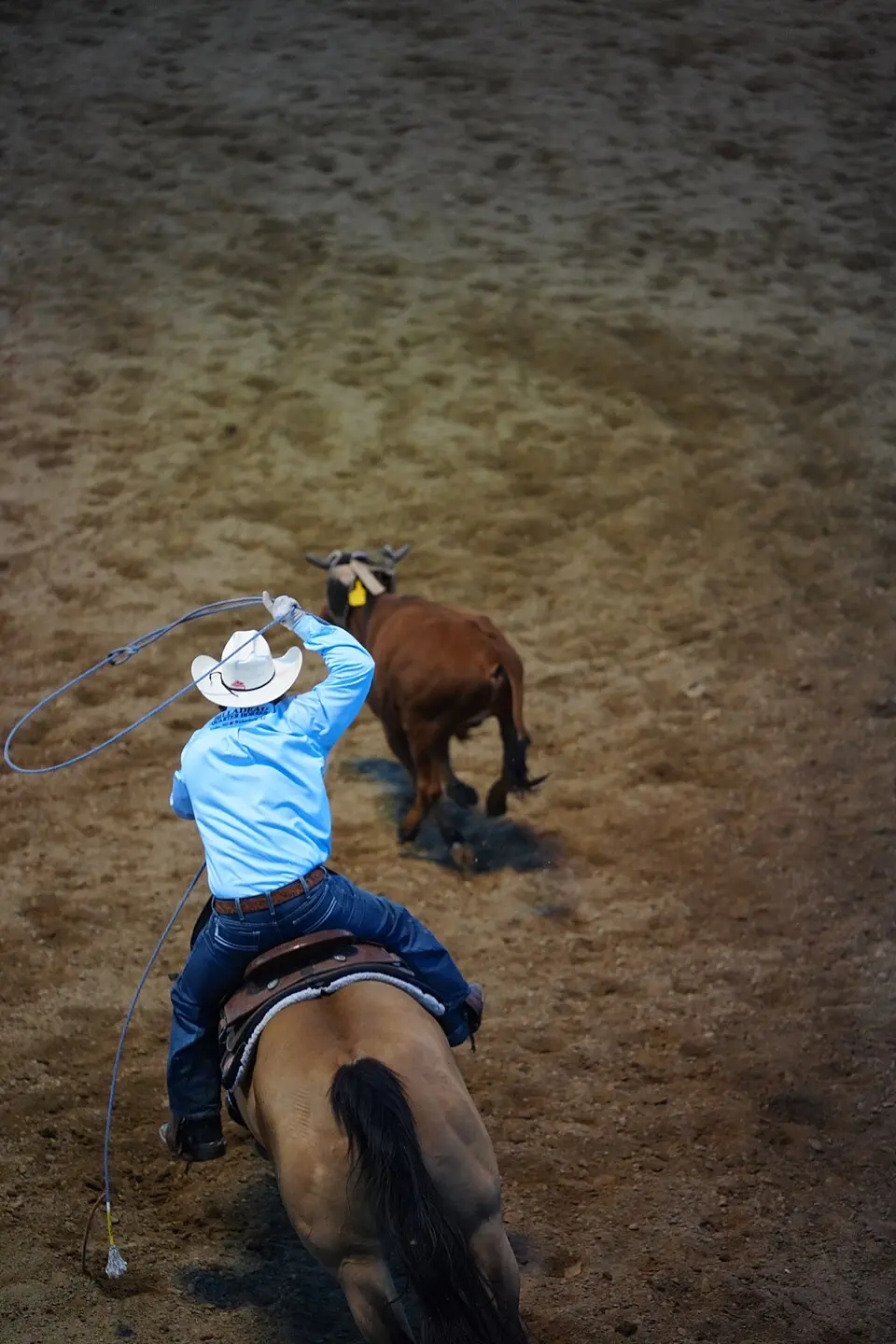
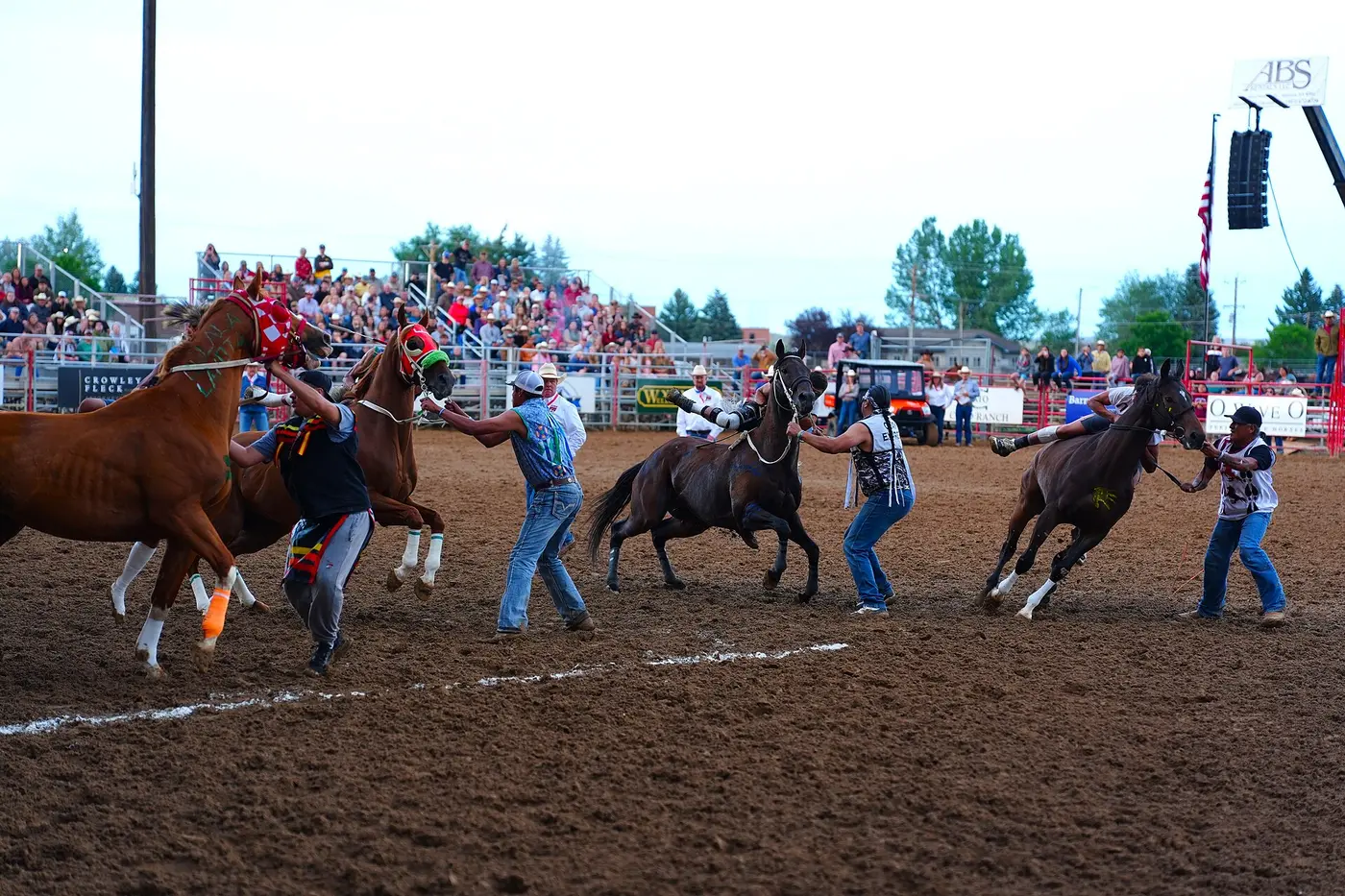
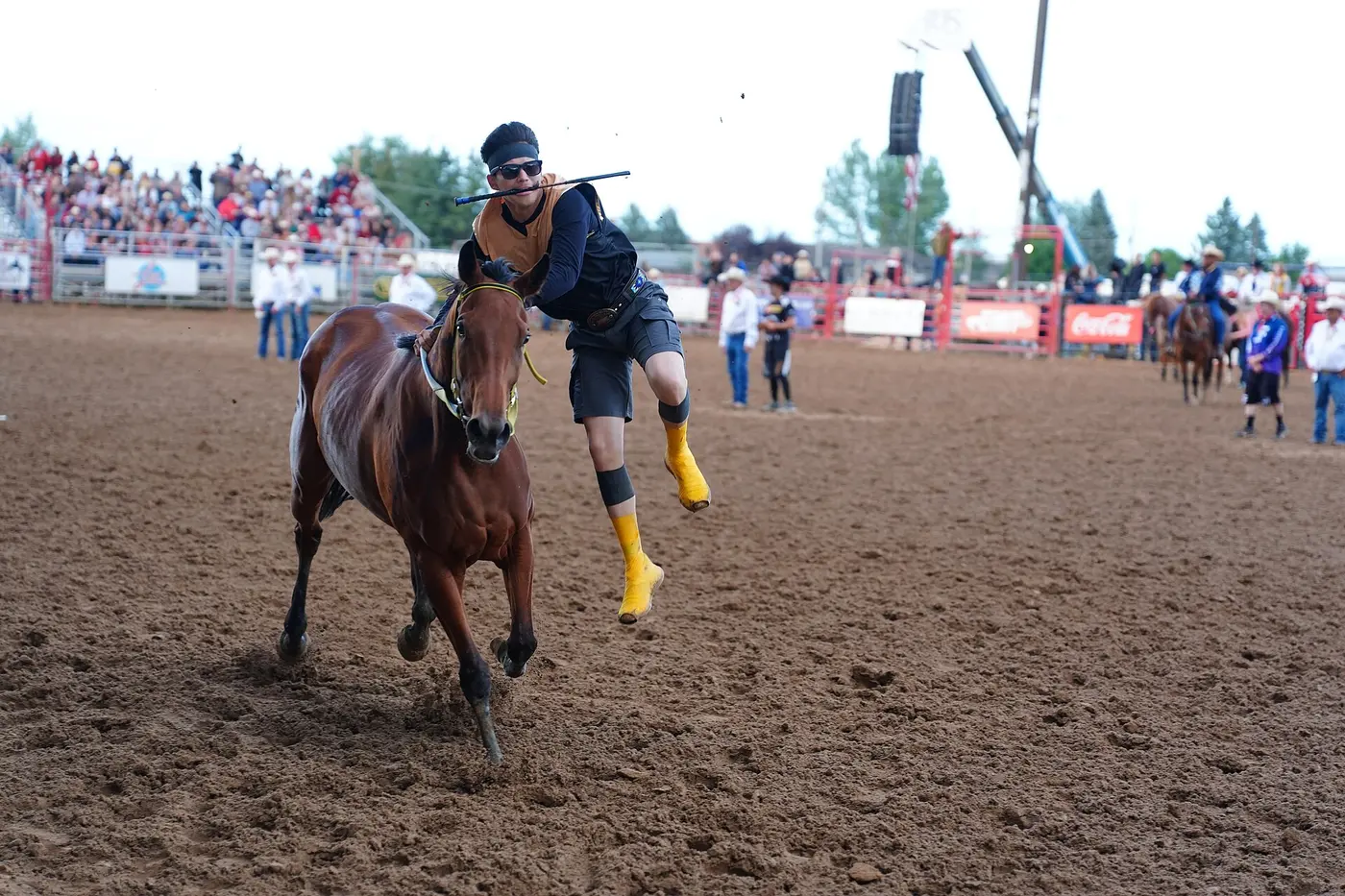
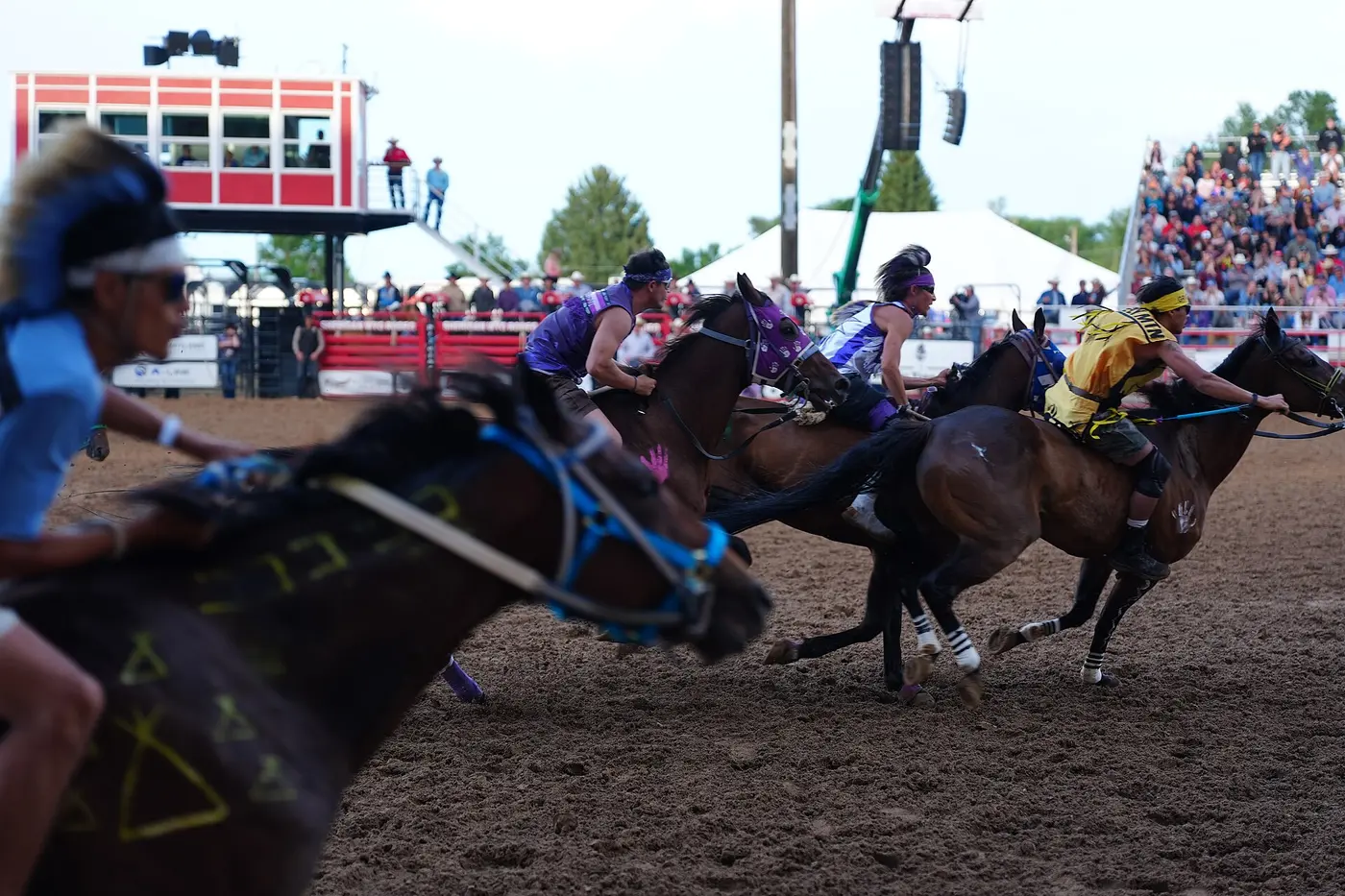
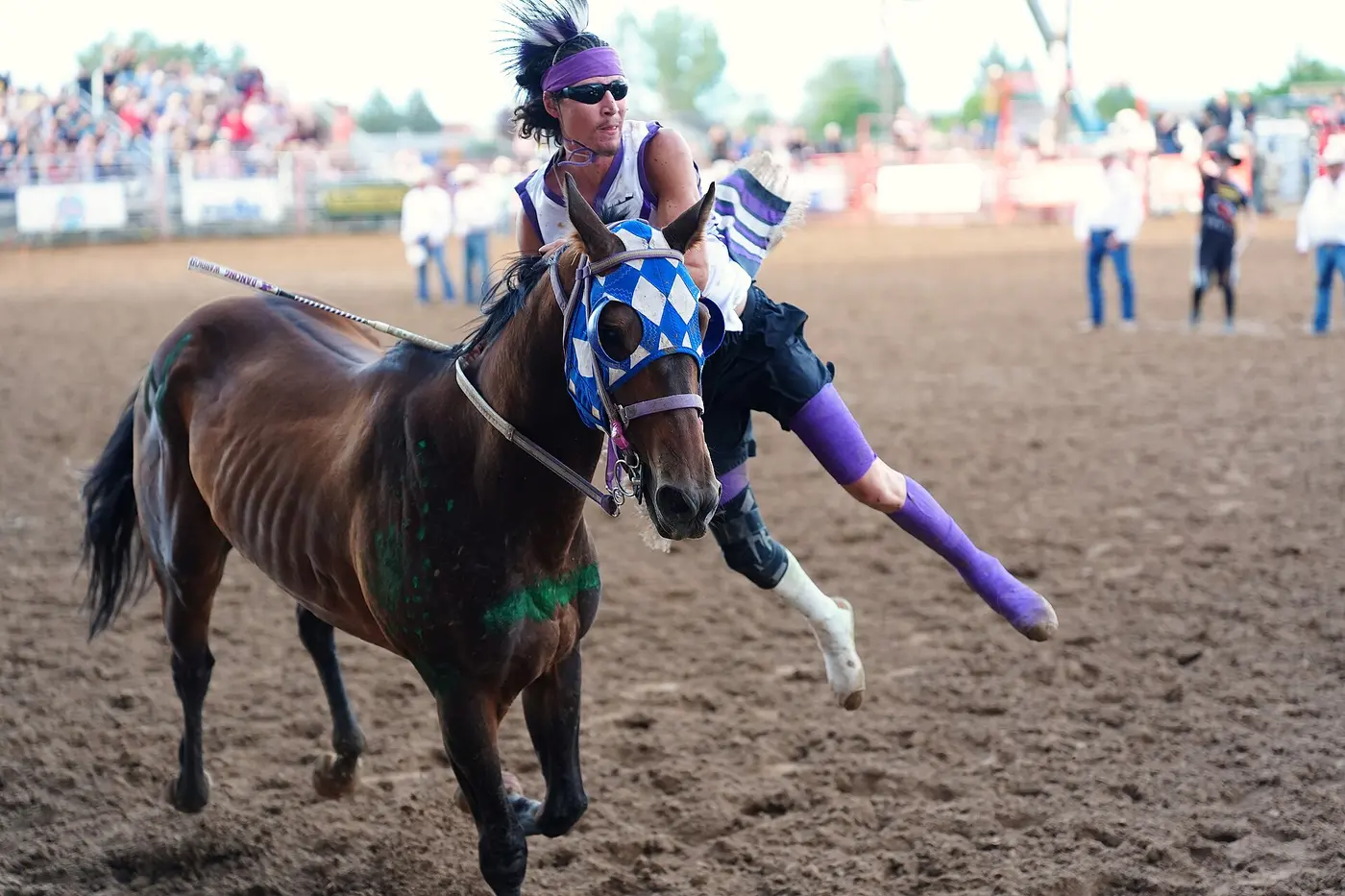
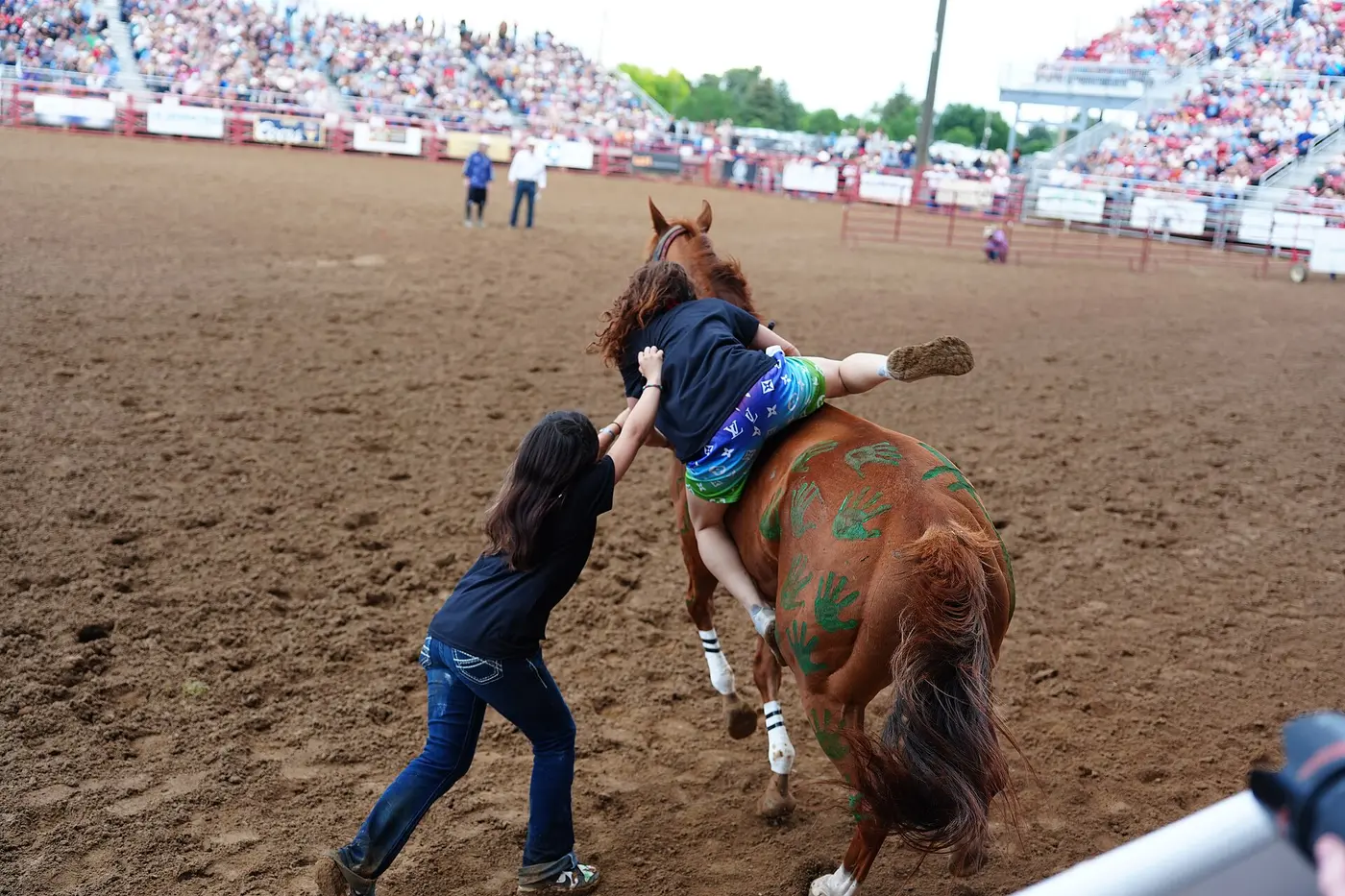
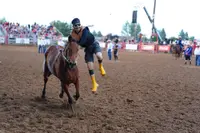
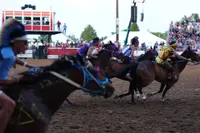
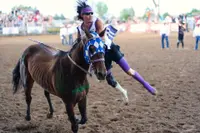
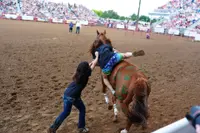
The Sheridan WYO Rodeo begins at 7 p.m. on four nights running, Wednesday through Saturday in the middle of July, at the Sheridan County Fairgrounds on Victoria Street. Each performance carries PRCA and WPRA events, and teams in the World Championship Indian Relay Races run at every one of them. The relay has since been added to the rodeo’s official name. Pre-rodeo entertainment starts at 6:30. Across the grounds a carnival runs from 5 p.m. to midnight on all four days. The PRCA has named the WYO its Mountain States Circuit Rodeo of the Year, and the performances air on The Cowboy Channel.
Four nights and the mornings between
Each night carries a theme. In 2026 Wednesday was Family Night and Thursday was Pink Night, with the crowd asked to wear pink. Friday was Patriot Night, in red, white and blue. Saturday was Heritage Night, and the year’s WYO Rodeo Royalty were introduced before the opening event. At the carnival, Wednesday is Buddy Night.
The arena is busy before the lights come on. Slack runs begin at 8 a.m. in team roping, tie-down roping, steer wrestling and women’s breakaway roping. At 8:15 each morning the Stock Stars Tour meets visitors at the fairgrounds and introduces them to the bucking horses, bulls and other stock that will work that night’s rodeo. The royalty who ride in the grand entry are chosen before the week begins. In 2026 the contest opened with a horsemanship competition at the Sheridan College AgriPark on June 24. The next evening brought a stage competition, a Queens Social and the crowning at the WYO Theater. Volunteers who keep the week running are called the WYO Rodeo Spurs.
Pancakes on Grinnell Plaza, chairs on Main
Rodeo Week spreads well past the fairgrounds. In 2026 it opened on the Saturday before with the Untapped Homebrewfest at The Shrine. The next afternoon brought Music on the Mall at Whitney Mall on the Sheridan College campus, with live music, local arts and crafts booths, and food trucks. On Tuesday evening the free Boot Kick-Off street party filled Whitney Commons Park.
Friday is the full day downtown. The Dr. Bisbee Memorial Boy Scouts Troop 117 pancake breakfast serves on Grinnell Plaza from 6 to 9 a.m. The Sneakers & Spurs 5k and 1k leave from Main Street at 8. At 10 the Main Street Parade, called “Star Spangled WYO” in 2026, starts on North Main at Dow Street. It runs south to Works Street, west to Brooks, and north again to finish at Brooks and Dow. Hundreds of people stake out viewing spots the night before, and the parade page asks them to wait until the stores close before setting out their chairs. At noon the First People’s Pow Wow and dance gathers at the Sheridan Inn. At 1 p.m. the Kiwanis rubber ducks race at Kendrick Park.
The Sunday after the last performance moves to the Big Horn Equestrian Center for a tailgate party and polo, with the Eatons’ Cup and Cowboy Polo at 1 p.m. and the WYO Rodeo Cup at 3. The rodeo’s own site says “some folks call it Sheridan’s homecoming.”
Sankey stock and a $40,000 payout
The stock and the production belong to Sankey Pro Rodeo, owned by Ike and Roberta Sankey and hired in 1994. When Ike Sankey went into the ProRodeo Hall of Fame in July 2026, the rodeo’s board described the WYO they took on that year. “Our stands had 1000 people at best,” the board wrote. Added money was $1,000 per event, sponsorships came to about $10,000, and the total payout was $40,000. “With better stock we attracted better rodeo athletes,” the letter went on, and by its count the rodeo now ranks “in the top 25 of all professional rodeos.” It reported record attendance, $21,000 per event in added money, $580,000 in sponsorships, and a total payout of $547,000. The work, the board noted, continues with Ike’s son Wade.
The World Championship Indian Relay Races began in 1997. In 2005 some 250 private citizens formed the Gold Buckle Club to give the rodeo more financial support. In 2010 the board joined the PRCA Million Dollar Tour, which raised prize money and brought top contestants to Sheridan. The 2020 rodeo was canceled because of the COVID-19 pandemic, the only cancellation outside World War II. It returned in 2021 for its 90th anniversary. The 97th is set for July 14–17, 2027.
A shotgun down Main Street
Sheridan held rodeo-style celebrations long before the WYO. The Sheridan Post advertised a Mid-Summer Carnival for July 3, 4 and 5, 1900. The program listed a balloon ascension and parachute drop, a Custer sham battle, baseball and polo, a stage hold-up, and “broncho busting by Indians and white men.” In 1914 came the Stampede, which local historians say was organized by the Sheridan dentist William Frackelton. “BOTS SOTS! THE BIG SHOW WAS OPENED THIS MORNING,” ran the Sheridan Enterprise. Visitors had come in on every train and by auto, wagon and horseback. Three cowboys, Will Eaton among them, led the parade. A line of cowboys followed, more than a block long, then fifteen or twenty cowgirls, then the old Canfield stage. That coach had hauled passengers in and out of Sheridan before the railroad came, and the paper said it would “be robbed in regulation style by the Indians.” Painted tepees stood inside the fairgrounds. That series of Sheridan Stampedes ran from 1914 to 1916. In 1928 and 1929 the PK Rodeo, held on the PK Ranch west of town, drew nearly 20,000 people, 3,000 of them from 35 states.
By the rodeo’s own telling, the Sheridan of 1931 was so quiet you could “shoot a shotgun down Main Street and have no fear of injuring anyone.” Organizing began in the City Hall council chambers on January 28, 1931. Three names were proposed: “Sheridan WYO Rodeo,” “Sheridan’s Old West,” and “Sheridan’s Frontier Jamboree.” The organizers aimed for a professional rodeo on a par with Cheyenne Frontier Days. A $15,000 purse drew contestants from across the country. E. W. Bill Gollings was commissioned to paint the first poster, and 10,000 copies were handed to residents leaving on vacation to spread across the United States and beyond. That first year brought a Main Street parade, a carnival at the fairgrounds, and hundreds of Indians in the night shows. In 1932 the Crow and Cheyenne smoked a pipe of peace as part of the night show. In 1936 Gladys Accola, listed as “Glady” in the rodeo’s history, became the first WYO Rodeo queen, with a $50 prize.
The war years are told two ways. The rodeo’s history, by Tom Ringley, says the board found it impossible to hold the event in 1942 and 1943. In 1944, it says, the rodeo was reactivated as the Bots Sots Stampede, taking the Crow term for “very good” that had advertised the old Stampedes. Under that name it was a “working cowboy” local rodeo, and vaudevillian night shows replaced the large Indian pageants. Historians quoted by the Sheridan Press in 2022 put the cancellation at 1942 to 1951, blaming supply and cowboy shortages, with only a small stampede for local cowboys in 1944. Both accounts agree on 1951. That year a public poll asked whether the rodeo should go on, and voters chose to continue it and to restore the Sheridan WYO Rodeo name. In 1966 the board judged the rodeo too large, too expensive and too long, and it turned professional again, limiting contestants and streamlining performances.
Lucy Yellowmule and the applause meter
The 1951 queen contest is the moment the record slows down for. According to WyoHistory.org, Lucy Yellowmule rode into the WYO on July 6, 1951. She was a 16-year-old Crow barrel racer from Wyola, Montana, trained at the Crow Roping Club. The favored contenders were usually daughters of prominent Sheridan merchants or ranching families. That year two Crow women had entered: Yellowmule and Margo Real Bird, the 1950 Crow Fair rodeo queen. Both reached the semifinal round, alongside Kathleen Grace Michelena of the Arvada Woman’s Club. The queen was chosen by an applause meter. Yellowmule galloped at full speed in her cowgirl hat and western clothes, and the crowd roared. When the story was told later, people suggested that boisterous rodeo cowboys had tipped the scales by standing next to the meter. The All American Indian Days Memorial gives the year of her title as 1952.
Sheridan then was, in the words of Dr. Joseph Medicine Crow, “the worst Indian-hating town in the country.” Crow people who rode the train in to do business waited for the train home under the cottonwoods in Kendrick Park rather than risk Main Street. One sign in a Sheridan business read “No Indians or dogs allowed.” Howard Sinclair, a Sheridan Press columnist who wrote as “Neckyoke Jones,” had described on July 3, 1951, a young Crow woman turned away from a Sheridan “eatin’ place.” After the crowning he asked Yellowmule and her court to speak before civic groups, veterans’ organizations and private homes. Within a short time restaurant owners took their signs down. On March 3, 1953, in Washington, Yellowmule accepted the Silver Anvil Award of the American Public Relations Association from Interior Secretary Douglas McKay. That same year the Freedoms Foundation’s George Washington Medal was presented to Sheridan during the rodeo. “We all hope the goodwill which has been accomplished will last,” Yellowmule said in accepting it.
Sinclair’s next idea came on a trip to Wyola with the photographer Don Diers. He asked Yellowmule to change into powwow regalia, and he later wrote that every bead “sparkled like a diamond” as she stood by her horse before a Crow lodge on the Little Bighorn. In 1953 the first Indian Day and Miss Indian America contest was held at the rodeo. An estimated 3,100 Indians came, and Arlene Wesley, a Yakama, drove from Washington and won the crown at the night pageant on the rodeo grounds. In 1954, with Medicine Crow and Brummet Echohawk as emcees, the event separated from the rodeo as All American Indian Days. Sheridan was named an All-American City in 1958. The gathering continued until 1984. A memorial to it now stands in Sheridan: Mitakuye Oyasin, by the Aaniih and Assiniboine sculptor Jon Decelles. The red circle around it opens to the Four Directions.
Notable Events
- 1914In 1914, there was a large rodeo, the Bots Sots Stampede. sheridanmedia.com
- 1928The event took place on the PK Ranch west of Sheridan and proved people would come to a rodeo; nearly 20,000 people attended. sheridanwyorodeo.com
- 1931To publicize the event, E. W. Bill Gollings was commissioned to paint a picture for the first Sheridan-Wyo-Rodeo poster; 10,000 posters were printed and distributed all over the U.S. and beyond. sheridanwyorodeo.com
- 1931The first Sheridan WYO Rodeo took place, organized by a group of local citizens who wanted to put the small town of Sheridan on the map. A $15,000 purse brought professional rodeo contestants from all over the United States. sheridanwyorodeo.com
- 1932Crow and Cheyenne Indian tribes smoked a pipe of peace as part of the night show at the WYO. sheridanwyorodeo.com
- 1936Glady Accola was selected as the first Sheridan WYO Rodeo queen. sheridanwyorodeo.com
- 1942Members of the Sheridan WYO Rodeo board found it impossible to conduct the event due to World War II. sheridanwyorodeo.com
- 1944In 1944 the rodeo was reactivated and renamed the Bots Sots Stampede to invoke the memory of a series of rodeos in 1914-1916 called the Sheridan Stampede; Bots Sots is the Crow Indian term for very good. sheridanwyorodeo.com
- 1951Lucy Yellow Mule, a member of the Crow Tribe, was elected rodeo queen by popular applause. sheridanwyorodeo.com
- 1951In a poll conducted to find if the community wanted the rodeo to continue, those who participated voiced their desire to restore the Sheridan WYO Rodeo name. sheridanwyorodeo.com
- 1953Sheridan held the first Indian Day and Miss Indian America contest at the Sheridan WYO Rodeo. wyohistory.org
- 1954In 1954 Joe Medicine Crow became an emcee for the event, joined by Brummet Echohawk, his Pawnee friend and fellow World War II veteran and Bacone Indian College student from Oklahoma. wyohistory.org
- 1966The Sheridan WYO Rodeo became professional again, after the board determined the rodeo had become too large, too expensive and too long. sheridanwyorodeo.com
- 1994Sankey Pro Rodeo owned by Ike and Roberta Sankey hired to provide stock and produce the Sheridan WYO Rodeo. sheridanwyorodeo.com
- 1997World Championship Indian Relay Races began. sheridanwyorodeo.com
- 2005Gold Buckle Club was formed, featuring 250 private citizens who had a desire to provide additional financial support to the rodeo. sheridanwyorodeo.com
- 2010WYO Rodeo Board joins the PRCA Million Dollar Tour, increasing contestant prize money and ensuring top contestants compete in Sheridan. sheridanwyorodeo.com
- 2020The only time other than during WWII the WYO Rodeo was canceled, due to the COVID-19 pandemic. sheridanwyorodeo.com
- 2021The Sheridan WYO Rodeo returned after a year off to celebrate the 90th anniversary of the event. sheridanwyorodeo.com
People
- E. W. Bill Gollings, artist commissioned to paint the first Sheridan-Wyo-Rodeo poster (1931).
- Glady Accola, first Sheridan WYO Rodeo queen (1936).
- Ike Sankey, co-owner of Sankey Pro Rodeo, hired as stock contractor (1994).
- Lucy Yellow Mule, rodeo's first American Indian queen, elected by popular applause (1951).
- Roberta Sankey, co-owner of Sankey Pro Rodeo, hired as stock contractor (1994).
- Tom Ringley, Author of the History of the WYO Rodeo.
- Howard Sinclair, Sheridan Press columnist and public relations expert who conceived All American Indian Days (1889).
- Luzenia 'Lucy' Yellowmule, Barrel racer of the Crow Nation named queen of the Sheridan-WYO Rodeo at 16 (1951).