Rich County Fair & Rodeo
Randolph, Rich County, Utah. County fair and rodeo; annual mid-August.
Details

- Where
- 30 East Church Street, Randolph, UT 84064. Directions
- When
- Last held August 10–15, 2026; next year’s date not yet stated.
- Getting there
- Held at the fairgrounds in Randolph, Utah.
- Phone
- (435) 757-0921
- Website
- richcountyut.org
- Managed by
- Rich County Fair Board.
Six days on East Church Street
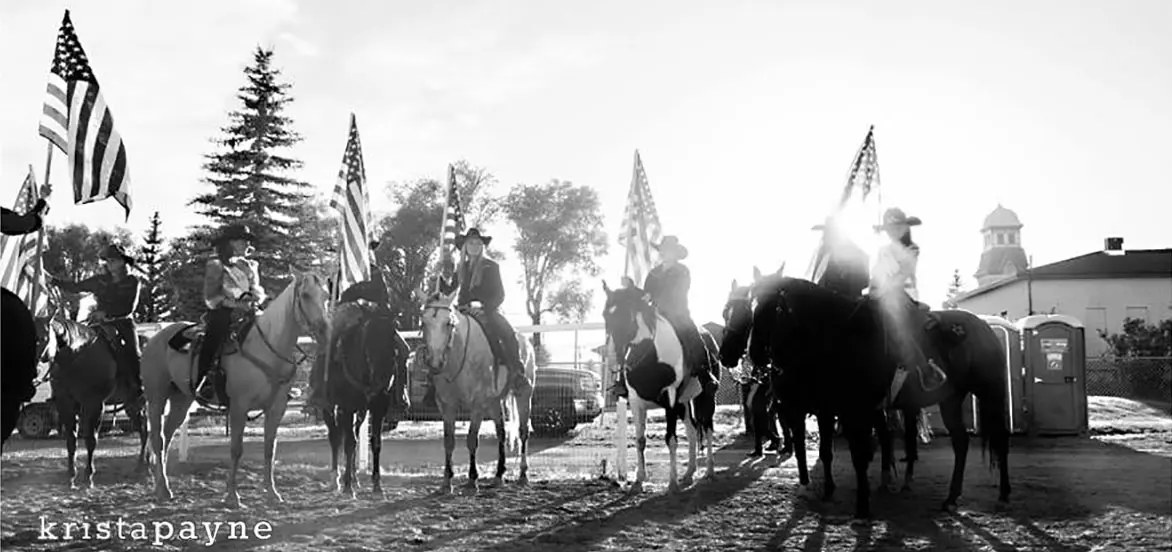
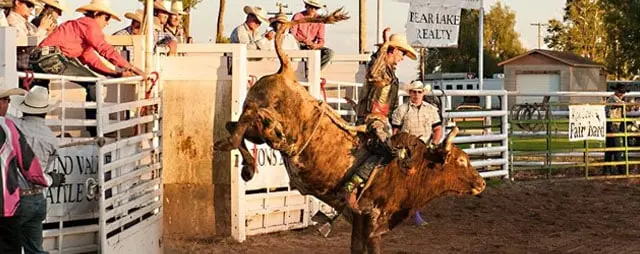
The 2026 Rich County Fair & Rodeo ran August 10 through August 15 at the county fairgrounds, 30 East Church Street in Randolph. The program held to the same five things the listings name each year: a livestock show at the fairgrounds, a rodeo in the fairgrounds arena, a parade through Randolph, a concert, and fireworks at the fairgrounds to close the week. Bounce houses went up for children. The Home Arts exhibits filled their own hours, though the local paper printed the wrong time for them in 2026. The fair’s page posted the correction a day before opening: “Ok we got the time wrong in the paper on the Home Arts please share and refer to this page!”
The concert fell on Thursday, August 13, with Dave Stamey booked at the Randolph fairgrounds. The fair also reached past town. On the evening before the concert, the fair announced that there would be concessions at the team roping in Woodruff, the next settlement down the Bear River.
The fair is run by the Rich County Fair Board, chaired in 2026 by Indy Anna Jones, with a Utah State University Extension professor, Reganne Briggs, listed beside her. The county’s fairgrounds page also carries the entry form for a Queen contest.
Cattle country at sixty below
The livestock in the show barns come out of a county where, by the Utah State Historical Society’s count, three fourths of the land is used for agriculture, mostly grazing, and livestock and livestock products account for the greater part of the county’s income. Rich County is a strip about 18 miles wide and 56 miles long in Utah’s northeast corner, with Wyoming to the east, Idaho to the north, and the southern half of Bear Lake inside its line. A county history page notes that cowboys, horses, and rodeos spaced through the summer are part of the life there.
Winters set the terms. Woodruff averages only 57 frost-free days a year. On February 6, 1899, it recorded 50 degrees below zero. The county’s history page calls that the coldest temperature ever recorded in the state; the state’s I Love History page puts it as the coldest recorded in one of the state’s towns. Joseph C. Rich, son of the county’s namesake, put it this way: “Only men with plenty of hair on ‘em are tough enough to stand the climate of Bear Lake, but what a country!”
A band from Morgan County, 1930
The fair was once held later in the year. On September 5, 1930, the front page of the Rich County Reaper, published in Randolph, ran the headline “Rich County Fair Assured Band.” The Morgan County band had been secured for the fair on September 23 and 24. A band stand was to be built on the fairgrounds, and the band would give concerts each evening. The same issue carried a second notice, “Wild West and Rodeo Randolph Sept. 23-24.” The band announcement closed by telling readers that to miss the fair and wild west rodeo was to miss one of the greatest events of the West.
The valley Charles C. Rich chose
Randolph was founded in 1870 and has remained the county seat. Before it came fur trappers, who held their rendezvous on the south shore of Bear Lake in 1827 and 1828. Then came Thomas L. “Peg Leg” Smith, whom the county calls the first white settler and the state history page calls perhaps the first Euro-American in the valley. He ran a cattle business, trading post, and horse exchange on the Bear River near present Dingle, Idaho. According to the county history, he stayed until 1863 and then left, discouraged.
That same year Brigham Young moved to secure the land. After Congress passed the Homestead Act of 1862, Young wanted Mormons to hold the land before non-Mormons did. In August 1863 he called Charles C. Rich, an LDS apostle, to lead an exploring party into the Bear Lake Valley. Rich chose a site near present Paris, Idaho, and obtained the permission of the Bannock and Shoshone, who also used the valley. Other towns followed: Round Valley in 1863, Laketown and Kennedyville (now Garden City) in 1864, Woodruff in 1865, Randolph in 1870, and Argyle in 1875.
The area had been part of Green River County, formed in 1852. It became Richland County in 1864, and the name was shortened to Rich in 1868. Sources give two explanations for the name. One holds that it came from the fertility of the Bear River Valley, first called Richland. The other holds that it honored Charles C. Rich. Another church leader left his mark closer to the fairgrounds: Wilford Woodruff caught and lost an enormous trout near Randolph, or at least, the state’s history page says, that’s the fish story.
Notable Events
- 1864Originally part of Green River County, which was formed in 1852, the area became Richland County in 1864; the name was shortened to Rich in 1868. richcounty.gov
- 1870Soon after the first town at Paris, Idaho, other towns sprang up, including Randolph in 1870; Randolph remains the county seat of Rich County. ilovehistory.utah.gov
- 1930The Rich County Reaper announced a band stand on the fair grounds and band concerts each evening for the Rich County fair and wild west rodeo of Sept 23 and 24. newspapers.lib.utah.edu
People
- Charles C. Rich, LDS apostle who led the exploring party into the Bear Lake Valley in August 1863 at Brigham Young's request and selected the site for the first settlement near present Paris, Idaho; county namesake.
- Thomas L. "Peg Leg" Smith, first white settler in the Bear Lake Valley area; operated a cattle business, trading post, and horse exchange on the Bear River near present Dingle, Idaho.