Quilt Walk Festival
Panguitch, Garfield County, Utah. Festival.
Details

- Where
- 385 E 100 S, Panguitch, UT 84759. Directions
- When
- Last held June 10–13, 2026; next year’s date not yet stated.
- Getting there
- Quilt show and classes at Panguitch High School, 385 E 100 S.
- Fees
- $30.00 General Class Registration Fee.
- Hours
- Wednesday 12:00 - 6:00 pm Thursday & Friday 9:00 am - 6:00 pm Saturday 9:00 am - 2:00 pm.
- Walk-in or reserve
- You do not need to be registered for the festival to visit the quilt show or vendor hall.
- Website
- quiltwalk.org
- Managed by
- Community volunteers.
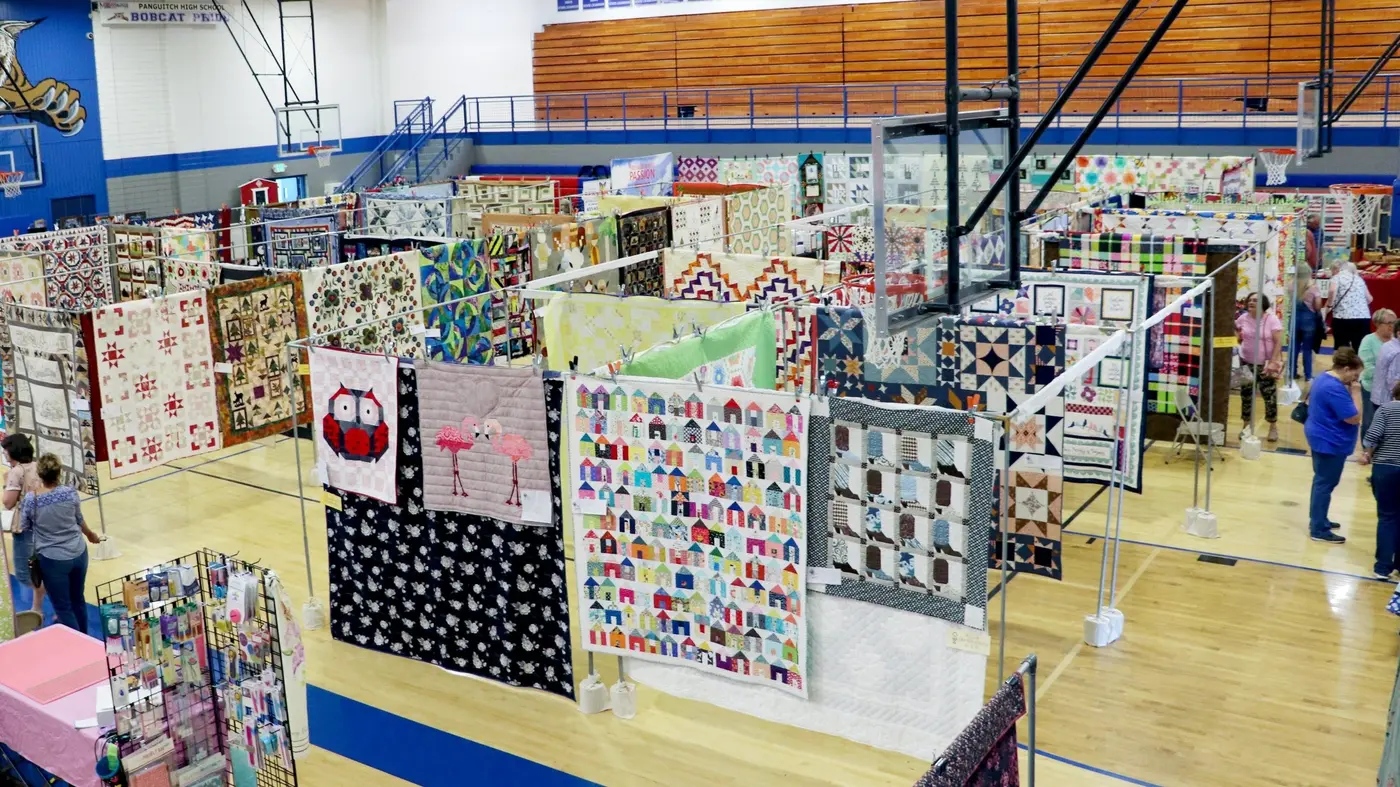
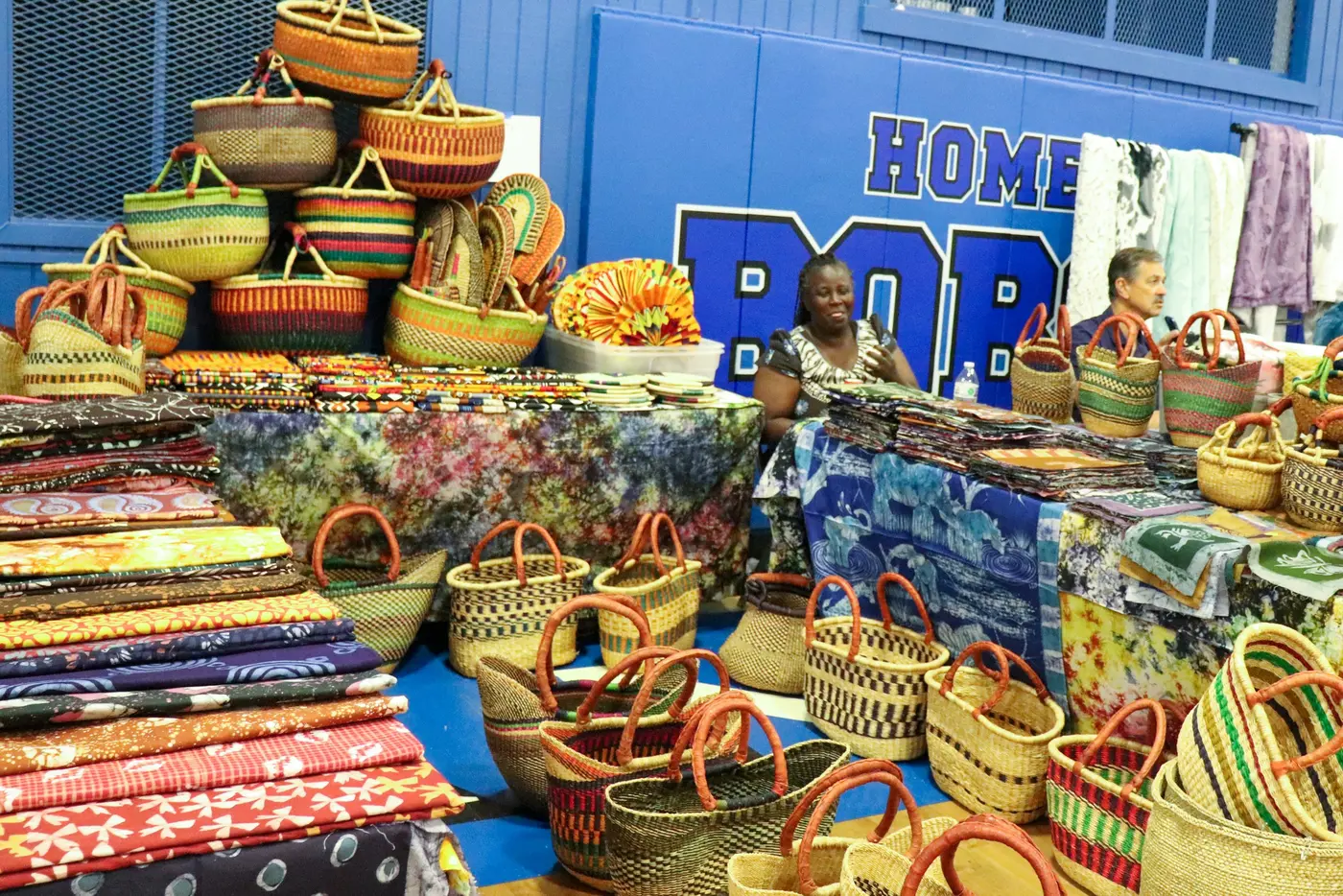
On the Wednesday of the second week in June, the gymnasium of Panguitch High School opens as a quilt show and vendor hall. Panguitch is the Garfield County town on U.S. 89 northwest of Bryce Canyon National Park, and its valley sits at 6,600 feet. Visitors need no festival registration to walk in. In 2024 the hall held 28 vendors in around 40 booth spaces on the main floor and the upper balcony. Sellers came from across the country and set up beside Panguitch makers Becki Henrie, Joni Neilsen, Anya Spencer, and Wanderlust Cowgirl Coffee. “It’s wonderful to showcase our community’s homegrown talent to visitors from all over,” said Tracy Wright, the vendor fair coordinator and a Panguitch city councilwoman.
The festival runs Wednesday through Saturday. The 2026 edition ran June 10 to 13, and the festival’s site gives June 9 to 12, 2027, for the next. Mack Oetting, who writes a weekly column for The Insider, reported that more than four hundred quilters registered in 2026. His daughter Kelly works in one of the town’s restaurants. That week she came home early on Monday and Tuesday because business was slow. From Wednesday on, the restaurant was busy enough that she worked overtime.
Classes, chocolate, and a Dutch oven supper
Registered quilters spend their days in classes at the high school. The classes run from Wednesday afternoon to Saturday noon, and some days go until nine at night. An open sewing room stays open until 8:30 p.m. Thursday through Saturday at a quarter past noon there is a trunk show. In 2024 it was held in the school theater, and quilters brought their quilts and told the stories behind them.
The first evening belongs to the Chocolate Fest and silent auction at Panguitch Middle School. In 2024 the line ran out the door. Residents and businesses had donated homemade treats, the auction raised money for Sub for Santa, and Tyler Craig of the band Jonny Ranger played western folk and rock and roll. April Hookham ran the Chocolate Fest for a couple of years. In 2026 four young people took it over, people Oetting knew from their high school days.
On Thursday, Friday, and Saturday nights the Social Hall on Center Street serves dinner at seven, and a play follows. The meal is Dutch oven roast beef, baked potatoes, green salad, rolls, and apple crisp, at $25 a person. For 2026, marking the nation’s 250th birthday, the production was A Patchwork of Independence. It was set in the Revolutionary War era and followed quilts through history, with original songs by Lex de Azevedo and Miki Ward Hunter. In other years the local cast has told the founding of Panguitch and the story of the walk.
Thursday of the 2026 festival added a first-time event, Quilts in the Park. Quilts by local quilters hung beneath the trees at Quilt Walk Park on Center Street, around the sculpture of the walk. The Rough Riders ATV Club leads a trail ride from the fairgrounds parking lot that morning, and riders bring their own machines and a light lunch. On Friday afternoon a citywide Pioneer Home Tour opens old houses, and visitors pick up a map at the Social Hall. Friday evening the high school auditorium holds the Block Party, with show and tell, door prizes, and drawings for the Opportunity Quilt and the Exchange Blocks.
Saturday starts with the Lions Club’s all-you-can-eat pancake breakfast by Zions Bank. The Heritage Fair and the Quilt Walk Races follow in the afternoon. The races were run in 2011 by seven-person teams on Center and Main streets.
The 2026 honors went to JeriLu Houston for her quilt “Rise and Shine.” The festival’s Facebook page called it Best in Show, and its website named her winner of the People’s Choice Award.
The volunteers behind it
Houston is also the trunk show contact, and for years she ran the classes. Oetting wrote that 2026 was her final year. She had taken Claudia Crump’s place “many years ago” and built the classes into what draws so many quilters to town. Registration, the open sew room, the vendor hall, the quilt show, and the Chocolate Fest each have a volunteer from town in charge. A Panguitch Quilt Walk Association receives the mail.
In 2011 Crump co-led the festival with Elaine Baldwin and Pat Oetting. Baldwin and Oetting wrote the first play about the walk and the settling of the town. “Our play is a tribute to the seven men who walked the quilt walk,” Baldwin told The Salt Lake Tribune that year. “We took a little artistic license to have some fun, add some music and put in some comedy.” The 2011 program included a tractor parade and a tractor pull at the rodeo arena, and the quilt show hung a Last Supper quilt. The dinner theater cost $15 and the pancake breakfast $6. That year’s featured teacher was Cathy Miller, a Canadian quilter and folksinger whose new recording included a song about the Panguitch Quilt Walk.
A sawmill closes
Baldwin traced the festival’s purpose to 1996. That year the sawmill that was Panguitch’s largest employer closed, and 100 children left the high school. Town leaders looked for other work and turned to festivals and tourism. “We were really hurting,” she said. “Since we are close to Bryce Canyon and have a lot of motels and cafes, we began to create festivals to help our economic situation. It has helped a lot.”
The festival’s starting year depends on the source. The Tribune called the 2011 festival the 14th annual, and The Insider called the 2024 festival the 26th. Mack Oetting wrote in 2026 that the Panguitch Main Street Committee placed the festival in the second week of June “some thirty plus years ago.”
Seven men on the Bear Valley Road
The story the festival keeps goes back to the town’s first year. The settlers came east from Parowan under Jens Nielson, over the Bear Valley route, part of the Spanish Trail. The state historical marker in town dates their arrival to March 16, 1864. The Patchwork Parkway management plan says fifty-four families made the crossing that March. The festival’s own account puts the first group in Panguitch in 1863. The city’s account says a community called Fairview was established in 1863, about 20 miles northwest of what is now Bryce Canyon National Park.
The season at that elevation was short, and the crops did not mature. The city’s account says deep snow came early in the second winter. The wheat was too green to grind and still inedible when boiled, and the men who hunted and fished competed with the Indians for meat. The marker puts the hard winter in 1864, and the festival’s account in 1864–1865.
The nearest supplies lay in Gunnison, 115 miles north by the marker’s count and 110 by the city’s, or in Parowan to the west. The marker and the festival give the Parowan distance as 40 miles, and the city about 45. The city says one party started for Gunnison, found the way blocked by snow, and turned back almost at once. Everything then rested on the seven bound for Parowan: Alexander Matheson, William Talbot, Thomas Richards, Jesse Lowder, John Butler, Thomas Adair, and John Paul Smith. They had two yoke of oxen and a light wagon. At the head of Bear Valley they left both behind in the snow and went on foot, sinking deep with each step.
Matheson kept a journal. As the story is told, the men knelt on a quilt to pray and found they no longer sank. From there they laid a quilt down, walked to the end of it, picked it up, laid it down again, and walked on, all the way to Parowan. The city’s account says they took as many sacks of flour as they could carry. Parowan settlers helped them as far back up the mountain as they could, and then the men were on their quilts again with the sacks on their backs. The city estimates the whole trip at as much as fourteen days. Utah Life magazine says the walking alone took an estimated 10 to 14 days.
Matheson’s account is quoted on the marker:
“We decided that if we had faith as big as a mustard seed, we could make it and bring flour to our starving families. So we began the quilt-laying in prayerful earnestness. The return trip was harder with the weight of the flour, but we finally made it to our wagon and oxen and on home with thankfulness to the Lord for his goodness. The whole settlement welcomed us, because we had been gone longer than expected. There had been prayers, tears, and fears which turned to rejoicing and cheers.”
The city’s account goes on from there. A later conflict with the region’s Native Americans emptied Fairview and other settlements for several years. When settlers came back in 1871, they renamed the town Panguitch.
Markers on Center Street
The state marker, Number 510, went up in 1997 at Center Street and 200 East, beside the marker for the Panguitch Fort. Farther along East Center Street, a second marker put up by the Panguitch Quilt Walk Association gives the walkers’ full names: Jessie Louder, Alexander Matheson, William Talbot, Thomas Jefferson Adair, Thomas Morgan Richards, John Lowe Butler II, and John Paul Smith. In 2011 part of the festival’s proceeds went toward a memorial statue for the center of town. Today a sculpture of a walker stands in Quilt Walk Park.
State Route 143, the old crossing to Parowan, is now called the Patchwork Parkway after the walk. Barbara Talbot of the Daughters of Utah Pioneers Panguitch Museum is a great-great-granddaughter of William Talbot. She estimates that half of the town’s 1,500 residents are related to the walkers, and that as many more live elsewhere and come back for reunions. Descendants visit the park all year. “We’re grateful that the walk happened,” she said. “It meant that we are here to stay.”
Notable Events
- 1863In 1863 a community called Fairview was initially established approximately 20 miles northwest of what is now Bryce Canyon National Park. panguitchutah.gov
- 1863In 1863 the first group of the pioneers came to Panguitch from Parowan under the leadership of Jens Neilson. quiltwalk.org
- 1864The winter of 1864 was extremely cold; seven men left for Parowan, abandoned their oxen and wagon at the head of Bear Valley, and made progress only by laying a quilt down, walking to the end of it, relaying it and walking again. hmdb.org
- 1864Fifty-four pioneer families led by Jens Neilson crossed the high plateau from Parowan to settle what would become Panguitch. travel.utah.gov
- 1871Upon return to the area in 1871 the name of the community was changed to Panguitch. panguitchutah.gov
- 1996The closure of a sawmill in 1996 that was Panguitch's largest employer caused 100 kids to leave the high school; town leaders turned to festivals and tourism. archive.sltrib.com
People
- Claudia Crump, co-lead of the annual event.
- Elaine Baldwin, co-lead of the annual event; co-wrote the play about the walk.
- Pat Oetting, Chocolate Fest and Sub for Santa silent-auction attendee.
- Jens Nielson, leader of the first group of pioneers to Panguitch (1864).
- Alexander Matheson, one of the seven men who went to Parowan for flour; recorded the account.
- Jessie Louder, Panguitch Quilt Walker.
- John Lowe Butler II, Panguitch Quilt Walker.
- John Paul Smith, Panguitch Quilt Walker.
- Thomas Jefferson Adair, Panguitch Quilt Walker.
- Thomas Morgan Richards, Panguitch Quilt Walker.
- William Talbot, One of the seven quilt walkers; Barbara Talbot’s great-great-grandfather.
- Jerilu Houston, ran the festival classes, taking Claudia Crump's place.
- Anya Spencer, Local Panguitch artist or maker featured in the Vendor Hall.
- Becki Henrie, Local Panguitch artist or maker featured in the Vendor Hall.
- Haisley Twitchell, Chocolate Fest and Sub for Santa silent-auction attendee.
- Joni Neilsen, Local Panguitch artist or maker featured in the Vendor Hall.
- Kelly Anderson, Chocolate Fest and Sub for Santa silent-auction attendee.
- Shawn Caine, Chocolate Fest and Sub for Santa silent-auction attendee.
- Tracy Wright, Vendor Fair Coordinator and Panguitch City Councilwoman.
- Tyler Craig, Jonny Ranger musician who performed at the Chocolate Fest.
- Jens Neilson, Led pioneer families from Parowan to settle what would become Panguitch (March 1864).
- Jesse Lowder, One of seven men who left Panguitch for Parowan to get food for the starving colony.
- John Butler, One of seven men who left Panguitch for Parowan to get food for the starving colony.
- Thomas Adair, One of seven men who left Panguitch for Parowan to get food for the starving colony.
- Thomas Richards, One of seven men who left Panguitch for Parowan to get food for the starving colony.
- Alex Matheson, Quilt walker whose account describes the settlement welcoming their return.
- Barbara Talbot, Daughters of Utah Pioneers Panguitch Museum representative; great-great-granddaughter of quilt walker William Talbot.
Sources
- quiltwalk.org
- quiltwalk.org/event-schedule
- quiltwalk.org/quilt-show-vendors
- quiltwalk.org/dinner-theater
- quiltwalk.org/faqs
- quiltwalk.org/about
- facebook.com/PanguitchQuiltWalkFestival
- panguitchutah.gov/annual-events
- quiltwalk.org/quilt-walk-story
- panguitchutah.gov/panguitch-quilt-walk
- archive.sltrib.com/article.php?id=51935336&itype=CMSID