Pioneer Day
Paso Robles, San Luis Obispo County, California. Annual Pioneer Day Parade; Second Saturday in October.
Details
- Where
- 16th and Spring Street, downtown, Paso Robles, CA. Directions
- When
- Second Saturday in October.
- Getting there
- Parade route starts at 16th and Spring Street and ends surrounding Paso Robles City Park.
- Fees
- The whole day is free.
- Hours
- Parade at 10 am.
- Access
- Bring lawn chairs, hats and sunscreen.
- Website
- pasoroblespioneerday.org
- Managed by
- Paso Robles Pioneer Day Committee.
- Established
- 1931 (first held Oct. 12, 1931).
At seven in the morning on Pioneer Day the bean cooking begins in the Paso Robles City Park. The day falls on the second Saturday in October. The 2026 edition, the 96th, is set for Saturday, October 10, under the theme “Flags, Freedom and Pioneer Spirit.”
Beans at seven, tractors at ten
The children go first. At eight o’clock the Children’s Pet Contest, for those 14 and under, is held at the park gazebo, and the Little Cowboy/Cowgirl Contest follows immediately after. The committee’s 2026 call also listed a Lil Pioneer Boy and Girl and asked families to “grab the dog, pony, goat… whatever you’ve got.”
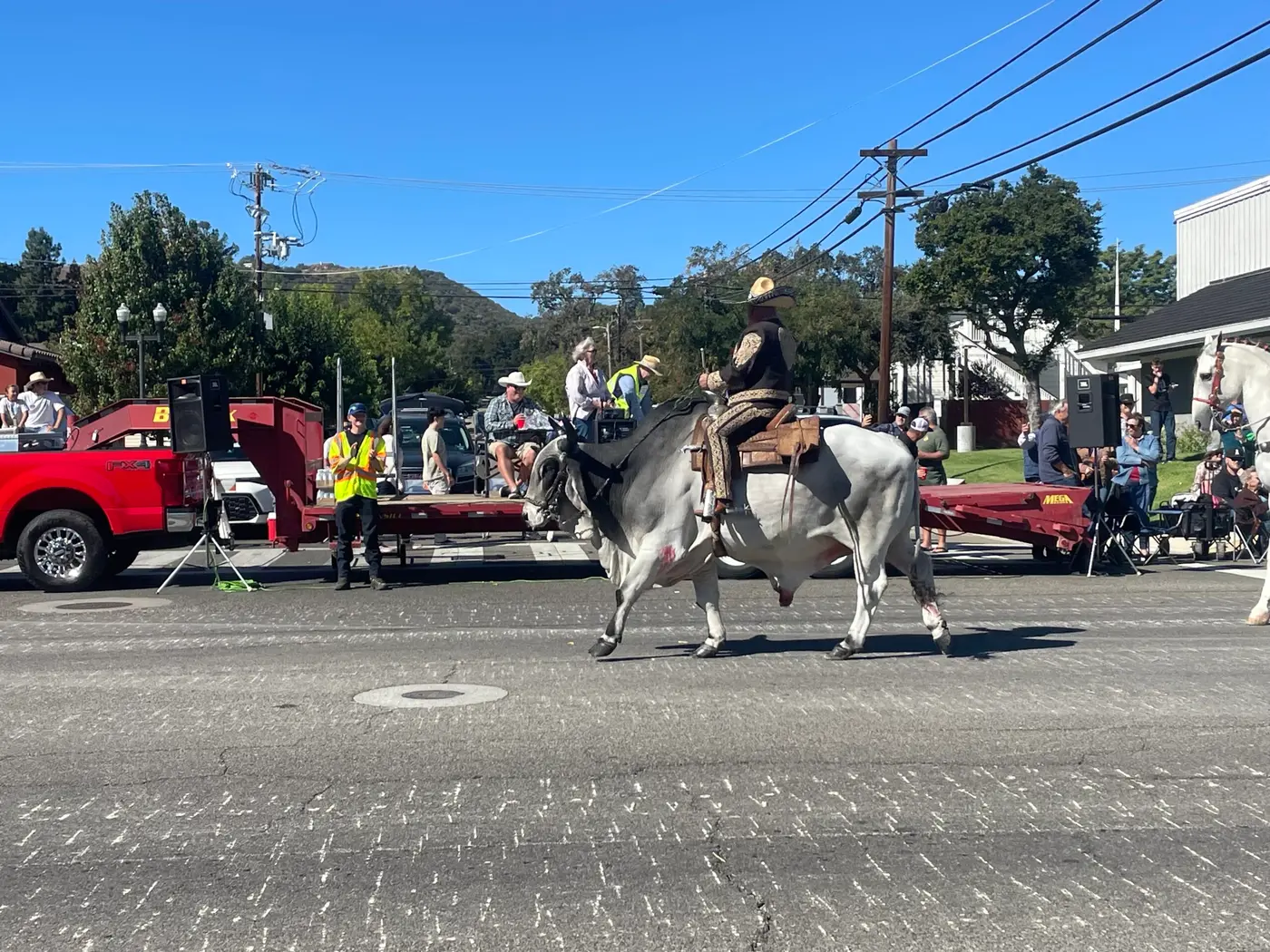
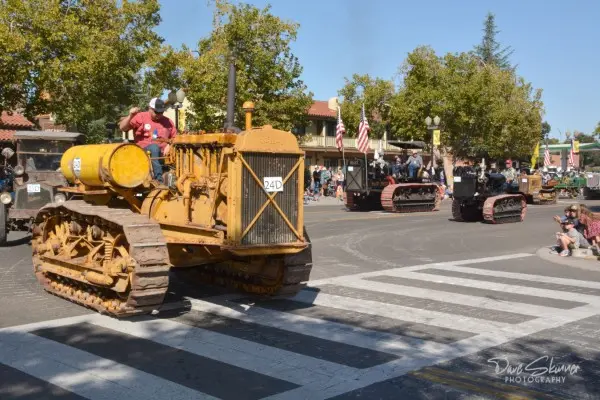
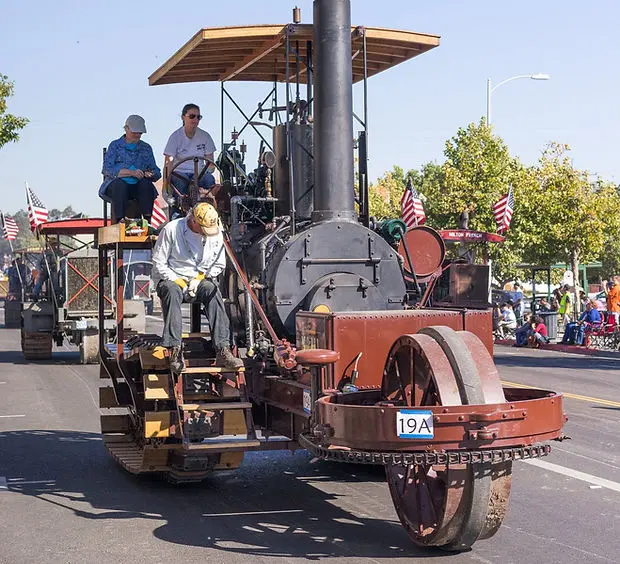
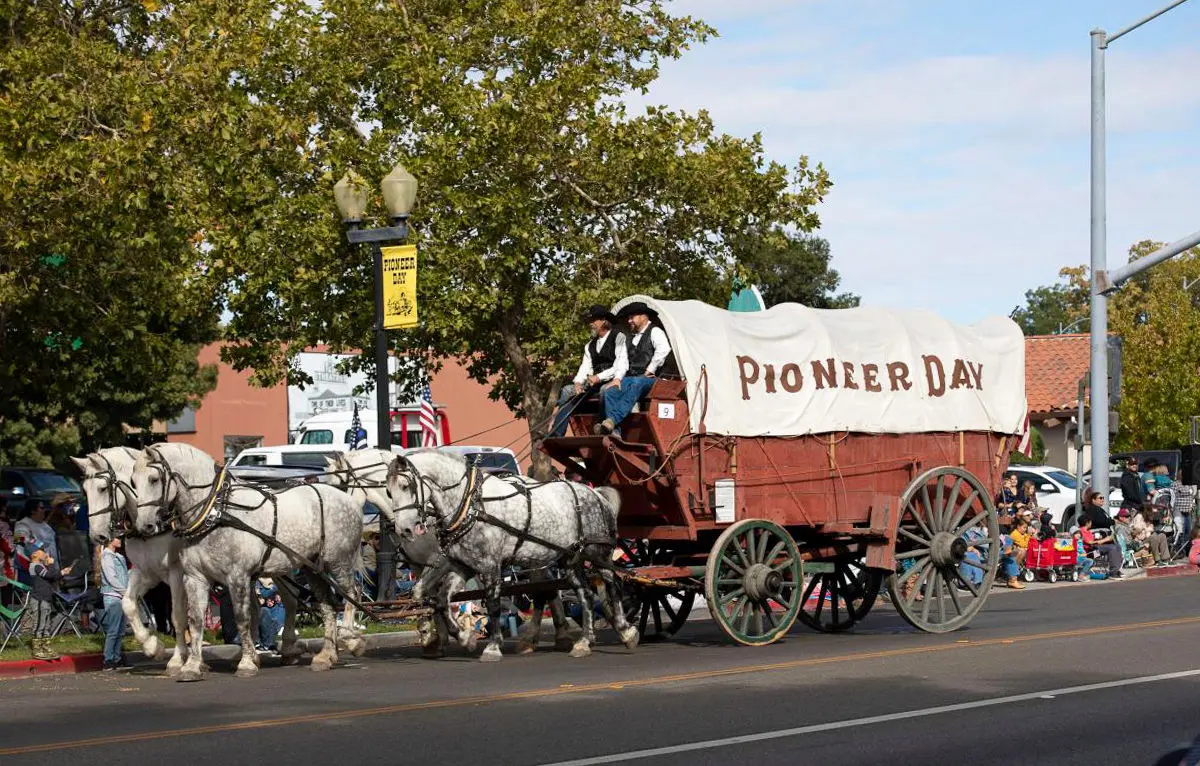
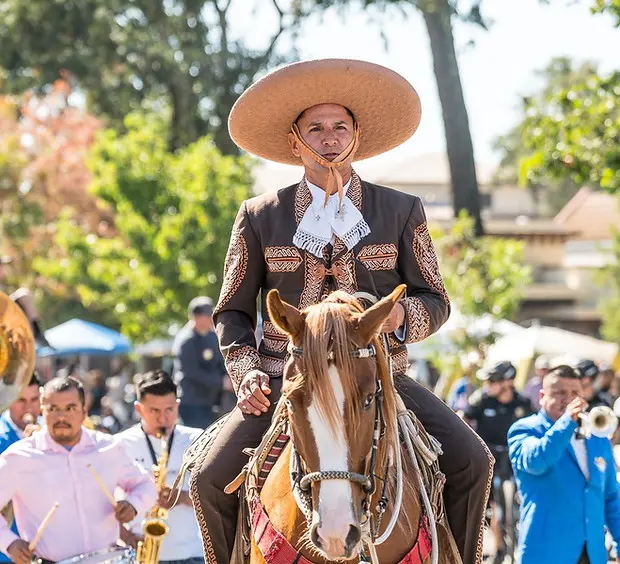
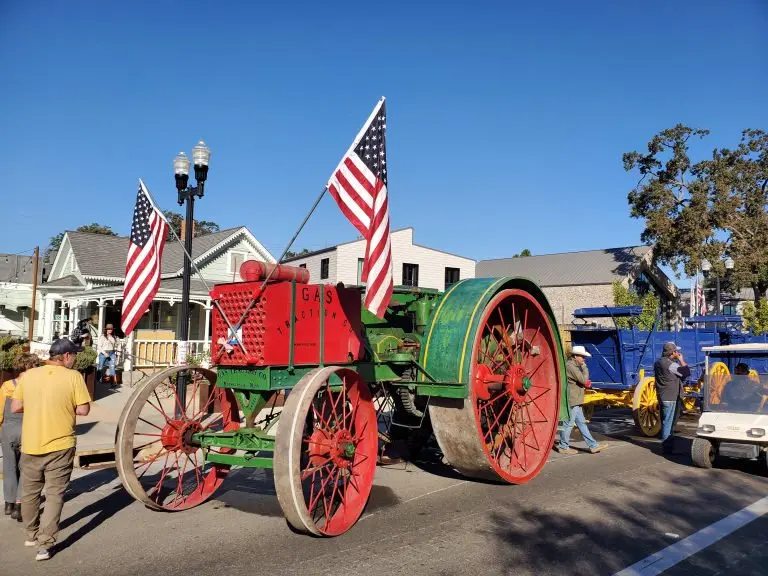
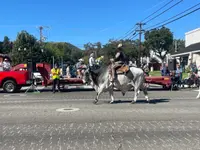
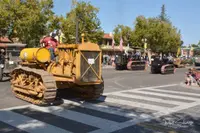
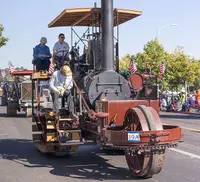
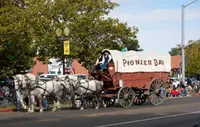
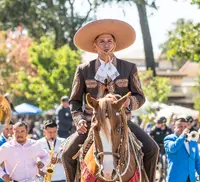
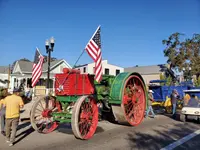
At ten the parade starts at 16th and Spring Street, comes down Spring, and ends around City Park. Organizers advise lawn chairs, hats and sunscreen. The line carries running antique tractors, horse-drawn wagons, marching bands, mounted equestrian groups, dancers, youth, church and civic groups, floats, vintage cars, fire engines and military vehicles. The committee’s parade page adds: “Oh - and did we mention tractors?!?” Part of what its September kick-off party raises goes to maintain and restore “the fine tractors, wagons and other equipment that belong to your Community.”
Royalty leads the 2026 parade: Marshal Steve Hansen, Queen Cheryl Wilshusen-Savage and Belle Abigail Johnson. The Belle Attendants the committee introduced that September include Kaci Carlson, Clarah Brown, Kylie Hurl, Bailey Bojorquez of the Hog Canyon area, Sienna Molina and Lylah Malone. The last two are kin to Elizabeth “ByBy” Root, one of the original Barbary Coast Girls. She was Sienna’s great-grandmother and Lylah’s great-aunt. The committee says the Ladies of the Barbary Coast were known for colorful costumes and a lively presence and became a longtime part of the celebration. Nearly 500 volunteers work the parade, the tractor and wagon displays, the gymkhana, the park and the museum each year, by the committee’s count.
Bill Culver graduated from Paso Robles High School in 1973 and came to the 93rd parade with classmates for their 50th reunion. “Most people come to town. It’s a party we spend all weekend gathering with our friends and it’s just a wonderful time because we all grew up together here,” he told KSBY. Emily Santiro, an FFA chapter secretary marching that year, said the parade gives clubs and organizations “more exposure so we know more about it.”
Whiskers, horseshoes and hay
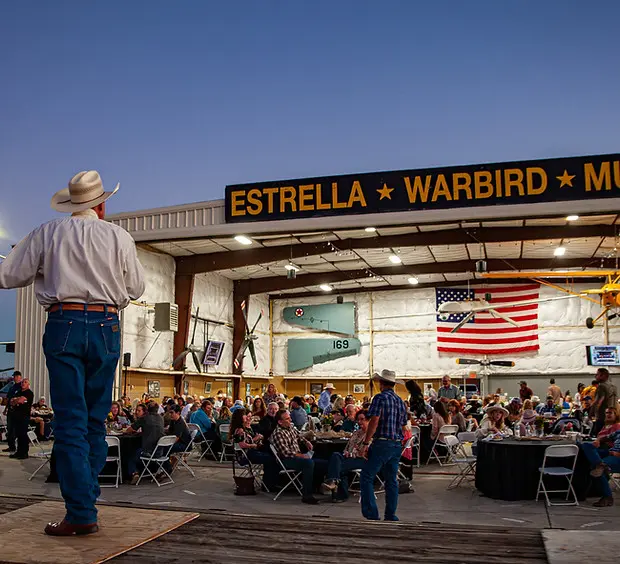
At noon the free bean feed is served in City Park, and the Carnegie Library & Historical Museum opens there. The park dates from the years after the town’s incorporation in 1889, when it was fenced by a hedge of cacti. A bandstand followed in 1890, paid for with money raised by private theatricals. At the same hour, out at the Pioneer Museum grounds at 2010 Riverside Avenue, an antique tractor and wagon display and a vintage engine show open. The Whiskerino Contest is at 12:30 in the park, and horseshoe pitching starts at one.
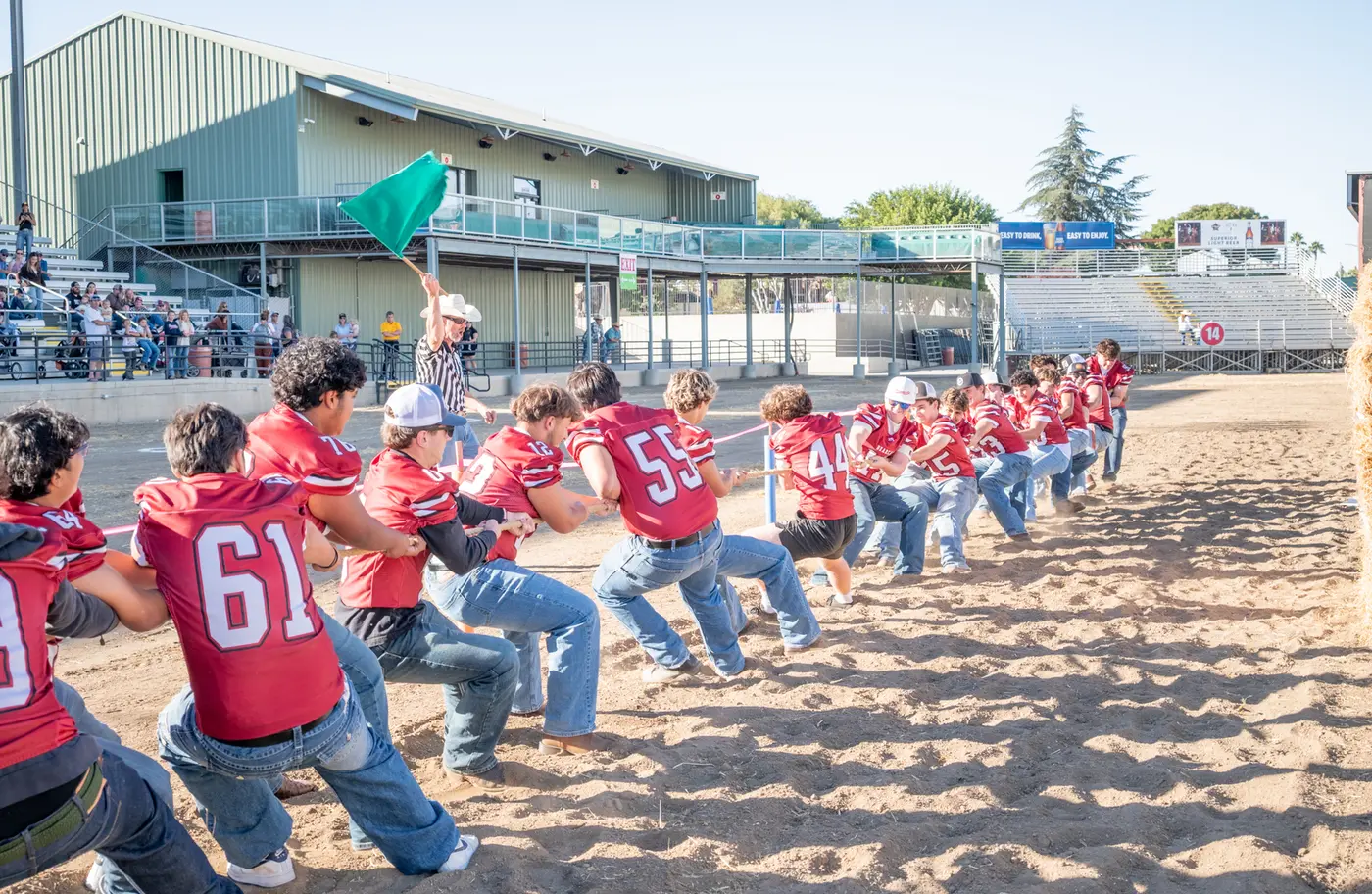
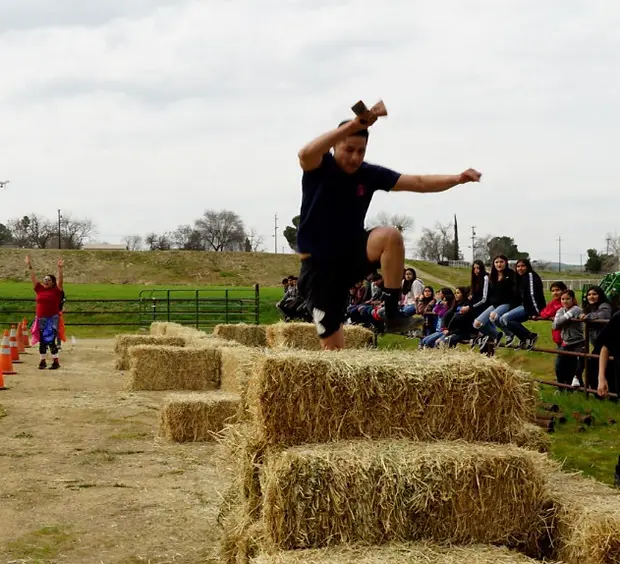
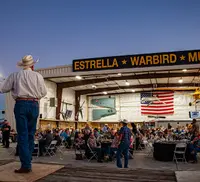
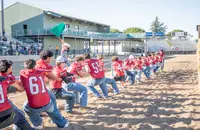
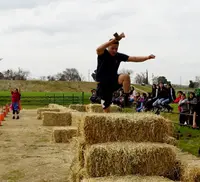
The Gymkhana is held at the Paso Robles Event Center. The committee’s parade schedule and its Facebook page put it at 1 p.m., while its events listing gives noon to 2 p.m. At three the Pioneer Games take the same grounds. The program lists a bale wagon “Haro-Bed” race, a hay hurdle relay, a celebrity tractor tire race, a hay stealing contest, an antique car potato race, a women’s truck and horse trailer backing contest, tug-of-war, a tractor stake race and a crawler tractor keyhole race. The committee advertised the 2026 games with “No sports. Just games.”
The Smooth Puss and the Hoosegow
The committee’s account of this custom goes back to the early days. Most of the area’s farmers, cowboys and ranchers wore beards, while the town’s merchants were generally clean shaven. In the month before Pioneer Day the merchants let their facial hair grow, as a token of respect and to show camaraderie with the farmers and ranchers. Anyone along the route who chose not to grow a beard could buy a “Smooth Puss” badge and be exempt from the penalties. On parade day a wagon called the Hoosegow worked the route looking for clean-shaven men without one. A man who was caught was locked inside, paraded around the route, and afterward taken to City Park and dunked in a horse trough.
The trough has been dropped. The Hoosegow has not, and a man with a smooth face and no badge can still be locked up and paraded. The badge has cost $1 for nearly 30 years. It is sold along the route and by committee members, and its sales have helped pay for Pioneer Day for many years.
October 12, 1931
The first Pioneer Day was held on October 12, 1931. Community volunteers organized it with donations of time, materials and money from individuals, businesses, churches and service organizations. They meant it as a day of community friendship and a commemoration of the area’s heritage. It was also to be a “Thank You” from the business and professional community to the people who supported it through the year. Most businesses closed so that employees could join in and hold family reunions. There were to be no charges for any event, no commercial concessions, and lunch at no cost. The committee still prints the motto “Leave Your Pocketbook at Home,” and by its own account the day “continues to occur almost as it was originally intended.”
The Paso Robles Advertiser of October 14, 1931, reported that the first one “brought more real pioneer material to Paso Robles than it was thought possible or expected.” The fire department, the “city dads” and the new municipal band led off. A float from the Parent-Teachers and the schools showed primeval Paso Robles as a woodland scene, with a deer beneath a tree and children dressed as flowers and butterflies. Sid Bretherton posed as the mission priest on the Indians and Padres float. On the Spanish Reign float, built by the city’s women’s organizations, the riders sang Spanish songs as it moved. Mr. and Mrs. Glenn Hartranft rode the covered wagon float as a pioneer couple moving their household and children “west.”
About 75 horses were in the line. Frank Reasons of Santa Barbara, who had been raised in the district, rode a black and white spotted Arabian under an expensively mounted saddle. William Jefferey of Salinas came in Spanish costume on a palomino. Ed Bermingham drove 14 mules drawing three wagons. The McMillan brothers of Shandon entertained the crowd with a burro and a Shetland pony through the afternoon. Ray Pelton drove an ox team that had stopped in Paso Robles on its way south. Ray Hays rode a 1905 motorcycle. The section given to modern Paso Robles brought the float of the first Belle, Ann Casper, made up in white and red, with her attendants Hazel Ernst, Elizabeth Hibbard, Bee Glass and Olive Street. The San Luis Obispo Fife and Drum Corps and the marching Paso Robles Legionnaires followed it.
Henry Boulware, owner of the Paso Robles Pharmacy, filmed the parade during the 1930s. His footage, edited by Karl Von Dollen, is posted on the committee’s parade page.
The 1931 prizes went to Miss Olive Adams for best decorated car, to Mrs. Ernest Still of Annette for best-equipped horse and lady rider, and to Bermingham’s team for most interesting old-time entry. Pete Daniels of Estrella won best-equipped horse and man rider. Special honorable mention went to Mrs. Pete Daniels, who rode sidesaddle on leather equipment she had made herself.
Notable Events
- 1886Two weeks after the first train arrived on October 31, 1886, a three-day celebration was held for prospective land buyers arriving from San Francisco, who toured the area and enjoyed daily barbeques. prcity.com
- 1889Paso Robles became incorporated in 1889 and improvements in city services became a reality. prcity.com
- 1931On October 12, 1931 the first Pioneer Day Parade was held Downtown Paso Robles. It is an annual event to say "thank you" to those who support businesses throughout the year and celebrates Paso Robles' rich history of farming, agriculture, and more. ksby.com
- The Pioneer Day Parade is one of Paso Robles greatest celebrations and oldest traditions. Hundreds of people came together and year after year they keep coming back. ksby.com
People
- Bill Culver, 1973 Paso Robles High School graduate; long-time Pioneer Day parade attendee (1973 graduate).
- Emily Santiro, FFA Chapter Secretary speaking about the Pioneer Day parade (parade participant).
- Tony Domingos, Pioneer Day parade participant supporting farmers (parade participant).
- Ann Casper, Belle of the first Pioneer Day Parade (Belle).
- Ed Bermingham, Pioneer Day 14-mule team driver (mule team).
- Glenn Hartranft and wife, Pioneer Day covered wagon pioneers (covered wagon ride).
- Sid Bretherton, Pioneer Day mission priest on the Padres and Indians float (Padres and Indians float).
Sources
- pasoroblespioneerday.org
- pasoroblespioneerday.org/parade
- pasoroblespioneerday.org/events
- pasoroblespioneerday.org/gallery
- pasoroblespioneerday.org/press
- kprl.com/annual-pioneer-day-parade-next-week-10-02-2026
- pasoroblesdailynews.com/hitch-up-the-wagons-pioneer-day-parade-returns-oct-10/223982
- pasoroblespioneerday.org/about
- pasoroblespioneerday.org/contact
- pasoroblespioneerday.org/events-1/gymkhana-2
- pasoroblespioneerday.org/events-1/pioneer-games-2
- pasoroblespioneerday.org/events-1/pre-pioneer-day-kick-off-party-3
- facebook.com/pasorobles.pioneerday