Palouse Empire Fair
Colfax, Whitman County, Washington. Agricultural fair.
Details

- Where
- 310 North Main Street, Colfax, WA 99111. Directions
- When
- Last held September 10–13, 2026; next year’s date not yet stated.
- Fees
- 4-day wristband: youth $10, adult $25; daily admission: under 5 free, youth $5, senior 55 and over $10, adult 18 and up $15; carnival wristband $25 pre-fair, $30 during fair.
- Hours
- Thursday-Saturday 8:00 AM - 9:00 PM; Sunday 8:00 AM - 4:00 PM.
- Access
- Whitman County Sheriff's Posse parking attendants on horseback; handicap, motorcycle and judge parking near the main gate with signs; parking is free.
- Walk-in or reserve
- Purchase admission wristbands and day tickets at the gate!
- Phone
- 509.397.6263
- Managed by
- Whitman County.
- Established
- 1887.
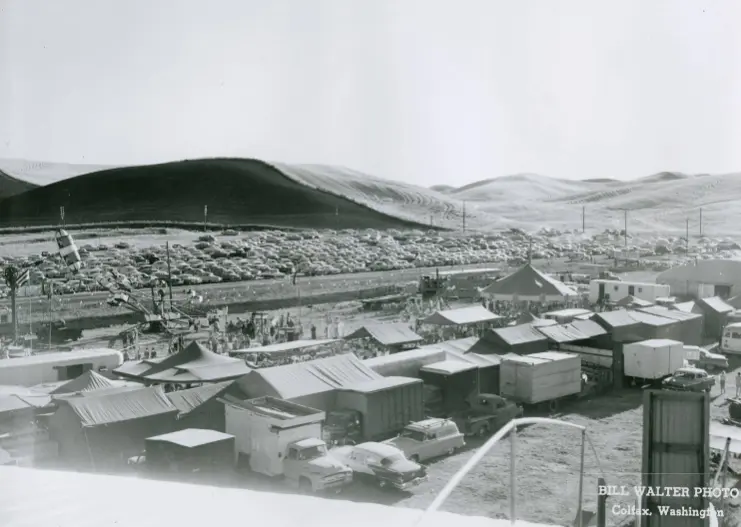
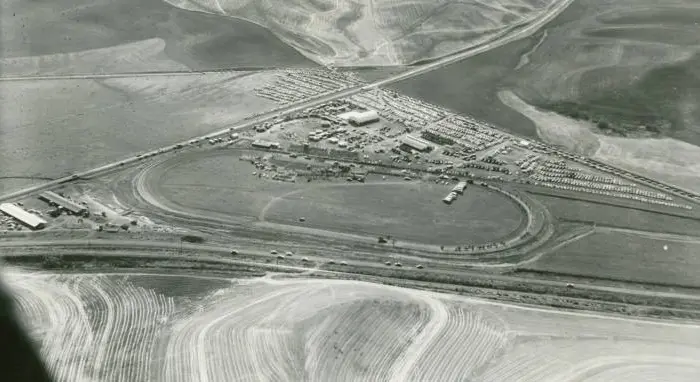
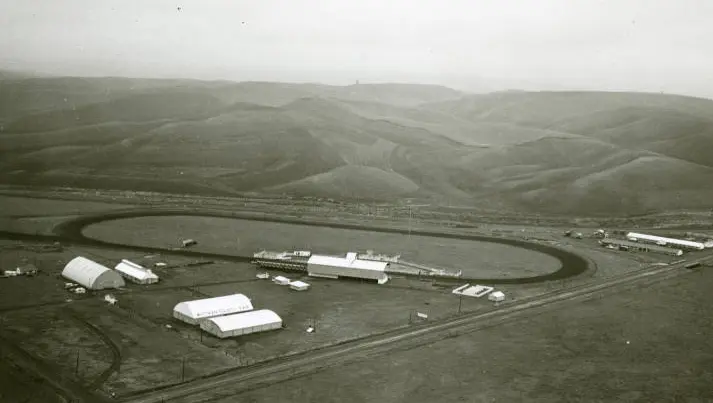
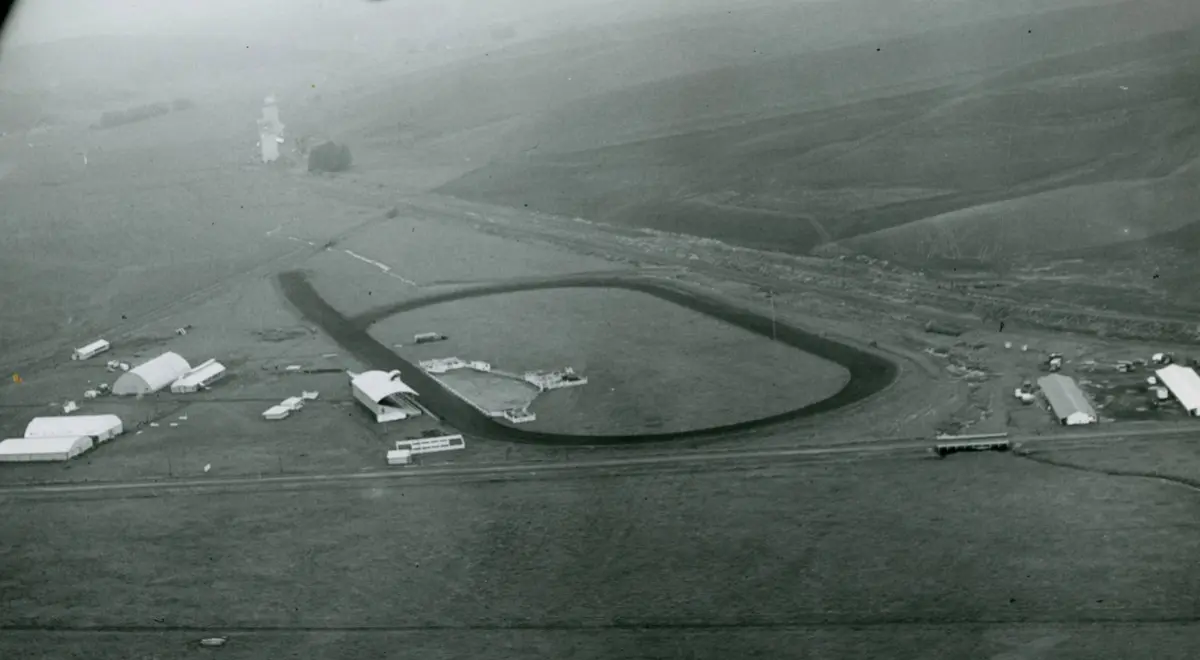
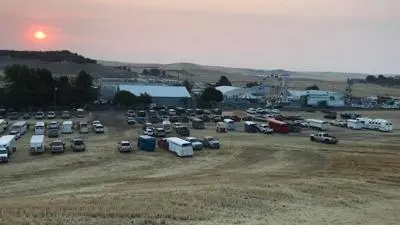
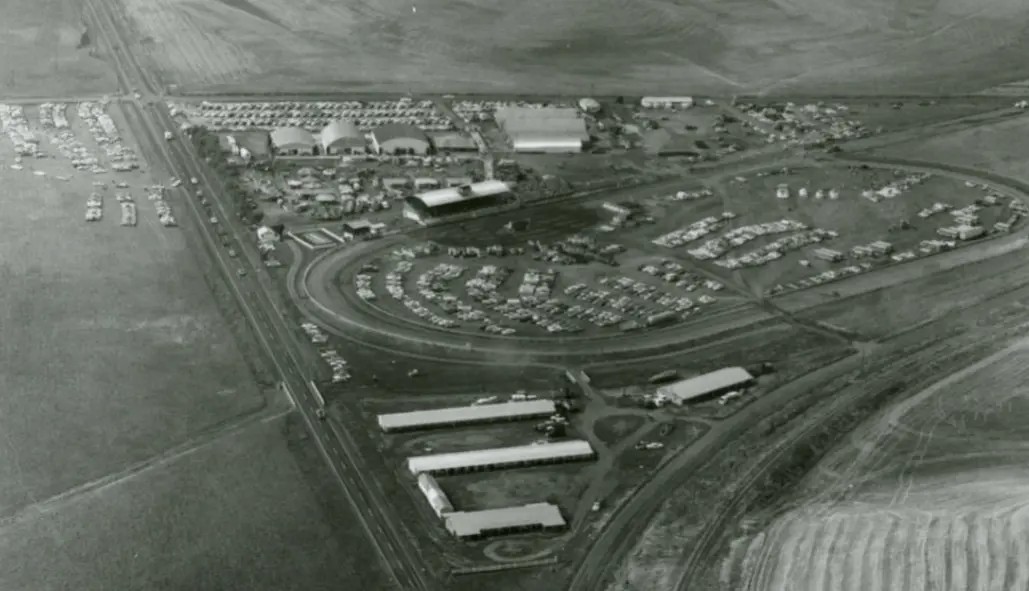
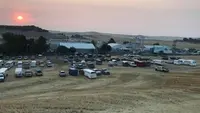
On fair days the parking attendants of the Palouse Empire Fair ride horses. The Whitman County Sheriff’s Posse works the general lot on horseback and steers cars to open spaces. Parking is free. Spaces for the handicapped, for motorcycles and for the judges are signed near the main gate. Rodeo contestants park behind the warm-up arena and the rough stock pens, and exhibitors’ livestock trailers go to a crop field off Fairgrounds Road. The grounds lie four miles west of Colfax, where State Route 26 meets the Endicott road, on land Whitman County has owned since 1949.
Rodeo, midway and the junior sale
The fair runs Thursday through Sunday in the week after Labor Day. The 2026 fair ran September 10 through 13. Gates opened at 8 a.m. and closed at 9 p.m., except on Sunday, when the fair ended at 4. Fair admission covers the rodeo. The carnival on the midway sells its own wristbands and opens at 3 p.m. on Thursday and at 11 a.m. on the other days. In 2021 the Daily Evergreen of Pullman reported that more than 21,000 visitors come into Colfax each year for the carnival rides, the 4-H presentations and the Future Farmers of America animal showings.
The rodeo is staged with the Palouse Empire Rodeo Association. Its 2026 queen was Caterina Carlson, who followed Bri Rasmussen, the 2025 queen. The funnyman for 2026 was Zach Cook, called “Cookie,” and Bull Demers announced. An entertainment lineup is booked for the grounds stage each year.
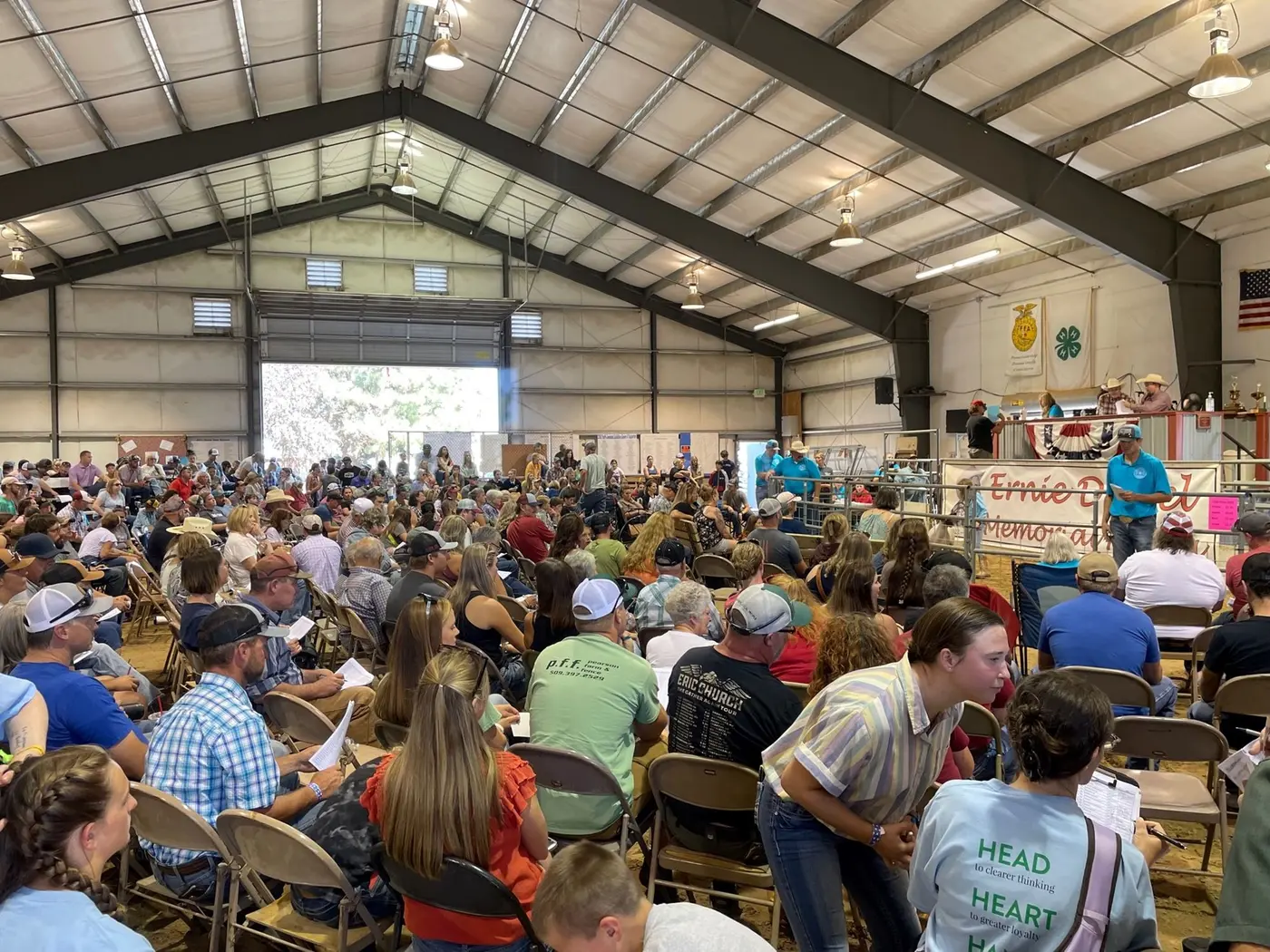
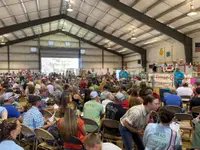
Across the grounds the young exhibitors show their stock, and the junior market animals go to auction. In 2026 the sale went goats, then sheep, swine and beef, with 4-H members selling first and FFA members after them. Lola Baerlocher, president of the C.U. There 4-H Club, had shown rabbits and goats for seven years by 2021. “It’s not just an opportunity for me to exhibit; it’s also an opportunity to see what other people are exhibiting and to see some friends that I maybe only see once a year,” she told the Evergreen. Her mother, Dawn Baerlocher, a leader of the club, described the work this way: “We try to set it up so that they learn how to run or operate a small business. Truly, it’s no different than most agricultural endeavors, where you just got to roll with it sometimes.”
The Jones Schoolhouse also stands on the grounds. It was built in 1895 near Dusty as School No. 146 and taught grades one through eight until 1942. From 1945 to 1998 it was the home of the Dusty Busy Bee Club. In 2010 the fair board and staff, the county commissioners, the Palouse Empire Fair Foundation and the Whitman County Historical Society moved it to the fairgrounds. During the fair it gives twenty-minute lessons in “Mental” Arithmetic, Penmanship, Poetry, Science, and Washington, U.S. and World Geography. The historical society states that, as in 1895, “strict discipline in the classroom is maintained at all times!”
A race track by the North Palouse River
The fair’s history was compiled from newspaper articles by Berniece Krom of Colfax. It opens with a line: “Agriculture is the most important resource of this area and so it was that a Fair was considered.” The Colfax paper discussed a fair as early as 1882. The Whitman County Agricultural Fair Association was not organized until April 1887. David March, F.M. Wade, Alfred Coolidge, James A. Perkins, C.P. Sullivan and Sid Benton drew up its rules and by-laws. The association set its capital stock at $20,000, which it judged enough for “a park, race course, and buildings that the County would be proud of.”
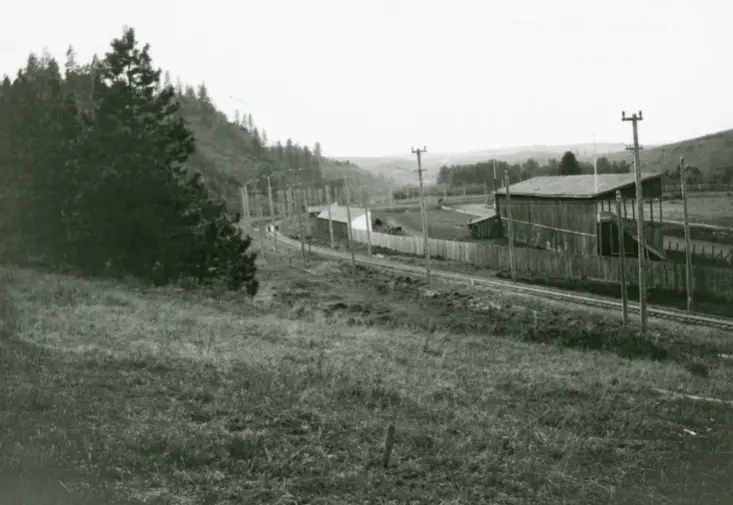
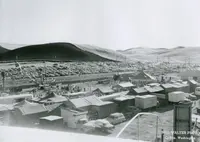
That summer a bridge was built across the North Palouse River to a fairground on the river’s north side, about a mile from Colfax. The grounds had a half-mile race track and a stable fourteen feet by six hundred with sixty stalls. A reservoir in Wood’s Gulch was piped in for water. The first Whitman County Fair opened on October 4, 1887, and ran five days. More than 2,000 people came to see rare collections, flowers, livestock, harness and saddlery, vegetables, fruits and needlework.
For many years the fair was a five-day October event. In 1888 there was a balloon ascension and a parachute jump. In 1899 the fair was free, and the crowd was especially large. In 1901 an excursion train ran from Tekoa to bring schoolchildren from Tekoa, Farmington, Fairfield and Elberton. The first carnival came in 1903. There was no fair in 1905, because of the Portland Exposition, and horse racing was held instead. In 1907 Colfax stores closed from 1 to 5 p.m. for the Friday horse parade, and prize apples went east to the Boston Fair.
The flood of 1910 nearly destroyed the fairgrounds along with much of the town. They were rebuilt “bigger and better than ever!” That winter W.R. (Rollie) Goodrich and his father lived in the quarters used in season by the racing trainers and jockeys while they repaired the eight-foot wooden fence around the grounds. In summer they moved into a tent. By 1911 the weekly Commoner reported the grounds in perfect condition, with straw spread on the wagon roads to keep down the dust.
Borrowed ground, 1912 to 1948
Over the next decades the fair lost ground. Bad weather put it $700 in the red in 1913. In 1915 and 1916 the Boys and Girls clubs, forerunners of 4-H, began showing in their own towns, and the county fair split. In 1917 L.L. Bruning, the assistant fair manager, raised all the money for the youth prizes himself and brought the exhibits back. In 1918 the Health Department closed all public meetings a few days before opening, because of the influenza epidemic. In 1919 the Colfax-born Hollywood stuntman Yakima Canutt headlined a “Wild West” show. One of the worst dust storms of the year peaked two hours before the gates opened.
In 1921 the Colfax businessmen held a Harvest Carnival in place of a county fair. It had floats, boxing, a style show, baseball, a rodeo, a tented dance floor seventy by one hundred forty feet, and an $800 automobile given away. Ten thousand people came. The next year the LA LA PALOUSER moved to Schmuck Park, which was on a paved street, partly to get away from the dusty roads of the old fairground. In 1924 the farmers asked for their county fair back, and the directors voted 9 to 2 to move it to Garfield. It stayed there through 1929. In 1930 Garfield gave it up for lack of money, and through the Depression the 4-H clubs kept small fairs going.
The fair came back to Colfax at the “Round Up” grounds at the south end of Schmuck Park. Grange booths stood under the grandstand, and indoor exhibits were shown in the high school. In 1938 Bruning, then president of the fair board, wrote to thirty-four communities for floats. Governor Clarence Martin was invited to speak, more than 4,000 attended, and FFA joined 4-H in exhibiting. Gas rationing cut the fair back during the Second World War. By 1946 it had recovered, with 7,500 in attendance. Every Whitman County Fair through 1948 had been held on borrowed or rented property.
Thirty-five acres of sod
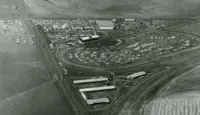
In 1949 R.H. Morrell, Hugh Huntley and Charles McSweeney found the present site. That April the county bought 35.22 acres from Art Jensen, land described as practically level and all in sod. By August the first building was finished, sixty by one hundred feet with a concrete floor. It is now the Display Building, and that first year it held commercial exhibits and Grange grain mosaics. The rest of the fair was held in tents. The office was set up in the Colfax Gun Club, home economics was shown in the high school gymnasium, and the flower show was arranged around the swimming pool.
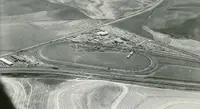
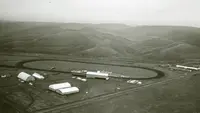
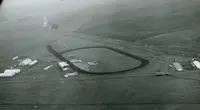
The next year the Mockonema Downs race track opened, and more than 10,000 people came to the fair, the largest attendance up to that time. The grandstand, which seated 1,800, was bought from the Spokane Indian Baseball Park. Residents bought enough ten-year seats in advance to pay two-thirds of its cost. Cattlemen raised the money for the first cattle barn, and the swine and sheep breeders built their own. Troy Lindley, the county agent and fair secretary, wrote in 1954 that the fair had become “everybody’s business.” In 1953 the fair took the name Palouse Empire Fair, and booster buttons were sold in place of tickets.
Patience, and the fair since
The fair became a four-day event in 1963. That year the Don Morton family won the first Palouse Empire Farm Family contest. In 1968 Jerry Jones, an artist for the Whitman County Gazette, drew a pink cow to liven up the year’s posters. She rode on the Garfield float and took the name Patience from the float’s designer. She has been the fair’s trademark ever since. In 1970 Doris Ensley of Colfax designed and built a concrete Patience. The same year, Leslie Shahan was crowned in the first Rodeo Queen contest. In 1981 a Threshing Bee was added, and a blacksmith show opened. On January 26, 1987, the county commissioners let a contract to tear down the old grandstand. That August the county bought the Spokane Grand Prix bleachers for $30,000.
The pandemic canceled the fair in 2020. It returned in 2021 under the theme “Back in the Saddle.” Fair Manager Janel Goebel said the organizers had picked the title partly as a joke. They were holding “Back in the Saddle … Again” in reserve in case the 2021 fair was canceled as well. “That’s kind of what happens when you’re a part of the Emergency Management department,” Goebel said. “We’re always planning out as far as we can.”
Notable Events
- 1887The first Whitman County Fair opened on October 4, 1887, and lasted for five days; over 2,000 people enjoyed the exhibits. cdn.saffire.com
- 1949In August the first 60' x 100' building with concrete floor, now the Display Building, was completed, and the Fair was held on the uncompleted grounds with tents. cdn.saffire.com
- 1949In April, 1949, 35.22 acres were purchased from Art Jensen at the junction of SR #26 and the Endicott road; the purchased land became county property. cdn.saffire.com
- 1953The Fair management under the name of Whitman County Fair received a new name, becoming the PALOUSE EMPIRE FAIR; booster buttons were sold in place of tickets for the three-day fair. cdn.saffire.com
- 1963The Fair became a four-day event with exhibit buildings open and the arena show on Sunday afternoon; carnival rides ran through the four days in the midway area. cdn.saffire.com
- 1963The first Palouse Empire Farm Family contest was held in 1963, won by the Don Morton family. cdn.saffire.com
- 1968A Pink Cow character appeared on the Fair's publicity posters; Whitman County Gazette artist Jerry Jones created the beast to spice up that year's posters. cdn.saffire.com
- 1970A concrete sculpture of Patience, the Pink Cow, was designed and constructed by Doris Ensley, Colfax. cdn.saffire.com
- 1987On January 26, 1987, the County Commissioners awarded a contract for the demolition of the grandstands; the Spokane Grand Prix bleachers were purchased for $30,000 in August of that year for seating. cdn.saffire.com
- 2010The building was moved to its present site by the combined efforts of the Palouse Empire Fair Board and staff, the Whitman County commissioners, members of the Palouse Empire Fair Foundation, and the Whitman County Historical Society. whitmancountyhistoricalsociety.org
- 2021The Palouse Empire Fair is set to start Sept. 9, after the pandemic led to its cancelation last year. dailyevergreen.com
People
- Doris Ensley, designed and constructed the concrete sculpture of Patience, the Pink Cow.
- Jerry Jones, Whitman County Gazette artist who created the Pink Cow that became a Fair trademark.
- Alfred Coolidge, appointed to the committee that planned the rules and by-laws of the Whitman County Agricultural Fair Association.
- Art Jensen, sold the fair association the 35.22 acres that became the permanent fairgrounds (1949).
- C.P. Sullivan, appointed to the committee that planned the rules and by-laws of the Whitman County Agricultural Fair Association.
- Charles McSweeney, found the permanent fair site four miles west of Colfax.
- David March, appointed to the committee that planned the rules and by-laws of the Whitman County Agricultural Fair Association.
- F.M. Wade, appointed to the committee that planned the rules and by-laws of the Whitman County Agricultural Fair Association.
- Hugh Huntley, found the permanent fair site four miles west of Colfax.
- James A. Perkins, appointed to the committee that planned the rules and by-laws of the Whitman County Agricultural Fair Association.
- L.L. Bruning, Assistant Fair Manager who raised the money for the youth prizes (1917).
- R.H. Morrell, found the permanent fair site four miles west of Colfax.
- Sid Benton, appointed to the committee that planned the rules and by-laws of the Whitman County Agricultural Fair Association.
- Troy Lindley, County Agent, Secretary and general advisor for the Fair.
- Dawn Baerlocher, one of the leaders of the C.U. There 4-H Club (2021).
- Janel Goebel, Fair Manager (2021).
- Lola Baerlocher, president of the C.U. There 4-H Club and seven-year fair exhibitor (2021).
- Berniece Krom, researched and compiled the fair's published history from newspaper articles.