
Artesian Well
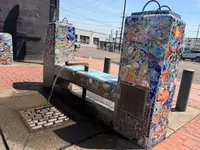
Olympia, Thurston County, Washington. Free-flowing artesian well.
Details

- Where
- 415 4th Avenue East, Olympia, WA 98501. Directions
- Getting there
- Between 4th Avenue E and Jefferson Street (former Diamond Parking Lot), downtown Olympia.
- Fees
- Free public drinking water.
- Access
- The park around the well is fenced; the well is accessible from the alley behind the park, between Fourth and Fifth Avenues.
- Phone
- 360.709.2774
- Managed by
- City of Olympia.
- Established
- Reported constructed between 1895 and 1915 on the former railroad station site.
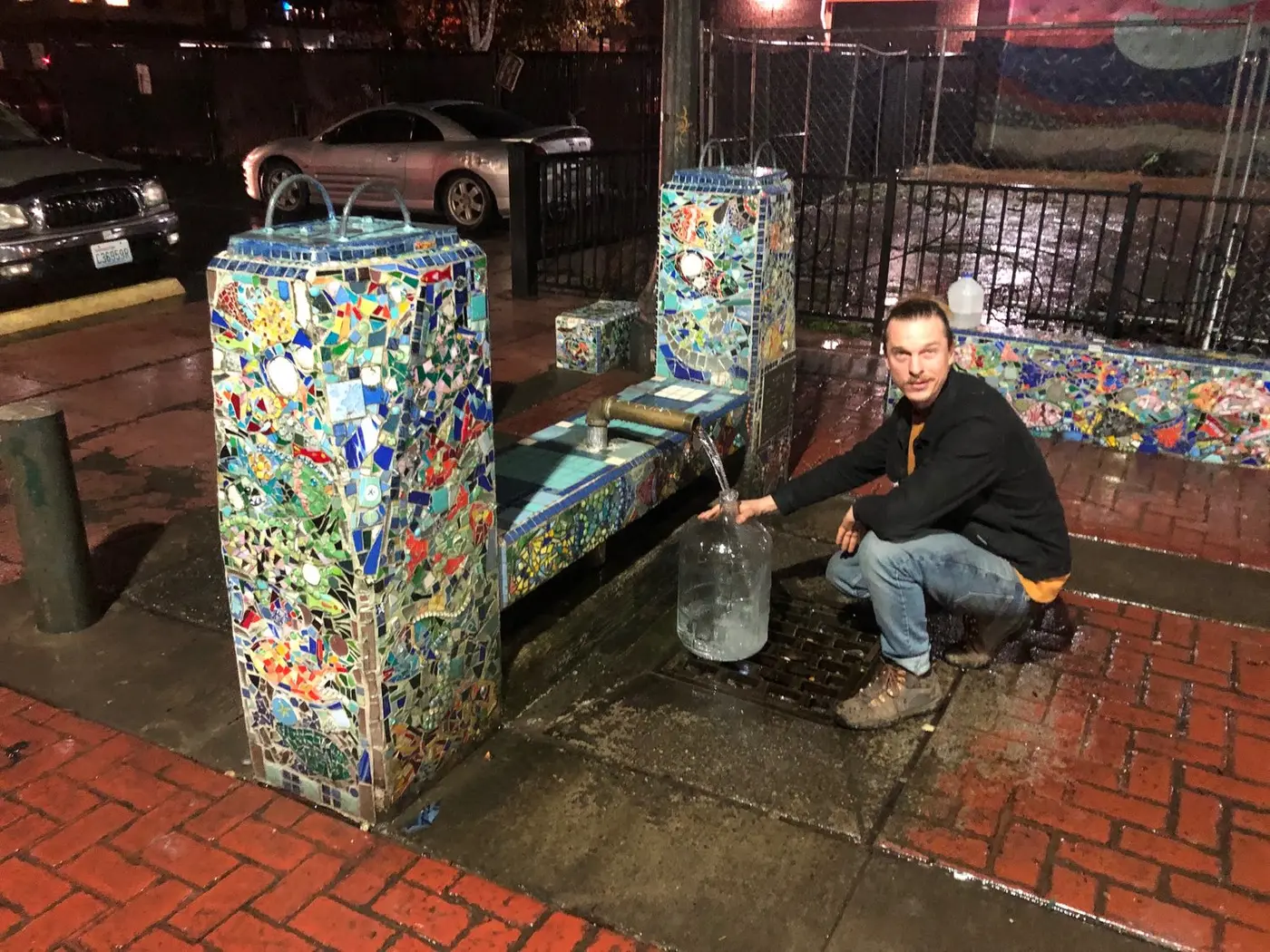
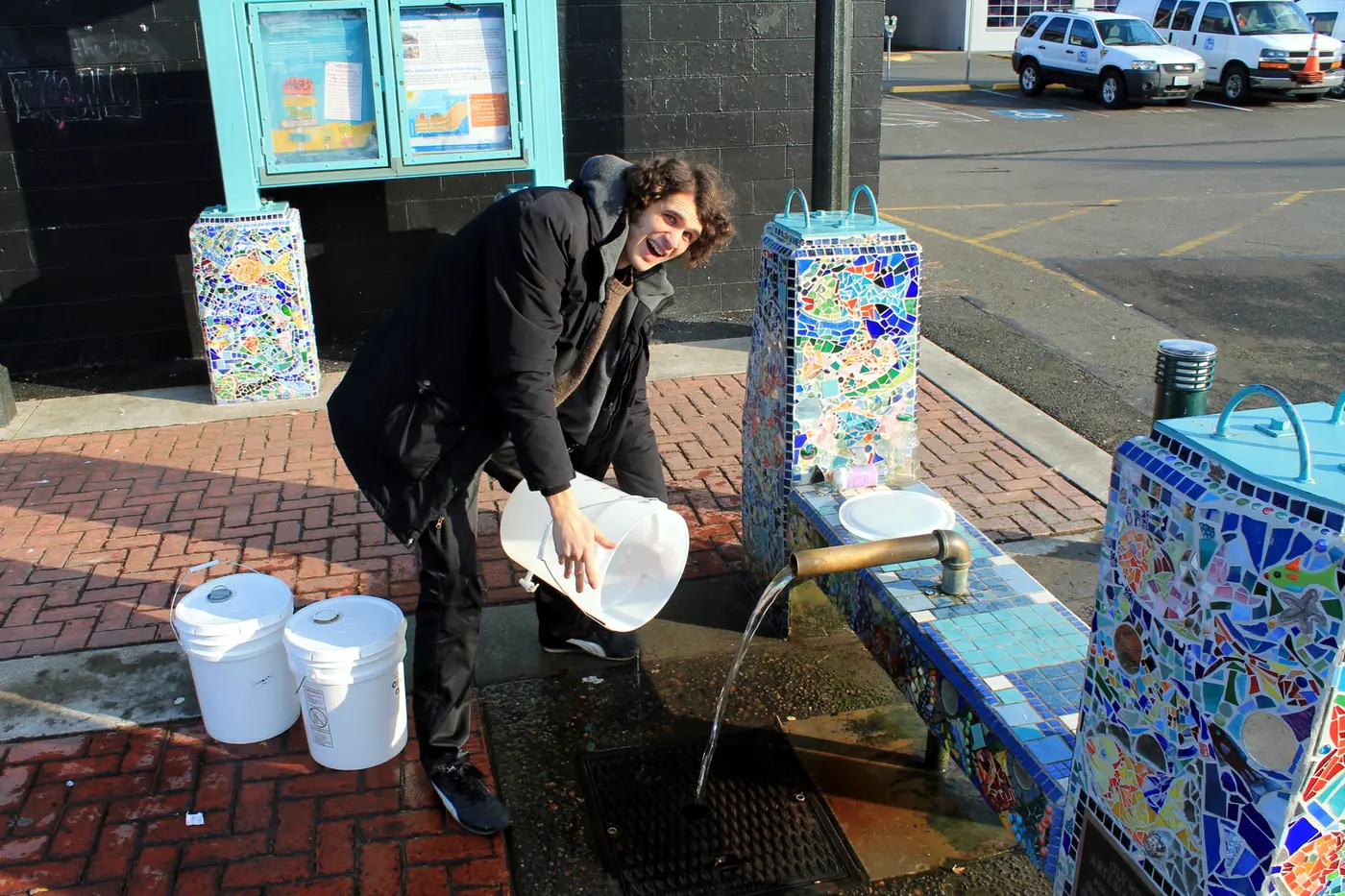
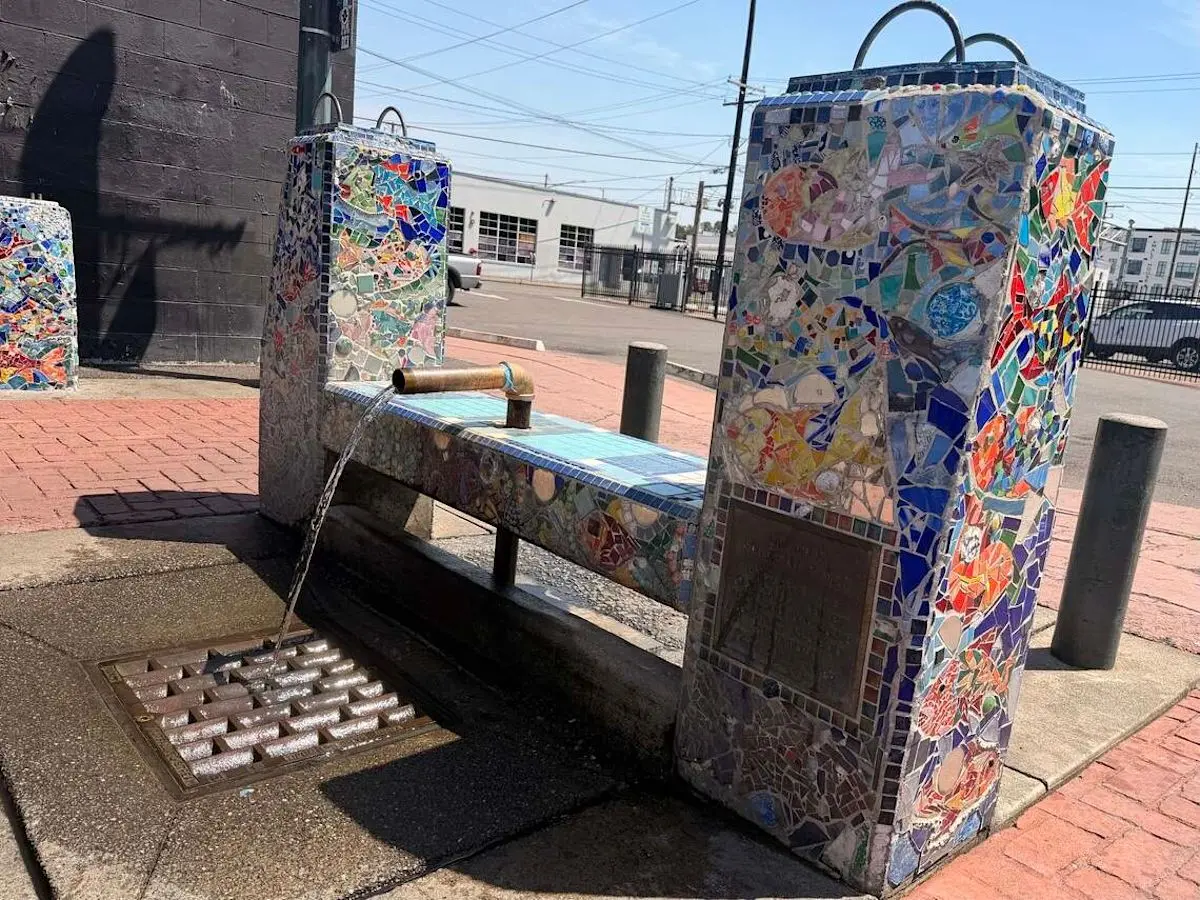
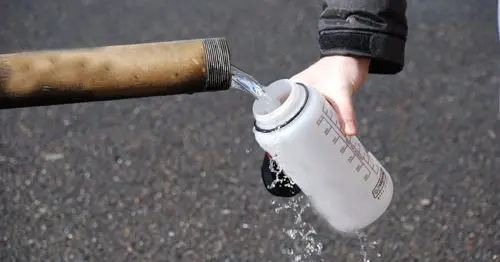
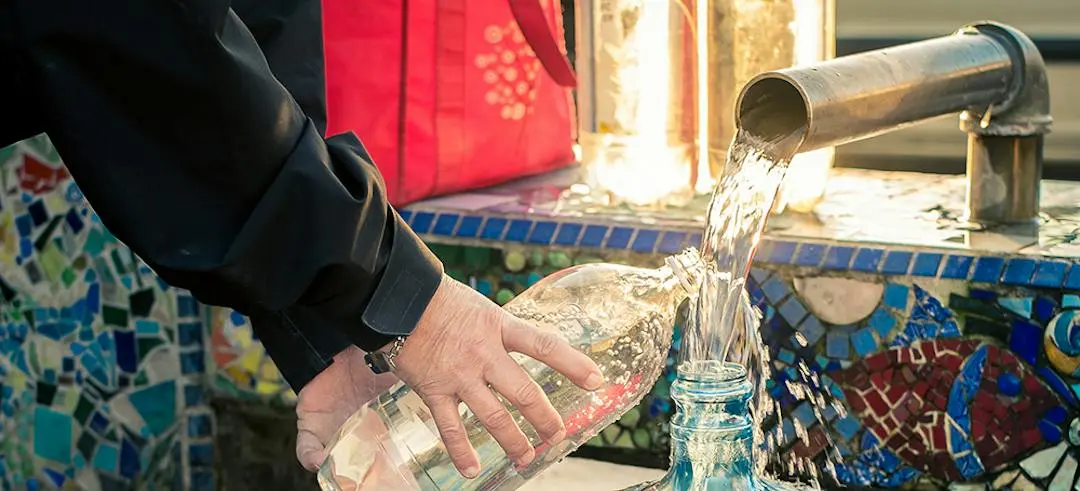
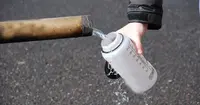
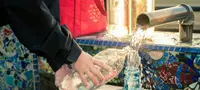
At 415 Fourth Avenue East in downtown Olympia, between Fourth Avenue and Jefferson Street Southeast, a pipe delivers water that rises to the surface under its own pressure. People come to it with bottles, jugs, and tanks. A January 2023 photograph in the JOLT News shows James O’Keeffe of Olympia holding his jug under the spout. The water costs nothing, and the City of Olympia keeps it running.
Behind the pipe lies a concrete pocket park of two-tenths of an acre, the Artesian Commons. The JOLT described it this way: “Like a scene from a New York police drama, Olympia’s downtown concrete park is surrounded by chain-link fences that keep would-be users out most of the time.” The well stands outside the fence and is reached from the alley behind the park, between Fourth and Fifth Avenues.
The city posts a manganese advisory for the well. Tests have found levels from 0.25 to 0.33 milligrams per liter, around the 0.3 mark at which the state Office of Drinking Water recommends public notice. The city says the water meets all state and federal drinking water regulations and does not enter the municipal system. It asks that the water not be used for formula or food for infants under six months. It also asks that the water not be boiled, because boiling leaves the manganese behind as the water evaporates.
An aquifer under downtown
“We have an artesian aquifer that underlies virtually the entirety of downtown Olympia,” Rich Hoey, the city’s public works director, told FOX 13 in 2019. According to the station, the water flows down from the Cascades between sloping layers of bedrock and collects minerals as it is filtered on the way. At one time some 100 wells flowed around the city and served as its primary water supply. The station counted more than 100 still flowing in 2019. “People really love the fact that you are tapping into naturally emerging water right out of the ground, so it has a bit of a magical quality in that sense,” Hoey said.
The Friends of Artesians, a local group, traces this dependence to 1845 and 1846. In those years settlers at what are now Olympia and Tumwater drew their water from artesian springs. A spring at Fourth Avenue and Main Street, now Capitol Way, served as the community well, and settlers gathered there to socialize. In 1885 the Talcott family drilled the first artesian well downtown, at their store on Capitol Way. Dozens more followed in the 20th century, partly in answer to the rising prices of the private water companies. The Olympia Historical Society lists other public artesian sites downtown over the years at the Chambers Block, Talcott’s building, and the Spar. The brewery’s motto was “It’s the water,” and the Friends recorded that 26 artesian wells supplied it. After Olympia built the McAllister Springs water system in 1949, most of the downtown wells were abandoned, capped, paved over, or forgotten between 1950 and 1995.
A merchant’s lot and a locomotive’s well
The ground at the Fourth Avenue well was the homesite of George Barnes, one of the first merchants in Olympia. He came to the town with his wife and his brother-in-law, John Miller Murphy, and built a Gothic style house on Fourth Avenue. “No doubt part of the attraction of this site for the Barnes family was the presence of good water,” the historical society writes. The house stood until the mid-20th century, when the historian Adah Dye photographed it in decay.
The sources give different dates for the well. The Friends of Artesians say it was drilled in 1915 to supply steam locomotives at an Olympia train depot. Experience Olympia reports that it was built between 1895 and 1915 on the former railroad station site. A 2013 ThurstonTalk piece says only that steam locomotives used it in the early 1900s. The well later served a grocery store, which has since been demolished. It then came to sit in the Diamond Parking lot. The Friends wrote of its “spontaneous eruption in the middle of a parking lot” and noted that it “predates every building that surrounds it.”
A psychologist and a parking lot
The effort to save the well began with talk of artesian water from Dick Batdorf, a co-founder of the Batdorf & Bronson coffee roasting business. That talk caught the interest of Jim Ingersoll, a local psychologist. In 1991 Ingersoll asked the city council to acquire the well and make it a community park. Herb Legg and John Robinson had spent years protecting the artesian wells at Olympia’s Watershed Park. Working behind the scenes, they placed an article in the Olympian on February 24, 1992, calling for public support. Afterward Ingersoll was flooded with phone calls offering time, talent, resources, and money.
In 1996 a group of residents formed the Friends of Artesians, with the long-term goal of building a small park around the well. Their studies in 1997 found the casing structurally sound and the water quality good. In March 1998 the state Department of Ecology found that the well did not meet state standards. It ordered Diamond Parking to make improvements or shut the well down by mid-April. On June 28, 1998, the Friends recorded that Diamond Parking had done none of the required work, and members said a new downtown well site might be needed.
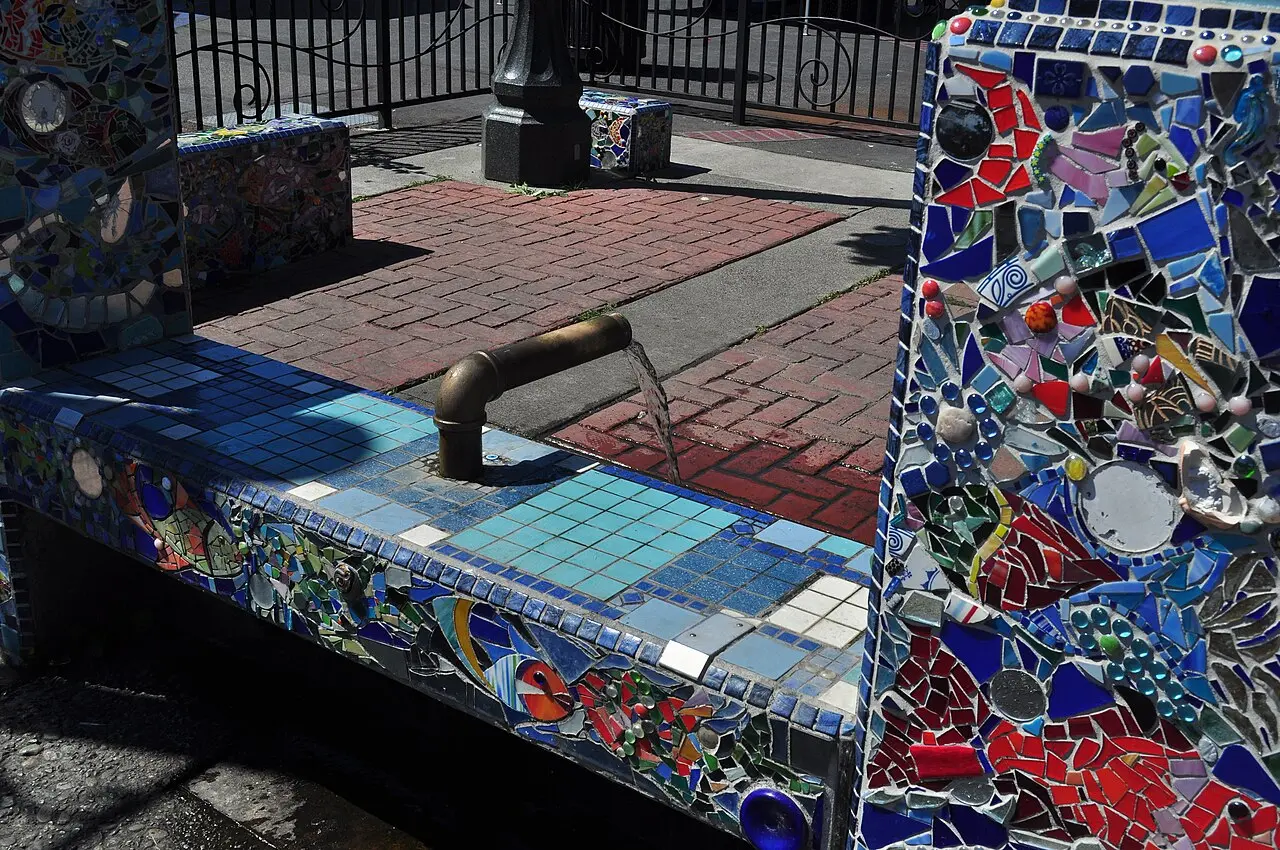
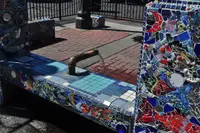
The well kept flowing. In the fall of 2008 the Friends announced that they would stop testing the water after February 2009. The announcement renewed interest in protecting the well and led to the founding of a group called H2Olympia. In 2009 the Thurston Public Utility District, Diamond Parking Service, and the City of Olympia agreed to keep the well open. In July 2010 the city council authorized buying the well and the parking lot. According to the Olympia Arts + Heritage Alliance, the city committed $50,000 to improvements and bought the lot in 2011. Work finished late that year added surface improvements, solar lighting, and a raised area for filling bottles. In the spring of 2012 community members installed sea-themed mosaics at the site.
By January 2013 the writer Jake Luplow had heard the well described by his roommate as “a well open to the public, man … flows water from the heavens.” Luplow wrote that “obviously, it doesn’t ‘flow water from the heavens,’ but it might as well, the way everyone speaks of it.” Several people told him it was the cleanest, purest water they had ever tasted. “This is the best water around,” said Stone, a student at The Evergreen State College. “There is definitely a difference in the way it tastes compared to tap water.”
Artesian Court to Artesian Commons
During planning and design the park was called Artesian Court. In August 2013 the city asked the public to give it an official name. A ThurstonTalk caption that year named the well site as the setting for a Saturday Make Olympia Street Market. The first phase of construction was set for spring 2014, with an opening celebration in early May, and the park opened that year as the Artesian Commons.
In 2018 the city closed the park, citing ongoing safety concerns. The JOLT reported that about 90 percent of the park was closed indefinitely. The well stayed open throughout. In January 2023 the downtown Parking & Business Improvement Area took up the idea of reopening the space as an open-air market and event ground for artists. “We have heard from other stakeholders that they would like the Artesian Commons to reopen to provide some public benefit for downtown and not have it be a vacant space behind a fence,” said Amy Buckler, a city strategic project manager. Jacob David, the board’s vice chair, added: “It is about time we bring it back. It has been sitting empty and useless for too long.”
Early on Sunday, July 12, 2026, according to a police probable cause statement, a man stole a brass fixture from the well. He then rammed vehicles in the nearby parking lot, damaging seven in all. The damage to the outfall spout left the well impossible to collect from. City staff replaced the spout, and the city spokesperson Brandon Chapman said the well was fully operational. Chapman called the well a resource “valued by thousands of residents and visitors each year.”
That summer city staff held focus groups on the future of the Commons. A public survey closed September 7, 2026, and its results were scheduled to go before the City Council at a study session on September 22, 2026. Any change to the site must answer to state rules that bar sources of contamination within 100 feet of the well. If the well itself is ever damaged, state agencies have said, it will be capped rather than repaired or rebuilt.
Notable Events
- 1900sThe artesian well was used by steam locomotives that needed water. thurstontalk.com
- 1915The well in Diamond Parking's Fourth Avenue lot was originally drilled to supply water for steam locomotives at an Olympia train depot. oly-wa.us
- 1991Efforts to protect and preserve the free-flowing artesian well on 4th Ave began when Jim Ingersoll, a local psychologist, called on the city council to acquire the well and develop it as a community park. olyaha.org
- 1992After Herb Legg and John Robinson worked behind the scenes to place an article in the Olympian calling for community support of the well, Ingersoll was flooded with phone calls offering time, talent, resources and money. olyaha.org
- 1996Community members concerned about preserving the Diamond Parking artesian well formed Friends of Artesians with a long-term goal of developing a small park around the well. oly-wa.us
- 1997Friends of Artesians conducted studies showing that the well casing is structurally sound and water quality is good. oly-wa.us
- 1998Diamond Parking had yet to do what Ecology required to keep the well open; Friends of Artesians members said a new artesian well site in downtown Olympia may be necessary. oly-wa.us
- 1998Finding the popular public well out of compliance with state standards, the state Department of Ecology ordered Diamond Parking to make improvements or shut down the well by mid-April. oly-wa.us
- 2008The Friends of Artesians announced they would stop testing the water quality after February 2009; the move renewed interest in protecting the well and led to the creation of H2Olympia. olyaha.org
- 2009Thurston Public Utility District, Diamond Parking Service, and the City of Olympia decided to keep the well open to the public. thurstontalk.com
- 2010The Olympia City Council authorized purchase of the well and parking lot, making the water available to the public. thurstontalk.com
- 2011The city committed $50,000 toward improvements to the well and bought the parking lot that year; renovations completed in late 2011 added surface improvements, solar lighting, and a raised bottle-fill area. olyaha.org
- 2012Sea-themed mosaic artwork created by community members was installed at the site of the well. olyaha.org
- 2014The Artesian Commons opened as a small park around the well. engage.olympiawa.gov
- 2018The City closed the park because of ongoing safety concerns, but the well remained open and publicly accessible. engage.olympiawa.gov
- The Barnes home on the site was still standing until the mid-20th century, when it was photographed in decay by historian Adah Dye. olympiahistory.org
People
- Dick Batdorf, co-founder of Batdorf & Bronson coffee roasting whose talk of artesian water started Ingersoll's interest in the well.
- Herb Legg, veteran protector of Olympia's Watershed Park artesian wells who worked behind the scenes to place the Olympian article calling for community support of the well (1950s and 60s).
- Jim Ingersoll, local psychologist who began the effort to preserve the well, calling on the city council to acquire it and develop it as a community park (1991).
- John Robinson, veteran protector of Olympia's Watershed Park artesian wells who worked behind the scenes to place the Olympian article calling for community support of the well (1950s and 60s).
- George Barnes, early Olympia merchant who built his Gothic style home on the well site.
Sources
- engage.olympiawa.gov/what-s-next-for-the-artesian-commons
- olympiawa.gov/services/water_utilities/water_advisory.php
- experienceolympia.com/directory/olympia-artesian-well
- thejoltnews.com/stories/artesian-commons-park-might-reopen-as-an-open-air-market,8796
- thurstontalk.com/2013/01/20/olympias-artesian-well-flowing-water-from-the-heavens
- oly-wa.us/Artesians/WhyThisWellMatters.php
- commons.wikimedia.org/wiki/File:The_artesian_well_at_Artesian_Commons,_Olympia,_Washington.jpg
- oly-wa.us/artesians/Historic.php
- olympiahistory.org/httpsolympiahistory-orgwpartesian-wellsite-of-george-barnes-home
- olyaha.org/itw-bay-2
- thurstontalk.com/2013/01/20/olympias-artesian-well-flowing-water-from-the-heavens
- thurstontalk.com/2013/08/12/help-name-new-park-at-the-olympia-artesian-well
- fox13seattle.com/news/its-the-water-artesian-wells-an-important-part-of-olympias-past-and-present