Old Mill Days
Millville, Cache County, Utah. City Celebration.
Details

- Where
- Millville South Park, 510 E 300 S, Millville, UT 84326. Directions
- When
- June 11 - June 13.
- Access
- The listed edition has ended.
- Website
- millvilleut.gov
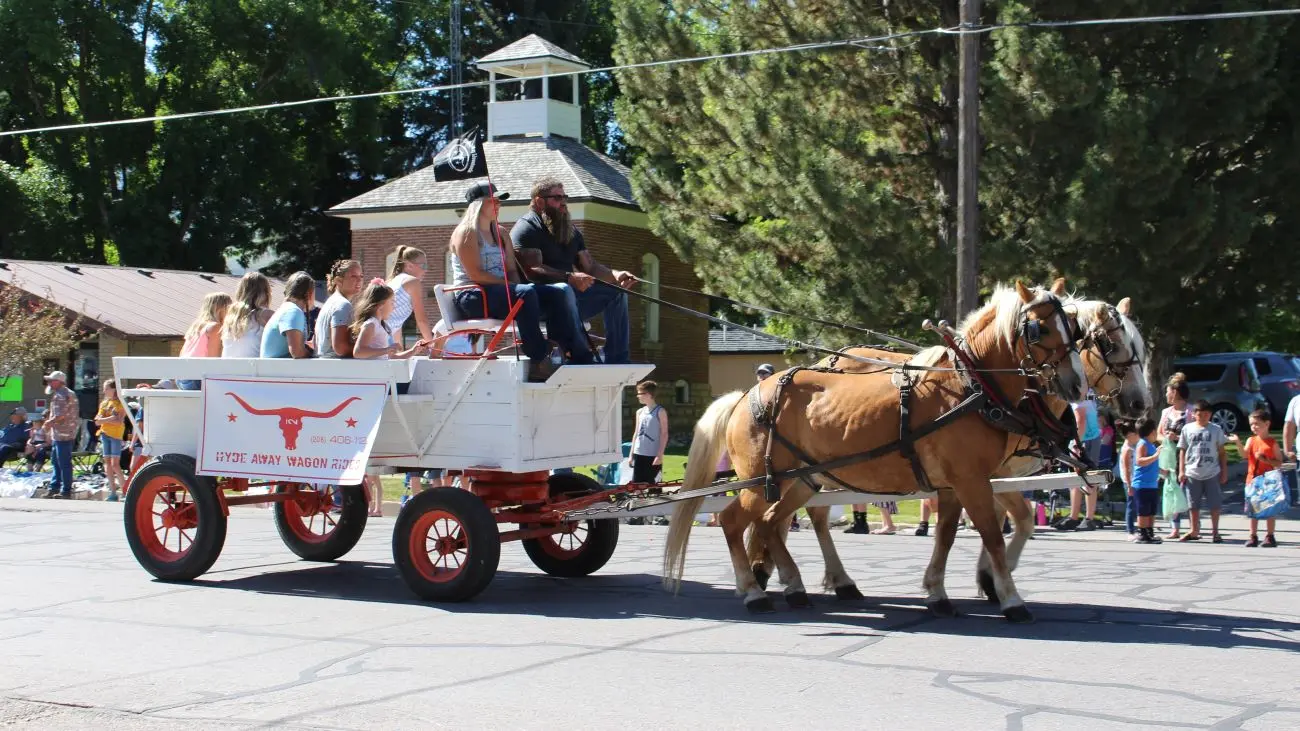
The 2026 edition of Old Mill Days ran at Millville’s South Park from 9 a.m. Thursday, June 11, to 10 p.m. Saturday, June 13. The park, at 510 East 300 South, has three covered pavilions with picnic tables, a splash pad, two playgrounds, a baseball diamond, seasonal soccer fields, and eight pickleball courts. The program used most of it: a pickleball tournament, a trivia contest, a 5k run and a kids’ race, a car show, a talent show, a parade, a cook-off contest, and Millburgers. According to the Cache Valley Family Magazine listing, all events were at the park unless otherwise noted. The Bear River Heritage Area calendar noted that the town museum stays open throughout the celebration.
The City Celebration and who runs it
At city hall the event goes by the plainer name City Celebration. In the May 2026 city newsletter, Mayor Hair asked residents to mark their calendars for June 11 through 13. “I hope to see all of you there,” the mayor wrote. “Thank you to all of the residents that are working on this event.” A quick-updates column in the same newsletter gave the dates as June 8–13. It also carried a request from Councilmember Ripplinger for someone to host and run the pickleball tourney. The June newsletter opened with the mayor’s “Big thanks to all the people that worked on the City Celebration” before turning to budget season.
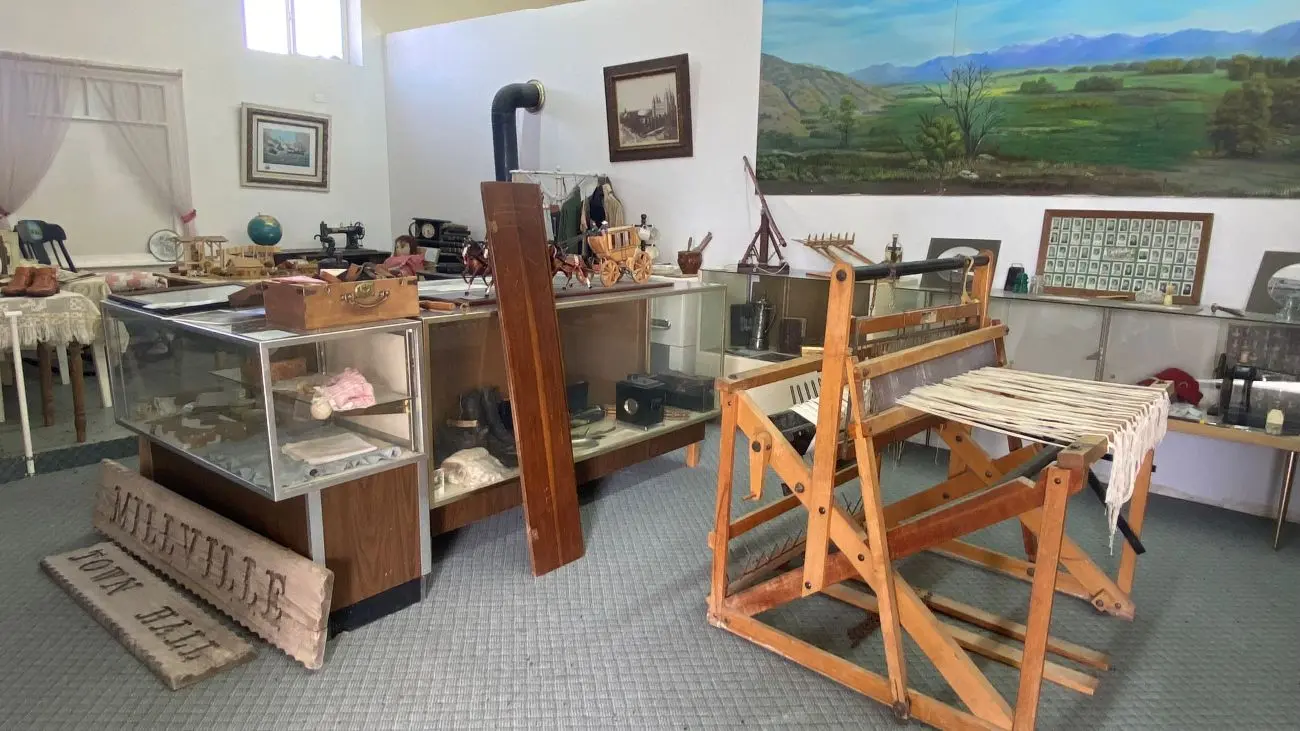
The museum beside the city office
The Millville Historical Museum stands next to the city office building, which shares the park’s address. The Herald Journal described it in December 2002. The collection then held a table made by Wilford Woodruff, a past president of the LDS Church, along with a tintype of William Garr and an original rug from the Logan Temple. “It’s a real small museum, but it’s packed with a lot of things that are significant not only to the town, but to the state,” said Bob Bates, then the volunteer curator.
The rooms are set up as a typical pioneer home. The bedroom has a straw mattress and trunks that Mormon emigrants carried across the plains. The kitchen has a sewing machine, a set of china, and three-pronged forks, with a wash basin, lanterns, tools, and farm implements nearby. “In those days the kitchen was the main room of the house,” Bates said. “People ate there, they socialized there and that’s where the stove was. That’s where it was warm.” There is also a one-room schoolhouse with desks, writing slates, and early primers. Beside the entrance, a restored bell from the school run by the federal government hangs in a tower. Next to the school stand mock-ups of the post office kept by Postmaster James Bigelow and of the Millville Coop Store.
Former mayor Clyde Linder organized the museum. He had helped compile Millville Memories, a history of the town, and people he interviewed kept offering him things from their attics. “Frequently people would say, by the way, I have this old whatever. If you ever get a museum, I’d like to donate to it,” Linder said. The idea gained momentum when the state centennial celebration committee wrote asking the city to mark Utah’s centennial in 1996. After touring museums around the state, Linder decided to show what life in Millville was like when Utah became a state. In 2002, Bates expected the museum to add a log cabin that a resident had offered and possibly a section on the Shoshone, the valley’s first inhabitants. Outside the celebration, the city’s history page directs visitors to Clint Preston, who meets them at the museum by appointment.
Linder counted his own diorama as the pride of the collection. It shows the original sawmill that gave the town its name. “I did a lot of research, the best I could, to find out what that first mill was like,” he said.
Edwards and Kent’s saw
M. R. Hovey, secretary of the Logan Chamber of Commerce, compiled an early history of Cache County between 1923 and 1925. It was printed in the Logan Journal beginning August 4, 1923. Hovey gives the mill’s date as the summer of 1859, when Esias Edwards and Leroy Kent built it. The 2002 newspaper spells the name Esaias. Water came through a ditch taken out of the Blacksmith Fork River. The Campbells and other settlers at Spring Creek, or Providence, helped dig it, since they meant to use some of the water on their land.
At first the mill ran an upright saw worked by man-power. Edwards then built a large penstock and a big undershot wooden wheel. More lumber was sawed and more logs split, and for a while the mill ran day and night to supply the neighboring settlements. Hovey calls it “one of the earliest and best sawmills of the Valley.” The 2002 article goes further, calling it the first in the valley and the source of much of the lumber for Logan’s early homes.
Edwards added a small gristmill run by the same power. It had a chop stone and a flour stone. The whole-wheat flour was good, but the smut could not be taken out. Smutty wheat made dark flour, and people called the bread “black bread.” A Mr. Harmon of Providence was the first miller. Hovey describes Edwards as “an old Virginian” and an expert mechanic for his day. He made rawhide-bottomed chairs, stools, and beds for Millville and other settlements. Near the mills he also ran a small molasses mill with a distillery, which made a whiskey called “Valley Tan.” People came from the surrounding settlements for their grists and lumber, Hovey writes, “and incidentally to sample the ‘Valley Tan.’”
Sixty settlers and a co-op store
The mill came first and the town followed. The “Garr Boys” were John T., Abel, William, and Ben Garr. They had herded church cattle in the valley since July 1855 from the Elkhorn Ranch, or Church Farm, about half a mile south of what was in Hovey’s day the Logan Sugar Factory. In May 1860, Apostle Ezra T. Benson and Peter Maughan advised the settlers gathered with the Garrs to locate near the Edwards and Kent sawmill, to give it better protection. The settlers took the advice. Benson organized the ward and installed Joseph G. Hovey as first bishop, and the name Millville was adopted.
The colony numbered about sixty people. George W. Pitkin built the first house on Mill Street, of cottonwood logs about fourteen feet square, and the first church services were held in it. Charles Wright taught the first school in 1860, in the home of Franklin Weaver. The first irrigation water came from a large spring east of town, later known as the Garr Spring.
William Garr ran the first store, a small co-op, out of his home on one of the Garr lots. According to the 2002 article, he had brought cattle up from his father’s ranch on Antelope Island at Brigham Young’s behest. He served as Cache County’s first sheriff in 1857–58, and he apparently won the job for his marksmanship shooting seagulls. He sold beef jerky, eggs, beans, canned fruits, flour, and horehound candy. “It was the Wal-Mart of its day,” Bates said. “Don’t forget, what they didn’t grow, they had to trade for or buy.” Later, George Yeates, called “Grandpa Yeates,” ran a cider mill west of his own store. Hovey writes that his cider had “all the necessary ‘authority’ in it.” On holidays the cider mill cellar became a gathering place.
The rock gristmill
As more mills opened in the valley, Edwards had less work. He sold his mills and the site to the settlement and moved to St. George. Thomas Jessop had built a shingle and lath mill on part of the same water power. He also made brooms from cane he grew himself and sold them across Cache Valley and in Ogden for thirty-five cents each.
The town later sold the mill site and water right to M. D. Hammond. With his sons Melvin and James T. Hammond, he began a rock gristmill. The stone was quarried in Millville Canyon, and James J. Jensen of Hyrum was chief mason. When finished, it was one of the largest mills in the valley. Hovey writes that it had “a stormy career,” changing hands and management many times until it burned to the ground. In Hovey’s day its wreck still stood where Edwards and Kent had set their upright saw. The ditch they took out of the Blacksmith Fork was by then known as the Mill Race.
Notable Events
- 1859Esias Edwards and Leroy Kent built a sawmill at the point where the present wreck of the rock gristmill stands, bringing water from the Blacksmith Fork River through a ditch now known as the Mill Race. mendonutah.net
- 1860Charles Wright taught the first school in the home of Franklin Weaver. mendonutah.net
- 1860On the advice of Apostle Ezra T. Benson and Peter Maughan, the settlers located their settlement near the mill; about sixty people made up the little colony. mendonutah.net
- 1996Former Mayor Clyde Linder organized the museum next to the city office building after helping compile the Millville Memories book, with momentum from the state centennial celebration committee for Utah's centennial. hjnews.com
People
- Bob Bates, volunteer curator of the Millville Historical Museum.
- Clyde Linder, former Millville mayor; organized the Millville Historical Museum and helped compile the Millville Memories history book.
- Gale Hall, mayor of Millville.
- William Garr, one of four Garr brothers who brought cattle to Cache Valley; Cache County's first sheriff; owner and proprietor of the Millville Coop Store, the town's first store (sheriff from 1857-58).
- Charles Wright, taught the first school (1860).
- Esias Edwards, built the settlement's sawmill and added a small gristmill; an old Virginian and expert mechanic (built the mill in the summer of 1859).
- Ezra T. Benson, apostle who advised the settlers to locate near the sawmill and organized the ward.
- Franklin Weaver, his home housed the first school.
- Joseph G. Hovey, first bishop of the Millville ward.
- Leroy Kent, built the sawmill with Esias Edwards (summer of 1859).
- Peter Maughan, advised the settlers to locate near the sawmill.
Sources
- millvilleut.gov/events/city-celebration-2
- millvilleut.gov
- millvilleut.gov/events
- millvilleut.gov/residents/newsletters
- millvilleut.gov/residents/parks-and-recreation
- millvilleut.gov/residents/news
- dropbox.com/scl/fi/rtnt08vbhtl8aymravubh/Newsletter-06-June-2026.pdf?rlkey=wgz6fmeddalu6hk1e7pfvu9by&st=duas0bch&dl=1
- dropbox.com/scl/fi/roewqx9p222xlcvw9y08c/Newsletter-05-May-2026.pdf?rlkey=onlnz9vp0n7n8joqpv8756fuq&st=wzazqdqb&dl=1
- dropbox.com/scl/fi/ye1fyf6yo72bipto5bnok/Newsletter-07-July-2026.pdf?rlkey=54rp9tqlxzc1b6nnzxcyao87u&st=ubud2akg&dl=1
- dropbox.com/scl/fi/rtnt08vbhtl8aymravubh/Newsletter-06-June-2026.pdf?rlkey=wgz6fmeddalu6hk1e7pfvu9by&st=duas0bch&raw=1
- dropbox.com/scl/fi/roewqx9p222xlcvw9y08c/Newsletter-05-May-2026.pdf?rlkey=onlnz9vp0n7n8joqpv8756fuq&st=wzazqdqb&raw=1
- dropbox.com/scl/fi/ye1fyf6yo72bipto5bnok/Newsletter-07-July-2026.pdf?rlkey=54rp9tqlxzc1b6nnzxcyao87u&st=ubud2akg&raw=1
- cachevalleyfamilymagazine.com/events/millville-old-mill-days
- mendonutah.net/history/cache_county/41.htm
- hjnews.com/news/millville-history-on-display/article_4ecb1070-4bb5-5989-979a-5f67b29745f1.html
- millvilleut.gov/residents/millville-history-and-museum