National Basque Festival
Elko, Elko County, Nevada. Basque Festival.
Details

- Where
- 1601 Flagview Drive, Elko, NV. Directions
- When
- Fourth of July weekend each year.
- Hours
- All day at the Elko Basque House.
- Access
- You do not have to be Basque to attend club events.
- Phone
- (775) 777-5255
- Website
- elkobasqueclub.com
- Managed by
- Elko Euzkaldunak Club.
- Established
- 1964.
On the Sunday of the National Basque Festival, the bread arrives first. Bakers bring homemade sheepherder’s loaves, baked in Dutch ovens, to the Elko Basque Clubhouse at 1601 Flagview Drive. The 2026 schedule set the contest for 10 a.m., with the loaves auctioned afterward. A full Catholic Mass followed at 11. At noon came the picnic lunch of lamb, beef, pork, beans, paella, salad and wine. At 1 p.m. the dancers came out again, along with rural sports and what the club calls crowd-favorite contests: a relay race, weight carrying and more.
The Elko Euzkaldunak Club, founded in 1959 to unite the Basques of the Elko area, runs the festival. Its stated mission is to share Basque culture with the community. “You do not have to be Basque to attend our events,” the club says.
Three days on Flagview Drive
The club lists the 2026 festival, its 62nd, as July 3rd–5th. The Elko Convention & Visitors Authority listed July 4th and 5th. On the evening of July 3 the club posted, “It has started. Just warming up in downtown Elko!” The 5 p.m. kick-off brought Basque dance performances, rural sport exhibitions, drinks and food.
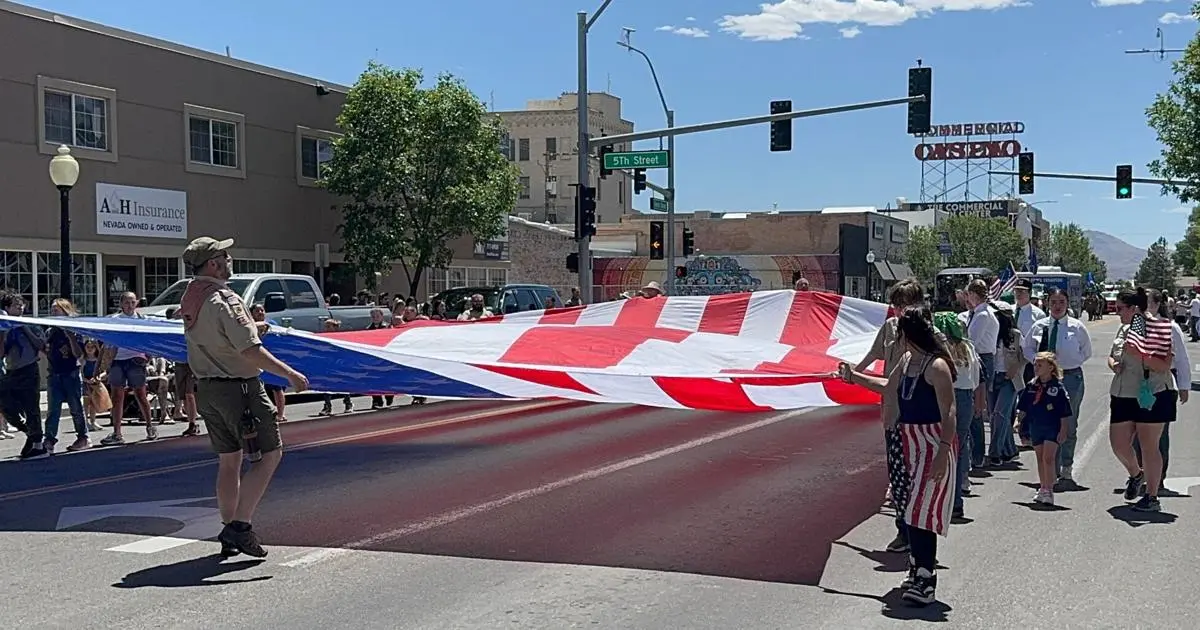
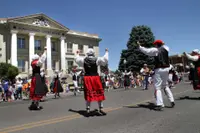
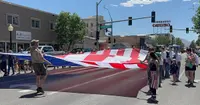
Saturday began at 8 a.m. with a golf tournament at Ruby View Golf Course, played in honor of the club’s friend Wes Walker. As it began, the club posted: “And they are off!!! Hit/JO (hoe) Straight and long! Zuzen eta luze!!!” Downtown that day the “Stars, Stripes and Spurs” parade, hosted by the Silver State Stampede, carried the 30-by-50-foot flag that normally flies by Interstate 80, marched by Elko youth. Among the Coca-Cola trucks and fire engines came the National Basque Festival float, the Basque dancers and the festival’s strength athletes putting on a display. That evening’s event was billed as Dancing Under the Fireworks: live music and a full bar, then fireworks set off by the Elko Lions Club. Handball opened Sunday at 9 a.m.
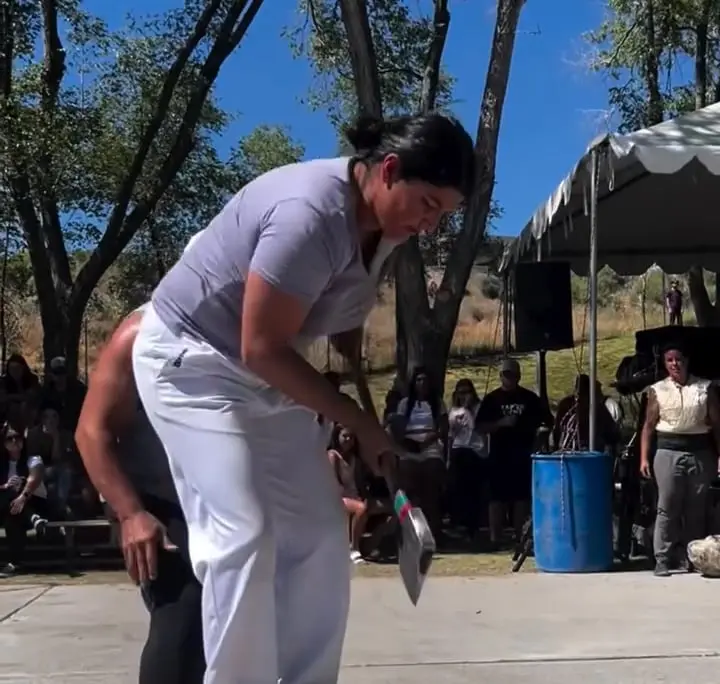
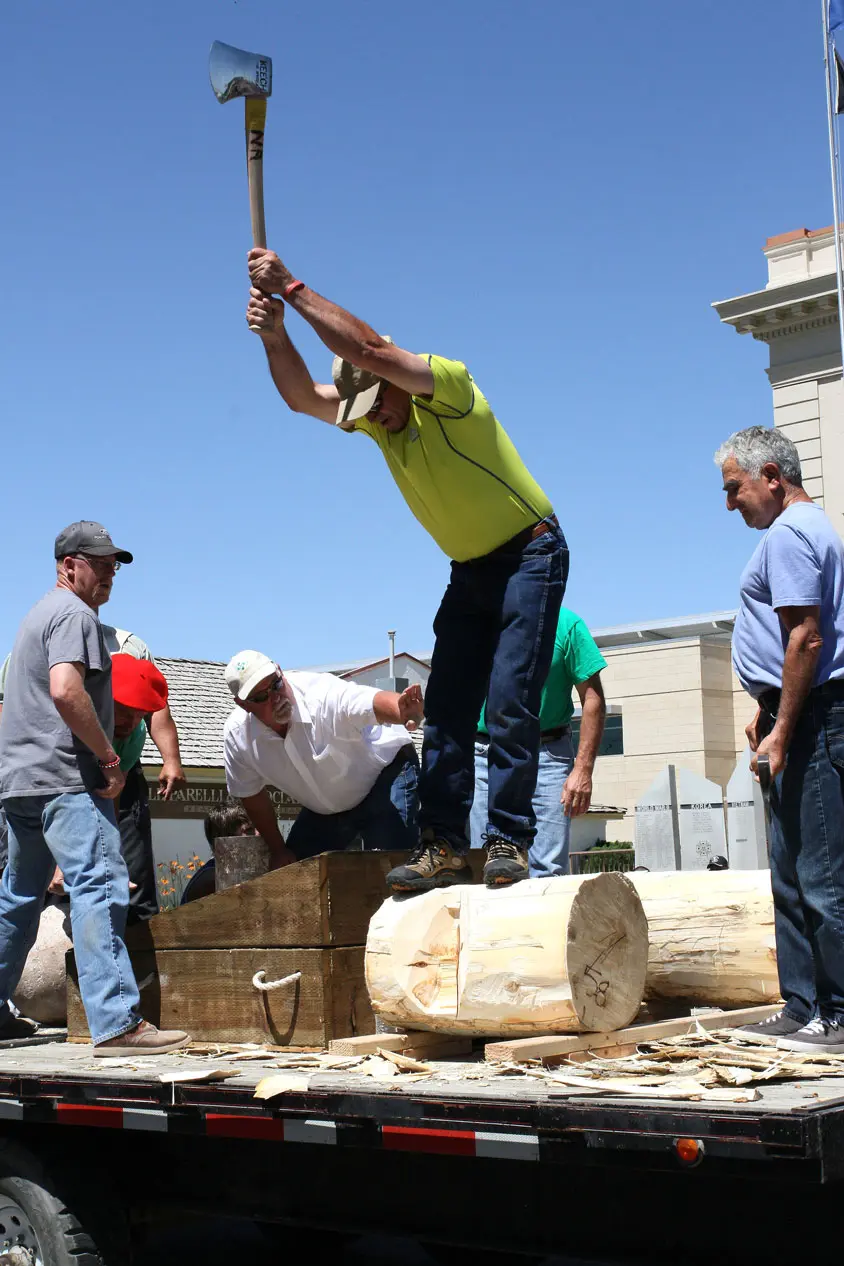
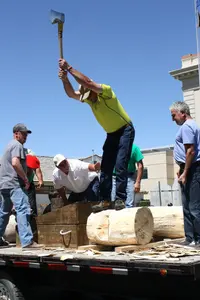
The visitors authority adds a 5K fun run, heavy stone lifting and wood chopping, songs from the Old Country, family-style meals and the Picon Punch, which it calls “the famous Basque cocktail.” It also says the handball games draw players from across the West.
The club billed the 2026 edition as “62 years of Basque tradition alongside 250 years of the United States.” On July 4 it shared an article from aboutbasquecountry.eus about Bilbao merchants, the house of Gardoqui among them, who shipped arms, powder and supplies to the Continental Army. Some of those cargoes reached the revolutionaries through New Orleans and Luis de Unzaga y Amezaga, the Basque governor of Louisiana. The club’s own history gives the reason for the date. The festival was set on the Fourth of July weekend “to celebrate with this great country and to thank them for accepting Basques and their heritage so freely.”
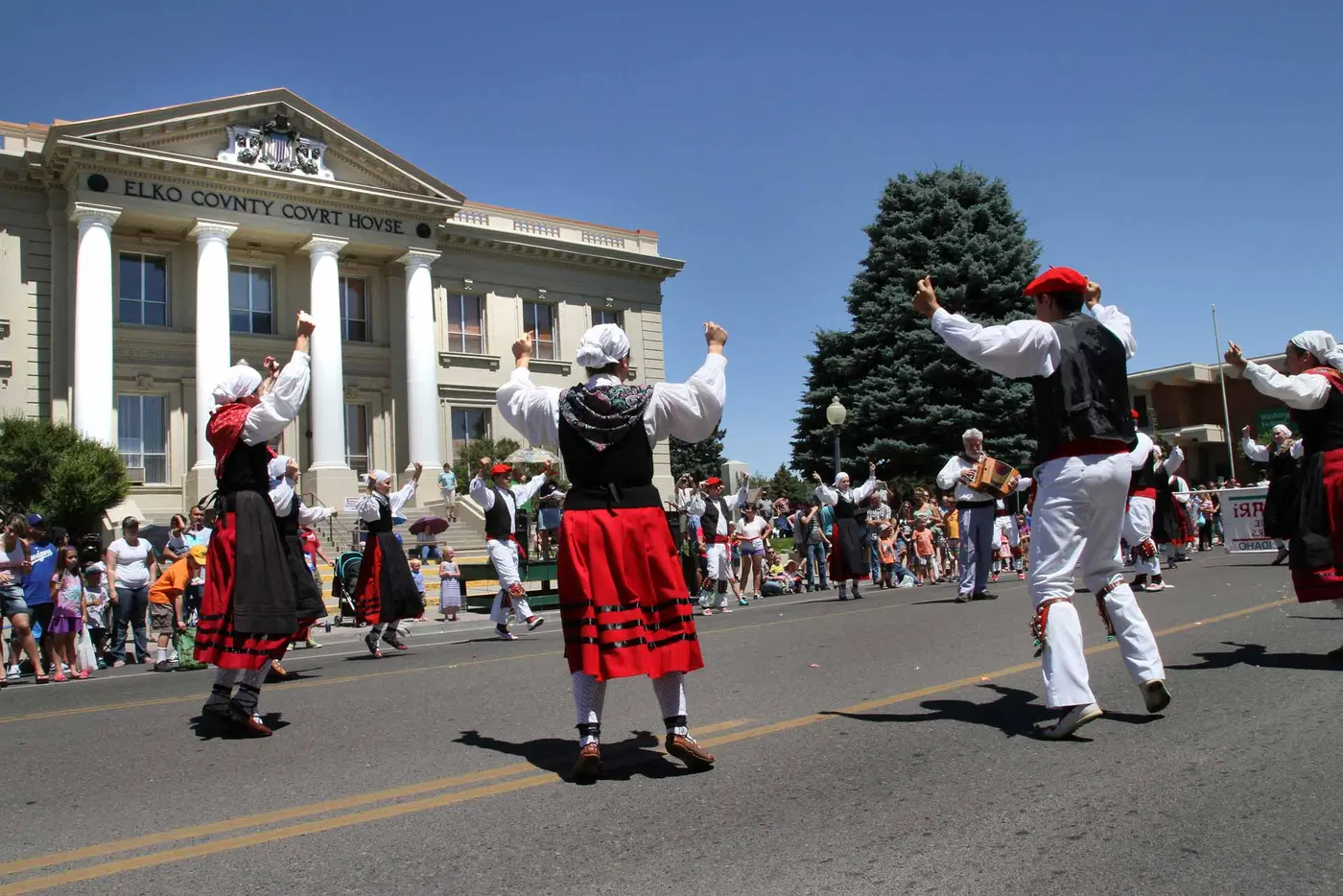
The dancers on the program are the Elko Ariñak Dancers, whom the club calls its ambassadors since 1968. They have performed as far away as Buffalo, Wyoming, and Washington, D.C. Instruction usually begins in winter and runs until festival week, when the performances come.
Txingas, sheep and a green canopy
Nancy Zubiri wrote a long account of the 2012 festival for Euskal Kazeta. That year the kick-off was held at the fairgrounds with a running of the bulls, a tribute to San Fermin in Pamplona, which falls at the same time. Earlier kick-offs had been held in front of Stockman’s Hotel. For three years there was a bull run there that anyone could join. “And they did. It was sheer craziness,” she wrote. The 2012 run was more of a spectator event, with a few participants chosen in advance.
Saturday’s parade went down Idaho Street, past the courthouse. Politicians and local organizations marched with the Basque groups, tossing candy to people along the sidewalks. Zubiri reported that the parade had been part of the festival since it started in 1964. Elko hosted the convention of the North American Basque Organizations that year. Dance groups came from Boise, Salt Lake City, Bakersfield, Chino and San Francisco to join those from Reno, Winnemucca and Elko, and they performed at the fairgrounds in 93-degree heat.
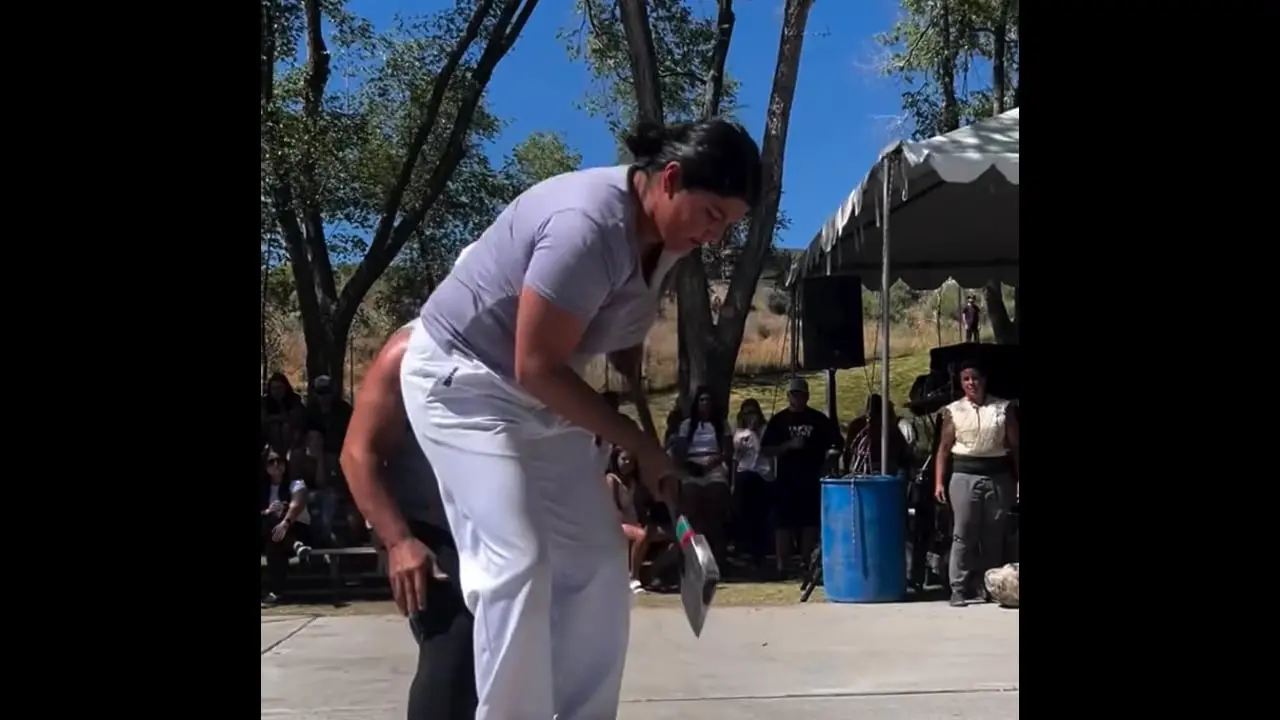
The weight carry used two 75-pound weights called txingas. One child could not lift them. Another picked them up and dropped them at once. Brody Donahue of Elko, wearing a red Mohawk, kept a steady pace until his shorts slipped to his ankles. He set the weights down at 503 feet, good for third place in the junior competition. In the children’s running with the sheep, the boys sped down a dirt path ahead of the flock. Then the sheep slipped through an open gate into the field beyond. Rancher Don Couch sent out one of his trained dogs, which ran them down and brought them back.
Two relay teams combined the sports. Stephanie Braña chopped wood and tagged a weightlifter, who lifted while two men spotted him. Then 12-year-old Gaizka Narvaiza ran to the end of a line of plastic bottles and brought one back. His father, Aitor, lifted for the same team, which lost. “It’s a reality check,” Aitor Narvaiza said. “You gotta be in shape.” In a soka tira, or tug of war, the Elko Police Department beat the Elko County Sheriff’s Department.
On Sunday, at City Park, a quick rain and a wind squall blew off the large green canopy that had been raised by crane to shade the dancers and crowd. “It took two-and-a-half hours to put up the shade and 45 seconds to bring it down,” said organizer Bob Echeverria. The jota contests went on, with longtime Elko family names such as Goicoechea, Fagoaga and Samper on the floor. Josette Lazcano and Yusenka Izoco took the $100 adult prize. In the irrintzi contest, Malaina Alberdi Fesenmeier of Elko placed first and Jesus Goñi of Reno second.
A name nobody was using
Elko native Bob Echeverria once explained how the town came to hold the national title. “Nobody was using the name,” he said, “so we took it.”
The club dates its own start to a 1959 organizational meeting at the Nevada Dinner House. Letters went out to local Basques, a good number came to the next meeting, and Johnnie Aguirre was elected the club’s first president. The club says a tradition followed: a celebration that brought sheepherders and cattle ranchers into town for a day. Gloria Totoricagüena, writing in Euskonews, adds that the club was founded partly out of the excitement of the first inter-community Basque festival in the American West. That festival was held in Sparks, Nevada, in 1959, and it was called the National Basque Festival.
The year 1964 brought Nevada’s centennial. Totoricagüena writes that the Elko club decided to stage a grand-scale festival to mark it, inviting every existing Basque club to send musicians, dancers and athletes. Because the event succeeded and Elko sits central to other Basque communities, the town became the site of the annual festival. The club says the festival became a two-day event in 1964. It credits Governor Sawyer with bestowing the national title that year, “in conjunction with the State of Nevada Bicentennial celebration,” as its history words it.
Other sources put the start a year earlier. Elko County’s history says the festival began in 1963. A City of Elko marker erected in 2017 in Railroad Park says Elko has hosted the festival every July since 1963. The same marker notes that people of Basque descent have come to the area from the Pyrenees since the 1890s, many of them as sheepherders.
A fronton, a clubhouse and a quiet year
In 1966 Joe Anacabe organized Elko’s first Basque folk dancing troupe, the group now known as the Elko Ariñak Dancers. With musicians Jean Iribaren and Bernardo Yanci, he gave thousands of volunteer hours to the club and the dancers. Handball got its own wall in 1975. That year general contractors Nicolás Fagoaga, originally of Lesaka, and Pedro Ormaza, originally of Bermeo, built the outdoor fronton in Elko Municipal Park, with $25,000 donated by the Spanish Consulate General in San Francisco. The clubhouse on Flagview Drive went up in 1978. It has an indoor hall, an outdoor ground, a kitchen, a bar and a musicians’ stage.
The 2020 festival was cancelled because of the Covid pandemic. In 2021 the Elko club was the first Basque club to decide to hold its summer festival. It cut the event from three days to two and moved most of it to the clubhouse. The downtown kick-off moved there too, and the parade was cancelled. “Saturday will feel different,” said Teresa Franzoia. The dancing and strength show once held at the fairgrounds came to the clubhouse. Jean Flesher’s band Amerikanuak played the evening dance, with city fireworks nearby. “The dancers are gearing up and buying gerrikos (waist sashes) and abarkak (leather shoes),” Franzoia said. Of the clubhouse she said, “The clubhouse is the perfect place to see the fireworks.”
Notable Events
- 1959A meeting at the Nevada Dinner House considered beginning an Elko Basque Club. elkobasqueclub.com
- 1963County history says the National Basque Festival began in Elko in 1963. elkocountynv.net
- 1964The festival became a two-day event, now known as the National Basque Festival. elkobasqueclub.com
- 1964The feature says the parade has been part of the festival since its 1964 start. euskalkazeta.com
- 1964Elko Basque Club decided to organize a grand-scale festival for Nevada's centennial and invited the existing Basque clubs to participate. euskonews.eus
- 1966Joe Anacabe organized the first Basque folk dancing troupe for the Elko area, now known as the Elko Ariñak Dancers. euskonews.eus
- 1975Contractors Nicolás Fagoaga and Pedro Ormaza built the outdoor fronton in Elko Municipal Park. euskonews.eus
- 1978The article's caption identifies the Elko Euskaldunak Basque Club as built in 1978. euskonews.eus
- 2021The returning festival was reduced from three days to two, with most events at the clubhouse. euskalkazeta.com
- The return article says the preceding year's festival was cancelled due to the Covid pandemic. euskalkazeta.com
People
- Governor Sawyer, Bestowed the National Basque Festival honor (1964).
- Johnnie Aguirre, First president of the newly formed Elko Euzkaldunak Club.
- Jean Flesher, His band Amerikanuak was announced for the evening dance.
- Teresa Franzoia, Quoted about cancellation of the annual parade and changed Saturday format.
- Aitor Narvaiza, Elko weightlifting participant who participates every year.
- Amanda Goicoechea, Jota contest winner with Phoebe Fagoaga.
- Bob Echeverria, Festival organizer.
- Brodey Ratliff, Jota contest winner with sister Tandie.
- Brody Donahue, Elko participant who carried txingas in the junior strength competition.
- Don Couch, Rancher who brought a trained sheep dog to retrieve escaped sheep during the festival.
- Ella Patane, Jota contest winner with Franci Mendive.
- Franci Mendive, Jota contest winner with Ella Patane.
- Gaizka Narvaiza, Runner on a Basque sports relay team.
- Jesus Goñi, Second-place irrintzi contest winner from Reno.
- Josette Lazcano, Adult jota contest first-place winner with Yusenka Izoco.
- Malaina Alberdi Fesenmeier, First-place irrintzi contest winner from Elko.
- Phoebe Fagoaga, Jota contest winner with Amanda Goicoechea.
- Stephanie Braña, Wood chopper on a Basque sports relay team.
- Tandie Ratliff, Jota contest winner with brother Brodey.
- Tom Davidson, Weightlifter shown on the festival feature.
- Yusenka Izoco, Adult jota contest first-place winner with Josette Lazcano.
- Bernardo Yanci, Musician who volunteered for the Elko Basque Club and dance group.
- Jean Iribaren, Musician who volunteered for the Elko Basque Club and dance group.
- Joe Anacabe, Organized Elko's first Basque folk dancing troupe and volunteered for the club and dance group (1966).
- Nicolás Fagoaga, General contractor who built Elko Municipal Park's outdoor fronton with Pedro Ormaza (1975).
- Pedro Ormaza, General contractor who built Elko Municipal Park's outdoor fronton with Nicolás Fagoaga (1975).
Sources
- elkobasqueclub.com/events
- elkobasqueclub.com
- elkodaily.com/calendar/community/collection_5f2baf7c-e49f-4b84-9da0-a6d704aca161.html
- elkobasqueclub.com/contact-us
- facebook.com/ElkoEuzkaldunakClub
- exploreelko.com/top-events/national-basque-festival
- img1.wsimg.com/blobby/go/f7f8a8d0-f77b-49ab-8d43-20c869533e1b/2026%20Basque%20Festival%20(5)-compressed.pdf
- elkobasqueclub.com/club-rental
- elkobasqueclub.com/membership-1
- elkobasqueclub.com/elko-ari%C3%B1ak-dancers
- elkocountynv.net/your_community_2/history.php
- euskonews.eus/0255zbk/kosmo25501.html
- euskalkazeta.com/elko-national-basque-festival-a-crowd-pleaser
- hmdb.org/m.asp?m=142678
- euskalkazeta.com/elko-basque-festival-is-back-for-2021