


Multnomah County Fair
Portland, OR, Multnomah County, Oregon. County fair.
Details

- Where
- 7805 SE Oaks Park Way, Portland, Portland, OR, OR 97202. Directions
- When
- Late May annually. Last held May 23–25, 2026; next year’s date not yet stated.
- Getting there
- The fair is located at Oaks Amusement Park, 7805 SE Oaks Park Way, Portland, OR 97202.
- Fees
- Admission: FREE; Oaks Park parking $4; amusement rides extra.
- Hours
- Saturday, Sunday and Monday: noon - 7pm.
- Phone
- 503-317-3560
- Website
- multcofair.com
- Managed by
- Friends of the Multnomah County Fair.
Peach jam in the Dance Pavilion
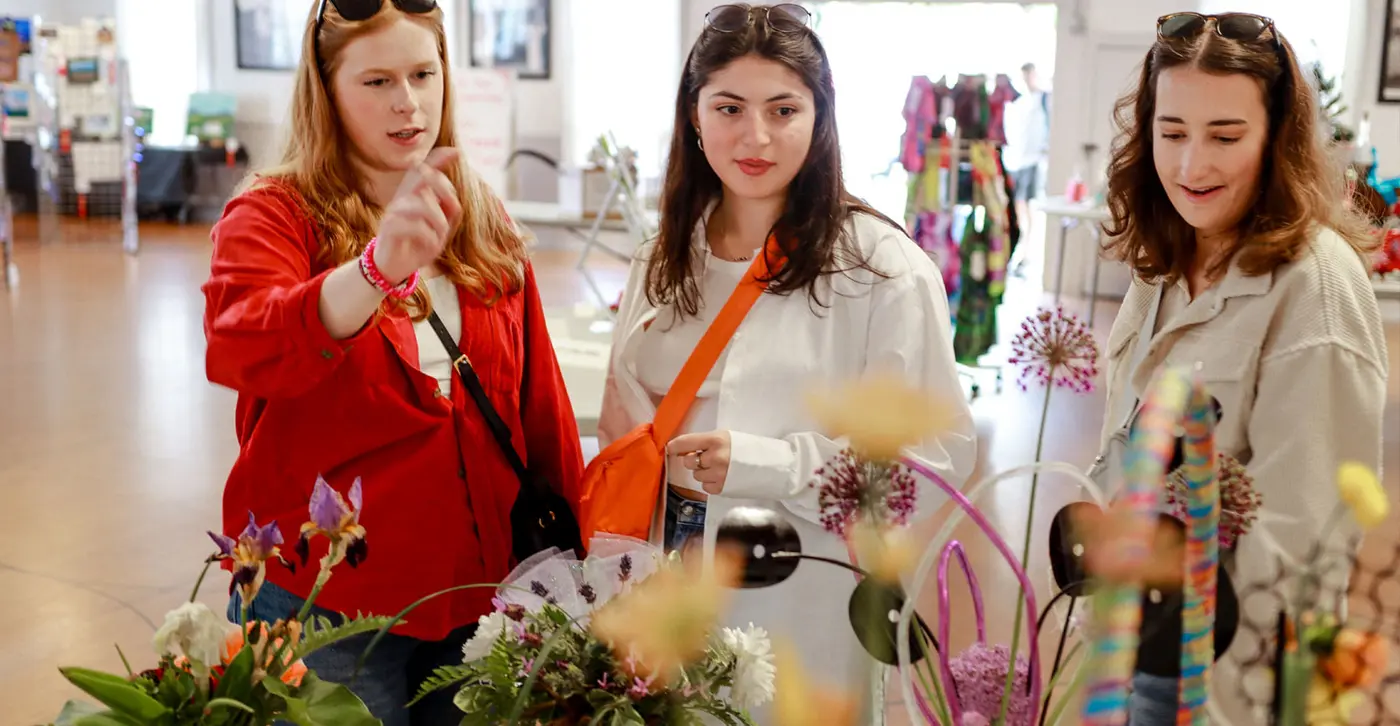
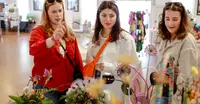
At the 2026 fair, Sandra Snyder stood in the Oaks Park Dance Pavilion holding a jar of peach jam that had taken a first-place ribbon and Best of Show. Snyder had once been the fair’s Foods Superintendent and held the post for many years. Around her the Creative Living Exhibition filled the long hall with nearly 1,500 entries: quilts, photographs, flowers, paintings, crafts, baked goods and pies. The exhibitors ranged from young children to adults in their nineties. According to The Bee, the count was the highest since before the COVID-19 pandemic. The exhibition had been absent the year before while the pavilion was remodeled, and returning visitors could see the renovation work from the north end of the room. The fair’s own exhibit categories are Arts & Crafts, Floral, Photography, Needle Crafts, and Foods, among others.
The 2026 edition ran May 23 through 25, from noon to 7 p.m. each day, over Memorial Day weekend. The Bee counted it as the 120th fair. Admission was free and Oaks Park charged $4 to park. Emily MacKay, marketing and events director for the Oaks Park Association, estimated that about 12,200 people came through the park over the three days. Saturday and Sunday were dry. “Saturday and Sunday offered perfect weather this year and Oaks Park was packed with people,” said Larry Smith, president of Friends of Multnomah County Fair. On Memorial Day, rain arrived in mid-afternoon. Some visitors went home, and others stayed under cover to watch Ballet Folklorico groups in the Outdoor Pavilion.
Smith named Sunday’s Día de la Familia as a high point of the 2026 fair, with Aztec dancers, mariachi music, and Portland Lucha Libre bouts. Wrestlers from Portland Wrestling and Lucha Libre Portland fought before crowds three and four deep. The Yeates Academy of Irish Dance performed traditional steps, and Ballet Folklorico Mexico en la Piel Academia danced in the Outdoor Pavilion. Other events included a classic car show, a dog costume parade, character visits, and a robotics exhibition by local high school FIRST teams. Dachshunds ran in the Dashing Dachshund Races. One dog owner told KPTV that she had read about the fair on Facebook that morning and thought “maybe she will win a prize.” The small animal area still holds goats, rabbits, and other small creatures for children to pet.
Cristina Gonzales Perry, the event’s emcee, helps organize the fair with her family. “When my family first started getting involved, we would talk to the community,” she said, “a lot of people didn’t know that Multnomah County had its own fair.”
The Oaks Park midway
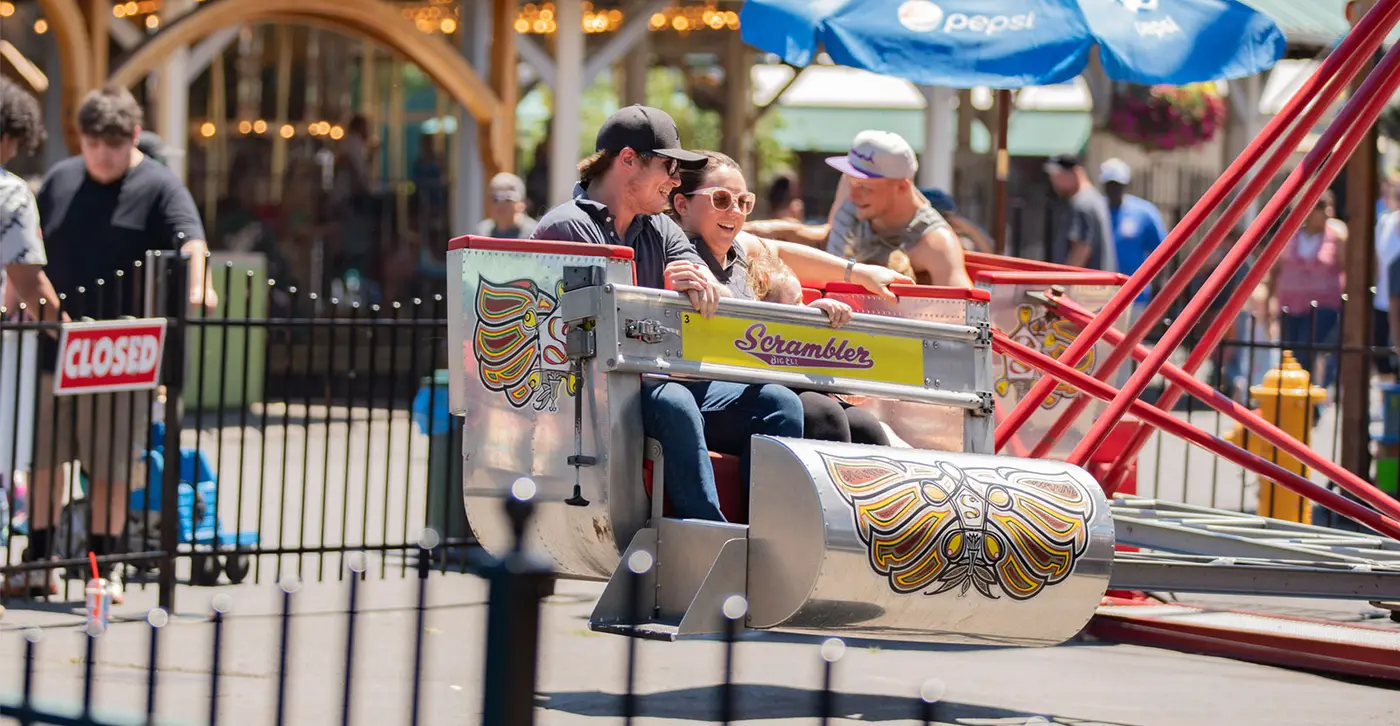
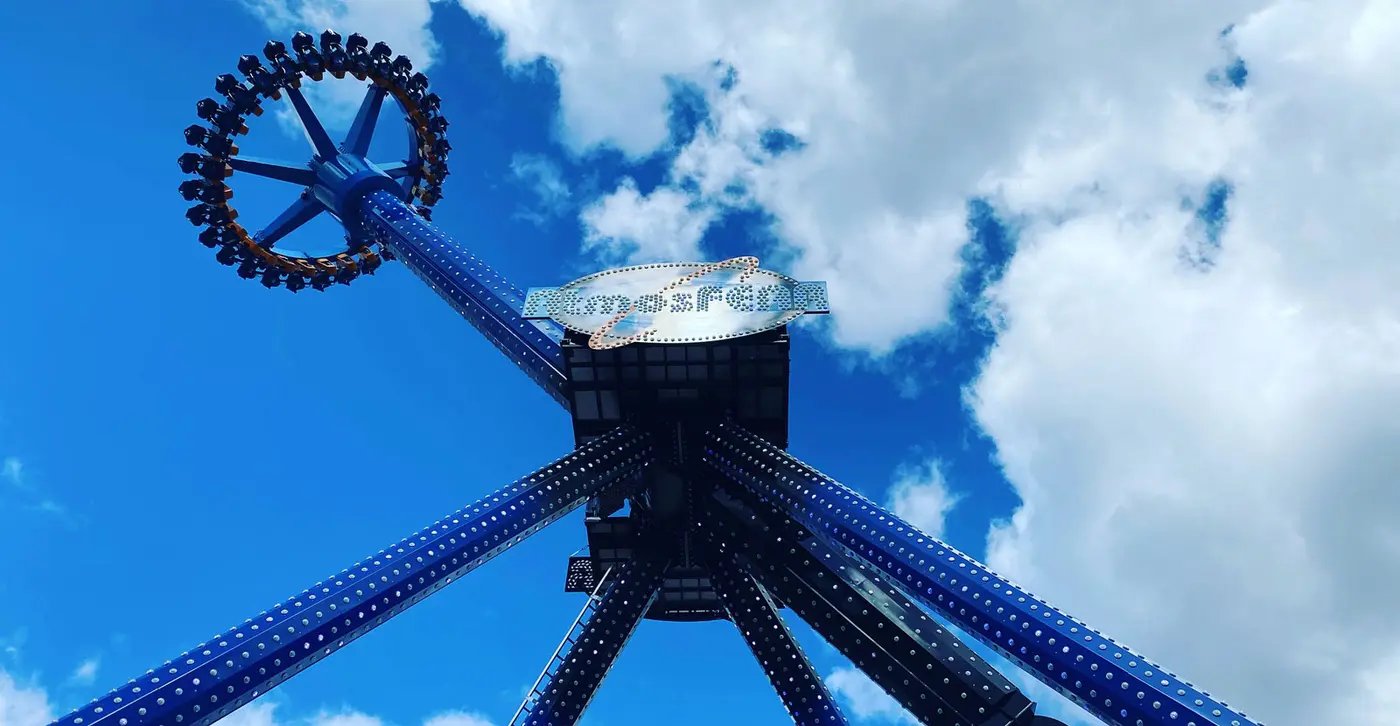
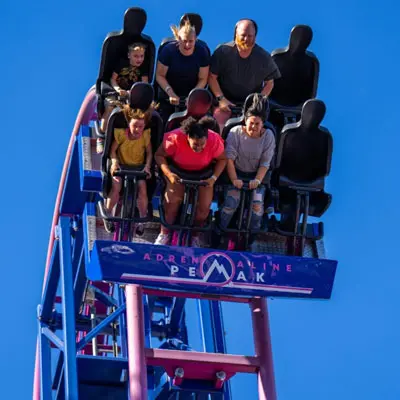
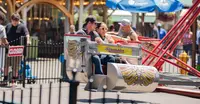
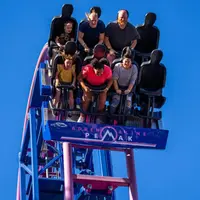
The fair occupies one section of Oaks Amusement Park, which keeps running around it during the three days. The midway has 24 rides, from the Adrenaline Peak and AtmosFEAR to the Carousel and the Tilt-A-Whirl. Rides cost extra, and every rider needs a bracelet, including a parent riding along with a child. Jack and Debby Youngkin brought their granddaughter in 2026. “We rode the train,” they told KPTV, and “the granddaughter is just having a great time.” Along the midway are games of skill and chance, including Balloon Bust, Basketball Toss, and Roller Bowler, along with a redemption arcade. Each play costs one to five dollars.
Beyond the rides, Chipper’s Woods is an 18-hole miniature golf course in the oak grove that gave the park its name. It looks out over the Willamette River toward Portland’s West Hills. The park’s roller rink, by the fair’s own account, is the oldest in the country and has the largest skating floor west of the Mississippi.
On Vendors Row, more than 25 small businesses sold crafts, food, and services in 2026. The food stands were Chimnik European Bakery, Lupita’s Taqueria, Juicy JV’s Wings, Asona Cuisine, Dairy Hill Ice Cream, and Sister’s Frye Bread. Sean Anderson brought his children on the Saturday after seeing the rides on TikTok. “[The kids] don’t have to be at school on Monday,” he said, “so we can get plenty tired tonight.”
Stumps on Johnson Creek
The fair’s start is told three ways. The fair’s own history says members of Gresham Grange and Multnomah’s Grange first discussed a fair in the mid-1890s. It says that on July 13, 1906, at a regular meeting at Gresham Grange, a motion passed that every Grange in Multnomah County would cooperate in presenting a County Fair. The fair was to be held on a tract in Gresham that had been intended for a park. It was first called the Grange Fair, and in its early years the Gresham Grange served as the fair office. The Gresham Historical Society dates the first fair to 1907, as an agricultural fair organized by the Gresham Grange. A 1959 City Club of Portland report also gives 1907 but credits someone else. In that account, an independent group of stockholders, seeing how well the yearly fall grange fairs did, formed a corporation to sponsor the 1907 fair and carnival and invited all residents and granges to take part.
According to the historical society, the first ground lay on the bank of Johnson Creek behind the Grange Hall. Stumps and uneven ground made it a poor fairground. In 1908 the fair moved to a plot directly west of Gresham’s downtown business district. A photograph from that year shows a building hung with banners, a sign reading “GRANGE | HEADQUARTERS,” three tents, two wagons with horses, and tree-covered Wallula Heights behind. Someone wrote across the corner: “first fair-1908 | at the present | location.”
A grandstand in Gresham
The fair grew on that downtown ground for six decades. The Oregon Encyclopedia lists horse races, exhibition halls, live performances, food stands, and rides there, with thousands of visitors each year. A historical society photograph from those years shows musicians on a stage before a crowd, with tractors and cars parked beside a “Gresham Equipment Co.” sign.
Its management changed hands more than once. The City Club report says Multnomah County paid some premiums and other expenses from 1912. In 1933 the State Legislature set aside pari-mutuel racing money to promote and operate county fairs. By the club’s account, the stockholders turned everything over to the county in the mid-1930s, and the Multnomah County Fair Association, a private nonprofit, ran it for the county until 1949. That year the county’s Tax Supervising and Conservation Commission reported dissatisfaction with the association’s management and its handling of tax funds. The commissioners refused to renew the five-year fairgrounds lease and took over direct operation. In 1950 they made the fair a separate county department under a hired business manager. Before that, the last known building work on the grounds dated from the WPA days of the mid-1930s.
The 1959 report includes a plan of the Gresham grounds: a grandstand and bleachers, a race-horse barn and paddock, floral and art halls, sewing and photography, swine and poultry barns, a carnival lot, and an armed services café. At the time the fair usually ran ten days in early August, with nine days of commercial horse racing. Its permanent staff was a manager and two groundskeepers. According to the county handbook, attendance grew from 90,000 in 1950 to more than 170,000 in 1955. The report describes a non-racing Sunday at the 1958 fair, when a 4-H horse exhibition held the track in the morning. It drew so much interest that it was difficult to close in time for the Shetland Pony Club show that afternoon.
Gresham wanted the fair gone. On November 9, 1953, the Gresham Chamber of Commerce urged the county commissioners to find a new site. In November 1956 a poll of chamber members favored moving the fair, and the chamber renewed its request in writing.
From the Expo Center to the oak grove
The fair’s own history says county leaders sold the Gresham fairgrounds in 1966 and bought a site in North Portland. That site became the Expo Center. Because the work there took several years, the fair stayed in Gresham through 1968, after 62 years on its original ground. The Gresham Historical Society says the fair stayed through 1969. The Oregon Encyclopedia gives 1970 as the year it moved to the Expo Center.
The county’s support ended in the 1990s, and the year is given differently by different sources. The fair’s history says the fair ran at the Expo Center until 1996, around the time the Multnomah County Commission removed county funding. In 2011, Rick Paul, then president of the Friends, said the county had not supported the fair since 1993. Community members formed Friends of the Multnomah County Fair, Inc. and took over the fair. The organization names Rick Paul, Mary Trupp, Frank Knapp, Lillian Adams, and Rick Sanders as the people without whom it would not have survived. It credits Ron Burback of Funtastic Inc. as a key negotiator in bringing the fair to Oaks Park in 1997. Apart from two years in the early 2000s at Portland Meadows, the fair has been held at the park ever since.
East Portland News covered the 105th fair, which opened on May 28, 2011. A boy named Apollo Dolkas played in the Corn Bin. Professor Bamboozle performed his “Balloonery Loonery.” An assistant to the Floral Superintendent pinned ribbons on the judged entries. Pig races and pedal-powered tractor pulls were new that year, and the needlecraft division had 40 exhibits, fourteen more than the year before. The fair then ran on an annual budget of $6,800, with eight volunteers working year-round. Smith told The Bee in 2026 that a mid-1990s county budget showed more than $400,000 for what was then a five-day fair. The Friends now stage it for “just over $75,000,” he said, “and not a penny of that comes from taxpayer revenue.”
In 2011, Paul looked over the Dance Pavilion full of craft exhibits and explained what kept the volunteers going: “it’s a ‘celebration of our people’ and their talents.”
Notable Events
- 1906On July 13, 1906, at a regular meeting at Gresham Grange, a motion passed that each Grange in Multnomah County cooperate in presenting a County Fair, held on a tract of land in Gresham intended for a park. multcofair.com
- 1907The Multnomah County Fair was held in Gresham from 1907 to 1969 and was a mainstay annual event in the area; it was later moved to the Expo Center in North Portland, and then to Oaks Park. northwestdigitalheritage.org
- 1908Stumps and uneven ground made the original site behind the Grange Hall unsuitable; the fair moved directly west of the downtown business district. northwestdigitalheritage.org
- 1912The county contributed some premiums and other expenses from 1912. pdxscholar.library.pdx.edu
- 1930sThe fair remained a private enterprise until stockholders turned everything over to the county in the mid-1930's. pdxscholar.library.pdx.edu
- 1933The state legislature earmarked pari-mutuel racing funds for county fair promotion and operation. pdxscholar.library.pdx.edu
- 1948The art department was given the building formerly occupied by the Grange. pdxscholar.library.pdx.edu
- 1949After dissatisfaction with association management and tax-fund administration, county commissioners refused to renew the fairgrounds lease and assumed direct operation. pdxscholar.library.pdx.edu
- 1950The commissioners formed a separate county department under a hired business manager to manage the fair. pdxscholar.library.pdx.edu
- 1953The Chamber of Commerce urged county commissioners to procure a new fair site. pdxscholar.library.pdx.edu
- 1955The fair included an arts-and-crafts division for Portland and county schools, private and parochial schools, and art schools. pdxscholar.library.pdx.edu
- 1956A proposed larger site was nearly secured, not reported as acquired. pdxscholar.library.pdx.edu
- 1956A Chamber member poll favored fair removal, followed by a renewed written request for relocation outside Gresham. pdxscholar.library.pdx.edu
- 1968Work took a few years to complete on what became known as the Expo Center, so the fair continued in Gresham until 1968, after 62 years on the original site. multcofair.com
- 1969The fair occurred annually in the same location through 1969. northwestdigitalheritage.org
- 1970The fair moved to the Portland Expo Center and has been held in Portland ever since. oregonencyclopedia.org
- 1990sFriends of Multnomah County Fair staged the fair at Oaks Park after county commissioners defunded it. thebeenews.com
- 1993Rick Paul, President of Friends of Multnomah County Fair, said the fair had not been supported by the Multnomah County government since 1993 and that volunteers kept it alive. eastpdxnews.com
- 1996The fair operated at the Expo Center until 1996, around the time the Multnomah County Commission decided to remove County funding; community-minded citizens formed Friends of the Multnomah County Fair, Inc. and took over operations. multcofair.com
- 1997The fair moved to Historic Oaks Park in 1997; aside from two years in the early 2000's at Portland Meadows, Oaks Park and its Dance Pavilion have hosted it since. multcofair.com
- 2000Portland Meadows hosted the fair for two years in the early 2000’s. multcofair.com
- 2026The exhibition returned following Dance Pavilion remodeling. thebeenews.com
- As of the county's administrative takeover, the last known grounds improvements and construction had been during the WPA days of the mid-30's. pdxscholar.library.pdx.edu
- The exhibition was unavailable during remodeling of the Oaks Park Dance Pavilion. thebeenews.com
People
- Frank Knapp, one of the citizens without whom the fair would not have continued to exist.
- Larry Smith, Friends of Multnomah County Fair president describing volunteer continuation of the fair.
- Lillian Adams, one of the citizens without whom the fair would not have continued to exist.
- Mary Trupp, one of the citizens without whom the fair would not have continued to exist.
- Rick Paul, one of the citizens without whom the fair would not have continued to exist.
- Rick Sanders, one of the citizens without whom the fair would not have continued to exist.
- Ron Burback, of Funtastic Inc., key negotiator for bringing the fair to Oaks Park.
- Duane Hennessy, Multnomah County Fair manager.
- George Cole, Concessionaire interviewed for the county-fair study.
- Jack Bain, County commissioner interviewed for the county-fair study.
- Mrs. Eugenia Raebel, County Fair exhibits supervisor.
- Emily MacKay, Oaks Park marketing and events director estimating attendance over the fair weekend.
- Sandra Snyder, Former longtime Foods Superintendent; prize-winning peach-jam exhibitor.