Mount Shasta Fish Hatchery
Mount Shasta, Siskiyou County, California. Trout hatchery.
Details

- Where
- 3 North Old Stage Road, Mount Shasta, CA 96067. Directions
- When
- Kids' Fishing Days in 2026: Saturday, June 27 and Saturday, July 25.
- Season
- Hatchery Building B egg hatching and fry raising viewable mid-March through July.
- Getting there
- From Interstate 5: exit at the central Mount Shasta off-ramp. Head west on Lake Street, which turns into Hatchery Lane. At the intersection of Hatchery Lane and Old Stage Road, continue straight ahead, across Old Stage Road, into the hatchery parking lot.
- Hours
- Open 8:00 a.m. to 3:00 p.m.
- Access
- Picnic tables on site.
- Walk-in or reserve
- Self-guided tours.
- Phone
- (530) 926-2215
- Website
- wildlife.ca.gov
- Managed by
- State of California Department of Fish and Wildlife.
- Established
- 1888.
Raceways, brood fish, and the spawning house
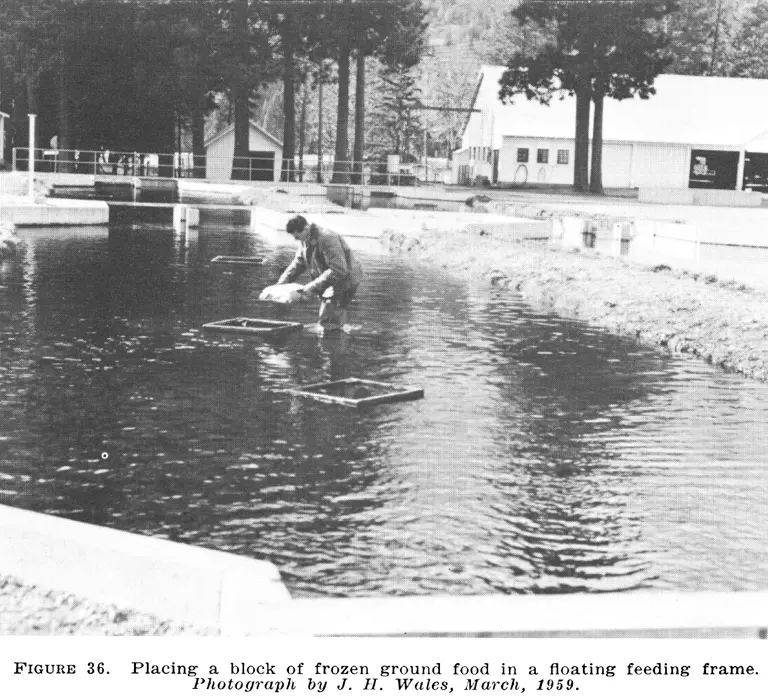
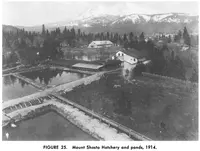
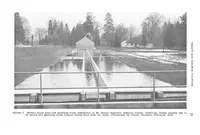
Lake Street runs west from the central Mount Shasta exit off Interstate 5, becomes Hatchery Lane, and crosses Old Stage Road straight into the parking lot of the Mount Shasta Fish Hatchery. The State of California Department of Fish and Wildlife operates it and calls it the oldest trout hatchery west of the Mississippi. The grounds are open from 8:00 a.m. to 3:00 p.m. for self-guided tours, and there are picnic tables. The brood stock lives in four concrete raceways, and these fish can grow to nearly 10 pounds. Two earthen raceways raise trout to catchable size. Their rock sides and gravel bottoms, the department says, come closer to a natural stream than concrete does, and Mount Shasta is one of the last of its hatcheries still raising catchable trout this way.
From mid-March through July, visitors to Hatchery Building B can watch eggs hatch and fry being raised. The fry leave the hatchery building for the nursery ponds and grow there until they are ready for the raceways.
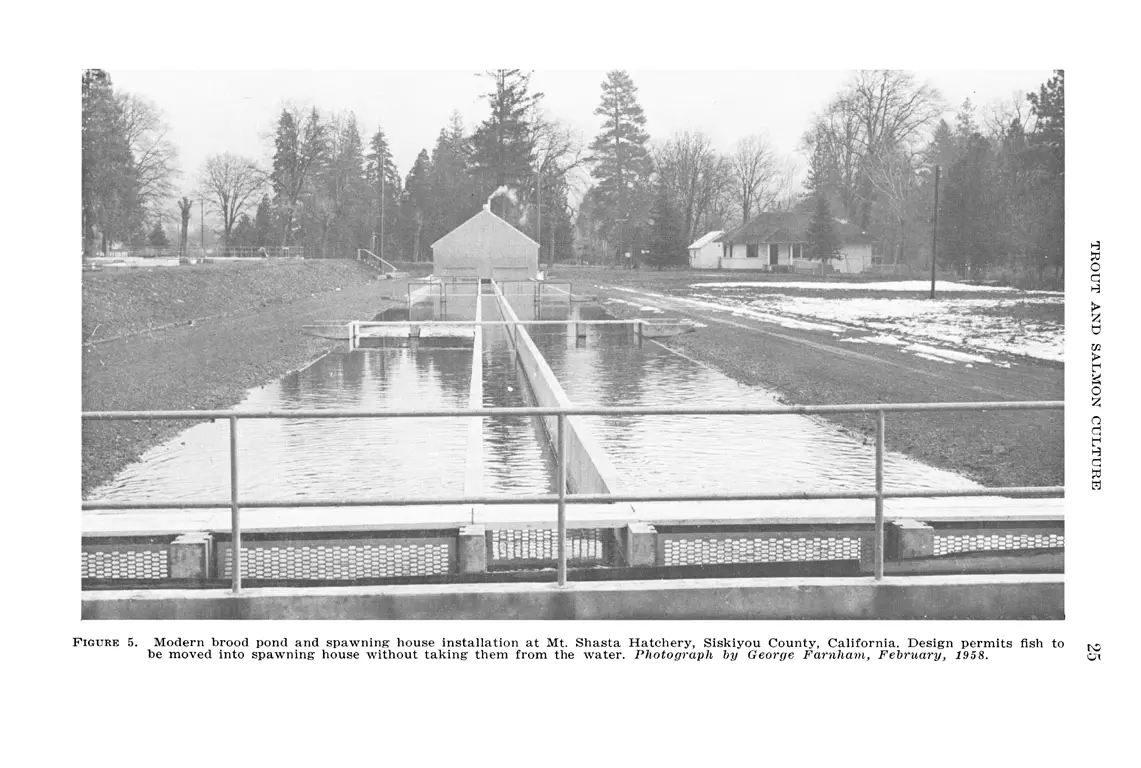
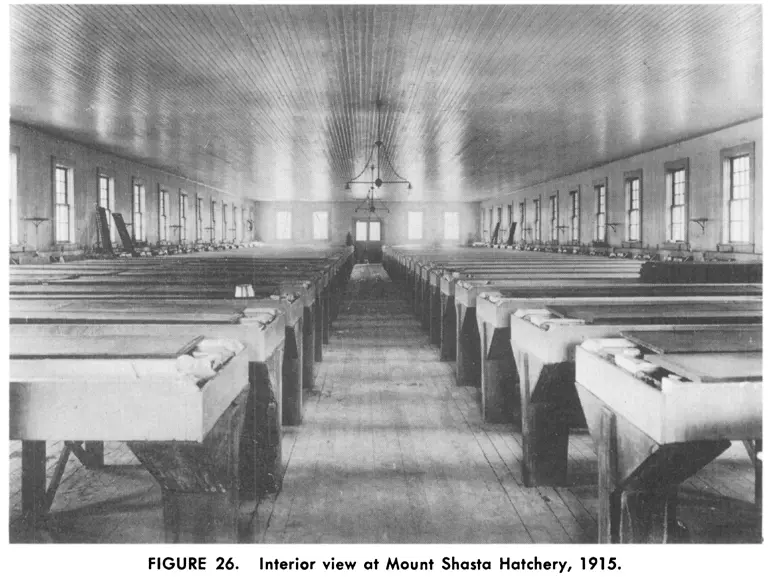
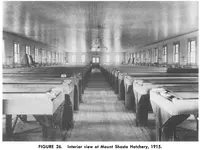
That spring work starts the previous fall. Beginning near Halloween, staff check the fish for ripeness, and for the next five months the crew spawns them as they come ready. Discover Siskiyou gives the spawning season as the beginning of November to mid-March. Fish go into the spawning house and are anesthetized for handling. On the sorting table each ripe female is air spawned: a needle inserted in the abdomen builds pressure that pushes the eggs out. Milt is collected separately from the males and added to the eggs in the hatchery building. The fertilized eggs are made triploid, which renders the fish sterile, and are set in vertical flow incubator stacks. In roughly 35 days an egg develops eyes. Most are shipped at that stage; the rest go into hatching jars and hatch about thirty days later. The water here is cold, and hatching takes longer for it.
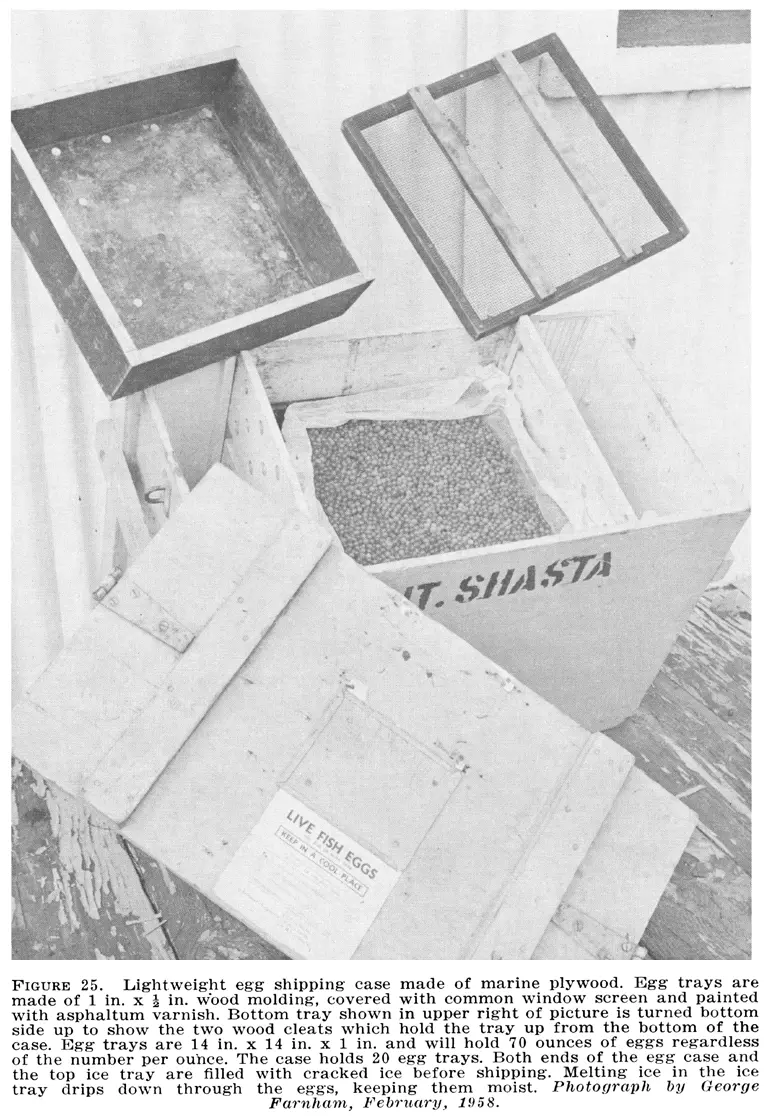
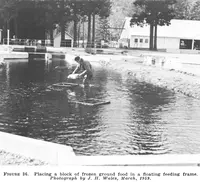
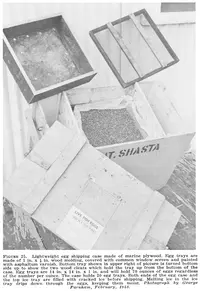
The hatchery supplies most of the eggs for the department’s other trout hatcheries. The department’s main page puts the figure at upwards of 30 million eggs a year. Its species page breaks it down: the Shasta and Coleman strains of rainbow trout average about 26 million eggs, Eagle Lake trout about 5 million, and brown trout about 3 million. Before shipping, a small machine sorts the eggs with an electronic eye and puffs of air, and workers remove any remaining dead eggs by hand with a bulb picker. The eggs now travel in Styrofoam containers packed with ice. The old containers were plywood boxes holding 20 trays, with ice on top that kept the eggs moist as it melted.
Fry that stay are raised in the troughs. Some are stocked as fingerlings into approved backcountry lakes by airplane or by horse and mule, and the Backcountry Horsemen often help pack them in. The rest grow to catchable size and go out by truck to roadside waters through the spring and summer.
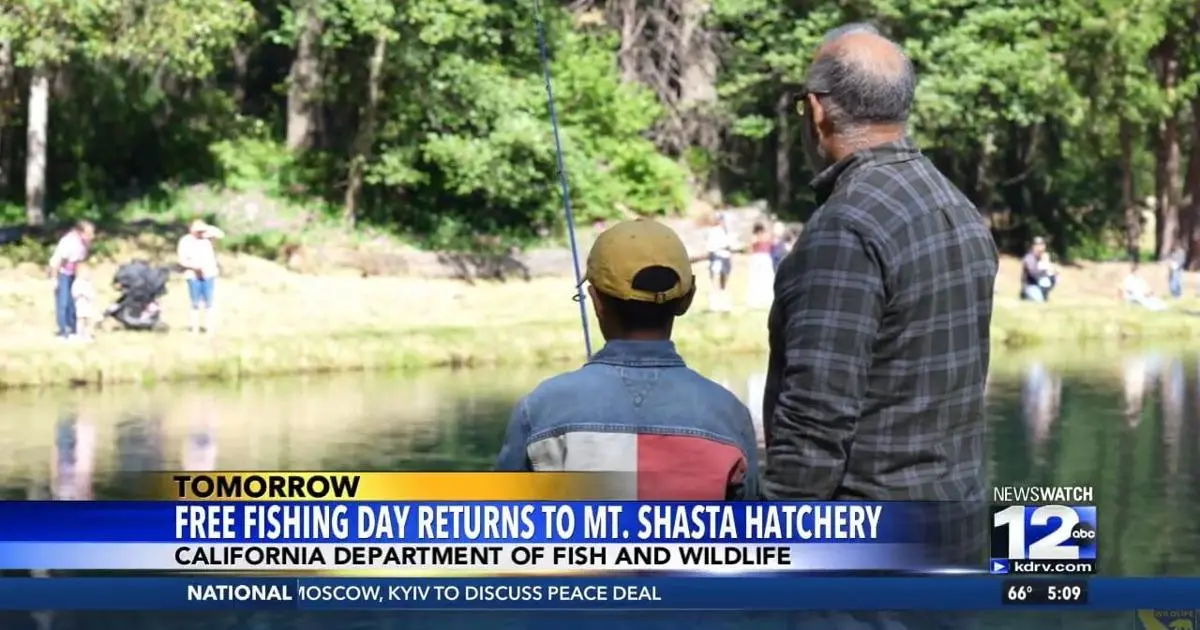
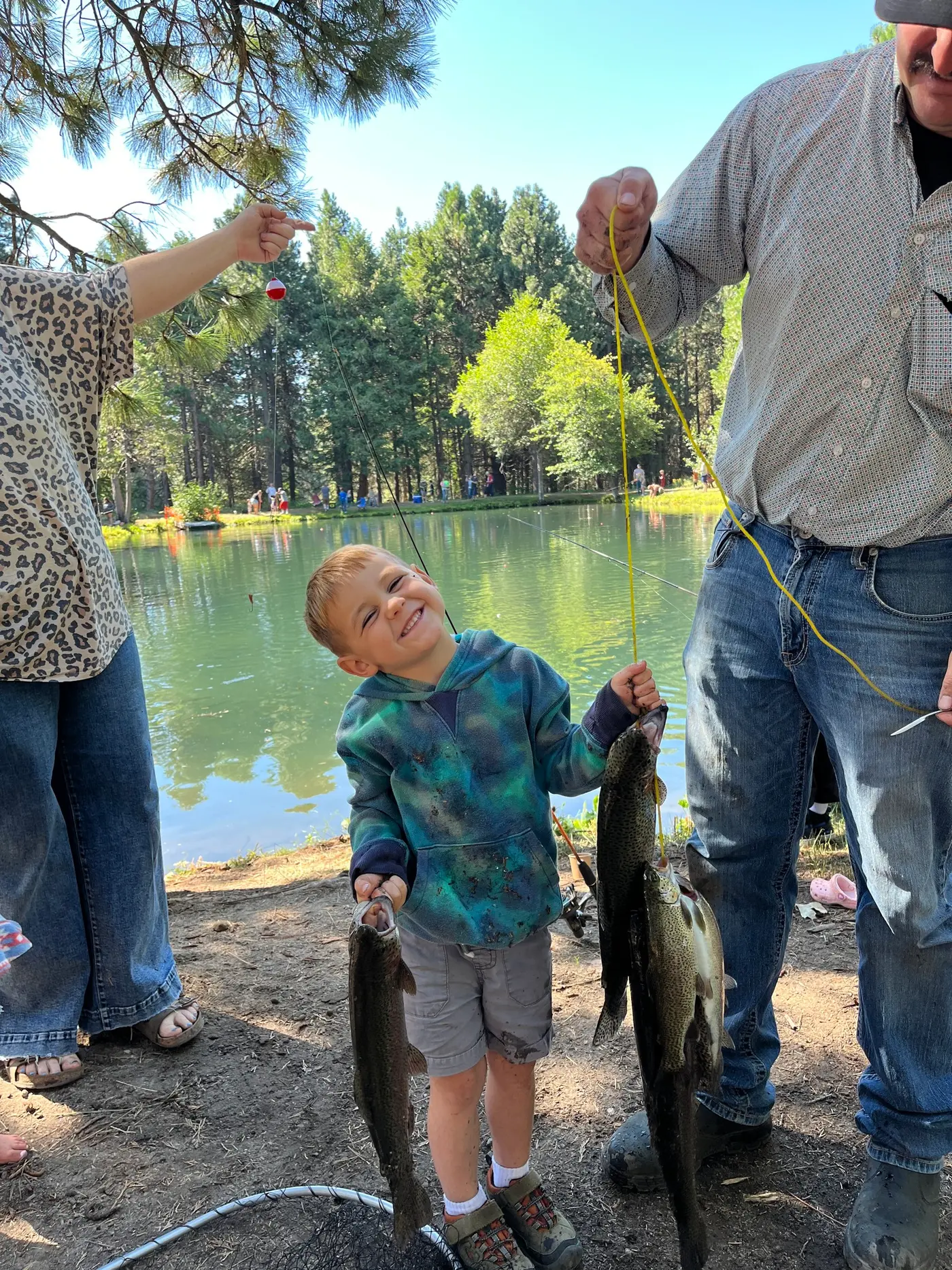
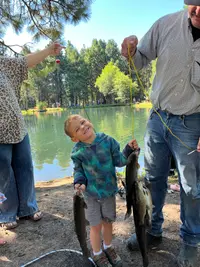
Twice a summer the settling ponds are stocked for children instead. The 2026 Kids’ Fishing Days fell on Saturday, June 27 and Saturday, July 25. They were open to anglers 15 and younger, with free bait, a small supply of loaner tackle, ice for the trip home, and volunteers on hand to help.
A walking trail named for Elsa Rupp leads from the hatchery to a nature area she gave to the Department of Fish and Game in 1973.
The museum in Hatchery Building A
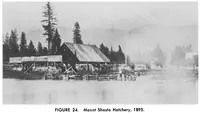
The front building on the grounds is the Mount Shasta Sisson Museum. The Department of Fish and Wildlife dates the building to 1909. Jefferson Public Radio, reporting in 2026, says it was built between 1905 and 1910. Admission is free, with donations asked, and the season usually runs from late March through December. The 2026 season opened March 19.
The museum has three large exhibit halls and an events room, and its executive director, Jean Nels, taught for 34 years before taking the job. Many of the volunteers are retired teachers too. The museum counts about 30 of them, giving more than 14,000 hours a year. “People learn by playing, learn by doing,” Nels told Jefferson Public Radio. “It makes it more real if they can touch it and do it.” Visitors crawl through a recreated lava tube in the volcano exhibit, work a flume that shows how logs were moved, and drive a locomotive in “Railroading ‘Round the Mountain,” among model trains and a full-sized hand car. Children ride Lulu Belle, the museum’s 1915 Model T fire truck. A 2026 radio caption says the truck was used against a fire that raced through the town. Murals show the 1917 fire and the arrival of the railroad.
The exhibits for the 2026 season include a new one, “Mount Shasta Stories,” along with displays on the lenticular clouds that form over the mountain, the century-old Sierra Club Foundation Shasta Alpine Hut, the history of climbing the peak, and a collection of local Native American basketry. One case holds the top of an 1870s signal cone. Surveyors used it to fix property lines and map the California-Oregon border, and the site is associated with what has been described as the longest mirror flash ever measured, 192 miles. Lightning brought the structure down in 1903.
The museum’s mascot is a yellow 1949 Dodge pickup named Susie. Alice Codamo, known around town as “Damo,” bought it new from Bruno’s Garage. According to her grandson, the museum president Jim McChesney, she drove it to town most days to shop at Marconi’s and Cervelli’s market, always parked on the side street by Schuller’s store, and kept driving it into her 90s. Its top speed was 45 mph. McChesney eventually gave it the engine, transmission, and axles from a 1988 Dodge that had sat ten years in a friend’s field, and he painted the museum’s logo on the doors.
Sisson’s tavern and the Fish Commission
The museum carries the name of Justin Hinckley Sisson, 1826 to 1893, whom its 2016 brochure calls “pioneer and originator of the fish hatchery.” A state landmark marker on Old Stage Road, erected in 1947 by the Siskiyou County Historical Society, sets out his neighborhood. The Strawberry Valley Stage Station stood across the road from 1857 until the railroad reached the valley in 1886. Sisson was the first postmaster of the Berryvale Post Office, which ran from 1870 to 1887. Behind the marker stood his hotel, built about 1865, which the marker says was known to mountain climbers, fishermen, hunters, and vacationers throughout California. It burned in 1916. When the business center moved to the railroad in 1886, Strawberry Valley became Sisson. In 1923 the town was renamed Mount Shasta City.
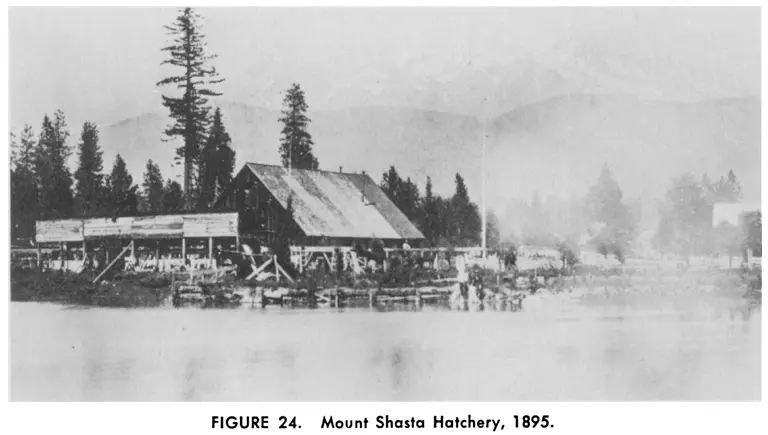
The accounts of Sisson’s fish differ in their details. The landmark says that in 1877 he reared trout to stock the streams in the vicinity. The Department of Fish and Wildlife says that possibly as early as 1877 he was raising trout and salmon as a draw to keep visitors at his tavern. A 2024 history in Siskiyou News says that in 1877 he built a trout-rearing pond near the tavern to improve fishing for his guests.
In 1888 the California Fish Commission took over. The department says the commission bought the hatchery. The Siskiyou News account says it established Sisson Hatchery on Spring Creek, a tributary of the upper Sacramento River, and chose the site for its supply of pure water and its nearness to the railroad. Earl Leitritz’s 1970 state bulletin on California’s hatcheries places it near Big Springs, on land Sisson had owned, with Baird Hatchery on the McCloud River serving as its egg collecting station. The sources also differ on the first building. Siskiyou News describes a 40-by-60-foot building with 44 troughs, built under the first superintendent, J.A. Richardson. The department records one building with 66 rearing troughs and production limited to a few thousand fish a year at the start.
Fish cars, mules, and airplanes
W.H. Shebley succeeded Richardson in 1893. By 1910, according to Siskiyou News, output had risen from a few hundred thousand fry to 66 million trout and salmon fry a year. The department ties nearly the same figure to the 1909 construction of Hatchery Building A. In 1911 the Fish and Game Commission created a Department of Fish Culture and Distribution with Shebley at its head. R.W. Requa, made assistant superintendent that year, is credited with inventing the Requa rotary fish screen.
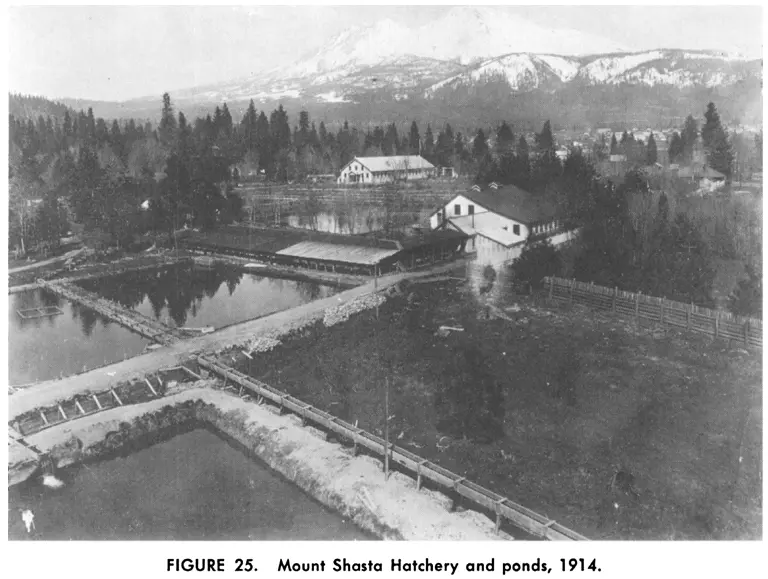
Distribution was the difficult part. The first fish went out in railroad baggage cars with the water aerated by hand. The state bought its first specialized fish car in 1907 and a second in 1915. Each could carry up to 250,000 fish a trip, as far as Mexico City. Trucks came into use as early as 1917, mules and horses packed fish to remote waters, and in 1946 airplanes began stocking the high mountain lakes. By 1926 the hatchery had 60 ponds and five hatchery buildings holding 468 hatching troughs. When Copco Dam went up on the Klamath River in the 1920s, the hatchery set up the Fall Creek Egg Collecting Station near Copco. Eggs taken there from wild king salmon were hatched at Sisson and the young released back into the Klamath. Captain G.H. Lambson oversaw Mount Shasta and the Klamath River stations from 1917 to 1931, and on July 21, 1923, he gave Leitritz his first assignment there.
Construction of Shasta Dam on the upper Sacramento began in 1938, and the salmon could no longer reach the hatchery. It turned to other fish. Over the years it has raised trout, salmon, arctic grayling, largemouth bass, sunfish, perch, catfish, and sturgeon. The same year it began selective breeding, mostly of rainbow trout. Its fall-spawning rainbow strain came out of a breeding line that Siskiyou News traces to McCloud River eggs in 1883. In 1950 the old ponds were replaced with raceways and three hatchery buildings were torn down. Siskiyou News says the work ran to 1952 and added 16 raceway ponds, 8 brood ponds, a modern spawning house, and a metal hatchery building. Trout eggs have since gone to Mexico, New Zealand, China, India, Pakistan, the Philippines, Bangladesh, and several states including Hawaii. The department says it is believed that the hatchery has produced more salmon and trout than any other hatchery in the world.
Saving the front building
In 1979 the Department of Fish and Game decided the front building no longer suited its needs and planned to tear it down. Vera Dal Gallo heard about it. She lived on the property that had once held Sisson’s tavern and home, and she proposed the building as a museum for the town. At the first meeting Donna Brooks, Frank Dal Gallo, Charles Fullerton, Gino Marconi, and Helen Bliss agreed. Louie Melo, who had taught architecture at San Jose State College, drew the renovation plans for free. “We have very few historical buildings left, and they wanted to keep that one,” Nels said of them. The group worked out a twenty-five-year lease with the state, and Governor Brown signed the bill in October 1981.
Velma Nile volunteered as the first director. “So, for one year I worked 40 hours a week doing something I had never done before: start up a museum,” she recalled. “At that time, there was no money in the budget for salary.” The museum opened on July 4, 1983, and it reports more than 500,000 guests since then. A founding member, Lee Apperson, remembered the volunteers who ran the store, set up displays, kept the books, and did “the million and one tasks that kept the museum running growing, and being interesting.”
When the first lease neared its end, Senator Dahle carried Senate Bill 1009. The governor approved it on July 15, 2024. It authorizes the state to lease Building A and its storage building to the Mt. Shasta Museum Association at no cost, for a historical museum and environmental education, for a term not to exceed 25 years, with the possibility of renewal.
Notable Events
- 1877J. H. Sisson started rearing trout to stock streams in the vicinity, before the hatchery's founding. ohp.parks.ca.gov
- 1877J.H. Sisson constructed a trout-rearing pond near his tavern to enhance fishing opportunities for guests. siskiyou.news
- 1883The hatchery's fall-spawning rainbow trout strain resulted from a long-term breeding program beginning with McCloud River eggs in 1883. siskiyou.news
- 1888The California Fish Commission established Sisson Hatchery on Spring Creek in Siskiyou County; pure water and proximity to the railroad motivated the site choice. siskiyou.news
- 1893W.H. Shebley succeeded Richardson, beginning an era of expansion and increased production. siskiyou.news
- 1905The former fish hatchery building that houses the museum was built between 1905 and 1910. ijpr.org
- 1907Specialized fish cars were used for distribution. siskiyou.news
- 1910By 1910 annual hatchery output had grown from a few hundred thousand fry to 66 million trout and salmon fry. siskiyou.news
- 1911R.W. Requa was appointed Assistant Superintendent; the source also identifies him as inventor of the Requa rotary fish screen. siskiyou.news
- 1920sCopco Dam construction on the Klamath River presented a salmon-conservation challenge; Sisson Hatchery responded by establishing Fall Creek Egg Collecting Station near Copco. siskiyou.news
- 1926By 1926 the hatchery included 60 ponds and five hatchery buildings with 468 hatching troughs. siskiyou.news
- 1938The hatchery initiated selective breeding, primarily for rainbow trout, with applications to salmon conservation. siskiyou.news
- 1938When Shasta Dam construction prevented salmon from reaching the hatchery, Mount Shasta Hatchery switched to other species. wildlife.ca.gov
- 1946Aerial stocking of high mountain lakes began, marking a new era in fish distribution. siskiyou.news
- 1946Mules and horses were used to pack fish to remote areas until 1946. siskiyou.news
- 1950The facility was remodeled with 16 new raceway ponds, 8 brood fish ponds, a modern spawning house, a metal hatchery building, and improved feed preparation and storage facilities. siskiyou.news
- 1973The nature area reached by the Elsa Rupp Trail was donated to the Department of Fish and Game. wildlife.ca.gov
- 1979Community members saved the structure from demolition, recognizing its value in a region with few historic buildings remaining. ijpr.org
- 1979The Department of Fish and Game decided the front hatchery building no longer suited its needs and planned to tear it down. mtshastamuseum.com
- 1979The Mount Shasta Museum Association formed when a surplus State Fish Hatchery building became available as a community museum. mtshastamuseum.com
- 1981The group obtained a twenty-five year building lease through work with the state and Department of Fish and Game; Governor Brown signed the bill. mtshastamuseum.com
- 1983Community support enabled the Sisson Museum to open in the renovated former hatchery building. mtshastamuseum.com
- 2024The approved act authorizes a no-cost lease of part of the Mount Shasta Fish Hatchery to the Mt. Shasta Museum Association, for a term not exceeding 25 years with possible renewal. leginfo.legislature.ca.gov
People
- Jean Nels, Executive director of the Mt. Shasta Sisson Museum housed in the former hatchery.
- Bruce Ross, Dahle staff member thanked for shepherding the museum lease bill through the legislative process.
- Charles Fullerton, At the first meeting, supported establishing a town museum in Hatchery Building A.
- Donna Brooks, At the first meeting, supported establishing a town museum in Hatchery Building A.
- Frank Dal Gallo, At the first meeting, supported establishing a town museum in Hatchery Building A.
- Gino Marconi, At the first meeting, supported establishing a town museum in Hatchery Building A.
- Governor Brown, Signed the bill associated with the group's building lease (October 1981).
- Helen Bliss, At the first meeting, supported establishing a town museum in Hatchery Building A.
- Lee Apperson, Founding member of the museum established in the hatchery building.
- Louie Melo, Former architecture teacher at San Jose State College who volunteered to draw renovation plans without charge.
- Senator Dahle, Legislative supporter thanked for shepherding the museum lease bill through the legislative process.
- Taylor Brown, Dahle staff member thanked for shepherding the museum lease bill through the legislative process.
- Ted Marconi, Secretary, Board of Directors, of the museum occupying the hatchery building.
- Velma Nile, Volunteered as the museum's first Director.
- Vera Dal Gallo, Proposed the threatened hatchery building as a museum for Mount Shasta.
- Justin H. Sisson, Local inn and tavern owner who raised trout and salmon to attract visitors (Possibly as early as 1877).
- J.A. Richardson, First superintendent; oversaw construction of the initial hatchery facility.
- R.W. Requa, Assistant Superintendent and inventor of the Requa rotary fish screen (1911).
- W.H. Shebley, Succeeded Richardson at the hatchery, ushering in expansion and increased production (1893).
- Elsa Rupp, donor of the nature area reached by the trail that bears her name, given to the Department of Fish and Game.
Sources
- wildlife.ca.gov/Fishing/Hatcheries/Mount-Shasta
- wildlife.ca.gov/Fishing/Hatcheries/Mount-Shasta/History
- wildlife.ca.gov/Fishing/Hatcheries/Mount-Shasta/Kids-Fishing-Day
- wildlife.ca.gov/Fishing/Hatcheries/Mount-Shasta/Species-Raised
- wildlife.ca.gov/Fishing/Hatcheries/Mount-Shasta/Operations
- mtshastamuseum.com/plan-your-visit/hours-admission
- mtshastamuseum.com/on-display-now
- siskiyou.news/2026/04/20/mount-shasta-fish-hatchery-will-host-its-highly-anticipated-and-hugely-popular-kids-fishing-day
- kdrv.com/video/free-fishing-day-returns-to-mt-shasta-hatchery/video_845ed50a-8e4b-589b-b9ad-13c73e85a48e.html
- siskiyou.news/2024/08/22/a-blast-from-the-past-building-siskiyou-countys-future-at-sisson-hatchery
- ohp.parks.ca.gov/ListedResources/Detail/396
- noehill.com/siskiyou/cal0396.asp
- mtshastamuseum.com/museum-history
- mtshastamuseum.com/2024/07/19/a-cause-for-celebration-governor-signs-senate-bill-1009
- mtshastamuseum.com/wp-content/uploads/2016/03/mtshastasissonmuseum2016.pdf
- ijpr.org/podcast/the-jefferson-exchange/2026-07-13/mt-shasta-sisson-museum-history-northern-california
- leginfo.legislature.ca.gov/faces/billNavClient.xhtml?bill_id=202320240SB1009
- noehill.com/siskiyou/poi_sisson_museum.asp
- web.archive.org/web/20241215033646/https://www.noaa.gov/sites/default/files/legacy/document/2020/Oct/07354626232.pdf
- discoversiskiyou.com/activities/mt-shasta-fish-hatchery