Mora National Fish Hatchery
Mora, Mora County, New Mexico. National fish hatchery.
Details

- Where
- 25 Hatchery Row, Mora, NM 87732. Directions
- When
- Visitor Center Mon-Fri 7 am - 3:30 pm.
- Getting there
- NM State Highway 434, Mile Marker 2, Mora, New Mexico 87732.
- Walk-in or reserve
- Open to the public.
- Phone
- (575) 387-6022
- Managed by
- U.S. Fish and Wildlife Service.
- Established
- Created 1994; operational by 1998.
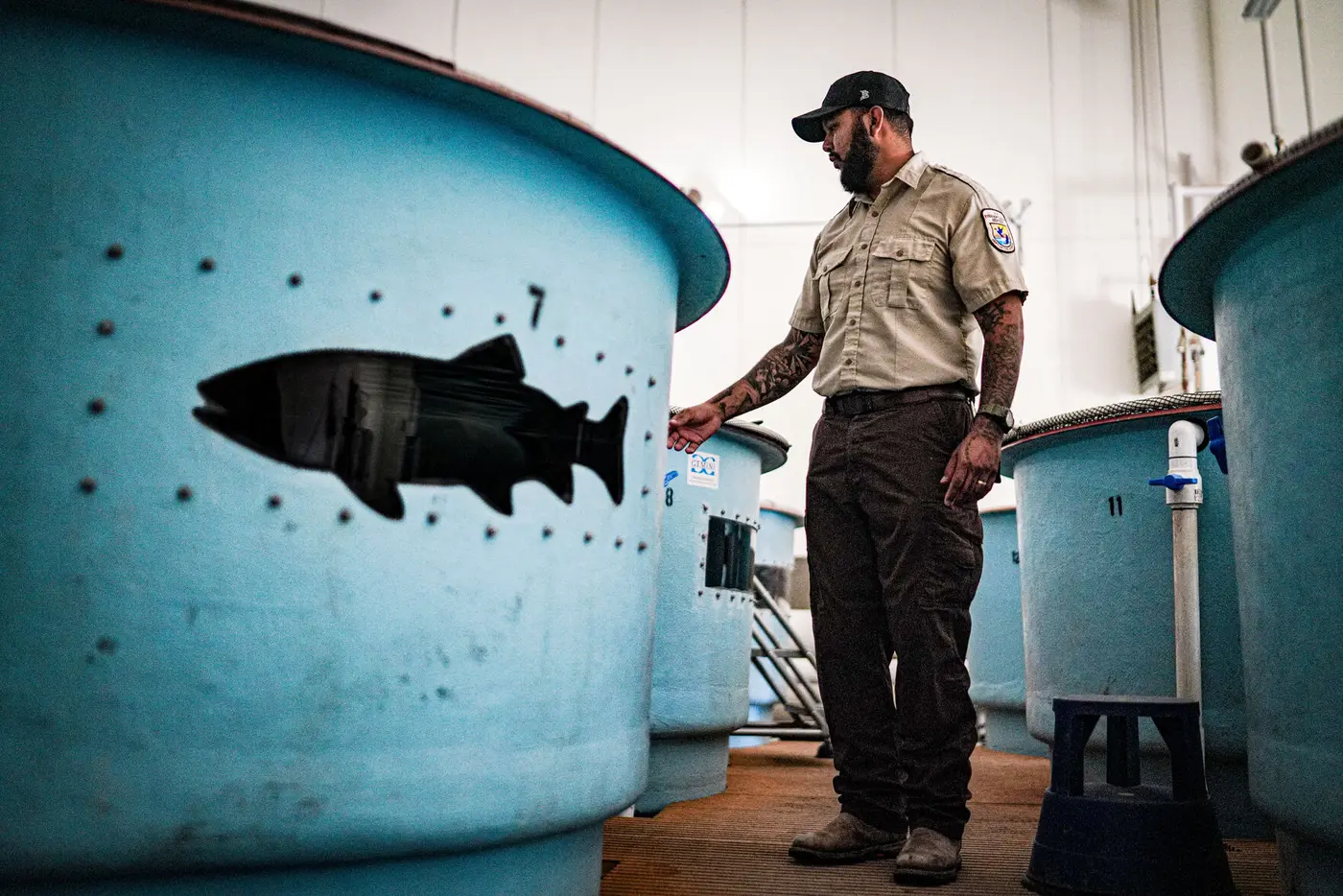
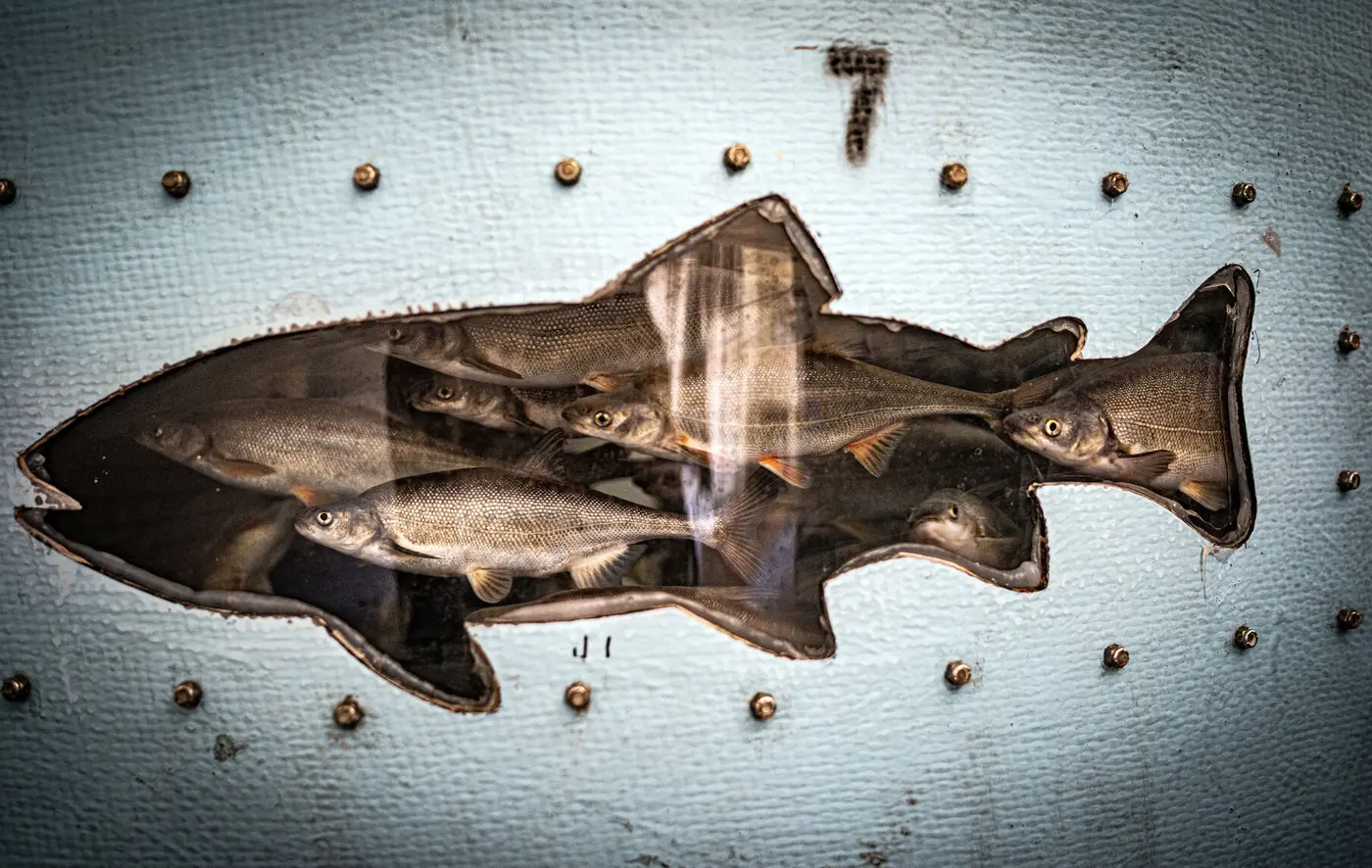
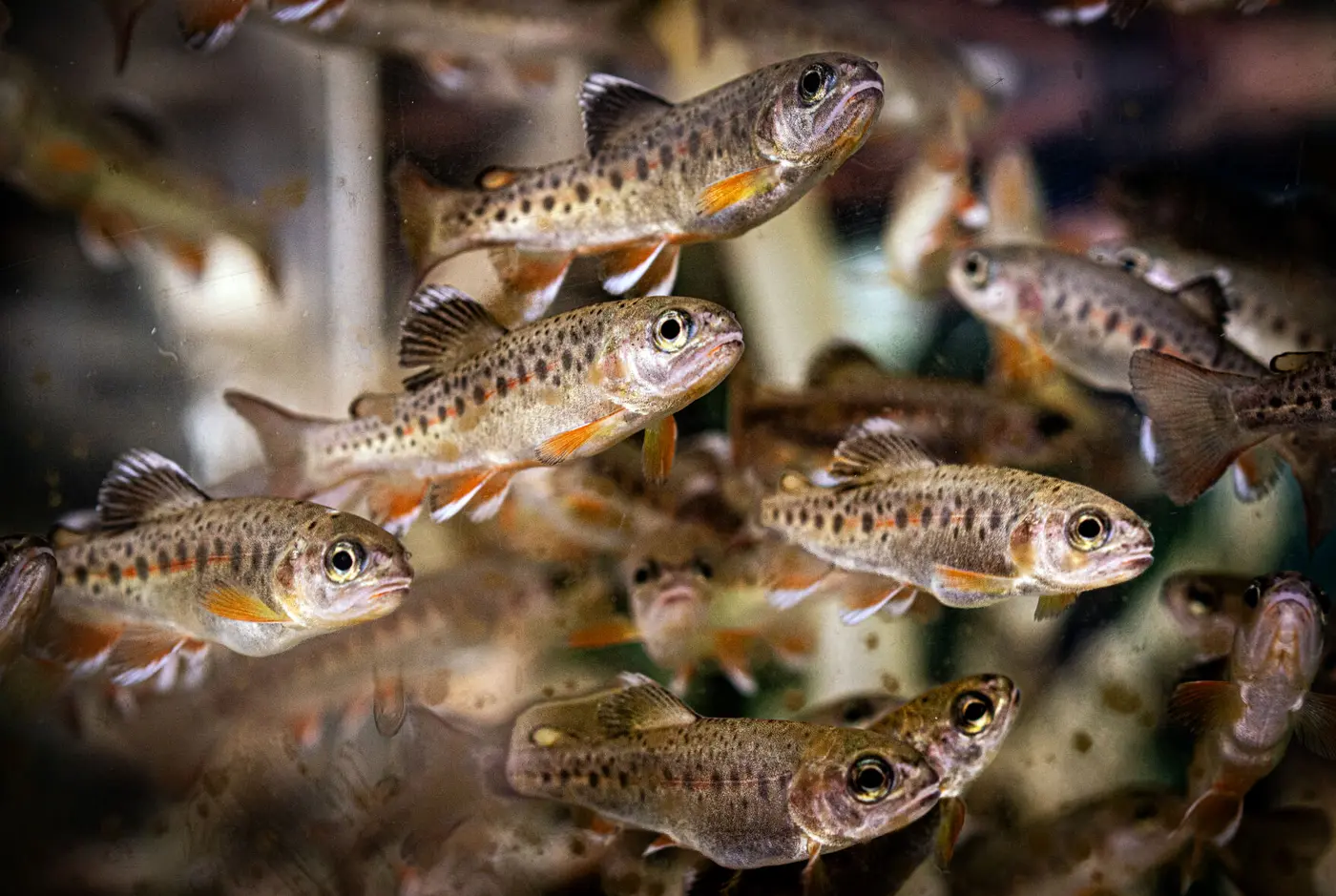
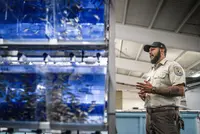
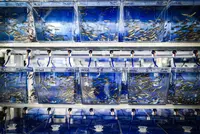
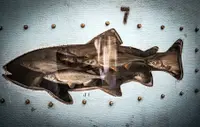
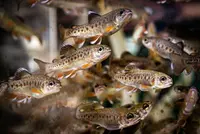
A tank of bonytail chub stands at the entrance to the Mora National Fish Hatchery, and the chub swim past a window cut in the shape of a fish. The bonytail is a Colorado River fish listed as endangered, thought by some to be among the most endangered freshwater fish in North America. The hatchery keeps a backup broodstock of it here. Inside, aquariums at the welcome center hold year-old Gila trout, the fish the place was given over to raising. Its color is sometimes compared to a New Mexico sunset: shimmery gold sides patterned with pink, orange and yellow, small dark spots gathered above the lateral line. Daniel Gallegos, the project leader, likes the description but cannot vouch for it. “Me, I’m colorblind,” he told The Santa Fe New Mexican in June 2025, looking into a tank of year-old trout.
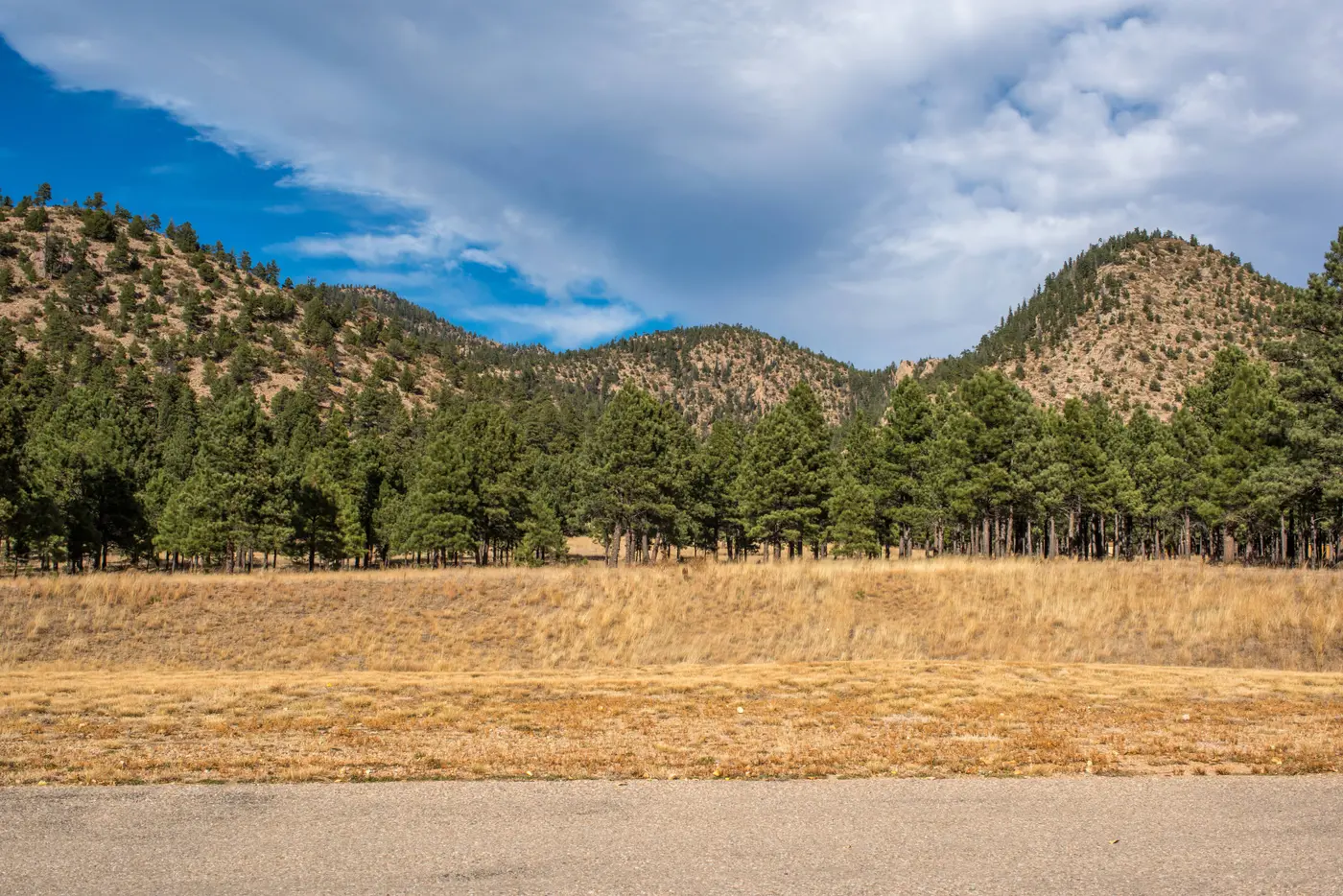
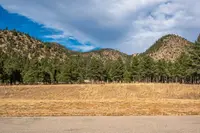
The hatchery stands about 1.5 miles north of the village of Mora, at Mile Marker 2 on State Highway 434. It sits at 7,200 feet among ponderosa pines at the eastern end of the Sangre de Cristo Mountains. The U.S. Fish and Wildlife Service runs it. On weekdays the visitor center is open and staff walk visitors through a short tour of the fish culture spaces. The service counts hundreds of visitors a year.
Three trails leave from the grounds. The Fish Pond Trail is listed at 0.30 mile and the Overlook Trail at 0.42 mile. The Juniper Trail is a 2.05-mile lollipop of moderate difficulty, about an hour and a half on foot, open to dogs and children and used for birding and ranger-led programs. The listing describes a path whose first quarter mile is packed and wheelchair-accessible as far as a shade structure. Past that point a two-mile loop runs through shortgrass prairie, piñon and juniper, oak, and conifer forest. It is a natural foot path, steep in places, and the service suggests sturdy shoes and a walking stick.
Tanks painted like a riverbed
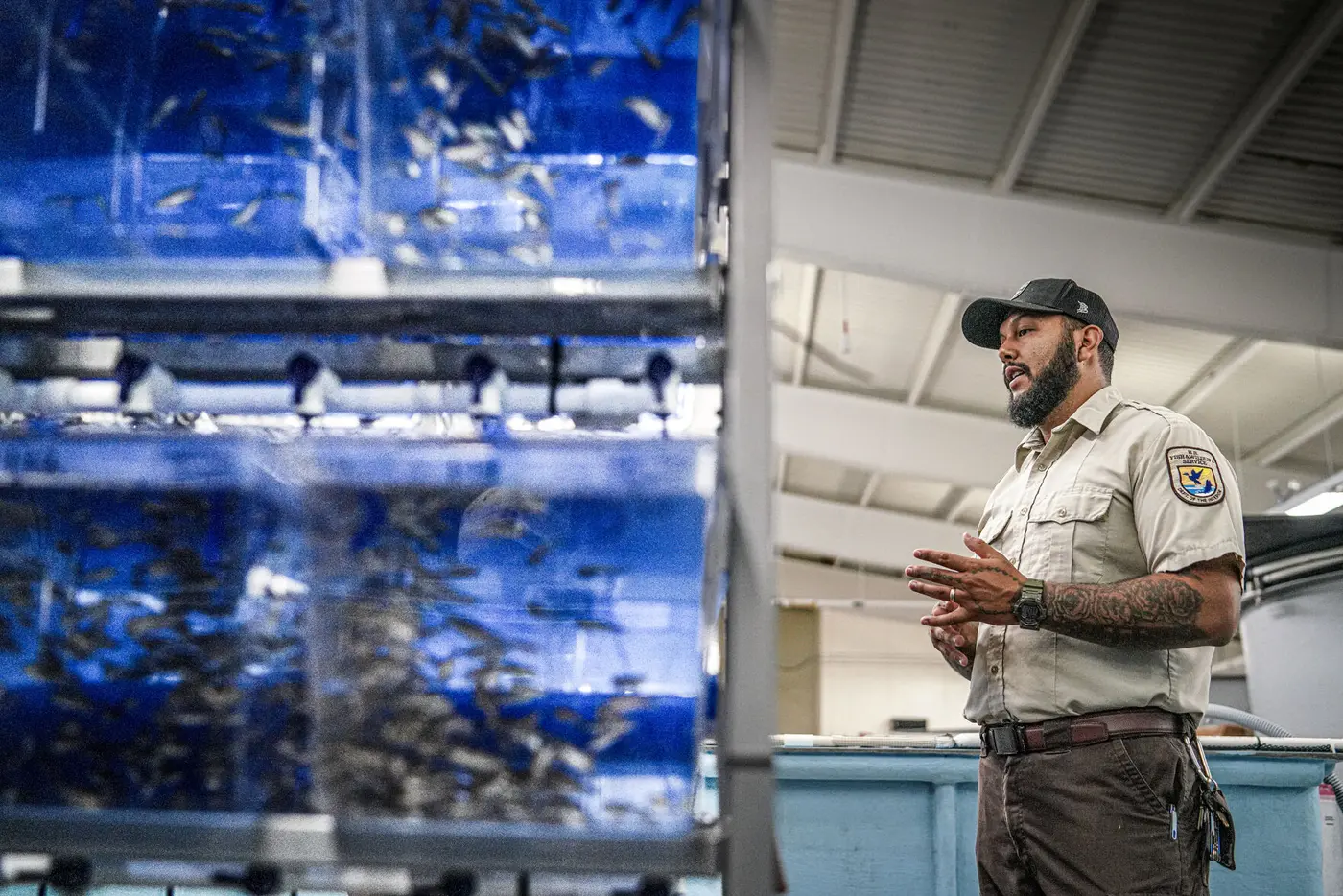
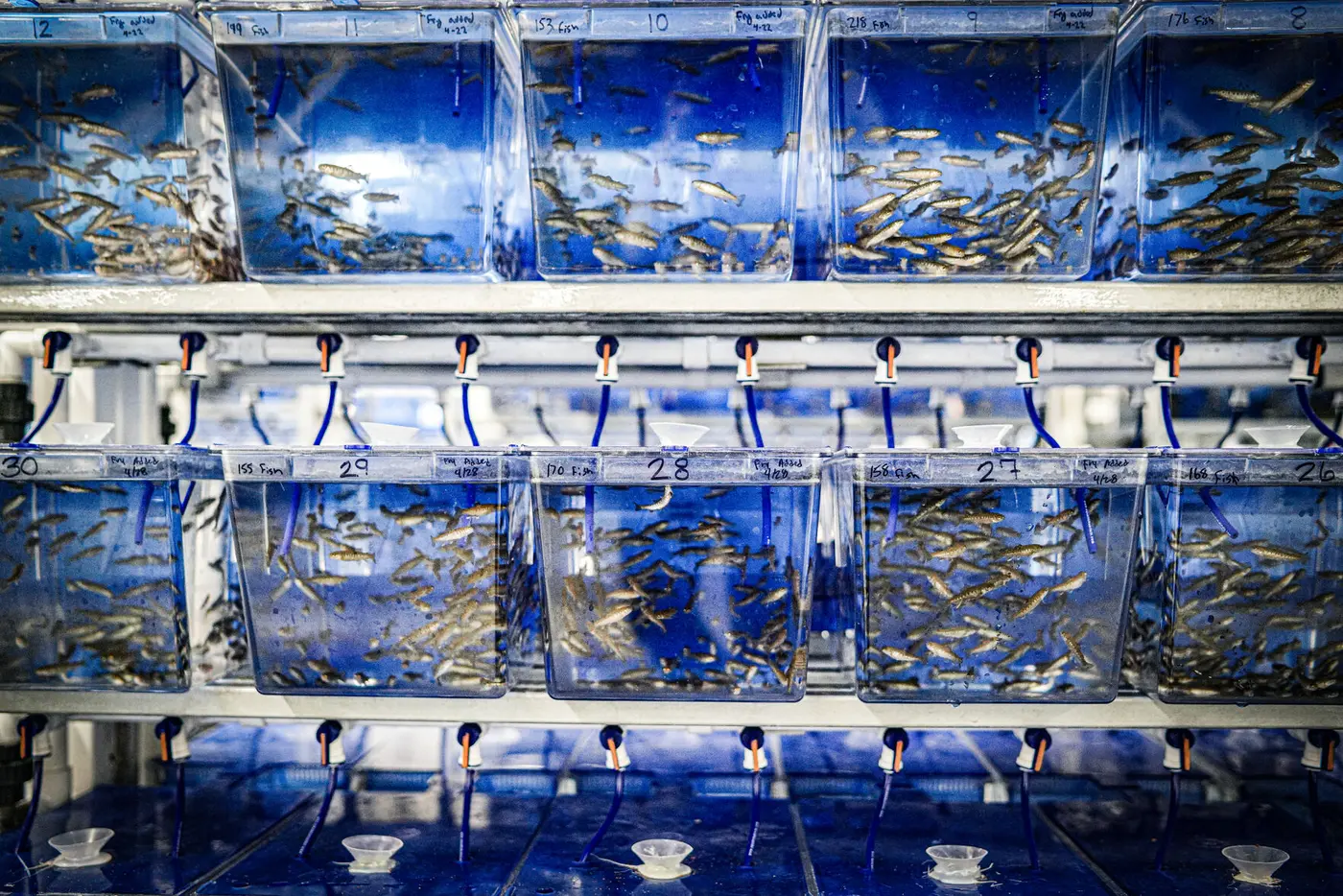
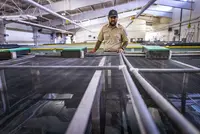
Beyond the visitor center, row after row of small tanks hold Gila trout a few months old. The fry are fed eight times a day. When Gallegos tipped an extra spoonful of rust-colored feed into one tank for the New Mexican’s reporter, the fish erupted in bubbling anticipation. Each breeding fish carries a passive integrated transponder tag, which is scanned and checked against a matrix of ancestry. Red marks a pairing too closely related, yellow a more distant one, and green a match cleared for breeding. The staff spawn only green pairs. “If you cross them, you’re going to maximize genetic diversity,” Gallegos said. “That’s our main role.”
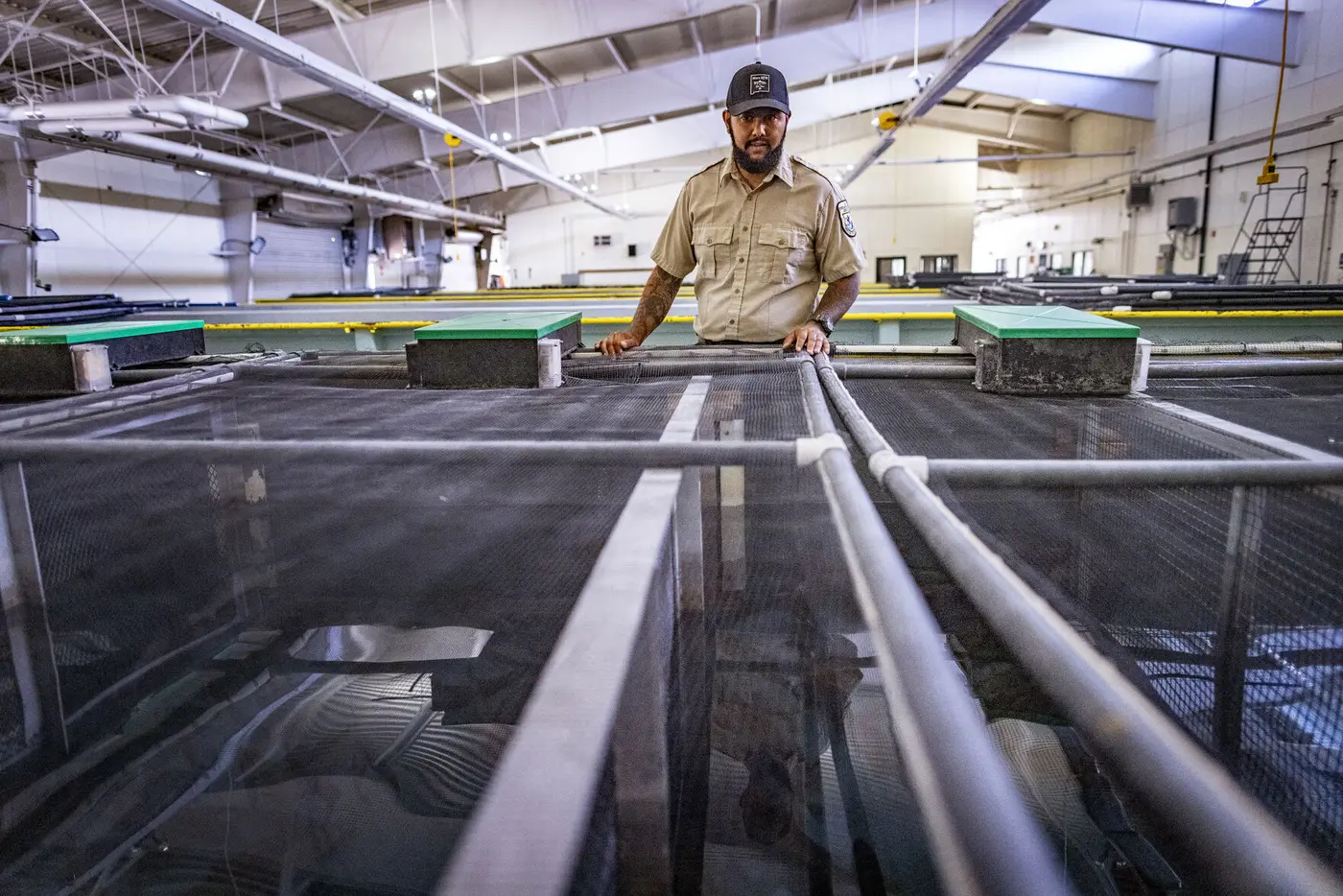
The old tanks were long, rectangular and light blue. Some fish now live in circular tanks that drain waste and sediment, and some tank interiors are painted a mottled brown to resemble the stones of a riverbed. When hatchery staff delivered trout to the Arizona Game and Fish Department in 2024, the Arizona crew noticed at once. “Hey man, what’d you guys do with these fish? These ones look way different,” Gallegos recalled them saying. The new fish blended into the creek. Earlier batches had shown up “like a flashlight” in the water. Gallegos wants every tank painted.
The hatchery was built to recirculate and reuse its water, which cuts its draw by about 95 percent. It runs on roughly 170 gallons a minute, and the fraction not recycled goes back into the Mora River. “We measure gallons per minute,” Gallegos said, setting Mora beside the hatcheries of the Pacific Northwest. “They measure their flow in a cubic feet per second.” Alarms watch the oxygen, gas pressure, temperature and flow around the clock. “In all my combined 10 years here, there’s not been one day where somebody has not reported in for duty, seven days a week,” he told a Fish and Wildlife Service writer in 2025.
Five creeks after the fires
The Gila trout lives only in high headwaters in New Mexico and Arizona. The hatchery’s own page gives its range as the Gila, Salt and Verde drainages, and the New Mexican gives its historic range as the Gila and San Francisco river basins. Five genetic lineages survive, each named for its creek: Main Diamond, South Diamond, Whiskey, Iron and Spruce. The hatchery raises all five, and it began building breeding populations of the Whiskey and Spruce Creek lines in 2012. Accounts of the fish’s listing differ. The New Mexican says it was declared endangered in 1967 under the predecessor to the Endangered Species Act. The Fish and Wildlife Service says 1966, and again in 1973. Both agree it was downlisted to threatened in 2006, which opened certain waters to anglers.
Fire is the danger Gallegos names first, because ash washes into the streams after a burn. According to a 2017 state Game and Fish article cited by the New Mexican, the Whitewater-Baldy Complex Fire of 2012 wiped out half a dozen populations, and the Silver Fire took two more the following year. During the Black Fire of 2022, a few dozen trout were carried out of Main Diamond Creek and held at Mora, and others died. “It almost set us back, not necessarily to square one, but set us way back,” Gallegos said. “That’s all it takes.”
Some fish go to the table and the creel. Early in 2025 the New Mexico Lady Anglers helped stock Lake Roberts with almost 1,000 retired Mora broodstock for the annual Aldo Leopold Kids Fishing Derby.
Counting eyed eggs
Gallegos grew up in Mora. He started at the hatchery in June 2012 as a Youth Conservation Corps intern and told his supervisor that one day he would have his job. He stayed on as a pathways intern through college and was hired as a fish biologist. After two years he left for other federal hatcheries, then came back in February 2023 as project leader over a crew of up to 13, a number that swells with students. “This is my hometown, and I am the first local project leader in the history of this facility,” he said. In 2024 the hatchery hosted 11 interns. On the June morning the New Mexican visited in 2025, a volunteer was mowing the grass.
What he found in 2023 was bad arithmetic. In 2022 only 16 percent of eggs reached eye-up, the stage where a fish eye shows through the shell. Only 10 percent of the young survived. The historic averages were about 20 percent eye-up and 30 to 40 percent survival. The old method let water into the egg’s opening and waited too long before fertilizing, so the opening could close. Now staff dry the female first, fertilize at once, and then add a solution. Brandon Maes, a fish biologist on the staff, proposed a different fertilizing solution and a new treatment for incubating eggs. “Perfection is the result of all the small steps done right,” Maes said.
Eye-up rose to an average of 70 percent in 2023 and 86 percent in 2024, with some lots at 98 percent. It held at 84 percent in 2025. Survival of the young climbed to 85 percent in 2023 and 91 percent in 2024. In 2023 the hatchery had about 60,000 surplus fish for the state’s anglers after its recovery stockings. In 2024 it produced almost 290,000 viable eyed eggs and shipped 130,000 to Canyon Creek State Fish Hatchery in Arizona. It hatched the other 160,000 and stocked about 112,000 fish. “When I first started here, producing 30,000 Gila trout was considered a great year,” Gallegos said. The service named Mora its Hatchery of the Year for 2023 and gave it an Environmental Leadership Award for the trout work.
The hatchery’s own page calls Mora the only facility that now raises the fish. Gallegos and the service’s 2025 story put it more narrowly, as the only hatchery raising Gila trout for recovery. They also note that Glenwood State Fish Hatchery in New Mexico and Canyon Creek raise it for sport. Gallegos started a Gila Trout Work Group with those two hatcheries to share methods, and Mora hosted its second annual meeting in January 2025.
Water from the Acequia del Norte
The hatchery began as a state idea. In the 1980s the New Mexico Department of Game and Fish looked into a hatchery at Mora to stock sport fish in area rivers, and in 1990 the state approved $1,000,000 for its construction. According to Antonio Medina, then president of the New Mexico Acequia Association, the department concluded there was not enough water and withdrew in 1991. Congressman Richardson then asked for a federal feasibility study. He noted Mora’s place among the poorest counties in the country and argued that a hatchery would bring tourist dollars. The study projected 10,000 tourists and schoolchildren a year. Senator Pete Domenici backed the plan. By February 1999 the community paper La Jicarita counted $13.7 million spent, some of it on farmland with water rights. Congress approved the hatchery in 1992, by Gallegos’s account, and construction began in 1994.
The Mora Land and Water Protective Association began objecting in March 1992. It said the project would “steal our most precious resource - El Agua” and would favor “the recreational industry of the wealthy outsider.” On January 19 through 21, 1999, the State Engineer’s Office heard the protest against moving 968.5 acre-feet of rights from the Acequia del Norte to four wells in the Mora Vega. The service put consumptive use at about 48 acre-feet. Peter White represented the protesting parciantes. José Rivera of the University of New Mexico warned in writing that large transfers “can destabilize the traditional and customary arrangements for water delivery, management, and self governance.” Mora County commissioners Joseph Garcia and Emma Duran Buck testified for the hatchery, and Garcia said the valley “has too much water.” State Engineer Tom Turney rejected the protest. La Jicarita faulted him for not explaining why less acequia water would not harm the valley’s public welfare.
The hatchery was operational by 1998, which in 2015 made it the newest in the federal system. It opened as the Mora National Fish Hatchery and Technology Center, paired with Dexter as the Southwestern Fisheries Technology Center under director Gary J. Carmichael. A June 1999 service publication still described it as in its final construction phase. “Tech centers are primarily focused on research,” Gallegos said. Gila trout had been raised at Mescalero, at what is now the Mescalero Tribal Fish Hatchery. After a flood closed that facility, the program came to Mora, and around 1999 and 2000 the station’s name and purpose changed with it.
In 2000 the Viveash Fire threatened a population of Rio Grande cutthroat trout while the nearest state hatchery was under renovation. Biologists brought the fish to Mora and housed them in a quarantine system, apart from the fish already there. Gallegos has said he would like to raise Rio Grande cutthroat at Mora one day.
Notable Events
- 1980sThe New Mexico Department of Game and Fish began looking into a Mora hatchery to provide sport fish for area rivers. lajicarita.org
- 1990sGila trout were initially raised at what is now the Mescalero Tribal Fish Hatchery; Mora took over in the 1990s and served as the state's lone source until the Glenwood conversion described in the article. newmexicomagazine.org
- 1990The approved projects included $1,000,000 for Mora hatchery construction: $400,000 from the game Protection fund and $600,000 from the game and fish department bond-retirement allocation. newspaperarchive.com
- 1991According to Antonio Medina, the State Game and Fish Department concluded that insufficient water was available and withdrew its proposal. lajicarita.org
- 1991La Jicarita reported that, with Richardson's and Domenici's support, the government had invested $13.7 million, some used to buy farmland with water rights for the hatchery project. lajicarita.org
- 1992The MWLPA began questioning whether the project would benefit poor and elderly Mora Valley residents. lajicarita.org
- 1992The hatchery was approved by Congress in 1992, Gallegos said. lasvegasoptic.com
- 1998The hatchery was operational by 1998, described as the newest hatchery in the U.S. Fish and Wildlife Service System. academic.oup.com
- 1998Construction began in 1994 and the hatchery became operational in 1998, Gallegos said. lasvegasoptic.com
- 1999The hatchery has bred and raised Gila trout since 1999 and is the only facility that now raises this rare fish. fws.gov
- 1999The contemporary FWS report described the Mora Fish Technology Center as presently in its final construction phase. fws.gov
- 1999On January 19 through the 21st, the State Engineer's Office heard the protest of transferring surface rights from the Acequia del Norte to four underground wells in the Mora Vega. lajicarita.org
- 1999Around 1999-2000 the title and goal of the hatchery changed when it was decided the site would be used as a Gila trout recovery program; research had been the main goal of the original technology center. lasvegasoptic.com
- 2000Rio Grande cutthroats threatened by the Viveash Fire were taken to Mora while the nearest state hatchery was being renovated; biologists housed them in a quarantine system to protect fish already at the center. digitalcommons.unl.edu
- 2012The hatchery began the process of developing breeding populations of the Whiskey and Spruce Creek lineages. fws.gov
- 2012Gallegos began his Mora hatchery career as a Youth Conservation Corps intern. fws.gov
- 2022A few dozen Main Diamond Creek trout were rescued during the Black Fire and held at Mora, while others perished. santafenewmexican.com
- 2022Only 10% of the fish survived in 2022. santafenewmexican.com
- 2023After new culture techniques and procedures, juvenile survival jumped to 85 percent in 2023. fws.gov
- 2023Gallegos returned as the new project leader, guiding and mentoring a team of upwards of 13 people. fws.gov
- 2023The hatchery received an Environmental Leadership Award for 2023 for its threatened Gila trout survival project and was recognized as Hatchery of the Year for 2023. lasvegasoptic.com
- 2024Gallegos reported almost 290,000 viable eyed eggs, 130,000 shipped to Canyon Creek, the remaining 160,000 retained and hatched, and about 112,000 fish stocked for recovery and recreation. fws.gov
- 2024Average eye-up reached 86 percent in 2024 after updated spawning protocols. fws.gov
- Gallegos led efforts to create the Gila Trout Work Group to share best practices. fws.gov
- 91% survived either to be released or to stay at the hatchery. santafenewmexican.com
- 84% of eggs went eye-up, stated as this year in the article. santafenewmexican.com
People
- Ronnie Maes, Assistant Center Director at Mora.
- Gary J. Carmichael, Director of Mora National Fish Hatchery and Technology Center.
- Brandon Maes, Mora fish biologist who proposed a different egg-fertilizing solution and a new incubation egg-treatment method.
- Daniel Gallegos, Gila trout project leader at the Mora Fish Hatchery (2023).
- Antonio Medina, President of the New Mexico Acequia Association, member of the Mora Land and Water Protective Association, and a protestant against the hatchery water transfer.
- Congressman Richardson, Requested a federally funded feasibility study, arguing that a hatchery could provide tourist-related dollars in impoverished Mora County (Since 1991).
- Dr. José Rivera, UNM public-administration professor quoted in the hatchery water-transfer story warning that significant transfers can destabilize traditional water management.
- Emma Duran Buck, Mora County commissioner who testified in support of the fish hatchery at the water-transfer hearing.
- Joseph Garcia, Mora County commissioner who testified in support of the fish hatchery at the water-transfer hearing.
- Pete Domenici, Senator who supported the hatchery proposal (Since 1991).
- Peter White, Water-rights attorney representing parciantes protesting retirement of acequia water rights for the hatchery.
- Tom Turney, State Engineer whose ruling rejected the Mora hatchery water-transfer protest arguments.
Sources
- fws.gov/fish-hatchery/mora/visit-us
- santafenewmexican.com/news/local_news/after-years-of-high-mortality-at-mora-fish-hatchery-local-project-leader-turns-recovery-efforts/article_83ca7a2a-f108-4587-be8e-508b8b965063.html
- fws.gov/fish-hatchery/mora/about-us
- academic.oup.com/fisheries/article-abstract/40/10/486/7834207
- lajicarita.org/99feb.htm
- lajicarita.org/99mar.htm
- newspaperarchive.com/clovis-news-journal-mar-11-1990-p-7
- fws.gov/story/2025-02/hooked-success
- fws.gov/sites/default/files/documents/2024-04/307.pdf
- digitalcommons.unl.edu/cgi/viewcontent.cgi?article=1014&context=fwnews
- newmexicomagazine.org/blog/post/glenwood-fish-hatchery