

Monte Vista Crane Festival
Monte Vista, Rio Grande County, Colorado. Festival; March.
Details

- Where
- Ski Hi Complex, 2335 Sherman Avenue, Monte Vista, CO 81144. Directions
- When
- March 5–7, 2027.
- Getting there
- Refuge farm-field viewing: pull-outs south of the Monte Vista NWR Office on County Road 8S; parking on County Road 7S between County Roads 2E and 3E.
- Fees
- Children ages 15 and under need no Festival Pass for talks, keynote, Friday movie or free Ski Hi programming with a parent or guardian.
- Hours
- 2026 Craft and Nature Fair: Friday March 6, 9 AM–5:00 PM; Saturday March 7, 9 AM–5:00 PM; Sunday March 8, 9 AM–2 PM.
- Access
- Crane roosts are closed to the public to protect the birds.
- Walk-in or reserve
- Guided experiences are separately ticketed and participants also need a Festival Pass.
- Phone
- 719-289-7522
- Website
- mvcranefest.org
- Managed by
- Craft and Nature Fair: Monte Vista Chamber of Commerce.
- Established
- 1984.
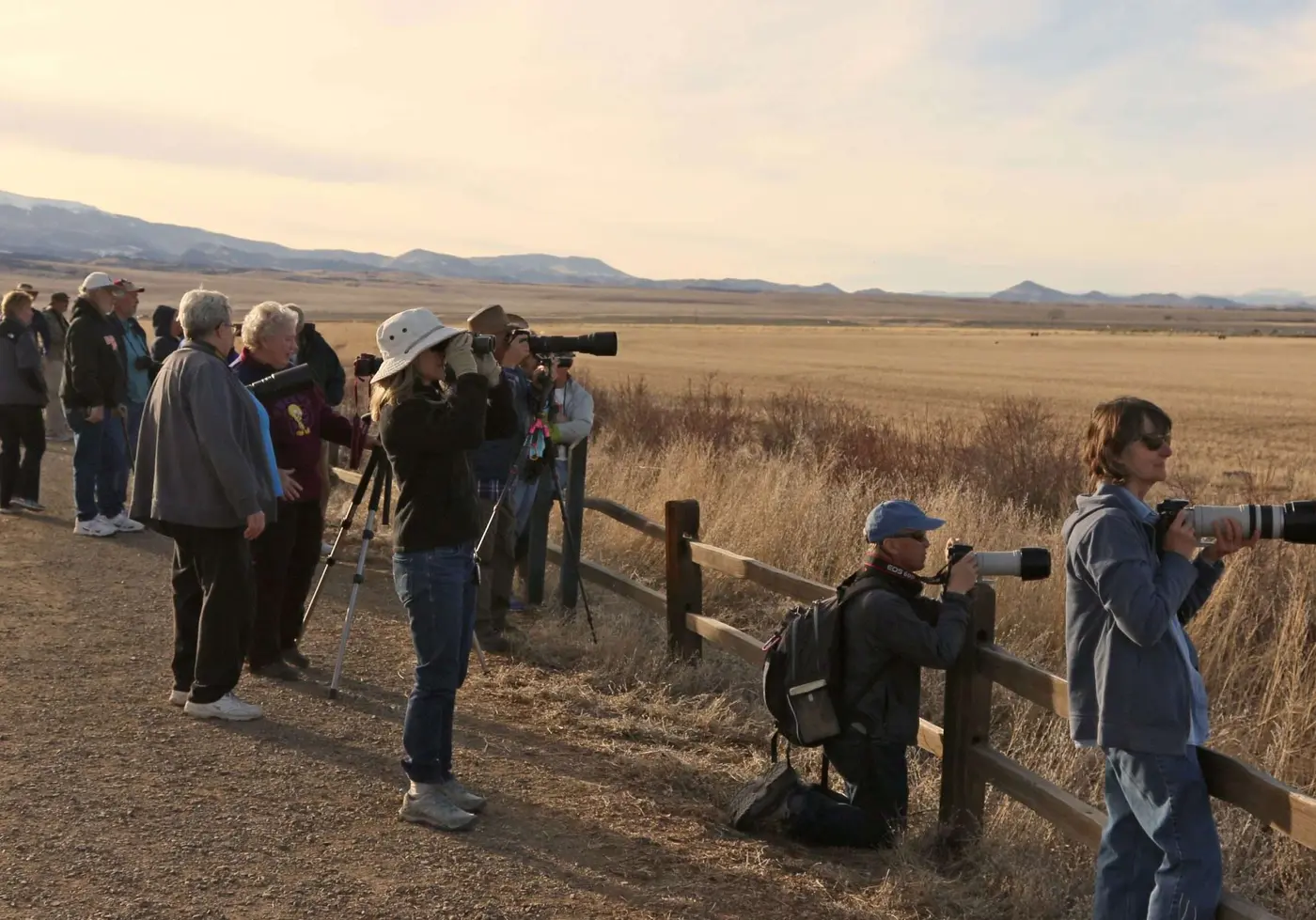
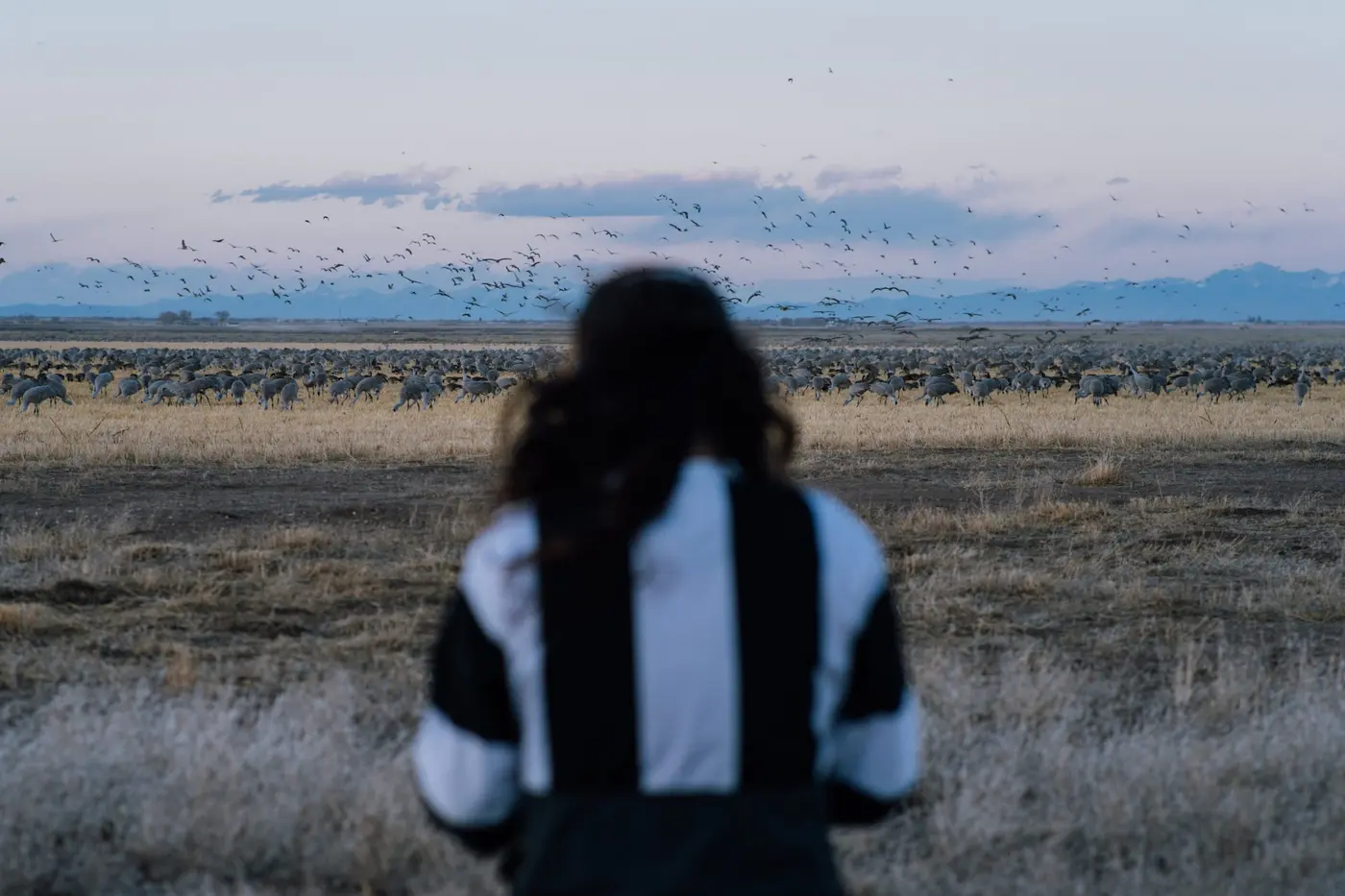
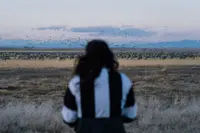
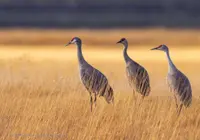
At sunset in early March the fields south of Monte Vista fill with sandhill cranes, and a chirping carries across the San Luis Valley as thousands more swirl down to roost. People stand along the county roads with binoculars and long lenses. Reporting from the 2026 festival, the Daily Yonder heard the same line from nearly everyone it talked to: “They sound like dinosaurs.” The U.S. Fish and Wildlife Service writes the call as “gar-oo-oo.”
The Monte Vista Crane Festival gathers around this stopover for three days each March. It is organized by the Friends of the San Luis Valley National Wildlife Refuges, an independent nonprofit that supports the Alamosa, Baca and Monte Vista refuges, and it is a major fundraiser for that group. The Monte Vista Chamber of Commerce, the City of Monte Vista and the San Luis Valley National Wildlife Refuge Complex are partners. The 43rd annual festival ran March 6–8, 2026, and the 44th is scheduled for March 5–7, 2027. The Chamber calls it “Colorado’s oldest birding Festival.”
Ski Hi and the church on Broadway
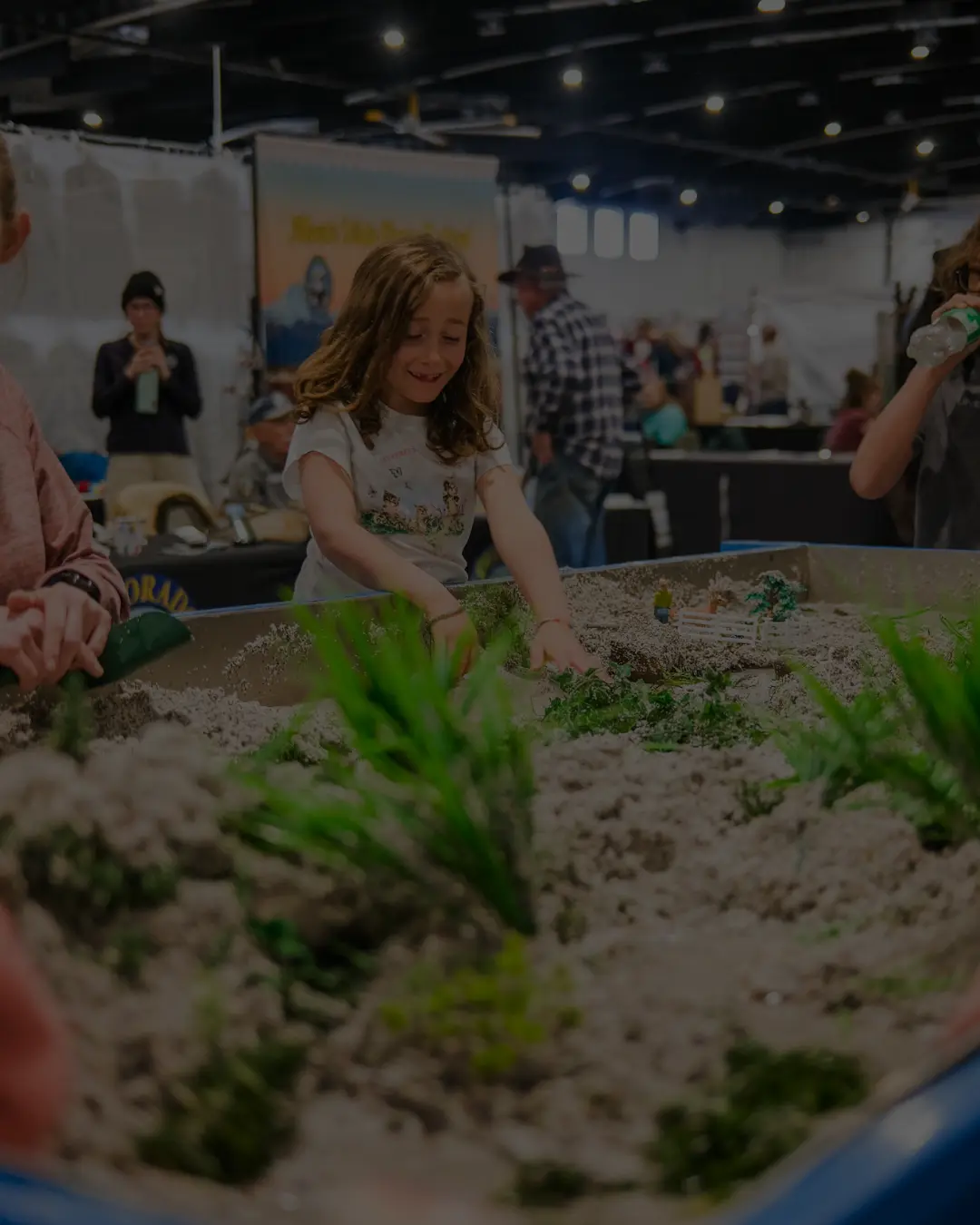
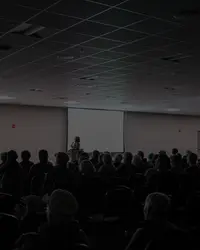
Festival headquarters is the Ski Hi Complex on Sherman Avenue, a grounds with rodeo arena, grandstand and the Outcalt Event and Conference Center. In March the center holds check-in, the talks, the keynote, the Friday night film, food vendors and the Craft & Nature Fair. The fair is run by the Chamber and is free. Artists, makers and nature organizations sell jewelry, fiber ware, photography, carvings and baked goods, much of it crane-themed. At the Colorado Parks and Wildlife booth in 2026, volunteers reenacted the cranes’ mating dance.
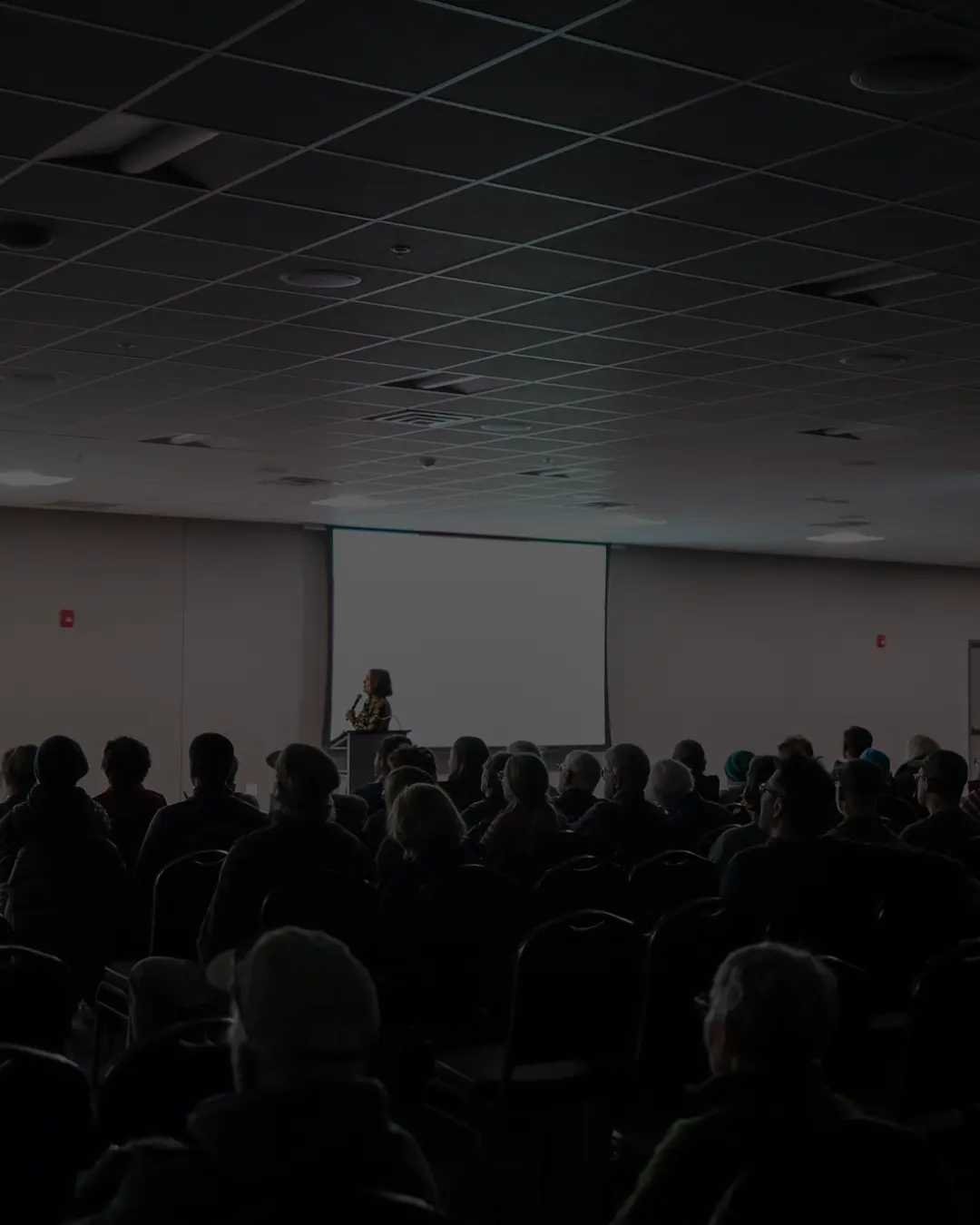
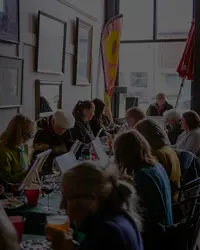
Amy Engle, the festival’s director, told the Daily Yonder that around 2,000 people came to ticketed events that weekend. Beginning with the 2027 festival, one Festival Pass, formerly called General Admission, covers the talks, the keynote and the film. Seats go first come, first served, and children 15 and under attend free with a parent or guardian. The 2027 keynote speaker is Kristi Dranginis, founder of Bird Mentor, who teaches people to read birds by their behavior, sound and habitat as well as their field marks.
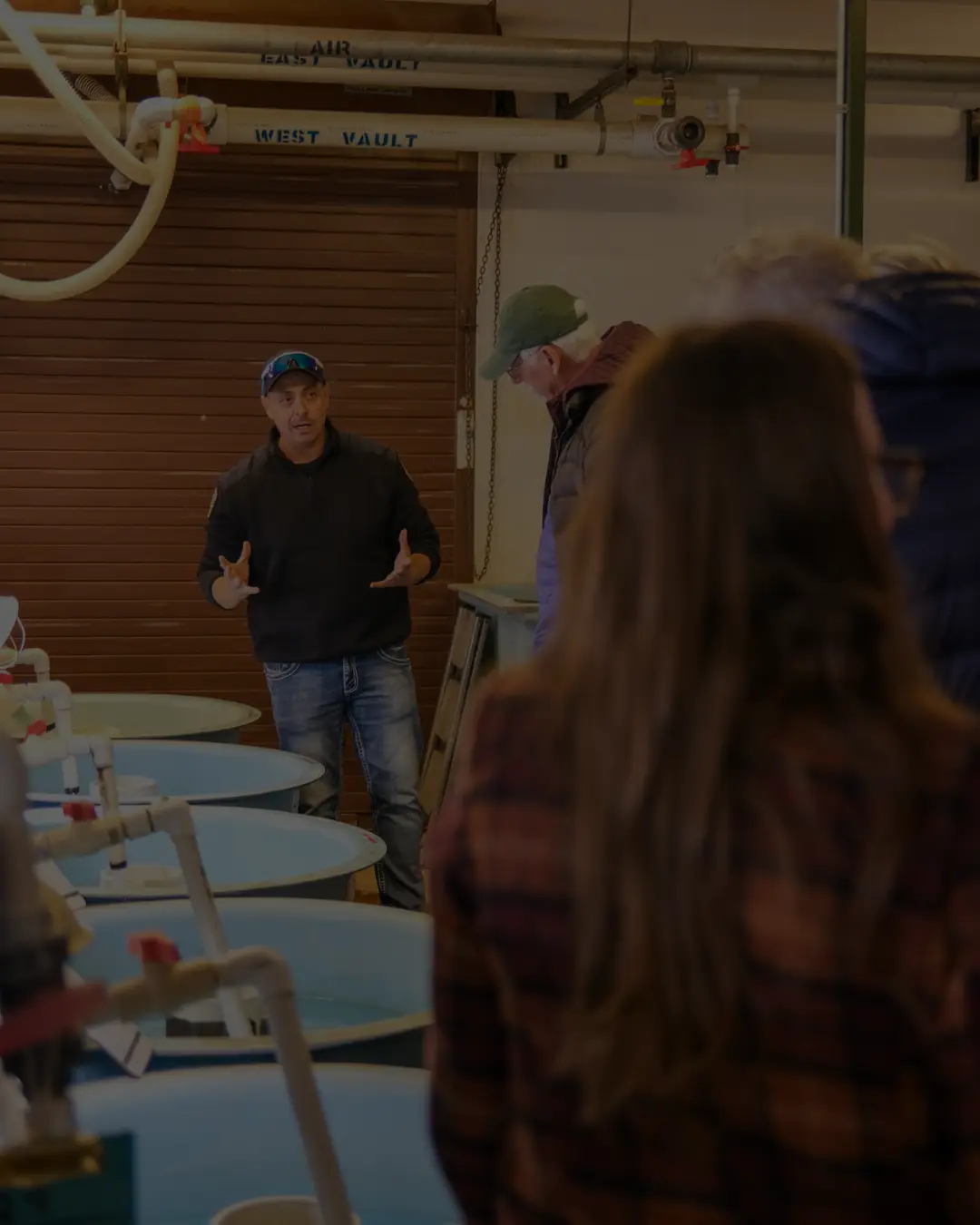
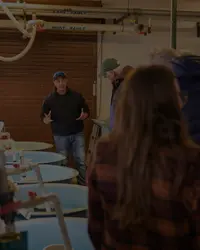
Smaller groups go out under the heading Into the Field. These outings include a bus trip called the Crane Cruise and another called the Waterfowl Window Tour, early-morning photography, behind-the-scenes refuge access, tours of local research facilities, archaeology tours, and sessions on how cranes and farmers share the valley. At the 2026 festival, Jocelyn Catterson of the Rio Grande Headwaters Land Trust led visitors across a conserved private property. The trust holds such land under conservation easements so that it is never divided. “A lot of people don’t know how important private land conservation is,” she said.
Art workshops do not require a Festival Pass. They include plein air painting, printmaking, brush painting and paint-and-sip, and several are held at The Church Project, a community art space at 256 South Broadway. Macey Sigaty, a Monte Vista artist in residence there, has taught festival workshops and designed festival prints for the past few years. Downtown, murals of cranes cover walls, and each festival season local businesses sponsor temporary crane art on every block.
Barley on County Road 8S
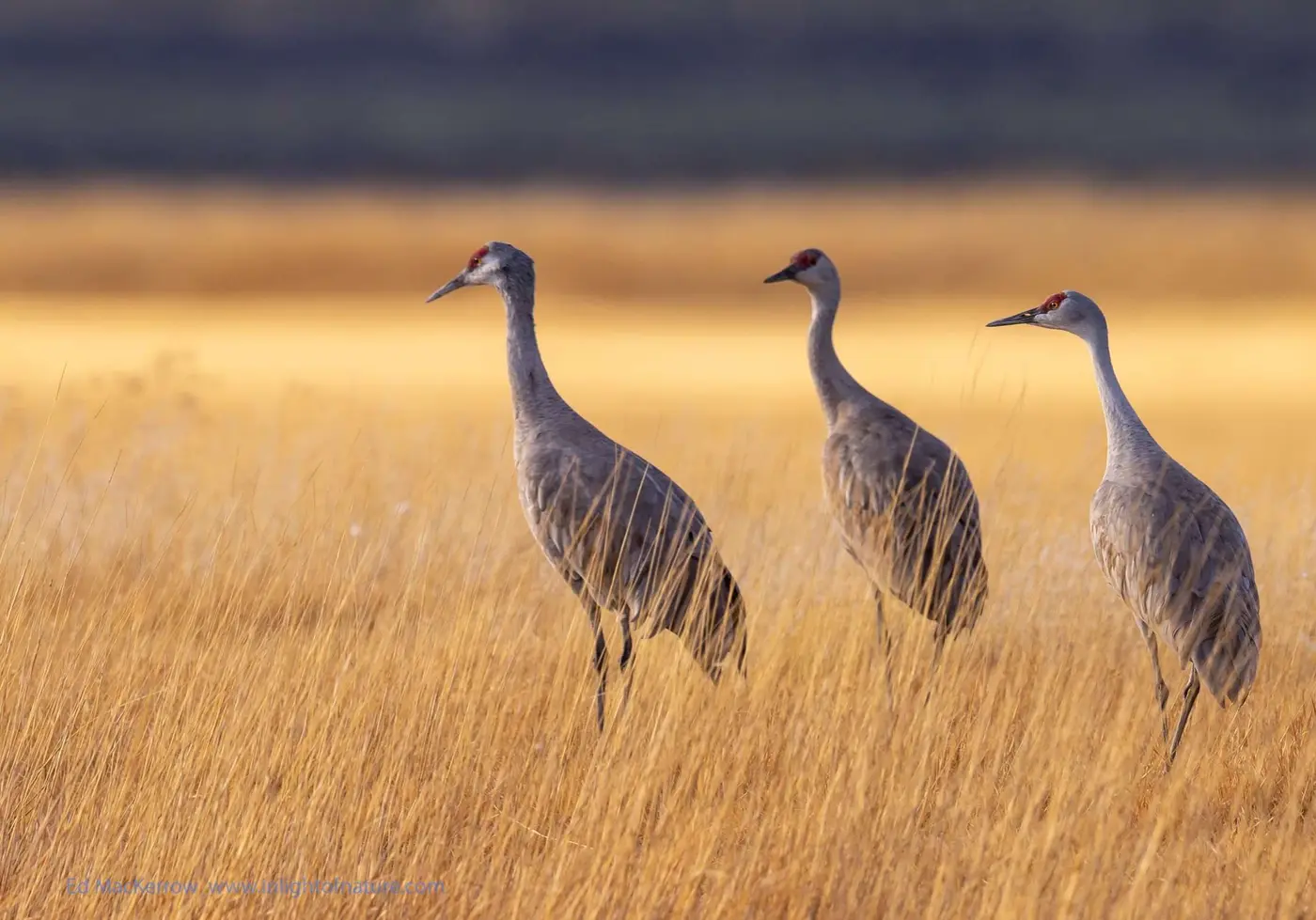
The birds belong to the Rocky Mountain population of greater sandhill cranes. They winter at or near Bosque del Apache National Wildlife Refuge near Socorro, New Mexico, and breed in the greater Yellowstone country. The sources give different counts. The Fish and Wildlife Service says the Monte Vista refuge hosts 95 percent of the population each spring, 18,000 to 21,000 greater sandhills, plus 5,000 to 6,000 lessers. Dave Gibson, writing in The Mountain-Ear in March 2026, put the figure at approximately 22,000 greaters and up to 5,000 Canadian and lesser sandhills. The festival’s own page says “20,000 or so” greaters and a few thousand lessers. The refuge’s 2025 viewing brochure counts about 23,000 to 27,000 cranes passing through the valley in spring and fall.
Gibson reports that the first flocks come as early as the second week of February and that by April 1 only stragglers remain. The Service places the spring peak around the first week of March.
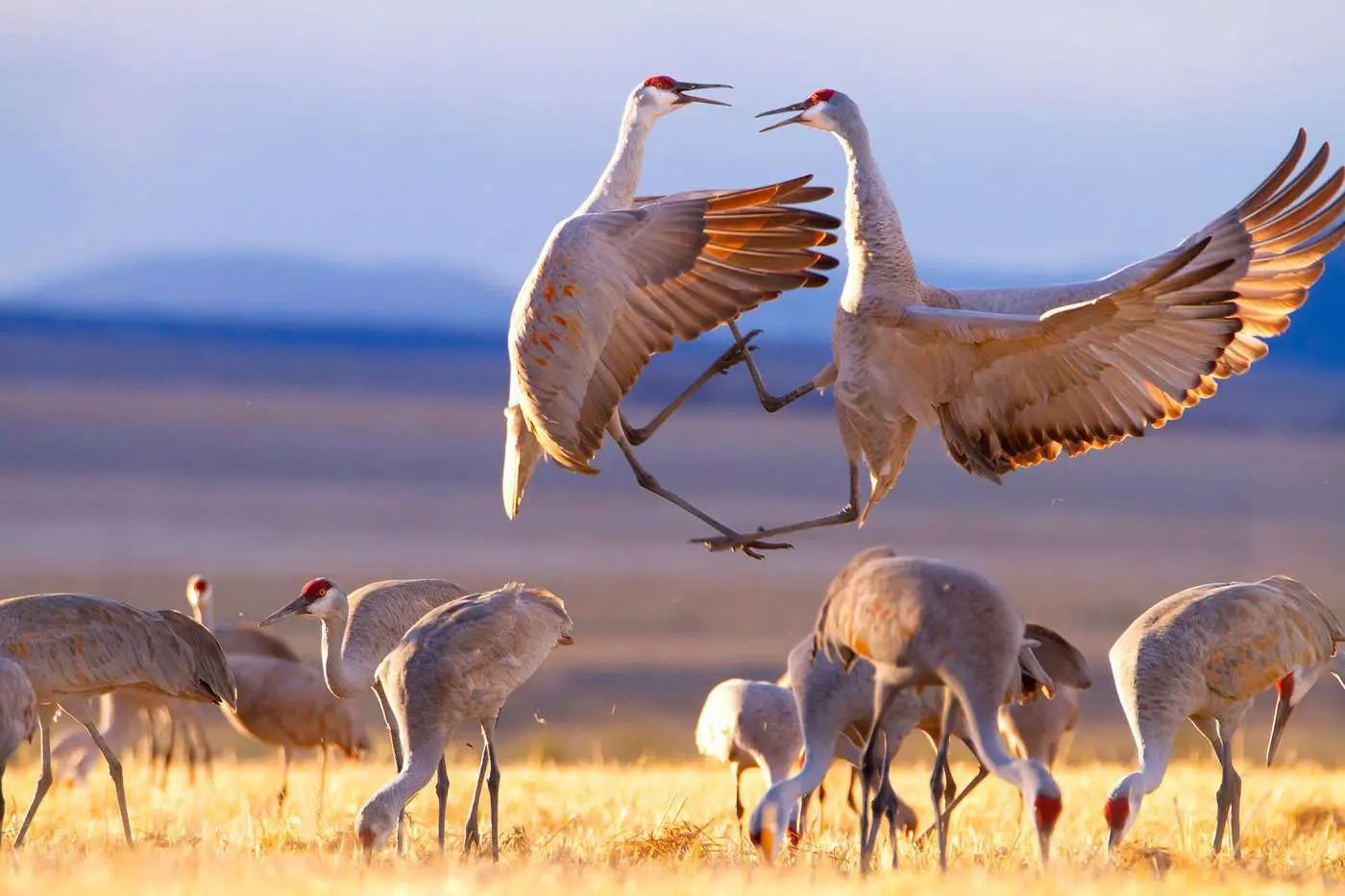
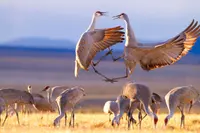
The cranes keep a daily schedule. They spend the night standing in shallow water, which Gibson says protects them from predators. Those roosts are closed to the public. At sunrise they fly out to grain fields and feed until about 10 a.m. From 10 to 4 they loaf in wet meadows, and there pairs renew their bonds with jumping, wing-flapping, twirling and head-bowing. Late in the afternoon they feed again, and toward sunset they return to the water with the San Juan Mountains behind them. By spring the private fields have been picked over through the fall, so the refuge mows its own grain fields to feed the birds. Visitors watch from pull-outs on County Road 8S south of the refuge office, from a parking area on County Road 7S between 2E and 3E, from pull-offs on Highway 15, and along the refuge auto-tour route, which opens an hour before sunrise and closes an hour after sunset.
On March 2, 2026, the refuge posted its current conditions. The Wildlife Drive was dry, but Spring Creek Pond at its south end was full. The fields at the 8S pull-out held 5,000 to 7,000 cranes and more than 2,000 Canada geese, and two small herds of elk had been seen in the area.
During the 2026 festival, the refuge administrator, Mike Oldham, stood beside a barley field he estimated held 12,000 to 14,000 cranes. The field belongs to Molson Coors, the brewer based in Golden, which he said donates the grain every year for the birds. Helping visitors at the same field was a longtime Colorado Parks and Wildlife volunteer, also named Mike Oldham, no relation.
Water in a dry valley
The valley floor sits at 7,800 feet between the San Juan Mountains to the west and the Sangre de Cristo to the east. The refuge’s wetlands, on 14,804 acres, are artificially created and kept wet by irrigation canals and wells. “At one time, the valley was a lot more wet. It’s a little drier now,” Oldham said. Engle explained that most water users receive water on April 1, while the refuge may pump earlier, so the roosts have open water when the cranes arrive. A study by the Intermountain West Joint Venture found that 90 percent of the land the cranes use is private, mostly flood-irrigated farmland.
The birds come in what Engle calls the valley’s “slow period,” between fall hunting season and summer. “It brings in a lot of tourists and a lot of people to spend money in restaurants and shops,” she said. A 2020 study estimated that about 16,500 non-locals and 1,600 locals visited the refuge to see cranes during the 30-day migration and contributed more than $3 million to the local economy. Susan Turner drove down from Glenwood Springs with her husband for her third or fourth visit. Standing beside a field at sunset, she said, “This is more than I think we’ve ever seen before.”
Whooping crane eggs in sandhill nests
The festival began in 1984 as the Whooping Crane Festival. In 1975 the federal government had started an experiment to return endangered whooping cranes to the Rocky Mountains by “cross-fostering”: placing whooping crane eggs in the nests of greater sandhill cranes, which raised the chicks and led them along the sandhill migration. On May 15, 1978, critical habitat was designated for the reintroduced birds, including roosting and feeding grounds at Monte Vista and Alamosa. By 1982 the Rocky Mountain flock numbered 14 birds and was growing, and the Service judged that the effort might soon become “an operational success rather than an experiment.”
It did not succeed. A proposed rule in the Federal Register of February 6, 1996, recorded that the program had been terminated because the birds were not pairing and their mortality was too high to sustain a population. Only four nonbreeding adults remained in the region. The Service proposed to remove whooping crane critical habitat from the Monte Vista and Alamosa refuges.
The festival kept going under the cranes that had raised the foster chicks. Its 40th edition was held March 10–12, 2023. For that anniversary the organizers made a film, Where the Cranes Meet the Mountains, which follows a first-time visitor through the valley. According to the festival, the whooping crane years have left one remnant in town: a sculpture built from farm tools, called “Cooper the Whooper,” standing in front of the Monte Vista Safeway.
Notable Events
- 1975An experiment to reintroduce whooping cranes to historic range in the Rocky Mountains began in 1975, testing the cross-fostering technique of placing whooping crane eggs in nests of greater sandhill cranes. govinfo.gov
- 1978Whooping crane critical habitat was designated to benefit the whooping cranes being reintroduced into the Rocky Mountains, covering roosting and feeding habitat during migration through Alamosa and Monte Vista. govinfo.gov
- 1984The event began in 1984 as the Whooping Crane Festival, named for the experimental effort to establish a Rocky Mountain population of endangered Whooping Cranes by placing their eggs in Sandhill Crane nests. mvcranefest.org
- 1996The Service proposed to designate the Rocky Mountain whooping crane population experimental nonessential and to remove whooping crane critical habitat designations from Bosque del Apache, Monte Vista and Alamosa, and Grays Lake. govinfo.gov
- 2023The 40th Monte Vista Crane Festival was held March 10-12, 2023, the festival's big anniversary year. mvcranefest.org
Sources
- mvcranefest.org
- mvcranefest.org/festival
- mvcranefest.org/festival-passes-and-more-2027
- montevistachamber.org/crane-festival
- mvcranefest.org/about
- mvcranefest.org/news
- visitriograndecounty.com/festivals-events
- allaboutbirds.org/news/event/monte-vista-crane-festival
- dailyyonder.com/monte-vista-crane-festival/2026/06/04
- mvcranefest.org/plan-your-visit
- mvcranefest.org/faq
- mvcranefest.org/about/media-kits
- mvcranefest.org/more-to-explore-2027
- mvcranefest.org/wp-content/uploads/2025/04/2025-edited-Crane-Viewing-Brochure.pdf
- montevistachamber.org
- skihicomplex.com
- facebook.com/MVCraneFest
- instagram.com/mvcranefest
- mvcranefest.org/its-a-wrap
- fws.gov/refuge/monte-vista
- themtnear.com/stories/monte-vista-sandhill-cranes,85004
- govinfo.gov/content/pkg/FR-1996-02-06/html/96-2485.htm