
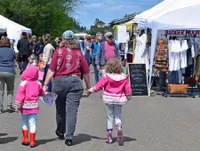
Monroe Festival
Downtown Monroe, Benton County, Oregon. Festival; Late spring.
Details

- Where
- 125 N. 6th St., Downtown Monroe, OR 97456. Directions
- When
- Last held May 16, 2026; next year’s date not yet stated.
- Fees
- Free admission.
- Hours
- 10:00am - 6:00pm.
- Access
- Pie eating contest registration on festival day at BAM Information Booth; pick up festival passport at the same booth.
- Phone
- 541-847-5175
- Website
- monroefestival.org
- Managed by
- Monroe Events & Activities, City of Monroe, Oregon, Business Association of Monroe - BAM, Mayor Dan Sheets.
- Established
- 2019.
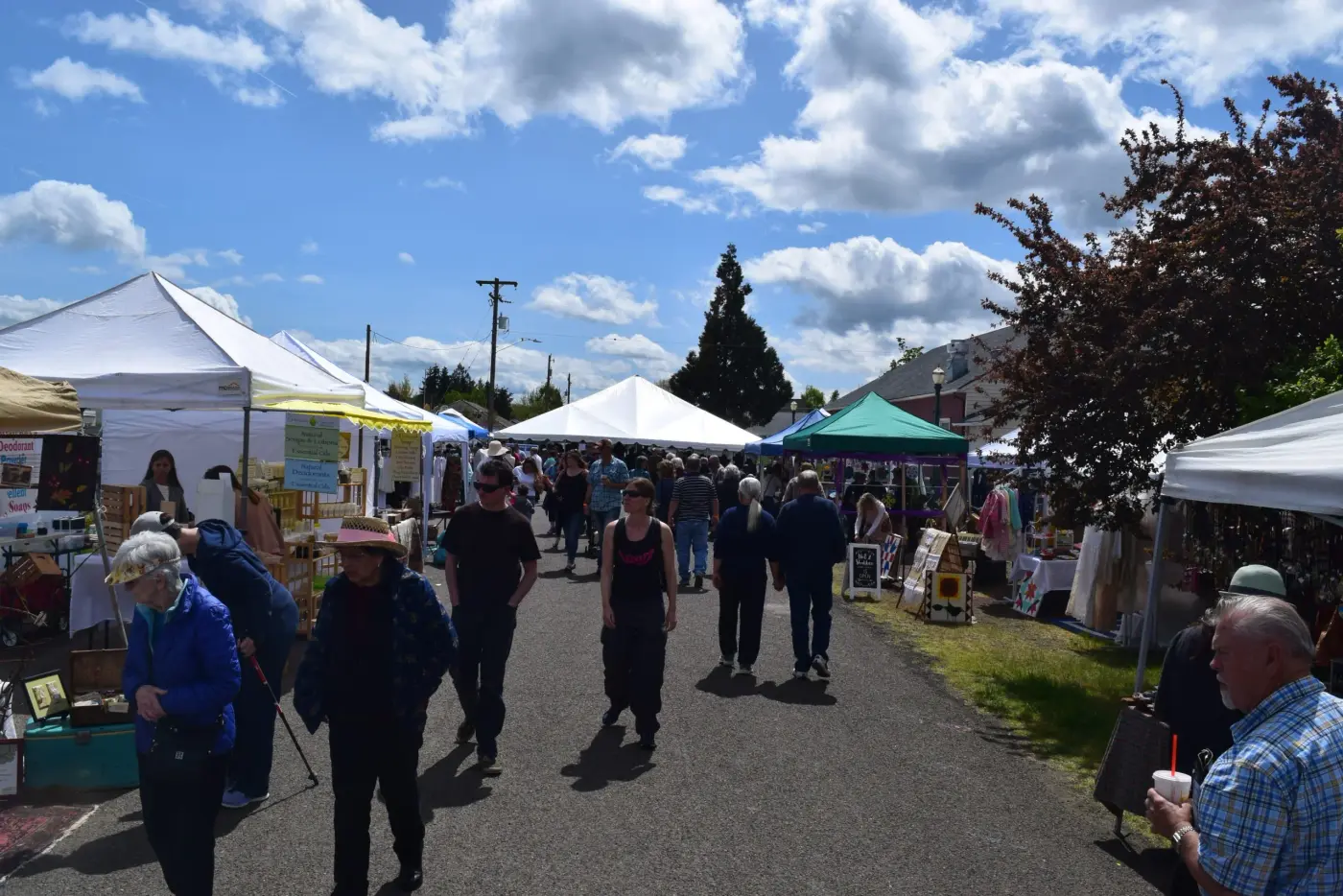
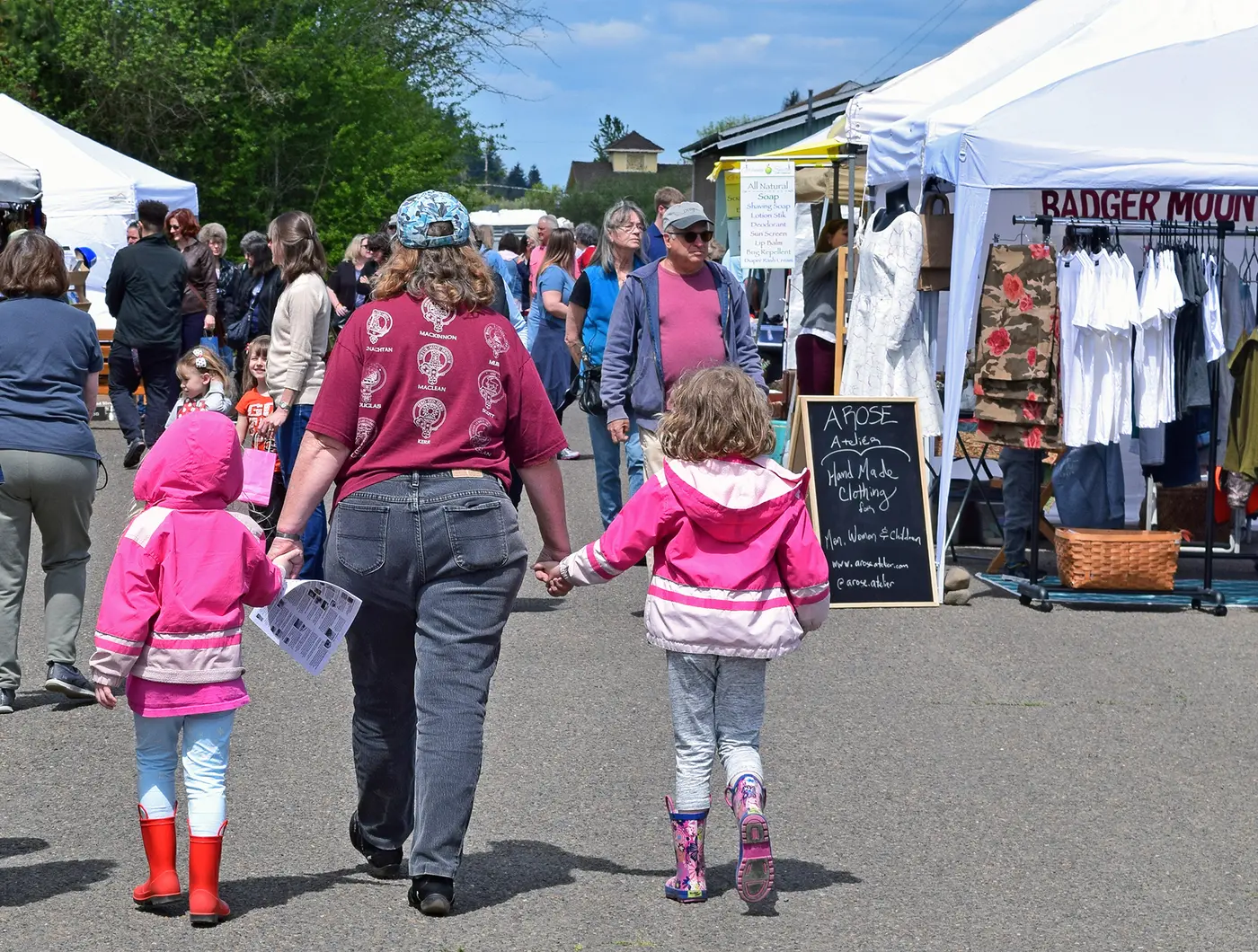
On a Saturday in late spring, from ten in the morning until six at night, downtown Monroe turns over its streets to the Monroe Festival. Admission is free. At the BAM Information Booth a visitor picks up a festival passport, a card to be stamped at local businesses and turned in for prizes. The same booth takes sign-ups, on the day, for the blueberry pie eating contest.
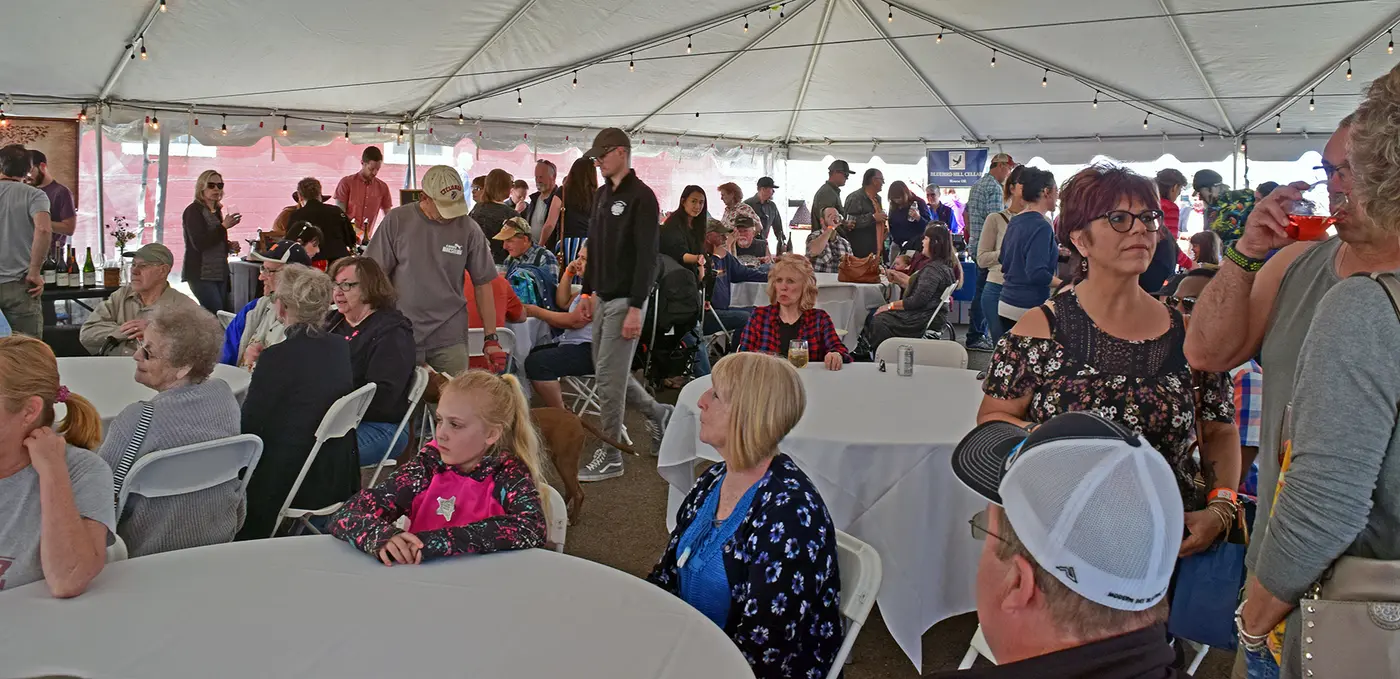
The organizers are the Business Association of Monroe, the Monroe Festival Committee and the City of Monroe. They bill the day first as a wine, craft beer and distilled spirits event, a chance to “see, taste, and experience the bounty of the Southern Willamette Valley,” and they address the invitation to visitors “from the Coast to the Cascades.”
Pourers, pie and log trucks
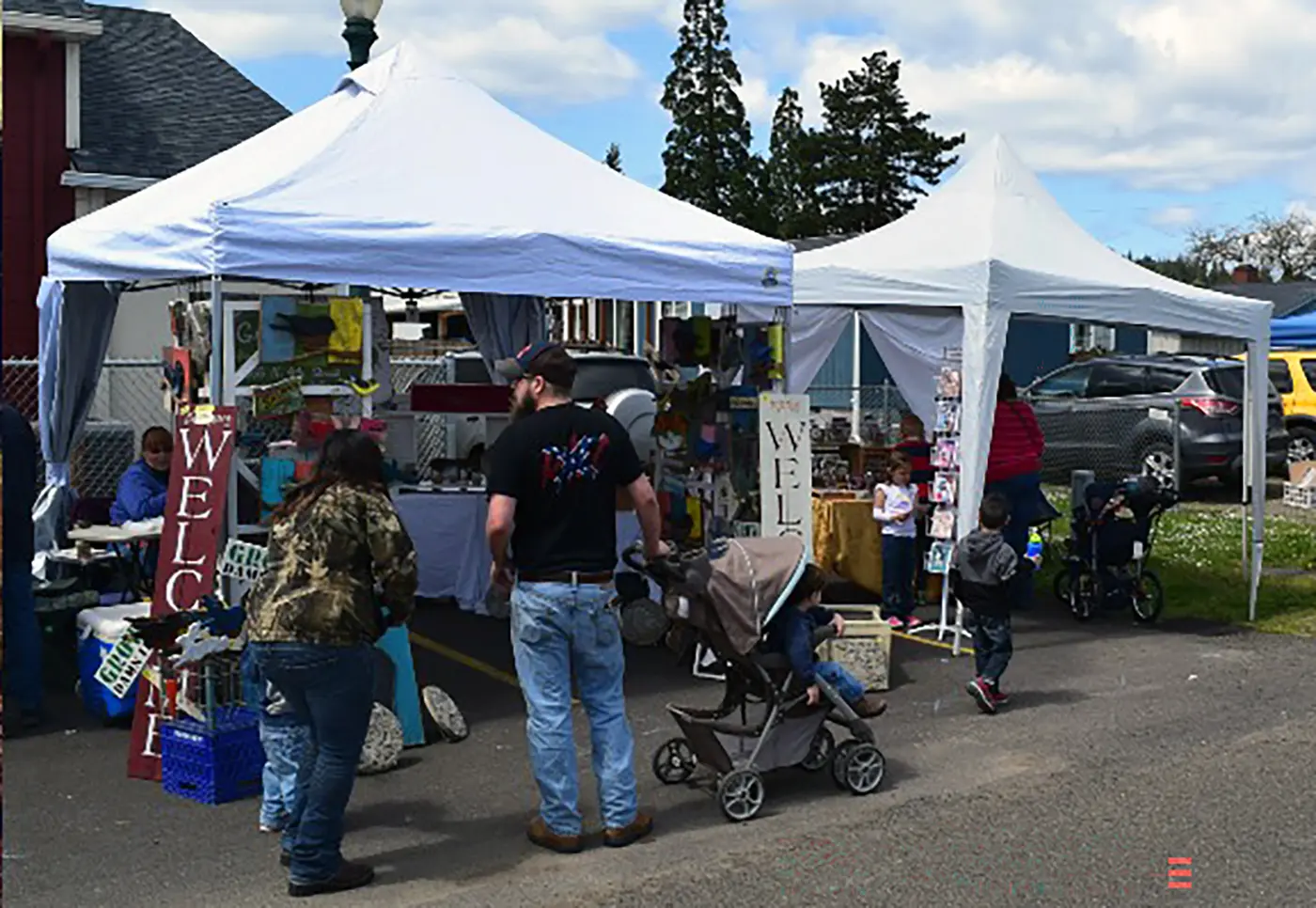
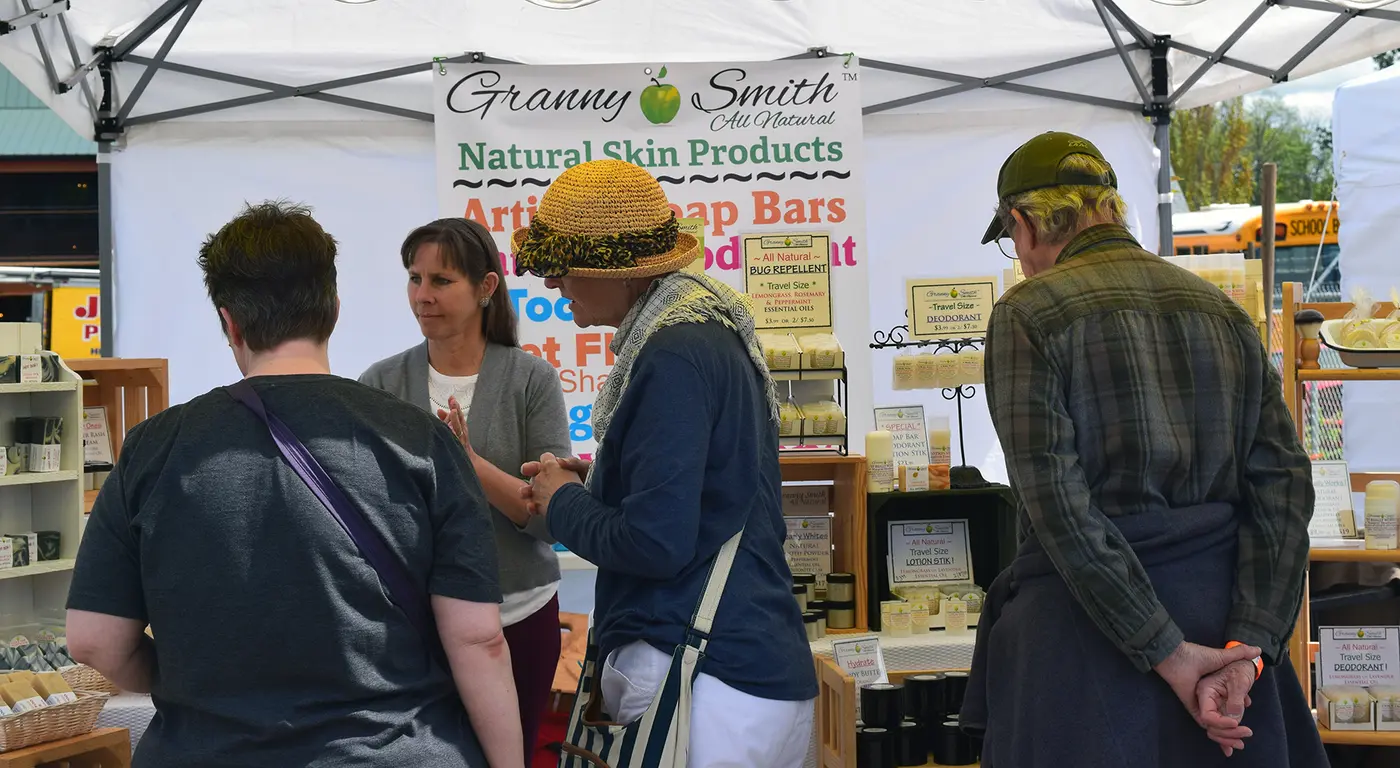
At the 2026 festival, held May 16, the pourers were Airlie Winery, Calapooia Brewing Company and Vivacity Spirits, Long Timber Brewing Company, SD Spirits, and Tumbleweed Taphouse. BAM counted five such vendors in one post and six tasting booths in another. Food came from three trucks, Smok’n Gingers BBQ, Uncle Sammy’s and King Whippy, and from Monroe’s own restaurants: Benny’s Pizza Joint, Long Timber Brewing Company and The LongBranch Bar & Grill. Thirty booths held artisans, crafters, informational tables and nonprofits.
DJ and podcaster Patrick Stutz, of the Spent the Rent Podcast, played the music, and McKayla Marie sang. Debra Rachelle of Outlaw ‘Shine led line dancing for those who came to watch and those who came to learn. Axe throwing ran, in BAM’s words, with “no judging, just good, safe fun.” Children fished in a derby, and an early program also listed face painting.
Much of the day consists of the town’s own buildings opened for the occasion. In 2026 the Monroe Community Library held an open house, introduced its new librarian and set out a game called Lego Block Blast. The South Benton Community Museum opened, and the South Benton Resource Center gave tours. Vintage log trucks stood on display as a reminder of the local timber heritage. The Monroe Rural Fire Protection District and the Benton County Sheriff’s Office brought displays of their own. A trolley with live tour guides carried riders into Monroe’s past.
When Benton County announced the 2026 edition, it expected 1,500 to 2,000 people. The sixth annual festival is set for Saturday, May 22, 2027, from 10 a.m. to 6 p.m.
From V3 to the fifth annual
The event began in 2019 as “Monroe’s Vino, Vintage & Victory (V3) Festival,” and Dan Sheets, now mayor, was one of its original organizers. It paused during the COVID-19 pandemic. The county says it came back with growing participation and more to do, including tastings, food trucks, the fishing derby, the pie contest, axe throwing, the trolley and, at one point, a model railroad display. In 2023 it ran on June 24, with vendor applications handled at Monroe City Hall. After what the county called “a brief hiatus,” the festival returned in 2026 to its traditional late-spring timeframe as the fifth annual.
“The Monroe Festival brings together neighbors, artists, crafters, businesses and families to celebrate what makes Monroe unique,” Sheets said ahead of that edition.
BAM was formed to advocate for business in and around the City of Monroe and the South Benton Community. It names the festival among the town’s big draws, together with Christmas in July and the Light Parade.
White’s Mill and Starrs Point
The trolley’s past begins with a sawmill. Monroe straddles Highway 99W, roughly midway between Corvallis to the north and Eugene to the south. It traces its origins to a small mill established by the settler Joseph White in 1852. Workers and their families followed, along with the services needed to support them, and by 1853 the settlement was known as White’s Mill. Just to the north, Rowland B. Hinton, who had settled a nearby donation land claim in 1846, established Starrs Point, named for the store owner George Starr. The two communities merged, and the town of Monroe, named for President James Monroe, was platted on October 6, 1857, according to Oregon Geographic Names (1944).
A high school followed in 1859. The Oregon State University local history guide records that it charged a “reasonable” tuition, with room and board extra. A post office came in the 1860s. By way of the Long Tom River, Monroe became a “nexus for commercial river traffic,” sending lumber, grain and produce north to towns on the Willamette. At one point, the same guide says, it was among the most populous cities in the state, with “five gas stations, four grocers, three automobile dealers, a pool hall, a hotel, and several restaurants.” The city was incorporated in 1914.
Next to the South Benton Community Museum, two interpretive displays recall the Applegate Trail. Their accounts of the party differ. One says Jesse Applegate and fourteen others from near Dallas, Oregon, laid out a trail south from the Willamette Valley in 1846. Another marker in Monroe says Applegate, Levi Smith and eleven other men left their homes near Dallas in June 1846, and that their route passed through the gap west of Pigeon Butte.
The wheel in the Long Tom
A marker on Pacific Highway West, Oregon Route 99, records how the town’s flour was milled. In 1906 a variable pitch water wheel was installed in the Long Tom River to drive the grain and flour machinery of the Adam Wilhelm Flour Mill. A generator was later added to the same wheel to supply electricity to the mill and to the Wilhelm and Son’s department store at Fifth and Commercial. It did so until 1925, when Mountain States brought electricity to Monroe.
Notable Events
- 1852Monroe traces its origins to a small sawmill established by settler Joseph White in 1852; by 1853, a settlement, known as White's Mill, had been established. guides.library.oregonstate.edu
- 1857White's Mill and Starrs Point merged and the town of Monroe was platted on October 6, 1857 (Oregon Geographic Names, 1944). guides.library.oregonstate.edu
- 1906This variable pitch water wheel was installed in the Long Tom River in 1906 to power the grain & flour machinery at the Adam Wilhelm Flour Mill. hmdb.org
- 1914The city was incorporated in 1914. guides.library.oregonstate.edu
- 1925The mill wheel powered a generator that provided electricity to the mill and the Wilhelm and Son's department store until 1925 when Mountain States brought electricity to Monroe. hmdb.org
- 2026After a brief hiatus, the festival returns to its traditional late-spring timeframe. boc.bentoncountyor.gov
People
- George Starr, Local store owner for whom Starrs Point was named.
- Joseph White, Settler who established the sawmill from which Monroe traces its origins (1852).
- Rowland B. Hinton, Settled a nearby donation land claim in 1846 and established the community of Starrs Point (1846).
Sources
- monroeoregon.gov/1233/Monroe-Festivals-Events
- monroefestival.org
- monroefestival.org/schedule-of-events
- monroefestival.org/monroe-festival-map
- monroefestival.org/contact-us
- facebook.com/businessassociationofmonroe
- instagram.com/businessassociationofmonroe
- boc.bentoncountyor.gov/monroe-festival-vendors-sponsors
- facebook.com/events/1641691737583434
- facebook.com/events/641781295491961
- guides.library.oregonstate.edu/localhistory/monroe
- tri-countychamber.com/event/monroe-festival
- hmdb.org/results.asp?Search=Place&State=Oregon&Town=Monroe
- hmdb.org/m.asp?m=119283