
Mill Ends Park
Portland, Multnomah County, Oregon. Park.
Details

- Where
- SW Naito Parkway and Taylor Street, Portland, OR 97204. Directions
- Getting there
- At the intersection of Southwest Naito Parkway and Taylor Street near the Willamette River; the park is disguised as a traffic circle on a median in the middle of the parkway and can be hard to find.
- Access
- All dogs must be leashed in this park.
- Phone
- 503-823-4000
- Website
- portland.gov
- Managed by
- Portland Parks & Recreation (City of Portland).
- Established
- 1948 (dedicated St. Patrick's Day).
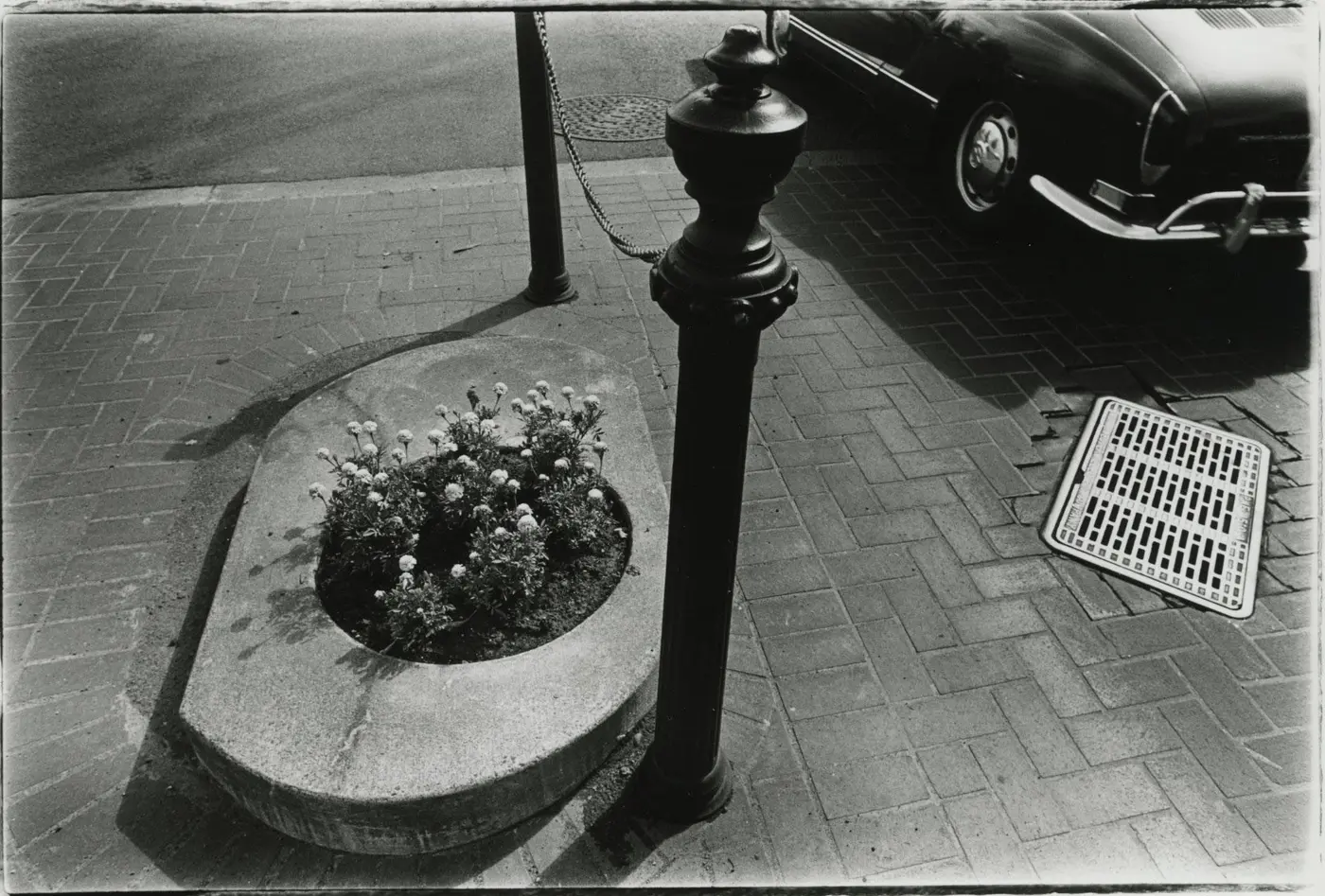
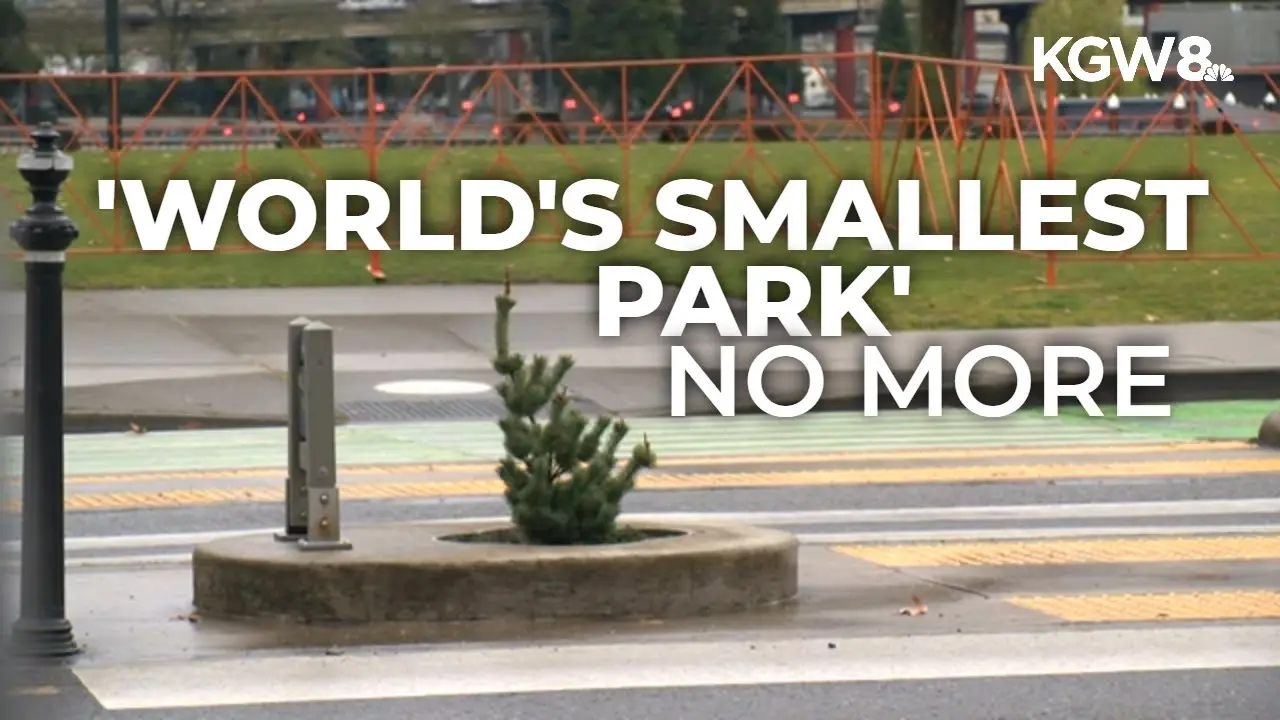
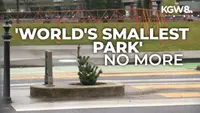
In the median of Southwest Naito Parkway at Taylor Street, between downtown Portland and the Willamette River, a curb rings a circle of soil two feet across. It sits in a crosswalk on a busy four-lane road. OPB described it in March 2026 as “literally just a frying-pan-sized hole with a shrub in it.” The city measures it at 452 square inches, or 0.00007205784 acres. This is Mill Ends Park, the smallest park in the United States. From 1971 until recently it was also the smallest park in the world by the count of the Guinness Book of World Records.
A cloverleaf curb in the crosswalk
The curb has been shaped as a cloverleaf since January 12, 2022, when Portland Parks & Recreation reinstalled the park a full six inches west of where it had been. The city says the shape suits the legend that a family of leprechauns lives inside. A new park sign went in at the same time. The move came with the Portland Bureau of Transportation’s Better Naito Forever project, which laid a permanent two-way bikeway and sidewalk along Waterfront Park. The parks bureau said it hoped visitors could find the park “without a map.” The Oregon Encyclopedia warns that it is easy to miss, since it passes for a traffic circle.
The planting is a single plant or close to it, and it changes often. Early on St. Patrick’s Day 2021, Daniel Misner, a horticulturist with the parks bureau, set red hook sedge beneath a Vanderwolf’s Pyramid limber pine. Re-landscaping the entire grounds took him less than ten minutes. In 2001 the circle held pansies and a miniature cypress. A photograph from February 28, 2025, shows it nearly bare.
That week Guinness World Records announced it had certified a smaller park in Nagaizumi, Japan. That park measures 372 square inches and has a tiny stool, tufts of grass, and a border of bricks. The Oregon Encyclopedia gives December 25, 2024, as the date Mill Ends lost the title. Shuji Koyama, who worked on the Nagaizumi project, told Guinness that his town built its park in 1988 after a staff member vacationed in Portland and visited Mill Ends. “So, they wanted to create an even smaller park,” Koyama said. Mark Ross, a parks spokesperson, reported that the resident leprechauns were “outraged.” He added: “If imitation is the most sincere form of flattery, we are most flattered indeed.” Frantz Dorsainvil, who owns a moving business in Portland, told OPB: “So congratulations to Japan on taking the title. But we had it first.” On St. Patrick’s Day 2026 the park marked fifty years as an official city park.
Keepers of 452 square inches
The park is weeded, watered, and planted like any other in the system. In 2001 the gardener was Phil Young. He put in summer beds each spring and pansies each fall, and in hot months he came by with a sprinkling can at least once a day. He had been told it was his duty to keep the place pleasant so the leprechauns would not leave Portland for greener Ireland. “I don’t know what to make of the leprechauns,” Young said. “I only know what I’ve read. . . . I’m Scandinavian myself.” Twenty years later Misner named his own difficulty: “We do have to replace the plant material on a regular basis due to traffic not being able to stay in their lane.”
The public adds to the park more often than it takes away. Shawn Rogers, head of customer services at the parks bureau, said this was the pattern over his twenty years on the job. Staff have found a miniature carousel, a diving board for butterflies, and the occasional Christmas tree. Plastic dinosaurs, toy soldiers, homemade signs, and ornaments on the lone tree have come and gone. On April 20, 2018, someone planted cannabis. On December 16, 2011, a flash mob of Occupy Portland demonstrators pushed tiny protest signs into the soil, one reading “You can’t evict an ideal.” They ringed the curb with toy soldiers and tiny tents, and one person was arrested.
The tree itself has gone missing twice. In early March 2013 a vandal yanked out the park’s pine, and the bureau planted a Douglas fir sapling in its place at 1 p.m. the next Wednesday. “We had to do what we could to ensure the leprechauns had shade,” Ross said. Within days an uprooted tree, presumed to be the stolen pine, turned up lying beside its replacement. Police Sgt. Pete Simpson was not moved: “Remorse does not mean ‘case closed.’”
Over Christmas 2019 someone sawed the tree off and left only a stump. Holiday visitors took selfies with the empty planter. Sandy Christoforou, visiting from New York, said the cut looked fresh. His daughter Angela said, “Somebody, somewhere has a beautiful little Christmas tree.” Ross said the bureau rotates in new saplings every few months and that a replacement costs about $5. By that Friday evening, someone had planted a new tree.
A columnist and a hole for a light pole
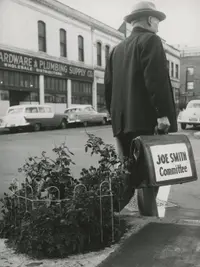
The park’s founder was Dick Fagan, an Iowa native who came to Portland to work for the News-Telegram and moved to the Oregon Journal when that paper folded. Drafted in World War II, he served as an Army lieutenant in Alaska and wrote for the Sourdough Sentinel. Back at the Journal in 1946, he worked as an assistant editor and wrote a column called “Mill Ends,” a loggers’ term for the scraps of lumber left over at a mill. “Mill Ends means bits and pieces,” his son Pat Fagan explained.
Fagan’s second-floor office looked down on Front Avenue, now Naito Parkway, where a median was going in. One concrete bed had a hole in the middle. The city’s history says it was meant for a light pole, the Oregon Encyclopedia says a traffic light, and Willamette Week says a utility pole. The Oregonian says a streetlight was planned and then removed or never installed. Whatever it was for, nothing arrived, and weeds and trash filled the hole. In a September 1961 column Fagan wrote: “I decided it would be much better if there were flowers instead of weeds, and thus Mill Ends Park was born.”
He told it another way as well. As Fagan told the story, he saw a leprechaun digging in the hole, ran downstairs, crossed the street, and caught it. A caught leprechaun must grant a wish, so Fagan wished for a park of his own. He never said where or how big, and the leprechaun gave him the hole. In a version reported by The Oregonian, Fagan got three wishes: many children (there were five), a leprechaun to write his column (he still had to type it), and his own park. The head of the colony was Patrick O’Toole, whom only Fagan ever saw. O’Toole reportedly told him this was the only leprechaun colony west of Ireland. “Sometimes he can be a very difficult man indeed,” Fagan wrote of him. “He simply refuses to state at this date exactly what is to be done, but has made it fairly clear that he doesn’t want to move.” Willamette Week called the leprechaun a conceit that let Fagan make up dozens of columns “out of whole cloth.”
Roses, a rival name, and a disputed date
The city’s history page says the park was dedicated on St. Patrick’s Day 1948. Samantha Swindler of The Oregonian reported in 2021 that this date, though widely repeated, does not appear to be true. She found the first mention of “Mill Ends Park” in the Journal archives in Fagan’s column of February 24, 1954. He wrote there that “Mill Ends Park was officially dedicated Tuesday morning,” after being known as such “for lo these many years.”
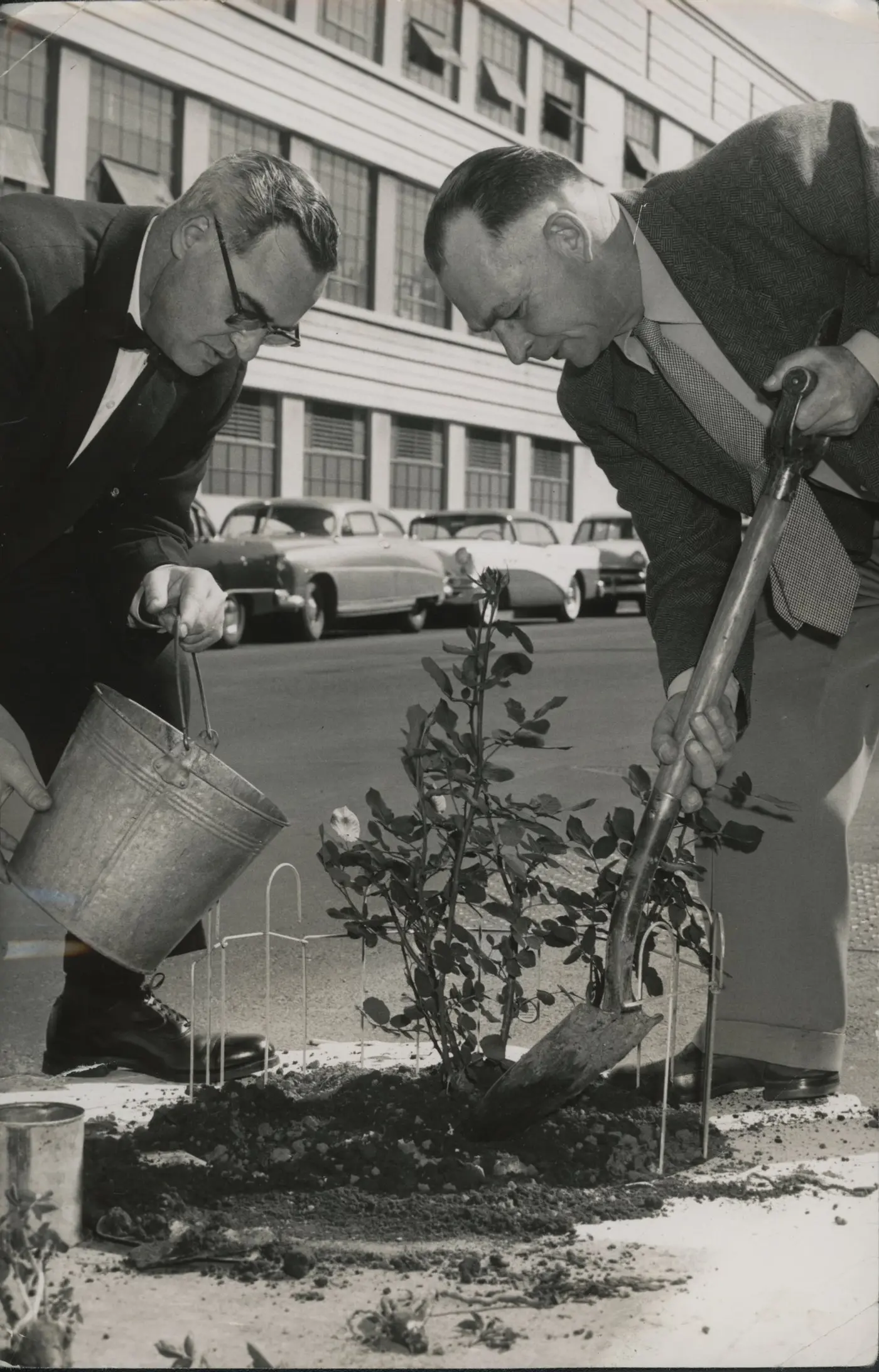
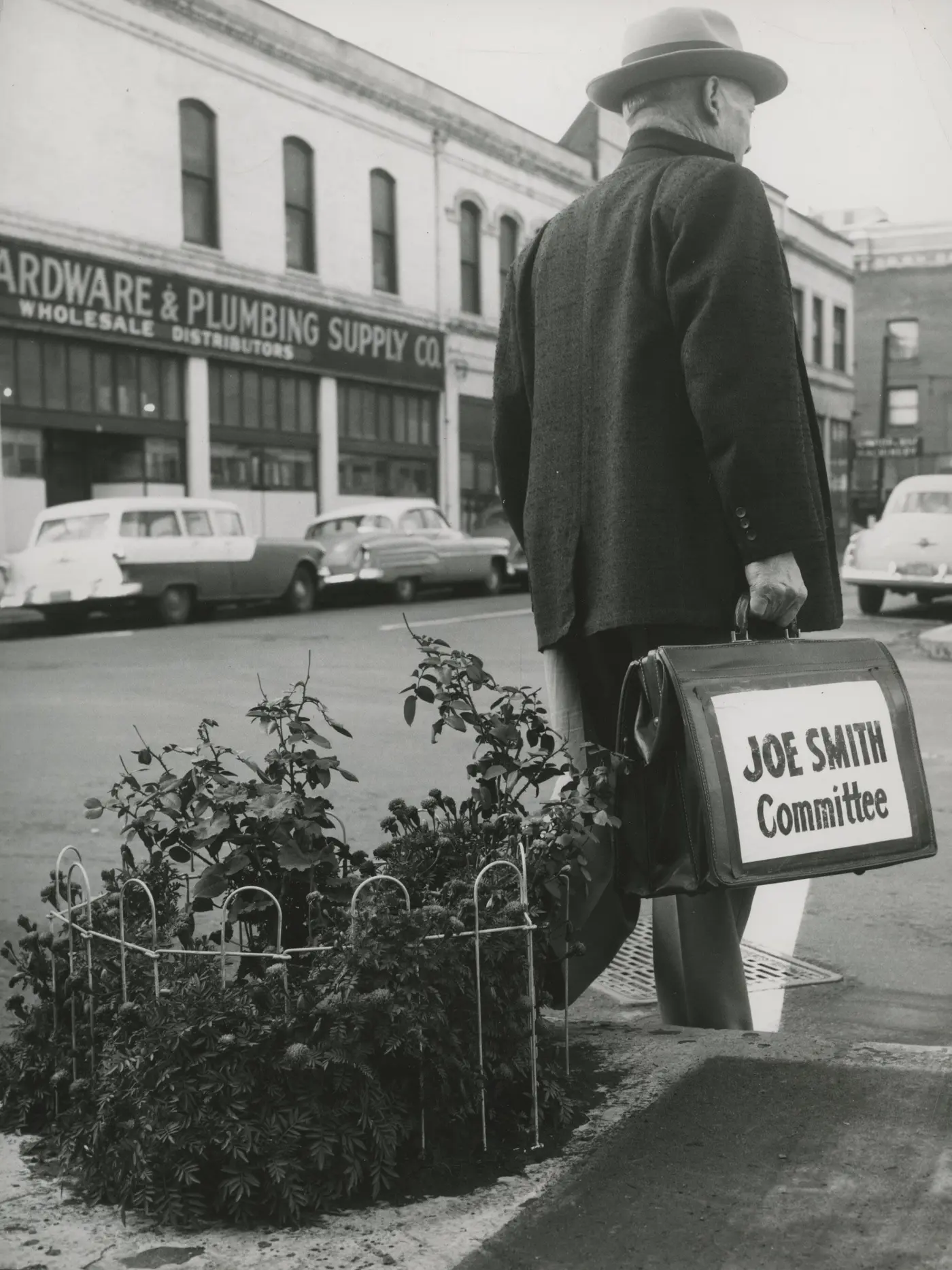
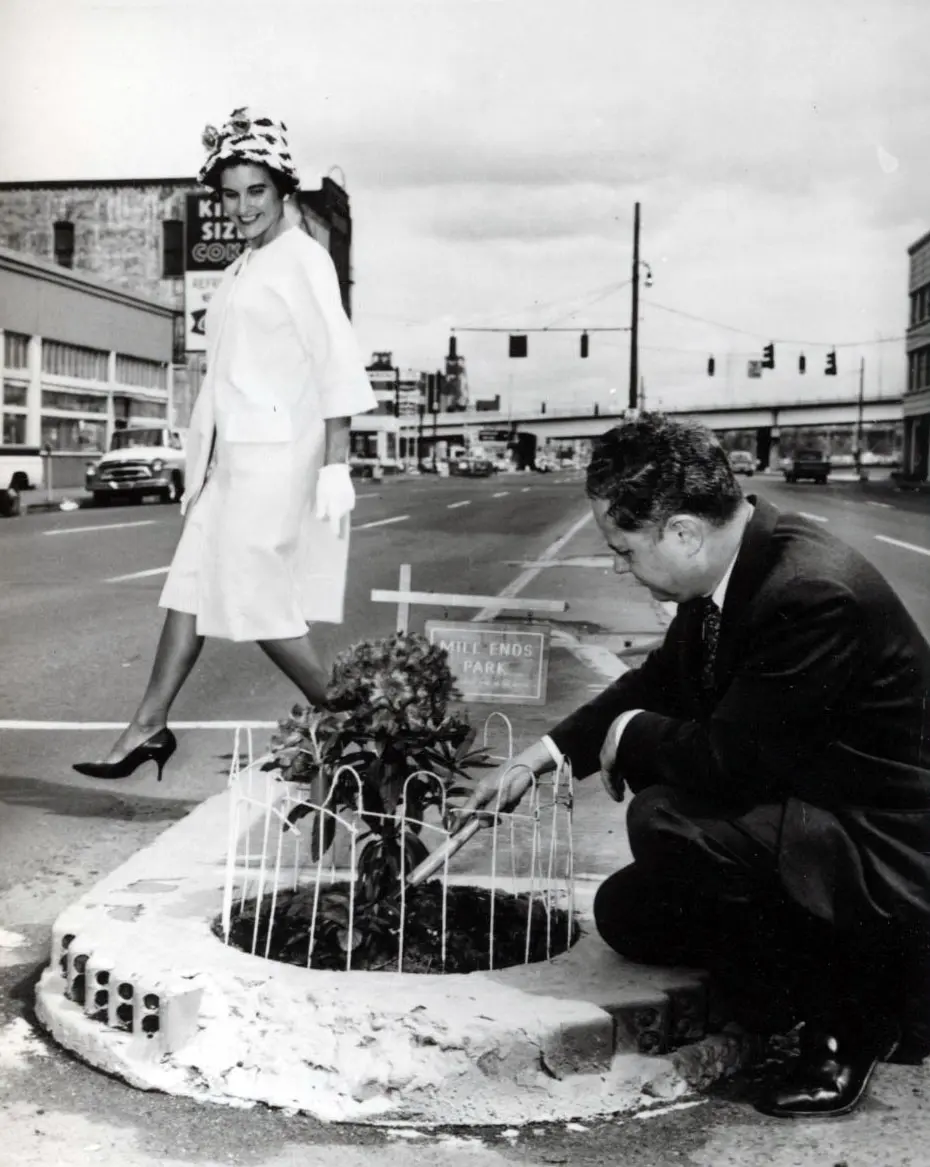
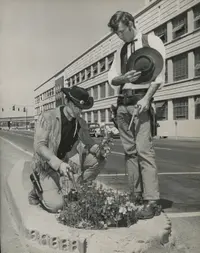
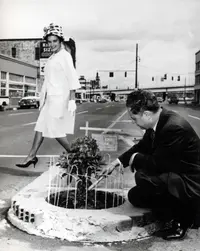
That year Portland was feuding with Columbus, Ohio, which claimed to have opened “the world’s largest municipal rose garden.” Portland’s Roses for Portland Committee answered with a season of rose events. On February 23, 1954, the Journal reported that the committee had planted a bush of the new “Portland’s Envoy” rose at Front and Taylor. The committee called the spot “Portland Envoy Park” and claimed it as the “world’s smallest park.” Fagan appears in the planting photograph.
When the photograph ran on March 7, its caption read: “CIVIL WAR set in recently when smallest rose garden in nation was planted in safety island in front of Journal building.” In it, Commissioner Ormond Bean argues for “Envoy park,” and committee head George Gutfleisch takes Bean’s side. Fagan holds out for “Mill Ends.” A 1955 letter from the superintendent of parks, found by Aimee Wade while researching the 2014 book PDXccentric, called the whole affair a “stunt to publicize ‘Rose Planting Week’” dreamed up by the Journal. Wade still credits Fagan as founder. “He was just doing it for a different reason than meeting a leprechaun,” she said. “He was trying to keep the title of the City of Roses, and that’s so much more important.”
Snail races, bagpipes, and a family toast
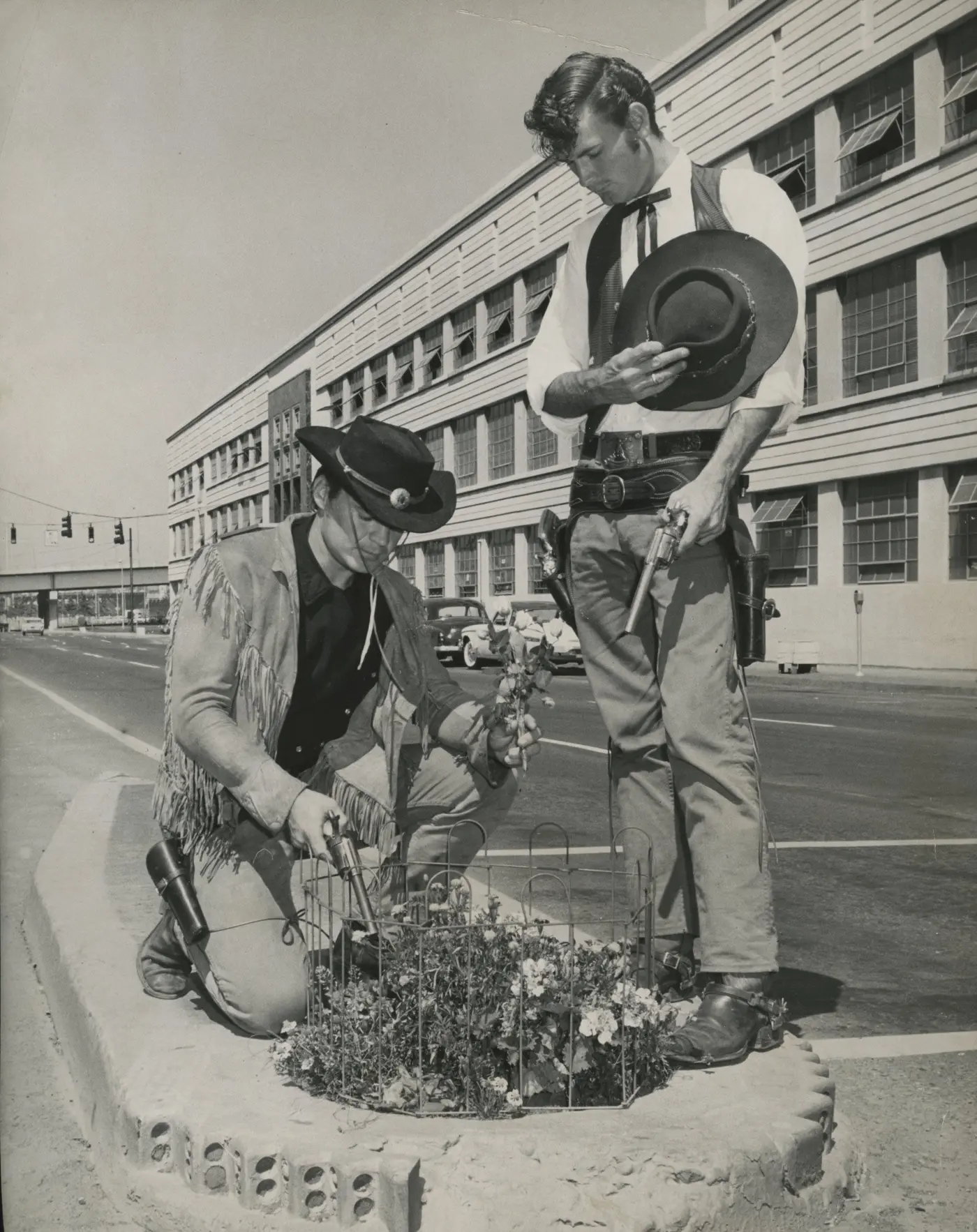
In time the rose gave way to other plantings, and Fagan’s columns drew Portland into the game. A swimming pool appeared with a diving board for butterflies; The Oregonian later identified the pool as a cat water dish. Crews working on the Hawthorne Bridge used a full-sized crane to set down a 5-inch Ferris wheel. Commissioner Stanley Earl and Leo Faust of the Portland Rose Society planted a rose for the 1955 Rose Festival. Grant High School students picnicked there in 1956. In 1960 two men planted the Yellow Rose of Texas, using a Colt 45 to blast the dirt. Someone left a tombstone worth $150, which was reclaimed, and someone else left a pair of false teeth.
On St. Patrick’s Day Fagan kept up a long feud with a bagpipe troupe, and the mayor came out. “Dad would go into my mom’s china closet, and get her good china,” his daughter Carolyn Litson recalled, “and he’d take it down to the park and they would have snail races.”
The Journal building was demolished in 1969, and its site is now Tom McCall Waterfront Park. Fagan died of lung cancer that November, at 58. Weeks before, Governor McCall signed a proclamation honoring Fagan “for his foresight in establishing the original Willamette River-Harbor Parkway, known as Mill Ends Park.” The Journal stopped publishing in 1982. Carbon copies of his “Mill Ends” columns from 1951 to 1969, given by his widow, are held at the Oregon Historical Society Research Library.
The city adopted the park on St. Patrick’s Day 1976. Since then it has drawn concerts by the Clan Macleay Pipe Band, rose plantings by the Junior Rose Festival Court, weddings, and demonstrations. When Naito Parkway construction began in February 2006, the park went to a planter outside the World Trade Center. It came back to the median on March 16, 2007, attended by the Royal Rosarians, bagpipers, and the Fagan family, including Dick’s wife, Katherine.
The family still comes each St. Patrick’s Day. On March 17, 2021, tiny paper cups of Baileys or Jameson passed among the adults, and Bill Fagan read the names of the clan who have died. His son Shaun recited a blessing that closes, “until we meet again, may the Lord hold you in the palm of his hand.” Then the roughly twenty people standing around the curb raised their cups.
Notable Events
- 1946While Fagan watched from his office window, a traffic median was being constructed on Front Avenue (now Naito Parkway); one raised concrete bed had a hole in the middle for a traffic light. oregonencyclopedia.org
- 1948Fagan billed the space as the World's Smallest Park, and it was dedicated on St. Patrick's Day. portland.gov
- 1954The Oregon Journal reported the planting of an envoy rose bush for Portland Envoy Park by the Roses for Portland Committee, which claimed it the world's smallest park at Front and Taylor streets; Fagan is shown in the ceremonial planting photo. oregonlive.com
- 1954Fagan's column writes that Mill Ends Park was officially dedicated Tuesday morning, after the spot had been known as such for lo these many years; The Oregonian reads this as a joke and a publicity stunt over roses. oregonlive.com
- 1961In a column that month in the Oregon Journal Fagan wrote that he decided the hole should have flowers instead of weeds, and thus Mill Ends Park was born. latimes.com
- 1969Dick Fagan died in 1969 and the Oregon Journal ceased publication in 1982, but Mill Ends Park lived on. oregonencyclopedia.org
- 1970sFor decades the 2-foot-diameter park has been dedicated and re-dedicated by city officials and serenaded by bagpipes for St. Patrick's Day, and in the 1970s it was the site of snail races; it was also occupied during the Occupy Portland movement. oregonlive.com
- 1971The Guinness Book of World Records officially listed Mill Ends as the world's smallest park. latimes.com
- 1976The 452-square-inch plot became an official park of the city of Portland on St. Patrick's Day. opb.org
- 1988Nagaizumi's park came to be after a town hall staffer visited Mill Ends in 1988 and was inspired to construct a smaller park. opb.org
- 2006The city relocated the park to a planter outside the World Trade Center when construction began on Naito Parkway in February 2006; it stayed there for a month. oregonencyclopedia.org
- 2007The park was restored to its original location with great fanfare and the skirl of bagpipes, the Fagan family and the Royal Rosarians attending. oregonencyclopedia.org
- 2011A flash mob of Occupy Portland demonstrators stuck tiny protest signs in the soil, such as 'You can't evict an ideal,' and ringed the concrete perimeter with plastic toy soldiers and tiny tents; one person was arrested. oregonlive.com
- 2013Kevin Wilson, a British sports manager, disparaged it as a glorified flowerpot and championed Prince's Park in Burntwood, United Kingdom. opb.org
- 2013An uprooted tree presumed to be the stolen pine sapling reappeared at the park, left lying beside the newly planted sapling; city arborists were to judge whether it was healthy enough to plant in another city park. oregonlive.com
- 2019A stump was all that remained in the 2-foot-wide park, and holiday tourists settled for selfies with a barren concrete planter. opb.org
- 2019By Friday evening someone had planted a new tree at Mill Ends Park. oregonlive.com
- 2021The park was removed again in 2021 to make way for the Portland Bureau of Transportation's Better Naito Forever Project, meant to give safer conditions for cyclists and pedestrians and better access to the park. oregonencyclopedia.org
- 2022Mill Ends Park was reinstalled a full six inches west of its previous location, with a new cloverleaf park border that the city says fits the legend of a leprechaun family living there, and a brand-new park sign. katu.com
- 2024Mill Ends Park lost its Guinness Book of World Records status to a park in Nagaizumi, Japan. oregonencyclopedia.org
People
- Carmen Rubio, Portland Parks Commissioner who spoke for the reopened park, saying the Better Naito Forever bike and pedestrian safety improvements will now allow more Portlanders to safely visit the park and the leprechauns living there.
- Dick Fagan, Oregon Journal columnist who resumed journalism there after World War II, planted the median hole, wrote about the park in his Mill Ends column, and billed it the World's Smallest Park (to 1969).
- Phil Young, Gardener for Portland's Parks and Recreation Department who works on Mill Ends Park, planting summer beds in spring and pansies in fall and watering at least once a day in hot months; told it is his duty to keep the place pleasant so the leprechauns won't forsake Portland (2 1/2 years).
- Kevin Wilson, Events planner with KP Events, a sports management company in Lichfield, Staffordshire, who challenged Mill Ends Park's Guinness title as his company organized a world's shortest fun run around Prince's Park, calling the Portland park a glorified flower pot (2013).
- Shawn Rogers, Head of customer services at Portland's parks bureau, who said that in his 20 years on the job it was much more common for passersby to drop things off at the park than remove them, and that the bureau has found a miniature carousel, a diving board for butterflies and the occasional Christmas tree within its 452 square inches (20 years on the job).
- Leo Faust, President of the Portland Rose Society who planted a rose at the park with Commissioner Stanley Earl for the Rose Festival (1955).
- Stanley Earl, Commissioner who planted a rose at Mill Ends Park with the Portland Rose Society president for the Rose Festival (1955).
- Bill Fagan, Son of Dick Fagan; tells how his father came to Portland newspapers, and reads the names of the Fagan clan who have died at the park's St. Patrick's Day toast.
- Carolyn Litson, Daughter of Dick Fagan; recalls her father carrying her mother's good china down to the park for snail races, and calls the park a legacy her father left Portland.
- Daniel Misner, Horticulturist with Portland Parks & Recreation who re-landscapes the park and replaces its plant material on a regular basis because traffic cannot stay in its lane.
- George Gutfleisch, Head of the Roses for Portland committee; supported Commissioner Bean and the name Envoy (1954).
- Ormond Bean, Commissioner who argued the planted plot should be named Envoy park rather than Mill Ends (1954).
- Pat Fagan, Son of Dick Fagan; explains what the column's name meant, and with his siblings worked at Bill's lumber yard and kept the family story of the park going.
- Shaun Fagan, Grandson of Dick Fagan; recited an Irish blessing at the family's St. Patrick's Day toast at the park.
- Tom McCall, Governor of Oregon who signed the proclamation honoring Dick Fagan weeks before Fagan's death, crediting his foresight in establishing the park (1969).
- Mark Ross, Portland Parks & Recreation spokesman who reported the theft of the park's tree, explained the replanting by the need to give the leprechauns shade, and said the city did not plan to pursue the vandal.
- Shuji Koyama, Worked on the park project for Nagaizumi, Japan, the town that took the world's-smallest-park record from Mill Ends Park, and told Guinness his town built its park to compete with Portland (1988).
- Mike Abbaté, Director of Portland Parks and Recreation who answered the challenger by letter that the park is weeded, watered, planted and maintained like every other park in the system, and called it an important leprechaun sanctuary, the only such site west of Ireland (2013).
- Pete Simpson, Portland Police Bureau sergeant who said remorse did not mean the case was closed in the theft of the park's tree.
- Katherine Fagan, Dick Fagan's wife; attended the park's 2007 replacement.
- Katherine, Dick Fagan's wife; in attendance with the Fagan family when the park was replaced in the median (2007).
Sources
- oregonencyclopedia.org/articles/mill_ends_park
- youtube.com/watch?v=2G9Z8HK9nvY
- portland.gov/parks/mill-ends-park
- oregonlive.com/portland/2013/04/brit_challenges_downtown_portl.html
- opb.org/article/2026/03/17/portland-mill-ends-park-50th-anniversary-second-smallest
- opb.org/news/article/world-smallest-park-portland-missing-christmas-tree
- oregonlive.com/crime/2019/12/lone-tree-in-worlds-smallest-park-is-chopped-down.html
- oregonlive.com/portland/2013/03/tree_stolen_from_mill_ends_park.html
- oregonlive.com/portland/2013/03/tree_stolen_from_mill_ends_par.html
- katu.com/news/local/worlds-smallest-park-back-open-in-downtown-portland-after-moving-6-inches
- oregonlive.com/living/2025/03/sorry-portland-the-worlds-smallest-park-is-somewhere-else-now.html
- latimes.com/archives/la-xpm-2001-may-06-me-60127-story.html
- oregonlive.com/living/2021/04/how-portland-ended-up-home-to-the-worlds-smallest-park.html
- wweek.com/news/2017/11/29/whose-bright-idea-was-it-to-claim-portland-has-the-worlds-smallest-park
- archiveswest.orbiscascade.org/ark:80444/xv25704