Malad Summit Guard Station
Malad, Bannock County, Idaho. Guard station.
Details

- Where
- 4350 CLIFFS DRIVE POCATELLO, Malad, ID 83204. Directions
- When
- Open 24 hours/day.
- Season
- Accessible by car when there is no snow; in snowy conditions, ski, snowshoe or snowmobile half a mile from the plowed road.
- Getting there
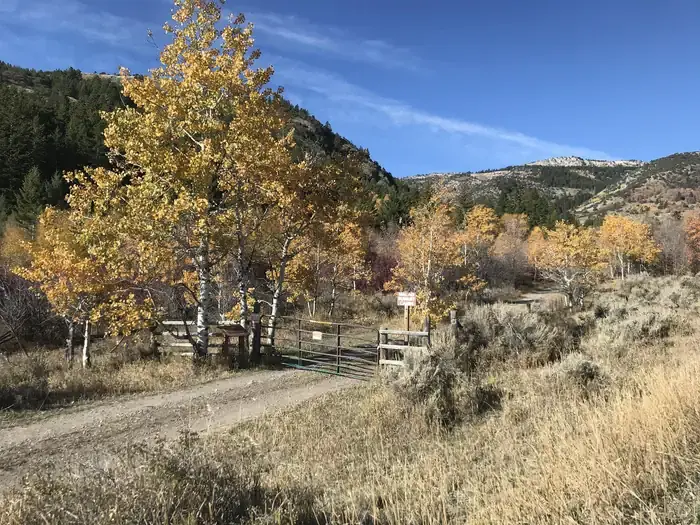
- Malad Guard Station is located 11 miles north of Malad, ID. On 1-15, take Exit 22 (Devil Creek Reservoir). Go north on N. Old Highway 191 for 3.5 miles. Turn left on E11000N/Forest Road 041 and cross over the interstate, drive 1.3 miles. At the bend keep right and continue on Forest Road 041 road for another mile. At the forest boundary there will be a Malad Summit Cabin sign and entrance gate.
- Fees
- Overnight Use: $60 per night.
- Access
- FR 041 not maintained or plowed in winter; when snow blocks vehicle access, renters park at the signed overnight parking area past the cattleguard at the USFS boundary (not on private property) and hike, ski, snowshoe or snowmobile in. Water shut off late September through May; winter guests bring their own. Pack-it-in/pack-it-out.
- Walk-in or reserve
- An access code for the gate and door is sent in the reservation confirmation email.
- Phone
- 208-757-3999
- Managed by
- Pinnacle Parks Llc under a special use permit with the Caribou-Targhee National Forest.
- Established
- Original guard station established 1908; replaced by the existing cabin in 1934.
- Coordinates
- 42.35106799, -112.2634223.
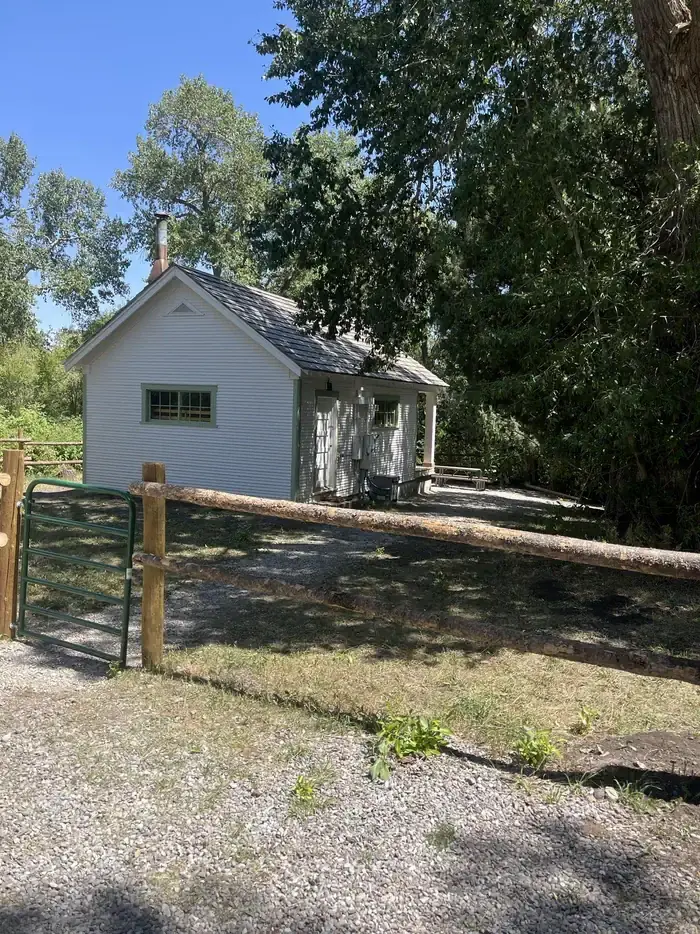
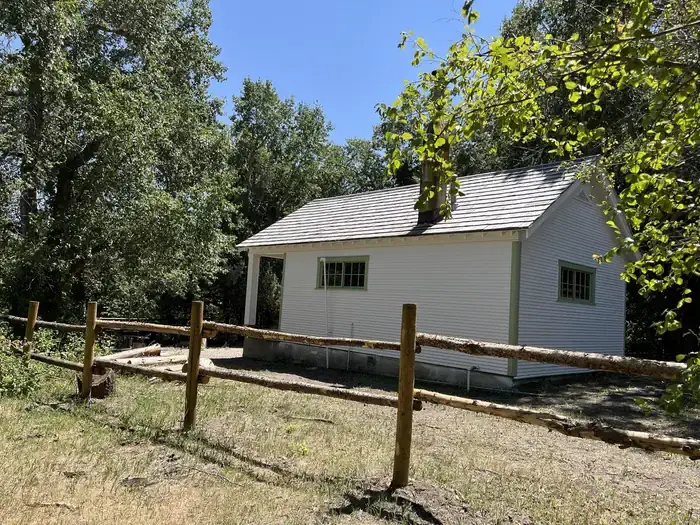
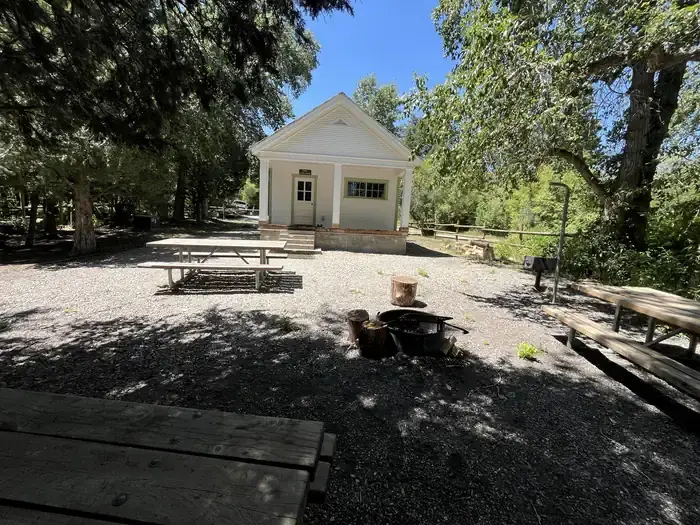
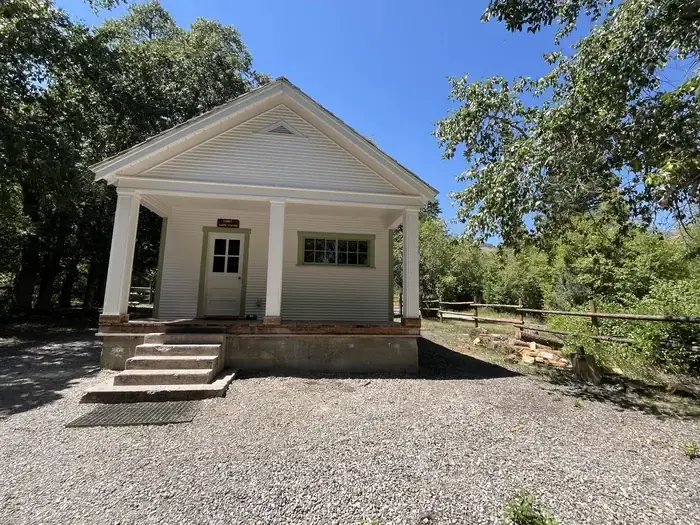
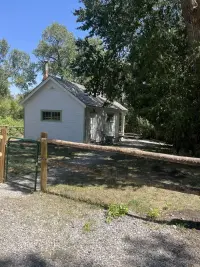
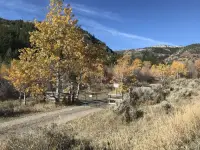
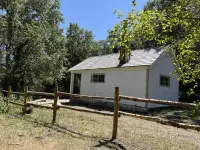
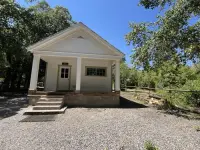
The road in leaves Interstate 15 at Exit 22, the Devil Creek Reservoir exit, runs north 3.5 miles on Old Highway 191, then turns onto Forest Road 041 and crosses over the interstate it just left. A little more than two miles on, at the forest boundary, stand a Malad Summit Cabin sign and an entrance gate. Renters open the gate and the cabin door with a code sent in the reservation confirmation email. The cabin itself is a few hundred feet past the gate. It is a single room at about 6,000 feet in the narrow Mill Creek drainage on Malad Pass, set on fenced acreage in a forest of deciduous trees and conifers, with a front porch facing the woods. The Forest Service’s overview places it 14 miles north of Malad; its driving directions say 11.
Bunks, a wood stove, and magnetic pans
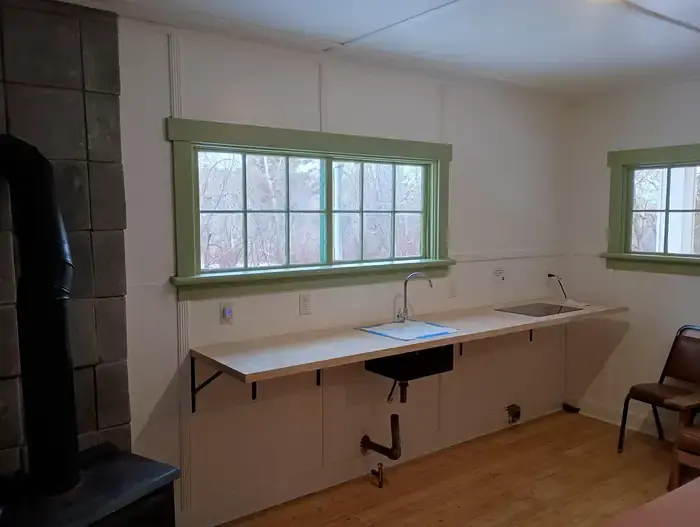
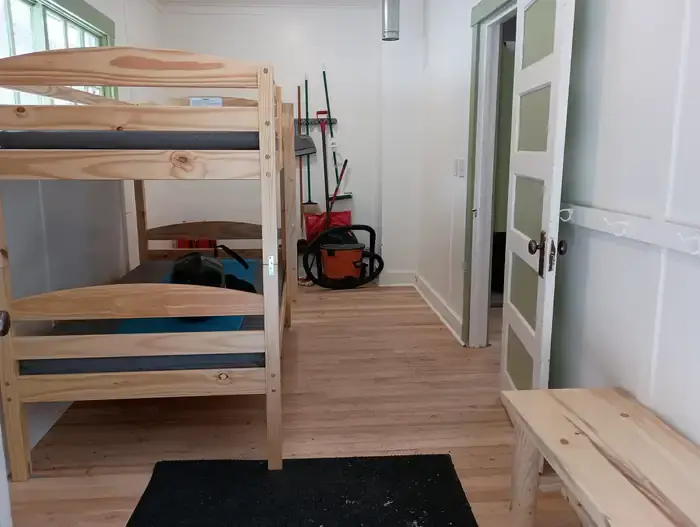
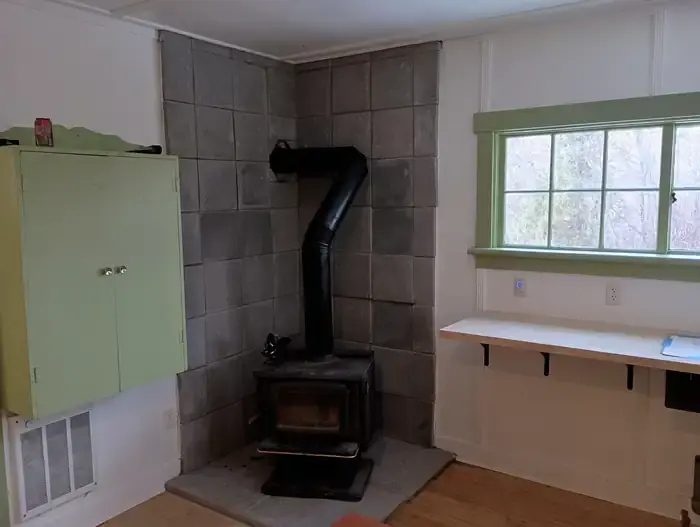
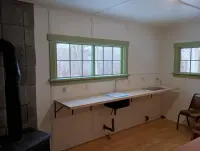
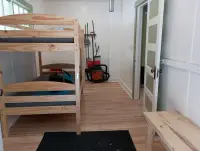
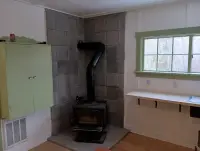
Recreation.gov lists three bunkbeds with mattresses, enough for six people. There is also a wood stove, a table with four chairs, a broom, dustpan and vacuum, a cook prep area, and a sink. The electrical appliances are a space heater, lights, and an induction stove, which heats only when a pan is set on it, and only if the pan is made of a magnetic material. The Forest Service page still describes two bunkbeds with folding cots, an oven, a refrigerator, and a seasonal shower in the mudroom. The Recreation.gov notice says the shower, oven, and refrigerator are no longer available and advises guests to bring coolers.
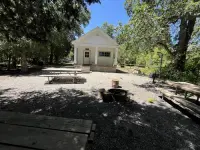
Outside stand a single vault toilet, a campfire ring, a grill, a lantern post, and picnic tables, with parking for up to three RVs. Guests may find a few dishes and some cookware. Bedding, towels, matches, lanterns, and flashlights are not supplied, and whatever comes in goes out again. Debra Tiller, recreation and trails specialist for the Westside Ranger District in Pocatello, put it to the Idaho State Journal in 2013: “It’s not like a Motel 6 with the sheets and the towels. Basically, we say bring your own bedding and your own cooking utensils. We don’t guarantee what is there. Some of that stuff disappears.”
Mill Creek and the winter half-mile
Mill Creek meanders through the site, and anglers fish it for small brook trout. Trails in the surrounding country are open to hikers, mountain bikers, horseback riders, and off-road vehicles, and hunters come for game and game birds. Recreation.gov names black bears, wolves, elk, moose, mule deer, bison, grizzly bears, mountain lions, and pronghorn among the species native to the area.
Forest Road 041 is neither maintained nor plowed in winter. When snow closes it, renters leave their vehicles at a signed overnight lot past the cattleguard at the Forest Service boundary. The lot holds four vehicles, and renters are asked to stay off the private land before the cattleguard. From there it is about half a mile to the cabin. Recreation.gov says renters may hike, snowshoe, ski, or snowmobile in, while the Forest Service lists winter access as by snowmobile only. The cabin’s water is shut off from late September through May, so winter guests carry their own, including extra water to put out a campfire.
The station is open year-round. It is run by Pinnacle Parks LLC under a special use permit with the Caribou-Targhee National Forest, and the Forest Service lists the overnight fee at $60.
Ranger families in one room
The Forest Service’s own history dates the Caribou National Forest to 1907, when President Theodore Roosevelt established it. The first guard station at Malad Summit followed in 1908. According to Tiller, from about 1905 into the 1920s such stations served as homes for rangers during the fieldwork season, when the state of the roads made living out in the forest necessary. “The ranger families used to live in them,” she said. “The rangers did have families. Sometimes they were a single guy. Generally, they would live there in the summer to do their fieldwork (and then) move to town during the winter. ... I can’t believe a family used to live in a one-room cabin.”
The existing cabin replaced the original in 1934. Tiller said that from about the 1930s on, the district’s cabins were used by work, trail, and fire crews as they were needed. As roads improved, the need to live out in the forest faded. The Westside Ranger District began renting Malad Summit, along with the Pebble Basin Guard Station north of Lava Hot Springs, in about 2005 or 2006. In 2013 the fee was $40 a night, the holidays were already booked, and Tiller advised reserving four to six weeks ahead. “If you don’t have a summer home it gives people the cabin in the woods experience,” she said.
The sick river and the stage road
The station takes its name from Malad Summit and Malad Pass. The Idaho State University digital atlas carries the account of the fur trapper Osborne Russell from 1842. Russell crossed the divide at Malad Summit and came down onto a stream called the Malade, or sick river, which empties into the Bear River about ten miles from its mouth. Russell wrote that the stream was named for the beaver living in it, which fed on poison roots, and that anyone who ate their meat fell sick to the stomach within a few hours.
By the early 1860s, the atlas records, two overland stage routes from Utah to the Snake River Plain and the Montana mines came north to Malad City. The more-used of them, the Portneuf Road, went over Malad Summit on the line Interstate 15 follows today.
Notable Events
- 1860sTwo overland stage routes from Utah to the Snake River Plain and the Montana mines came north to Malad City, and the more-used Portneuf Road went over Malad Summit on the line Interstate Highway 15 follows today. isu.edu
- 1930sThe original structures were either replaced or rebuilt in the 1930s, and from about that time on the cabins were utilized by work, trail and fire crews as needed. idahostatejournal.com
- 1934The original 1908 guard station was replaced by the existing cabin in 1934. fs.usda.gov
- 2005The local district started renting the Malad Summit and Pebble Basin guard stations in about 2005-2006. idahostatejournal.com
People
- Debra Tiller, local recreation and trails specialist for the U.S. Forest Service Westside Ranger District in Pocatello, who described the station's history and its rental.
- Osborne Russell, fur trapper; the Idaho State University atlas draws his journal for the naming of Malad Summit and the Malade or sick river (1842).
Sources
- recreation.gov/camping/campgrounds/234609
- fs.usda.gov/r04/caribou-targhee/recreation/malad-summit-guard-station
- idahostatejournal.com/sports/local/outdoors-u-s-forest-service-guard-stations-fire-outlooks-for-rent/article_56bceaf8-cff0-11e2-b433-0019bb2963f4.html
- isu.edu/digitalatlas/geography/rocks-rails-and-trails
- fs.usda.gov/r04/caribou-targhee/recreation/discover-history