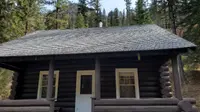
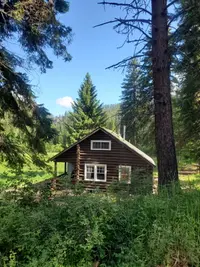

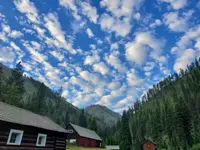
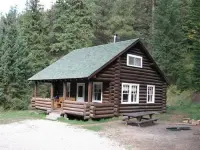
Magruder Rangers House
Darby, Idaho County, Idaho. Historical cabin; June thru October.
Details

- Where
- Darby, Idaho County, ID. No street address stated. Directions
- When
- Check-in is at 2:00 p.m. and check-out is at 12:00 p.m. MST.
- Getting there
- From Darby, Montana, travel south on Highway 93 for 4 miles to West Fork Road/Highway 473, then approximately 14 miles to Nez Perce Road/Magruder Corridor Road #468, then 34 miles on the one-lane gravel and partially paved road to the rental cabin.
- Fees
- Overnight Use: $100 per night.
- Access
- Cabin is winterized annually on October 1st. Potable water will need to be brought in for drinking and cleaning. A vault toilet is provided on the administrative site.
- Walk-in or reserve
- Call the West Fork Ranger Station at (406) 821-3269 for the current combination for the lock on the door a week in advance of your arrival.
- Phone
- (406) 821-3269
- Managed by
- Bitterroot National Forest.
- Established
- 1920's and 1930's.
- Coordinates
- 45.70166667, -114.7163889.
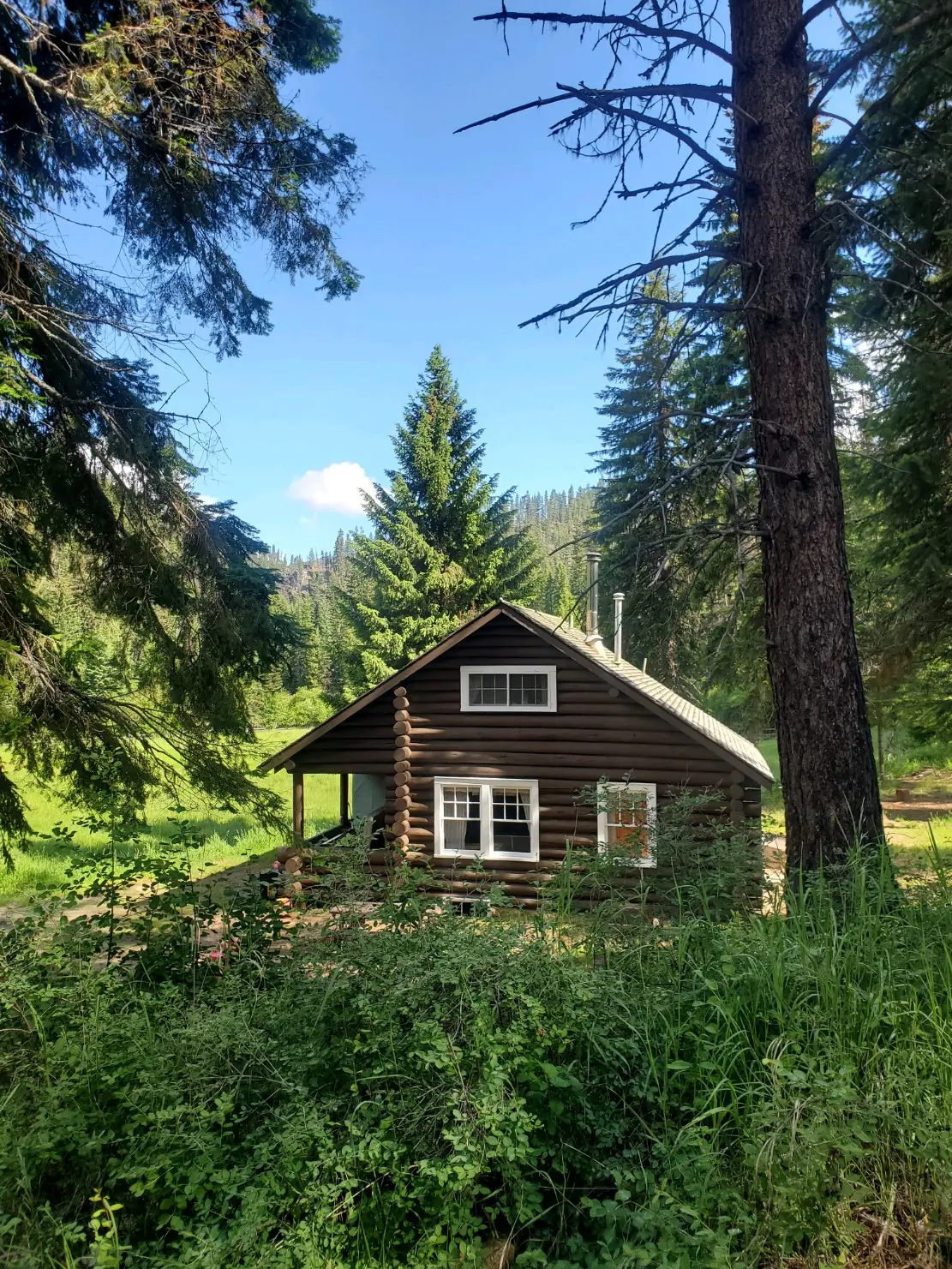
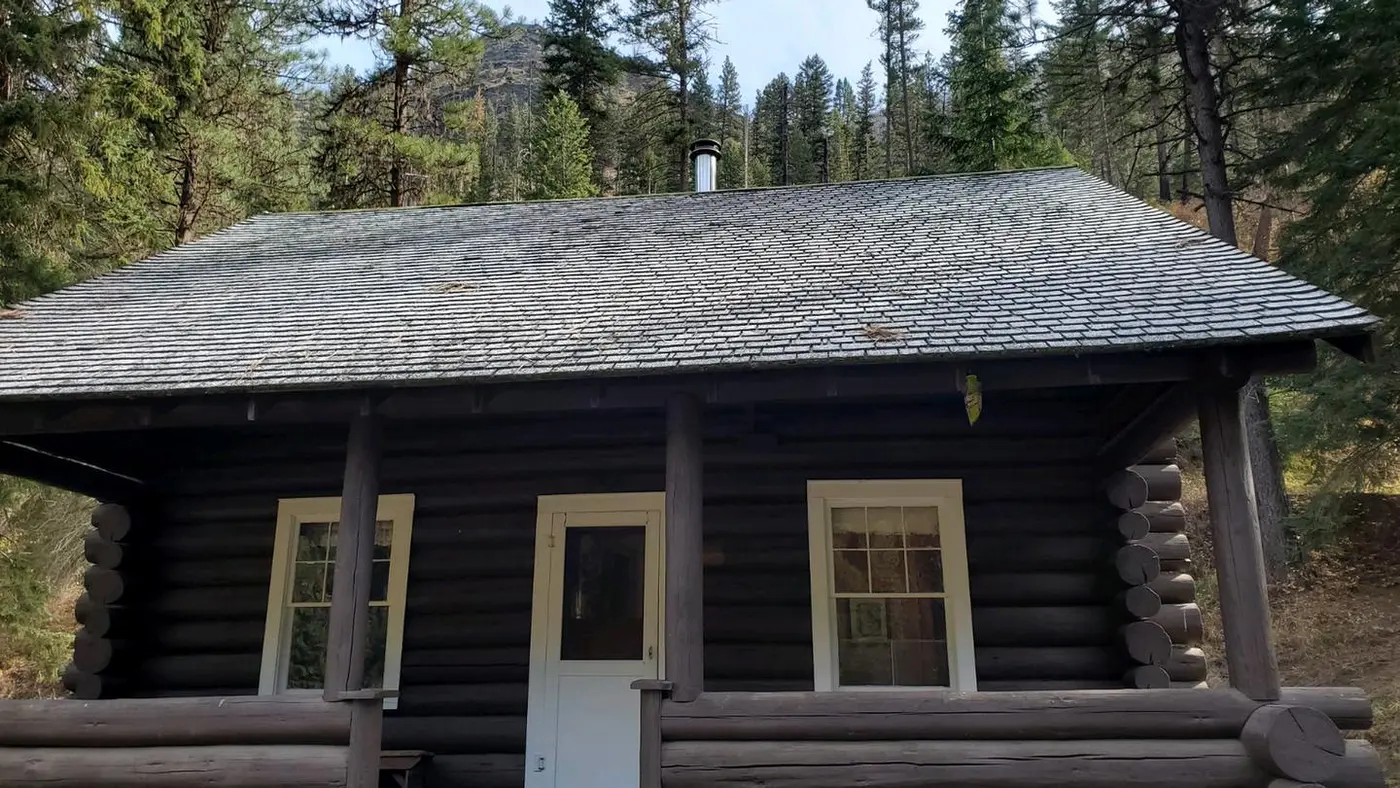
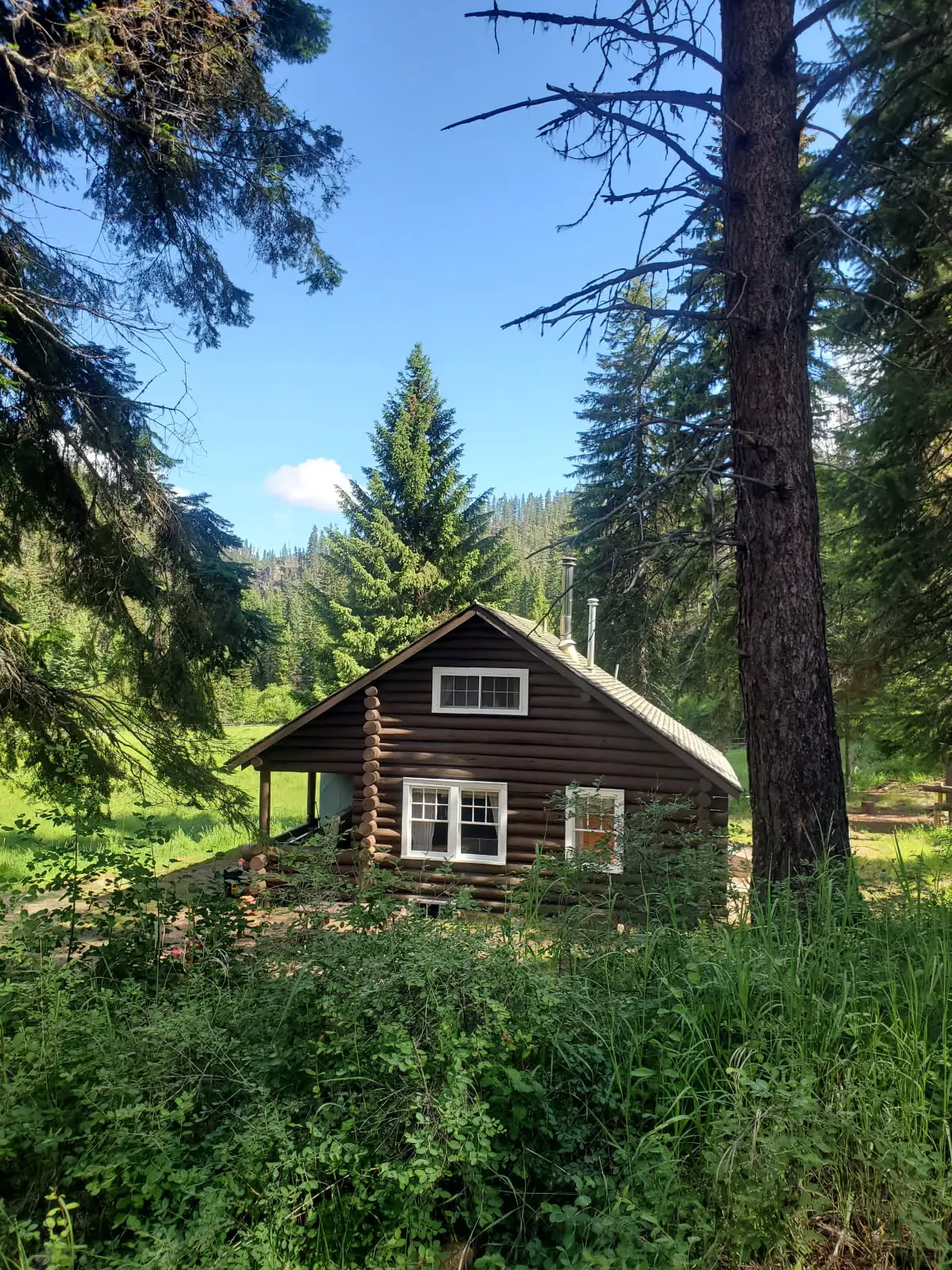
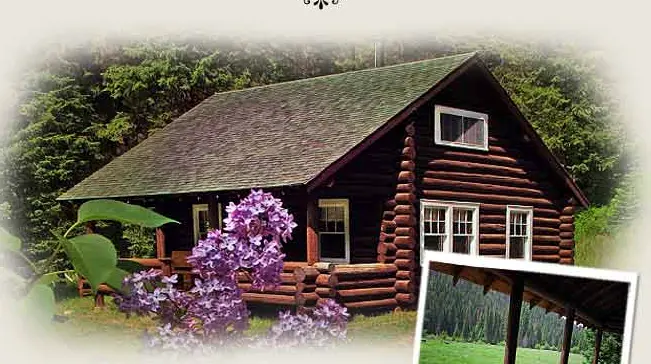
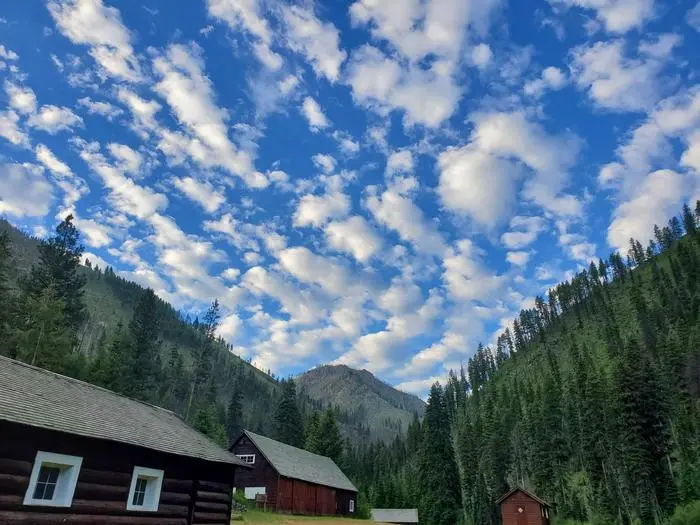
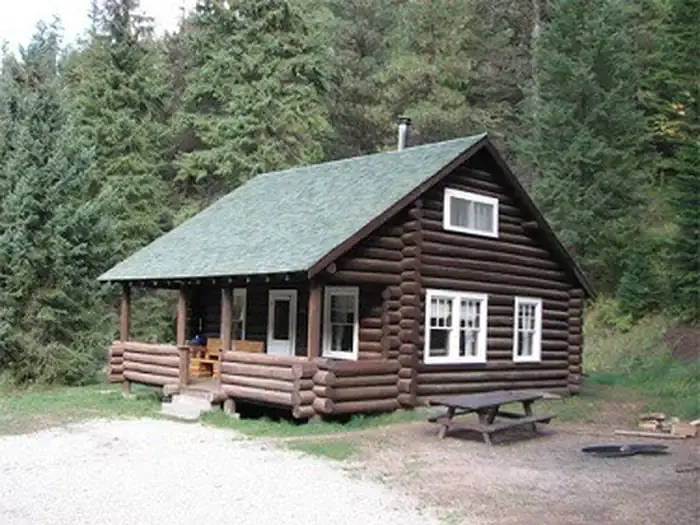
Just before Deep Creek meets the Selway River, a stone bridge crosses the creek. A road turns south over it and runs half a mile to the old Magruder Ranger Station. The station’s seven buildings went up in the 1920’s and 1930’s, and Forest Service trail crews and wilderness rangers still use them. The one rented to the public by the night is the two-story, five-room log house that was once the residence of the district ranger and his family. The door has a combination lock. Renters get the code by telephone from the West Fork Ranger District in Darby, Montana, a week ahead. The lock opens when the code is entered and the lock is squeezed in and released.
The district ranger’s house
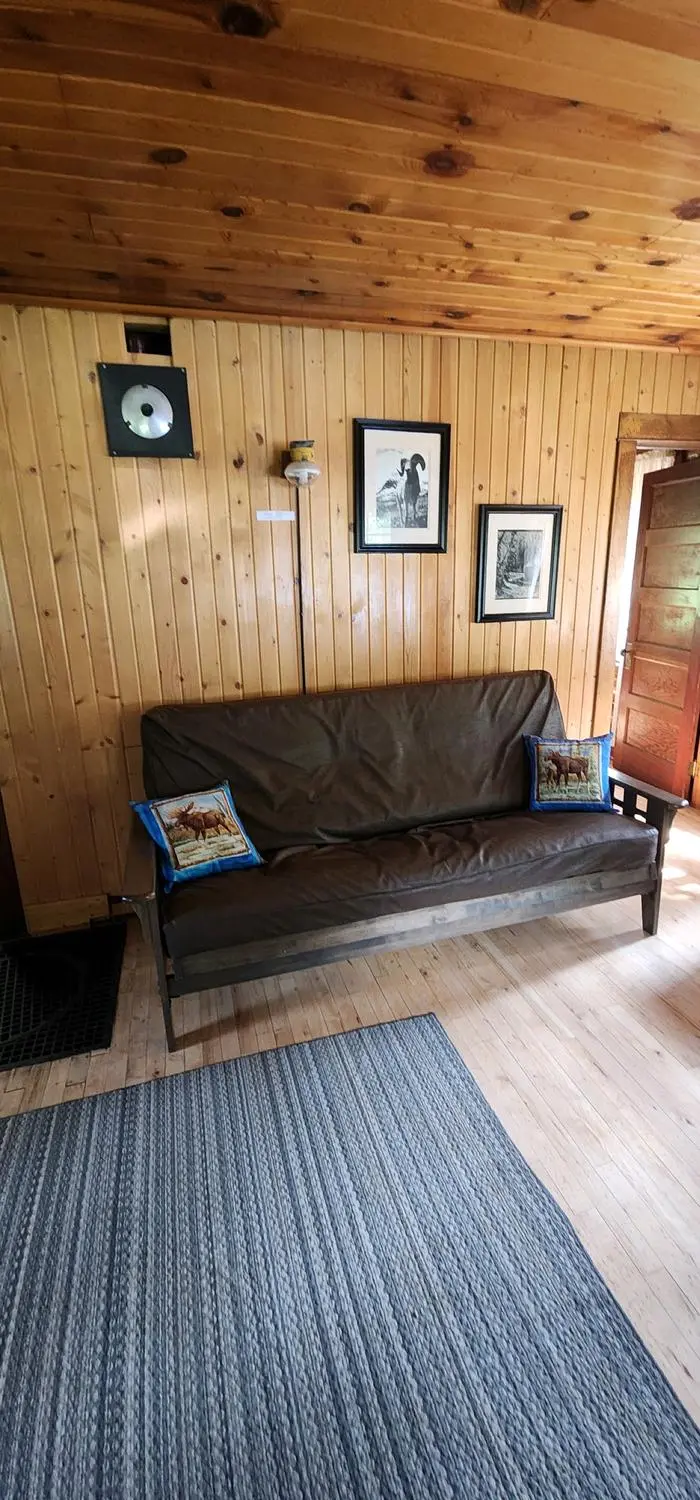
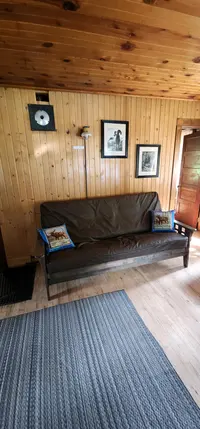
The house has two bedrooms, each with a single bed and a double bed, and two full-size futons in the living room. The Bitterroot National Forest says it holds six to ten people. A wood stove in the basement heats the house, and firewood is provided. The kitchen has a table and chairs, a propane refrigerator and stove, propane lights, and cooking and eating utensils. From June through September 30, hot and cold water runs to the kitchen and to a bathroom with a flush toilet and a shower. On October 1 each year the cabin is winterized and the water shut off. After that date, guests bring their own water and use the vault toilet outside.
Guests bring their own bedding, towels, food and matches. Before they leave they must replenish the cut kindling supply and clean the cabin. The Forest Service gives the season as June through October, and Recreation.gov gives it as early June to mid-October. The Idaho Heritage Trust describes the residence as available year round.
Whether the house is rented or not, the compound stays open to the public, and the main road wraps around the house. For the summer of 2026, the Forest Service announced that the administration building would be occupied daily while staff worked at the station and along the corridor. It warned renters of construction noise and of more traffic, equipment and personnel coming and going.
Between the Selway-Bitterroot and the Frank Church
The house stands on the Selway River at about 4,000 feet. On one side is the 1.2-million-acre Selway-Bitterroot Wilderness, and on the other the 2.3-million-acre Frank Church-River of No Return Wilderness. Coniferous forest covers most of the country, with open meadows near the river. Mountain lions and grey wolves live here, along with coyote, fox, bighorn sheep, mountain goats, elk, moose, deer and black bears. The Scenic and Wild Selway and the mountain streams around it hold bullhead, rainbow, steelhead and cutthroat trout, and mountain whitefish.
Several trails leave from the station area:
- Selway River-FCRONR Trail #4.4
- Pasture Ridge Trail #62
- Grass Ridge Trail #65
The trails are open to hiking and horseback riding, but livestock are not permitted at the cabin compound itself. Bicycles and motor vehicles must stay on the roads, outside the wilderness.
The Selway River Road leads to Indian Creek, where there is interpretive information and the remains of the Indian Creek Hatching Channel. The road ends at Paradise Campground and White Cap Creek. Whitewater parties who draw permits put in on the Selway from May 15 through July 31.
Thirty-four miles of Magruder Road
From Darby the route runs south 4 miles on Highway 93. It then follows West Fork Road, Highway 473, about 14 miles to the Nez Perce Road, which is Magruder Corridor Road #468. From there it is 34 miles on one-lane gravel and partially paved road to the stone bridge. Recreation.gov advises high-clearance vehicles from June through September. In the fall, snow may fall in the high country and on Nez Perce Pass, and the roads are not plowed. Trees may fall across the road at any time, and there is no cell phone coverage. Coming from Elk City on the Idaho side, the road is generally not passable by vehicles until mid to late July.
The whole Magruder Corridor Road is 101 miles long, single-lane and mostly unimproved. It is also known as the Nezperce Trail Road, the Montana Road, the Elk City to Darby Road and the Parker Trail. The Civilian Conservation Corps built it in the 1930s, and it has changed little since. The corridor was created in 1980, which left a road running between the two wildernesses. The Nez Perce-Clearwater National Forests put the drive from Red River to Darby at six to eight hours without stops, at 12 to 15 miles an hour.
The name goes back to 1863. The Nez Perce-Clearwater National Forests say that Elk City merchant Lloyd Magruder and four companions were murdered that year near the Selway River, near mile 44.2 westbound. The murderers were pursued and brought back to Lewiston, where they were tried, found guilty and hanged. It was the first legal hanging in Idaho territory. The Bitterroot National Forest’s list of place names gives a different location. It says Lloyd A. Magruder and members of his pack outfit were killed on Magruder Ridge in October 1863, and it traces all the Magruder names to him.
Deep Creek, Tangen’s logs, and a goat
The station did not carry Magruder’s name at first. It was the Deep Creek Ranger Station, a district headquarters on the old Selway National Forest, named for the creek at its door. No one knows where the creek’s own name came from. The place-names list says the station kept the Deep Creek name until about 1935. One reason for the change was that the Helena National Forest also had a Deep Creek Ranger Station, on another Deep Creek east of Townsend. Recreation.gov still lists the older names: Deep Creek Work Center, Magruder Work Center and Horse Heaven Cabin.
Ole Tangen, a Forest Service employee known for his log construction, built both the ranger’s residence and the office building. The Idaho Heritage Trust says the Magruder buildings reflect his skill in the perfection of the building logs and the precision of their saddle-notched joints. The Trust lists grants to the Old Magruder Ranger Station in 1999 and 2000.
Frank Schumaker, an early district ranger at Magruder, wrote an essay retelling the history of the corridor. The place-names list credits him with naming Chuckling Creek about 1950, for the sound it makes in spring high water in the canyon below Observation Point. The same list keeps a story about the station itself. Stan Greenup once caught a young mountain goat near Steep Gulch, brought it to Magruder Ranger Station, and then turned it loose.
Notable Events
- 1935The station was called Deep Creek Ranger Station after the creek until about 1935; one reason for changing is that there is a Deep Creek Ranger Station on the Helena National Forest also located on Deep Creek east of Townsend. fs.usda.gov
- 1999The Idaho Heritage Trust lists 1999 as a grant year for the Old Magruder Ranger Station. idahoheritagetrust.org
People
- Lloyd Magruder, Elk City merchant for whom the Magruder Corridor was named; murdered in 1863 with four companions near the Selway River (died 1863).
- Ole Tangen, Forest Service employee known for his log construction skills; constructed the ranger's residence and office building at Magruder.
- Frank Schumaker, early District Ranger at Magruder, and author of the corridor essay that retells the history of the area that came to be called the Macgruder Corridor.
Sources
- recreation.gov/camping/campgrounds/234301
- fs.usda.gov/r01/bitterroot/recreation/magruder-rangers-house
- idahoheritagetrust.org/projects-grants/old-magruder-ranger-station
- fs.usda.gov/sites/nfs/files/r01/bitterroot/publication/Place%20Names%20of%20the%20Bitterroot%20National%20Forest_0.pdf
- sbw.lib.uidaho.edu/pages.html
- fs.usda.gov/r01/bitterroot/recreation/magruder-rangers-house
- fs.usda.gov/r01/nezperce-clearwater/recreation/magruder-road-corridor