Los Ojos Fish Hatchery
Los Ojos, Rio Arriba County, New Mexico. State fish hatchery.
Details

- Where
- 29 Hatchery Road, Los Ojos, NM 87551. Directions
- When
- Visitors welcome during business hours.
- Getting there
- E. end of Hatchery Rd.
- Access
- Visitors are welcome during business hours.
- Walk-in or reserve
- Walk-in; visitors are welcome during business hours.
- Phone
- (575) 588-7307
- Website
- wildlife.dgf.nm.gov
- Managed by
- New Mexico Department of Wildlife.
- Established
- 1932.
- Coordinates
- 36.71979, -106.57383.
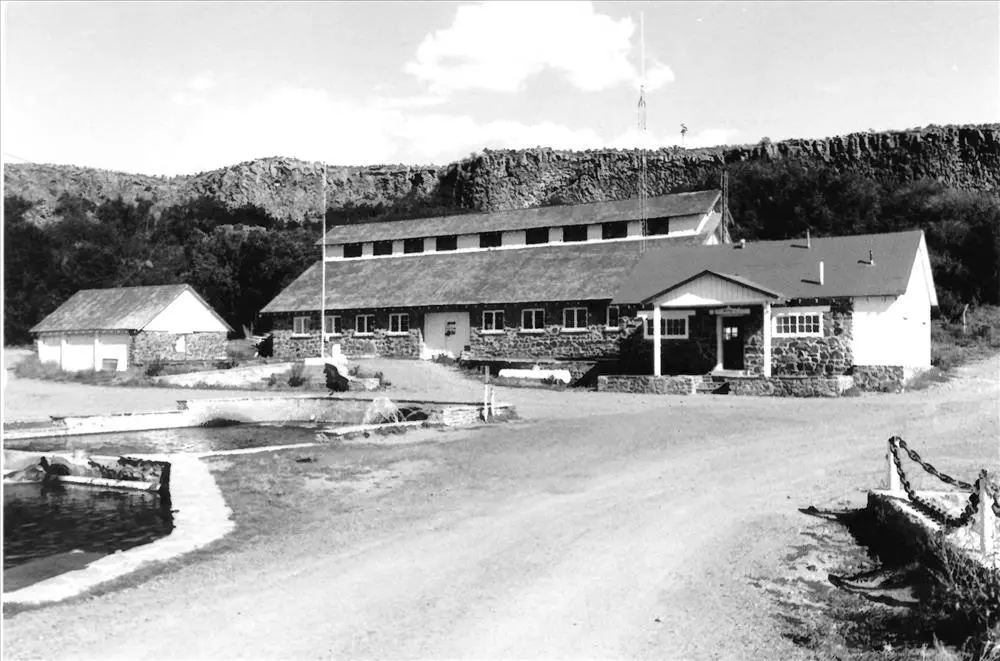
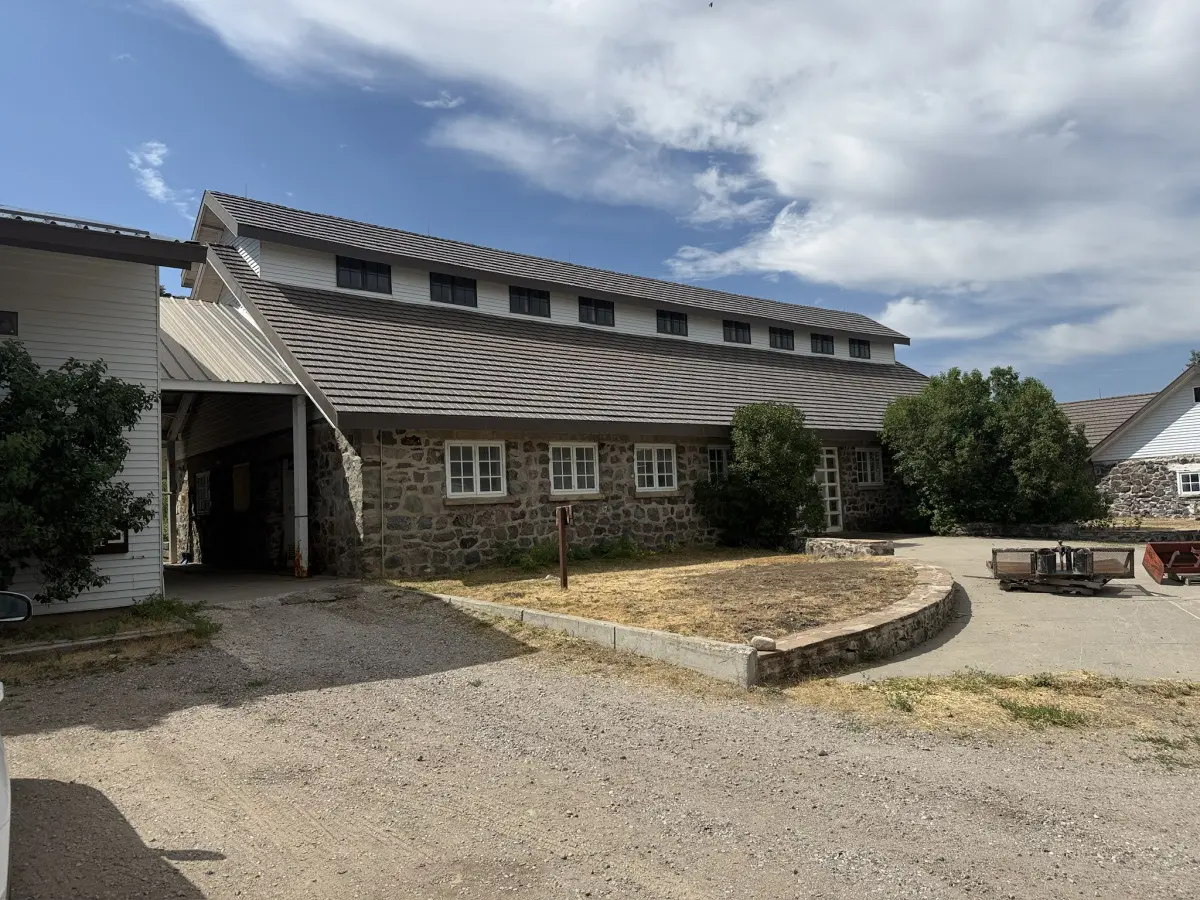
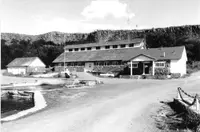
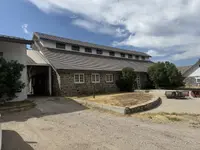
Four stone buildings stand at the east end of Hatchery Road in Los Ojos, about 15 miles south of Chama, on a gradually sloping site at the foot of cliffs 120 feet high. The main hatchery building is at the center, with the offices on one side, the garage on the other, and a pump house to the rear. The walls are stone rubble laid in concrete mortar on concrete foundations. Casement windows of four or six panes rest on concrete sills. Side-facing gable roofs overhang on exposed rafters and purlins, and a monitor roof sits above the main building. Ramps wind up to its entrance.
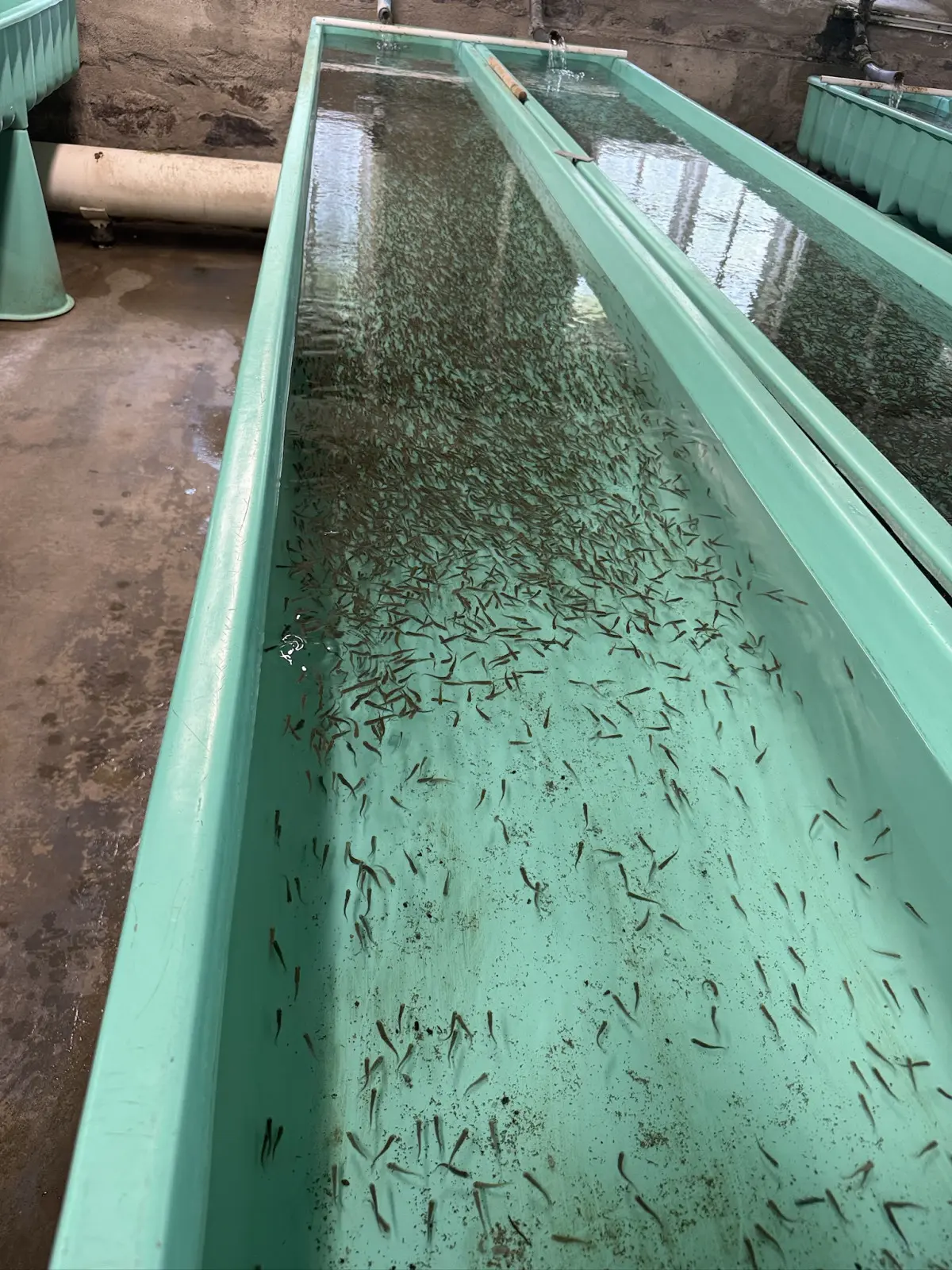
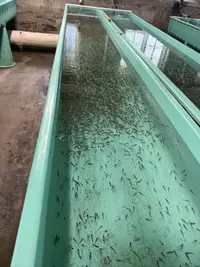
The New Mexico Department of Wildlife runs the hatchery as one of its six, and visitors are welcome during business hours. The department lists its product as catchable-sized rainbow trout and notes that it may be converted to a fingerling rearing facility. It puts the capacity at three million trout fingerlings a year for waters statewide. Photographs posted to the Living New Deal in 2026 show small trout being raised inside the main building. They also show the hatchery’s former administration building standing unoccupied.
Burns Lake and Laguna del Campo
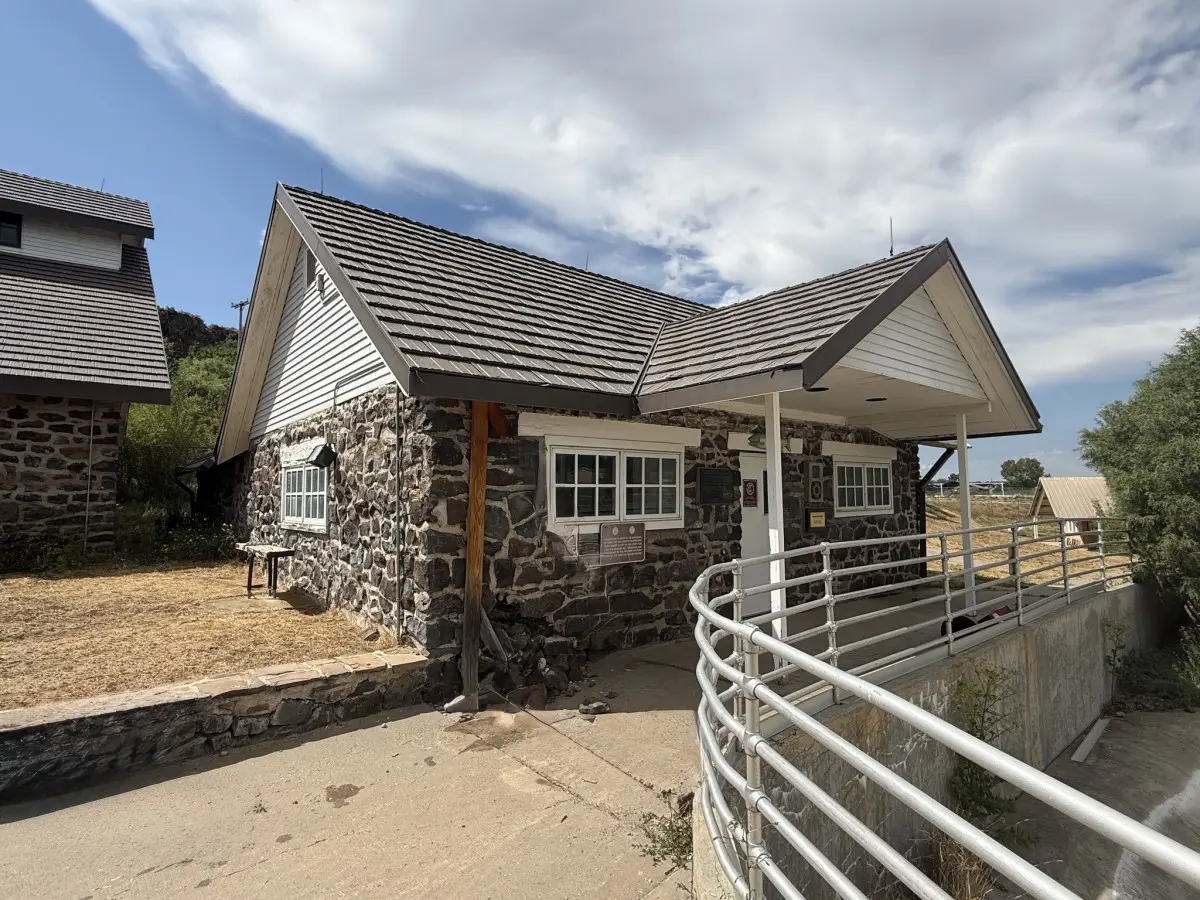
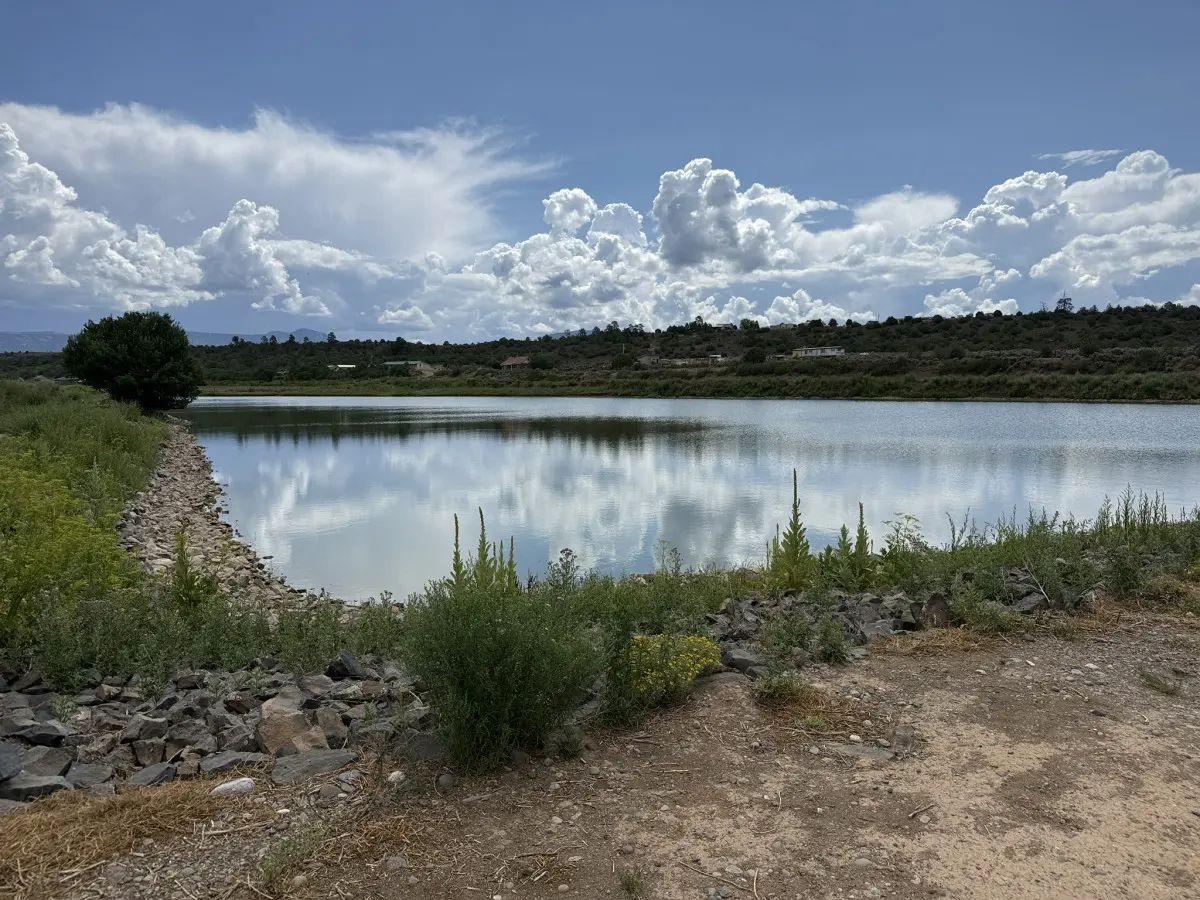
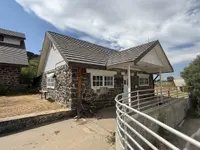
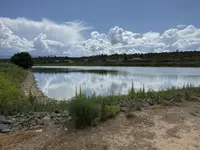
A water runway carries trout from the hatchery down to Burns Lake. There, in the words of the Living New Deal caption, they are “finished” and grow to size for release into streams and lakes. An earth-fill dam impounds the lake and is still part of the hatchery works. Half a mile south of the hatchery stands the Burns Lake Bungalow, on a rise above the lake where the cliffs between the first and second plateaus dissolve into steep hills. It has stone rubble walls with raked concrete joints, wood shingles in the gable ends, and eight-light casement windows on brick sills. Its porch rests on tapered boxed piers trimmed with molded “bases” and “capitals.” A two-car garage of the same date and construction stands 40 feet northeast. Because the house is smaller and away from public roads, its 1985 nomination judged it a less prominent symbol of state government than the main complex.
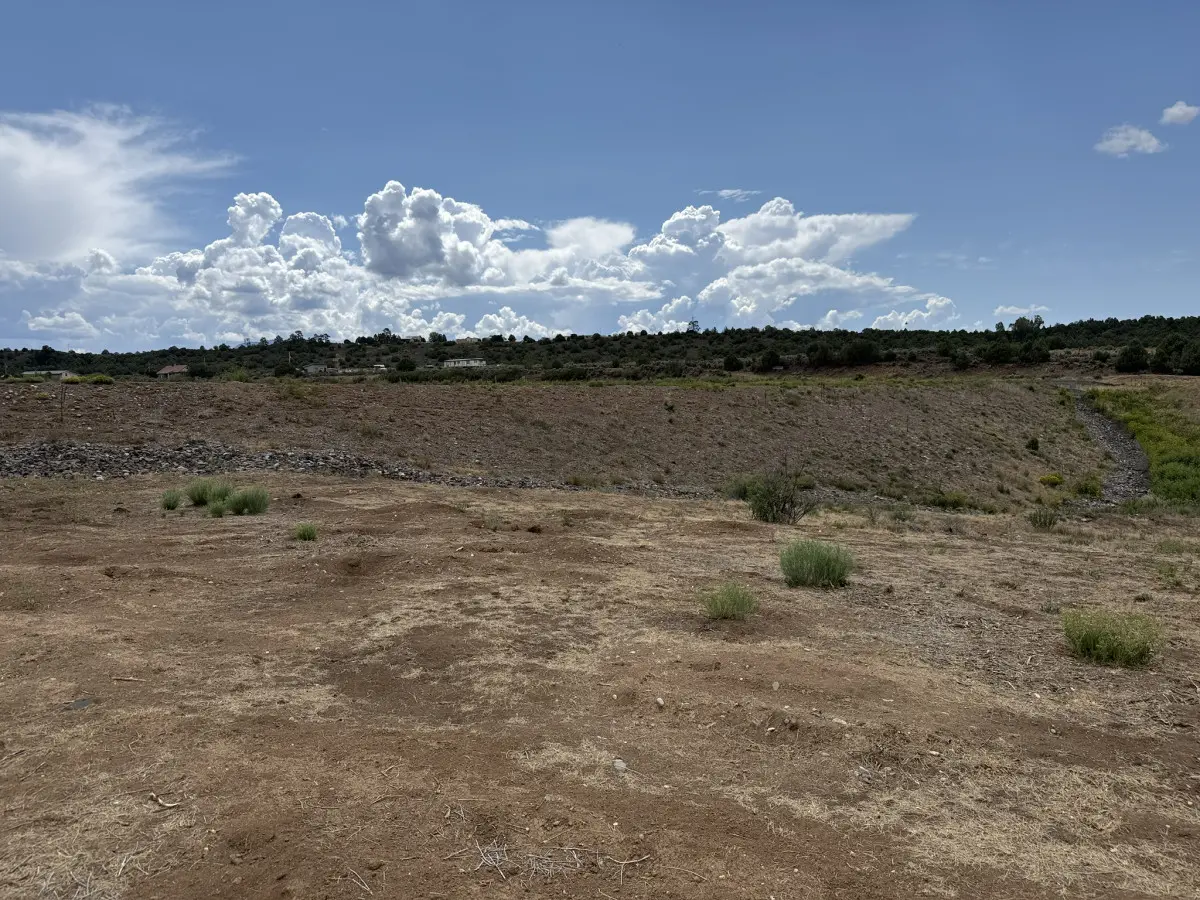
Near the hatchery lies Laguna del Campo, a pond that state regulation reserves for anglers 14 and under, anglers 65 and older, and anglers with disabilities. Up to two parents or guardians supervising fishing children may also fish there. In July 2017 The Santa Fe New Mexican reported that about 15,000 people a year fished the pond, in a 10-acre state-owned recreation area. The paper described the hatchery as one “which once was used to raise trout to stock New Mexico waterways.” Game and Fish officials said a dam in the area had fallen into disrepair and could not withstand a “worst-case scenario” flood. Three options went before a public meeting in Tierra Amarilla:
- repair the dam for $8 million;
- reduce the pond’s capacity for $2.7 million;
- remove the dam and the pond for $1.7 million and return the water to irrigation.
The State Game Commission had voted on May 11 to develop a report on the least expensive option, and spokesman Karl Moffatt said that report would be presented at the meeting. The fishing rule naming Laguna del Campo was amended in 2021, effective April 1, 2022.
Stone in an adobe valley
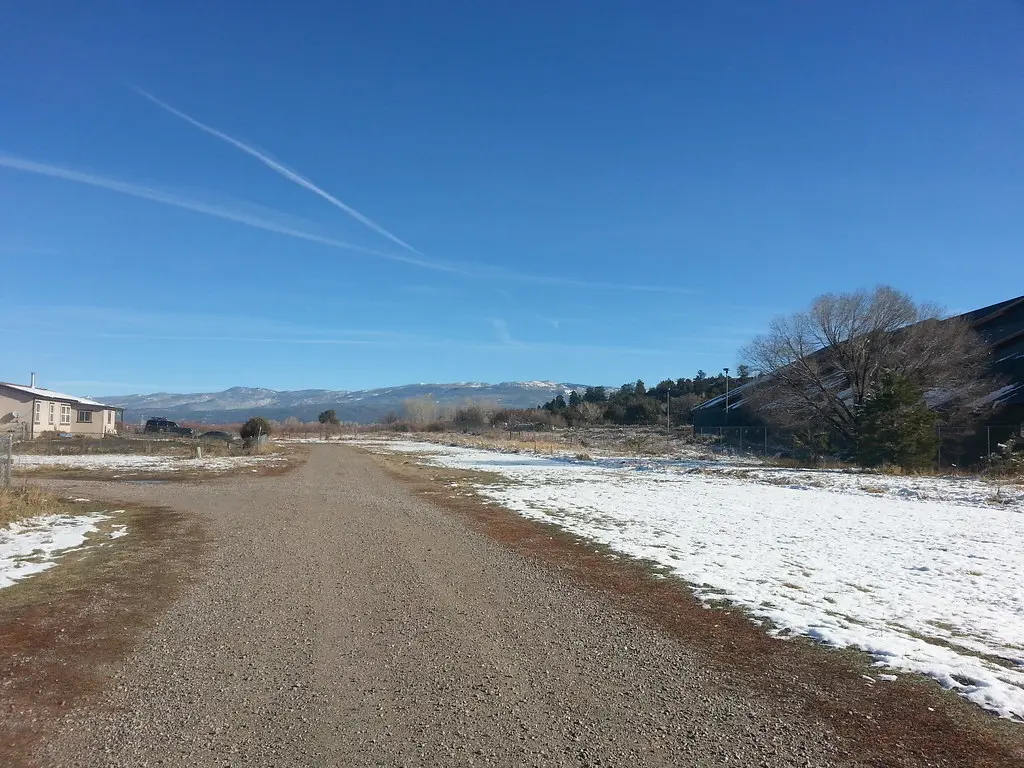
Los Ojos, “The Springs,” sits on the first plateau above the Chama River, in the valley Hispanic settlers named La Tierra Amarilla. In 1877 an Army engineer, Lt. C.A.H. McCauley, counted 180 people and four stores there and put the river ford at 7,300 feet. The valley’s builders worked in adobe and in log: jacal posts planted upright in the ground, and hewn or unhewn horizontal logs known locally as fuertes. The hatchery departed from that tradition. Its nomination says the stone probably indicates the participation of an outside contractor. It also places the complex among the first few architect-designed buildings in the valley, preceded perhaps by some railroad structures in Chama and the 1916 courthouse in Tierra Amarilla.
The plan is Beaux Arts and rigidly symmetrical in arrangement, massing, and windows. The nomination traces the eye from the auxiliary buildings to the higher roof of the main building, on to the monitor roof, and finally to the cliffs behind. Such order and procession, it notes, was common in government projects between the World Wars, “even in one as modest and remotely-located as a fish hatchery.” The general plan appears to have been used elsewhere in the Rockies and in upstate New York. The length of the main building varied from project to project with the available water flow and the local need for recreational fish. The nomination calls the type “WPA Rustic.”
Accounts of the building differ in their dates. The department says the hatchery was built in 1932 under the name Parkview Hatchery. The Living New Deal says it was begun in 1932, just before the New Deal, and continued during it, and lists the project as running from 1933 to 1940. By that account, multiple WPA projects from 1935 to 1940 built a stone building, lakes, fish ponds, and an earth-fill dam, at a federal cost of $178,272. The 1985 nomination describes a WPA hatchery project of 1932–34.
Jobs and common lands
The nomination calls the complex the most prominent reminder of state and federal activity in the area during the 1930s. Spending on it brought local employment. The hatchery also reflected the government’s development of the once communal surrounding mountains for recreation. According to the nomination, it was viewed locally with ambivalence, as a source of new jobs and as a symbol of outside government’s role in the loss of common lands. In 1967 Reis Tijerina led a raid on the county courthouse that brought the movement to regain control of the land grant to a head. In the days before that raid, local rumors spoke of plans to dynamite the hatchery.
The hatchery and the Burns Lake Bungalow entered the State Register on October 17, 1984, and the National Register on April 4, 1985, as part of the La Tierra Amarilla multiple listing.
Twenty of the ugliest fish
Until the summer of 2004, New Mexico had no indication of whirling disease. The disease is caused by a parasite that feeds on the cartilage near a young trout’s head. That year Steve Bates, a department cold-water fisheries biologist, made a routine check to establish a baseline for disease in the state hatcheries. “I took 20 of the ugliest fish I could find in each hatchery,” he said. Lisboa Springs and Seven Springs came back positive, and later testing found some infected fish at Parkview. Mike Sloane, an assistant chief of fisheries, named the Pecos River as the most likely source. Lisboa Springs had been using river water in some raceways, and transfers of trout from those raceways to Seven Springs and Parkview appear to have spread the disease. An estimated 225,000 fish were destroyed.
In 2008 Los Ojos was shut down for cleaning and disinfecting, with Greg Friday as manager. The department’s magazine said it would get new raceway covers and begin raising rainbows again. Once it had proven free of the disease for one year, its trout would be allowed into state waters. The same article noted that trout grow slowly at Los Ojos. The spring water feeding the raceways runs 48 degrees, against the 58 degrees best for raising trout. Because of that, the hatchery might raise trout only to fingerling size and then either stock them or send them to another hatchery.
Notable Events
- 1932Hatchery construction provided local jobs but also represented government development of once communal mountains for recreation, and was viewed with ambivalence. npgallery.nps.gov
- 1932The Burns Lake House was built as part of the WPA hatchery project using the same materials as the main hatchery complex. npgallery.nps.gov
- 1932Formerly called Parkview Hatchery, the Los Ojos Fish Hatchery was built in 1932. wildlife.dgf.nm.gov
- 1933The Living New Deal project summary lists its start as 1933. livingnewdeal.org
- 1935Multiple WPA projects completed, expanded and improved the hatchery, constructing a stone building, lakes, fish ponds and an earth-fill dam. livingnewdeal.org
- 1940The Living New Deal project summary lists completion in 1940. livingnewdeal.org
- 1967Before the courthouse raid, local rumors spoke of plans to dynamite the hatchery; the nomination presents this as rumor, not an attack that occurred. npgallery.nps.gov
- 1984Los Ojos Fish Hatchery & Burns Lake Bungalow entered the State Register under file #1113. nmhistoricpreservation.org
- 1985Los Ojos (Parkview) Fish Hatchery, National Register 85000779, listed April 4, 1985. philadelphiabuildings.org
- 2004The Pecos River was called the most likely source of contamination; transfers of trout from river-fed Lisboa Springs raceways appeared to have spread the disease to Seven Springs and Parkview. wildlife.dgf.nm.gov
- 2008Los Ojos was shut down for disinfection while the state hatchery system continued stocking trout. wildlife.dgf.nm.gov
- At a State Game Commission meeting, commissioners discussed the area in closed session and voted afterward to develop a report on the least expensive option. santafenewmexican.com
People
- Roddy Gallegos, Assistant Chief of Fisheries in charge of hatchery operations.
- Reis Tijerina, Leader of the courthouse raid invoked as context for local rumors about dynamiting the hatchery (1967).
- Karl Moffatt, Game and Fish spokesman discussing presentation of the Laguna del Campo dam-options report.
- Eric Frey, Department sport fish program manager who described the stocking of trout held at Los Ojos after decontamination.
- Greg Friday, Los Ojos hatchery manager.
- Mike Sloane, Assistant chief of fisheries involved in the whirling-disease investigation.
- Steve Bates, Department cold-water fisheries biologist who conducted routine hatchery disease checks.
Sources
- wildlife.dgf.nm.gov/fishing/fish-hatcheries
- wildlife.dgf.nm.gov/home/contact/location-map
- livingnewdeal.org/sites/los-ojos-fish-hatchery-previously-parkview-fish-hatchery-los-ojos-nm
- npgallery.nps.gov/AssetDetail/NRIS/85000779
- npgallery.nps.gov/GetAsset/3f7ffd9b-193f-4b03-9ed5-fd13848ac817
- flickr.com/photos/105727220@N03/15700392840
- law.cornell.edu/regulations/new-mexico/N-M-Admin-Code-SS-19.31.4.14
- npgallery.nps.gov/GetAsset/12fea0f0-a047-4dc0-a5aa-79941f75e88f
- npgallery.nps.gov/GetAsset/6eb8ac43-8511-43c0-9e09-ebb1f5558c47
- npgallery.nps.gov/GetAsset/60a46dd5-360b-47ac-9ac9-30872d1e2e0e
- nmhistoricpreservation.org/assets/files/registers/2012%20Report_%20Section%201_%20Arranged%20by%20Name.pdf
- wildlife.dgf.nm.gov/fishing/fishing-regulations/whirling-disease
- losalamosreporter.com/2021/05/05/nmdgf-where-do-all-those-fish-come-from
- wildlife.dgf.nm.gov/download/revitalized-nm-hatcheries-see-bright-future/?wpdmdl=44424&ind=0&refresh=6d1e082f&filename=Revitalized-NM-hatcheries-see-bright-future.pdf
- wildlife.dgf.nm.gov/a-big-fish-story
- santafenewmexican.com/news/briefs/future-of-laguna-del-campo-fishing-pond-debated/article_fa3be657-7ff7-5f9a-aa4a-d801e55307c2.html
- philadelphiabuildings.org/pab/app/pj_display.cfm/692404