Leavenworth National Fish Hatchery
Leavenworth, Chelan County, Washington. Public U.S. Fish & Wildlife Service facility (national fish hatchery); Open to the public year-round.
Details

- Where
- 12790 Fish Hatchery Road, Leavenworth, WA 12790. Directions
- When
- spawning viewing late August; fish release into Icicle Creek in April; adult salmon arrive late May.
- Getting there
- From Highway 2 at the west end of Leavenworth, at the traffic circle, turn south onto Icicle Road; after 2.3 miles turn left on Fish Hatchery Road; parking lot on the right just before the entry gate.
- Fees
- None; no parking pass or entry fee.
- Hours
- Hatchery grounds: year-round, 24 hours; visitor center: 7 days a week, 10 AM - 4 PM.
- Access
- Toilet at trailhead; accessible toilet with running water; main loop paved.
- Walk-in or reserve
- No reservation needed; visitors are always welcome.
- Phone
- (509) 548-7641
- Website
- fws.gov
- Managed by
- U.S. Fish and Wildlife Service.
- Established
- Built 1938-1940 on 170 acres two miles south of Leavenworth.
- Coordinates
- 47.5583, -120.6760.
Six square columns front the main building of Leavenworth National Fish Hatchery, two stories of concrete on a terrace above Icicle Creek in Chelan County, Washington. Inside, the visitor center’s mural covers all four walls with the animals that rely on salmon, people among them. Exhibit panels set out what a fish faces between here and the sea: 500 miles of river and seven dams. Of the 1.2 million young spring Chinook released each year, the hatchery may see 500 to 6,000 come back.
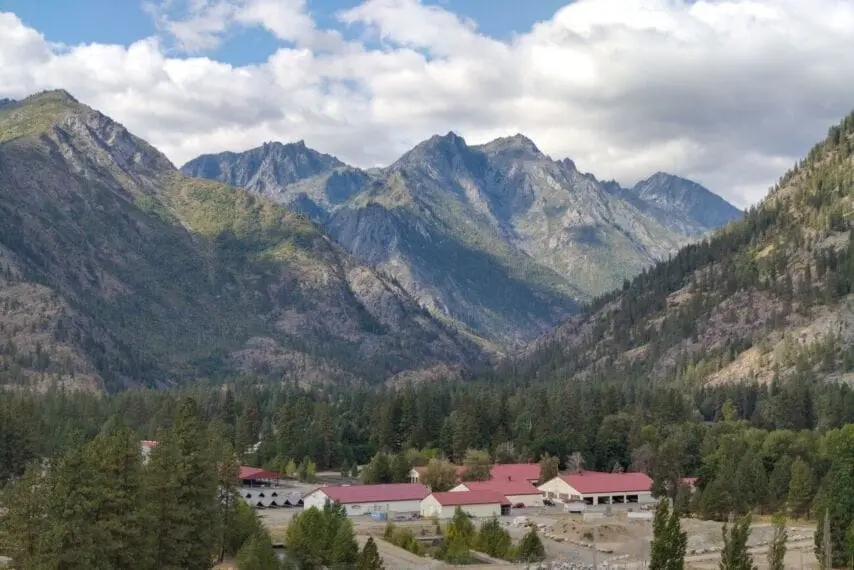
The grounds are free and open every day of the year. Visitors park at Hatchery Park outside the main gate and go in on foot, by bicycle, or on horseback, and dogs are welcome on leash. Interior roads belong to hatchery staff. A kiosk in front of the main building holds self-guided tour flyers in English and Spanish. The route runs past long outdoor raceways where staff feed the fingerlings, clean the channels, and watch for sickness, ospreys, and otters. The hatchery is headquarters of the Leavenworth Fisheries Complex and home to the Mid-Columbia Fish and Wildlife Conservation Office. Its 180 acres in the Icicle Valley also hold a public boat launch for non-motorized craft and a tribal fishing area. In the shop, built in 1940, the original band saw and blacksmith forge are still in place. On a low bluff above the ponds stand four of the seven houses built for hatchery workers in 1941, still occupied by employees.
The year on Icicle Creek
Spring Chinook eggs hatch in October in trays in the nursery, a long unheated room lit by tall windows. The sac-fry live off their yolks and are then moved into green fiberglass tanks, where staff feed them dry food by hand up to seven times a day. Between March and May they go outside to the raceways. They stay there 14 months in a mix of river and well water kept below 60°F. Over that time they shed their dark, mottled scales for silver ones. In April they are let into Icicle Creek.
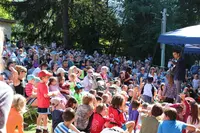
The April release is the hatchery’s spring party. At the April 2026 Salmon Release Party, tribal representatives and other partners ran booths and stations on salmon and stewardship. Participants each named a young salmon and set it into the creek. The flags of tribal nations and the Bureau of Reclamation flew beside the Service’s for the country’s 250th anniversary.
Adults begin returning in late May, following the scent of home water. They climb the short fish ladder just below the bridge into the holding ponds, where full-grown fish can be watched at close range. Upstream of the bridge is a spillway on the diversion channel dug in 1939, sometimes running and sometimes dry. In a history column for the local paper, Julia Pinnix, the complex’s visitor services manager, wrote that in flood season the sound of that waterfall draws salmon upstream. She added that the spillway is too steep for any salmon to climb, so the fish take the ladder or keep on up the river.
Along the creek stand fishing platforms built by Native Americans. A treaty signed in 1855 guarantees their harvest during the tribal seasons, generally May to July. The Wenatchee chief Tecolekun was among the signers of that Yakima Treaty at the Walla Walla Council on June 9, 1855. The Yakama Nation and the Confederated Tribes of the Colville Reservation both fish here every year. In summer the hatchery invites tribes and selected groups to take surplus fish. It keeps 500 males and 500 females for spawning in late August.
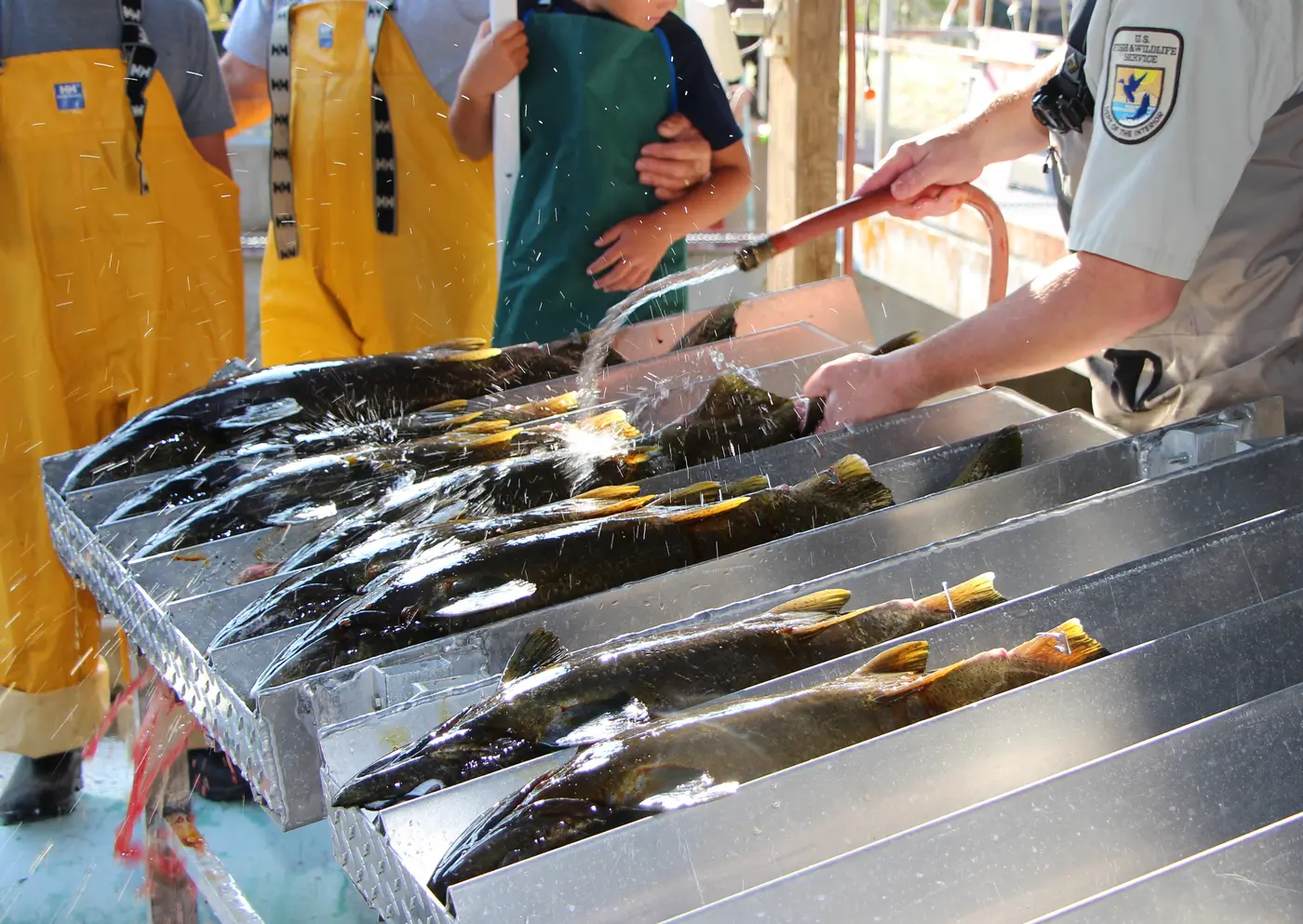
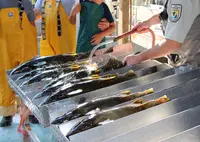
In the spawning shed the eggs and milt are mixed and carried to the nursery, and each female can give up to 5,000 eggs. The adults die after spawning, as they would in the wild. Returns swing widely: 976 spring Chinook came back in 2018, 10,839 in 2022, and 3,500 in 2024.
Coho are part of the cycle too, raised here since 2001 through a partnership with Yakama Nation Fisheries. When enough adults return, hatchery fish supply sport and tribal fisheries on the creek in June and July and again in October and November. In 2026 the state opened coho retention from September 30 through November 30. The lower stretch of that fishery ends 500 feet below the hatchery’s barrier dam, where returning salmon gather in the water.
Across the bridge
The most-used trails lie across the bridge from the production area. The Icicle Creek Nature Trail is listed by the hatchery at 1.36 miles. Pinnix, reviewing it in 2020, called it “an easy 1 mile loop.” She wrote that it is paved and wide enough in most places for two people to walk side by side. She also wrote that “black bears are often spotted along the river in late summer when berries are ripe and salmon are arriving to spawn.” Along the way are a Storywalk and a “Choose Your Migration” adventure on the journeys of salmon and lamprey. Spur paths branch off about every tenth of a mile to wildlife blinds and the water. The trail was certified a National Recreation Trail on June 3, 2005.
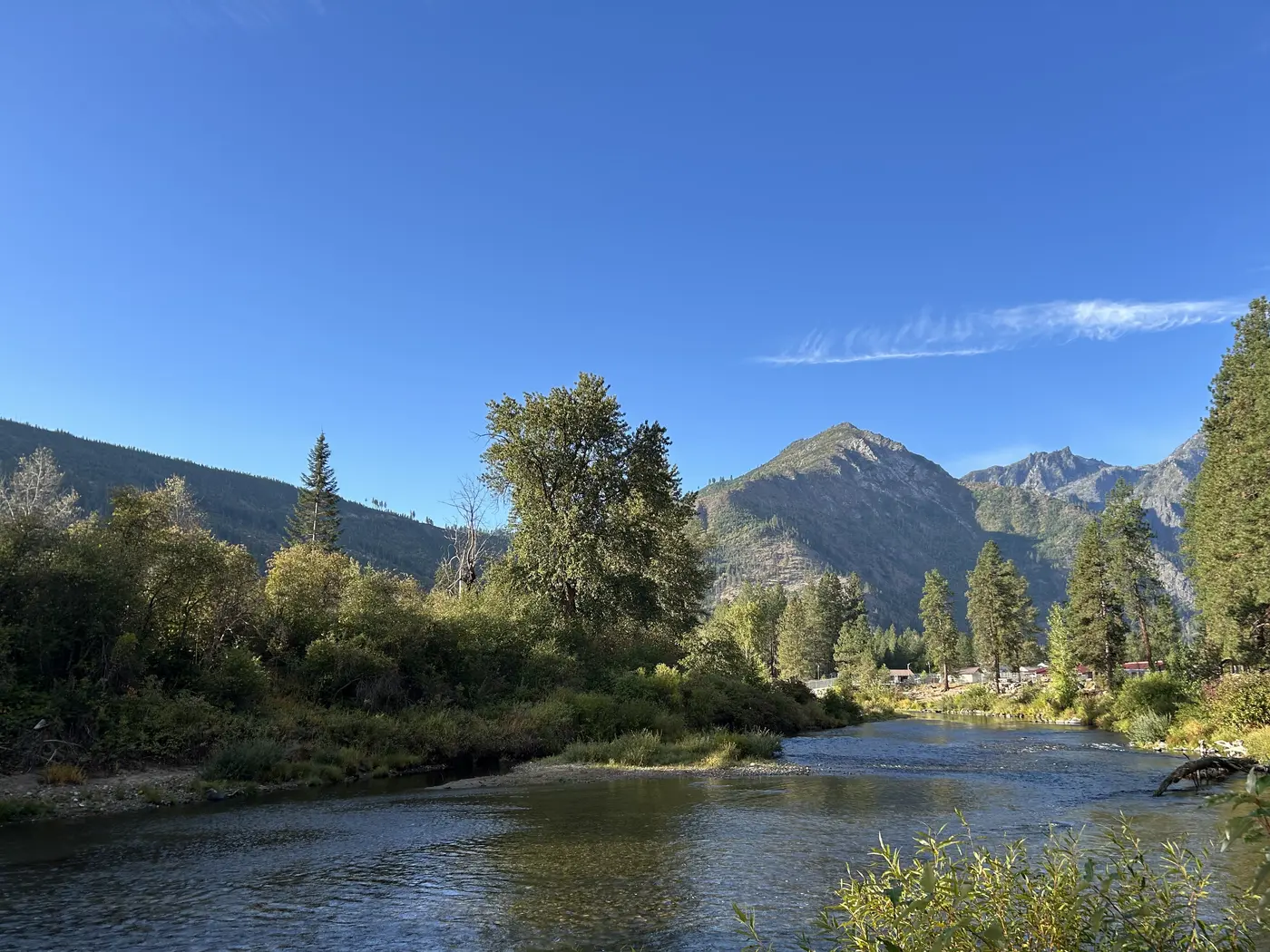
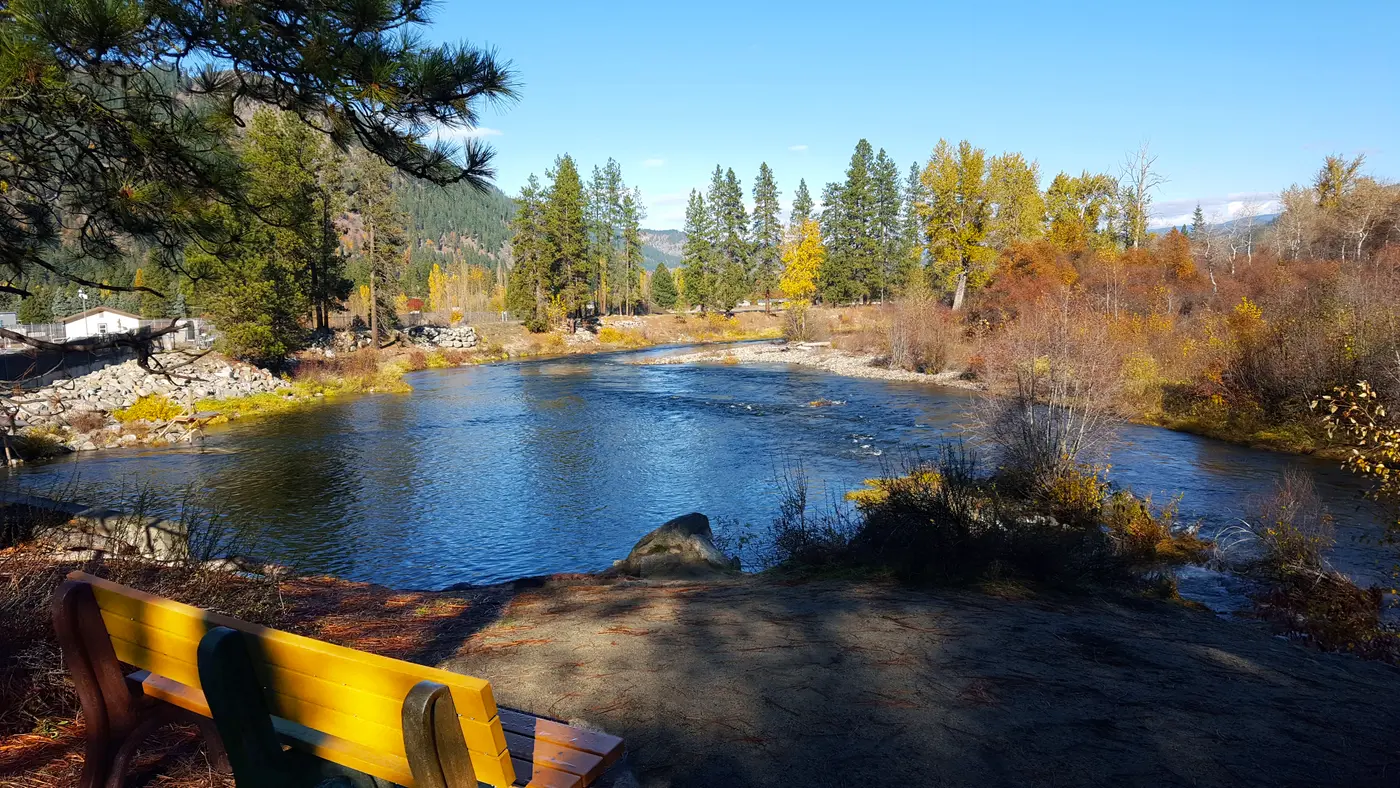
A wide crushed-gravel path leads from East Hatchery Road to an accessible fishing platform, which looks back across the creek at the hatchery. Benches along the trails are placed for morning birding, and a free guide at the signboards maps them and lists the birds of the Wenatchee Valley.
WSU Extension Master Gardener volunteers keep a native plant and pollinator garden on the grounds. The hatchery’s events listing gives their annual solitary bee harvest for Wednesday, October 7, 2026, when the bees are gathered from their tubes for the winter. The next night the Wenatchee Valley Astronomy Club holds a star party at the hatchery. The 2026 Leavenworth Marathon ran the hatchery paths that same week. On its page the hatchery wrote: “500 miles for our salmon; 26.2 for our marathoners.” In winter the trails are groomed for cross-country skiing and snowshoeing. The Leavenworth Winter Sports Club grooms portions of the nature trail as part of its Icicle River Trail.
A meander and a terrace
All of this answers to Grand Coulee Dam, which shut salmon out of the upper Columbia. The Grand Coulee Fish Maintenance Project of 1937 called for four hatcheries to make up the loss, with Leavenworth as the administrative headquarters and laboratory. Entiat followed in 1941 and Winthrop in 1942. The fourth, in the Okanogan, was never built. Under the first plan, adult Chinook and steelhead were to be trapped at Rock Island Dam and hauled to Leavenworth for holding and spawning, with eggs shipped on to the other two.
Hanford Thayer, on the survey team, said the site was picked in 1936 “because of the natural S-curve meander necessary for spawning ponds and the large terrace that would easily accommodate the large rearing ponds and hatchery building needed for the extensive fish-culture operation.” The Service’s pages differ on the start of work. One gives 1938 to 1940; the history page puts the start of construction in the summer of 1939.
The nursery had to be ready by December, or a whole year’s run would be lost. Seven contractors worked at once on canals, ponds, pipes, dams, roads, the hatchery building, a garage, and a refrigeration plant. The 4,085-foot diversion channel was dug around the clock in four shifts. It was built to carry twice the largest recorded flow of the creek, and it cut off a piece of land as an island. The main building was finished in April 1940 for $159,999, a smaller version of a planned 162-by-308-foot hall. It held 228 concrete hatching troughs, since replaced with fiberglass in the same places. Snow sliding off the eaves curled inward and broke the tall windows, so shutters were added later. Fish feed in the 1940s was made on site from horse meat, beef liver, hog spleen, and salmon carcasses, ground and pressed into pellets.
The first plan was to raise fish in Icicle Creek itself, in ponds made by damming the meander. It failed. Summer water ran too low and too warm, and predators found the crowded fish. The Service’s history says the method lasted five years. Pinnix’s column says the change came almost at once and that banks of ponds were installed instead. One of those dams remains.
The hatchery opened in 1940 as the largest fish hatchery in the world. On August 6, 1941, its first salmon, 50,000 fingerling Chinook, were trucked to the Entiat River and released. In 1943 no salmon or steelhead showed up at the base of Grand Coulee Dam. The Bureau of Reclamation claimed victory and moved to hand the hatchery over. By 1949 the U.S. Fish and Wildlife Service owned it.
Ponds, a rifle range, and a stage
The oval rearing ponds were named for Fred Foster, director of the U.S. Bureau of Fisheries, and his assistant Clarence Lucas. They had been developed at Quilcene. Research done at Leavenworth in 1946 found the Foster-Lucas ponds unhealthy for fish. Pinnix wrote that their rotating brushes stirred waste into the water and lowered the oxygen.
Requests for raceways began in the 1950s, but the first were not built until 1979. A second bank of ponds gave way in 1998. In 2021 a building with four large circular tanks replaced a bank of the smaller ponds. One old pond was converted into a station for viewing fish. Along the way the coal heating plant went to oil in 1958 and the hatchery switched to dry feed in 2010. In 1998 the hatchery was placed on the National Register of Historic Places as representing “twentieth century conservation and fish restoration on a grand scale.”
The flat ground also served other uses. People camped here and held Native American cultural celebrations, and winter brought horse-drawn sleigh rides. In fire season it served as a base camp for firefighters. A shooting range ran on the grounds from 1946 to 1999 and left lead shot and clay targets across eight acres. In 2015, over 27 days, the Service removed more than 32,000 tons of contaminated soil and debris. The ground was regraded with clean soil from an on-site pit, which started work on a children’s fishing pond.
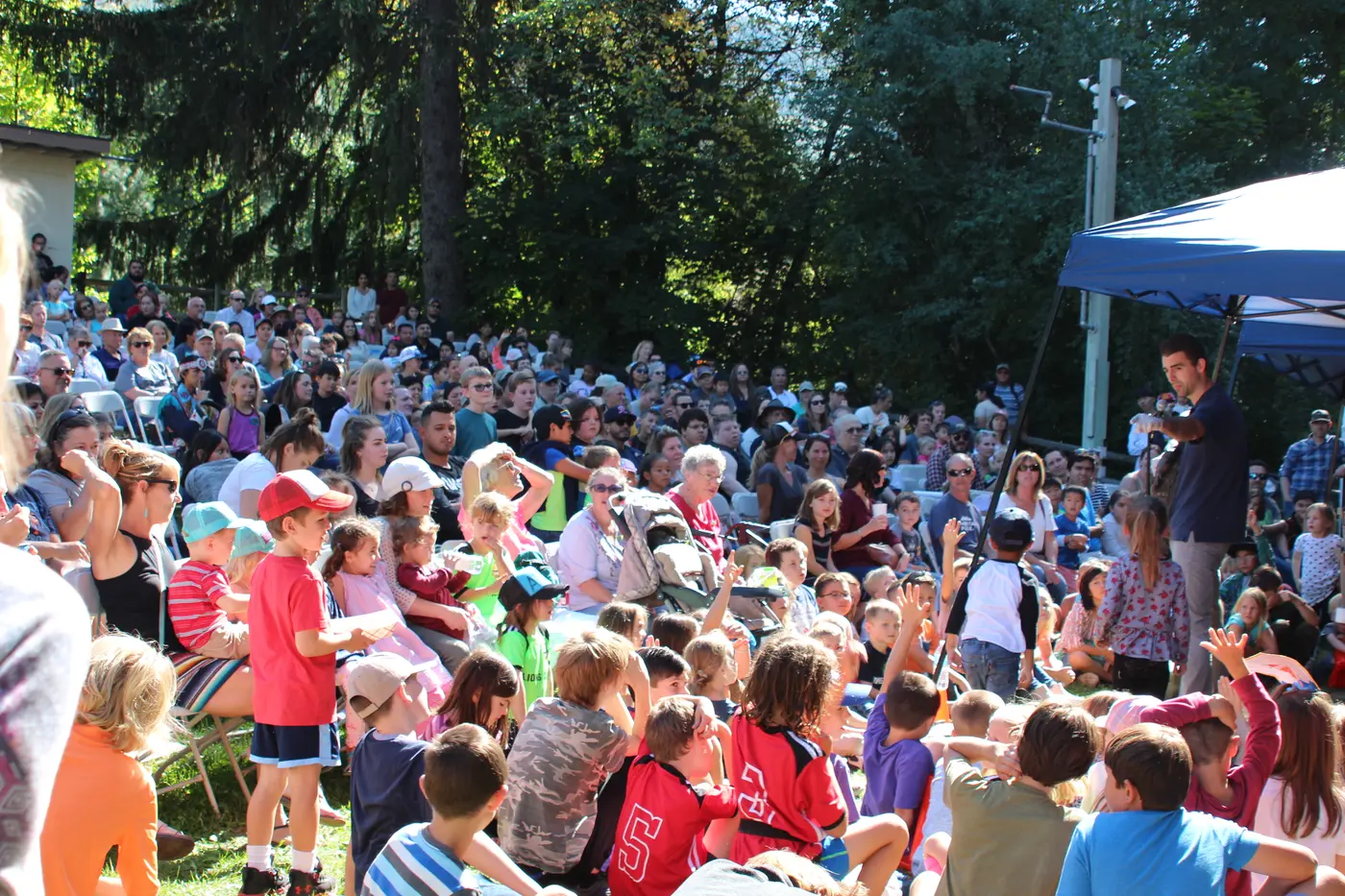
In 1994, lightning on July 24 started the fires that became the Hatchery Complex. The Hatchery Creek fire began high on Icicle Ridge and jumped the Wenatchee River and Highway 2. Of the 1,600 National Guard members called up, some camped at the hatchery. That summer the new Leavenworth Summer Theatre gave up its debut stage at Icicle River Middle School, which had no air conditioning. Founder John Wagner found a stage at the hatchery, built in 1993 and paid for almost entirely by the theater. The Wenatchee River Salmon Festival, begun in 1991, brought thousands of students to the grounds for years before moving to Rocky Reach Dam.
Rebuilding continues. New fish screens and passage at the creek intake were finished in December 2023. Rehabilitation of the supply pipeline began in spring 2026. A partial water-reuse system is being tested as an alternative to infrastructure dating from the 1940s. Just below the hatchery, the Icicle Work Group, formed in 2012 out of disputes over the watershed, is dealing with built-up sediment that has cut the tribal catch.
The valve under Snow Lake
Planners knew from the start that summer water would run short and warm. In 1938 crews cut a trail up to Snow and Nada lakes. The Service’s history describes it as 30 inches wide, eight miles southwest of the hatchery and 3,000 feet above it. Another Service page gives seven miles, built by teams of men and horses. Forty men lived nearly a year at Nada Lake Camp, with a mess hall, cook shack, compressor house, blacksmith shop, powder shed, and dormitories. They drove a tunnel through solid granite beneath Snow Lake, 2,250 feet long by one Service account and 2,500 by another. Louis Ackerman of the Bureau of Reclamation was the principal designer. Hydraulic engineer Sterling Hill calculated the pressure the gate valve would have to hold.
On October 16, 1939, an audience gathered for the final blast that would crack the bottom of the lake. A short in the wire to the charge held things up. The charge was reset, and at 6:15 that evening the dynamite let the water rush in. The gate valve held.
The trail later became a popular way into what Congress in 1976 made the Alpine Lakes Wilderness. Because the dams and valve came first, the hatchery kept the land and the water rights. HistoryLink records that the hatchery’s own safety now hangs on the aging dams on the lakes above Icicle Creek. In 2018 a dam-breach model put six homes downstream at risk, and the dam at Eightmile Lake began to leak. A flood, HistoryLink writes, could inundate the hatchery or blow it out entirely.
Every year someone from the hatchery climbs the trail to open the valve by hand. Mat Maxey, the hatchery manager, makes the trip. Staff open it in July, hike up through the season to set the flow, and close it in October. To a hiker who does not know what it is, the water pouring from the outfall looks like a waterfall.
Notable Events
- 1855Nearby fishing platforms are built by Native Americans, and a treaty signed in 1855 with the U.S. Government guarantees harvest during tribal fishing seasons, generally from May to July. fws.gov
- 1871Since 1871 the National Fish Hatchery system has been at work improving recreational fishing and restoring aquatic species that are in decline, at risk, and important to the health of aquatic systems. fws.gov
- 1900sThe town guide says the name Icicle was established by USGS maps in the early 1900s. leavenworth.org
- 1936A team of engineers and biologists designed the facility, surveying and planning from 1936 to 1938. fws.gov
- 1936The Leavenworth site was chosen for the natural S-curve meander needed for spawning ponds and the large terrace that would hold the rearing ponds and hatchery building. fws.gov
- 1937Leavenworth is a mitigation hatchery established by the Grand Coulee Fish Maintenance Project of 1937 to compensate for anadromous fish losses above Grand Coulee Dam, alongside Entiat and Winthrop national fish hatcheries. fws.gov
- 1938Construction of the hatchery took place from 1938 to 1940 on 170 acres of Icicle Valley land, two miles south of the town of Leavenworth. fws.gov
- 1938U.S. Forest Service workers dug a 30 inch-wide trail up to Nada and Snow lakes, eight miles southwest and 3,000 feet above the hatchery, to reach cool water for the fish. fws.gov
- 1938Teams of men and horses worked to build a 7-mile long trail into the mountains near where the hatchery was sited, and this access reached the water diversion project at Snow and Nada lakes. hatcheryinternational.com
- 1939The charge was reset and at 6:15 that evening the dynamite let the water rush in, and the gate valve held. fws.gov
- 1939Everything was in place and an audience assembled to witness the final blast that would crack the base of Snow Lake and let the water into the tunnel under the lake; a short in the electrical wire to the powder charge caused a delay. fws.gov
- 1939Seven contractors worked rapidly and simultaneously to dig canals and rearing ponds, install pipes, and build dams, roads, the hatchery building, a garage, and a refrigeration plant, racing to have the nursery ready by December. fws.gov
- 1939The 4,085 foot diversion channel was built with excavation carried on around the clock in four shifts. fws.gov
- 1939The hatcheries and associated facilities were constructed by Reclamation as mitigation for the construction of Grand Coulee Dam, and the facilities are now owned and operated by the U.S. Fish and Wildlife Service and funded by Reclamation. iciclestrategy.com
- 1939The local newspaper's photo caption dates the hatchery's diversion channel to 1939 and puts it in service the following year; from the air the channel is a prominent landmark at the hatchery. wenatcheeworld.com
- 1940MacDonald Construction Company built the cold storage building, which held a heating plant that warmed all the buildings with steam from two coal-fired boilers, plus refrigeration machinery, cold storage, an ice-making room and food preparation rooms. fws.gov
- 1940The 90 x 225 foot main hatchery building and nursery was finished in April 1940 at a cost of $159,999, the work was completed that summer, and in the same year the Foster-Lucas rearing ponds were under construction while the cold storage and heating plant went up. fws.gov
- 1940The garage and shop, 89 feet 8 inches by 142 feet 8 inches, cost $65,686 to build and held the carpenter, blacksmith and general machine shops. fws.gov
- 1940Its mission was to produce salmon to make up for the impact of the Grand Coulee Dam, which completely blocked fish passage to the upper Columbia River. fws.gov
- 1940In 1940, Leavenworth National Fish Hatchery proudly opened as the world's largest fish hatchery. fws.gov
- 1940sEngineers from the Bureau of Reclamation blasted through solid granite to form a tunnel drawing water from Snow and Nada lakes through a valve, and the water released from that tunnel looks to an unknowing hiker like a powerful waterfall. hatcheryinternational.com
- 1940sAfter the first wilderness dams were built northwest of Leavenworth in the 1920s by the Icicle and Peshastin Creek Irrigation District and competition for water rights began that decade, dams had been constructed by the 1940s on Colchuck, Eightmile, Lower Klonaqua, Square, Upper Snow, Lower Snow and Nada lakes. historylink.org
- 1941Seven simple residences were built to house hatchery workers; heavy snow interrupted construction, so the houses were not completed until late March 1941. fws.gov
- 1941The first salmon reared at the hatchery, 50,000 fingerling Chinook, were trucked to the Entiat River and released. nwcouncil.org
- 1943The Bureau of Reclamation claimed victory in 1943, the year no salmon or steelhead showed up at the base of Grand Coulee Dam, and sought to turn over the Leavenworth hatchery and its related facilities to the U.S. Fish and Wildlife Service. nwcouncil.org
- 1946Beyond fish culture the site has hosted visitor events such as camping, Native American cultural celebrations, access to sport and tribal fishing, and horse drawn sleigh rides in winter, and serves as a firefighter base camp. doi.gov
- 1946A shooting range began operating on hatchery grounds in 1946. doi.gov
- 1946Research done at Leavenworth in 1946 proved the Foster-Lucas ponds to be unhealthy for fish. fws.gov
- 1949By 1949, ownership had been transferred to the U.S. Fish and Wildlife Service. nwcouncil.org
- 1958The coal-fired heating plant was converted to oil; its chimneys were eventually removed. fws.gov
- 1969The Columbia River Fisheries Management Plan under the U.S. v. Oregon decision of 1969 set production goals for the fisheries this hatchery serves. fws.gov
- 1974Since 1974, spring Chinook salmon have been the priority species, after years of production that included spring and summer Chinook, coho, steelhead, kokanee and other resident salmonids. fws.gov
- 1976Congress formed the Alpine Lakes Wilderness in 1976, enclosing Snow and Nada lakes; since the dams and valve predate the Wilderness, the hatchery retains ownership of the land and the use of the water, as it has since 1940. fws.gov
- 1976The concrete building was not painted until 1976. fws.gov
- 1979The easternmost bank of eight large Foster-Lucas ponds was replaced with three banks of raceways, and an adult holding pond was built beside Icicle Creek. fws.gov
- 1993The Fish Hatchery Stage has been home to Leavenworth Summer Theatre since the 1990s, and when the hatchery stage was built in 1993 it was funded almost entirely by Leavenworth Summer Theatre. leavenworthecho.com
- 1994A sand settling basin was built to reduce sediment entering the rearing ponds. fws.gov
- 1994The company's debut season was at Icicle River Middle School, which had no air conditioning, and the fires hit as it opened in 1994; going back to the middle school was not an option, so at the hatchery John Wagner discovered a stage they could use. leavenworthecho.com
- 1994Over 9,500 firefighters and other personnel from twenty-five states joined local crews in the fire battle, including 1,600 members of the National Guard who joined fire camps at the Leavenworth Fish Hatchery and the Lake Wenatchee Airstrip, at the time the largest peacetime mobilization of the Washington National Guard. leavenworthecho.com
- 1994The Hatchery Creek fire began high on Icicle Ridge, burned into Tumwater Canyon, jumped the Wenatchee River and Hwy 2, then headed up Tumwater Mountain toward Spromberg and Freund Canyons, threatening Leavenworth and the Chumstick corridor. leavenworthecho.com
- 1998In 1998 the hatchery was placed on the National Register of Historic Places by the U.S. Department of the Interior, recognizing the historic significance of its construction in 1939. fws.gov
- 1998A second bank of seven large Foster-Lucas ponds was replaced with single lane raceways. fws.gov
- 1998The nomination of Leavenworth National Fish Hatchery, 12790 Fish Hatchery Rd., near Leavenworth in Chelan County, Washington, was received by the National Park Service as reference 98000847. govinfo.gov
- 1999The range that had operated on hatchery grounds closed in 1999, leaving lead shot and clay targets in an eight-acre area. doi.gov
- 2010Initial sampling and laboratory analysis of lead in soils at the site was conducted by the Bureau of Reclamation, and the study found lead above thresholds for protection of human health and the environment. doi.gov
- 2010The walk-in cold storage rooms kept moist fish feed chilled until 2010, when the hatchery converted to dry feed. fws.gov
- 2012The Icicle Work Group, whose members include agencies, tribes, irrigation and agricultural interests and environmental groups, formed in 2012 in response to legal disputes over resource management in the Icicle Creek Watershed, the water system the hatchery runs on. ncw.news
- 2015FWS began the removal action in late August 2015; within 27 days over 32,000 tons of contaminated soil and debris were removed and more than 400 samples were collected and analyzed. doi.gov
- 2015Construction and planting were completed on November 9, 2015, and the site is to be monitored for erosion until May 2016. doi.gov
- 2018When engineers modeled a dam breach they found six homes at risk downstream on Icicle Creek, and that same year the dam impounding Eightmile Lake began to leak. historylink.org
- 2021A new structure completed in 2021 demolished one bank of the smaller Foster-Lucas ponds and houses four large circular tanks being tested for rearing. fws.gov
- 2023The two-mile pipe bringing water from the intake upstream on Icicle Creek was to be replaced or re-lined over four or five years, beginning in 2023. fws.gov
- 2023Phase I of the Surface Water Intake Fish Screens and Fish Passage project was completed, addressing fish passage and screening concerns, water quality improvements, and allowing more flexible hatchery management by reducing hatchery impacts to Icicle Creek. iciclestrategy.com
- 2025Just below the hatchery the work group is managing sedimentation build-up that has hurt catch per unit effort at the tribal fishery used by the Yakama Nation and the Confederated Tribes of the Colville Reservation. ncw.news
- 2025A water reuse system called Partial Recirculating Aquaculture Systems is being tested at the hatchery as an alternative to infrastructure that dates back to the 1940s. ncw.news
- 2026Phase II consists of rehabilitation of the surface water supply pipeline that serves the hatchery. iciclestrategy.com
- The hatchery raises spring Chinook, with additional coho raised through its partnership with the Yakama Nation Fisheries, and is home to the Mid-Columbia Fish and Wildlife Conservation Office. fws.gov
- The initial operating plan called for adult spring Chinook and summer steelhead to be trapped at Rock Island Dam and hauled to the hatchery for holding and spawning, with Leavenworth the primary holding and spawning site and eggs shipped on to Entiat and Winthrop. fws.gov
- Water levels in summer were too low and temperatures too warm for healthy conditions, and the concentration of fish proved irresistible to predators; fish culture shifted to constructed raceways on the grounds. fws.gov
- The U.S. Bureau of Reclamation was in charge of the engineering project, established a camp in the high country, and forty men lived at Nada Lake Camp for nearly a year building a mess hall, cook shack, compressor house, blacksmith shop and powder shed, as well as dormitories. fws.gov
- Every year a valve high in the mountains is opened in July and closed in October, and hatchery staff and others hike up during those months to adjust how much water flows out of an outfall into Icicle Creek. hatcheryinternational.com
- HistoryLink writes that at stake in the decisions over the failing alpine dams was this hatchery, which helps mitigate the hundreds of miles of spawning habitat lost when Grand Coulee Dam was built without fish ladders, and that the hatchery could be inundated in a flood or blown out entirely. historylink.org
- The guide says the hatchery releases over one million salmon per year and calls the grounds one of the best areas to learn about Northwest salmon, river ecology and the role of fish hatcheries in the state. leavenworth.org
- Most of the fires were swiftly suppressed by quick-acting firefighters, but the extreme conditions, coupled with high winds, allowed three of the fires to overcome containment efforts. leavenworthecho.com
- The Okanogan-Wenatchee National Forest and the Leavenworth National Fish Hatchery host the Wenatchee River Salmon Festival at the hatchery, a free festival then counted at 19 years, with a school poster contest drawing entries from North Central Washington schools. leavenworthecho.com
- The channel was built higher at the downstream end than upstream on purpose, to capture water and charge several adjacent hatchery wells; when Icicle Creek runs low in summer the channel stands empty and all the creek's water is allowed to flow unimpeded to support wild fish. web.archive.org
- The innovative plan at the time was to raise fish directly in Icicle Creek: a series of four dams divided the natural creek into ponds where adult fish were expected to spawn and young fish to spend their first year. web.archive.org
- The channel runs brim-full and gushes over a spillway into Icicle Creek in flood season; the column says the sound of the waterfall draws salmon upstream but the spillway is too steep for a salmon to conquer, so they may leap the fish ladder or follow the river farther upstream. web.archive.org
- The column says the hatchery's practices are based partly on research carried out by the Mid-Columbia Fish and Wildlife Conservation Office's monitoring and evaluation team, which advises the hatcheries, and that the hatchery is no longer the biggest in the world. web.archive.org
- The rotating brushes in the large ponds swept fish waste into the water column and lowered oxygen; none of the large ponds are in use today, raceways replaced them, and the smaller Foster-Lucas ponds are being phased out. web.archive.org
- Three banks of short and four banks of long Foster-Lucas ponds were installed at the hatchery; the oval structures were named for their inventors and had automated brushes to clean waste plus circulating water flow to build young fish's muscle. web.archive.org
People
- Clarence Lucas, Assistant to Bureau of Fisheries Director Fred Foster; the Lucas of the hatchery's Foster-Lucas rearing ponds.
- Fred Foster, Director of the U.S. Bureau of Fisheries, later incorporated into the U.S. Fish and Wildlife Service; the Foster of the hatchery's Foster-Lucas rearing ponds, developed at Quilcene National Fish Hatchery.
- Hanford Thayer, Member of the survey team that chose the Leavenworth site; the page quotes his account of why the site was picked (1936).
- Louis Ackerman, Bureau of Reclamation engineer, principal designer of the Snow Lake water project that supplied the hatchery.
- Sterling Hill, Hydraulic engineer who correctly calculated the water pressure the Snow Lake valve gate would have to hold.
- Mat Maxey, Manager of the Leavenworth National Fish Hatchery, who makes the annual trek to open and adjust the Snow Lakes valve.
- Tecolekun, Wenatchee chief who signed the 1855 Yakima Treaty, the treaty the hatchery cites for the tribal harvest taken at its fishing platforms (d. 1858).
- Charles Leavenworth, Portland man and major stockholder in the Okanogan Investment Company, for whom the town of Leavenworth was named (around 1893, when the new permanent town replaced the cabin cluster called Icicle).
- Nicole Ahlem, Bureau of Reclamation project manager for the hatchery's Surface Water Intake Fish Screens and Fish Passage works.
- Charles Frederick Leavenworth, Captain named in the Echo's town history column as the man who platted Leavenworth.
- Julia Pinnix, Visitor services manager for the Leavenworth Fisheries Complex; writes the hatchery's own history column for the local newspaper.
- John Wagner, Founder of Leavenworth Summer Theater who found the hatchery's stage and put the company's outdoor seasons on the hatchery grounds (25 years with the company).
- Bill Gale, Complex Manager of the Leavenworth Fisheries Complex, quoted on the water-reuse system now being tested at the hatchery (in post when the Icicle Work Group reported to the Leavenworth Firehall on Feb. 26).
Sources
- fws.gov/fish-hatchery/leavenworth/visit-us
- leavenworth.org/attractions/leavenworth-national-fish-hatchery
- wta.org/go-hiking/hikes/leavenworth-fish-hatchery
- nrtapplication.org/trails/icicle-creek-nature-trail
- fws.gov/fish-hatchery/leavenworth/our-history
- fws.gov/fish-hatchery/leavenworth/about-us
- usbr.gov/pn/programs/leavenworth/index.html
- nwcouncil.org/history/GrandCouleeImpactsOnFish