Lahontan National Fish Hatchery
Gardnerville, Douglas County, Nevada. National fish hatchery.
Details

- Where
- 710 Highway 395, Gardnerville, NV 89410. Directions
- When
- Spawning February to May, normally every Wednesday; call ahead to schedule a day.
- Getting there
- On the west side of US Highway 395, 5 miles south of Gardnerville, Nevada.
- Hours
- Visitor hours Monday-Friday (except federal holidays) 8:00am-3:00pm.
- Access
- No entry into broodstock or rearing buildings without a scheduled tour for safety and biosecurity; spawning observation by call-ahead.
- Walk-in or reserve
- Full tours by advance arrangement; the Carson Valley visitor authority advises scheduling a couple of weeks ahead at (775) 265-2425.
- Phone
- (775) 265-2425
- Website
- fws.gov
- Managed by
- U.S. Fish and Wildlife Service.
- Established
- Authorized under the Washoe Project Act in 1956; fish production operations began in 1967.
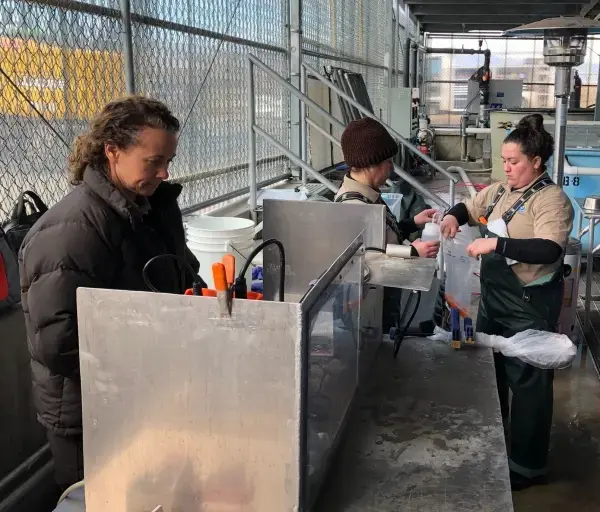
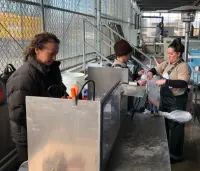
On a spawning Wednesday at Lahontan National Fish Hatchery, volunteers in rubber boots and jackets move through the building with nets. They dip into large pools of water chilled to the temperature of local waterways and lift out mature male Lahontan cutthroat trout one at a time. The fish are sedated but still squirming as they are carried to a line of waiting biologists. A biologist holds each fish for a matter of seconds and presses its belly from head to tail to draw the milt. The milt goes into a small vial marked with a letter and number like a bingo card, such as G83, H24 or F17. Later it is mixed with eggs from a female judged a genetic match. There are hundreds of trout, and the work takes hours. “We know what male is spawning with what female, which doesn’t normally happen in a hatchery,” Lisa Heki, the U.S. Fish and Wildlife Service project leader, told The Nevada Independent. “It’s not random.”
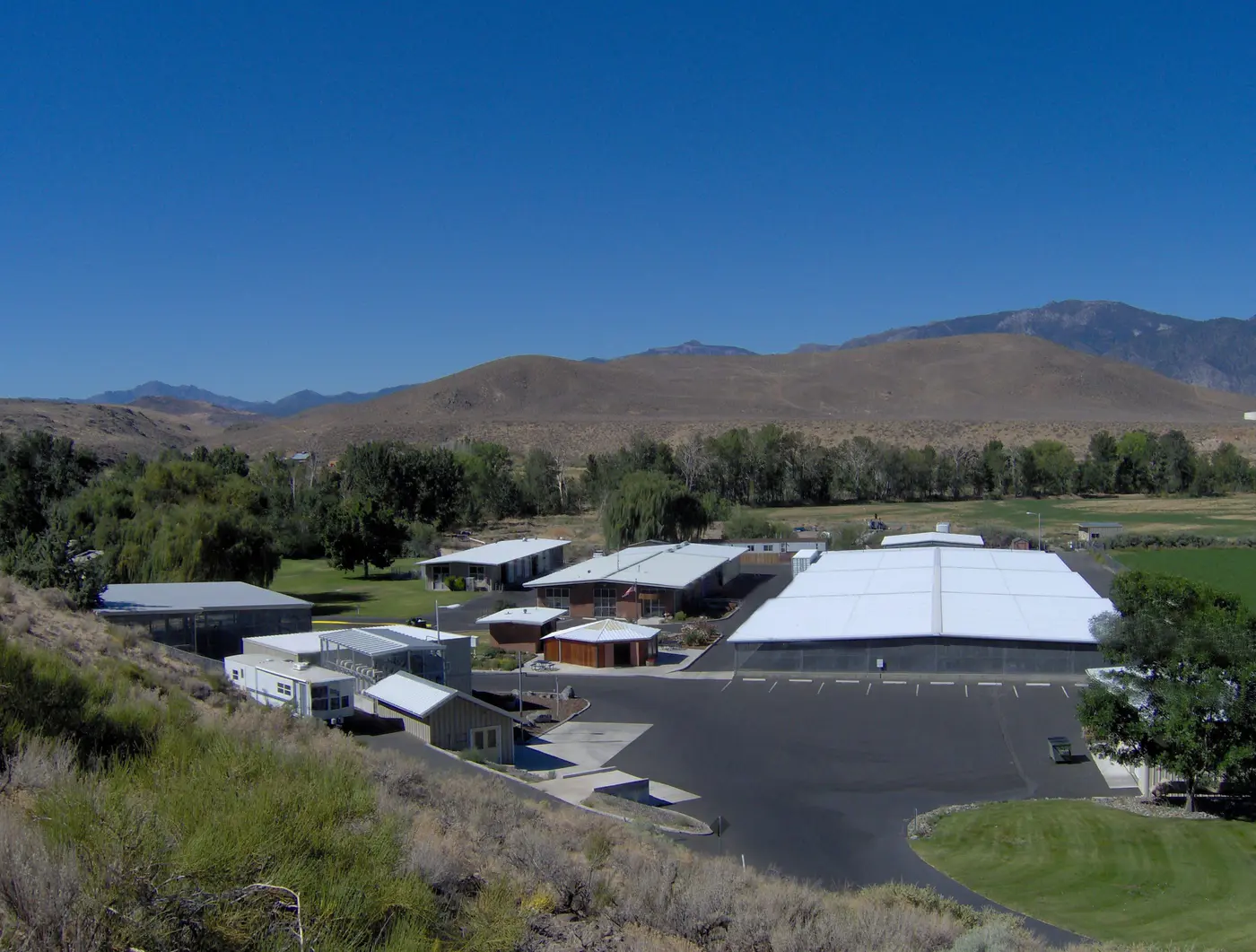
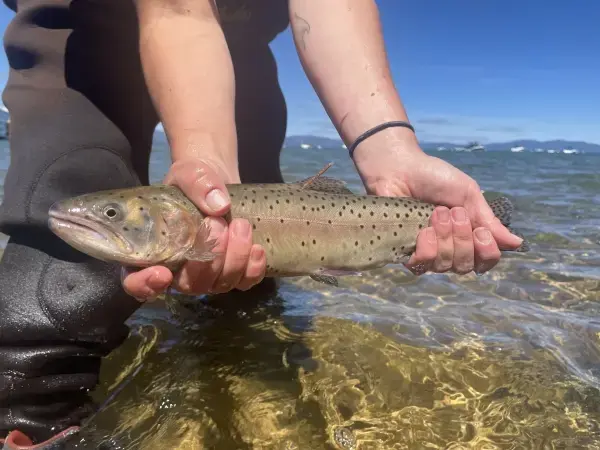
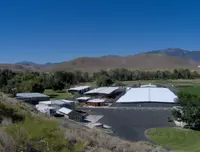
The hatchery stands on 8 acres on the west side of US Highway 395, 5 miles south of Gardnerville, in the high desert below the Sierra Nevada. It raises one fish, the Pilot Peak strain of Lahontan cutthroat trout. The Service describes it as the original lake form that evolved in ancient Lake Lahontan and the largest inland cutthroat trout in the world. The Service gives the spawning season as February to May, normally on Wednesdays, and The Nevada Independent gives it as early February through mid-May. Visitors who call ahead can arrange a day to watch and can also see incubating eggs and small fry. In other seasons the work on view may be feeding, cleaning, adipose fin clipping or FLOY tagging. The visitor center holds interpretive materials, and the production fish are in three banks of raceways. For safety and biosecurity, the broodstock and rearing buildings are open only on a scheduled tour. The Carson Valley Visitors Authority advises asking for a full tour a couple of weeks ahead.
Matched pairs and a lab in Montana
About 3,000 Pilot Peak broodstock live at the hatchery. Each mature fish carries a tag and a clipped fin. Before spawning, the fin clippings go to a lab in Montana, which works out the crosses that keep the most genetic diversity and prevent inbreeding. “We’re not directing the genetics here, but we are trying to maintain the genetic diversity,” said Jason Smith, the broodstock coordinator. Jason Barnes, a Trout Unlimited biologist who works on the species, credits the hatchery with doing it well. “In the wild, those genes would plummet,” he said.
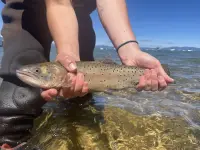
Milt and eggs are mixed in plastic bags. The fertilized eggs go into trays, where they become “eyed eggs,” with tiny eyes showing through, and then fry. The fry live in large troughs cut with grooves that stand in for the shelter of gravel and small rocks. Of each year’s thousands of offspring, about 150 are kept to replace broodstock that are aging out, separated like all the fish by age and sex. They are ready to spawn by about 3 years of age and serve as breeders for the rest of their lives, about five to six years at the hatchery. No broodstock fish is ever planted in Pyramid Lake or Tahoe.
The production fish go out. The Service puts the yearly figure at about 500,000, released into Pyramid Lake, the Truckee River and the Lake Tahoe Basin, with eggs or fish also sent to state and tribal partners and to local schools. The visitor authority’s listing gives 300,000 to 400,000 a year and adds Walker Lake, Fallen Leaf Lake and Marlette Reservoir to the waters. By that listing, the strain grows 0.6 inches a month at the hatchery, and six-year-old fish in Pyramid Lake have reached twenty-four pounds.
A garage south of Gardnerville
The Washoe Project Act authorized the hatchery in 1956, and fish production began in 1967. At first it raised Lahontan cutthroat and other sportfish for area waters affected by the project.
In April of 1969, road improvement work exposed a burial site on the crest of a hill where the Fish Hatchery access road meets Highway 395. Richard Messier of the National Park Service called the Nevada Archaeological Service. Dr. Don Fowler, Dr. Catherine Fowler and Dr. Don Hardesty of the University of Nevada, Reno inspected the site and judged further damage likely, so they recovered what they could from three burial pits in the cut-bank. A federal notice dated December 13, 2023 records the remains of three individuals of Native American ancestry and four stone manos. It affiliates them with the Washoe Tribe of Nevada & California and allowed repatriation on or after January 12, 2024.
The cutthroat was downlisted from endangered to threatened in 1975, under a rule that allowed recreational fishing, and the hatchery turned more of its work to the species. It stopped raising other fish in 1978. In 1990 the Truckee-Carson Water Settlement Act called for recovery plans for the cui-ui sucker and the Lahontan cutthroat, and the Lahontan complex was given the lead on the Truckee and Pyramid Lake system. Heki had joined the U.S. Forest Service as a fisheries biologist in 1990, and the hatchery hired her two years later.
In 1995 Heki and then-manager Larry Marchant worked with Bryce Neilson, a Utah Fish and Game biologist, to bring Pilot Peak eggs from ponds in Utah. The eggs were flown in and raised in a garage retrofitted for the purpose. “There was a glimmer of hope there that this may have been a remnant of that strain,” said Marchant, who has since retired. “So we did it on a shoestring budget.” After a few years a small bank of raceways was converted into a larger brood area. By 2004 the hatchery raised nothing but Pilot Peak fish. By the Service’s 2019 count, the complex staff had grown from eight people to 26.
Monster salmon trout and a creek in the Pilot Mountains
The strain descends from the large trout of Pyramid Lake, the Truckee River and Lake Tahoe. Service accounts cite historical records of trout migrating more than 120 miles from Pyramid Lake to Lake Tahoe, and the visitor authority’s listing gives 114 miles. Gold Rush settlers of the late 1800s told angling stories of 60-pound “monster salmon trout” abundant in the river. According to the Nevada Appeal, the largest on California record was caught at Lake Tahoe in 1911 and weighed more than 31 pounds.
By The Nevada Independent’s account, Derby Dam was built on the Truckee in 1905 and diverted nearly half the river’s water. Sources differ on when the runs ended. The visitor authority’s listing puts the last spawning run from Pyramid Lake in the late 1930s. A Service story says the fish had vanished from the system by 1940, and The Nevada Independent places the last natural run in the 1940s. The Service says the trout were gone from Lake Tahoe by the 1930s.
The rediscovery is told several ways. A 2019 Service story says the taxonomist Robert Behnke identified a single population in the late 1970s, in a remote stream in the Pilot Mountains on the Nevada–Utah border. Working before there were genetic tools to tell populations apart, he judged the fish by appearance and figured they had likely been transplanted from Pyramid Lake 40 years earlier. The Nevada Independent writes that a federal biologist found them in Morrison Creek while looking for Bonneville cutthroat. A Society for Conservation Biology program says trout from Pyramid Lake and Lake Tahoe were transplanted to out-of-basin drainages from early in the 20th century. Many of those transplants died, it says, but the Pilot Peak population, planted in a fishless stream, survived. Neilson looked after the fish from their discovery in 1977 and dug ponds beside the stream through the 1980s to build their numbers. “We’d never seen one over 6-7 inches in the stream,” he said. “When they started, they just grew fantastically.”
Proof took longer. Genetic comparison with museum mounts of Truckee Basin fish taken between 1872 and 1911 showed that the Pilot Peak trout descended from the original stock. Professor Mary Peacock began making headway on that comparison in the early 2000s, and her work was published in 2017. The hatchery did not wait for it.
From Pyramid Lake up the Truckee and into Tahoe
In 2006 the Service and the Pyramid Lake Paiute Tribe stocked the Pilot Peak strain into Pyramid Lake. In 2014, as the first generations reached spawning age, they swam out of the lake into the lower Truckee. “It gives me goosebumps when I talk about it even now,” Heki said in 2019. “They started using the lower three miles, then the lower eight.” In 2017, after a winter of more than 700 inches of Sierra snow, high flows carried the fish into water where they had not been documented since the late 1930s. “I hope to one day see a family looking down over the Virginia Street Bridge in downtown Reno or as far up as Lake Tahoe watching these fish spawn in the place where they truly belong,” said Roger Peka, a hatchery biologist.
The Marble Bluff Fish Passage Facility stands 3 miles above the lake. There an elevator lifts fish into holding pens, where biologists measure and sort them. Since 2016, fish judged to be Pilot Peak strain drop through a tube into the river above the dam, and the rest return below it. The 2026 season at Marble Bluff closed June 4 with 2,035 cutthroat passed upstream.
The separation has critics. Officials of the Pyramid Lake Paiute Tribe, which spawns its own trout in a nearby channel, say the fish that swim into that channel are the ones nature has chosen. Mike Sevon, retired from the Nevada Department of Wildlife, calls the Gardnerville fish “the real deal” but sees nothing wrong with mixing them with headwater stock. In 2020 a fish bypass at Derby Dam opened, letting fish swim past the dam for the first time in more than a century.
To the south, the hatchery complex has been restoring the lake form in Fallen Leaf Lake in the Tahoe Basin since 2002. In the first week of September 2014 the hatchery added 30,000 to 40,000 fish there. Victor Babbitt of Tahoe Fly Fishing Outfitters questioned the cost and the size of the fish. “They can weigh over 20 pounds, but are there 20 pound fish swimming in Fallen Leaf Lake?” he said. “No, there are not.”
On Oct. 5, 2019, during the Forest Service’s Fall Fish Festival near South Lake Tahoe, the hatchery released about 2,000 cutthroat into Lake Tahoe for the first time. The fish, 12 to 14 inches long, left a holding truck through a stocking tube, and some ran into spectators’ legs as they swam off.
In the summer of 2026 the hatchery stocked 1,200 tagged fish in Trout Creek, a Tahoe tributary. Each tag carries an ID number and a phone number. An angler who leaves a message with the tag number, location and fish length gets a call back saying when and where the fish was stocked and how much it has grown.
Notable Events
- 1940sBy the 1940s the Lahontan cutthroat trout were gone from their home waters, driven out by habitat loss, water diversion, and introduced species - the loss the hatchery later existed to undo. fws.gov
- 1956The hatchery was authorized by the Washoe Project Act in 1956. fws.gov
- 1967The hatchery was constructed on 8 acres of land 5 miles south of the town of Gardnerville, and fish production operations began in 1967 to provide sportfish for area waters impacted by the Washoe Project Act. fws.gov
- 1969In April of 1969 Richard Messier of the National Park Service contacted the Nevada Archaeological Service to investigate a burial site exposed during road improvement activities on the crest of a hill at the junction of Highway 395 and the Fish Hatchery access road, six miles south of Gardnerville. govinfo.gov
- 1970sThe complex's description says transplanted fish were found in the Pilot Peak Mountains in the late 1970s and that museum mounts from 1872 to 1911 showed them to be descendants of the original Truckee River Basin run, the stock this hatchery later built up. visitcarsonvalley.org
- 1975After Lahontan cutthroat trout were downlisted from endangered to threatened in 1975 with a 4(d) rule that allowed recreational fishing, more emphasis was placed on rearing Lahontan cutthroat trout at the hatchery. fws.gov
- 1978Other species production at the facility was halted in 1978 as emphasis moved to Lahontan cutthroat trout. fws.gov
- 1990Public Law 101-618, the Truckee-Carson Water Settlement Act, was signed into law in 1990, calling for the Secretary to expeditiously revise, update and implement plans for the conservation and recovery of the cui-ui sucker and Lahontan cutthroat trout. fws.gov
- 1990sThe conservation society's plenary description says that in the early 1990s political support for expedited recovery of Lahontan cutthroat trout set the stage for the Lahontan National Fish Hatchery Complex to visualize, identify and re-create the building blocks of conservation needed for a successful reintroduction and recovery effort. scbnorthamerica.org
- 1992Since 1992 the hatchery has evolved to play a pivotal role in the U.S. Fish and Wildlife Service's efforts to protect and restore threatened Lahontan cutthroat trout populations. fws.gov
- 1992The story dates the habitat and instream-flow work along the Truckee to a strategy in place since restoration of the species was first envisioned in 1992. fws.gov
- 1995To pursue recovery of the extirpated lake form in Pyramid and Walker Lakes, the hatchery began developing broodstock from the out-of-basin population in Utah in 1995; in the early days eggs were flown to the hatchery, where a garage was retrofitted to initiate broodstock development. fws.gov
- 1995In 1995 fertilized eggs from the remote fish - dubbed the Pilot Peak strain after a nearby mountain - were transported back to Northern Nevada, and the newspaper calls that effort the start of the now expansive hatchery program in Gardnerville. thenevadaindependent.com
- 2002Beginning in 2002, the Service's Lahontan National Fish Hatchery Complex started working to restore the iconic lake-form of Lahontan cutthroat trout in Fallen Leaf Lake in the Tahoe Basin. fws.gov
- 2006Since 2006 the hatchery has produced and stocked Pilot Peak strain Lahontan cutthroat trout in support of conservation and recovery in their native waters of Nevada and the Eastern Sierra. fws.gov
- 2006In 2006, the U.S. Fish and Wildlife Service and the Pyramid Lake Paiute Tribe restocked the Pilot Peak strain back into Pyramid Lake. thenevadaindependent.com
- 2014In 2014, as those first generations of trout reached spawning age, they headed out of Pyramid Lake and into the lower Truckee as their ancestors had. fws.gov
- 2014The Carson City newspaper reports that the project to reintroduce the Lake Tahoe Basin's only native trout at Fallen Leaf Lake was moving to a new management phase, with resources focused on protecting the cutthroat population instead of costly research, and that the hatchery had added another 30,000 to 40,000 cutthroat trout to the lake the week before. nevadaappeal.com
- 2019The hatchery released about 2,000 fish into Lake Tahoe on Oct. 5, 2019, for the first time ever, in tandem with the U.S. Forest Service Fall Fish Festival near South Lake Tahoe, California. fws.gov
- 2023Lahontan National Fish Hatchery completed an inventory of human remains and associated funerary objects and determined a cultural affiliation between them and the Indian Tribes named in the notice; the remains were removed from Douglas County, NV. govinfo.gov
People
- Amanda George, Lahontan National Fish Hatchery fish biologist, shown feeding Lahontan cutthroat trout fry at the hatchery's aquatic habitat.
- Roger Peka, Lahontan National Fish Hatchery Complex fish biologist who surveys the Numana Dam fish ladder and watches the hatchery-raised trout run up the Truckee (on the Service story of Jun 1, 2017).
- Bryce Neilson, Utah Fish and Game biologist convinced the Pilot Peak strain was the ancient trout; he dug ponds near the stream to house the fish and build numbers, and worked with the hatchery to bring its eggs from Utah (from the strain's discovery in 1977).
- Dan Boone, hatchery maintenance worker who rinses Lahontan cutthroat trout eggs during spawning operations at the complex in Gardnerville.
- David Miller, Lahontan National Fish Hatchery biologist who downloads trout migration data along the Truckee River with Roger Peka.
- Larry Marchant, manager of the Lahontan National Fish Hatchery when the Pilot Peak eggs came from the Utah ponds (1995).
- Lisa Heki, U.S. Fish and Wildlife Service project leader who oversees the matched-pair spawning at the hatchery.
- Mary Peacock, professor who started to make headway in the early 2000s comparing the Pilot Peak strain with the original Pyramid Lake museum mounts, work that backed the hatchery's use of the strain (her findings were published in 2017).
- Robert Behnke, taxonomist whose judgement that a single remote population in the Pilot Mountains could be the Lahontan cutthroat trout of Pyramid Lake gave the hatchery the strain it now keeps (late 1970s).
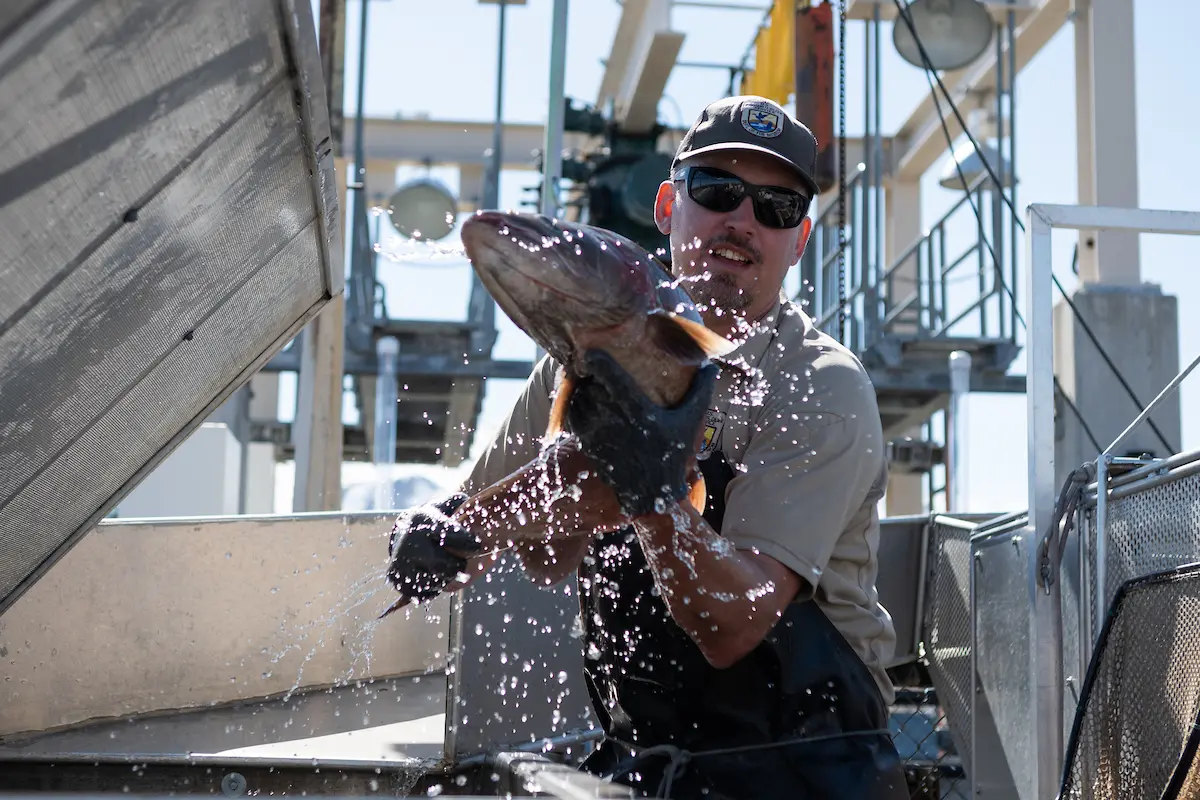
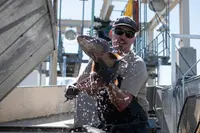
- Roy Hicks, of Lahontan National Fish Hatchery, shown holding a large spawning-age Pilot Peak Lahontan cutthroat trout.
- Thomas Bland, Lahontan National Fish Hatchery Complex fishery biologist who electrofishes the mouth of Glen Alpine Creek with Jason Smith and Roger Peka.
- Dr. Catherine Fowler, University of Nevada Reno investigator who inspected the site at the hatchery access road.
- Dr. Don Fowler, University of Nevada Reno investigator who inspected the site at the hatchery access road and judged that recovering the disturbed material was the best recourse.
- Dr. Don Hardesty, University of Nevada Reno investigator who inspected the site at the hatchery access road.
- Patrick W. Rennaker, Archaeologist, U.S. Fish and Wildlife Service Cultural Resources Team, the responsible official to whom written requests for repatriation of the hatchery's inventoried remains must be sent.
- Richard Messier, National Park Service man whose call to the Nevada Archaeological Service brought investigators to the burial site exposed where the Fish Hatchery access road meets the highway (April of 1969).
- Victor Babbitt, owner of Tahoe Fly Fishing Outfitters in South Lake Tahoe who questioned the cutthroat project the hatchery leads, both the size of the fish and the cost.
- Jason Barnes, Trout Unlimited biologist who credits the hatchery with maintaining genetic diversity.
- Jason Smith, the hatchery's broodstock coordinator.
- Lisa Irving-Peterson, volunteer who rinses fertilized Pilot Peak strain eggs at the hatchery.
- Mike Sevon, retired fishery supervisor for the Nevada Department of Wildlife's Western Region who recalls watching Service crews keep Gardnerville hatchery fish from mixing with non-hatchery fish.
- William Dutton, U.S. Fish and Wildlife Service staff member who nets Pilot Peak strain broodstock before spawning activities at the hatchery.
Sources
- fws.gov/fish-hatchery/lahontan/visit-us
- fws.gov/fish-hatchery/lahontan/about-us
- nevadaappeal.com/news/2014/sep/08/fallen-leaf-lake-project-switches-gears
- govinfo.gov/content/pkg/FR-2023-12-13/pdf/2023-27371.pdf
- fws.gov/story/2019-02/peak-pyramid
- thenevadaindependent.com/article/one-recovery-effort-two-strains-of-fish-the-complex-comeback-of-lahontan-cutthroat-trout
- fws.gov/story/2026-05/reviving-legend
- fws.gov/fish-hatchery/lahontan