Klamath County Fair
Klamath Falls, Klamath County, Oregon. County fair.
Details

- Where
- 3531 S 6th St, Klamath Falls, OR 97603. Directions
- When
- Last held July 30–August 2, 2026; next year’s date not yet stated.
- Getting there
- Head to South 6th Street in Klamath Falls; the Klamath County Fairgrounds & Event Center is at 3531 S 6th Street, just a few minutes from downtown.
- Fees
- Adults $8, Seniors $4, Kids 12 and under free; first three hours free on opening day.
- Hours
- Friday 12:00 Noon to 11:00 PM; Saturday 10:00 AM to 11:00 PM; Sunday 10:00 AM to 6:00 PM.
- Access
- Free fair parking.
- Walk-in or reserve
- Arena shows are separately ticketed; a Fair Nights Package bundles the three shows with fair admission and a free 3 day Fair Season Pass.
- Phone
- (541) 883-3796
- Managed by
- Klamath County Fair Board.
- Established
- 1902.
At noon on Thursday, July 30, 2026, the gates of the Klamath County Fairgrounds & Event Center opened at 3531 South Sixth Street, a few minutes from downtown Klamath Falls. For the first three hours nobody paid. After that it was $8 for adults, $4 for seniors, and free for children 12 and under and for military with identification. Parking was free. “Livestock in the barns. Kids on the midway. Neighbors running into neighbors,” the Event Center wrote that morning, calling the fair “the biggest four days of our year.”
Sheep, ponies, and a Sasquatch
At two o’clock the first mutton bustin’ of the fair began in the Ride Hard Entertainment arena. There was another run at four and the Longhorns at five, and the same order held through Saturday. On Sunday the Championship Mutton Bustin’ came at four. Goat roping and stick horse races ran all day around the arena, alongside mechanical bulls, roping dummies, and Freckles the Photo Bull.
Ride Hard was one of more than a dozen attractions included with admission. Pony rides ran from 1:00 to 7:00 p.m. all four days on Memorial Lawn in the Kid’s Area. Tumbleweed Pony Co. gave more free rides near the Big 98.5 Family Fun Stage. The Roaming Mountain Climbing Company set up a mobile climbing wall. Reptile Hunter put live reptiles in front of visitors and talked about their habitats. Jugglemania worked juggling and comedy with the crowd, and Kiddle Karoo played to children with puppetry, storytelling, and music. Tori Hayman painted faces. Steve of Steve’s Balloons walked the grounds twisting balloons, and so did Fairly Bigfoot, a larger-than-life Sasquatch who stopped to pose for photographs. At the World’s Funnest Photo Booth, visitors had their pictures taken riding animals and other set pieces and got a print on the spot.
Three stages carried the live music: the Food Court, the Family Fun, and the Shade Bar. The World of Amusement Carnival ran the midway all four days, and a Ride Riot Pass bought unlimited rides for the whole fair. The agricultural and open-class exhibits, the 4-H and FFA entries, and the livestock filled the barns and halls. Indoor vendors closed at 10:00 p.m. and the gates at 11:00 from Thursday through Saturday. Sunday ran from 10:00 a.m. to 6:00 p.m., with admission free all day.
The Herald and News has covered the fair’s food for years. In 2013 its reporter Kate Tracy laid out a route: “Eat an elephant ear. Sip lemonade from Fizzie’s Lemonade. Ride the Ferris wheel. Eat 10 deep-fried Oreos and then immediately ride the Zipper.” In 2012 the paper reported that the swine judge, Jett Eder, had just recently had his first look at the Pacific Ocean when he arrived in town.
Three nights in the John Hancock Arena
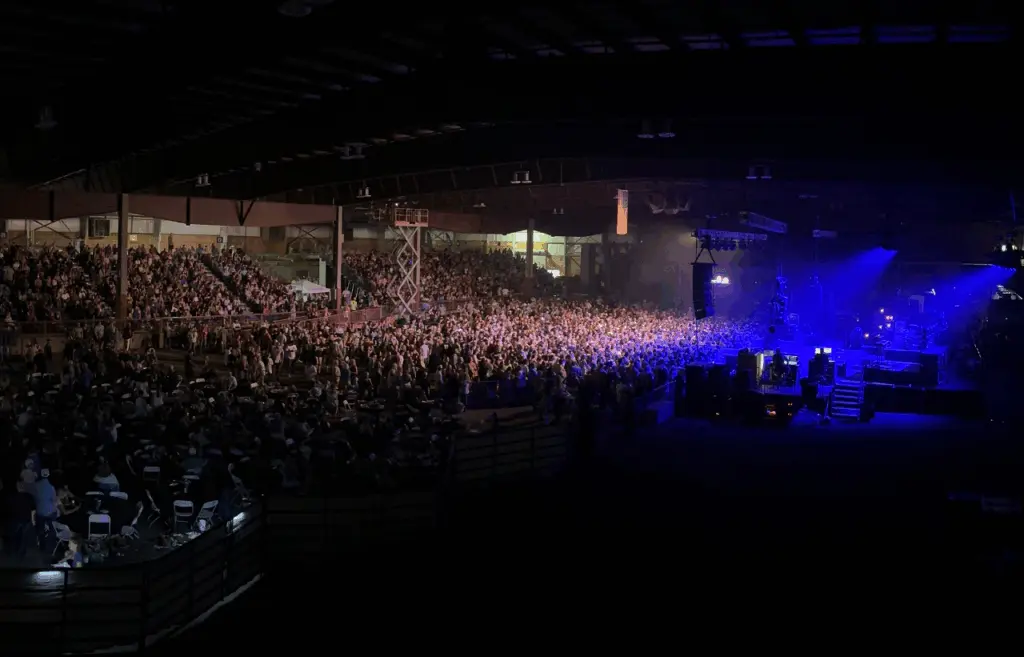
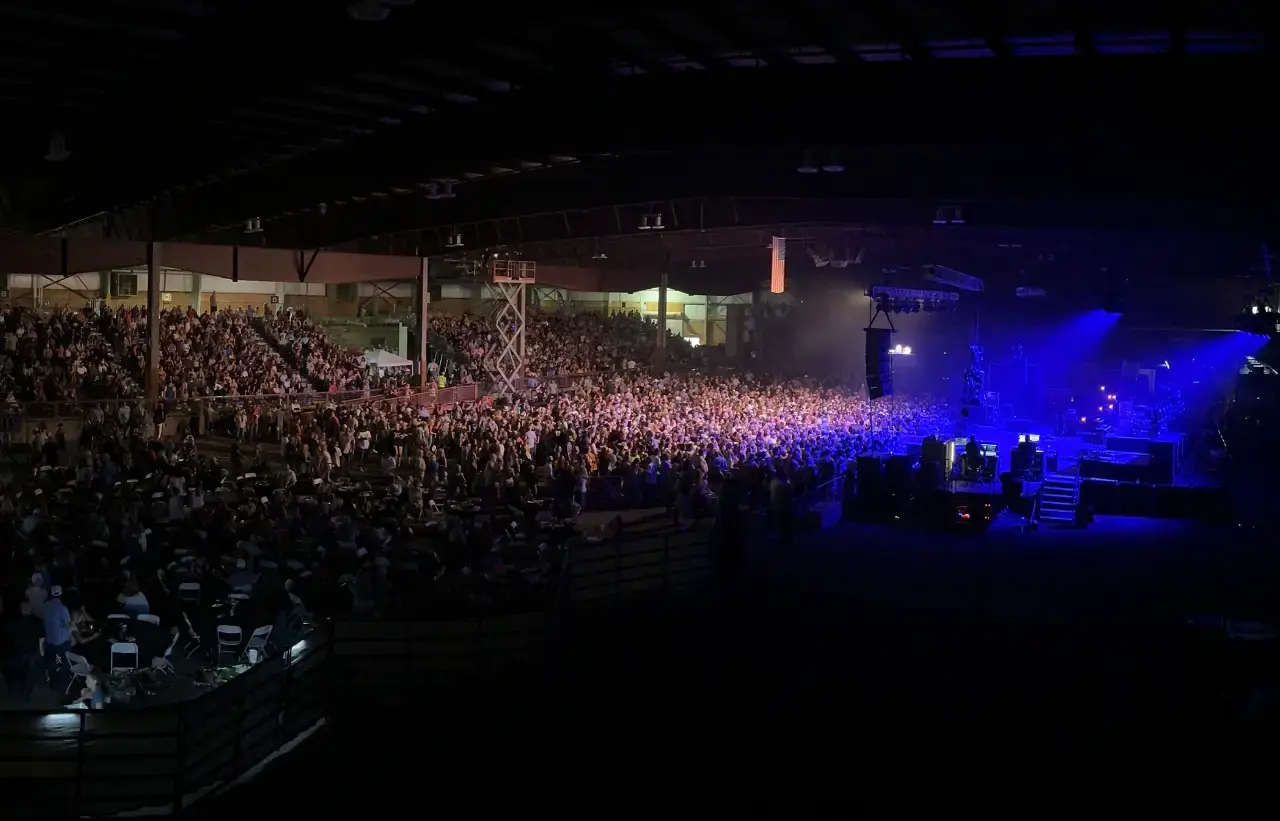
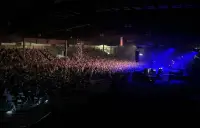
The evenings belonged to the John Hancock Arena – Pavilion, where shows were ticketed separately from the fair. On Thursday, Trace Adkins brought his 30th-anniversary tour. The Herald and News called the concert the highlight of opening day and noted that Adkins is a six-time gold- and platinum-album artist who topped the Billboard charts at least 20 times. Friday brought the Challenge of Champions Tour. On Saturday the doors opened at 5:00 for the Crash 4 Cash Demolition Derby, which started at 6:00 and cost $20 with fair admission included. A Fair Nights Package sold all three shows together with fair admission and added a three-day Fair Season Pass.
The fair belongs to the Klamath County Fair Board. It has seven members, appointed by the County Commissioners, and they set goals and policy. A Fairgrounds Manager works for the board as general manager. The board’s stated mission is “to provide a safe modern public facility that will provide recreational enjoyment, youth education, local agriculture promotion, economic development, and entertainment for all ages.” The Event Center calls itself an independently funded county department that runs “without any local tax dollars,” paying its way through venue rentals, fair revenues, and state grants. A 2022 Herald and News account listed grants, local sponsors, a portion of lottery funds, and rental income.
Those rentals keep the grounds busy the rest of the year. The Event Center counts more than 400 events and over 400,000 guests annually. In 2026 the calendar included the Klamath River Roundup PRCA Rodeo in June, a Red Cross blood drive in October, and a Deupree Auctioneers surplus sale on October 17. The grounds also have an RV park.
Oliver’s horse race and Fordyce’s farm
The fair’s beginnings are told two ways. The fair’s own short history says it began in 1902 as a small event for 4-H and Future Farmers of America members, was held sporadically at first, and gained a permanent site in 1922. The Herald and News account, drawn from research by Dawn McLing of the Klamath County Historical Society, says that in 1902 Caleb T. Oliver of Merrill organized the first Klamath County Fair and Horse Race. That account traces the idea back further still, to 1853, before Oregon had statehood, when local farmers and residents formed agricultural societies to promote farming in the region and put on the first county fairs.
Public money came in 1913. That year the legislature let counties levy taxes to fund their fairs, up to $2,000, and directed each county to appoint three residents to a fair board.
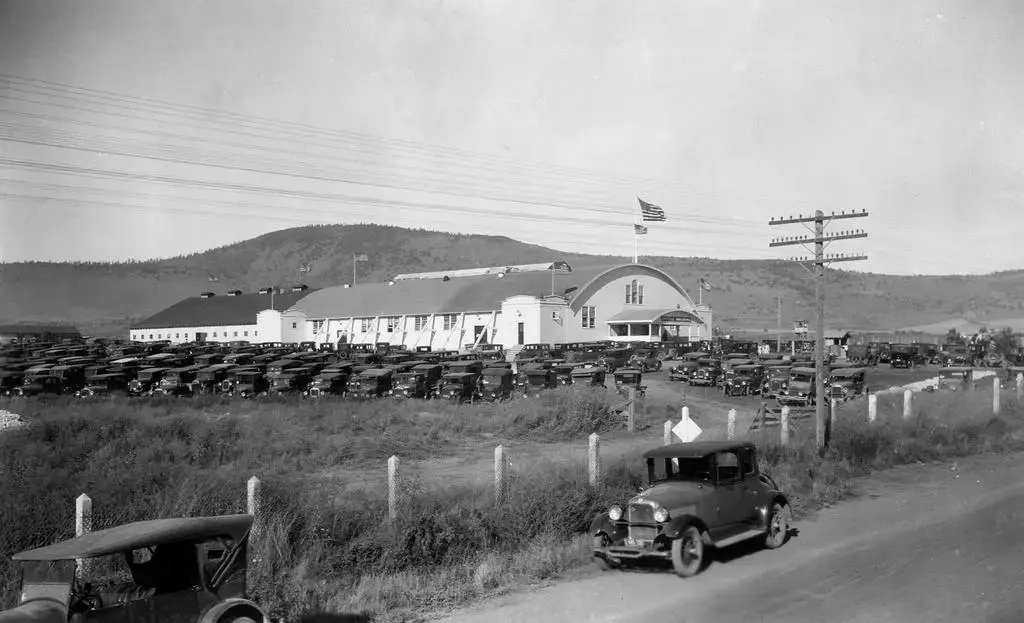
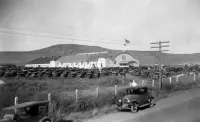
The fair found its permanent ground on July 29, 1922. That day the Evening Herald reported the purchase of Asa Fordyce’s farmland on what is now South Sixth Street, at $300 an acre. The first fair at the new site was scheduled for October 4 through 6 of that year, at the same time as the rodeo. A grandstand seating 1,600 people went up beside a half-mile racetrack. In 1923 the Cummings Brothers were contracted to build a second grandstand for $7,000. In 1926 an Evening Herald headline read “New building to be erected for Klamath exhibits,” announcing that year’s new livestock building. In 1931 Wrightman Carnivals won the bid to bring its carnival to the fair.
Fire, snow, and a bond issue
In 1933 fire destroyed the grandstands, and the cause was judged likely to have been arson. The track came back in 1940. On August 16 of that year the Klamath News reported that, “following receipt of a license from the Oregon Racing Commission, a large group of Klamath horsemen and business men completed plans for rebuilding the fairgrounds track.” The paper added that “work has already started at the fairgrounds on a flat, resurfaced oval five-eighths of a mile in circumference.”
Building went on after the war. An arena and sales building, 110 by 176 feet, opened in 1956, and a new livestock barn followed in 1960. By 1961 the grounds held five buildings, the grandstands, a rodeo arena, a 16-faucet animal wash rack, and two Little League diamonds. In 1971 the fairgrounds hosted 27 events and drew 11,000 patrons.
In the winter of 1993 the indoor arena collapsed, weakened by deterioration and loaded with heavy snow. It was rebuilt in 1994. That same 1993 season, Alan Dierksen of the Corvallis-based Dierksen Flying Service offered helicopter rides over the area fairs. The Herald and News reported long waits for them at the Tulelake-Butte Valley Fair, and rides at the Klamath County Fair “but with less success.”
In 2000 a 93,000-square-foot event center opened, paid for with a $4.5 million bond. The Event Center now describes itself as one of the largest indoor event facilities in the Pacific Northwest and credits voter support for it. By 2008 the grounds hosted more than 400 events a year and saw nearly 400,000 people come through the front gates. The Herald and News marked the centennial of the South Sixth Street site in 2022. A year later it headlined its fair story “Klamath County Fair opens 101st yearly event at Fairgrounds.”
The 2026 fair closed on Sunday, August 2. By August 10 the Event Center was serving as the Incident Command Post for the Wrights Spring Fire and had opened as a shelter for evacuated large animals.
Notable Events
- 1922On July 29, Asa Fordyce's farmland on South Sixth Street was purchased for the fairgrounds; a grandstand and half-mile racetrack were built. heraldandnews.com
- 1923Cummings Brothers were contracted to build a second grandstand for $7,000. heraldandnews.com
- 1926A new livestock building was built. heraldandnews.com
- 1931Wrightman Carnivals got the bid to bring their carnival to the county fair. heraldandnews.com
- 1933A fire destroyed the fairgrounds grandstands; the cause was determined likely to have been arson. heraldandnews.com
- 1940On Aug. 16, Klamath News reported that, following receipt of a license from the Oregon Racing Commission, a large group of Klamath horsemen and business men completed plans for rebuilding the fairgrounds track; work had started on a flat, resurfaced oval five-eighths of a mile in circumference. heraldandnews.com
- 1956An arena and sales building measuring 110 by 176 feet was built. heraldandnews.com
- 1960A new livestock barn was erected. heraldandnews.com
- 1961The fairgrounds consisted of five buildings, the grandstands, a rodeo arena, a 16-faucet animal wash rack and two little league baseball diamonds. heraldandnews.com
- 1971The fairgrounds hosted 27 events that year, attracting 11,000 patrons. heraldandnews.com
- 1993The indoor arena collapsed because of deterioration and heavy winter snowfall. heraldandnews.com
- 1994The collapsed building was rebuilt. heraldandnews.com
- 2000A 93,000-square-foot event center opened, funded by a $4.5 million bond. klamathcofair.com
- 2008The fairgrounds hosted more than 400 events and welcomed nearly 400,000 people through its front gates. heraldandnews.com
- 2026The highlight of the fair's Thursday opening day was a concert by country music artist Trace Adkins, part of his 30th-anniversary tour. heraldandnews.com
People
- Asa Fordyce, sold the farmland that became the permanent fairgrounds (1922).
- Caleb T. Oliver, organized the first Klamath County Fair and Horse Race (1902).
- Trace Adkins, country music artist whose 30th-anniversary-tour concert headlined the fair's Thursday opening day (2026).
Sources
- klamathcofair.com
- klamathcofair.com/event-schedule-2
- klamathcofair.com/free-at-the-fair
- klamathcofair.com/general-info
- klamathcofair.com/getting-here-yes
- heraldandnews.com/news/local_news/looking-back-this-week-in-klamath-basin-history/article_fc3726f8-e8e1-5a70-9bf8-d7022b86858d.amp.html
- heraldandnews.com/search/?q=%22Klamath+County+Fair%22+fairs+good+country+fun
- heraldandnews.com/news/klamath-county-fair-brings-good-country-fun/article_9ba2d39e-e3e7-4109-904c-f30c51acd75d.html
- klamathcofair.com/about-us
- kceventcenter.org/mission-history
- heraldandnews.com/klamath/klamath-county-fairgrounds-100-year-anniversary/article_a92d88b5-a3f4-5965-a201-81090ac08943.html
- archiveswest.orbiscascade.org/ark:80444/xv572426