Jack Rabbit Hill Farm
Hotchkiss, Delta County, Colorado. Wines and spirits.
Details

- Where
- 26567 North Road, Hotchkiss, CO 26567. Directions
- When
- Visitors welcome by appointment.
- Getting there
- 5 hours drive from Boulder, 2 from Carbondale and 20 minutes from Hotchkiss.
- Access
- Visitors are asked to schedule in advance; 5 hours drive from Boulder, 2 from Carbondale and 20 minutes from Hotchkiss.
- Walk-in or reserve
- Visitors welcome by appointment.
- Phone
- (970)234-9463
- Website
- jackrabbithill.com
- Managed by
- Jack Rabbit Hill Farm.
- Established
- 2000.
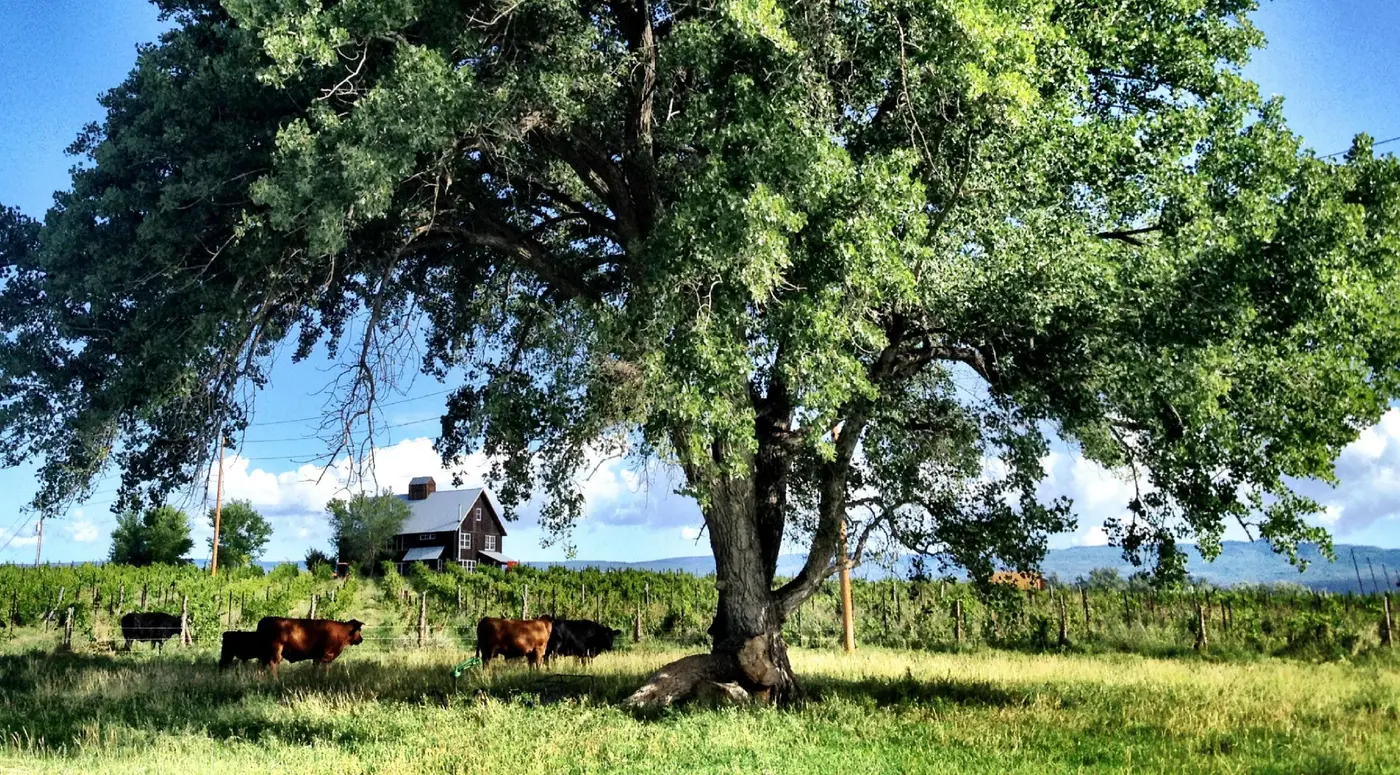
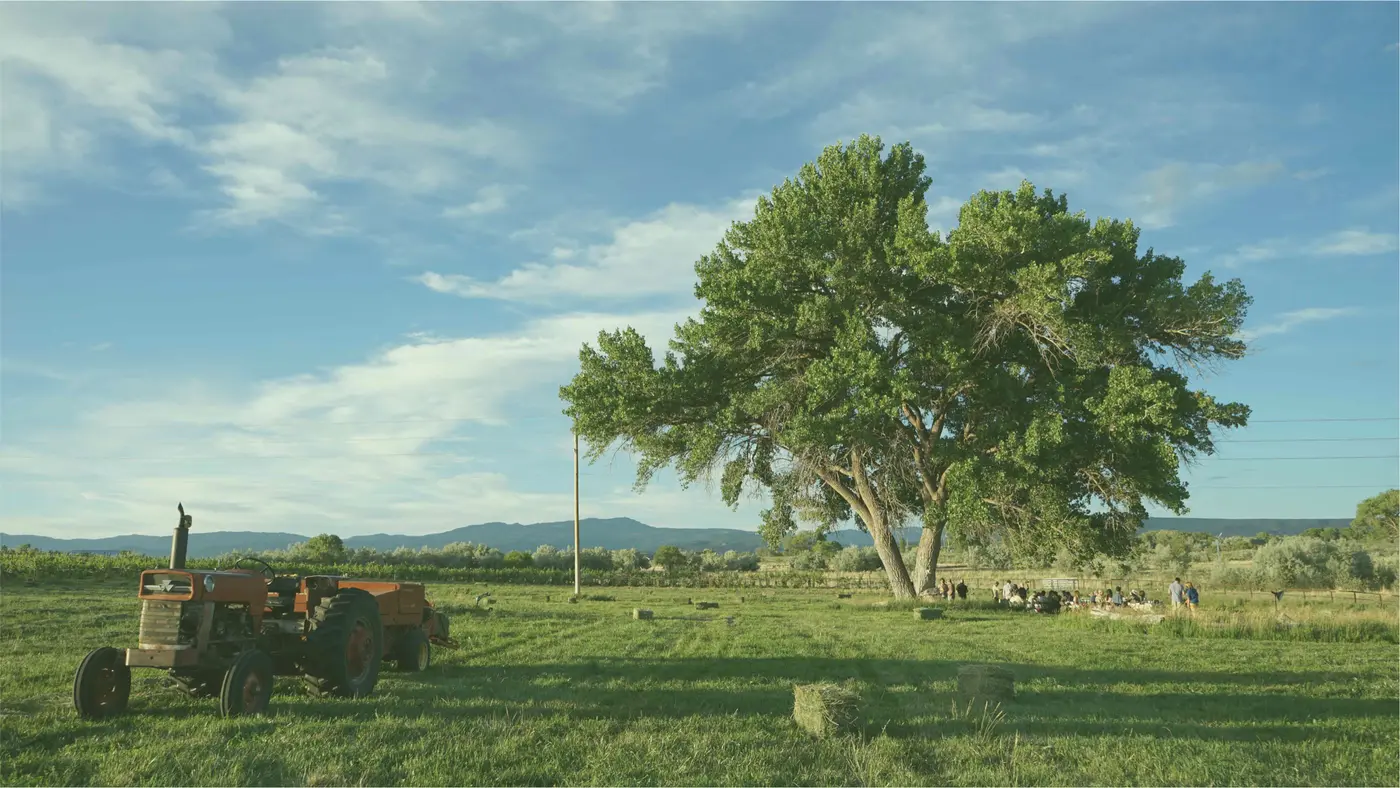
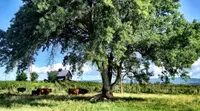
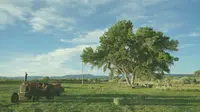
Jack Rabbit Hill Farm lies on Redlands Mesa in Delta County, about twenty minutes from Hotchkiss. The farm puts it two hours from Carbondale and five from Boulder. A real-estate listing places it at 6,200 feet on the south slope of Grand Mesa, with views of the San Juans, the West Elks, the Black Canyon, Grand Mesa itself and the Uncompahgre Plateau. The same listing describes stone accents, mature trees and shady seating areas. The farm calls itself a 70-acre diversified operation of wine grapes and tree fruits, medicinal herb gardens, pasture and cattle. There is no walk-in trade. Visitors are asked to make contact in advance, and the farm’s contact page notes the hiking, rafting, fishing and skiing in the North Fork Valley around it.
The vines and the cellar on Redlands Mesa
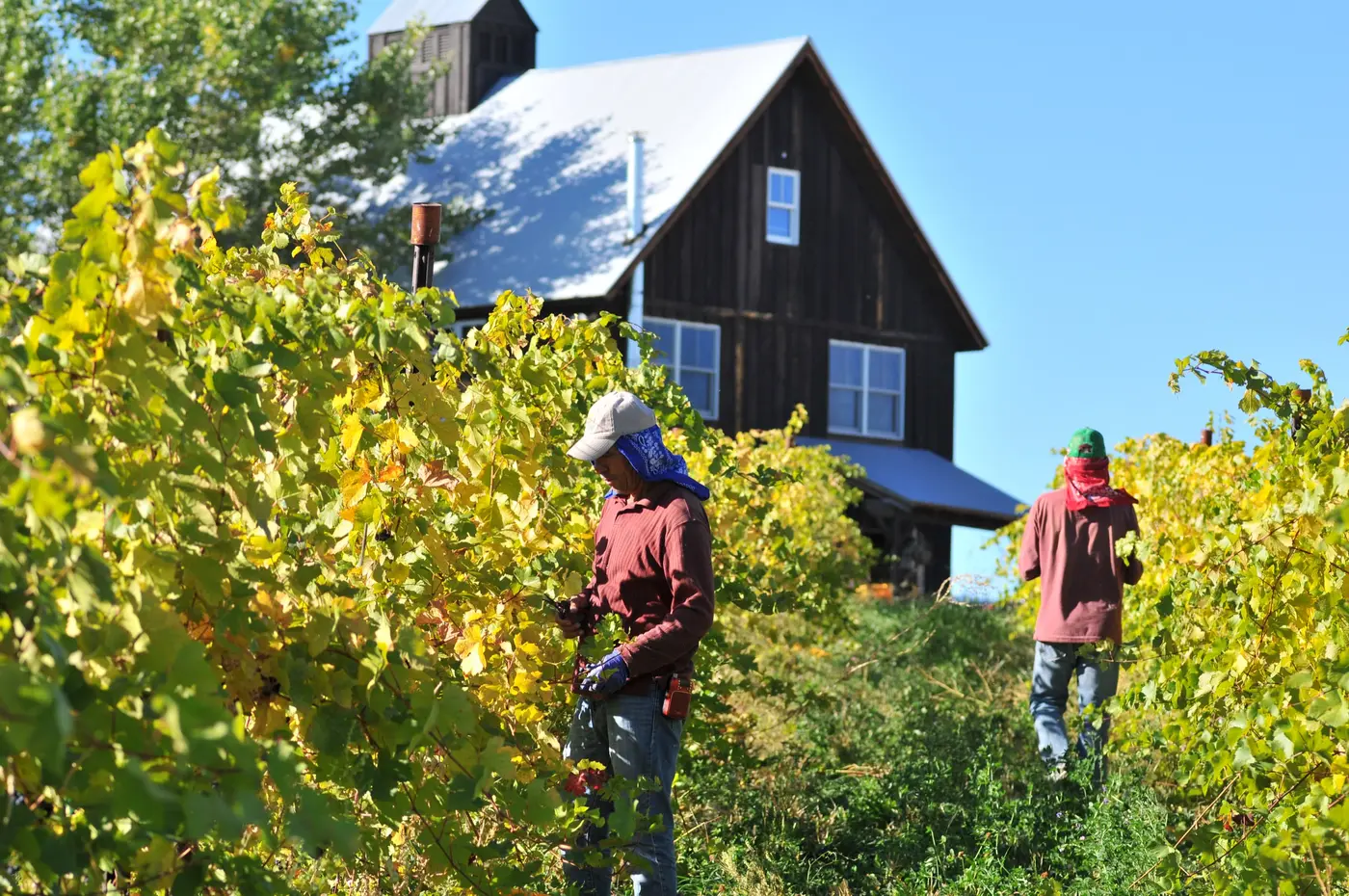
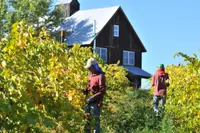
The farm lists every input it uses on the vineyard. Irrigation is first-use water, which is snowmelt. The soil gets biodynamic compost preparations, which are teas made from fermented plant and animal materials, along with horse and cow manure compost free of hormones and antibiotics, cover-crop seed, and organic sulphur. Grapes are picked by hand. They ferment on native yeasts, the ones already present on the fruit and in the cellar, in what the farm calls “long, slow, warm-but-not-hot fermentations” that usually take five to six months to finish. Whites age sur lees in stainless vats. Reds spend 18 to 20 months in neutral French oak barrels.
The sources give different vineyard sizes. The Denver Post in 2008, the Aspen Times in 2009 and the Vail Daily in 2012 each counted 22 acres. The farm’s story page gives 20 acres of grapes and tree fruits. Its wine club page says the wines come “only from the farm’s 18-acre vineyards.” The real-estate listing counts 14 acres of certified biodynamic wine grapes, 23 acres of pasture and hay, and 10 acres of wildlife habitat.
The plantings have included cabernet franc, chardonnay and riesling. In 2009 the farm poured three reds and two Rieslings, and all three reds were blends. In 2019, 5280 singled out a dry Riesling and a Pinot Meunier-Pinot Noir blend it called “red fruited, energetic.” The farm advises storing its bottles at 55 degrees, on their sides, in the dark. It suggests uncorking a bottle 24 to 48 hours before serving and leaving it upright. It expects the reds to keep maturing for at least five years and the whites for at least three. Members of the Round Tower Wine Club may collect their shipments at the farm.
The listing also lists the buildings. A 1,500-square-foot cellar with a barrel room went up in 2003, a building called the “Miner’s” building in 2005, and a root cellar and cabin in 2006. A production and reception building was added in 2014. On the east side stands a homestead residence rebuilt in 1966. Irrigation runs from shares in Redlands Mesa Water Users Incorporated and the Overland Ditch & Reservoir Company. The water passes through a 3-acre and a 2-acre reservoir and 12,000 feet of buried pipe, and the listing records 86,000,000 gallons delivered in 2024. The listing was offered by Colorado Brokers & Auctioneers at $2,250,000 for 71 acres and is now marked sold. It gives 2001 as the year the farm was established and calls the place the first Demeter-certified biodynamic property in Colorado. It describes the farm as the current home of Jack Rabbit Hill Farm estate wines and WineTapistry, the farm’s program of keg and box wines for Colorado restaurants, caterers and events.
A copper still and a truckload of peaches
The farm’s spirits carry the CapRock label. They are fermented and distilled in a Bavarian-made copper pot still on the property, and the farm’s spirits page quotes E. F. Schumacher: “small is beautiful.” The vodka is made from Chambourcin grapes grown on the farm and organic winter wheat. The gin uses Jonathon and Braeburn apples from Ela Family Farms with winter wheat. A bitter aperitif is built on Vignoles grapes from the farm with foraged and exotic botanicals. Grappas are made from the farm’s Chardonnay, Riesling and Pinot noir pomace. The fruit brandies come from Bartlett pears grown at Ela Family Farms and Fortunate Orchard, Rosa peaches from the Ela orchard, and heirloom apples from Filigreen Farm. One Rosa peach brandy is aged eight years in barrel. The farm also makes single-orchard ciders under the New Avalon Grower Ciders name.
In 2010 the Denver Post followed a single batch of that peach brandy from blossom to bar. In April, Steve Ela walked his 99-acre orchard about ten miles from Hanson’s place while forecasters predicted between 23 and 25 degrees. “My hair turns grayer with a forecast like that,” Ela said. The frost alarms sounded and the orchard fans ran for twelve hours. Ela saved about 5 percent of his peach blossoms and ripened roughly 30 percent of a normal crop.
In August, Ela drove a truckload of peaches to Hanson’s distillery, which the paper described as “a small, copper still in a barn not much bigger than a shed.” The men loaded the fruit into an 8-foot vat, where it fermented with yeast for about six weeks until it looked like peach soup. Hanson then hauled it by the bucket, juice, skins and pits together, into an orchard still. Inside, a paddle turned the mash and flicked the pits against the sides with a clanging sound. As the spirit ran from the spigot, Hanson dipped a finger in the stream and tasted it. A shoe-polish taste marked the head of the run and a bitter taste marked the tail, and he kept both for herbal tinctures. Only the heart between them became eau de vie.
Each two-hour run made 8 liters, enough for about 36 bottles of 375 milliliters. Each bottle took 25 pounds of peaches. To bring the spirit down to 80 proof, Hanson drove plastic barrels up Grand Mesa, about half an hour away, to a source of snowmelt that drains through basalt soil. “People say, ‘Why do you go to all of this trouble to drive up to get the water?’” he told the paper. “Well, it’s half the bottle.” Meanwhile, workers bottled gin in what would have been the house garage, across from the barn with the still.
Easter, 2000
Lance Hanson trained in Latin and Greek. According to the tasteMAKERS profile, he walked away from a PhD program days before it was to begin, then spent fifteen years with early-stage software companies in the Bay Area. The Aspen Times adds that he had once lived in Sonoma. In 2000, he and his wife, Anna, were driving home from Easter at his family’s farm in Colorado. The same profile says they took all of thirty minutes to decide they were ready for something new. “Our friends back in California looked at us, shook their heads and told us that it was never going to work and that we’d be back in a couple of years,” Hanson recalled.
They moved their children to Hotchkiss, which the Denver Post gave in 2010 as a town of 968 people. The land they took on was a former cattle ranch. In 2008 the Post reported that the rock walls of the farm’s foundation had all come out of its fields. The Hansons started with 4 acres of vines.
The first bottle sold on a Saturday morning in early July of 2002, at the Aspen farmers market. The Hansons sold it from a fold-up table, under a tent, with a cooler behind them. “We’d grown grapes, made wine and got somebody to taste it and buy it at nine in the morning,” Hanson said. “As soon as that happened, we looked at each other and said, ‘We’ve succeeded. This is going to fly.’” They sold at the market for two years before moving into restaurant sales.
Reporters disagreed about what kind of man had made the move. In 2009 the Aspen Times found Hanson with “neatly kept hair and a clean-cut wardrobe,” still looking barely removed from selling marketing software. A year later the Denver Post described “a big, perpetually disheveled guy.” “This is not a tax write-off,” Hanson told the Aspen Times. “We had to make this work. And the way to do it was to scale up.”
Cow horns and compost
The farm began as a certified organic farm and vineyard. It says it was inspired by the organic fruit growers already working in the valley. In 2004 the Hansons read Secrets of the Soil, by Christopher Bird and Peter Tomkins, and in 2006 they began making biodynamic compost and applying the preparations. The farm counts nine such preparations, and the Aspen Times noted that one of them uses a cow’s horn.
The sources date the certification differently. The farm’s story page says it entered certified biodynamic farming in 2006. In February 2019, 5280 wrote that Hanson made Jack Rabbit Hill the state’s first certified biodynamic winery in 2007. In June 2009, the Aspen Times wrote that the certification had come “a year ago,” which made the farm one of approximately 50 certified biodynamic winemakers in the country.
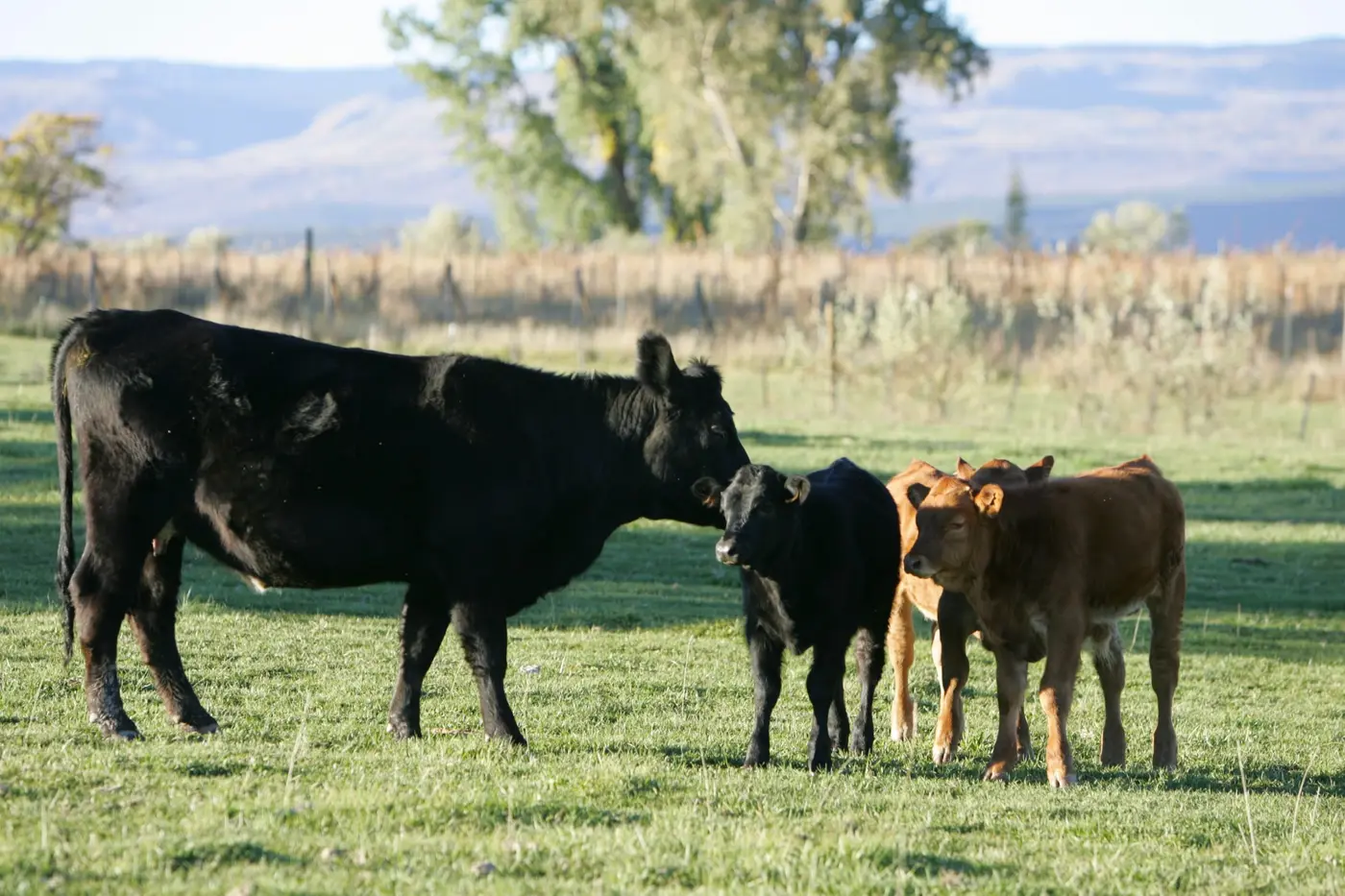
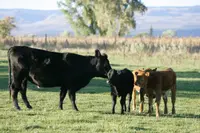
Hanson explained the change partly as a matter of hauling. “We had to truck it in from a dairy 5 miles away, hundreds of tons of wet manure for 22 acres,” he said of the compost. To cut that load, the farm added chickens, sheep and cattle. For instruction he went back to acquaintances at Grgich Hills and Robert Sinskey, both biodynamic vineyards in California. Some years earlier, one variety had developed black spots that no viticulture program could identify, and the condition did not return after the switch. “People say it’s a natural form of farming, but it isn’t,” Hanson said. “Without the active participation of the farmer, this doesn’t happen.”
Bottles that come back
The distillery came in 2005. By 2009 the farm was selling about 2,500 cases of spirits a year and about the same number of cases of wine. In 2008 the wine expert Steve Olson called Jack Rabbit Hill the best of the local wines. In 2012 Hanson planted 10 acres of organic hops for Colorado craft brewers, and that same year the James Beard Foundation nominated him as outstanding wine and spirits professional. He later counted the hops among his failures.
In 2019 he took up the milk-delivery model for MEll, the farm’s “workhorse, all-purpose” vodka. Bars and restaurants returned the empty bottles to be cleaned and refilled. Hanson told 5280 it was the first commercial, no-cost reusable bottle service in the country, and he hoped to get at least 100 uses out of each bottle. Kimbal Musk’s Kitchen Restaurant Group was one of the first partners. “When he came to us with this idea, we just jumped on it,” Musk said.
In 2020 the restaurant shutdowns cut into the wine business. Within days the farm had produced a hand sanitizer, and it began work on a line of medicinal hemp, CBD, calendula and herbal oils. “I think in any craft endeavor, you have to be prepared, deal with failure and roll with the punches,” Hanson said. “You’re going to have failure – hopefully not too many train wrecks.”
Notable Events
- 1966The homestead residence on the property was rebuilt. unitedcountry.com
- 2002Lance and Anna Hanson sold their first bottle of wine on a Saturday morning in early July at the Aspen farmers market, from a fold-up table, tent and cooler. watchtastemakers.com
- 2004The farm discovered biodynamic farming through the book Secrets of the Soil, by Christopher Bird and Peter Tomkins. jackrabbithill.com
- 2005Hanson added a distillery to his operation; the spirits are sold under the Cap Rock label. aspentimes.com
- 2006The farm started making biodynamic compost and applying the biodynamic preparations. jackrabbithill.com
- 2007Lance Hanson made Jack Rabbit Hill Farm the state's first certified biodynamic winery. 5280.com
- 2019Hanson adopted a milk delivery-style reuse service, which he said was the first commercial, no-cost reusable bottle service in the country. 5280.com
- 2020In response to Covid-19 the farm accelerated medicinal herbs and tinctures planned for the second half of 2020 and introduced High Desert Organic Hand Sanitizer Spray. jackrabbithill.com
People
- Kimbal Musk, His Kitchen Restaurant Group was an early partner in Hanson's sustainable bottle-reuse endeavor.
- Lance Hanson, Owner of Jack Rabbit Hill Farm, turning fruit into liquor.
- Anna Hanson, With Lance, converted a former cattle ranch into an organic vineyard, winery and distillery.
- Steve Olson, Wine expert who called Jack Rabbit Hill the best local wine.
- Anika Zappe, Root Down mixologist developing cocktails with Peak Spirits eau de vie.
- Anna, Hanson's wife, who moved with him and their children from California to Hotchkiss.
- Steve Ela, Organic fruit supplier on whom Hanson depended for peaches, apples and pears.
Sources
- jackrabbithill.com
- jackrabbithill.com/story
- jackrabbithill.com/biodynamic-farming
- jackrabbithill.com/jack-rabbit-hill-farm-wines
- jackrabbithill.com/peak-spirits-caprock
- jackrabbithill.com/winetapistry-kegs-boxes
- jackrabbithill.com/contact
- coloradowine.com/winery/jack-rabbit-hill
- jackrabbithill.com/join-the-wine-club
- instagram.com/jackrabbithillfarm
- aspentimes.com/news/colorado-vintner-makes-wine-the-natural-way
- watchtastemakers.com/meet-the-makers-profiles/jackrabbithill