
Interrorem Cabin
Brinnon, Jefferson County, Washington. Historic cabin; Year-round (closed Thursdays).
Details

- Where
- Duckabush Road/Forest Service Road 2510, Brinnon, WA 98320. Directions
- When
- Open year-round; closed every Thursday for cleaning.
- Getting there
- From Quilcene, WA take Highway 101 South for 15 miles to the Duckabush Recreation Area, turn west onto the Duckabush River Road (Forest Road #2510). Follow the Duckabush Road for 4 miles to the end of the pavement. Interrorem Cabin is on the left side of the road.
- Fees
- $50 per night per group.
- Access
- No electricity, no indoor plumbing, no water available on site. No pets allowed. Maximum four occupants, seven consecutive nights.
- Walk-in or reserve
- Reservation online at recreation.gov or call 1-877-444-6777; max seven consecutive nights.
- Phone
- (360) 765-2200
- Managed by
- Olympic National Forest.
- Established
- 1907.
- Coordinates
- 47.681243, -122.994168.
The cabin at the end of the pavement
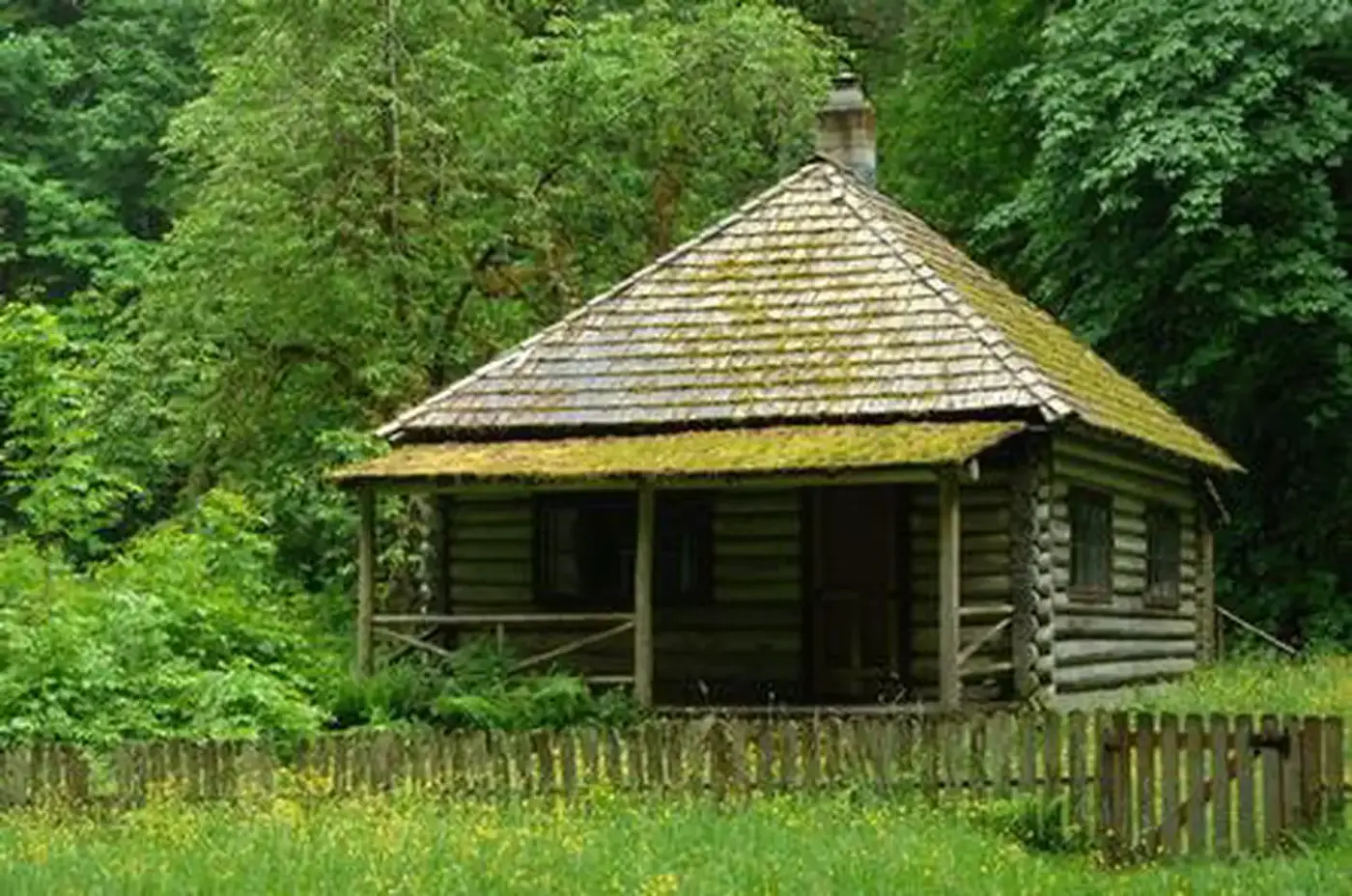
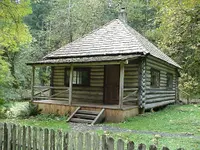
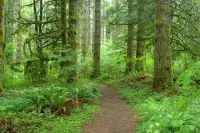
The Duckabush River Road, Forest Service Road 2510, leaves Highway 101 at the Duckabush Recreation Area, about 22 miles north of Hoodsport and 15 miles south of Quilcene. It climbs west for 4 miles until the pavement ends. Interrorem Cabin stands there on the left side of the road, in a grassy clearing under stands of bigleaf maple. The Forest Service plows the road in winter.
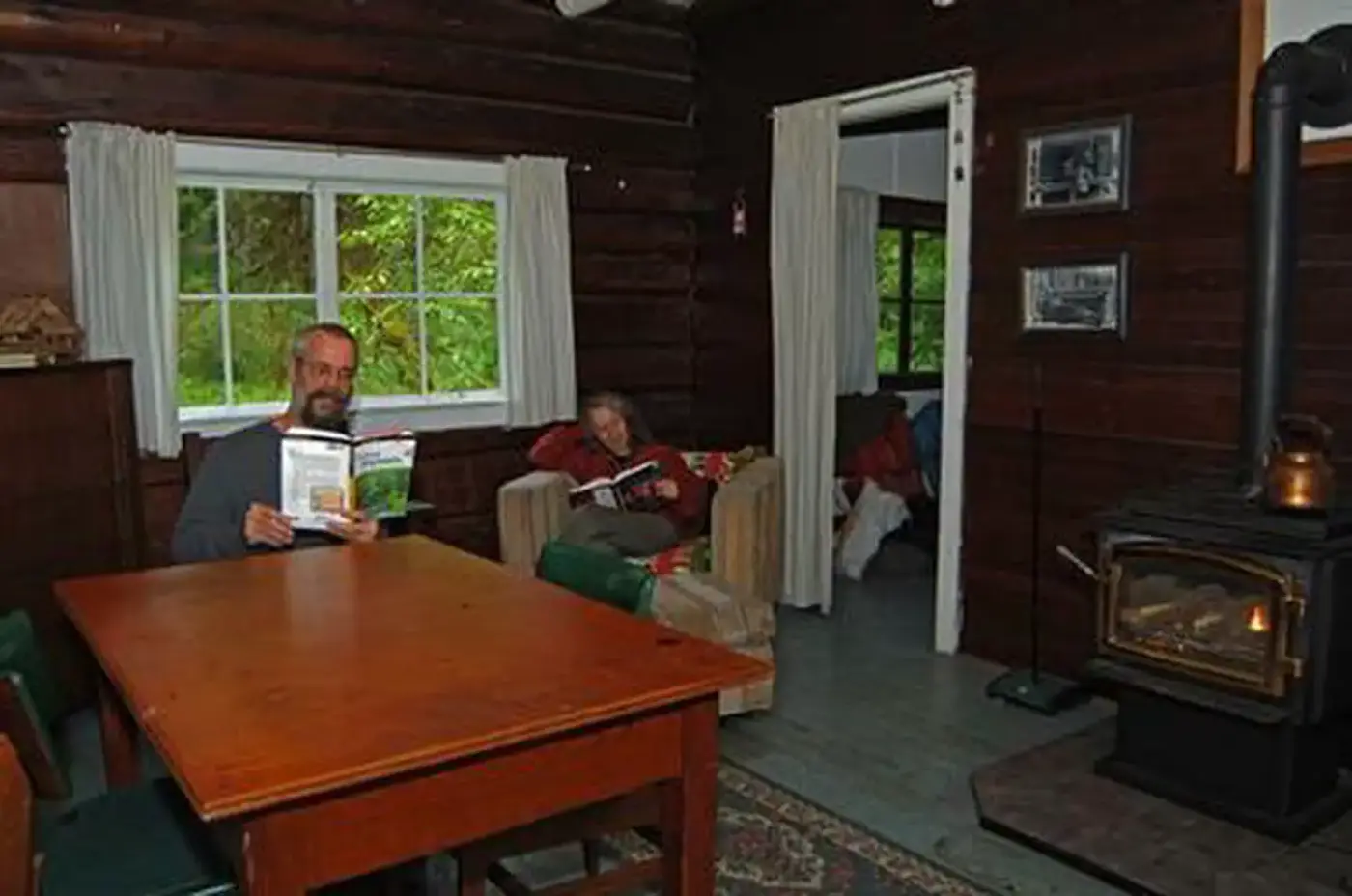
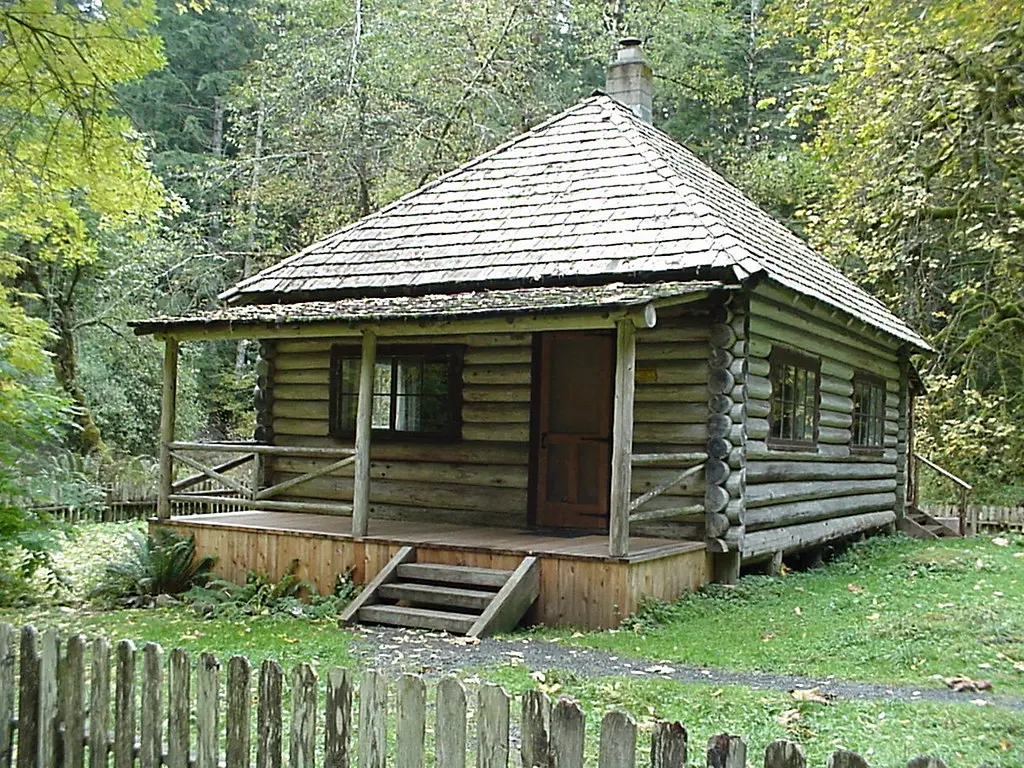
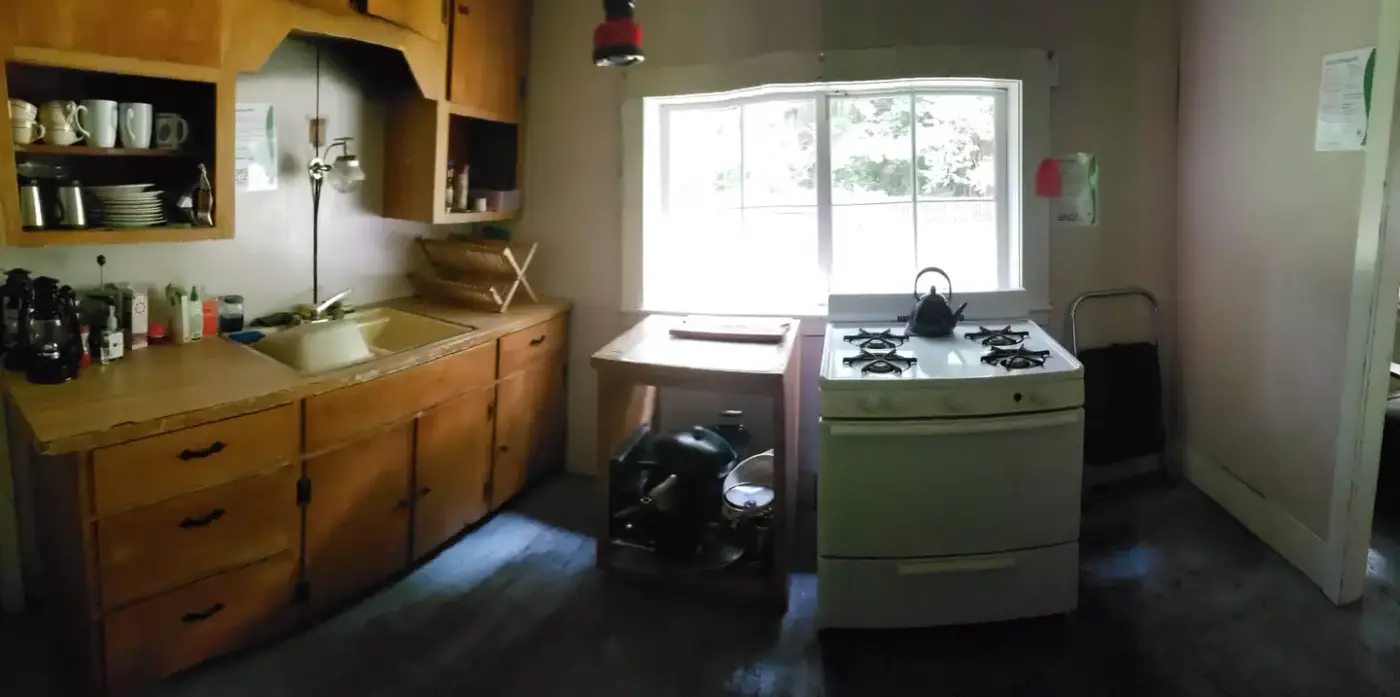
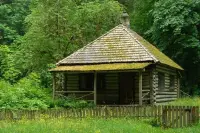
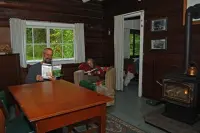
The building is one story and square, 24 by 20 feet, of peeled logs. An open porch runs across the front, and the roof is a pyramid of cedar shakes. The kitchen holds a table and chairs, cookware, utensils, a propane cook range, and propane lights. The living room has a futon, and the bedroom has twin bunk beds. A propane heater warms the cabin in winter, and the propane is furnished. There is no refrigerator, no electricity, and no indoor plumbing. An outhouse with a vault toilet and a fire ring stand on the grounds. Recreation.gov lists an outdoor hand pump for drinking water. Both agency pages now say no water is available at this time, and the Forest Service directs guests to its Quilcene office for current word on the water system.
The cabin sleeps no more than four, for no more than seven nights running. It is open year-round except Thursdays, when it is closed for cleaning. Entry is by a keyless lock, and the code arrives in the reservation email. Guests bring their own sleeping bags, pillows, towels, dish soap, matches, toilet paper, and garbage bags. They pack out all food and trash and clean the place before they leave. Open flame is not allowed inside. The fee is $50 a night per group, and the Forest Service says the money goes directly to maintaining and preserving the cabin.
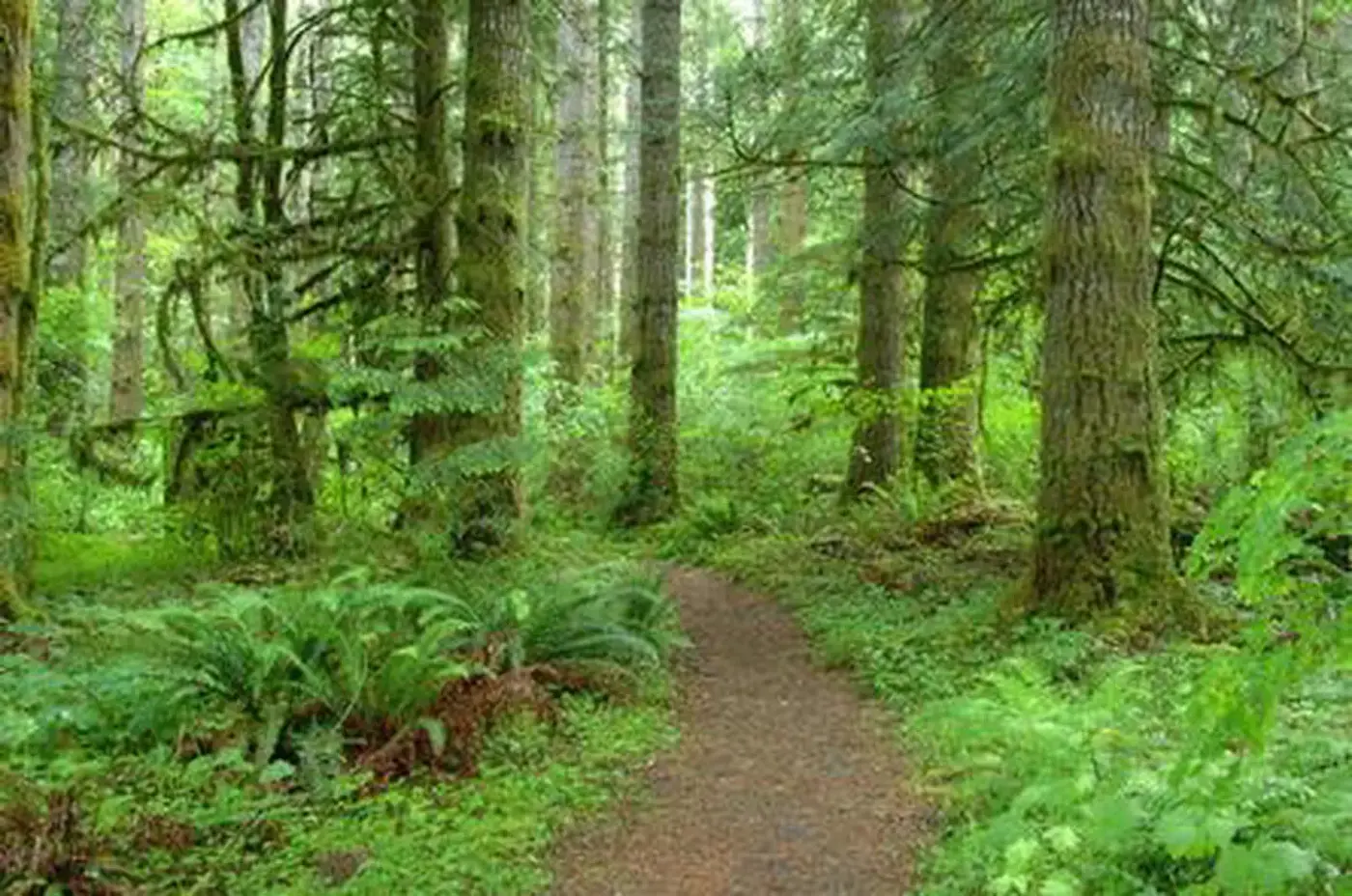
Western hemlock, western red cedar, and Douglas fir close in the forest around the clearing. The forest is habitat for elk, black-tailed deer, black bears, and mountain lions, and higher up for the Olympic marmot. The cold, clear Duckabush runs through the drainage. A short hike leads to Murhut Falls, and several public access sites lie along the fjord-like Hood Canal. To the north rises The Brothers, at 6,866 feet the highest peak in the area. Its double summit ranks among the most popular climbs in the Olympics.
Trail #804 and the Ranger Hole
Interrorem Nature Trail #804 starts behind the cabin. A row of interpretive signs with historic photographs, erected by Olympic National Forest, stands just south of the building and tells the cabin’s story.
The trail goes on toward the river. One mile down it lies the Ranger Hole, a churning pool on the Duckabush. According to the marker, Emery Finch and many of the early rangers who followed him were avid fishermen. They wore a path from the cabin to their favorite spot, because fishing was an important way to put food on the table so far from town. Recreation.gov credits Finch himself with building the Ranger Hole Trail and allows that “a few trout and some wonderful views of the river can be caught here.” The sign at the trailhead asks visitors to use caution around the rushing water.
A ranger, his bride, and a campfire
The signs place the building’s start in the spring of 1907, with the ranger peeling and sawing cedar logs for a small cabin. The marker spells him Emory J. Finch, while the Forest Service and Recreation.gov write Emery. He was a son of Hoodsport pioneers. The cabin he raised had three rooms and became the first ranger station of Olympic National Forest, which then took in the country that is now Olympic National Park. Finch and the rangers after him used it as both home and office. The marker calls it the oldest Forest Service dwelling on the Olympic Peninsula and one of the oldest in the Northwest.
The marker tells how Finch met his wife. She and two friends had come over from Seattle to camp, and “Ranger Finch” cautioned them about their large campfire. The marker gives her name as Maybelle Peterson, and the Forest Service calls her Mabel. They moved into Interrorem on April 22, 1908, and the marker says that was their wedding day.
The early Forest Service had no women in its field ranks, but rangers’ wives often served as assistants. They issued permits and gave out information when their husbands were away. The marker lists Maybelle’s chores. She washed clothes on a scrub board, baked bread on a wood stove, made her own soap and butter, and ironed with flat irons heated on that same stove. She also kept a garden, gathered berries, and canned salmon and fruit. Friends and relatives occasionally came to visit.
Her husband’s job was spelled out in the first Forest Service manual, “The Use Book.” It required that applicants be “first of all, thoroughly sound and able-bodied, capable of enduring hardships and performing severe labor under trying conditions.” Each ranger was issued a water bucket, a rake, a single-bitted axe, a short-handled shovel, and a badge. He supplied and kept his own saddle and pack horses. During the five years Finch served as ranger, his pay averaged $17 a week.
Interim or enduring
Nobody is certain where the name came from. The marker says the most popular theory derives Interrorem from Latin meaning “between the gold.” Others believe it was slang for “Interim,” used by people who expected the cabin to be a temporary place from which to manage the forest.
The cabin outlasted that expectation by decades. From 1908 to 1933 it served as the administrative site for Olympic National Forest and for Mount Olympus National Monument, which the Forest Service ran and which later became Olympic National Park. From 1933 to 1942 it hosted Depression programs: the Emergency Relief Administration, the Works Progress Administration, and the Civilian Conservation Corps. From 1942 to 1986 it was a fire guard station. From 1986 to 1994 Forest Service volunteers used it.
In May 1994 the Forest Service opened Interrorem and the Hamma Hamma Guard Station, a few miles south, to nightly renters. Eric Pryne, writing in The Seattle Times that August, counted them among more than 30 old lookouts, ranger cabins, and packers’ sheds the agency had opened in the Northwest. He wrote that they were the only two in the Puget Sound area. He gave the program’s aims as expanding recreation, raising money to restore and maintain historic buildings, and reducing vandalism.
The rent then was $25 a night. Renters picked up their keys at the Hood Canal Ranger Station in Hoodsport and left another $25 as a damage deposit. Pryne’s family stayed at Hamma Hamma. He described Interrorem as “smaller and more primitive — just one bedroom, no running water, a one-holer outside rather than a bathroom in.” He added: “The cabin’s forested setting is cozy, but we preferred the Hamma Hamma Guard Station’s expansive views.”
Notable Events
- 1907The cabin became the first administrative site of Olympic National Forest, then including the present Olympic National Park area. fs.usda.gov
- 1908Emery J. Finch and his bride Mabel moved into the cabin he built for her. fs.usda.gov
- 1908The station served Olympic National Forest and the Forest Service-administered Mount Olympus National Monument, later Olympic National Park. hmdb.org
- 1933The station hosted ERA, WPA and CCC programs. fs.usda.gov
- 1942The cabin served as a fireguard station. fs.usda.gov
- 1986Forest Service volunteers used the cabin. fs.usda.gov
People
- Emery J. Finch, Ranger, Hoodsport pioneer and builder for his bride (April 22, 1908).
- Mabel, Finch's bride and cabin resident (April 22, 1908).
- Emory J. Finch, Early ranger who peeled and sawed cedar logs for the cabin.
- Emory Finch, Ranger whose average pay was $17 per week during five years of service.
- Maybelle Peterson, Finch's bride and cabin resident (April 22. 1908).
- Emery Finch, Avid fisherman who, with other early rangers, wore a path from the cabin to their fishing spot.