



Indian Creek Guard Station
Ferron, Sanpete County, Utah. Guard station; End of June to mid-October.
Details

- Where
- Ferron, Sanpete County, UT. No street address stated. Directions
- Getting there
- From the intersection of State Route 10 (State Street) and Canyon Road in Ferron, head west on Canyon Road, which becomes Ferron Canyon Road and then Forest Road 0022; in about 26.5 miles turn north onto Forest Road 0025; in about 0.1 mile turn northeast into the guard station loop, Forest Road 2063.
- Fees
- $50 per night.
- Access
- Forest Service volunteers are stationed on-site during the summer months.
- Walk-in or reserve
- Book on Recreation.gov; bookable through the middle of October.
- Website
- fs.usda.gov
- Managed by
- Manti-La Sal National Forest, Price Recreation Region.
- Established
- 1930s.
- Coordinates
- 39.141185, -111.458583.
The road to Indian Creek Guard Station leaves Ferron westward on Canyon Road, passes the golf course and Millsite Park, and climbs about 27 miles up Ferron Canyon. The pavement ends near the national forest boundary. At Ferron Reservoir the way bears left around the water to a sign for the guard station. A second road comes in from the west, out of Mayfield through Twelve Mile Canyon and over the top of the plateau, and reaches the cabin before it reaches the reservoir.
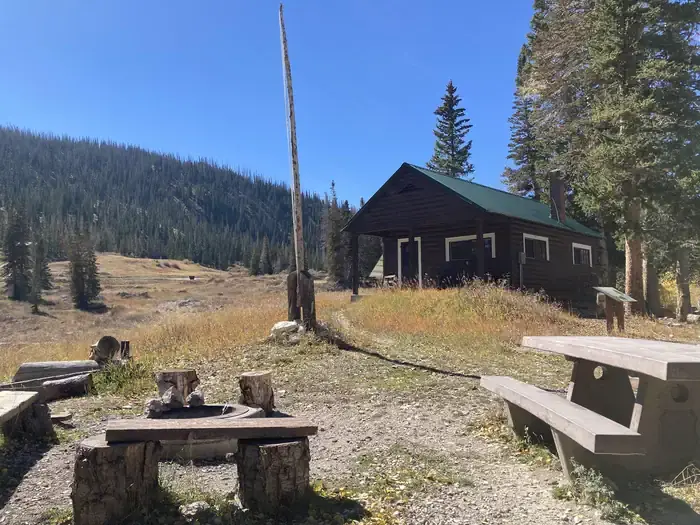
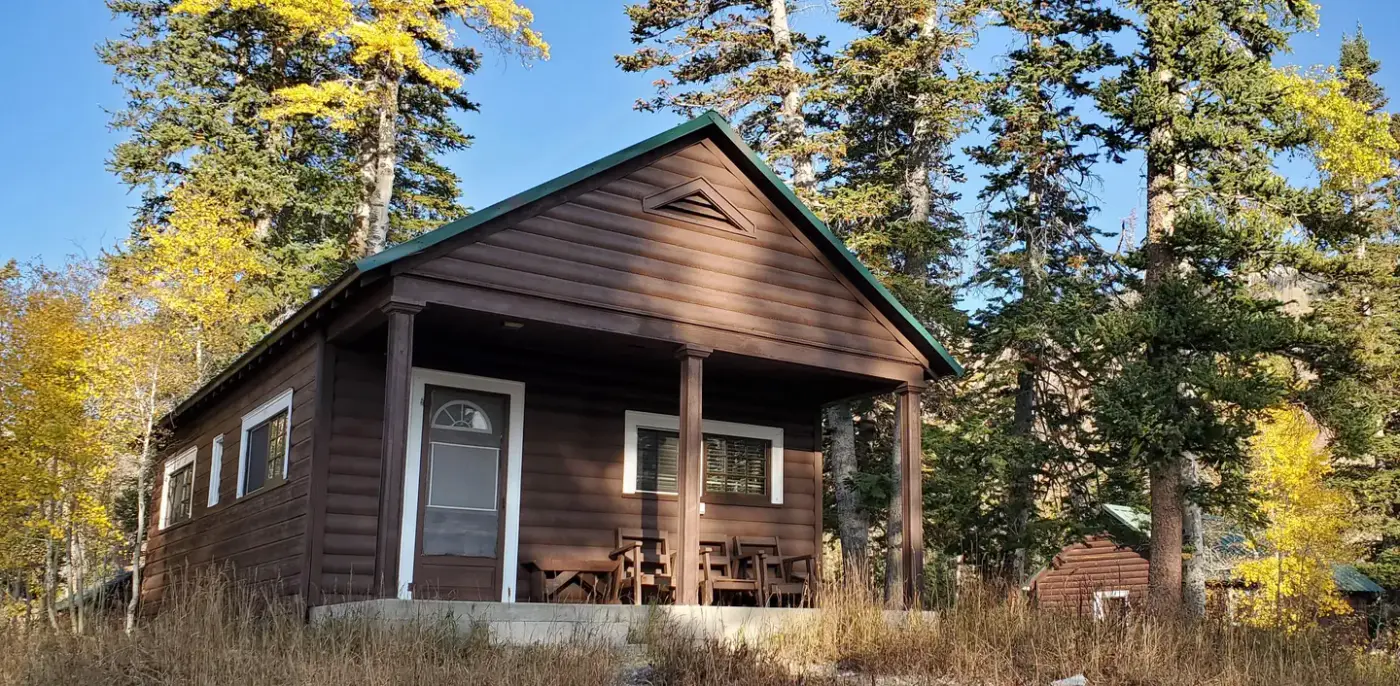
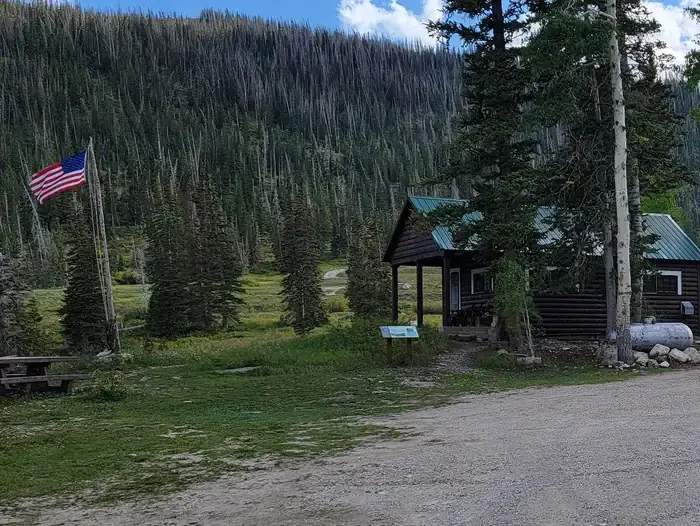
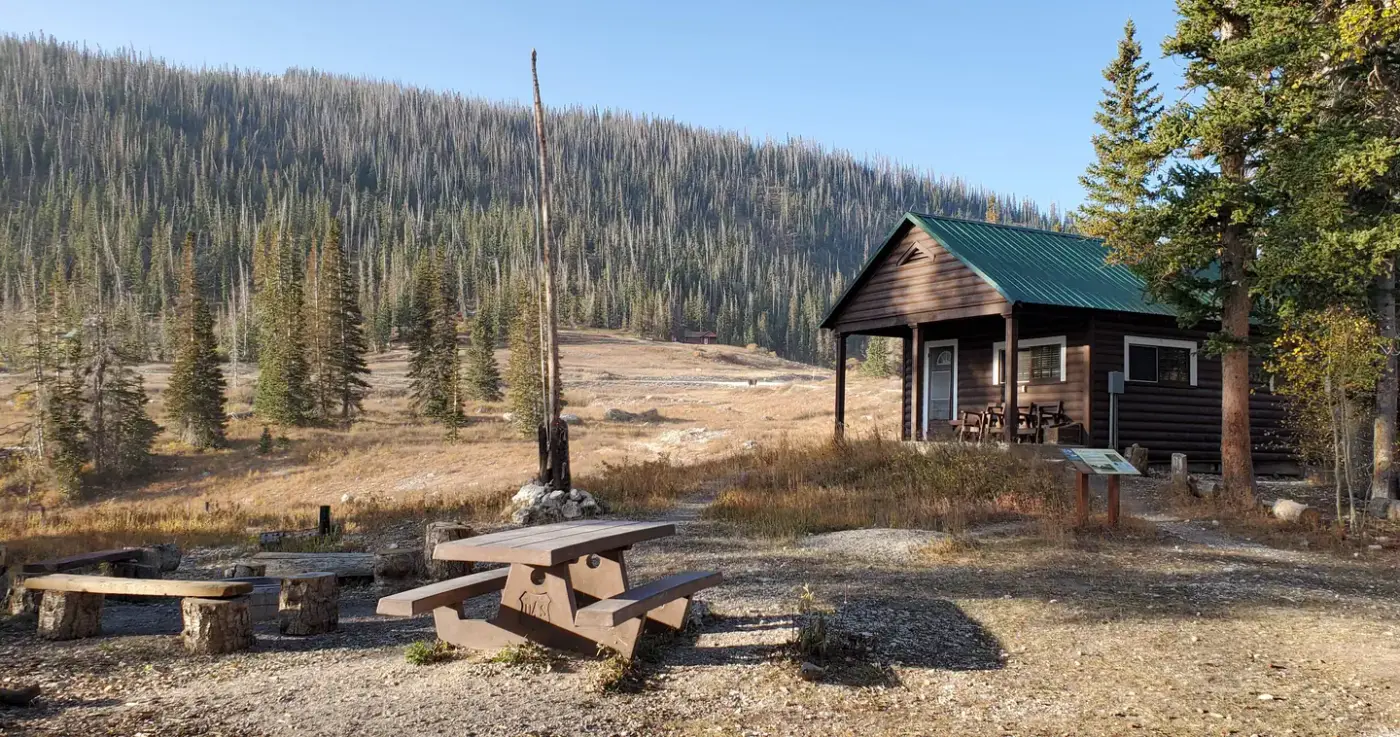
The cabin facing the water
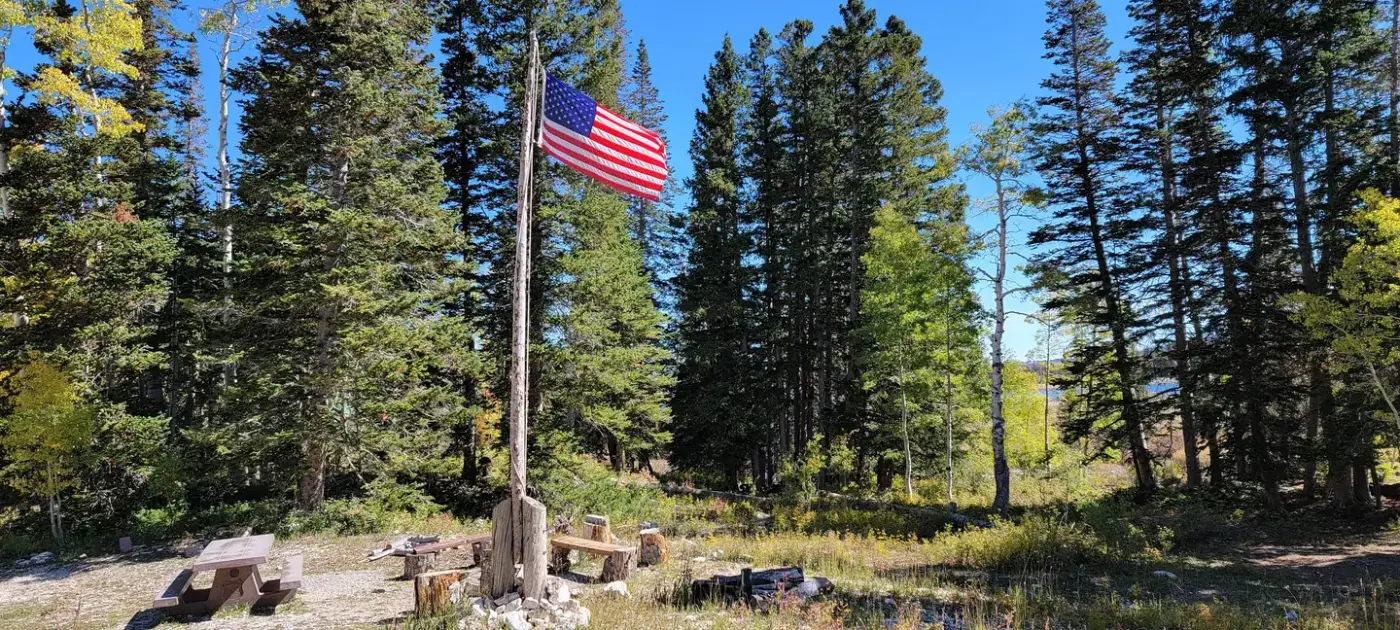
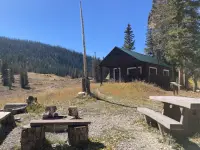
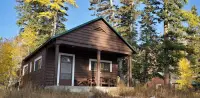
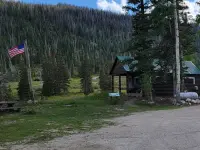
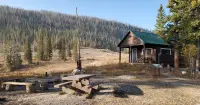
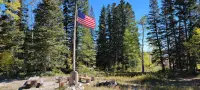
The guard station faces Ferron Reservoir. From its front porch the lake shows in pieces through the trees, and Engelmann spruce, fir, and aspen stand all around. The Forest Service gives the elevation as 9,500 feet. The Recreation.gov listing gives 9,400. Both warn that guests should be ready for snow or hail, especially after September.
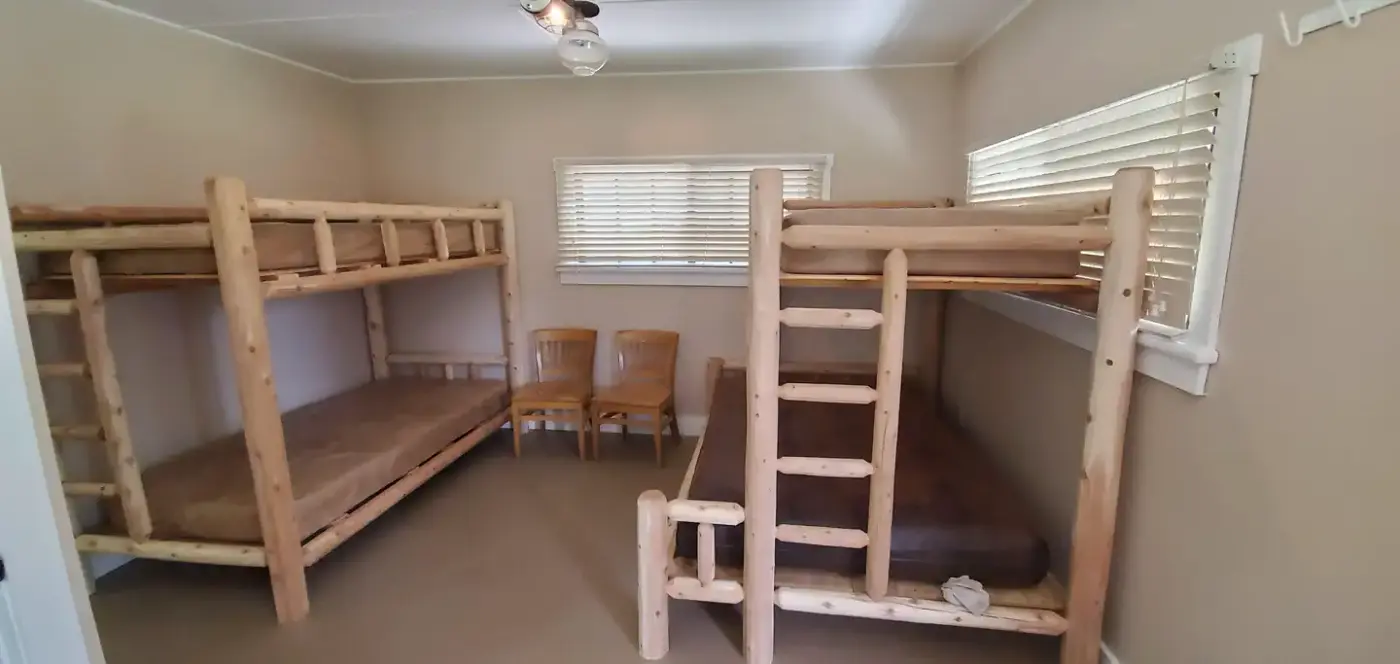
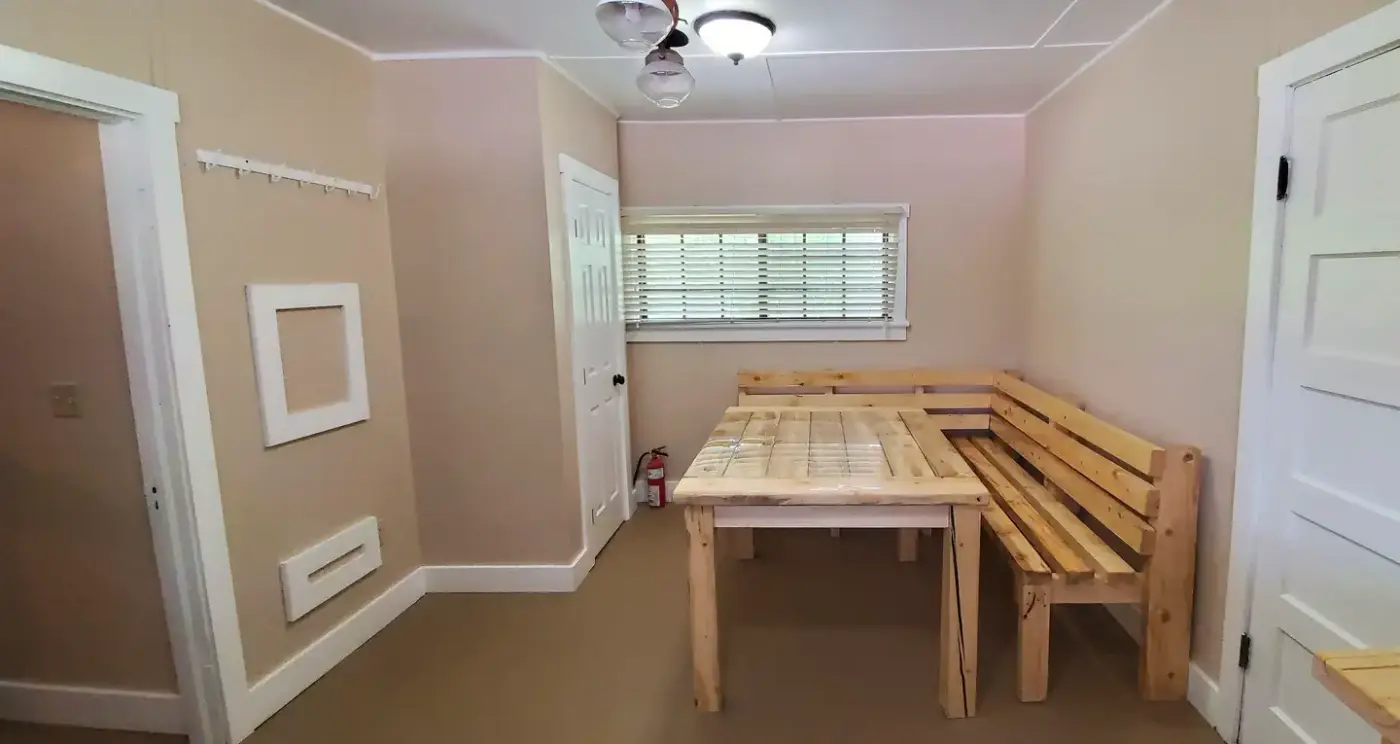
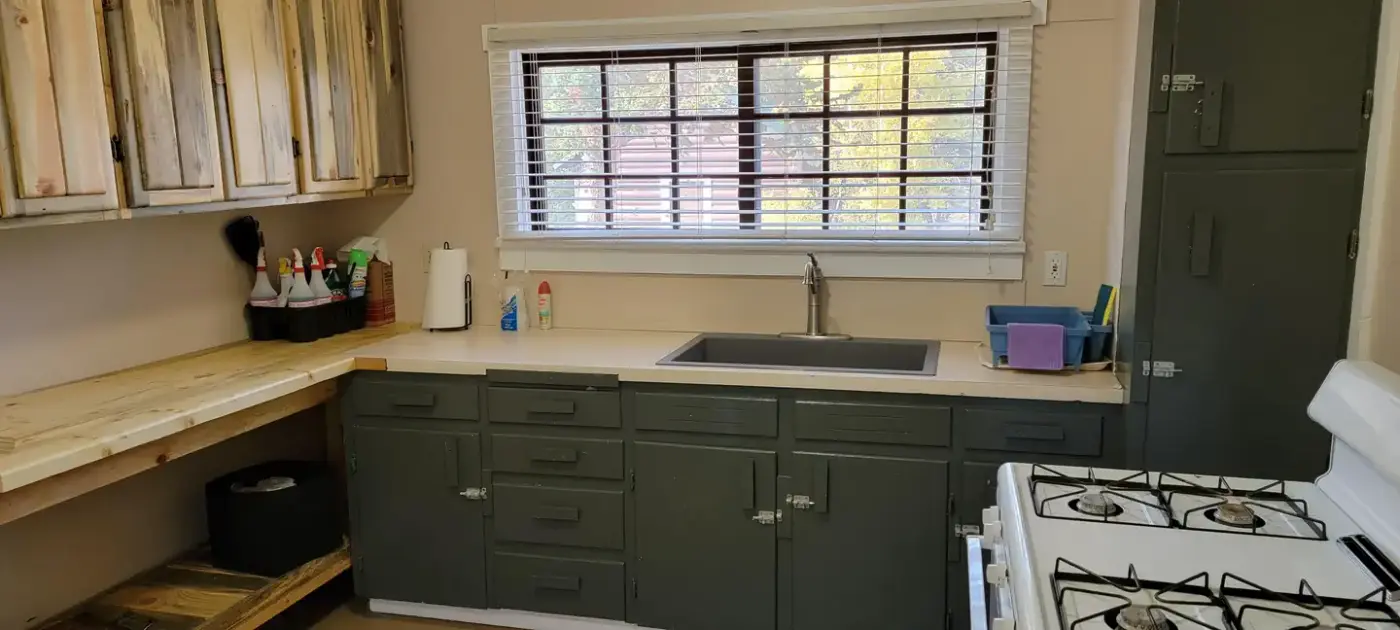
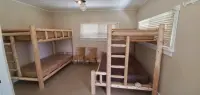
Inside are single bunks with mattresses for four. Guests bring their own linens and pillows. The kitchen has a table and chairs, a sink, a wood stove, propane lighting, a propane stove and oven, and a propane water heater, along with a small supply of cookware. The Forest Service page also mentions solar lighting. The solar power runs only the lights and phone chargers, and the listing asks guests to turn lights off when not in use. From July through mid-September there is drinking water, an indoor flush toilet, and a shower. From about mid-September through March the plumbing is shut off. Guests then carry in their own water and use a vault toilet 50 feet from the door, and the listing advises bringing a snow shovel to reach it. Firewood is supplied from December through March only.
The complex sleeps ten at most: six inside and four in tents outside. RVs are not allowed. The door opens with a combination code, which the ranger district office gives out by phone. In summer, Forest Service volunteers live on the compound, usually in a trailer near the cabin. Everything brought in is hauled out, and guests clean the cabin before they leave. The Forest Service lists the season as late June to mid-October. The Recreation.gov notices are also written for winter guests: after September, snow may close the road to wheeled vehicles, and once enough has fallen the only way in is by snowmobile.
Trout, the Skyline, and the trail system
The reservoir beside the porch is open to canoes and small boats and holds rainbow and cutthroat trout. Ferron Campground is less than half a mile away. Rush Pond and Willow Lake lie a short drive east and have more fishing. Above the cabin, Skyline Drive runs more than 60 miles along the top of the Wasatch Plateau, past glacial cirques, spruce-fir and aspen forest, and a string of lakes and reservoirs. Nearby is the Arapeen ATV Trail System, with more than 350 miles of maintained trail. In winter the country around the cabin is used for snowmobiling, cross-country and backcountry skiing, and snowshoeing.
A reservoir in the high watershed
The water came before the cabin. In 1873 a government surveyor named Augustus D. Ferron marked out Castle Valley and opened it to homesteading. The town, the mountain, and the creek were later named for him. The settlers who followed found that Ferron Creek often ran dry once the spring runoff ended. In a history of Emery County water, Edward A. Geary of Brigham Young University writes that the upper watersheds of the Wasatch Plateau held natural reservoir sites. Some of them sat on glacial moraine deposits, where a modest amount of earthwork could hold back water.
The Ferron Creek Irrigation Company was organized on May 28, 1888. Its first storage was a natural depression nearly 22 miles up the canyon, which it dammed to make Willow Lake. In 1890, according to local historian Roger Barton in a talk to the Emery County Historical Society, work began on a dam for Indian Creek Reservoir, the lake now called Ferron Reservoir. Geary’s history has the reservoir storing some water by 1890. The irrigators also began a road through Ferron Creek Gorge. In 1914 the U.S. Forest Service gave them 100 pounds of dynamite to blast the rock in the stretch called the narrows.
By 1927 the reservoir had a resort. That year George Petty, a sawmill businessman, received a government permit to open Petty Resorts beside the water. He built five cabins, and his son Dean later added seven more. The lodge sold snacks, fishing gear, and whatever a visitor had forgotten. Petty took up boat building and rented boats at the resort, paying the irrigation company $25 a year for the right.
Local men, 1933
Rangers had been working the area for decades with no roof over them. From 1907 to 1933, rangers patrolling what was then called the Ferron Reservoir Administrative Site camped out, because the site had no cabin.
President Franklin D. Roosevelt signed the bill creating the Civilian Conservation Corps on April 5, 1933. Less than six weeks later, construction began on several Utah camps. Across the state, corpsmen were paid $30 a month, and $25 of it went home to their families. The Ferron camp opened in April 1933. Its largest job was an automobile road from the Old Mill in Ferron to Ferron Reservoir, nearly 24 miles long with almost 3,000 feet of climb. That work included the mile-long dugway of Ferron Mountain, cut with motorized bulldozers, horse-drawn scrapers, and dynamite.
The same year, CCC men built the present ranger cabin and its garage at the reservoir. A Forest Service page states that every CCC man who worked on the cabin was local to the area. Generations of forest rangers serving in the back country used it afterward.
The reservoir changed hands in purpose as well. Barton told the historical society that when Millsite Reservoir was being planned, federal and state wildlife agencies demanded that water be held for fish. The irrigation company’s board answered by offering Duck Fork, Willow, and Ferron reservoirs as fisheries in exchange.
On September 19, 2007, the Manti-La Sal National Forest published a notice in the Federal Register. It stated that Indian Creek Guard Station and Seeley Guard Station had recently been restored and would be offered for overnight rental, at a fee then under study of between $30 and $50 a night. The Forest Service now lists the cabin at $50 a night.
Notable Events
- 1890Construction began on the dam for the reservoir the guard station now stands beside, then called Indian Creek Reservoir and now known as Ferron Reservoir. etvnews.com
- 1907Rangers on patrol at the Ferron Reservoir Administrative Site had to camp out since no cabin existed at the site. web.archive.org
- 1927A sawmill businessman received a government permit to start a resort next to the reservoir the guard station stands beside; he built five cabins and his son later added seven more. etvnews.com
- 1933President Roosevelt signed the bill creating the Civilian Conservation Corps, the program whose men built this guard station; less than six weeks later construction started on several Utah camps. web.archive.org
- 1933Men from the Civilian Conservation Corps, all of them local to the area, built the present-day Indian Creek ranger cabin and garage. web.archive.org
- 2007In a Federal Register notice proposing new recreation fee sites, the Manti-La Sal National Forest stated that Indian Creek Guard Station had recently been restored and would be available for overnight rental at a fee then being analyzed. govinfo.gov
People
- Augustus D. Ferron, Government surveyor who marked Castle Valley in 1873; the town, the mountain and the creek that name the road and district of this guard station were later named after him (1873).
- Dean Petty, Son of George Petty who later added seven more cabins to Petty Resorts beside Ferron Reservoir.
- George Petty, Sawmill businessman who received a government permit in 1927 to start Petty Resorts next to Ferron Reservoir and built five cabins there (1927).
Sources
- fs.usda.gov/r04/manti-lasal/recreation/indian-creek-guard-station
- recreation.gov/camping/campgrounds/233167
- etvnews.com/articles/local-news/from-desolation-to-prosperity-the-impact-of-ferron-creek-on-emery-countys-development
- waterhistory.org/histories/emery2/emery2.pdf
- govinfo.gov/content/pkg/FR-2007-09-19/html/E7-18402.htm
- web.archive.org/web/2018/https://historytogo.utah.gov/utah_chapters/from_war_to_war/thecivilianconservationcorpswasaboontoutah.html
- web.archive.org/web/2024/https://www.fs.usda.gov/detail/r4/recreation?cid=FSEPRD512151