Hotchkiss National Fish Hatchery
Hotchkiss, Delta County, Colorado. National fish hatchery.
Details

- Where
- 8077 Hatchery Road, Hotchkiss, CO 81419. Directions
- When
- 7:30 a.m. to 4:00 p.m., Monday through Saturday; closed on federal holidays.
- Season
- Open all year; grounds dawn to dusk, visitor center more limited hours.
- Getting there
- From Hotchkiss, go west three miles and turn south on CR 31.00. Take CR 31.00 1.5 miles to the end and go east on CR I.50. Go one mile on CR I.50 and look for the signs for the hatchery.
- Fees
- Free.
- Access
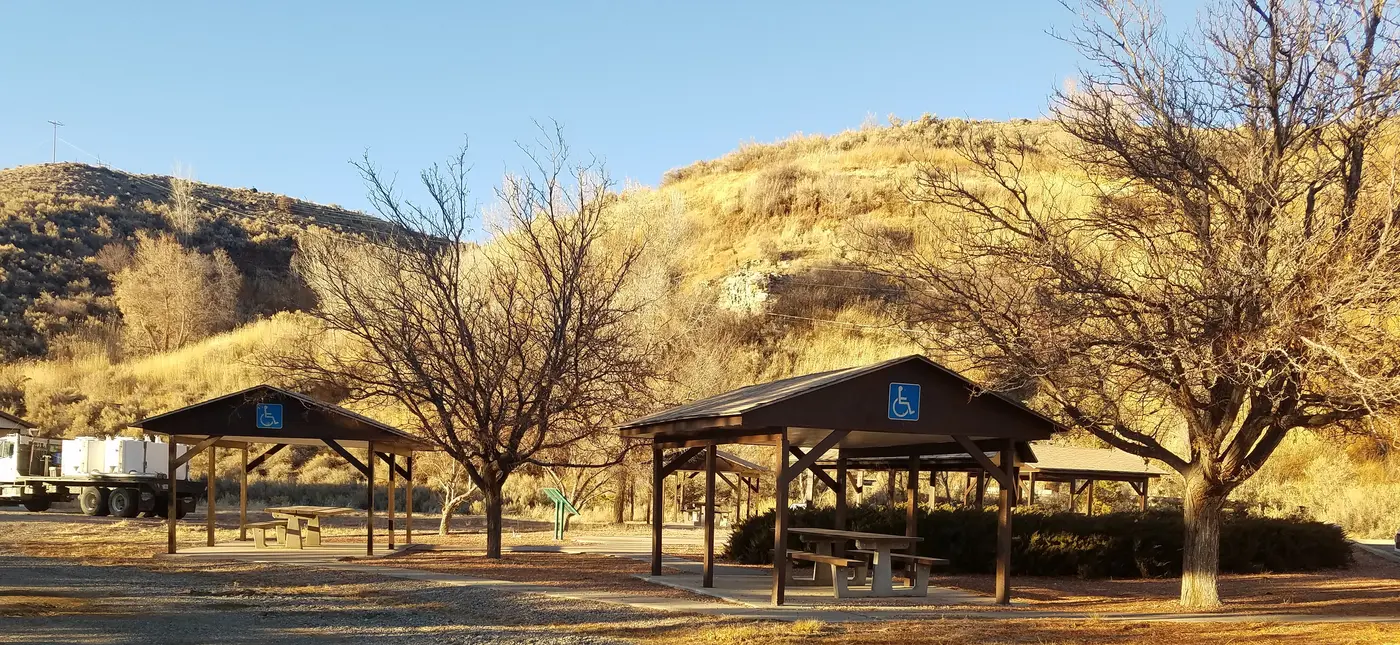
- Gravel parking lot; disabled access limited.
- Walk-in or reserve
- Educational programs/tours provided when scheduled in advance; a self-guided tour is available without one.
- Phone
- 970-872-3170
- Managed by
- U.S. Fish and Wildlife Service.
- Established
- 1967.
- Coordinates
- 38.7738, -107.7723.
The water at Hotchkiss National Fish Hatchery comes out of a hillside at a constant 56 degrees Fahrenheit, at 2,200 to 5,000 gallons a minute. A covered spring house protects the source, Tommy Dowell Spring. From there an underground pipe carries the water about 100 feet downhill to a settling pond. It then passes into an aeration tank of eight water columns, where it is charged to 105 to 110 percent oxygen saturation before it reaches the fish. About every five weeks the settling pond is bypassed so the accumulated sediment can be dug out, and that sediment is given away to community members for domestic use. A 2022 federal permit document calls the source Corey Springs and gives its flow as 2,200 to 4,000 gallons a minute. The hatchery’s own literature uses the Tommy Dowell name.
The nursery tanks and the five banks
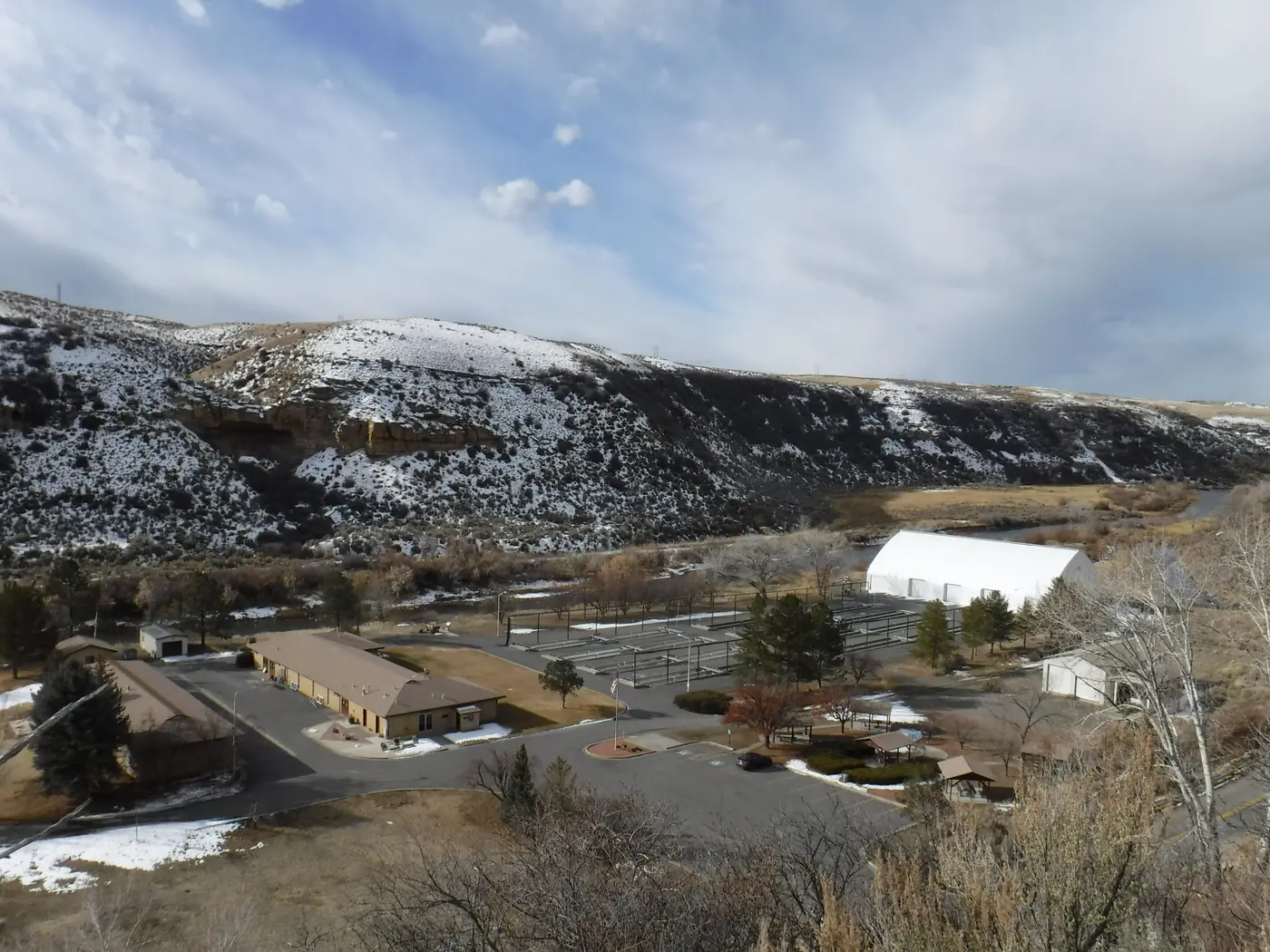
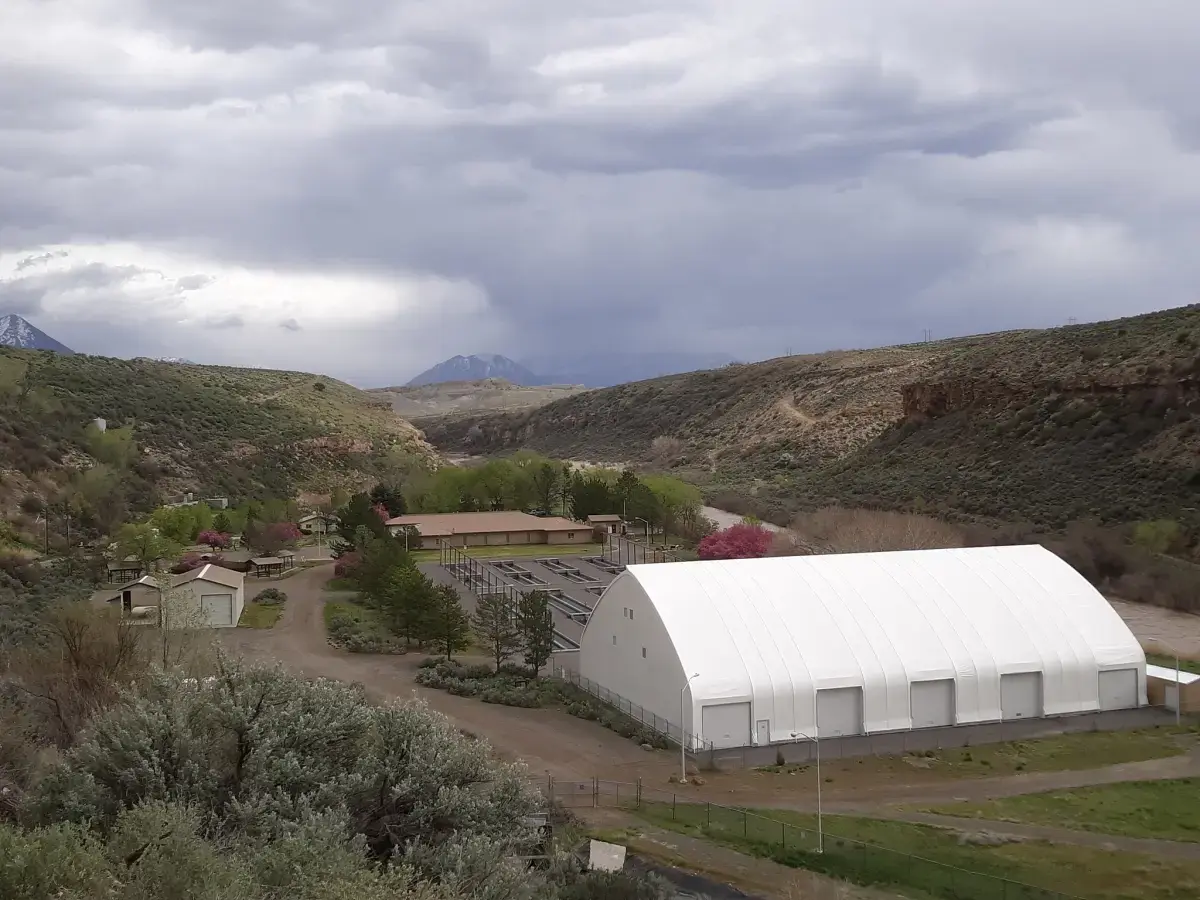
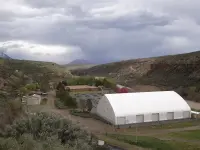
The hatchery occupies 58 acres on the north bank of the North Fork of the Gunnison River in Delta County. It lies about three miles from the town of Hotchkiss, half a mile east of Lazear, and about 20 miles east of Delta. The U.S. Fish and Wildlife Service runs it with four full-time employees and one seasonal hand. That crew does the fish culture, keeps the grounds and equipment, and gives the tours.
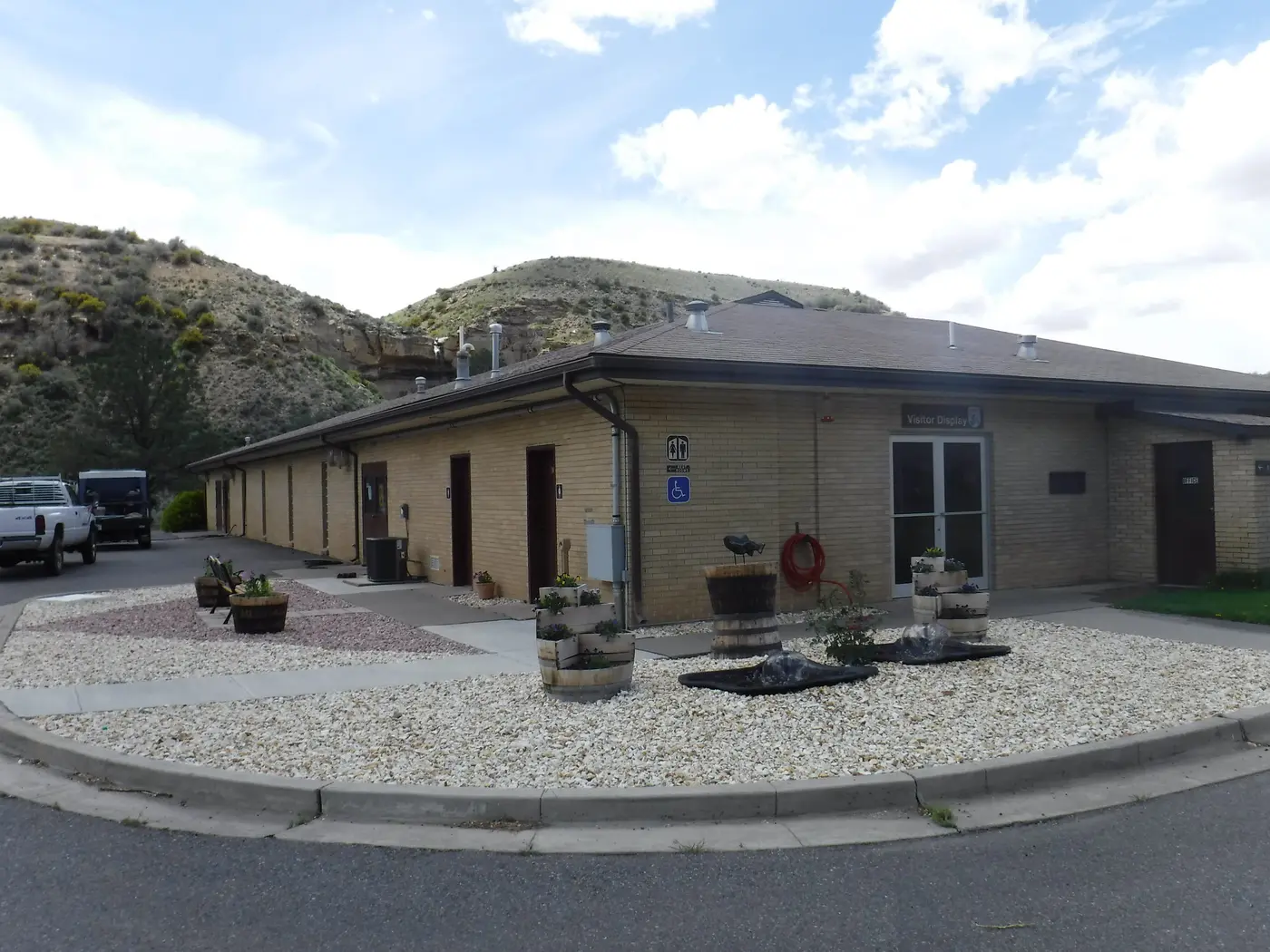
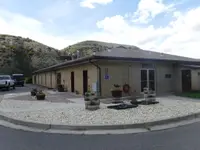
Inside the hatchery building, a small visitor center opens onto the tank room, which holds 24 nursery tanks. When a batch of eggs arrives, about three times a year by the 2022 permit account, the eggs go into upwelling incubator jars set on a platform above each tank. The fry absorb their yolk sacs and swim out of the jars into the water below. Feeding starts when 90 percent of them are out. In the nursery the crew feeds by hand so they can see whether the fish are eating. Each tank is cleaned once a day, and the round of all 24 takes about an hour.
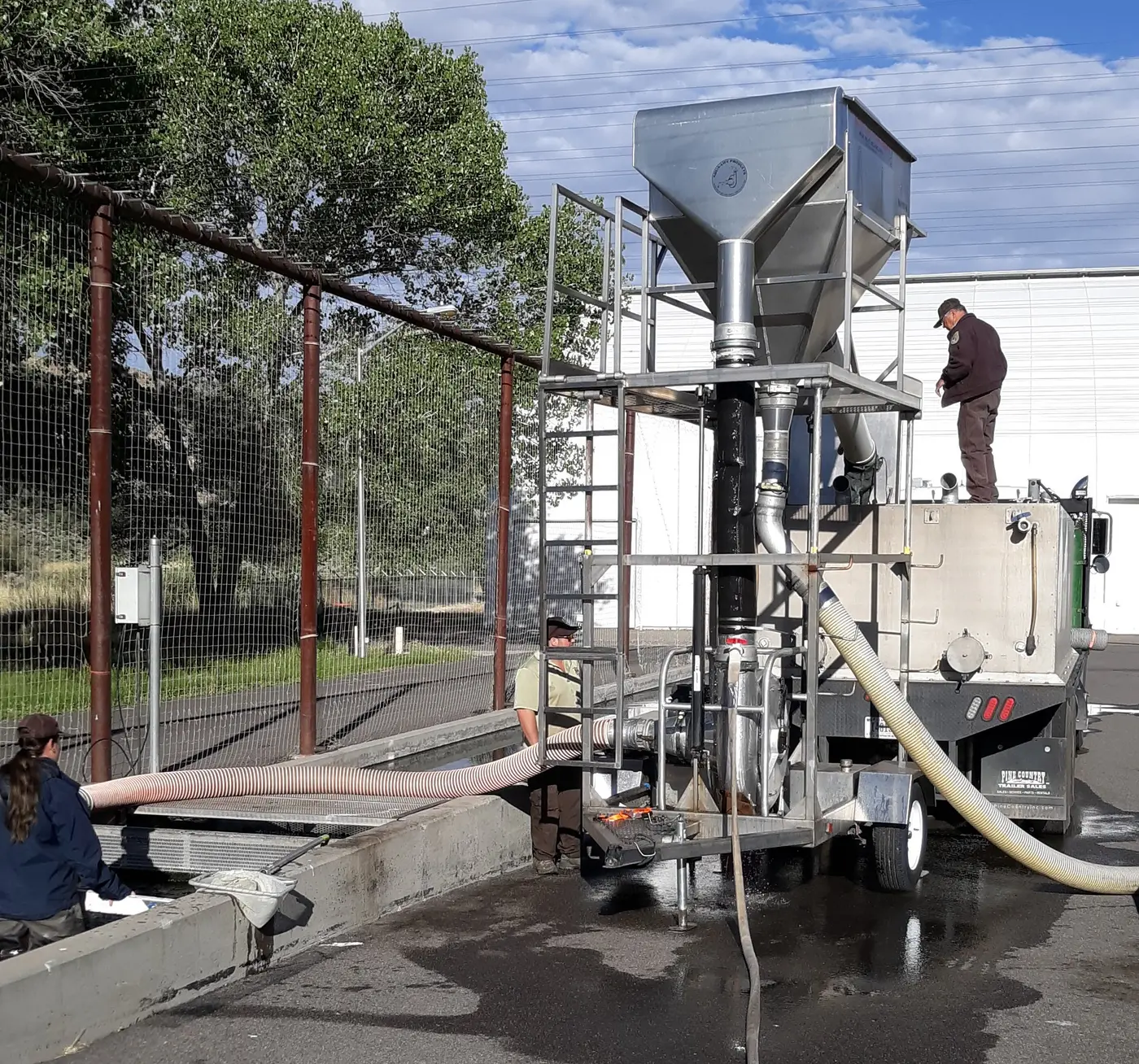
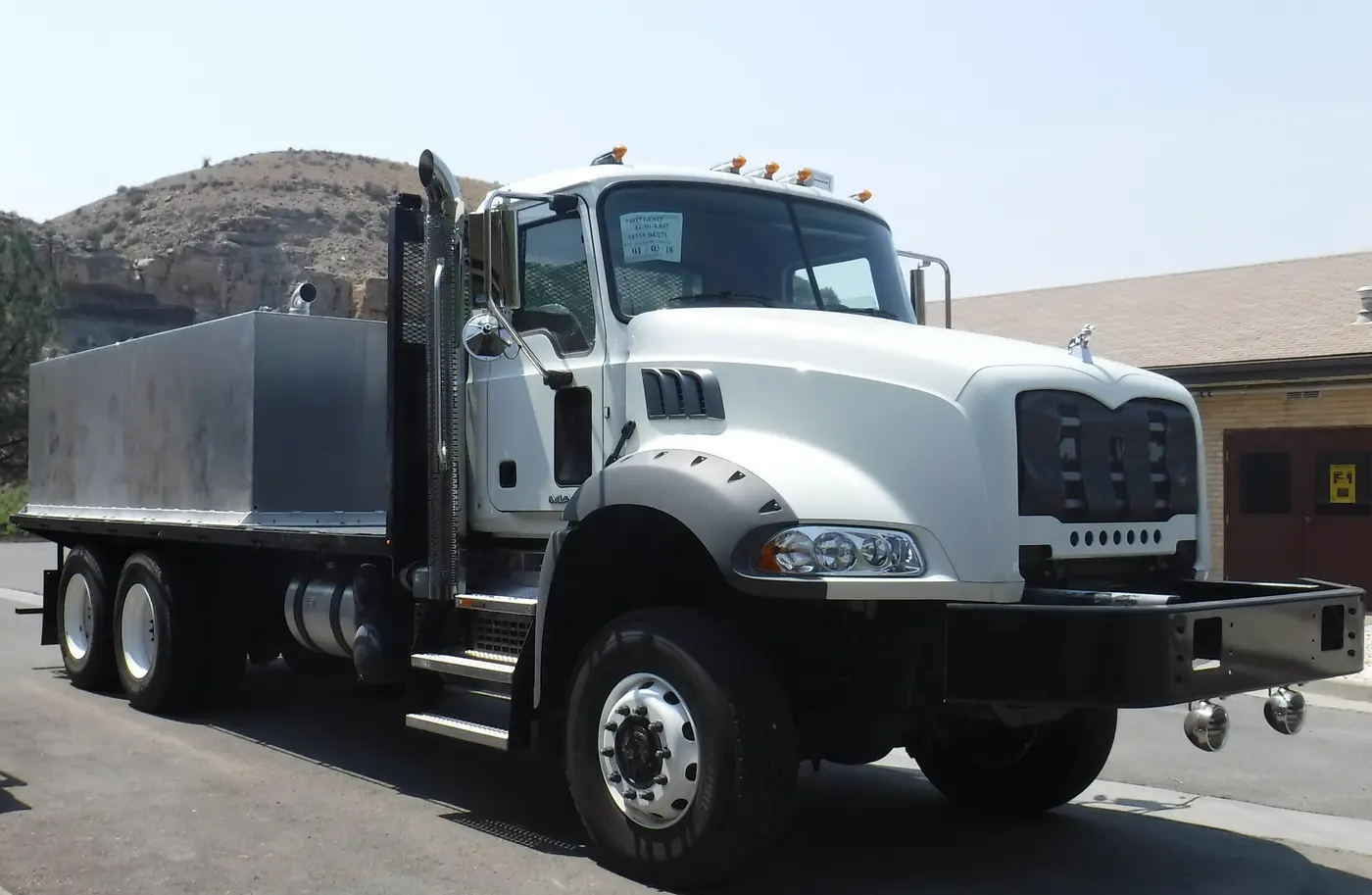
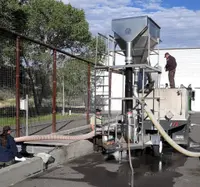
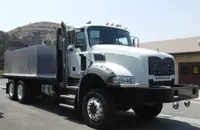
At two and a half inches the trout move outdoors to the concrete raceways. There are 40 of them, set eight abreast in five banks lettered A through E, each bank downhill from the last, east to west. Water enters at A-bank and runs down through E-bank. At about four inches the fish stop being hand-fed and are fed from a mechanical feeder mounted on a vehicle, which blows a measured weight of food into each raceway. One bank of eight is scrubbed with brushes every day. The fish leave at catchable size, ten inches. Below the raceways, two plastic-lined ponds settle out solids before the water returns to the river. The dried pond waste, like the spring sediment, goes to neighbors.
Picnic tables, herons, and the river
More than 7,500 people a year come through. Staff are normally on hand to answer questions in the visitor center and along the raceways. A short self-guided tour is wheelchair accessible, and school groups and others can arrange programs in advance. Admission is free. The office keeps hours of 7:30 a.m. to 4 p.m., Monday through Saturday, and closes on federal holidays. The grounds are open dawn to dusk all year.
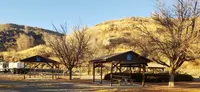
Five covered picnic areas stand on the grounds above the river. There are nature trails, and a Watchable Wildlife viewing area looks out over the surrounding canyon country. When the hatchery described the viewing area in 2001, it said the area was partnered with the local Audubon Society and the Youth Alliance Organization. The hatchery advises visitors to bring binoculars for juncos, hawks, eagles, waterfowl, elk, deer, raccoons, and fox. The Colorado Birding Trail lists the site on its Fruitgrowers Trail. Along the river and its thin band of riparian growth it notes Great Blue Heron, ducks, eagles, dippers, swifts, and wrens. It adds that the wet cliffs along the entrance could harbor Winter Wren and Hermit Thrush in winter.
Anglers may fish the North Fork for trout. They reach the river through the hatchery grounds only west and downstream of the raceways, by a dirt road that ends at a primitive parking lot. No overnight stays or camping are allowed. The Daily Sentinel reported in April 2020 that this access had been finalized the summer before, opening the river and the bank along the hatchery’s shore under a Trump administration initiative to expand hunting and fishing on federal refuges and hatcheries.
Children’s fishing has a long thread here. In 2001 the hatchery’s literature promoted the Annual Huck Finn Days Fishing Derby for Children in July, sponsored by local businesses, civic groups, and citizens. Colorado Parks and Wildlife still lists a children’s derby in July. The Fish and Wildlife Service now describes the hatchery as an exhibitor at Delta’s “Outdoor Heritage Days” in June, where it supplies the fish for the kids’ derby. Staff also turn up at Conservation Days in Paonia, give fishing and archery lessons at Sweitzer Lake State Park, and work with Trout Unlimited on Trout in the Classroom.
Reservoirs behind the dams
The hatchery was established in 1967 under the Colorado River Storage Project Act. Its job was to stock fish where federal dams had drowned habitat. Craig Eaton, a later project manager, described the origin:
“The Upper Colorado River Storage Project Act of 1956 has had a significant impact on the development and management of water in the Upper Colorado River Basin (Colorado, New Mexico, Utah, and Wyoming) with the creation of built reservoirs. When dams were built and filled, it covered acres of wildlife habitat. To help mitigate for the loss of wildlife habitat, the Department of Interior built Hotchkiss NFH for stocking fish in some of these reservoirs.”
The Daily Sentinel names Blue Mesa, Crystal, and Morrow Point on the Gunnison among the reservoirs that came of the act. The hatchery began its first full year of production in 1970. Federal permit documents say it was set up to raise trout for Colorado, Utah, New Mexico, Wyoming, Montana, and North Dakota. Its range has since narrowed to Colorado, New Mexico, and the Southern Ute Indian Tribe, whose waters it stocks under the Service’s tribal trust responsibility.
Counts of the output vary with the source and the year. In fiscal year 2000 the hatchery reported more than 2 million trout distributed to more than 80 waters. EPA permit documents say it provides over 1.5 million trout and produces about 145,000 pounds a year. The Fish and Wildlife Service’s current figure is about 600,000 trout a year, sent to reservoirs in southwestern Colorado and northern New Mexico. Rainbow trout are the featured species, and the Sentinel in 2020 reported brown trout as well. In 2010 the hatchery listed 47 lakes, reservoirs, and rivers on its stocking rolls, 18 of them on Grand Mesa. For Blue Mesa it raised its rainbows a little larger to stand up to disease and to predation by lake trout and brown trout. Adam Mendoza, the hatchery manager then, put the range simply: “When I give tours of the hatchery, I usually end up telling them that if it says ‘reservoir’ at the end of it, I usually end up stocking it.”
An earthquake, a parasite, and the herons
The spring that makes all of this possible is said to be younger than most of the people who first worked here. A 2001 Fish and Wildlife Service publication says Tommy Dowell Spring was created in the 1930s by an earthquake near Salt Lake City whose tremors also reached the Hotchkiss area. The Sentinel dates it to the 1934 earthquake north of Salt Lake City. As whirling disease spread through Colorado trout waters, Hotchkiss became one of the few public hatcheries in western Colorado certified free of it. The Sentinel reported in 2010 that the hatchery had never been touched by the parasite, and credited the clean status partly to management but mostly to the spring. Because of it, the hatchery took on extra stocking for the Colorado Division of Wildlife.
That disease-free status brought new work. In June 2009 the hatchery stocked 34,000 whirling disease-resistant rainbows in the Animas River. It was then taking on a yearly assignment of 100,000 five-inch fish for the Animas near Durango and the Southern Ute reservation. In 2010 a $1.5-million project paid for by the American Recovery and Reinvestment Act began reshaping the grounds. “We finally got started and there’s a lot of dirt being dug up around here,” Mendoza said that May. “We probably have 15 or 16 people working back there now.” The six old earthen rearing ponds were to become effluent ponds, eight new raceways were to be added, and the plan called for a weatherproof cover 42 feet high and 100 by 135 feet over the raceways. The cover was meant for the Great Blue Heron. “There would be times we could count 25 to 30 herons out there,” Mendoza said. Crews stocked about 11,000 fish in each pond every January, and by June fewer than 8,000 were left. Interior Secretary Ken Salazar, announcing the money, said the projects would “improve the quality of water placed back in the Gunnison River, as well as create construction jobs in the community.”
The spring has its own troubles. In 2020 the Service awarded Kissner G.C. of nearby Austin a $377,712 contract to rework the sand settlement basin first built in the early 2000s. “The spring that supplies water to the hatchery currently brings in sand, and this sand then gets into nursery tanks and outside raceways,” said Michael D’Agostino, a Service spokesman. A year earlier, in March 2019, the hatchery had stopped using chloramine-T, a gill-disease treatment in use there since the mid-1980s. By 2026 Josh Homer was serving as complex manager over both the Leadville and Hotchkiss national fish hatcheries.
Eaton, asked about what comes next, answered with the derby in mind: “My wish for the future is that there will be fish caught by young kids, which will inspire them to become fish biologists, aquaculturists, and hatchery managers, to perpetuate fish for future generations.”
Notable Events
- 1930sTommy Dowell Spring was created by an earthquake near Salt Lake City whose tremors also affected the Hotchkiss area. digitalcommons.unl.edu
- 1934The hatchery's nearby Tommy Dowell Spring was created by the earthquake north of Salt Lake City; the tremors also affected the Hotchkiss area. gjsentinel.com
- 1967Hotchkiss National Fish Hatchery was established as part of the Colorado River Storage Project Act. fws.gov
- 1970Hotchkiss National Fish Hatchery began its first full year of production as a mitigation hatchery. hatcheryinternational.com
- 1980Chloramine-T has been in use at this facility since the mid-1980’s. 19january2021snapshot.epa.gov
- 2000sThe hatchery's sand settlement basin was originally built in the early 2000s, according to Fish and Wildlife Service spokesman Michael D’Agostino. gjsentinel.com
- 2009The hatchery stocked 34,000 whirling disease-resistant rainbow trout into the Animas River. gjsentinel.com
- 2010A hatchery letter dated April 28, 2010 notified EPA of planned facility modifications. 19january2021snapshot.epa.gov
- 2019Chloramine-T has not been used since March 2019 and will not be used in the future; its monitoring requirements are removed in the draft. epa.gov
People
- Adam Mendoza, Project leader for the Hotchkiss National Fish Hatchery.
- Darcy O’Conner, EPA Region 8 inspector who inspected the hatchery (September 14, 2000).
- Patricia Ochoa, EPA Region 8 inspector who inspected the hatchery (September 14, 2000).
- Craig Eaton, Hotchkiss project manager explaining the hatchery's mitigation origins.
- Josh Homer, Complex manager for the U.S. Fish and Wildlife Service's Leadville and Hotchkiss national fish hatcheries.
- Doug Krieger, CPW official discussing the successful antibiotic treatment of remaining Hotchkiss fish after bacterial kidney disease detection.
- Greg Gerlich, Assistant regional director for the Fish and Wildlife Service's Fish and Aquatic Conservation program, commenting in the hatchery-disease report.
- Michael D’Agostino, Fish and Wildlife Service spokesman explaining the hatchery's basin redesign.
- Ken Salazar, Interior Secretary who announced the hatchery-project funding.
Sources
- fws.gov/fish-hatchery/hotchkiss
- fws.gov/fish-hatchery/hotchkiss/visit-us
- fws.gov/fish-hatchery/hotchkiss/about-us
- digitalcommons.unl.edu/cgi/viewcontent.cgi?article=1191&context=usfwspubs
- gjsentinel.com/outdoors/stimulus-funds-make-over-area-fish-hatchery/article_7991e01b-f233-59c7-97cd-d2016e75b0b5.html
- hatcheryinternational.com/hotchkiss-national-fish-hatchery-a-lifeline-for-aquatic-populations
- 19january2021snapshot.epa.gov/sites/static/files/documents/HotchkissSOB.pdf
- cpw.state.co.us/hatchery/hotchkiss
- digitalcommons.unl.edu/usfwspubs/192