


Holland Happening
Oak Harbor, Island County, Washington. Two-day spring celebration; April.
Details

- Where
- Windjammer Park, 1600 SW Beeksma Drive, Oak Harbor, WA 98277. Directions
- When
- Last held April 25–26, 2026; next year’s date not yet stated.
- Getting there
- Parade along Bayshore from SE Midway to the parking lot near Ace Hardware; visitors may watch from the sidewalk.
- Fees
- Klompen wooden shoes: $5 community; $10 business.
- Hours
- Street festival Saturday 11 AM–6 PM; Sunday 10 AM–5 PM.
- Access
- Pets welcome on leash; owners must clean up. Service animals allowed.
- Walk-in or reserve
- Dutch dinner tickets are sold through the organizer.
- Phone
- 360-675-3755
- Website
- oakharborchamber.com
- Managed by
- Oak Harbor Chamber of Commerce.
- Established
- 1969.
At Windjammer Park on the Oak Harbor waterfront, people buy small wooden shoes at the chamber booth, decorate them, and set them in a water-filled canal. Once released, the klompen drift toward the finish line. Prizes go to first, middle, and last place in both a Community Race and a Business Race. A shoe costs $5 for community members and $10 for businesses, sold while supplies last, and the racer keeps it afterward.
Klompen on the canal at Windjammer Park
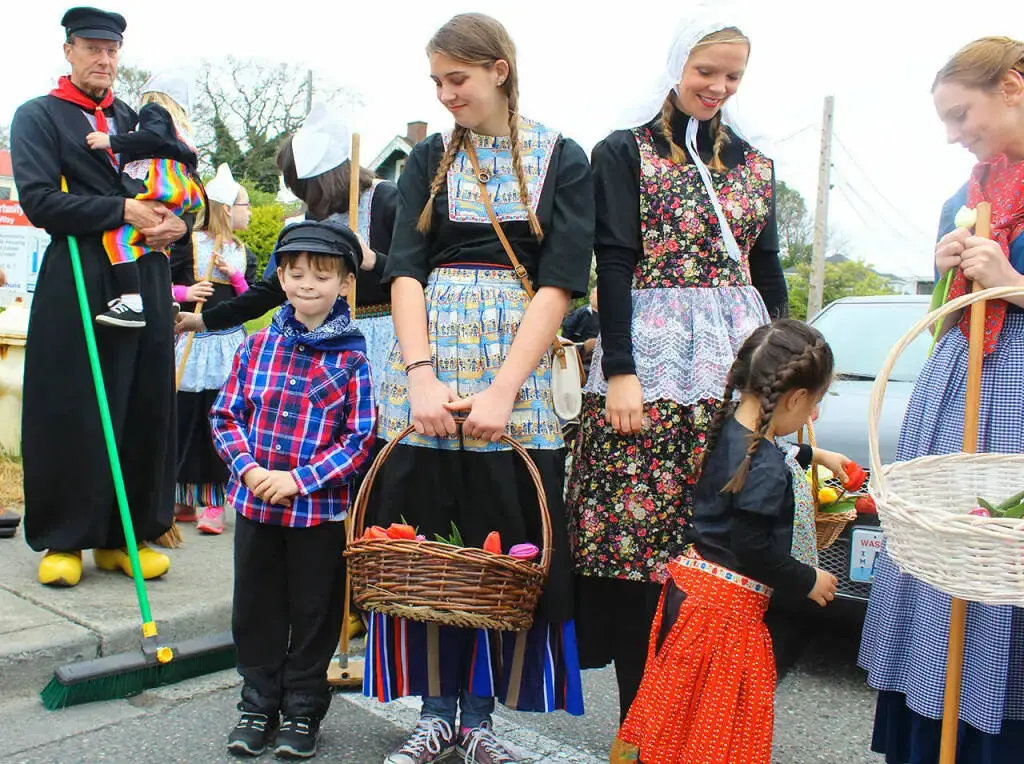
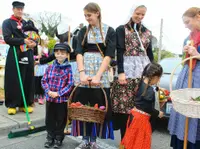
The Klompen Canal Races anchor the Holland Happening & International Festival, a free two-day street festival the Oak Harbor Chamber of Commerce holds each April. In 2026 it ran April 25 and 26 in Windjammer Park, a 28.5-acre waterfront park with a public beach, a swimming lagoon, a splash park, and access to the Oak Harbor Waterfront Trail. Luke Traver of Luke’s Lost Arts and his crew carved full-size klompen by traditional methods and sold pairs. Stryker Forge, a blacksmith the Whidbey News-Times called award-winning, also worked at the festival. A European slide 40 feet tall, 30 feet wide, and more than 100 feet long rose over the grounds. The chamber’s booth sold tulips, tiles, and T-shirts and lent Dutch costumes free of charge. The grounds also held a kids zone, face painting, and a beer garden of local and regional brews. The News-Times counted 87 vendor stalls for 2026. A Whidbey Local listing gave the number as approximately 70.
The international stage that year carried a Japanese drumming group, a bagpiper, an Irish-Keltic folk group, and belly dancers. “We have a full-slate of international performances,” said Eric Marshall, director of the Oak Harbor Chamber of Commerce. “We recognize that we are a multicultural community.” The chamber advises that April here can be chilly, windy, and wet, and that the festival goes on rain or shine. It suggests warm layers, rain gear, sunscreen even on cloudy days, and a blanket or camp chair for the performances. On Sunday the festival runs alongside the Whidbey Island Marathon, which offers a full marathon, a half marathon, a 10K, a 5K, and a kids 1K.
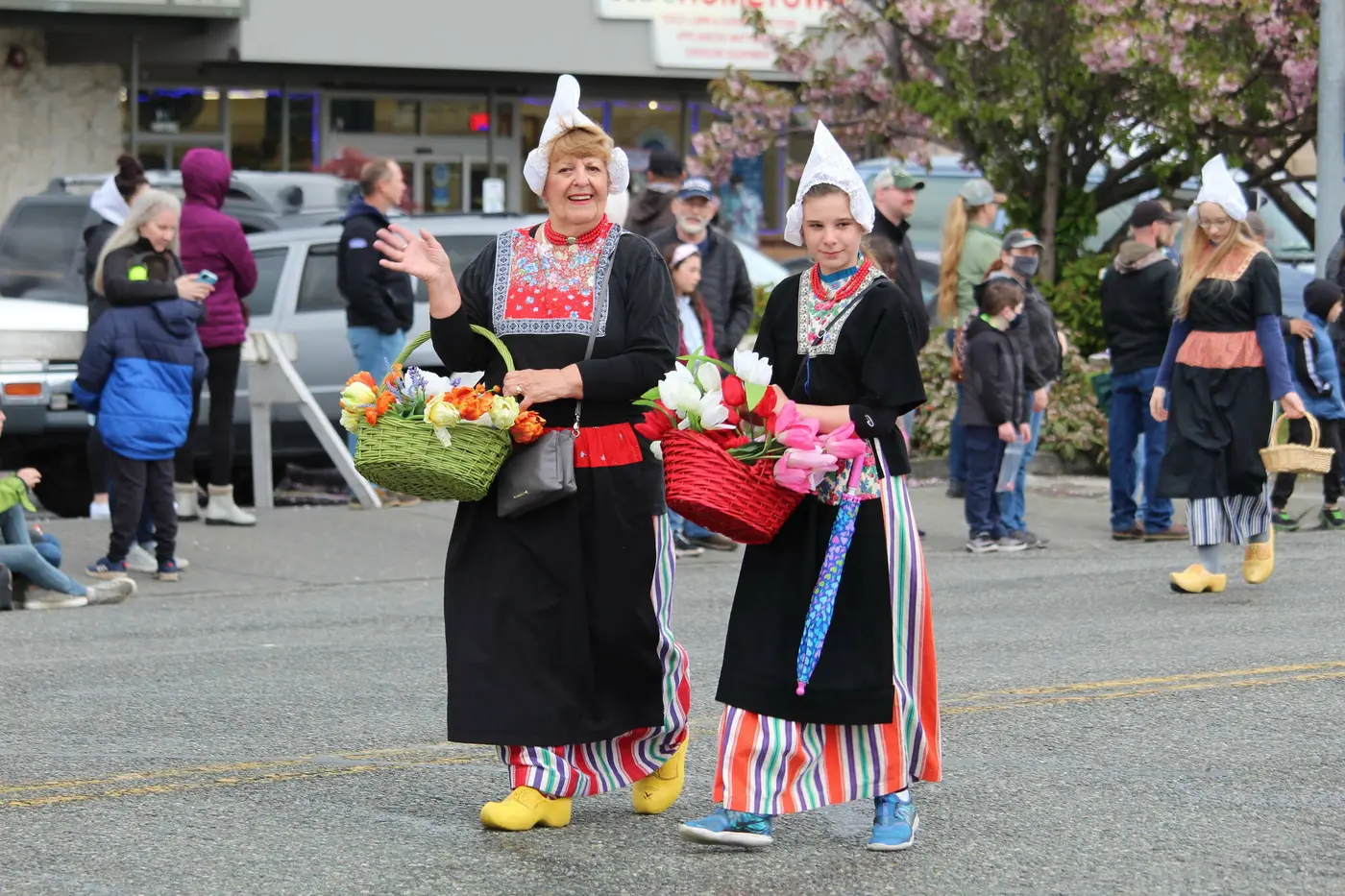
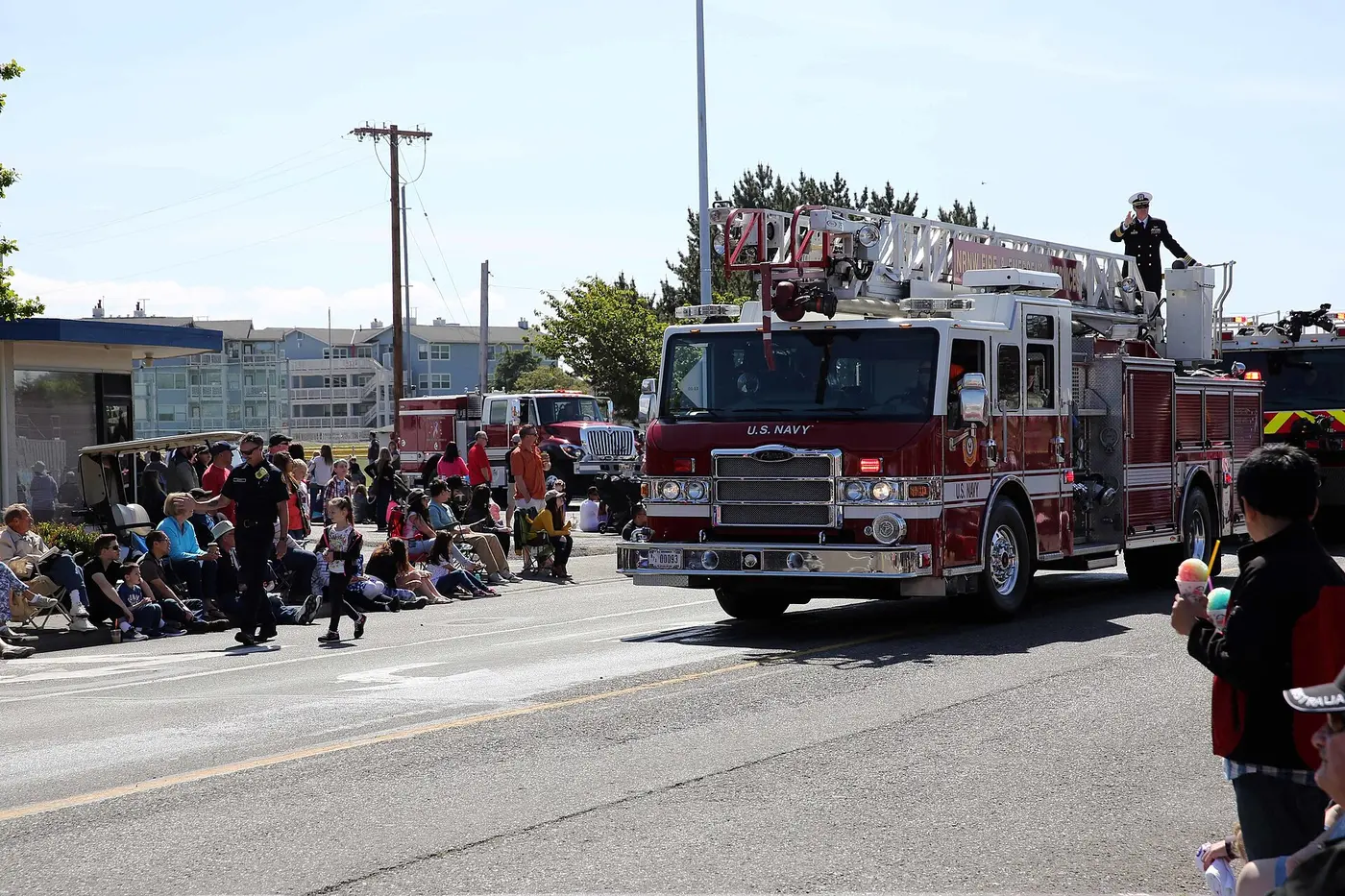
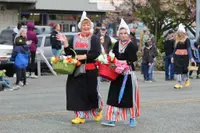
The parade on Bayshore
The street festival opens after Saturday’s parade, which in 2026 ran from 11 a.m. to 1 p.m. The chamber gives the route along Bayshore, starting at SE Midway and ending in the parking lot near Ace Hardware. The News-Times reported that the parade would begin on East Pioneer Way. Spectators sit or stand on the sidewalk and stay off the street. Near Hal Ramaley Memorial Park the chamber sets aside a quiet viewing area, where there are no loud sirens, fewer flashing lights, lower music, and fewer sudden noises.
Hutspot and oliebollen at First Reformed Church
The weekend begins the evening before, at First Reformed Church on SW 3rd Avenue. In 2026 the Dutch dinner returned there from 5 to 7 p.m. on Friday, April 24. According to its volunteer chef, Wendy Nienhuis, it had not been held in about a decade. The menu was handmade hutspot, a mashed potato dish; thick split pea soup; and oliebollen, a name that translates to “oil balls.” Nienhuis works from traditional recipes and sources her cheeses from Canada. Marshall said she has it “down to a science.” Tickets were $15, and children five and under ate free.
Marshall’s mother immigrated from the Netherlands, and he grew up with the food. As a child he did not care for split pea soup. “The stroupe-waffles were always a favorite,” he told the News-Times, and he recalled hagelslag, which he described as chocolate sprinkles on buttered toast. The late Whidbey News-Times editor and columnist Dorothy Neil, who chronicled the town’s Dutch heritage over many decades, wrote that hutspot and olie bollen were staples of the annual festival.
Eighteen Hollanders and a cheesemaker
The potatoes in the hutspot have a history here. HistoryLink, the online encyclopedia of Washington history, traces Dutch settlement to the land companies that bought railroad land and sold it to farmers who had come too late for free homesteads. In 1894 John “R.E.” Werkman acquired the right to market land around Oak Harbor for one of these companies. He visited Holland, Michigan, placed newspaper ads in Dutch, and displayed foot-long potatoes to impress farmers. HistoryLink dates the colonists’ arrival to March 17, 1894. Its own account gives March 17, 1895, for the day the steamer Idaho landed at San de Fuca on Penn’s Cove with 18 Hollanders and an expert cheesemaker from the Netherlands. Neil gives 1894. She wrote that the immigrants chose Whidbey after witnessing the Skagit Flats flood.
Neil’s account of those first years is hard going. Many settlers had lost everything in a Dakota drought or the 1893 Depression. Those who could not afford cleared farms bought uncleared land, lived in log houses, and earned a few dollars cutting fuel for the wood-burning steamers on the Sound. In the first year, she wrote, the Hollanders raised 80,000 pounds of potatoes and saw the price rise to $10 a ton from a low of $5: “It was a good omen and potatoes became a symbol of success.” Werkman carried crop samples back to Michigan. By Neil’s count the Dutch population grew from 18 to 213 within two years, and HistoryLink puts it at 200. They farmed Clover Valley, Crescent Harbor, Swantown, and San de Fuca.
They also built. In 1913 Otto Van Dyk raised the round-roofed Neil Barn, which Neil called the largest barn on the West Coast on completion. People came from Seattle and Everett for the barn dance, but the Hollanders stayed home, because their churches forbade dancing. In 1911 four Heller brothers, Martinus, Malenus, Henry, and George, formed the town’s first community band. “As new Americans,” Neil wrote, “the first number they learned to play was ‘Dixie.’” During World War II the Navy built Ault Field on Clover Valley farmland the Hollanders had cleared before the turn of the century. Many families left. Their names stayed on the map: Fakkema Road, Heller Street, Zylstra Road, Nienhuis Street, and Beeksma Drive, the street that gives Windjammer Park its address.
Two founding dates, and a name kept
The chamber, the News-Times, and Whidbey Local all say the festival was first held in 1969. Neil told it differently. She wrote that “there was little to call attention to its Dutch heritage until the late 1940s when an annual festival, ‘Holland Happening’ was held.” After it came a Holland Gardens park, a big windmill at City Beach, and a tulip display in Ramaley Memorial Park, the same ground where the quiet parade viewers now stand.
In 2020 the festival was canceled because of the COVID-19 pandemic. Earlier that year the South Whidbey Record reported that the chamber had planned to rename it “Spring Festival,” since many of its Dutch elements had faded over 51 years. Residents petitioned to keep “Holland Happening,” and the chamber reversed itself. By 2026, Marshall said, many on the planning committee had Dutch ancestry and had grown up with its customs. “This is what many of us have grown up with,” he said, “and we want to share that with the younger generations.”
Notable Events
- 189418 Dutch colonists, including a cheesemaker, arrived at Oak Harbor on Whidbey Island on March 17, 1894. historylink.org
- 1940sper Dorothy Neil's writing, there was little to call attention to Oak Harbor's Dutch heritage until the late 1940s when an annual festival, 'Holland Happening' was held. southwhidbeyrecord.com
- 1969First held in 1969, Holland Happening is one of Oak Harbor's longest-running and most beloved festivals, celebrating the community's Dutch heritage and the diverse cultures that make the city unique today. whidbeylocal.com
- 2026the festival was held in April with a Dutch dinner at the First Reformed Church and a street fair at Windjammer Park; the Dutch dinner was a community favorite not seen in about a decade. whidbeynewstimes.com
People
- John R.E. Werkman, land agent who acquired the right to market land around Oak Harbor for one of the land companies, visited Holland, Michigan, and recruited Dutch settlers who arrived at San de Fuca in 1894.
- Eric Marshall, Director of the Oak Harbor Chamber of Commerce; oversees the Holland Happening festival; his mother immigrated from the Netherlands.
- Wendy Nienhuis, volunteer chef of the Dutch dinner at the First Reformed Church; reintroduced the Dutch dinner at the festival for the first time in about a decade.
Sources
- oakharborchamber.com/holland-happening
- oakharborchamber.com/?page_id=62474
- oakharborchamber.com/holland-happening-parade
- oakharborchamber.com/dutch-dinner
- whidbeynewstimes.com/2026/04/17/holland-happening-to-happen-next-weekend
- whidbeylocal.com/listing/view/130185/holland-happening-and-international-festival
- business.oakharborchamber.com/events/details/dutch-dinner-21070
- facebook.com/oakharborchamber
- instagram.com/oakharbor_chamber