
Hidden Legend Winery
Victor, Ravalli County, Montana. Winery, gift shop.
Details

- Where
- 1345 US 93 #5, Victor, MT 59875. Directions
- When
- Tuesday-Saturday 11am-6pm.
- Getting there
- South of the town of Victor and north of Hamilton, in the Sheafman Plaza across from Pioneer Log Homes at the intersection of US Highway 93 and Sheafman Creek Road.
- Access
- Within the Sheafman Plaza across from Pioneer Log Homes.
- Walk-in or reserve
- Open to the public for tours of the mead winery; private tours also accommodated.
- Phone
- (406) 363-6323
Hidden Legend Winery occupies Suite 5 of the Sheafman Plaza, a strip mall at the corner of U.S. Highway 93 and Sheafman Creek Road, south of Victor and north of Hamilton, across from Pioneer Log Homes. In 2011 Laura Lundquist of the Ravalli Republic found it “squeezed as it is between unrelated businesses.” She warned that unfamiliar residents and UPS drivers might have trouble finding it. “An extravagant rock-and-wooden-beam Napa-style winery, it isn’t,” she wrote. “In that respect, it lives up to its name.”
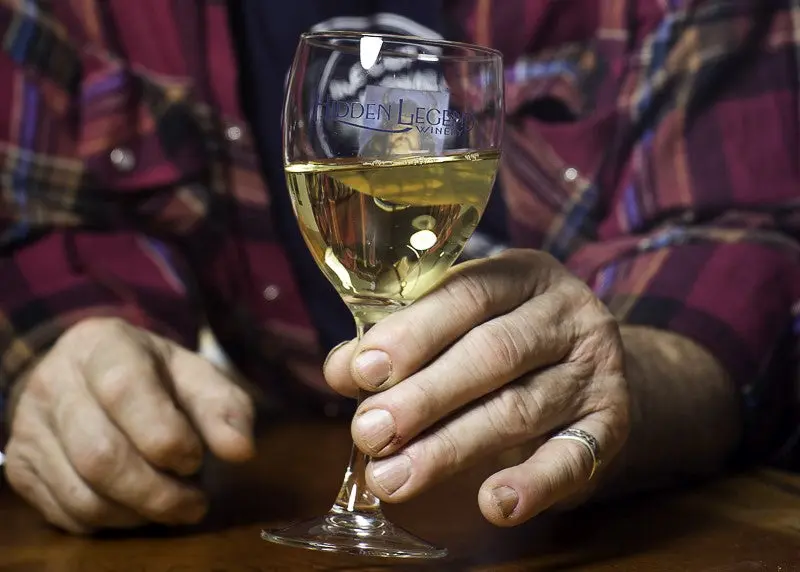
Inside are a tasting room and a gift shop. The meadery is open to the public for tours. Private tours can be arranged, and the winery hosts weddings, parties and conferences. A Bitterroot Valley guide describes the building as a 3,000-square-foot facility. By 2011 the winery had expanded into the adjacent retail unit, and Ken Schultz’s son Patrick was planning a series of mead events for the new space. That December a customer, Kevin Keskeny, walked out of the tasting room carrying two bottles of mead and a bottle of wine. “I like it because it’s local—they use local huckleberries and chokecherries—but mainly because it’s good,” he said. “It’s hard to name a favorite—I can’t pick one over the other.”
Honey, chokecherries and dandelion
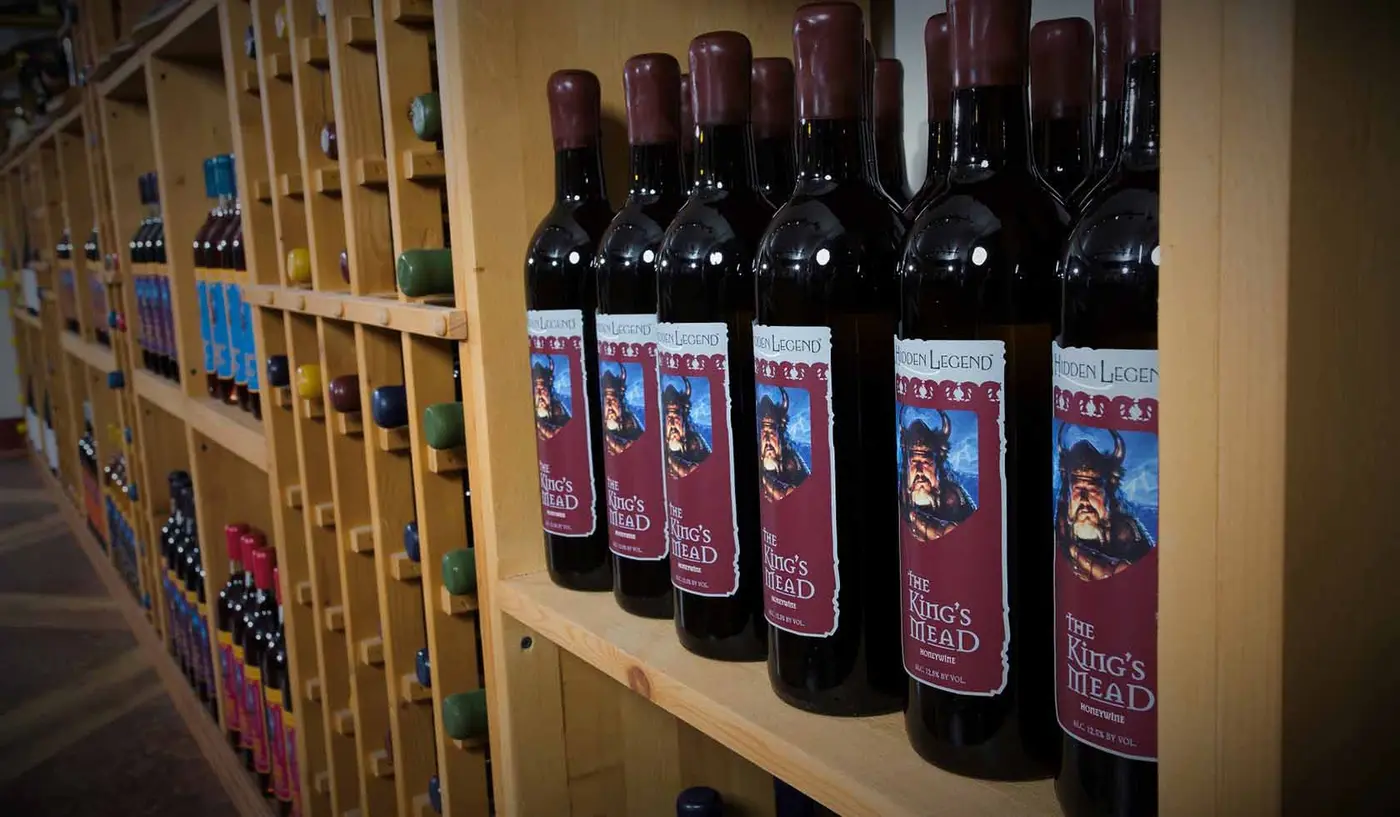
Mead is honey wine. The winery’s state tourism listing says it is made from 100 percent Montana honey with no sulfites added. Its California distributor names the flavors as coming from “the surrounding hills and meadows”: honey, tart chokecherries, sweet huckleberries, and “the lovable, plentiful dandelion.” The winery divides its meads into two lines. The Traditional line is “crafted in the style of the old world” for drinkers who want “big honey flavor,” in more than 12 flavors running from traditional honey to chokecherry. The contemporary meads aim for what the winery calls the “Not-too-Sweet spot between meads and wines.” According to the distributor, the King’s Mead line is the newest addition.
An older valley listing names a pure honey mead, a dark mead, three berry meads and a spiced mead. In 2011 Patrick said the Pure Honey Mead was the most popular. The winery has also made a pyment, which blends grape wine and mead. That year Ken was preparing a cyser, a blend of mead and apple juice, with local orchards. The cellar also turns out red and white wines from grapes grown in western Montana, and those grapes took a long time to arrive.
A tipi cellar and a bucket of honey
The winery traces its beginnings to Mentor, Ohio. There a boy watched his uncle turn juice into wine. The distributor calls the uncle a research chemist, and the winery calls him a “research mead chemist.” In eighth grade Ken Schultz made fermentation his science project. He began making wine as a hobby from native Great Lakes grape varieties. The winery and its distributor date that start to 1975, and the 2011 newspaper account dates it to 1974.
In 1979 Ken and his wife, Lisa, moved to Montana and lived in a tipi while they built their house by hand. Ken kept making wine and stored it in a cellar dug beneath the tipi floor. The distributor says the lack of local grapes in western Montana was discouraging.
The honey came in 1989. In the distributor’s telling, a neighbor gave Ken a five-gallon bucket of crystallized honey. In a 2003 Missoula Independent story by Andy Smetanka, Ken “liberated” a bucket of sugared honey that someone was about to throw away. “I got them to give it to me,” Schultz said, “and I decided to make mead out of it. I bottled it the day before we left for the airport and didn’t get to taste it until we came back on furlough in 1994. And it was good. When we came back here to stay in ‘97, it was great.”
The family had gone to Papua New Guinea, where they spent seven years building a village-level vocational training program. The five gallons of honey made about fifteen gallons of mead, and much less of it was left when they came home. “I half suspect that my father-in-law drank most of what we left behind while we were in New Guinea,” Schultz said. “I remember making a lot more than what we found when we got back.”
Painted Rocks, up the West Fork
The Schultzes lived at Alta, thirty miles up the West Fork Road south of Darby. The 2003 story describes it as a former gold-mining settlement where 600 people lived in 1891, and where about a century later only 26 families lived year-round. Schultz ran a masonry company in the valley with six full-time employees. A new neighbor, Alan Tresemer, was chief of the fire department, which was headquartered across the creek in his backyard. Tresemer loved the mead too. “Living as far as we do from town, everybody’s dream up here is to have a business where you can stay here,” Schultz said. “Plus, in the history of this place up here, there always was a little bit of hooch being made, so we figured we would be filling a historical void.”
Painted Rocks Winery was the result. The distributor dates its opening to 2001, with friends and neighbors as partners. The 2003 story says it officially opened on January 1, 2002, owned jointly by four married couples. Ken was head winemaker. Alan handled marketing and sales, and Erica Tresemer ran day-to-day operations. Company literature said Lisa Schultz “keeps all of us fed on bottling day and makes sure the winery is always clean and orderly.” The tasting room, offices and meadery fit into an outbuilding on the Tresemer property about the size of a modest living room, with a plant-filled sunroom under sloping greenhouse windows on one side. Within a year and a half the mead was in 80 retail outlets across the state.
Selling mead meant explaining it. “We’ll get people walking by our display at a tasting,” Schultz said, “and they’ll just look over and you can tell from this look on their face that they’re thinking, ‘Oh, cute! They’re trying to make wine in Montana!’”
The Viking on the label has two origin stories. In the distributor’s account, Ken chose a Viking as the mead’s logo, “inspired by the Scandinavian love for honeywine,” and “Thorvald’s legend began.” The 2003 story credits Alan Tresemer. He first saw the face of the Norseman on the Dark Mead bottle as a dwarf in a video game, then tracked down the artist. The artist agreed to a customized computer “morph” of the bearded model, a Toronto machinist. The federal alcohol bureau rejected at least one early label, which carried part of a Beowulf-era riddle whose answer was mead, on the grounds that it boasted of the drink’s intoxicating qualities.
From Trapper Creek to Sheafman Creek
The 2011 newspaper account says Schultz won his first medal in an international wine competition about a decade after his first mead. In 2001 he took a bronze for mead at the Indiana State Fair. The sources disagree on when Painted Rocks changed hands. The 2011 account says it was sold in 2003. The distributor says the Schultz family took over as sole owners in 2005.
By the 2011 account, Schultz opened the Trapper Creek Winery in Hamilton in 2006. A Montana business newsletter of December 19, 2006, reported it open about a year, with a label showing “a pleasantly gruff, rosy-cheeked Viking.” A trademark dispute then forced a new name. The valley guide dates the change to 2008 and assured customers that the honey wines under the new label were “the same in every way.” A federal list of wine producers dated November 2008 carries both names, Hidden Legend Winery and Trapper Creek Winery, under Good Foundations Inc., permit MT-W-15002, at 1345 U.S. Highway 93 in Victor, Ravalli County. The 2011 account puts the renaming and the move north to Victor in 2009. In 2010 the huckleberry mead won a Gold Medal and Best in Region at the Northwest Wine Summit.
Late in 2011 the orders came all at once. On October 24, Andrew Bender listed mead in Forbes among the latest food trends. “The online business has really picked up,” Schultz said. “It happened suddenly on Nov. 4.” On November 30, Sommelier Journal published a special report on mead. “Pictures of us ended up in the article and they listed us as one of the top 10 or 12 producers in the U.S., although they included a couple of Canadians,” Schultz said. “It’s launched us into the stratosphere.” He was making ten mead flavors then. “Probably the only thing limiting our experimentation is our ability to keep up with orders,” he said.
Skalkaho Red and Skalkaho White
Grapes stayed a problem. Under state alcohol law, Schultz could use only grapes from states bordering Montana. In 2011 he was buying from Idaho’s Snake River country. He bottled a riesling and a cabernet-merlot that included Flathead cherry juice. “We want to put out some well-known wine varieties for our local markets so we’re targeting bottles under $10,” he said.
The local grapes came from Rod and Linda Allen, a retired couple who moved to the Bitterroot from Colorado’s high country in 2009. They bought a little more than an acre of rocky ground off the Skalkaho Highway, east of Hamilton, and planted 700 vines of University of Minnesota varieties on three-quarters of an acre of former hay ground. The first large crop came in 2012, along with birds and hornets. By 2014, Perry Backus of the Ravalli Republic reported, the mead was distributed in stores in eight states and shipped daily to 30.
That year Schultz entered two wines made from the Allens’ grapes, Skalkaho Red and Skalkaho White, in the Indy International Wine Competition at Purdue University, along with one mead. He said he entered “on a lark.” “I like to enter to get the judge’s notes,” he said. “It lets me know if I’m on the right track.” Both wines won gold medals, and the mead won a bronze. “I haven’t found anyone who would dispute that ours was the first commercial wine produced by grapes grown here in the Bitterroot,” Schultz said. “I’ve received silver medals before in the competition, but never a gold. Gold is like the holy grail.”
Notable Events
- 1974He began making wine as a hobby in 1974 and made his first batch of mead in 1989. web.archive.org
- 1979Ken and Lisa Schultz moved to Montana, lived in a tipi, and worked on their home. lvbev.com
- 1989A neighbor gave Ken Schultz a five-gallon bucket of crystallized honey, and he tried making honey wine. lvbev.com
- 2001Painted Rocks opened with friends and neighbors as partners. lvbev.com
- 2001A decade after his first medal in an international wine competition, he won a bronze medal for mead going up against a bevy of winning wines at the Indiana State Fair. web.archive.org
- 2002Painted Rocks Winery officially opened for business on January 1. matr.net
- 2005The Schultz family took over as sole owners and expanded production of mead honey wine. lvbev.com
- 2006A Montana business newsletter item reports that the Trapper Creek Winery in Hamilton has been open about a year and has introduced a label featuring a gruff, rosy-cheeked Viking. matr.net
- 2008The federal list carries Good Foundations Inc. on permit MT-W-15002 with the operating names Hidden Legend Winery and Trapper Creek Winery at 1345 US Hwy N, Victor, Ravalli County. ttb.gov
- 2009After being caught up in a trademark dispute, Schultz changed the name of his business to Hidden Legends and moved north again to the Victor site in 2009. web.archive.org
- 2010His huckleberry mead won the 2010 Gold Medal and Best in Region at the Northwest Wine Summit. web.archive.org
- 2014Two Hidden Legend wines received gold medals at a major North American wine competition. ravallirepublic.com
People
- Ken Schultz, vintner who may have to change the name of his business yet again, because the Hidden Legends Winery is not so hidden anymore.
- Lisa Schultz, Built a Montana home with Ken Schultz while he continued making wine.
- Alan Tresemer, Partner responsible for marketing and sales (from 2002).
- Erica Tresemer, Ran day-to-day operations and served as vendor contact (from 2002).
- Patrick Schulz, Ken Schultz's son, who makes the many varieties of mead with his father at Hidden Legend Winery and plans a series of events in the new space.
Sources
- visitmt.com/listing/hidden-legend-winery-13825
- explorethebitterroot.com/food_drink/wineries.php
- lvbev.com/brand/hidden-legend-winery
- hiddenlegendwinery.com
- hiddenlegendwinery.com/pages/contact
- ravallirepublic.com/news/local/article_cf509be4-2018-11e4-a8e6-0019bb2963f4.html
- visitbitterrootvalley.com/shopping-itineraries
- matr.net/news/pleased-to-mead-you-painted-rocks-winery-reintroduces-the-worlds-oldest-tipple