
Heidrun Meadery
Point Reyes Station, Marin County, California. Naturally sparkling varietal meads.
Details

- Where
- 11925 State Route 1 in, Point Reyes Station, CA 11925. Directions
- When
- Tours every Saturday at 11:30am, approximately an hour, $45.00 +tax and gratuity.
- Getting there
- just half a mile north of the town.
- Fees
- Tasting Flights cost $25, waived with each 3-bottle purchase.
- Hours
- 7 days a week, Monday-Sunday, 11:00 am-5:00 pm.
- Access
- Our parking lot can get quite busy on the weeknds. Please carpool as much as possible.
- Walk-in or reserve
- Tables first-come, first-serve; reservation highly recommended; required for groups larger than 6.
- Phone
- (415) 663-9122
- Established
- 1997.
Bottles on ice beside the old dairy
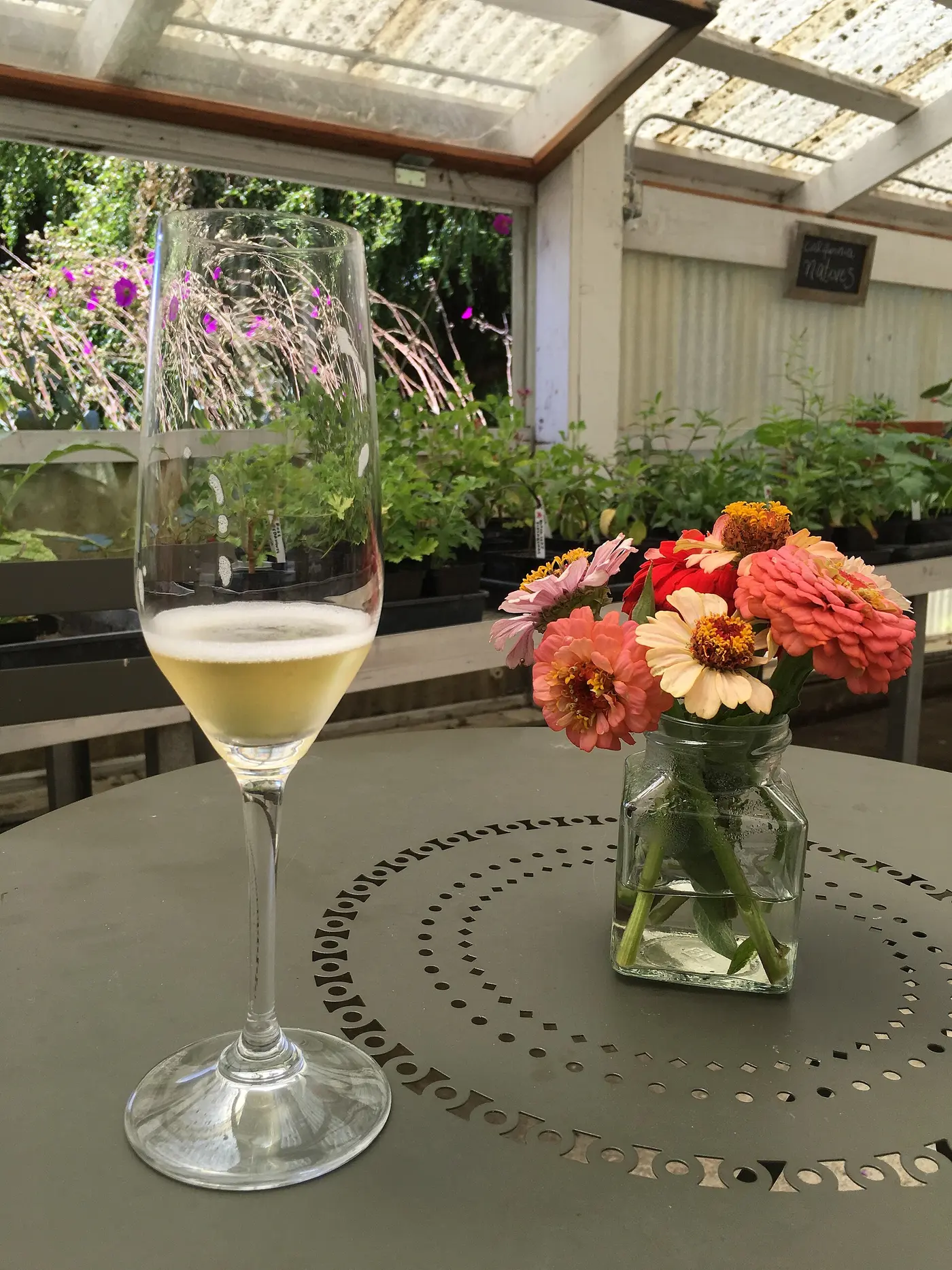
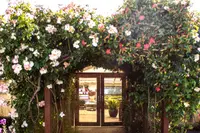
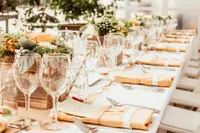
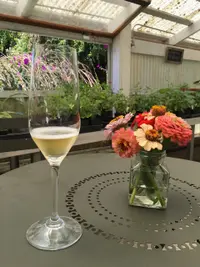
Half a mile north of Point Reyes Station, at 11925 State Route 1, the buildings of a former dairy farm hold a tasting room and a patio set with tables. Visitors order a guided flight of sparkling mead, or a bottle on ice, and sit outside. The meadery suggests stopping in after a hike in the national park next door. Tables go first come, first served. Reservations are recommended, and on weekends the parking lot fills.
Mead here is wine made from honey rather than grapes, fermented dry and given its bubbles in the bottle. Each wine is a single varietal, and its flavor comes from the flower the nectar came from. The list has included orange blossom, Madras carrot blossom, Hawaiian macadamia nut, alfalfa and clover, and a Point Reyes Wildflower made from honey gathered on the farm. A 2015 tasting note in Edible Marin & Wine Country found the carrot blossom ale-colored, with aromas of sandalwood, tasting like a Saison beer. The macadamia it called nutty, a match for oysters. Nothing is added to preserve the wines, so the meadery gives them an ideal shelf life of about a year and advises: “Drink’em early. Drink’em often.”
From Friday through Monday the tasting room sells cheese boxes from Point Reyes Farmstead Cheese, along with packaged picnic goods. Visitors may bring their own food, and the meadery sends them to Inverness Park Market and Palace Market for sandwiches. Outside alcohol is not allowed. Leashed dogs may stay on the grounds but not in the buildings.
Flowers for the hives
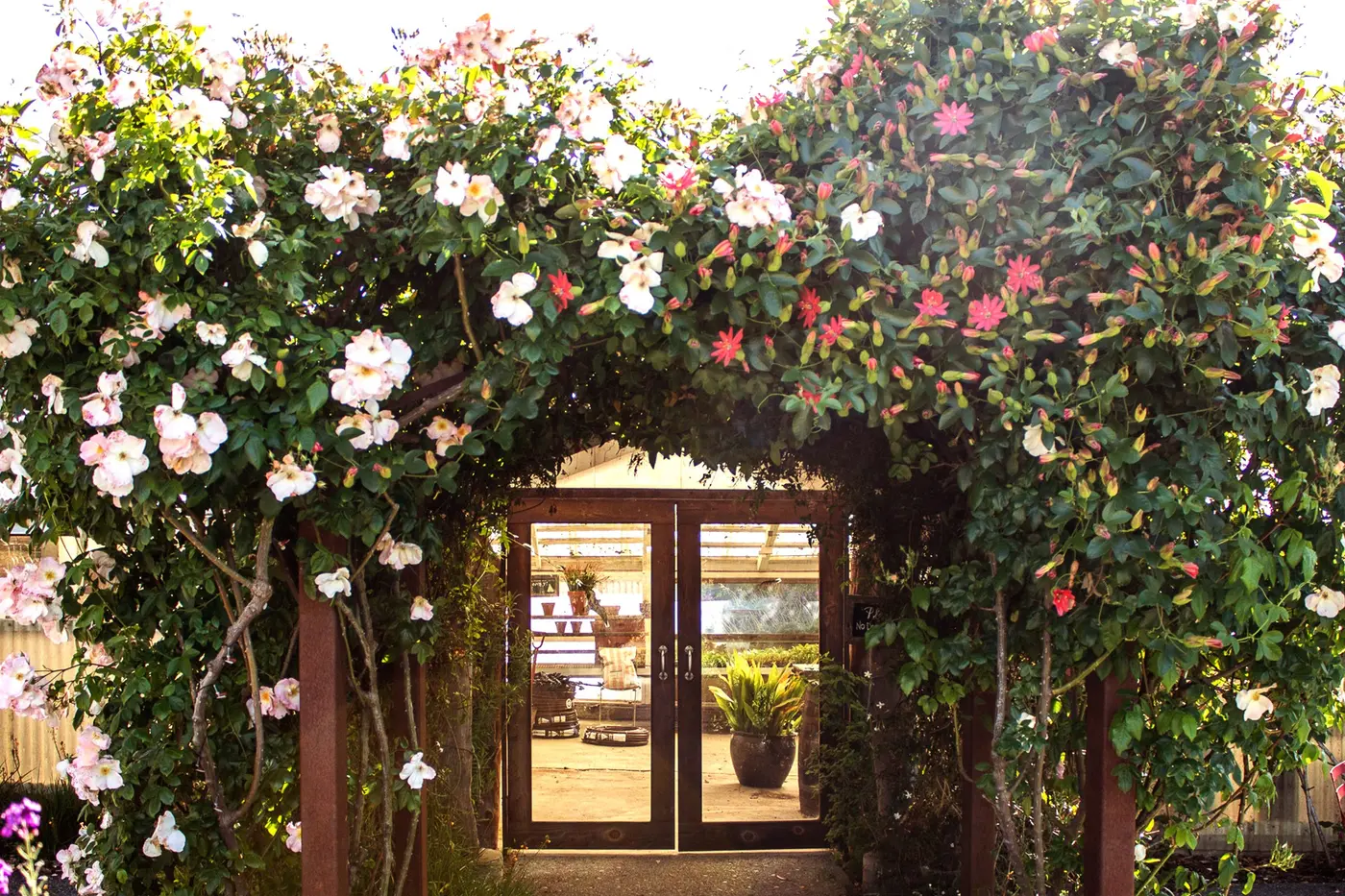
Around the patio, the pastures, gardens and greenhouse are planted with flowering plants meant to give the meadery’s honey bees forage all year. In 2015 the dairy’s open fields were being turned into a large vegetable garden, a series of fruit orchards, and fields of wild and bedded flowers. A creek running through the property was on its way to becoming a riparian zone, with a small wetland in the dry ranchland.
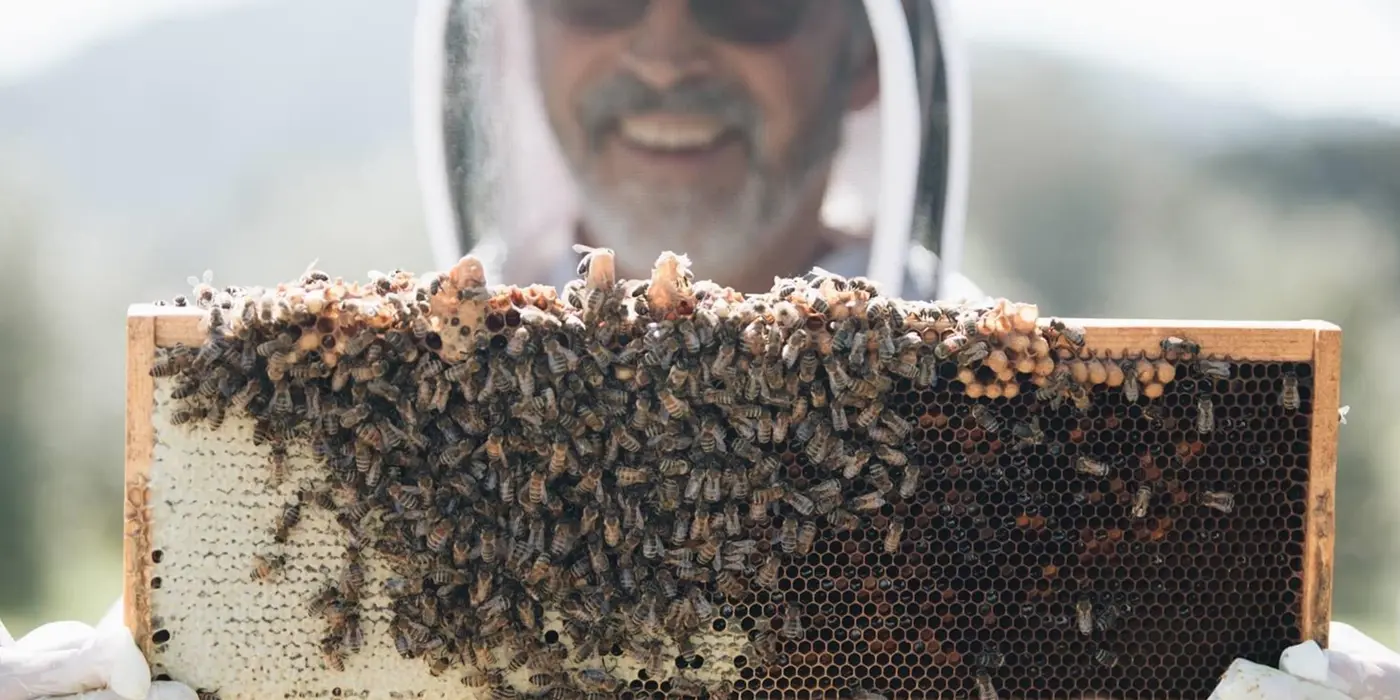
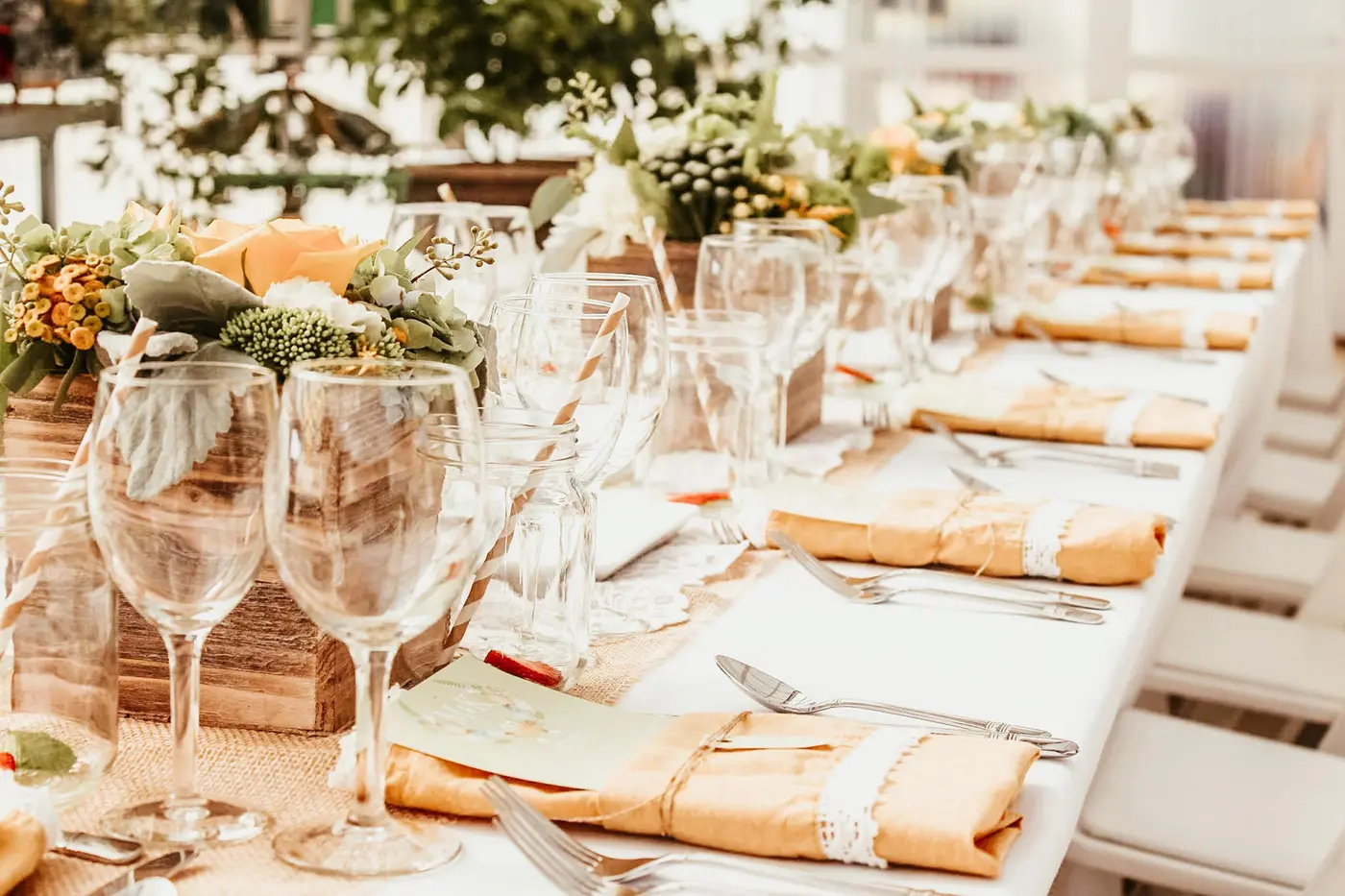
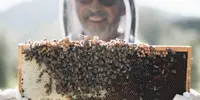
On Saturdays at 11:30 a guide leads an hour’s tour through the production rooms and the farm, past the estate bees at work, with samples poured along the way. The fee is $45. In the “Bee, Experienced!” sessions, which run from about 10 in the morning to 12:30, visitors join the beekeepers to inspect working hives, pull frames of honey for hand extraction, jar their own estate honey, and finish with a tasting. Children 12 and older may come with an adult. The meadery planned a series of Bee Experiences, barn tours and food events for 2026, and says its parties usually sell out within days.
In 2017 the California Ag Network counted five employees. Jordan Uth, the horticulturalist, ran the farming and the greenhouse and grew cut flowers for local florists, restaurants and weddings. Her husband, Jay Uth, held the cellar job, bottling and packing the mead. Carly Sheriff, the sales director, ran the tasting room and its two staff members. In a Visit Marin profile, Uth described the work: “I identify native plants, the ornamentals, annuals and perennials and am focusing on what nectar and pollen the bees eat.” She added: “We are working to restore the (native) wildflowers so the bees can forage naturally.” Sheriff put the whole operation in one line: “It’s really interesting to see how all the parts of the meadery work together, from Jordan out in the flowers to Brad in the hives and Gordon in the meadery.”
Brad was Brad Alpert. Hull hired him to manage the meadery’s own hives, which Edible Marin counted in 2015 at 65, in eight apiaries, all within 30 miles of the farm. By the 2017 account, two contract beekeepers managed more than 100 colonies for Hull, a dozen of them on the farm. That year Hull was also making mead from two separate apiaries to test the micro-terroir of each site.
Honey, water, and a Champagne yeast
The making begins slowly. As Hull described it in 2017, the honey is melted for a week at 105°F, a temperature kept low so the flavors don’t cook off. It is then mixed with water at one part honey to four. Hull calls this first stage the brewing. The honey water, or must, boils for 15 minutes. The boil keeps the mead clear and lets him leave out sulfites, which, by Edible Marin’s account, he disdains. The must then goes into stainless steel tanks with a Champagne yeast. Primary fermentation lasts a week by the 2017 account and typically ten days by the 2015 one.
After a month’s rest the mead is bottled under beer caps and laid in tirage bins for two months. In that time a second fermentation in the bottle makes the bubbles. Then comes riddling, the slow work of turning each bottle until the yeast sediment slides into its neck. Hull still riddled the estate varietals by hand in 2015 and used an automated riddler for the rest. The necks go into cold glycol, the sediment freezes, and when the cap comes off, pressure pops the plug out. Hull removes the yeast early and adds no dosage. “We early disgorge to minimize the contribution of the yeast to the character of the mead,” he told Edible Marin, “because our focus is on revealing the natural essence of the honey from which the mead is made, and nothing else.” Each batch takes about four months.
Claims about how rare this is have shifted over the years. In 2013 the Point Reyes Light called Heidrun “perhaps the only producer of naturally sparkling mead in the country.” In 2017 Hull said that, as far as he knew, he was the only one in the world. The meadery’s own page says it is the only commercial meadery in the country it is aware of using true Méthode Champenoise.
A geologist’s experiment in Arcata
Gordon Hull was a geologist. The California Ag Network places him in the mid-1990s at a government agency in Seattle. He took a ten-week leave for an American Brewer’s Guild course, was offered work as a professional brewer, and quit geology for a commercial brewery in Humboldt County. Edible Marin dates the change to the early 1990s and names the brewery as Lost Coast in Eureka. Breweries were opening everywhere, and the timing seemed wrong to start one of his own. Meanwhile he was fermenting honey.
“Because I don’t care much for sweet wines, I decided I would try and make a honey wine that’s not sweet,” Hull said in 2017. “Because I like beer, I thought I’d put bubbles in it and make it sparkling.” Orange blossom honey made a different wine from sage honey, and he came to see honey varieties as grape varietals. The meadery dates the first experiment to 1995. Hull recalled the first customers: “Our first customer was [San Francisco’s] Greens in 1995, then Chez Panisse and the French Laundry.” Some customers then called about the yeast sediment left in their patrons’ glasses, so Hull taught himself the Champagne steps of riddling and disgorging.
He took the name from his reading of Snorri Sturluson, the 13th-century Icelandic writer of Norse myth. In the story, fallen heroes in Odin’s hall of Valhalla feast on roasted boar and on a never-ending stream of mead from the udders of Heidrun, a magic goat who ate the leaves of the great ash tree. The meadery says the name is pronounced “Hi-drun.”
Hull spent two years on recipes, a business plan and a location. He opened in Arcata in 1997 and made his first batch in 1998. For 15 years he ran it alone out of a small light-industrial warehouse. By then he had spent more than a decade driving deliveries to San Francisco, he had married, and he had outgrown the space. He wanted more than a winery. “If I wanted to encompass everything that honey wine is about,” he said, “I needed to start a beekeeping operation – just like winemakers want to grow their own grapes.”
Sixteen acres on Highway 1
He looked south of Arcata, where honeybees prefer the climate. The 16-acre dairy farm near Point Reyes Station already had the buildings he needed. It was close to the San Francisco market and on the Highway 1 corridor, where visitors already passed, among farms making cheese and oysters to go with the wine. The dates of the move vary by source. Edible Marin says Hull and his family came from Humboldt County in 2008, and that construction finished in 2011. The Ag Network describes four years of permits and changes to the buildings before the doors opened, “tentatively at first,” in 2011. Marin Magazine also gives 2011. The meadery’s own history and the Point Reyes Light give 2012, and the Light adds that Hull was drawn by the area’s food culture and the purity of its environment.
The bees came hard. A few years before 2015, Colony Collapse Disorder was suspected when Heidrun’s hives died. Hull learned from Mark Johnson of Nature’s Best Oregon Honey how to take his apiaries “from hobby level to commercial level.” Drought took two of his honeys. Sierra foothill sage, he explained, “will not blossom unless they get 13 inches of rain at the end of spring,” and his Ventura source of avocado blossom honey had bees gathering pollen but making no honey. “I have not been able to purchase either of these honeys in three or four years,” he said. “Beekeeping is still as perplexing as it was before.”
In 2023 Hull told the Pacific Sun that his days ran to repairing equipment, paying bills and filling out government forms. On good days he was tasting honeys from around the world, or out driving the tractor. Asked where he would take someone to show them Marin, he answered: “Hands down, I’d take them to the farm at Heidrun Meadery on a sunny weekday afternoon for a picnic of oysters, local cheese and Brickmaiden Bread and a glass of bubbly, then scoot over to Limantour Beach in time for sunset. That’s livin’!”
Notable Events
- 1990sHull's home brewing grew into such a passion that he left geology to work with the American Brewer's Guild; after an internship with a brew master he brewed beer for Eureka's celebrated Lost Coast Brewery. ediblemarinandwinecountry.ediblecommunities.com
- 1995Hull recalls that the meadery's first customer was San Francisco's Greens, then Chez Panisse and the French Laundry. ediblemarinandwinecountry.ediblecommunities.com
- 1998Hull produced his first batch in 1998, after opening the meadery in Arcata in 1997. californiaagnet.com
- 2008Hull and his family moved to Point Reyes from Humboldt County, purchasing a former dairy farm just north of town on Highway 1. ediblemarinandwinecountry.ediblecommunities.com
- 2011After four years of permits and infrastructure changes on the purchased farm, they opened their doors, tentatively at first, to the public in 2011. californiaagnet.com
- 2011Construction of a meadery on the purchased farm property began soon after and was completed in that year. ediblemarinandwinecountry.ediblecommunities.com
- 2011Marin Magazine states that the meadery, founded in 1997 in Arcata, relocated to a farm in Point Reyes Station in 2011. marinmagazine.com
- 2012After 15 years as a one-man enterprise in an Arcata warehouse, Gordon moved his operations 300 miles south to a former dairy farm in Point Reyes Station. heidrunmeadery.com
- 2013The Point Reyes Light reported that for the last year Point Reyes had also been home to perhaps the only producer of naturally sparkling mead in the country. ptreyeslight.com
People
- Brad Alpert, brought on to manage the meadery's own hives and apiaries near Heidrun.
- Jordan Thompson, Heidrun's horticulturalist and farmer, caring for the transition of the former dairy farm's open fields into garden, orchards and wildflower fields.
- Lacey Bediz, of Heidrun, pictured with Gordon Hull in the Edible Marin & Wine Country profile.
- Mark Johnson, commercial beekeeper of Nature's Best Oregon Honey who worked with Hull to move Heidrun's apiaries from hobby level to commercial level after Colony Collapse Disorder was suspected in the loss of its hives.
- Gordon Hull, relocated Heidrun Meadery to West Marin, drawn in part by the area's foodie culture and in part by the purity of the environment (2012).
- Carly Sheriff, tasting room host and sales director.
- Jordan Uth, full-time horticulturalist and farmer.
Sources
- heidrunmeadery.com
- heidrunmeadery.com/visit
- heidrunmeadery.com/about-us
- heidrunmeadery.com/contact/faq
- ediblemarinandwinecountry.ediblecommunities.com/drink/drink-thoroughly-modern-mead
- marinmagazine.com/arts-events/things-to-do/tastes-of-west-marin
- ptreyeslight.com/features/heidruns-mead-steals-effervescent-niche
- californiaagnet.com/2017/09/06/heidrun-meadery-marin-countys-honey-wine
- pacificsun.com/honey-wine-winemaker-gordon-hull
- visitmarin.org/culinary/the-farmer-the-market/meadmakers-at-heidrun-meadery