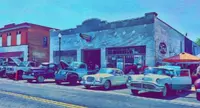
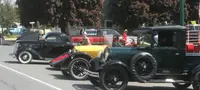
Harrington Car Show
Harrington, Lincoln County, Washington. Annual Harrington Car Show.
Details

- Where
- 9 N 3rd St, Harrington, WA 99134. Directions
- When
- Saturday, May 15, 2027 at 8:00 AM – 3:00 PM PDT.
- Fees
- May 21st, 2022 edition: $20 entry fee per car.
- Phone
- (208) 882-6563
- Website
- thestudebakergarage.com
- Managed by
- The Studebaker Garage.
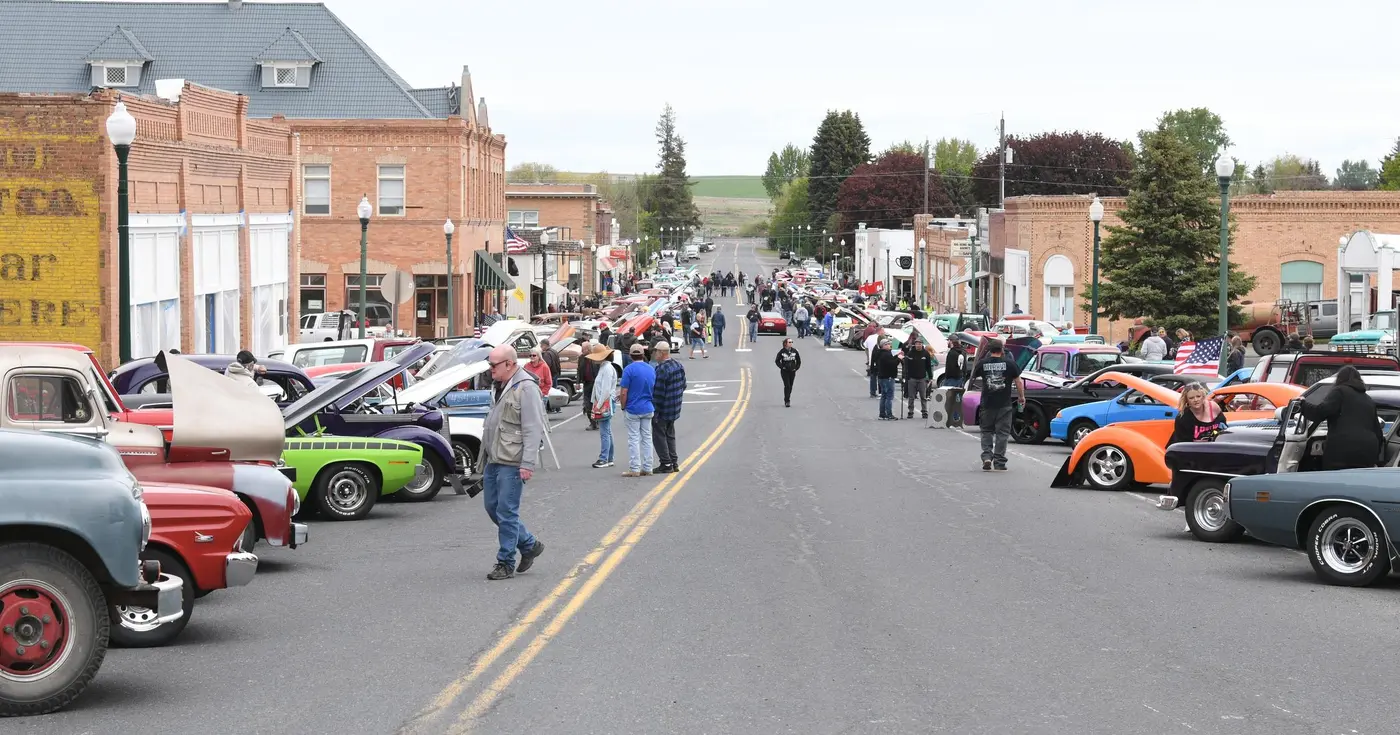
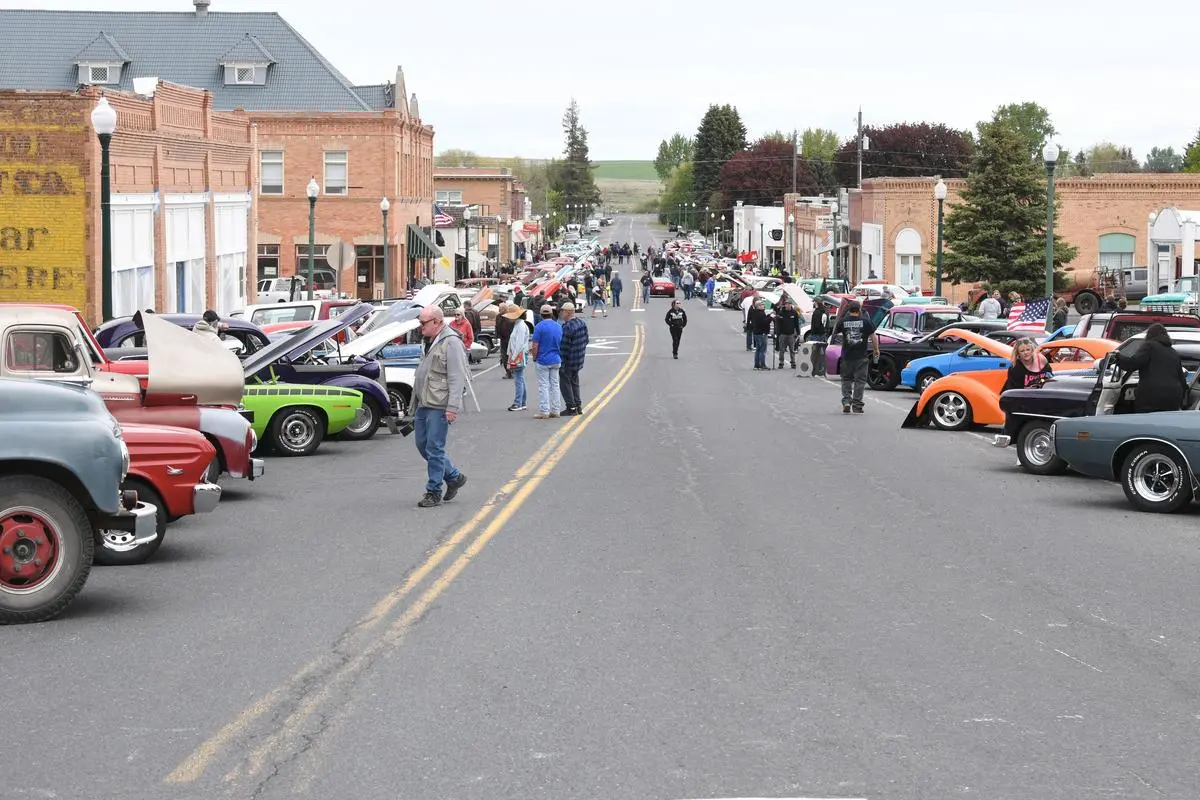
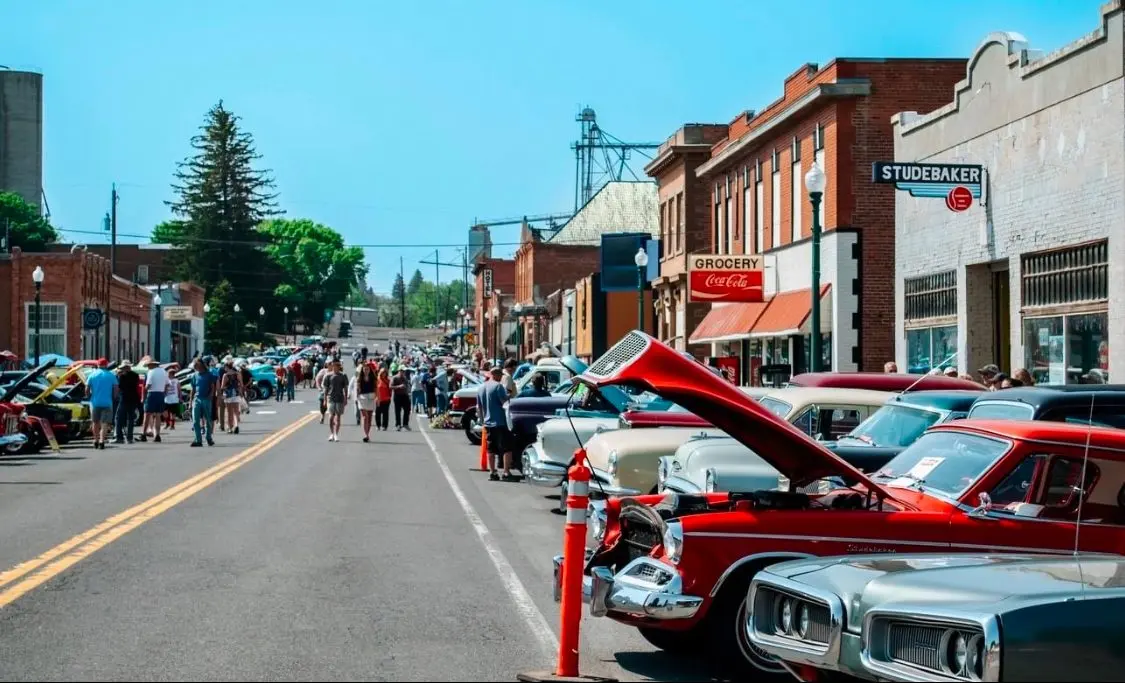
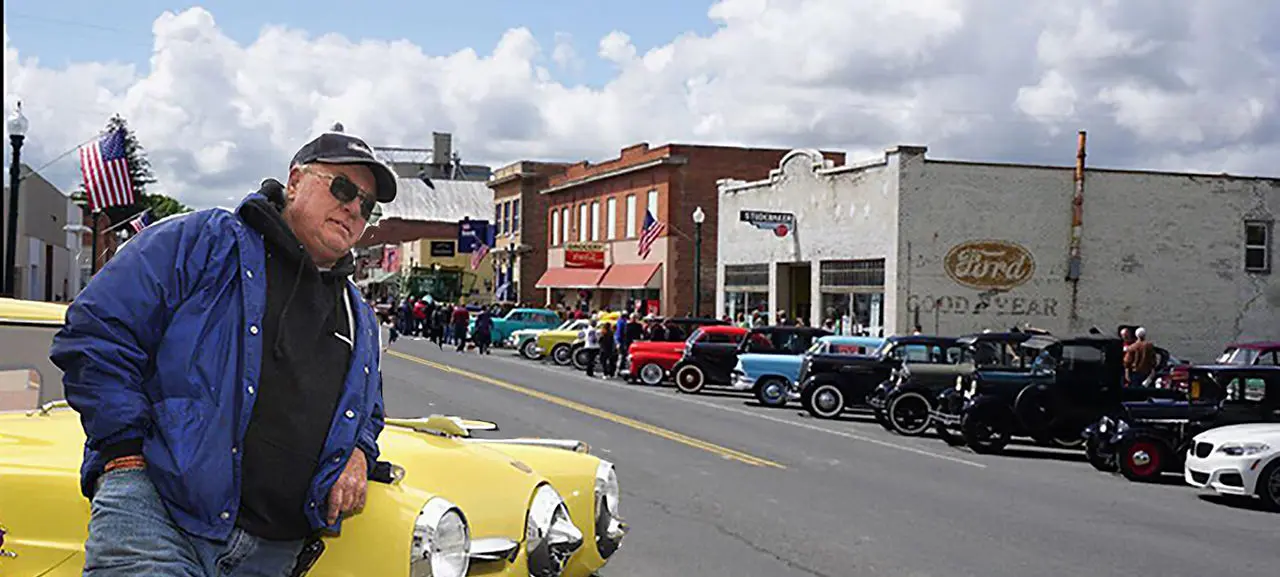
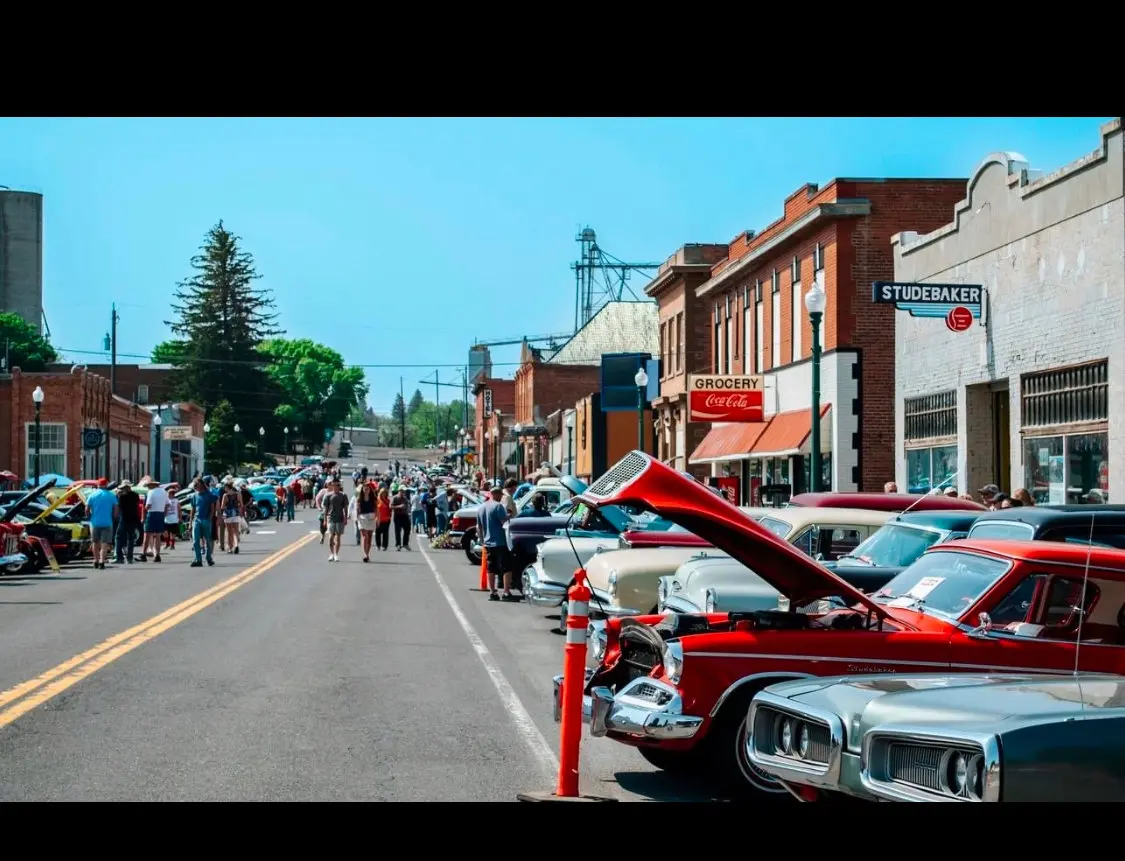
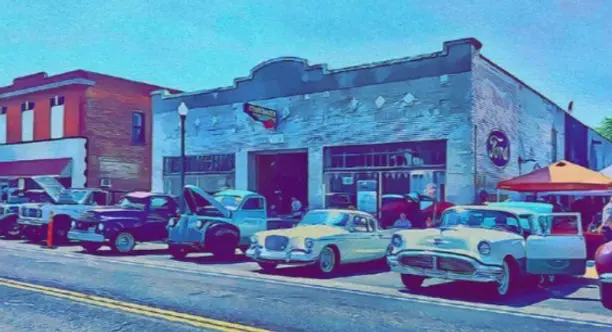
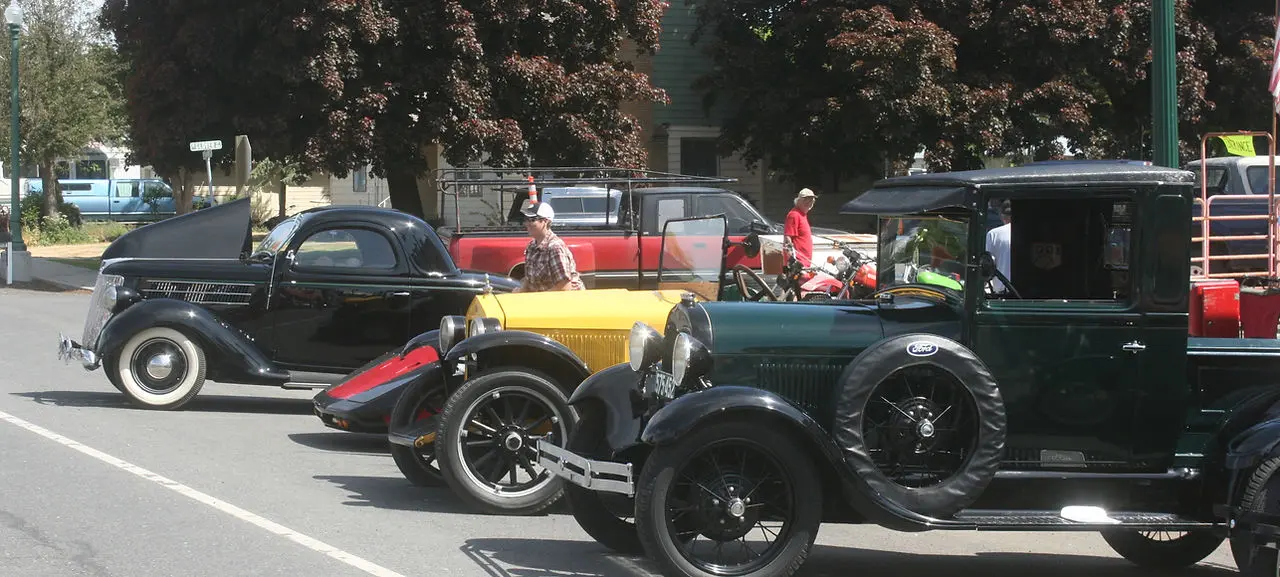
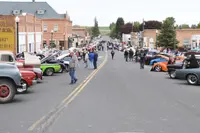
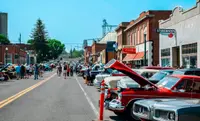
On the third Saturday in May, Third Street in Harrington lines with old cars from 8 a.m. to 3 p.m. Hoods are popped and doors stand open. Owners sit in camp chairs on the sidewalk and trade stories through the day. The street was once the town’s Main Street and now also carries State Route 23 through this Lincoln County wheat town. The Chamber of Commerce puts the population at around 425. The show is free to walk, open to all makes and models, and hosted by The Studebaker Garage, a family-run antique car museum in an old Ford dealership at 9 North Third Street. It is held in memory of Allen Jay Barth.
The 14th annual show ran on May 16, 2026. Afterward the show’s page posted that the weather “made for some beautiful, moody photos,” and asked whether anyone had lost a canopy. The 15th is set for May 15, 2027.
Rat rods and a ‘41 Commander
The Spokesman-Review covered the 12th annual show, held May 18, 2024, and counted more than 200 classic cars and hot rods. The Innovia Foundation supported that year’s show as part of its 50th anniversary, and its announcement had promised more than 250 vehicles. Latecomers parked on side streets. Ben Wille, a Nine Mile Falls resident who often visits Harrington, told the paper the show gets bigger every year.
Larry Wainwright of Deer Park taped his entry form to the windshield of his light green 1970 Chevy Chevelle. “No one has their nose in the air thinking they are better than everyone else,” he said. Farther up the street stood a pair of rusty 1940s trucks. Elvin Brincefield of Ephrata had owned his 1942 Chevy pickup for 20 years before he fixed it up by installing the motor and transmission from his race car. He likes the rust patina. “You don’t have to worry about somebody scratching your paint job,” he said. His friend Chris McCart had welded a cab, frame and bed from different trucks into one. Under make and model his entry form read, “Forty-eight-ish, a bit of everything.” Both entered the Rat Rod class, which the paper called “a class for souped-up beaters.”
Melissa Druffel was polishing her friend Jerri Berg’s ‘51 Chevy inside and out. “I grew up with hot rods,” Druffel said. “It bugs me when things are dirty.” Berg, from Moscow, Idaho, laughed and offered to buy her breakfast. She had bought the car a year earlier from Stockton, California, and was in Harrington for the first time. “This is a lot bigger than I anticipated,” she said.
Across from the Studebaker Garage, Tim Deprey, president of the Central Washington chapter of the Studebaker Drivers Club, showed his 1955 Studebaker Commander. When his family moved to Yakima in the early ‘70s, his mother wanted a pre-war car, so his father came home one day with a ‘41 Commander. She still had it in 2024 and had won a trophy with it in Harrington two years before. The family sold its spare car, a Studebaker truck, in 1980. About five years before the 2024 show it turned up on Craigslist. Deprey’s brother bought it, fixed it, and gave it to him, and he now uses it to tow an old Shasta trailer camping. “It’s amazing, we all have a car we’ve had for at least 40 years,” Deprey said.
Quilts at the Opera House, breakfast at Memorial Hall
The 2024 show judged 22 award categories, from pre-1929 to modern. The 10th annual show, on May 21, 2022, gives a fuller picture of the day. Cars were judged by decade, trucks by era, and tractors in a class of their own. There were prizes for Pre-War Studebaker, Post-War Studebaker and the Post Studebaker Avanti. Other awards went to rat rods, cars still under construction, survivors, paint, interiors, a dream car, and the longest distance driven, along with People’s Choice and a Studebaker Garage Show Favorite. The day also brought dash plaques, a raffle and a 50/50 cash draw.
Food trucks, live music and vendor stalls filled the street. Vendors included The Popcorn & Sweet Shoppe, Kandi’s Yarn Closet, Parker Family Farm and A Plus Woodshop. The Spokane Valley Quilting Bee hung a quilt show in the Opera House, which also held a rummage sale. The Booster Club served breakfast in Memorial Hall from 8 to 10, and the hall held a camera swap and photo exhibit. The awards ceremony was set for 3 o’clock, and the flyer warned: “MUST BE PRESENT TO WIN!!”
In 2024 Innovia set up at the Harrington Town Square and handed out a complimentary “Innovia Buck” to spend on food and drink at local businesses. A $30,000 matching grant from Innovia had helped establish the square as a gathering space downtown.
Allen Barth’s garage
The garage’s own page tells how it began. Allen J. Barth bought “The Studebaker Garage” in 2008. He was doing a lot of antique car restoration at the time and wanted a place to display his most valued possessions. The garage’s home page gives 2010 as the year Allen Jay Barth founded the museum. He liked it when people stopped by to visit, take a tour, sit for a burger, or try his famous apple pie moonshine. In town he worked to broker the deal for one of the first newly established businesses. He also wrote a grant that won Harrington its fiberoptic network before any other town in Lincoln County. The page says he enjoyed planning and taking part in his annual car show.
“Our annual car show is used to keep my dad’s love of the classic car alive, promote the town he saw so much potential for, and keep his memory alive,” the page reads. The Spokesman-Review called Allen Jay Barth the garage’s founder. Innovia’s 2024 announcement named Jill Barth, the garage’s owner, as the show’s founder. “Our goal is to celebrate more than 100 years of automotive innovation,” she said, and to show “our commitment to keep Harrington vital.” Between shows the garage offers group tours, vehicle storage, events for car clubs, weddings and private parties.
Wheat, rails and brick blocks
According to Revisiting Washington, the first settler, Adam Luby, homesteaded on Coal Creek in 1879. In 1882 W. P. Harrington of Calusa, California, the Seattle banker Jacob Furth, and Luke Robinson bought 1,500 acres of bunch grass in one of the least settled parts of the Big Bend country. A Northern Pacific survey crew came through the same year. Expecting the railroad, Mrs. Horace Cutter bought a quarter-section from Harrington and platted a townsite in May 1883. Revisiting Washington names her Mrs. Emily H. Cutter and says she platted on a Northern Pacific land grant. A general store opened that spring and a post office that fall.
Then the Northern Pacific bypassed the town, and Mrs. Cutter could not sell her lots. In 1892 the Great Northern brought its Crab Creek line through. Harrington bought the site back that year, and reports said 40 carpenters were at work on new buildings. Bumper crops in the 1890s made Harrington the trade center of a wheat district, with grain warehouses that held over a million bushels. The town incorporated in 1902, and by 1905 it had 850 people. In 1903 the Harrington Citizen wrote that “no building now standing would look out of place in a town of many thousand inhabitants.” Three years later the paper claimed “more brick blocks than any town its size in the state.” Revisiting Washington describes a town “solidly matter-of-fact,” with long lines of boxcars on the sidings, grain elevators, and flour and feed mills.
Spokane Historical tells the decline. The harvester plant burned in the 1920s and the hospital about ten years later, and neither was rebuilt. Highways drew traffic past the town. In the 1980s passenger service stopped, the depot shut, and the Lincoln Hotel closed.
The Bank Block and its last dance
The largest of those brick blocks stands at Third and Willis. John F. Green, Marion F. Adams and Albert G. Mitchum had founded the private Bank of Harrington in 1898, and they built the block for about $25,000. The Harrington firm of J. R. Burrill and Company designed and built it of locally made brick, and L. V. Sisum of the Harrington Planing Mill supplied the woodwork. Raised stone letters in the main pediment spell “Bank Block.” Revisiting Washington recalls an opera block of red brick with scroll work and a mansard roof. The 1992 National Register nomination calls the brick orange-brown and the roof over the auditorium a steeply pitched hip.
The building held the bank, a barber shop, a cigar and confectionery store, the Harrington Citizen, and a bowling alley below the cigar store. The Opera House filled the second floor. It opened on December 16, 1904, and the nomination counts a capacity crowd of 375, described as the “largest attendance in the history of Harrington.” Spokane Historical gives the first show as “The Lady Minstrels.” It says the hall had 350 seats but shows normally drew over 400. For four decades the stage hosted lyceums, Chautauquas, masquerade balls, wrestling and boxing, vaudeville, and “home talent entertainments.” Eight scenic canvases from 1906, by J. R. Quinn and the Spokane Scenic Studios, survive. On their backs are hand-drawn portraits, mostly of women’s faces. Backstage, names are signed on the dressing-room walls: the Jolly Entertainers, Miss Clara Gooley, the Odessa Dramatic Club, Harrington High School.
In 1969 Old National Bank bought out the Bank of Harrington and moved it a block away, and the old teller’s counter went to the Old Spaghetti Factory in Spokane. The old barber shop now serves as the town’s historical museum. The Harrington Opera House Society formed on January 11, 1992, and bought the building for one dollar, in a sale arranged by Douglass Rudkoff, a retired college professor, and other members. The society repaired the sagging south wall, put in a new staircase in 2008, and replaced the auditorium ceiling in 2010.
The hall had been condemned in the 1940s as unsafe for crowds. Its last planned event was a Valentine’s Day dance in February 1942, canceled for “the war and weather conditions.” The decorations from that dance stayed up until the building was sold in 1992.
Notable Events
- 1879Adam Luby homesteaded on Coal Creek, the first settlement in what became Harrington. revisitwa.org
- 1883Anticipating the railroad, Mrs. Horace Cutter bought a quarter-section from Harrington, surveyed a townsite and platted it in May; the first settlers arrived, a general store opened that spring and a post office in the fall. npgallery.nps.gov
- 1892The Northern Pacific had bypassed Harrington, dashing early hopes and leaving Mrs. Cutter unable to sell her lots; then the Great Northern Railway brought its Crab Creek line through town. npgallery.nps.gov
- 1898John F. Green, the California Land Company manager, with Marion F. Adams and Albert G. Mitchum established the Bank of Harrington as a private financial institution serving the region's farmers and businesses. npgallery.nps.gov
- 1902Harrington was incorporated; by 1905 an agricultural machinery manufactory was in business, the town's population had grown, and firms conducted business in a series of substantial brick commercial structures lining the downtown streets. npgallery.nps.gov
- 1904Construction of the Bank Block was completed at a cost of $25,000, and on December 16 the Opera House opened to a capacity crowd described as the largest attendance in the history of Harrington. npgallery.nps.gov
- 1906Eight scenic canvases created by J.R. Quinn and the Spokane Scenic Studios still exist, with hand drawn portraits on their backs. spokanehistorical.org
- 1940sThe opera house remained in business until the 1940s, when it was condemned as unsafe for crowds, ending four decades as the center of entertainment in the community. npgallery.nps.gov
- 1942The last event planned at the Opera House, a Valentine's Day dance, was scheduled but cancelled due to the war and weather conditions; its decorations were not taken down until the building's eventual sale. spokanehistorical.org
- 1969The Bank of Harrington was bought out by Old National Bank and moved a block away; the old teller's counter was sold to the Spokane Old Spaghetti Factory, the old bank lobby became the lobby for the Opera House and the old barber shop now acts as the town's historical museum. spokanehistorical.org
- 1980sWith more people using the highways, Harrington was bypassed more often, the Opera House and many other businesses closed down, passenger service stopped, the railroad depot was shut down and the Lincoln Hotel closed. spokanehistorical.org
- 1992The Harrington Opera House Society was founded to preserve the old opera house and Bank Block Building. harringtonoperahouse.org
- 2008Allen J. Barth bought the old Ford dealership premises to display his antique car restoration work, the place the annual show now runs from. thestudebakergarage.com
- 2024As part of its year-long anniversary celebration the Innovia Foundation supported this year's Harrington Car Show. khq.com
People
- L. V. Sisum, Owner of the Harrington Planing Mill who provided the wood interior and furnishings of the Bank of Harrington (Bank Block completed in December, 1904).
- Jill Barth, Studebaker Garage owner and car show founder, who says the show celebrates more than a century of automotive innovation while highlighting Harrington's rich history (named car show founder in the 2024 feature).
- Albert G. Mitchum, Bank of Harrington proprietor whose firm built the Bank Block and the Adams-Mitchum Block across the street (firm built the Adams-Mitchum Block in 1898).
- J. R. Burrill, Architect and builder of the Bank Block; his firm, self-described building contractors and architects, designed many of Harrington's commercial structures (Bank Block construction completed in 1904).
- Jacob Furth, Seattle banker who with W. P. Harrington and Luke Robinson purchased the 1,500 acres that became Harrington (purchased the townsite land in 1882).
- John F. Green, Local manager and promoter for the California Land and Stock Company and a founder of the Bank of Harrington, which built the Bank Block (bank established 1898).
- Luke Robinson, Third of the three speculators who bought the bunch grass-covered land that became Harrington (purchased the townsite land in 1882).
- Marion F. Adams, Bank of Harrington proprietor who initially managed the Opera House hall (bank established 1898).
- Mrs. Horace Cutter, Bought a quarter-section from W. P. Harrington, surveyed the townsite and platted it (platted the townsite in May, 1883).
- W. P. Harrington, California banker and land speculator of Calusa for whom the town was named, whose vast holdings included the future townsite and who later bought the townsite back and sold most of the lots through his Harrington Townsite Company (speculated in Eastern Washington farmland in the early 1880s).
- Adam Luby, The first settler in Harrington, who homesteaded on Coal Creek (1879).
- Emily H. Cutter, Platted the town of Harrington on a land grant from the Northern Pacific Railroad (no year stated on this page).
- Douglass Rudkoff, Local retired college professor who facilitated the Opera House Society's one-dollar purchase of the building and whose submitted information the National Register form was drawn from (sale facilitated when the society formed in 1992).
- J.R. Quinn, Creator, with the Spokane Scenic Studios, of the eight Opera House scenic canvases still in the building (canvases date back to 1906).
- Tim Deprey, President of the Central Washington chapter of Studebaker Drivers Club who displayed his 1955 Studebaker Commander across the street from the Studebaker Garage (at the 12th annual show).
- Allen Jay Barth, Founded the family-run Studebaker Garage museum that hosts the Harrington Car Show (founded the garage in 2010).
- Allen J. Barth, Purchased The Studebaker Garage, brokered one of the town's first new business deals, wrote the grant that won Harrington its fiberoptic network before any other Lincoln County town, and planned and took part in his annual car show; the show keeps his memory alive (purchased the garage in 2008).
Sources
- thestudebakergarage.com
- thestudebakergarage.com/annual-car-show-flyer
- harringtonbiz.com/event/14th-annual-harrington-car-show
- thestudebakergarage.com/become-a-sponsor
- thestudebakergarage.com/event-list
- thestudebakergarage.com/event-details/14th-annual-harrington-car-show-registration
- thestudebakergarage.com/event-details/14th-annual-vendor-registration
- thestudebakergarage.com/_files/ugd/4cdfe0_fc9e9089c69b41e99c718a79f1f72762.pdf
- thestudebakergarage.com/_files/ugd/4cdfe0_e2b3f2bc1b4f4c94b68fb3b9bc8d93bc.pdf
- thestudebakergarage.com/_files/ugd/4cdfe0_736993d445ee47baac1acf9ebdcd54b8.pdf
- facebook.com/Harringtoncarshow
- facebook.com/thestudebakergarage
- instagram.com/the_studebaker_garage
- facebook.com/events/3849770875071928
- facebook.com/events/1604692170597703
- harringtonbiz.com/local-events
- harringtonbiz.com/about
- instagram.com/harringtonareachamber
- spokesman.com/stories/2024/may/20/classics-and-hot-rods-of-all-kind-line-the-street-
- npgallery.nps.gov/GetAsset/f4e43054-775e-440b-b212-c35752d41a1b