Harley Farms
Pescadero, San Mateo County, California. Small-scale farmstead goat dairy.
Details

- Where
- 205 North Street, Pescadero, CA 94060. Directions
- When
- Open Everyday 11am – 4pm.
- Access
- The Farm is Closed - New Year's Day, Easter Sunday, Thanksgiving Day, Christmas Day (please check for updates during the winter season).
- Walk-in or reserve
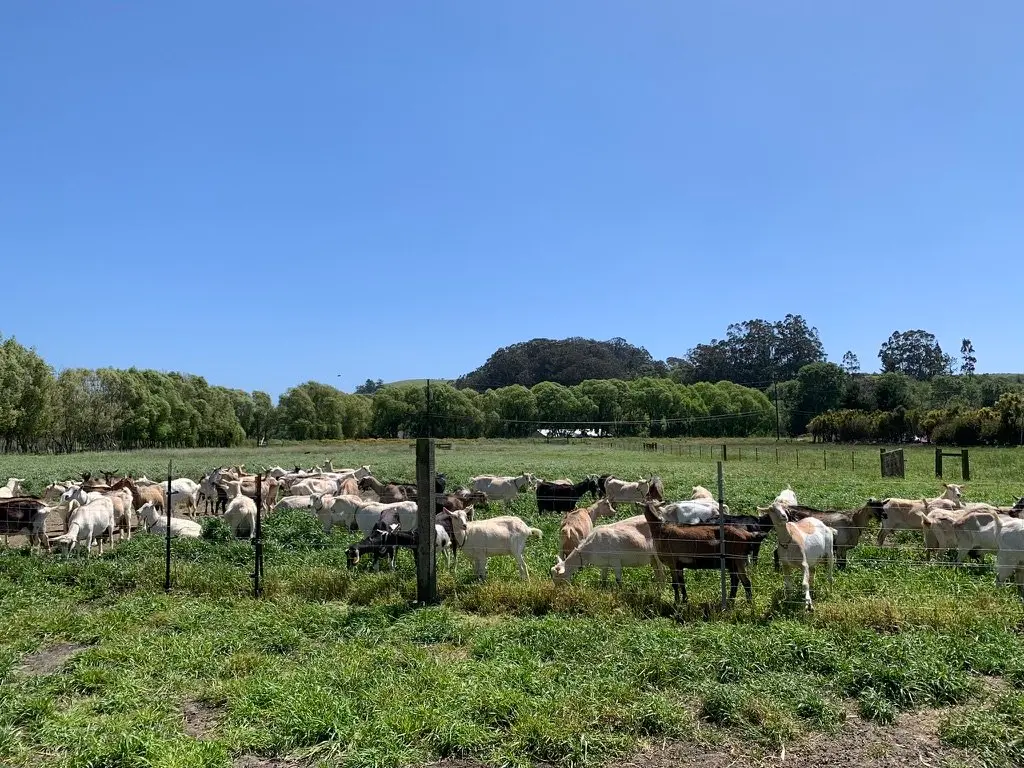
- Walk-ins welcome any day between 11am and 4pm to see the goats over the fence; guided tours enter gated areas not accessible to the public.
- Website
- harleyfarms.com
- Managed by
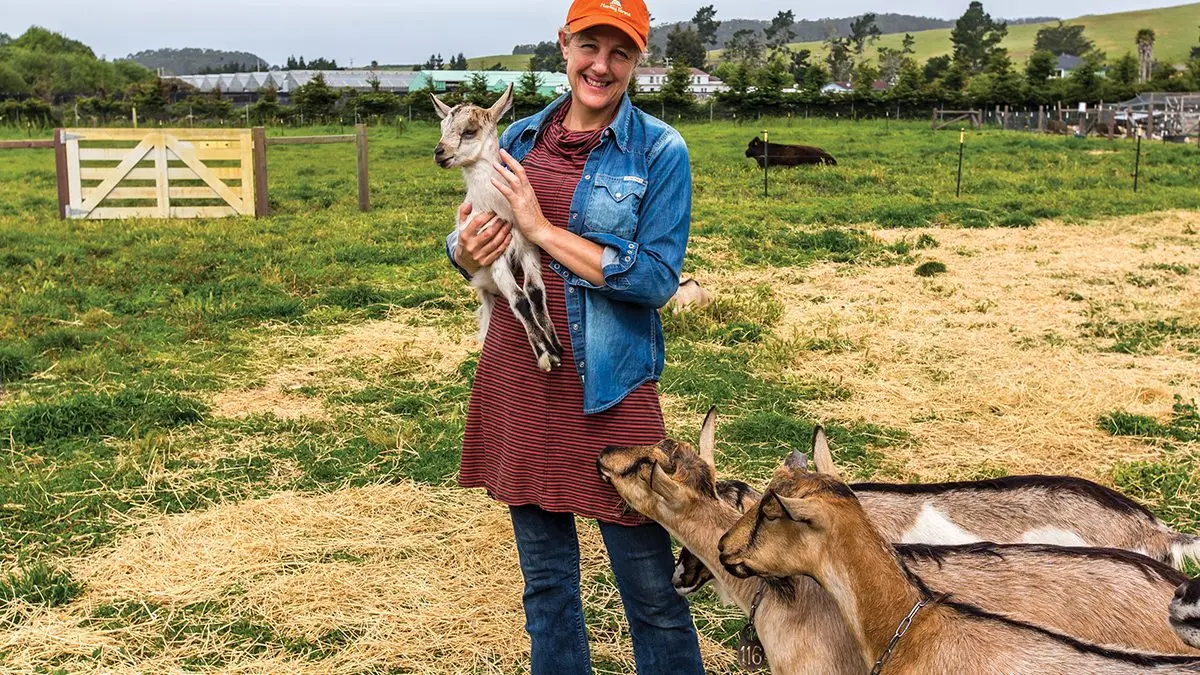
- Owner Dee Harley.
- Established
- 1991.
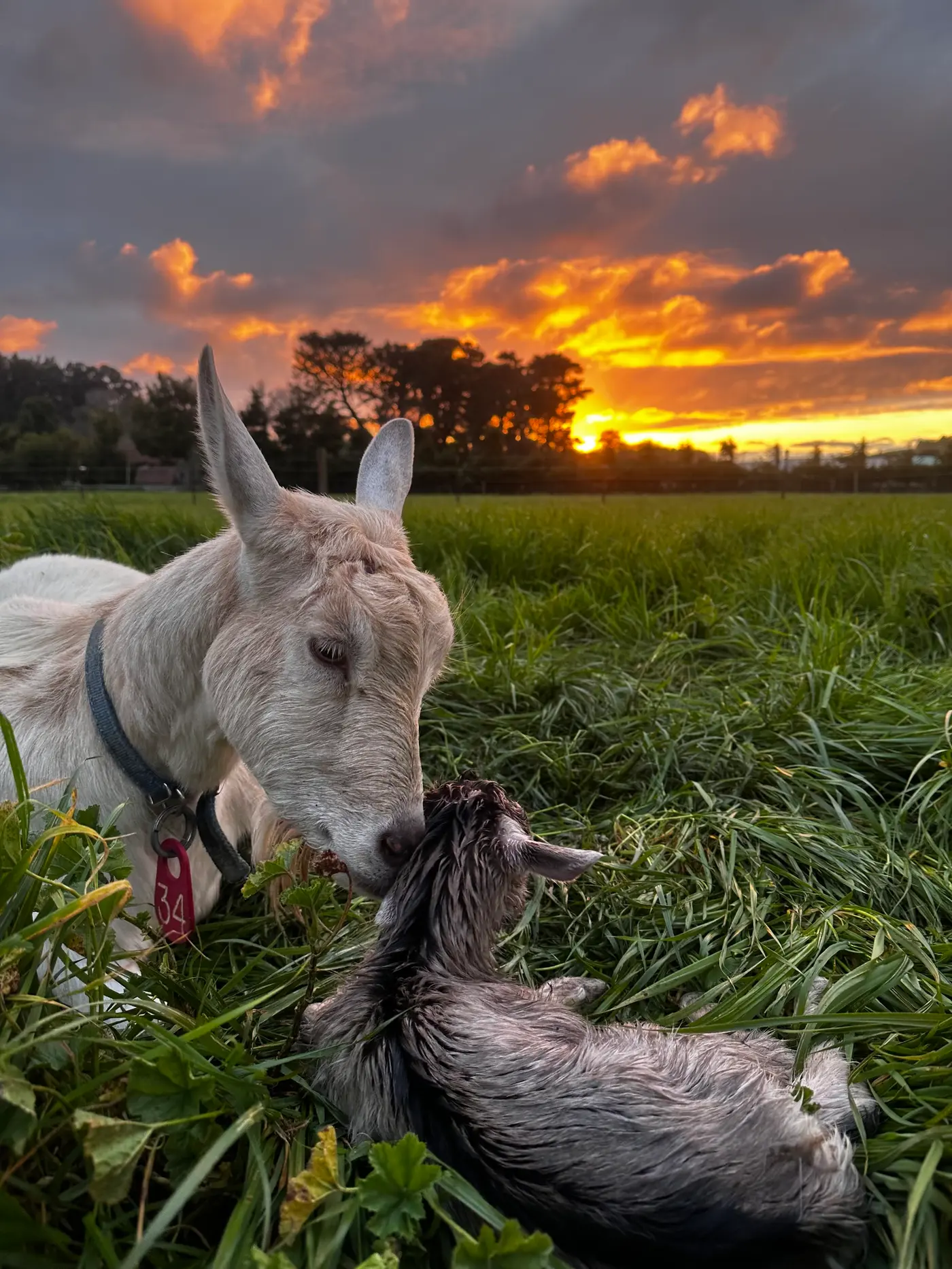
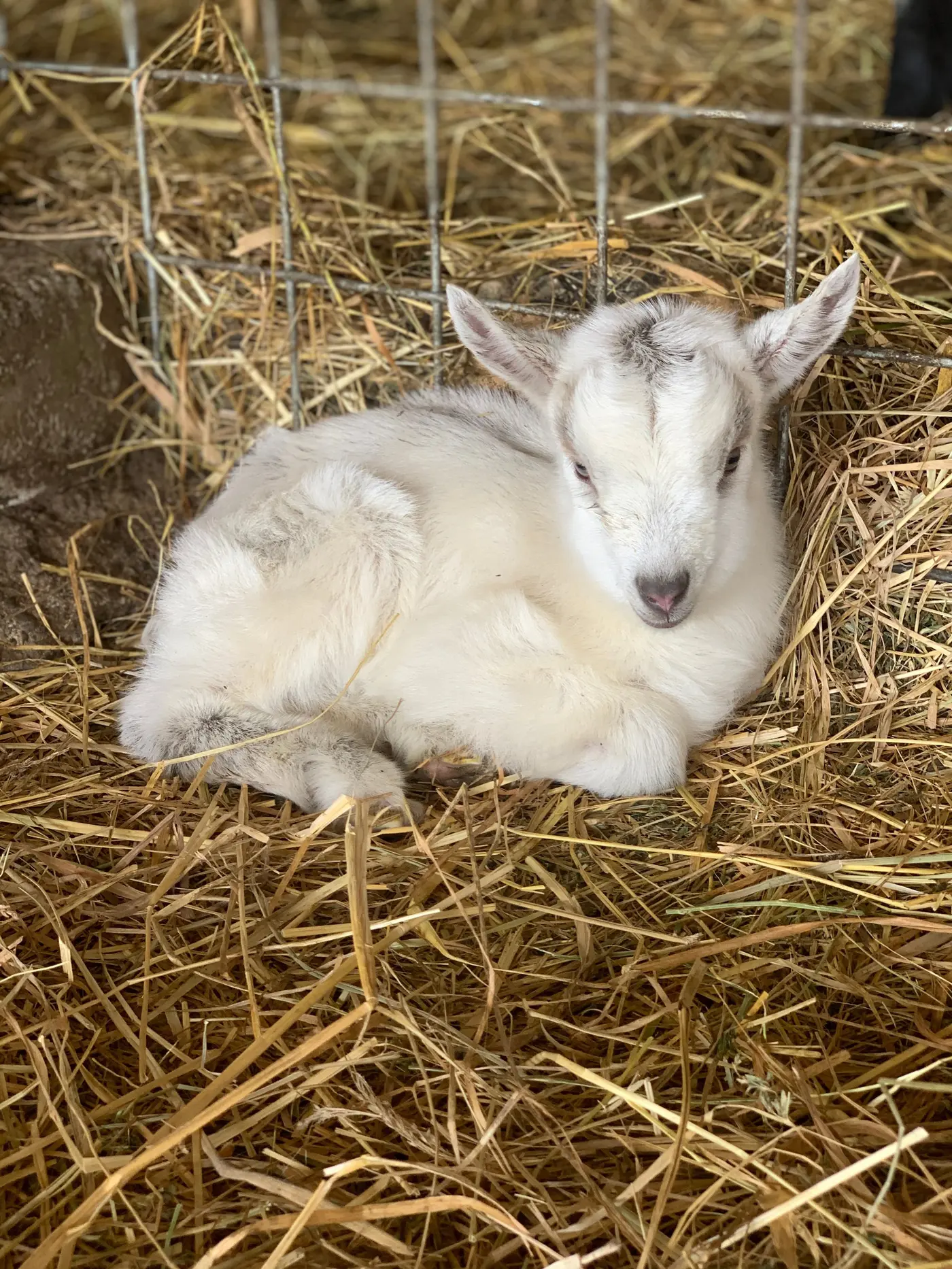
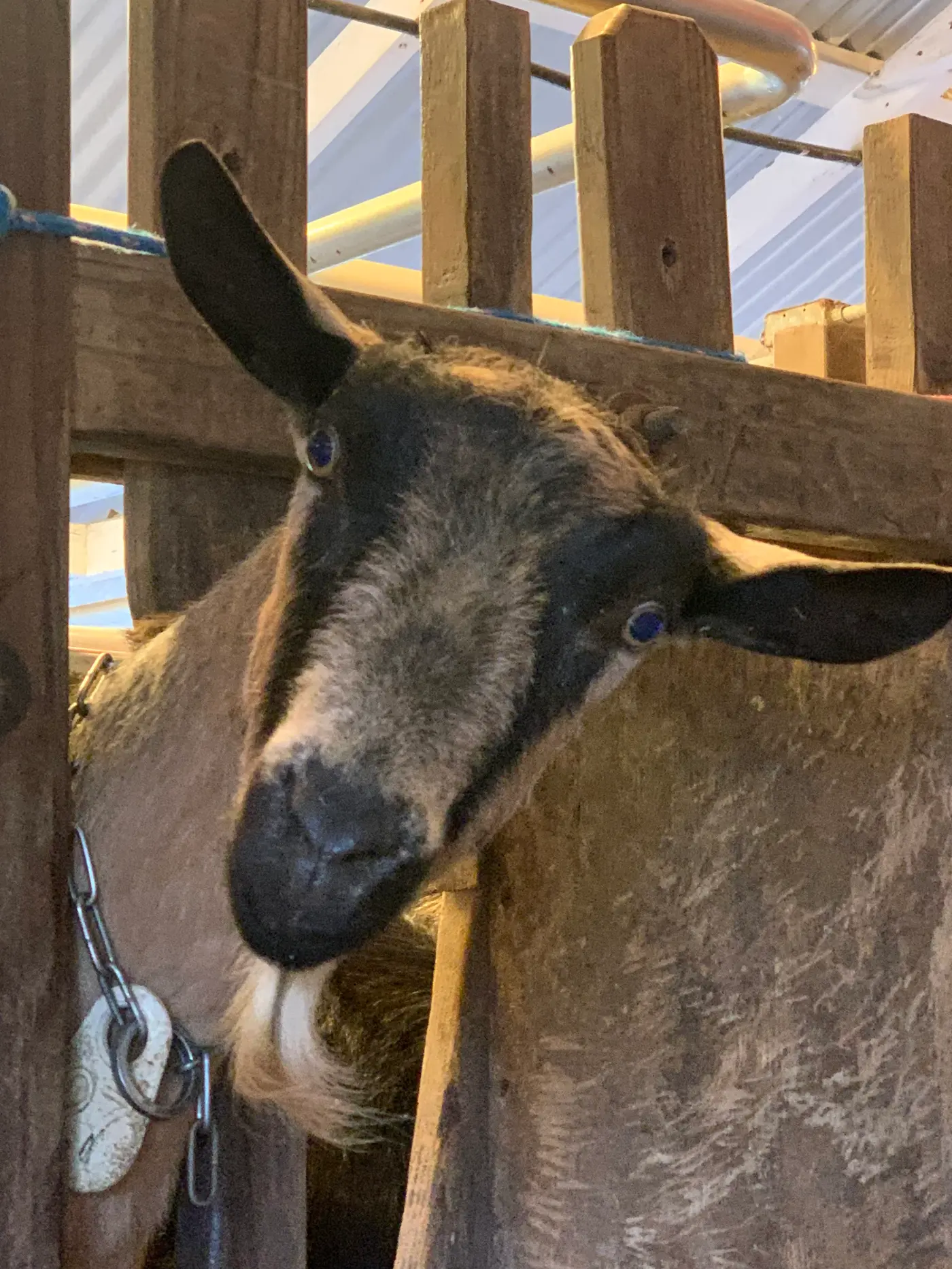
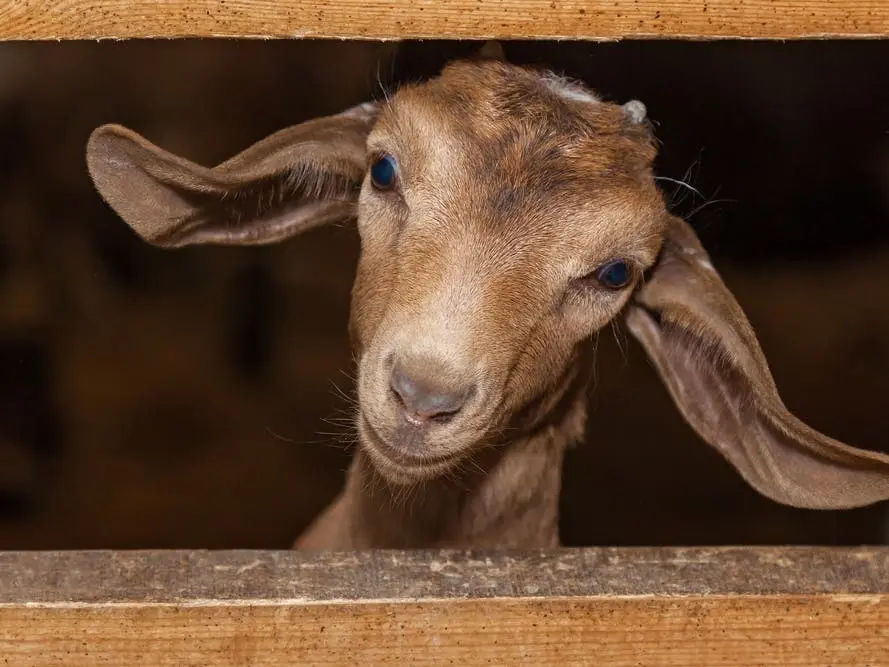
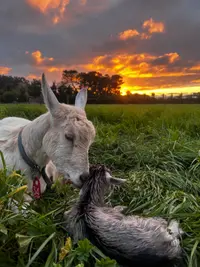
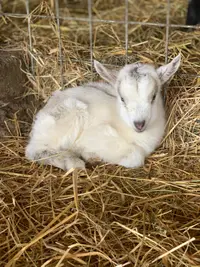
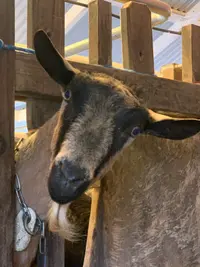
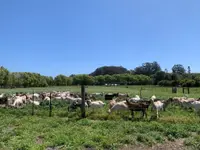
The goats at Harley Farms come to the fence on North Street in Pescadero any day between 11 and 4, and no ticket is needed to meet them there. Information boards stand around the public ground, and one pen keeps goats close enough to touch over the rail. In spring that pen holds the kids. Behind the gates is a working dairy of about two hundred Alpine goats, the only active dairy in San Mateo County. By the farm’s measure its buildings stand two miles inland from the Pacific. The Half Moon Bay visitors’ bureau puts them three miles from the surf at Pescadero Beach. Picnic tables circle the farm pond, and visitors are asked to pack out their trash.
In late September 2026 the farm posted “Goodbye ricotta!” As the days shortened, the crew began drying off the does for their winter rest, and fresh ricotta came off the shop list until March. The last weekend for visitors to milk a goat fell at the end of the month. Hand-milking on the tours returns in July 2027. Andrew, a visiting grazier, brought 400 goats to eat down the reeds in the pond before moving them on to the Secret Garden, and the farm signed its post “FARMERS HELPING FARMERS!” The pastures were mown before winter. Kidding begins again in February.
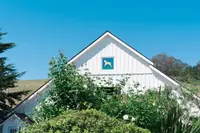
The herd has guardians. Dogs are kept outside the gates and away from the goats, because the farm’s guard dogs, which its FAQ calls Anatolian shepherds, are trained to treat a stranger’s dog as a threat. Visiting dogs may walk the pond area on a leash. One guard dog, Bravo, appears on the farm’s Facebook page as an Anatolian shepherd and on its Instagram as a Maremma. The visitors’ bureau writes of a pair of woolly llamas that guard the goats against mountain lions and bobcats. Two Shetland ponies, Olive and Pearl, live on the place, along with cats and beehives. The upper barn, 145 years old by the farm’s count, houses bats and birds. Every wooden sign on the property was carved by a man the farm calls Three Fingered Bil.
From the parlour to the cheesecloth
Early each morning the milking does clip-clop into a historic milking parlour. Each gives about a gallon a day. The milk runs through stainless steel pipes, open to view, into a vat in the dairy room next door, where it is pasteurized and set with culture and rennet. The curds sit in the pasteurizer overnight. The next morning the crew “flips” the cheese, scooping the yogurt-looking solids into cheesecloth bags that hang on the whey-draining table all day and all night. The curds are then hand-mixed with a little salt, chilled, and shaped into rounds and logs, three days from start to finish. Dee Harley told the San Francisco Chronicle’s cheese writer Janet Fletcher in 2012 that her fromage blanc and fresh chèvre differ only in that hanging: a day for the fromage blanc, at least twice as long for the chèvre. The cheese a visitor tastes, the visitors’ bureau reports, was likely made the day before from milk given two days prior.
Harley described the sounds of the work to a Carlmont High School reporter in 2026: “I like the clinkity clank of the stainless steel.” She also likes the drips of whey from the bags, and “looking out at the goats with the grass hanging out of their mouths.”
The farm makes fresh chèvre, fromage blanc, feta and ricotta, all from its own herd’s milk. The signature cheese, Monet, is a soft white disk with a thin layer of herbes de Provence inside, garnished with edible flowers. In 2005 Fletcher listed the flowers Harley grew for it: bachelor buttons, dianthus, roses, calendulas, pineapple sage, geraniums and chives. At the 2026 American Cheese Society conference, Garden Chive Log took first place among fresh goat’s milk cheeses and Monet took second in the farmstead category. Fromage blanc and ricotta placed second and third among fresh unripened cheeses. Harley credits the sea air. “It wouldn’t taste the same if we were in Sacramento,” she told the visitors’ bureau. She also tells of her chèvre being presented at a Slow Food show in Italy, where a taster said at once that it must have been made near the ocean.
The shop stocks those cheeses along with jams, jellies and oils from the Farm Kitchen. It also carries a bath and body line of aged bar soap, lotions and bath salts, and has sold milk-based apothecary goods and a cheese-based paint. In September 2026 the chocolate cheese truffles returned. The farm delivers fresh chèvre to Ashby Confections, which hand-dips the truffles and dusts them with sea salt. The same month, a James Herriot treasury of English country stories and The Three Billy Goats Gruff went onto the shelves.
Tours, the Hay Loft, and the Secret Garden
The guided Farmstead Cheese Tour goes through the gates. It visits the dairy to watch the cheesemaking and taste fresh cheese, then walks the property and the milking herd while a guide explains how a working farm is run. Children under 7 cannot join, because the walking is long and the group must be kept together past electric fencing.
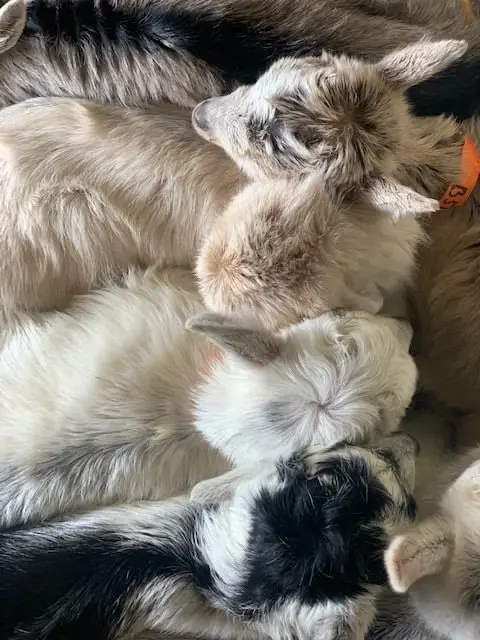
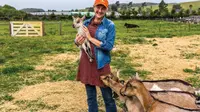
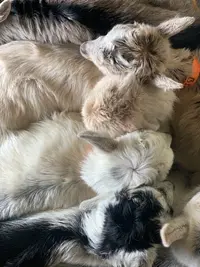
In March 2026 the student reporter followed a baby-goat tour. It began in the garden with the history of the farm, then walked the pasture fence with Hannah Greendorfer, a former cheesemonger from Oregon who had guided at the farm for eight years. At a pen of kids a week and a half old, everyone got to hold one, and play went on for about forty-five minutes. Back at the main barn, Greendorfer described kidding: “Usually, the first one is born, and then within about 10 minutes or a little bit more, the next one will come, and then the next one will come. Once it starts, it’s pretty fast.” The last doe of the 2026 season gave birth at the start of June. The farm put that season’s count at 180 kids, “give or take a few.”
Private tours run an hour and a half. From February to June they center on the kids. From July to November they meet the milking does and end with a tasting in the Hay Loft, the upstairs room of the barn. The Hay Loft is also where the Saturday farm dinners are served. Each dinner opens in the garden with Harley Farms cheese, lavender lemonade and local bread, then a tour of the farm at golden hour, then four or five courses planned only weeks ahead. The visitors’ bureau describes a light-strung barn and a handmade dining table. The August 2026 dinner drew on produce from Simms Organics, Fifth Crow Farm and Blue House Farm, with duck from Root Down Farm. The 2026 series sold out through its final dinner on October 24, which the farm billed as a celebration of “the farm slowing down.” Dates for 2027 are to be released in the winter.
The calendar fills in around the dinners. In June 2026 the farm held a free Summer Solstice Faire, and Sante Arcangeli Winery poured its rosé with oysters from Duarte’s. The Secret Garden, a private garden beside the creek, holds small ticketed gatherings such as the solstice and equinox ceremonies led by Rising Wolf Collective. The farm’s homepage lists a Día de los Muertos celebration for November 1.
Six goats, told four ways
The dairy itself was built in 1910, when San Mateo County’s dairy trade was growing fast. The visitors’ bureau writes that the coast’s dairies later moved inland and grew industrial. A 2009 oral history from the University of California, Santa Cruz, says the farm closed after the industry migrated to the Central Valley. The county’s last cow dairies closed in the 1980s, by the farm’s account.
Dee Harley grew up in Yorkshire, England, and found Pescadero while traveling in California as a young woman. The hills reminded her of home. She fell in love with Tim Duarte, a local restaurateur who became her husband, and took up residence on the nine-acre farmstead. The derelict buildings had sat unused for decades. Accounts of her early jobs vary: an herb farm, Larry Jacobs and Sandra Belin’s Jacobs Farm, a store selling dried tomatoes.
How the goats arrived depends on who tells it. The Santa Cruz oral history says that in 1982 she acquired six goats from a local dairywoman. Fletcher, writing in 2005, said Harley and her husband had bought the place sixteen years earlier with no plan to revive the dairy. A couple of years later, Harley agreed to buy six goats from a neighboring cheesemaker, Nancy Gaffney of Sea Stars, and sell the milk back to her. Gaffney taught her to vaccinate and milk, “and those six became 10, and those 10 became 20,” Harley said. She later bought her mentor’s cheese business, renamed it Harley Farms, and kept making the flower-covered chèvres Gaffney had originated. The visitors’ bureau tells of a dairy farmer from nearby Davenport who dropped by and talked Harley into buying goats to supply her with milk through the winter. “Aside from goldfish, we never had animals growing up,” Harley told the bureau. In 2026 she told the student reporter it began with a customer collecting dried tomatoes at her house: “Why don’t you buy some goats from me, and you can provide the milk for me, and I’ll make the cheese?” The farm dates its launch to 1991. The first six goats were milked by hand, and the cheese went to farmers’ markets and stores around the Bay Area. Today’s herd descends from those six.
Birthing stalls and a hay baler
Harley says she has never marketed the farm. As word spread, customers knocked on her door and woke her, so she turned the old birthing stalls in the hay barn into the cheese shop. San Mateo County named her Farmer of the Year in 2007. In 2008 the Chronicle reported that she fertilized with goat and chicken droppings, recycled all the farm’s water, and grew her flowers without pesticides. A Half Moon Bay consultant, Terri Reece, networked the office computers for the first time. Paper use fell from two cases a month to about a quarter of a case.
On April 8, 2009, Sarah Rabkin recorded the oral history in a cottage on the farm. Outside, guard llamas looked on while goats played atop a chicken tractor in the pasture, and children on a tour cradled newborn kids. In 2013 the farm acquired more acreage for foraging trips and wild-food workshops with the herbalist Suzanne Elliott.
In June 2026 the farm baled its own fields for the first time, an experiment in making bedding hay. Across the road, Cliff had baled his field the day before, and the farm recalled him on “his old rickety tractor, straw hat on.” The post continued: “This weekend, for the first time ever, you’ll see hay bales in our fields across the street. These fields have fed cows, grown berries, and become the resting place of our old beloved goats.”
Notable Events
- 1910The cow dairy later revived by Dee Harley was built during San Mateo County’s rapid dairy-industry growth. harleyfarms.com
- 1982In 1982, she acquired six goats from a local dairywoman. The herd began to grow; one thing led to another, and Harley Farms was born. library.ucsc.edu
- 1991Dee Harley launched Harley Farms, breathing life into a derelict cow dairy. harleyfarms.com
- 1991Harley brought the farm to operational standards and bought goats, starting with six. scotscoop.com
- Dee Harley and her husband bought the former dairy property without intending to return it to a dairy. sfgate.com
- Harley agreed to buy six goats from Nancy Gaffney of Sea Stars and sell the milk back to her. sfgate.com
People
- Dee Harley, Established Harley Farms Goat Dairy in an old traditional dairy after settling in Pescadero.
- Tim Duarte, Local restaurateur who became Dee Harley’s husband; falling in love with him made Pescadero her new home.
- Hannah Greendorfer, Harley Farms tour guide (eight years).
- Nancy Gaffney, Neighboring Sea Stars cheesemaker who supplied Harley’s first goats and taught her to vaccinate and milk them.
- Terri Reece, Helped the farm buy Energy Star computers, taught staff power management, and created its first computer network.
- Suzanne Elliott, Local herbalist associated with the farm’s foraging trips and wild-food workshops on newly acquired acreage.
Sources
- facebook.com/HarleyFarms
- instagram.com/harleyfarms
- patch.com/california/halfmoonbay/its-baby-goat-season-harley-farms
- visithalfmoonbay.org/places/harley-farms
- harleyfarms.com
- harleyfarms.com/about
- harleyfarms.com/tours
- harleyfarms.com/faqs
- harleyfarms.com/private-tours
- harleyfarms.com/private-group-tours
- harleyfarms.com/farm-luncheons-dinners
- harleyfarms.com/farmanddining
- harleyfarms.com/farm-shop
- harleyfarms.com/company-experiences
- library.ucsc.edu/reg-hist/dee-harley-harley-farms-goat-dairy
- sfgate.com/food/cheesecourse/article/Fresh-chevre-shows-off-its-flower-power-2687668.php
- scotscoop.com/kiding-around-at-harley-farms
- sfgate.com/travel/article/Pescadero-small-coastal-town-with-big-options-3188176.php
- sfgate.com/food/cheesecourse/article/Harley-Farms-fromage-blanc-good-for-slathering-3848786.php
- sfgate.com/travel/article/pescadero-goat-farm-wild-food-workshops-4264091.php
- sfgate.com/tech/article/a-greener-glow-for-computers-3211196.php
- hmbreview.com/tncms/asset/editorial/461b6c34-e2f3-11ee-8e20-4b0b6d8a9d02