Hamma Hamma Cabin
Hoodsport, Mason County, Washington. Guard station.
Details

- Where
- Hamma Hamma Road/Forest Service Road 25 Lilliwaup, Hoodsport, WA 98555. Directions
- Season
- Available for rent year-round except Thursdays for cleaning.
- Getting there
- From Hoodsport, WA take Highway 101 north for 14 miles to Hamma Hamma River Road. Take a left onto Hamma Hamma River Road/Forest Service Road 25 and travel 5.7 miles to the access road to the cabin.
- Fees
- $60 per night per group, maximum of six occupants.
- Access
- Automobile access may be limited in the winter months and require alternative transportation such as cross-country skis or snowshoes.
- Walk-in or reserve
- Reservations can be made online at recreation.gov or by calling 1-877-444-6777.
- Phone
- (360) 765-2200
- Managed by
- Olympic National Forest.
- Established
- 1936-37.
- Coordinates
- 47.59247521, -123.115145.
The clearing above the river
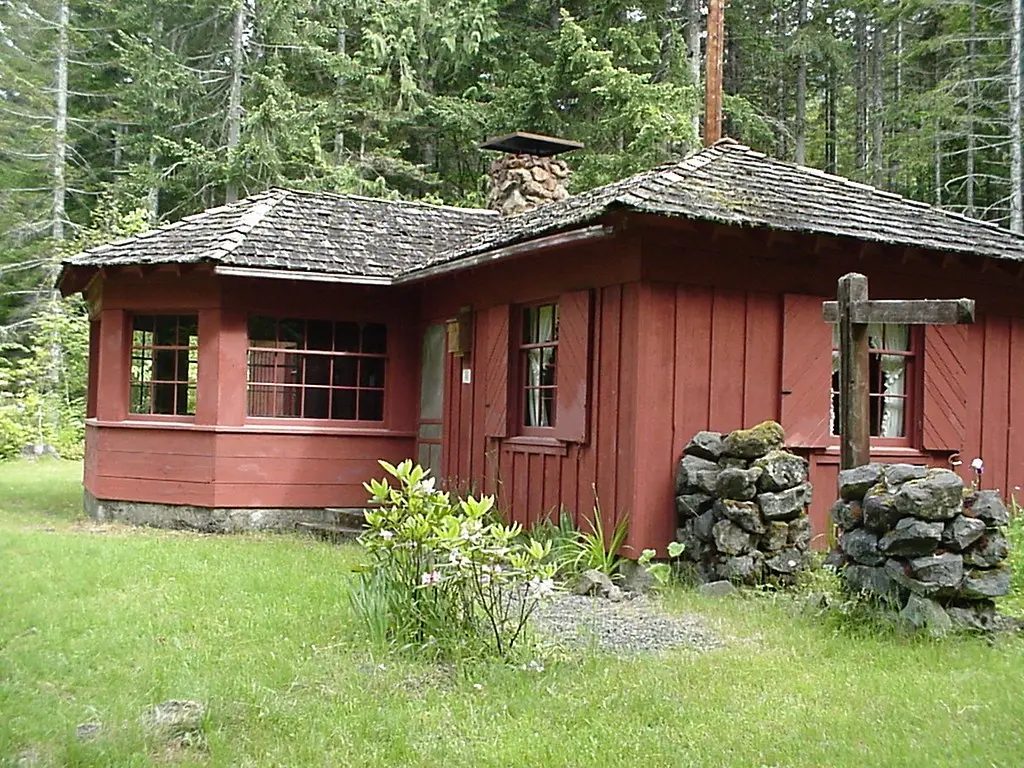
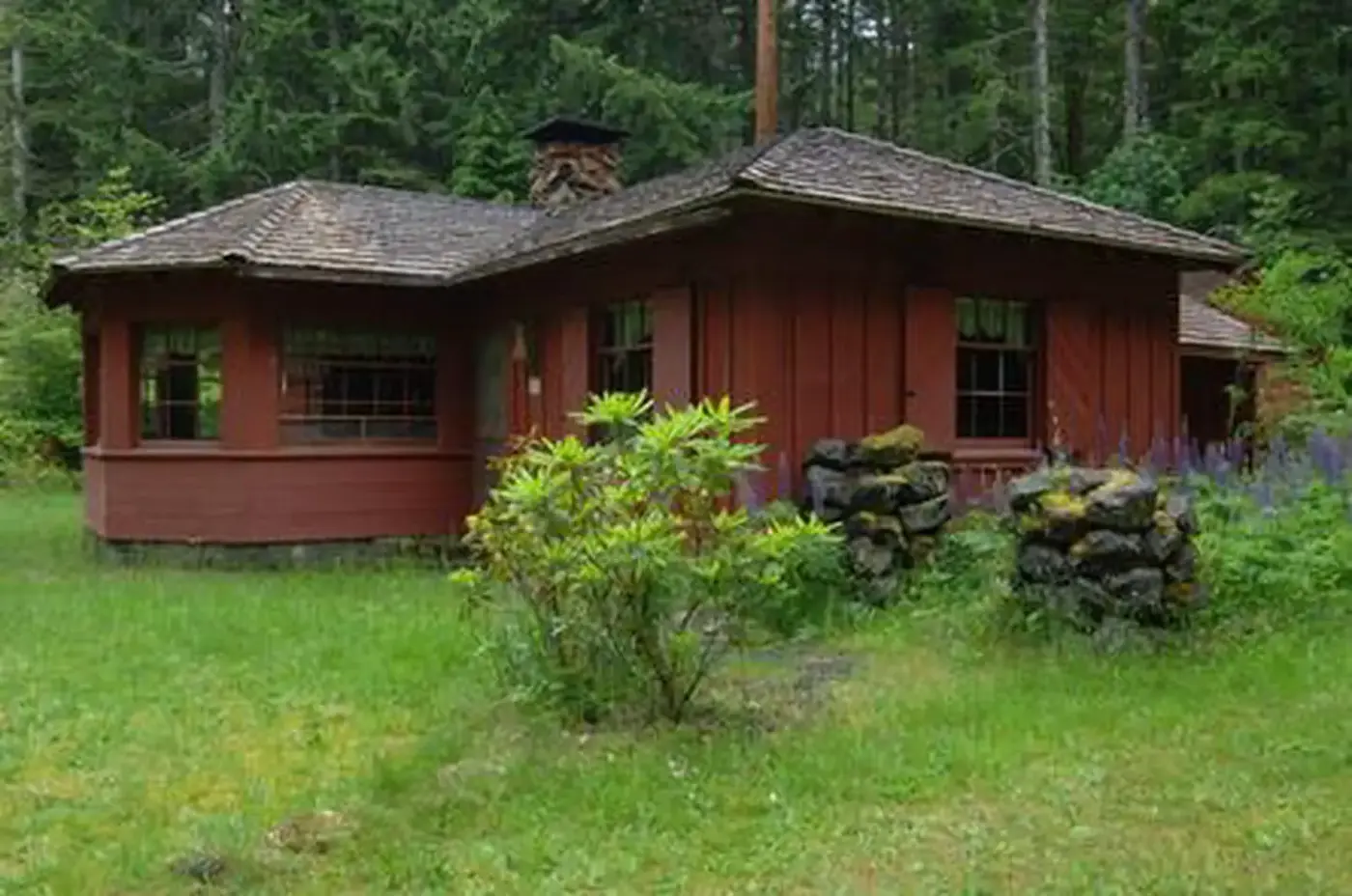
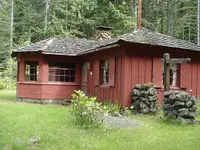
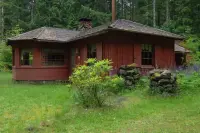
The Hamma Hamma Cabin sits in a landscaped clearing above the river it is named for. Douglas firs, dogwoods and rhododendrons surround it, and Recreation.gov describes the firs as old-growth. The way in leaves Highway 101 about 14 miles north of Hoodsport and climbs Hamma Hamma River Road, Forest Service Road 25, for 5.7 miles to a short access road. In winter the last stretch may call for cross-country skis or snowshoes. The door opens with a keyless lock, and the code arrives in the renter’s confirmation email. The nearest telephone is 6.5 miles back down the valley at the Eldon Store.
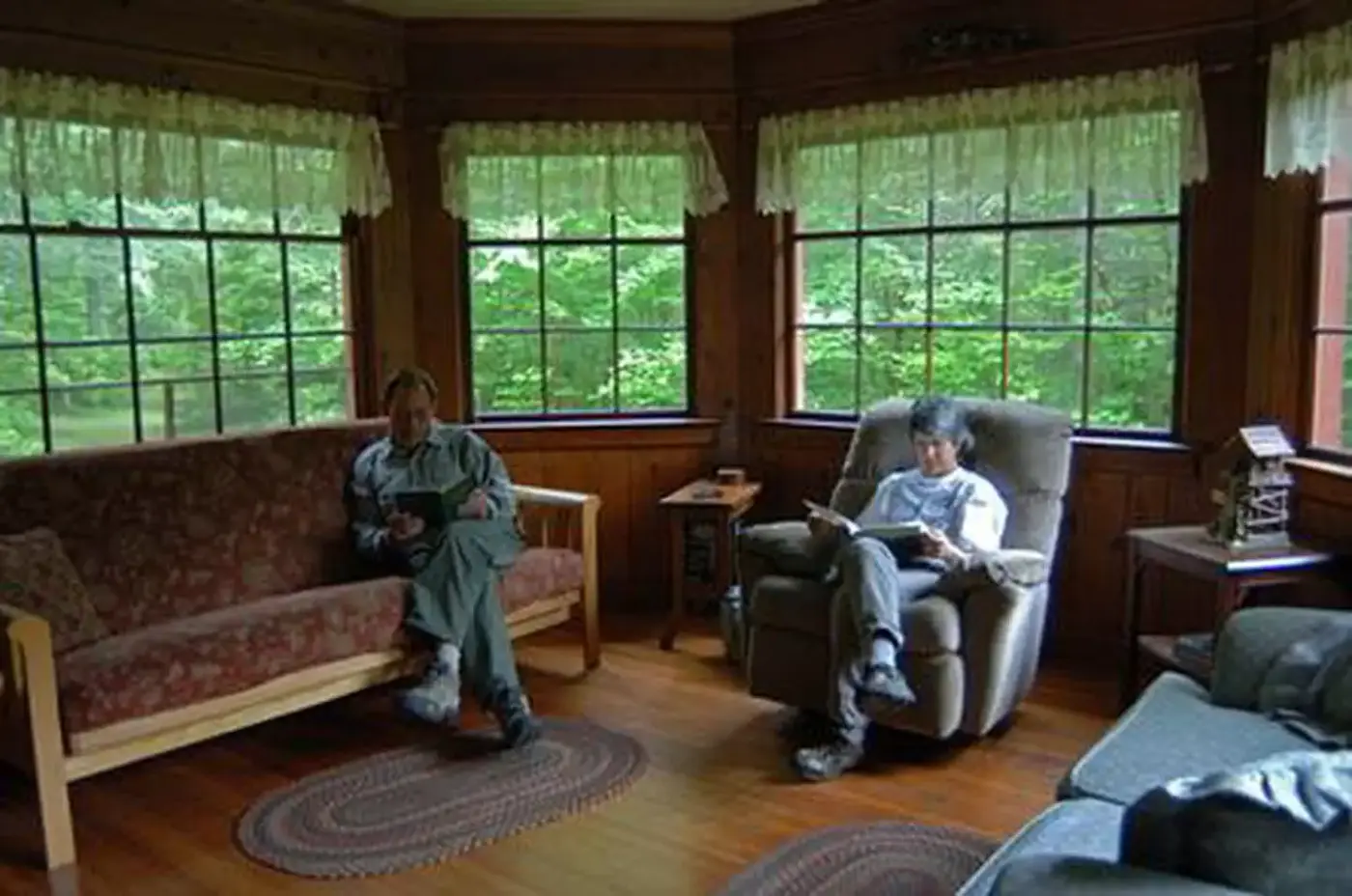
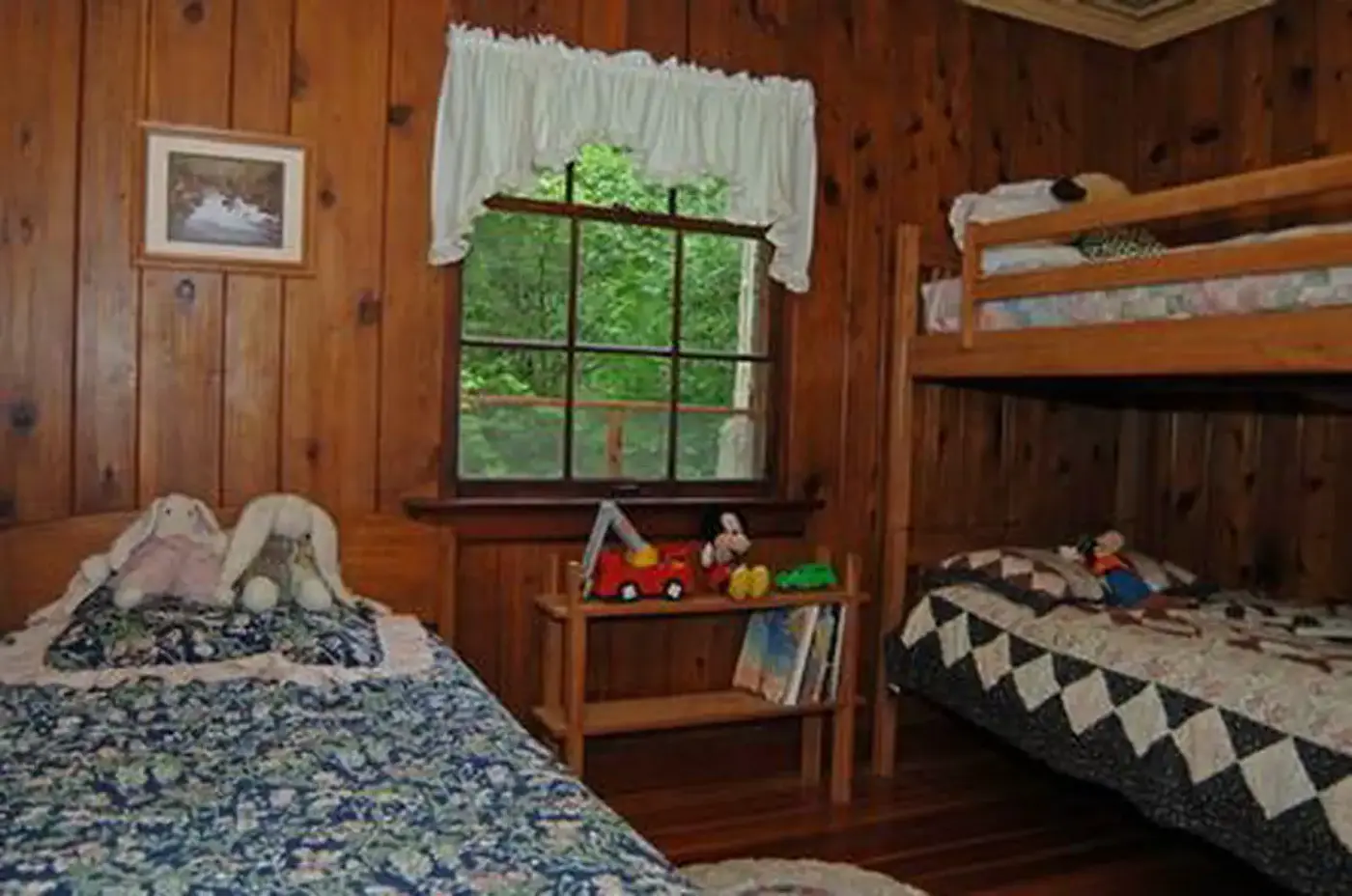
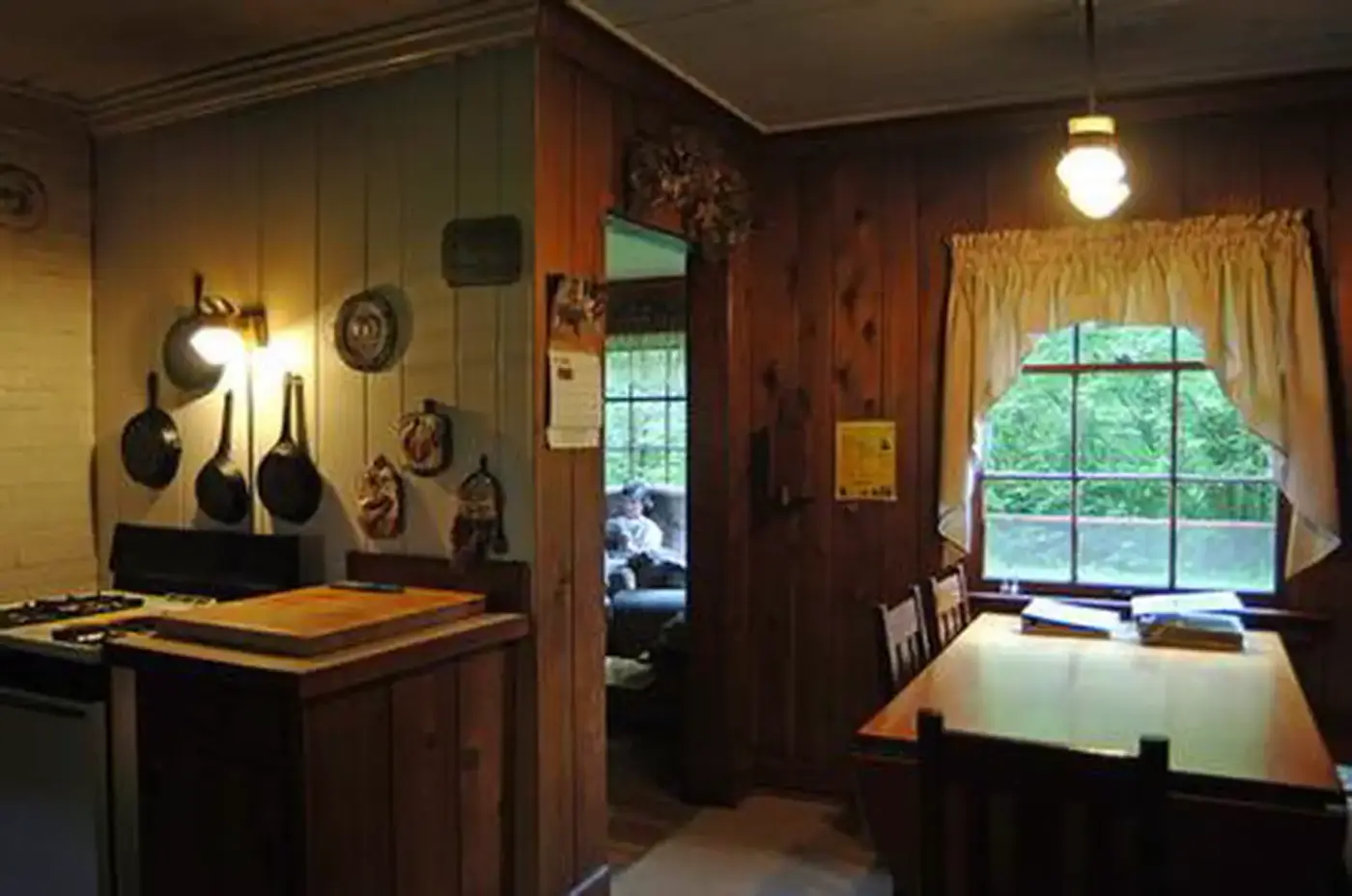
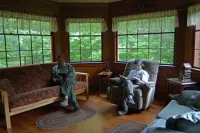
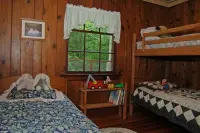
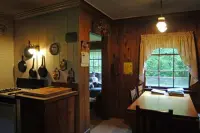
The building is a single story. Its living room has a hexagonal bay window overlooking the Hamma Hamma River drainage and a futon couch that unfolds into a bed. One bedroom holds a double bed and the other bunk beds. The kitchen has a table and chairs, a refrigerator, a cook range, dishes, pots, silverware and utensils. Propane runs the lights, the heater and the appliances. A flush toilet is the only use for the plumbing, and its water is not potable, so guests haul in their own for drinking, cooking and washing. Outside are a picnic table, a fire ring and a pedestal barbecue. Six people at most may stay, there are no pets and no smoking, and the cabin is rented every night of the year except Thursdays, which are kept for cleaning. The Forest Service says rental fees go directly to the cabin’s maintenance and preservation.
A quarter mile of trail and three names for a river
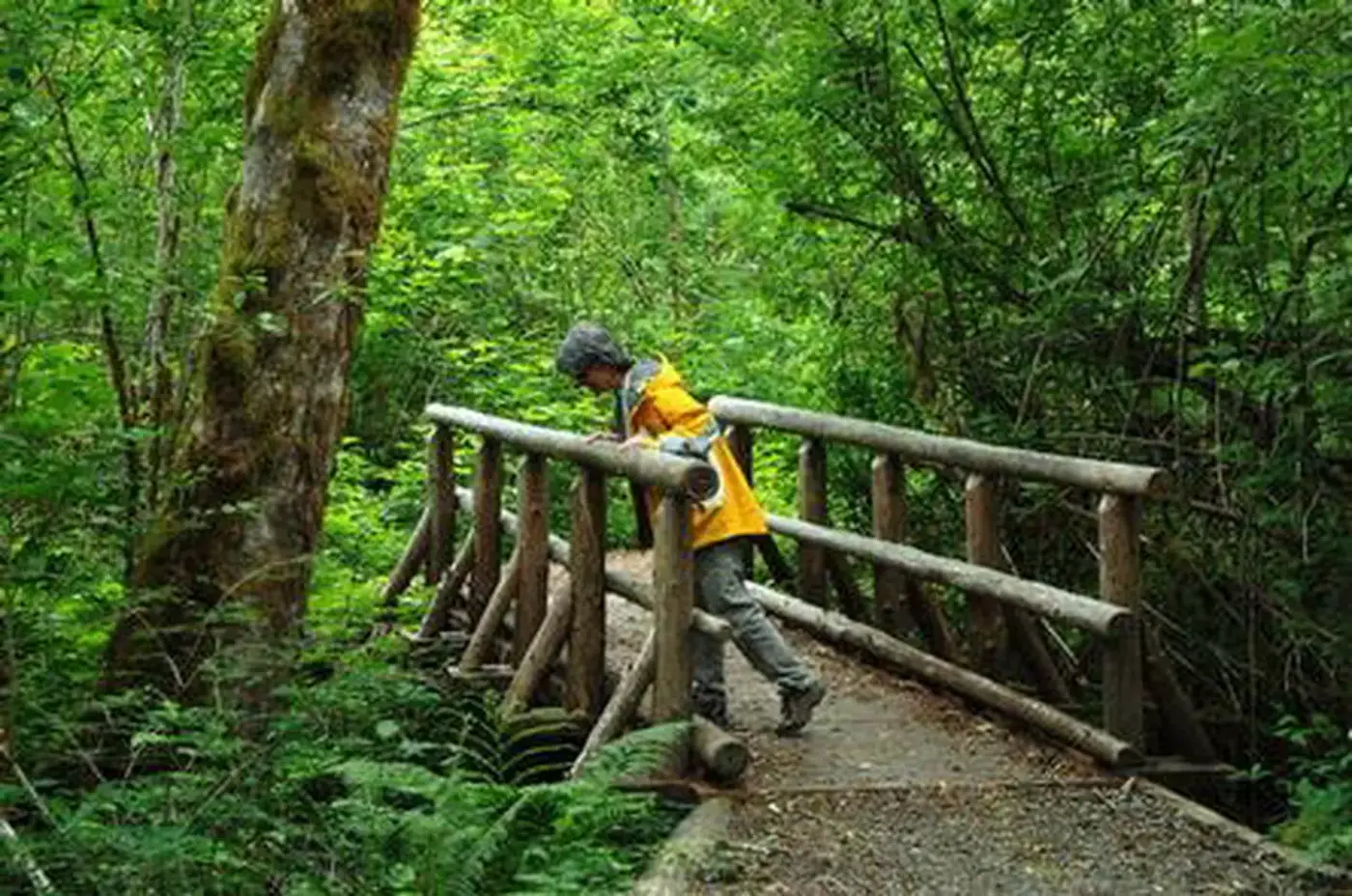
Visitors who have not rented the cabin are asked to respect the renter’s privacy and see it from the Living Legacy Trail. The trail’s interpretive signs describe the work of the Civilian Conservation Corps. A quarter mile along, the trail opens on a view of the river. In spring, Harlequin ducks come up from the sea to nest in this freshwater stretch. Once the eggs hatch, the male leaves, and the female raises the young until they are ready to travel downriver to Hood Canal. Anglers fish the river for chum, pink, chinook, coho and steelhead. The Lena Lake Trail, #810, begins a few miles west, and beyond Lena Lake lies the Valley of the Silent Men.
The sources differ on where the river starts:
- Recreation.gov says it is fed by the Mildred Lakes in the Mount Skokomish Wilderness and drops from the eastern slope of the Olympics to Hood Canal.
- Revisiting Washington, published by the Washington Trust for Historic Preservation, has it rising on the northwest side of Mount Elinor and flowing east and southeast to Hood Canal at Eldon.
- A 1990 Forest Service study of wild and scenic rivers measured it at 17.8 miles, from a source at Murdock Lake to the mouth. It classed 3.4 miles as wild, down to a bridge on Road 25, then 5.5 miles as scenic to Lena Creek, and the last 8.9 miles as recreational.
The name has three explanations:
- Recreation.gov says it comes from a Twana village once at the river’s mouth, called Hab’hab, after a reed that grows along the banks.
- Revisiting Washington calls it a greatly altered version of the Twana name Du-hub-hub-bai, after a small rush called Hub-hub that was once plentiful along the river.
- A 1994 Seattle Times article held that Hamma Hamma means “stinky stinky,” for the spawned-out salmon carcasses that once covered the riverbanks.
Fire guards and a CCC side camp
According to the Forest Service’s 1990 study, the guard station replaced an earlier structure that had served as the summer headquarters of Olympic National Forest’s Forest Supervisor. During the Great Depression a Civilian Conservation Corps side camp was stationed near the river. Between 1936 and 1937 its crew built the guard station, a garage, a register station and the fences around the site. Revisiting Washington gives 1937 as the year of completion. The station became an administrative site for Forest Service fire and trail crews. Eric Pryne, writing in The Seattle Times, described the guards as men who roamed the back country in search of forest fires.
When the station went up, the road up the Hamma Hamma Valley went no farther. The CCC crew built a trail register with stone walls and a shake roof that, in Pryne’s words of 1994, “still looks as if it could withstand a nuclear attack.” The crew also built stone-and-rail fences that still circled the parking area that year. Inside, the CCC work showed in a built-in bookcase and a bench along one side of the dining table, and in pine trees carved into the cabinet doors under the kitchen sink.
Mason County lists the Hamma Hamma Guard Station on its state historic register table, under Smithsonian number OL00098, with a listing date of December 7, 1984. The 1990 Forest Service study evaluated the station as eligible for the National Register of Historic Places, and the Forest Service says it has since been nominated for the skill and craftsmanship of its construction.
Girl Scouts, Jack Janda, and the summer of 1994
After the last full-time occupant moved out in the mid-1980s, the station fell into decline. Windows were broken and furnishings stolen. Jack Janda, recreation officer for the Hood Canal Ranger District, thought that if the cabin were spruced up it could serve as a base camp for hikers in summer and cross-country skiers in winter. The work took two years. Girl Scout Troop 624 of Hoodsport adopted the cabin, made curtains and planted flowers outside, and most of the furnishings were donated.
The cabin opened for rent in May 1994. That August, The Seattle Times counted it among more than 30 old lookouts, ranger cabins and packers’ sheds the Forest Service had opened for nightly rental across the Northwest. The Forest Service wanted to expand recreation, raise money to restore historic buildings and cut down on vandalism. The Hamma Hamma station and the nearby Interrorem cabin were the only such rentals in the Puget Sound area. The Hamma Hamma cost $25 a night, at a time when a state park a few miles away charged $10 for a tent site. By late August it was booked solid through October, and every weekend through Christmas was taken.
Pryne and his family spent the summer solstice of 1994 there. Bats nested behind the shutters, and the management, he wrote, “wouldn’t dream of evicting them.” Knickknacks and dried-flower arrangements filled the rooms, and a Frisbee and a jump rope sat in the covered walkway to the garage. The shelves held Reader’s Digest condensed books, an out-of-date L.L. Bean catalogue and a 1973 World Almanac. The windows had no screens, because Janda said screens would alter the exterior of the historic structure. Water for the cabin came from shady Watson Creek, reached down an old woods road past rusting campsite grills and a graveyard of mossy picnic tables.
That evening the family toasted marshmallows at the fire ring and watched shadows climb Jefferson Ridge across the river to a single clearcut at its summit, 3,000 feet above them. To the west, the setting sun faded the Sawtooth Range from purple to blue to black. At dusk two rabbits came out to browse clover on the lawn, the bats began “shadow-dancing” in the covered walkway, and an owl hooted somewhere in the woods to the north.
Notable Events
- 1936The CCC constructed the guard station, garage, register station and site fences for use by Forest Service fire and trail crews. fs.usda.gov
- 1980sAfter the last full-time occupant moved out, the cabin declined; windows were broken and furnishings stolen. archive.seattletimes.com
- 1984The county lists Hamma Hamma Guard Station in its state historic register table with Smithsonian number OL00098. cms2.revize.com
- The newspaper describes Hamma Hamma and nearby Interrorem cabins as open only since May, the only such sites in the Puget Sound area. archive.seattletimes.com
People
- Jack Janda, Olympic National Forest Hood Canal Ranger District recreation officer who proposed sprucing up the cabin as a base camp for hikers and cross-country skiers.
Sources
- recreation.gov/camping/campgrounds/233740
- fs.usda.gov/r06/olympic/recreation/hamma-hamma-cabin
- cms2.revize.com/revize/masonwa/Documents/Departments/Community%20Development/Planning/Comprehensive%20Plan%20Update/2036%20Comprehensive%20Plan/sepa-comp-plan-fall-2017-final.pdf
- site-media.americanwhitewater.org/Document_533.pdf
- archive.seattletimes.com/archive/19940821/1926272/forest-service-cabins-a-chance-to-rough-it-in-a-jewel
- revisitwa.org/waypoint/hamma-hamma-guard-station
- apps.ecology.wa.gov/separ/Main/SEPA/Document/DocumentOpenHandler.ashx?DocumentId=23053