Half Moon Bay coastside farmstands and u-picks
Half Moon Bay (Coastside), San Mateo County, California. Farm Stand.
Details

- Where
- 2080 Green Oaks Way, Pescadero, Half Moon Bay (Coastside), CA 94060. Directions
- When
- Every Saturday from April to third Saturday in December, 9am - 1 pm (Coastside Farmers' Market).
- Getting there
- Located on California Hwy 1 near Pescadero.
- Hours
- Weekdays | 11am-5pm (Closed Tuesdays & Wednesdays) Weekends | 10am-5pm.
- Access
- U-pick is first come first served, no reservations required. Cell service depends on the carrier, and we do not have wifi. Download your maps before hitting the road!
- Walk-in or reserve
- No reservations required.
- Phone
- (650) 262-1220
- Managed by
- cooperative effort of the Half Moon Bay Coastside Chamber of Commerce & Visitors' Bureau, the Half Moon Bay Hotel Business Improvement District, and the Half Moon Bay Downtown Association.
A redwood barn on La Honda Road
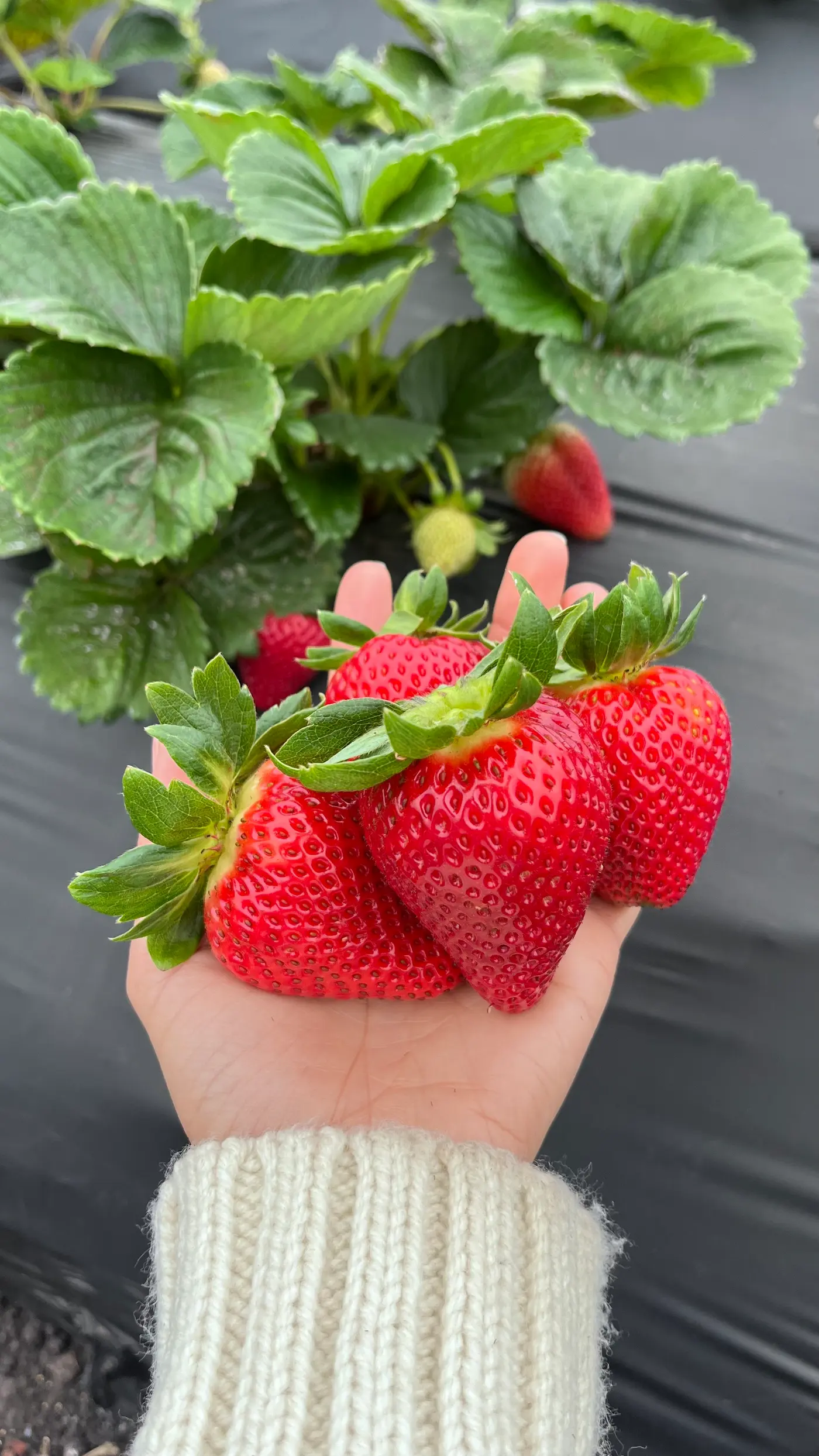
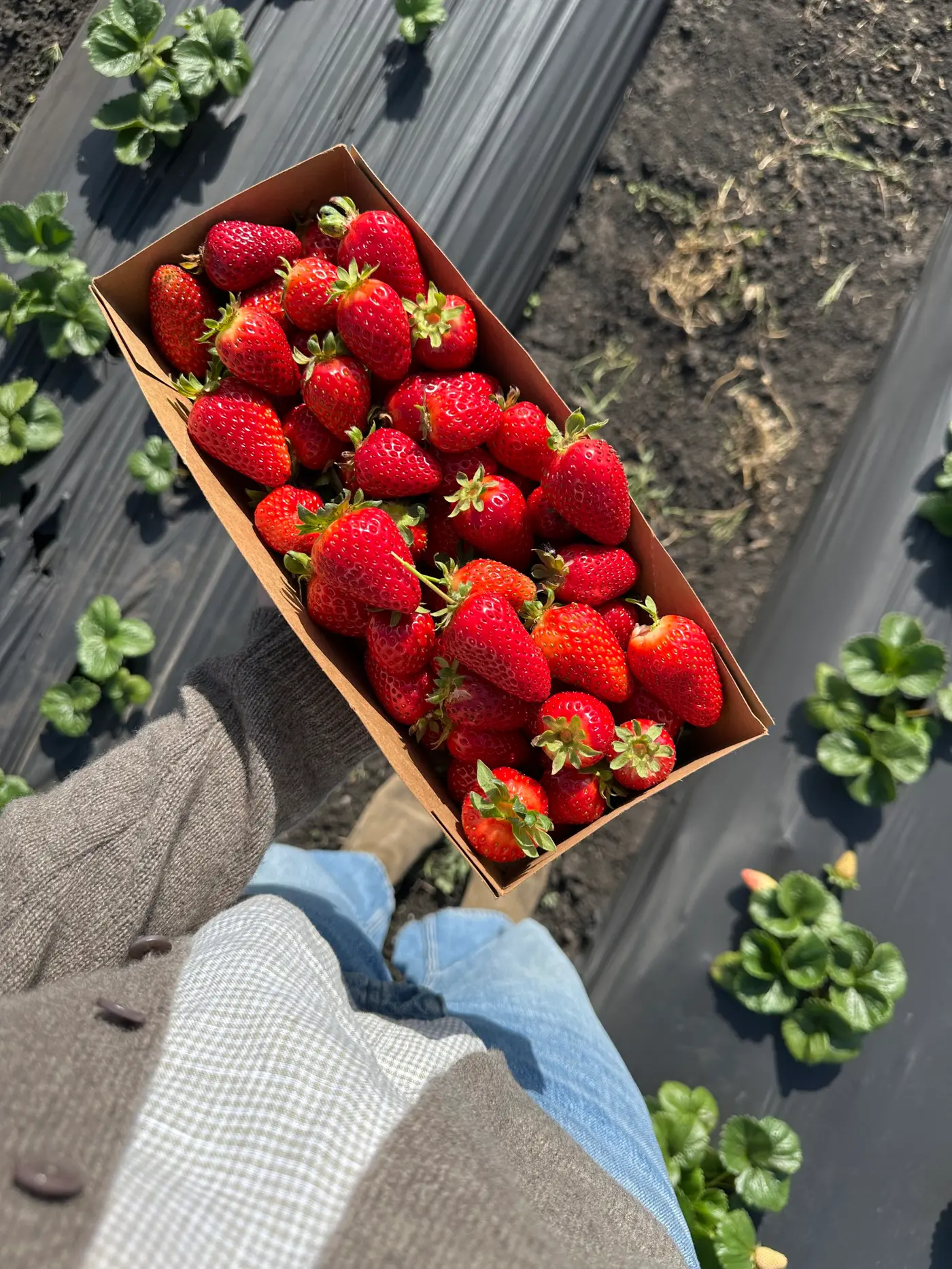
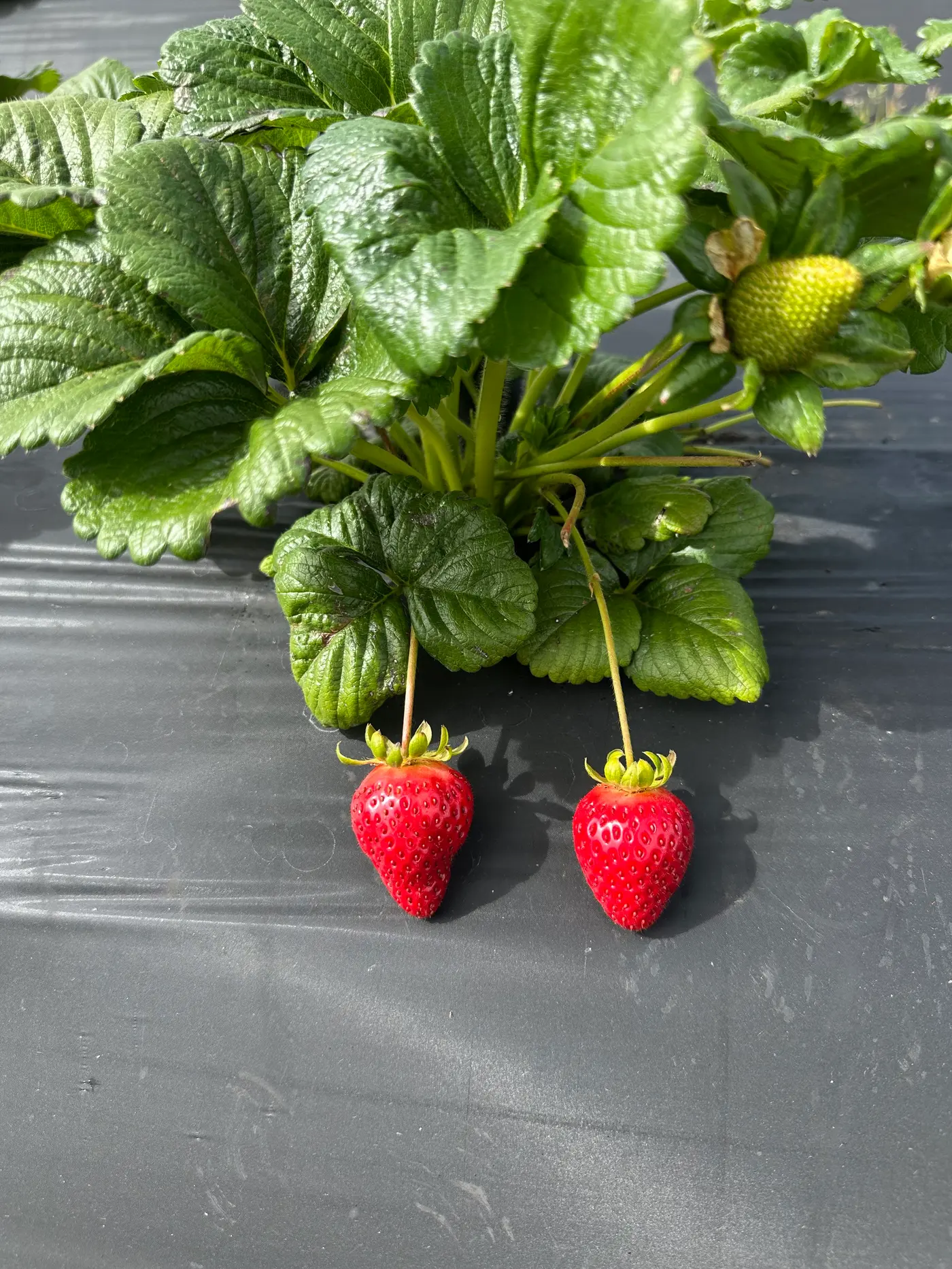
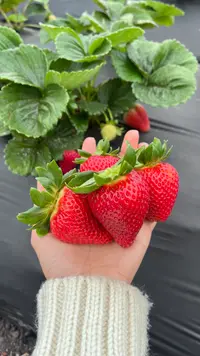
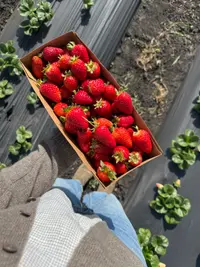
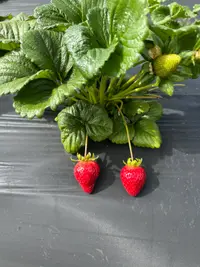
Eight-tenths of a mile east of Highway 1 on La Honda Road, at San Gregorio, a farm entrance on the right opens onto Blue House Farm. Signs send cars to parking and pickers to the strawberry field. The farm supplies recyclable boxes. Pickers keep to the paths between the beds and take only berries that are, in the farm’s words, “100% red!” They carry the boxes back to the big redwood barn, where the fruit is weighed and paid for by the pound. There are no put-backs: “once the berry is off the plant, it is yours.” The early plants are Cabrillo and Monterey, the later ones Albion and San Andreas. Strawberries are the only crop open to pickers, because the farm crew harvests the vegetables and flowers. Dogs may come to the stand and the picnic areas but stay tied outside the field.
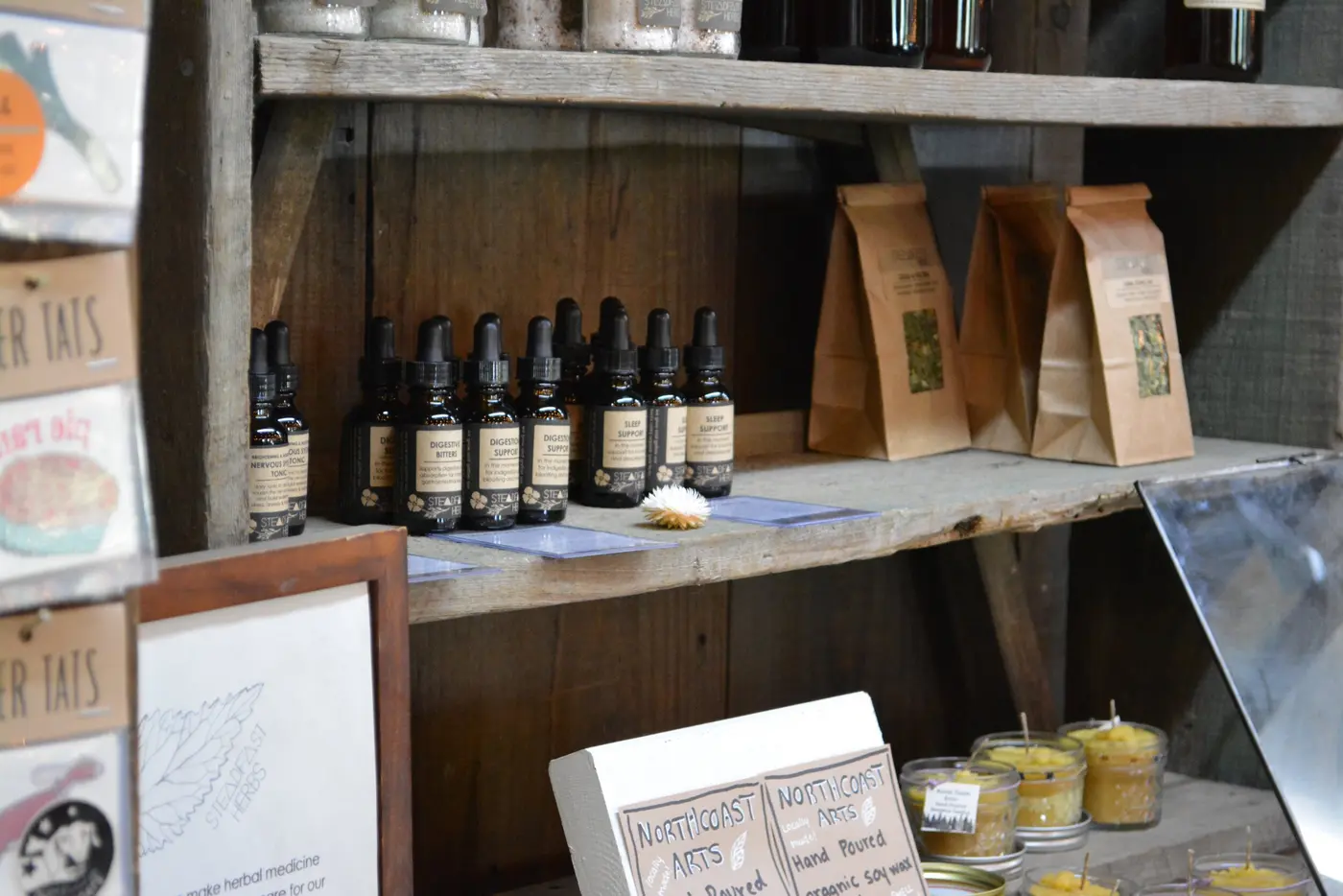
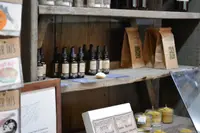
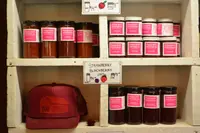
The barn is also the farmstand, open year round and kept on weekends. Its shelves hold the farm’s own certified-organic vegetables, flowers and preserves, and its heirloom dry beans, of which Blue House grows more than 30 varieties. Goods from neighbors fill out the stand: sourdough and pastries from Rosalind Bakery, pastured eggs from Twisted Fields, chicken, pork and beef from Root Down Farm and Markegard Family Grass-fed, fruit from Frog Hollow Farm and Blossom Bluff Orchards, honey from State Street Honey. The ranch is 74 acres and lies in the fog, where brassicas, lettuces, strawberries and artichokes do well. Tomatoes, summer squash and sweet potatoes grow on the farm’s sunnier ground at Pescadero. Most of the year-round farmworkers live on the San Gregorio ranch. Potable water is short on this part of the coast, the farm says, and there is no tap for filling a bottle. Cell service depends on the carrier, and there is no wifi. For lunch the farm sends visitors to Alice’s Restaurant or to the food truck at the San Gregorio General Store.
Pie and berries toward Pescadero
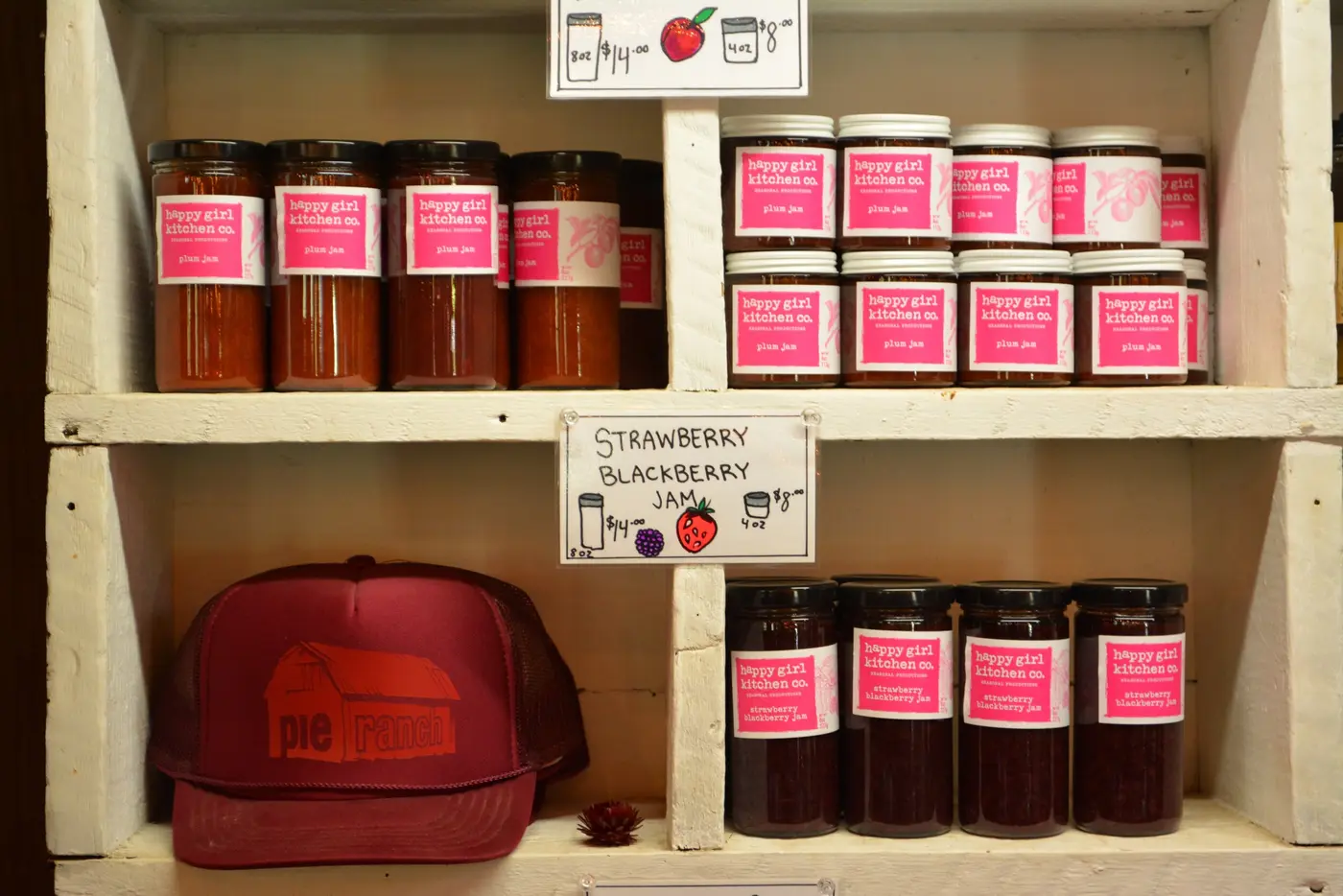
South on Highway 1 near Pescadero, Pie Ranch keeps a roadside stand downhill from its fields. The farm sits on a triangular slice of coastal hillside that, by the account of a UC Santa Cruz oral-history project, grows “everything you need to make pie”: pumpkins, berries, tree fruit, eggs, milk, butter, honey and wheat. The stand sells Senatore Cappelli whole-grain flour, blue corn flour, heirloom beans, preserves, medicinal herbs, grass-fed beef, pastured chicken and pork, and prints, jewelry and ceramics by local artists.
The pies come from Companion Bakeshop. Erin Lampel, a self-taught baker with a degree in agriculture and fruit sciences from Cal Poly, started Companion in 2006 and in the early years hand-mixed all the dough herself. She began baking pies for Pie Ranch in 2007. Companion staff now bake more than 270 a week for the stand. Pie Ranch is a nonprofit. City high school students come out through the school year, and the ranch holds work days and barn dances.
Inland at 2310 Pescadero Creek Road, R & R Fresh Farms hands out baskets for its organic olallieberries, blackberries, raspberries and strawberries. The farmstand tells pickers where the day’s best picking is.
Pumpkins and sunflowers on Cabrillo Highway
At Half Moon Bay the stands multiply in the fall. Andreotti Family Farms, at 800 Cabrillo Highway North, plants a pumpkin patch, a corn field, and a you-pick field of giant sunflowers between them. The Half Moon Bay visitors’ bureau calls the sunflower field the only one of its kind in Northern California. Bob’s Vegetable Stand & Pumpkin Farm, south of town, spreads its pumpkins over a large field set back from the highway. Visitors take a wheelbarrow and choose among many kinds, ornamentals among them. Farmer’s Daughter, off Highway 1 on the way into town, sets out its pumpkins with some decoration. On Saturdays from April to the third Saturday in December, the farmer-directed Coastside Farmers’ Market gathers growers, ranchers, fishermen and food makers at 225 Cabrillo Highway South.
The Half Moon Bay History Association notes that the town is often called the “pumpkin capital of the world,” though in 2022 Brussels sprouts sold $8,250,000 to the pumpkin’s $1,258,000. The association’s journal places the start of the roadside trade in the early 1930s. Teenage brothers John and Clarence Arata planted pumpkins to feed the family hogs, and, as the Arata Pumpkin Farm website relates it, sold them to a passing motorist for a quarter apiece.
Artichoke kings and Brussels sprouts
The Ohlone people tended the land around their seasonal villages by burning, weeding, pruning and planting. Spanish settlers brought heavier farming, and coastal dairies appeared in the mid-1800s. Italian immigrants came to the fields in the early 20th century, and their family names are still on the Coastside: Andreotti, Iacopi, Giusti, Lea, Arata, Pastorino.
Artichokes came first among their crops. An 1878 article in the San Mateo Times Gazette described artichokes fed to pigs, horses, cattle and sheep. It is not clear who first grew them on the Coastside for people. One story tells of a test crop in Pedro Valley around the turn of the 20th century. Dante Dianda, born in Italy in 1875, grew the first large crops. He had been farming on the Sacramento River, and when he became engaged to Silvia Belli he left that country because of malaria. He leased land near Half Moon Bay to grow a crop he knew nothing about, and Italian farmers already there taught him. By 1900 he had ten men from Italy working rented ground in El Granada. When the Ocean Shore Railroad came through, he bought it. In 1904 he became the first “Artichoke King,” because he was the first to ship artichokes to New York. They went over the hills by horse and wagon to the trains at San Mateo.
The second king, John Debenedetti, was a banker. He took charge of the Half Moon Bay-Coastside Artichoke Growers Association when it formed in 1917. He contracted with American Express to get artichokes east in days instead of weeks, and he brought hundreds of Italians, mostly from around Genoa, to work the fields. One of the association’s packing plants stood at 845 Main Street for 70 years. Today it is Pasta Moon, an Italian restaurant. The third king was Ciro Terranova of New York. Through his Union Pacific Produce Company he forced growers to sell at his prices. In the first week of January 1931 more than $10,000 worth of Coastside artichokes were stolen, and in some fields the plants were hacked to the ground with machetes. On December 21, 1935, Mayor Fiorello LaGuardia climbed onto a vegetable truck in the Bronx Terminal Market and banned the sale of artichokes in New York City. Coastside growers wrote to thank him. Nineteen residents signed the letter, and the first and largest signature was Dianda’s. By then, the association’s journal says, the bulk of artichoke growing was moving south to northern Monterey County.
Brussels sprouts followed. Guido Giusti, an Italian immigrant, founded Giusti Farms in 1949, and sprouts have been a core crop there from the start. In the 1950s Coastside sprouts drew frozen-food companies to Half Moon Bay. Louis Iacopi founded Iacopi Farms in 1962 and runs it with his son Mike. “My dad loved beans,” Louis has said, “and we got started when he brought over a handful from Italy.” One Iacopi plot lies between the runways of the Half Moon Bay Airport. It has no water, so the beans are dry-farmed, planted five to six inches deep in clay that must be disked at least five times. “This is where we grew up,” Mike Iacopi told a reporter in 2018. “This is the land we know.”
The Andreotti fields and the newcomers
The Andreotti farm began in 1926 with Dino Andreotti and Julia Benedetti growing mainly artichokes, beans and broccoli. The Peninsula Open Space Trust (POST) records that Dino Andreotti Sr. bought the land shortly after he arrived from Italy. In 1943 the farm was among the first to join the farmers’ market movement, selling at the Alemany Market in San Francisco. In the 1970s his son Dino and Dino’s wife Terry took over. The farm lies between downtown and Francis Beach. Its barn on Kelly Avenue once stored hay for livestock and was later turned into the family’s year-round farmstand.
After the founding generation died, parts of the farm went up for sale on the open market. POST began buying parcels as they appeared. In 2017 it bought the farm center and an adjoining 4.6-acre homesite, and in 2018 another 10 acres. It then placed the reunited 69-acre farm under a permanent agricultural conservation easement, and California FarmLink lent the Andreottis the money to buy it back. “This farm is a Half Moon Bay institution that was narrowly saved from the auction block,” said Ben Wright of POST when the deal was announced in June 2019.
On a Friday night in February 2021, shortly after 8 o’clock, fire took the historic barn at 329 Kelly Avenue. Firefighters found it fully engulfed and held the two-alarm blaze to the barn in under 30 minutes. No one was hurt. “You know it’s almost like losing a family member kind of,” said Dawn Dillman of Andreotti Family Farms. The family set up a fund for rebuilding.
The newer farms came from outside these families. Jered Lawson and Nancy Vail, with their San Francisco colleague Karen Heisler, began building Pie Ranch in 2002 as a place where city youth could learn about food. Lawson and Vail had both apprenticed at the Center for Agroecology and Sustainable Food Systems at UC Santa Cruz, the same program Erin Lampel later completed. Ryan Casey, a San Diego native, interned there too before starting his own organic operation. In 2005 POST gave him a lease on land in Pescadero, and Blue House Farm grew from it to the San Gregorio ranch. There, in 2019, with POST’s help, the farm raised the redwood timber-frame barn where the strawberries are weighed.
Notable Events
- 1904Dianda was the first to carry the Artichoke King moniker because he was the first to ship artichokes to New York; they were hauled over the hills by horse and wagon to San Mateo and loaded onto trains. halfmoonbayhistory.org
- 1917Coastside growers organized their own marketing association under banker and financier John Debenedetti, who contracted with American Express for faster east-coast shipping and recruited hundreds of Italian farmworkers. halfmoonbayhistory.org
- 1926Dino Andreotti and Julia Benedetti started the farm, producing primarily artichokes, beans and broccoli. californiafarmlink.org
- 1926Andreotti Family Farms was established in 1926 and offers a you-pick sunflower field. visithalfmoonbay.org
- 1930sTeenage brothers John and Clarence Arata planted pumpkins to feed the family hogs and, the Arata Pumpkin Farm website relates, sold them to a passing motorist for a quarter apiece - just like that a business and tourist attraction was born. halfmoonbayhistory.org
- 1943Among the first farms to join the Farmer's Market movement, selling at Alemany Market in San Francisco. californiafarmlink.org
- 1949Guido Giusti, an Italian immigrant, founded Giusti Farms in 1949; Brussels sprouts have been a core crop from the beginning. visithalfmoonbay.org
- 1950sCoastside Brussels sprouts, likely first planted commercially by Italian immigrants, gained popularity nationwide in the 1950s and spurred frozen food companies to flock to the coast in Half Moon Bay and Santa Cruz. visithalfmoonbay.org
- 1960The Higaki family nursery, incorporated after World War II as Bay City Flower Company, relocated to Half Moon Bay in 1960. halfmoonbayhistory.org
- 1962Louis Iacopi founded Iacopi Farms in 1962 and runs it today alongside his son Mike. visithalfmoonbay.org
- 1970sTheir son Dino and his wife Terry took over the farm. californiafarmlink.org
- 2002Lawson, Vail, and Heisler began establishing Pie Ranch, a working educational farm, in 2002. library.ucsc.edu
- 2005POST awarded Blue House Farm a lease on land in Pescadero. bluehousefarm.com
- 2017POST purchased original farm acreage for sale and worked with Dino and Terry to reassemble and preserve the parcels with an agricultural conservation easement. californiafarmlink.org
- 2018After purchasing the farm center and adjoining homesite, POST saved another 10 acres in 2018. openspacetrust.org
- 2019With POST support, Blue House raised a redwood timber-frame barn on its San Gregorio ranch; it now houses the year-round farmstand. bluehousefarm.com
- 2019The entire Andreotti Family Farm became subject to an affirmative agricultural easement guaranteeing agricultural use in perpetuity. californiafarmlink.org
- 2019After 109 years and four generations in floriculture, the Higaki family's Bay City Flower Company closed its doors. halfmoonbayhistory.org
- 2021A fire ripped through the historic Andreotti Family Farms barn in Half Moon Bay on Friday night. abc7news.com
People
- Dawn Dillman, Andreotti Family Farms representative describing the barn fire as almost like losing a family member.
- Ryan Casey, San Diego native and first-generation Blue House farmer who became interested in farming through college agriculture courses.
- Ben Wright, POST Farmland program manager involved in saving the Andreotti farm from auction.
- Brett Melone, FarmLink director of lending involved in financing the protected Andreotti family farm.
- Julia Benedetti, Co-founder of Andreotti Family Farm (1926).
- Dante Dianda, early Coastside farmer whose successful artichoke farm earned him the title The Artichoke King (fled Italy for the United States around the turn of the 20th century).
- Harry Higaki, led the Higaki family nursery, incorporated as Bay City Flower Company, in Half Moon Bay; a Military Intelligence Service veteran who rejoined the family business after internment (honorably discharged as a U.S. Army Sergeant in 1947; led the company after the family returned from internment).
- John Debenedetti, banker and financier who led the Half Moon Bay-Coastside Artichoke Growers Association and became the next Artichoke King (ran the association about 15 years before retiring in the early 1930s to farm artichokes with his son).
- Jered Lawson, co-founder of Pie Ranch; part of its founding partnership.
- Karen Heisler, San Francisco-based colleague of Lawson and Vail in Pie Ranch's founding partnership.
- Nancy Vail, co-founder of Pie Ranch; part of its founding partnership.
- Dino Andreotti Jr., Second-generation farmer determined to preserve the family farm with Terry and their children Frank and Haley.
- Dino Andreotti Sr., Italian immigrant who established the Andreotti family farm and bought it shortly after immigrating (1926).
- Frank, Child of Terry and Dino Andreotti Jr.; helped preserve the family's way of life.
- Haley, Child of Terry and Dino Andreotti Jr.; helped preserve the family's way of life.
- Terry, Second-generation Andreotti farmer determined to preserve the farm with Dino Jr. and their children.
- Mike Iacopi, owner of Iacopi Farms, farming alongside his father Louis (farming alongside his father since the 1970s).
- Guido Giusti, founder of Giusti Farms (founded Giusti Farms in 1949).
- Louis Iacopi, founder of Iacopi Farms, which he runs alongside his son Mike (founded Iacopi Farms in 1962).
Sources
- visithalfmoonbay.org/discover/farmstands-u-picks
- bluehousefarm.com/farmstand
- pieranch.org/farm-stand
- halfmoonbayhistory.org/wp-content/uploads/2024/06/CoastsideChronicles_Spring-2024.pdf
- paloaltoonline.com/uncategorized/2018/07/26/why-the-bay-areas-hottest-restaurants-look-to-this-half-moon-bay-farm-as-their-secret-source
- visithalfmoonbay.org/discover/farmstands-u-picks
- visithalfmoonbay.org/articles/legacy-farming-two-centuries-coastside-agriculture
- library.ucsc.edu/reg-hist/jered-lawson-and-nancy-vail-pie-ranch-a-rural-center-for-urban-renewal