Great Northern Fair
Havre, Hill County, Montana. Hill County's Fair; Year-round.
Details

- Where
- 1676 US-2, Havre, MT 59501. Directions
- When
- Last held July 15–19, 2026; next year’s date not yet stated.
- Fees
- Free to attend with paid entrance to events, carnival rides, and food; parking free until 1pm, then $5 per day or $20 for the week.
- Hours
- Carnival: Wednesday 4 pm to midnight; Thursday-Saturday noon to midnight; Sunday noon to 9 pm; food booths and vendors open at noon.
- Access
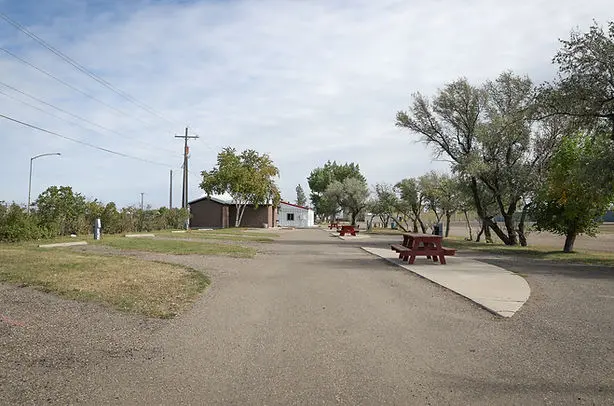
- Onsite restrooms, showers, and RV dump; $5 use charge for showers and RV dump without a camp spot reservation.
- Walk-in or reserve
- Presale of carnival and event tickets available through the fair office.
- Phone
- 406-265-7121
- Website
- greatnorthernfair.net
- Managed by
- Great Northern Fair Board; Frank English, Fair Manager.
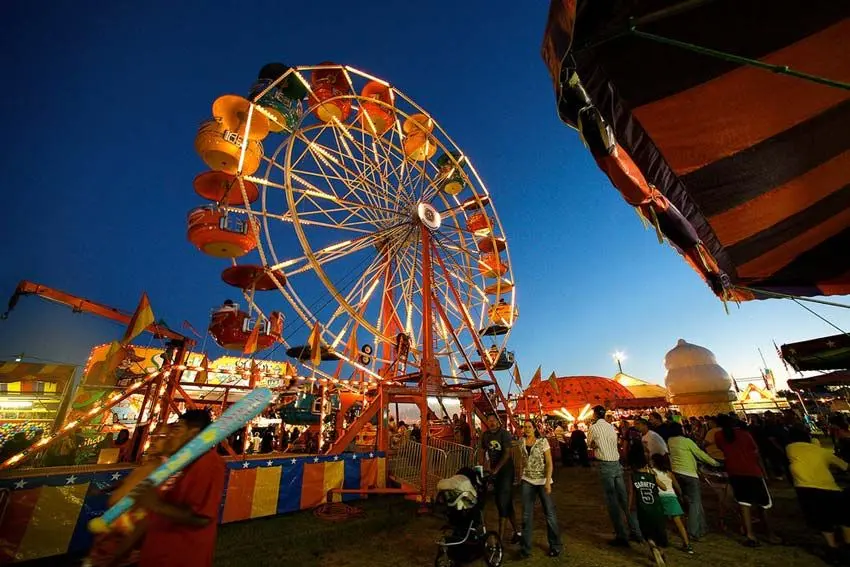
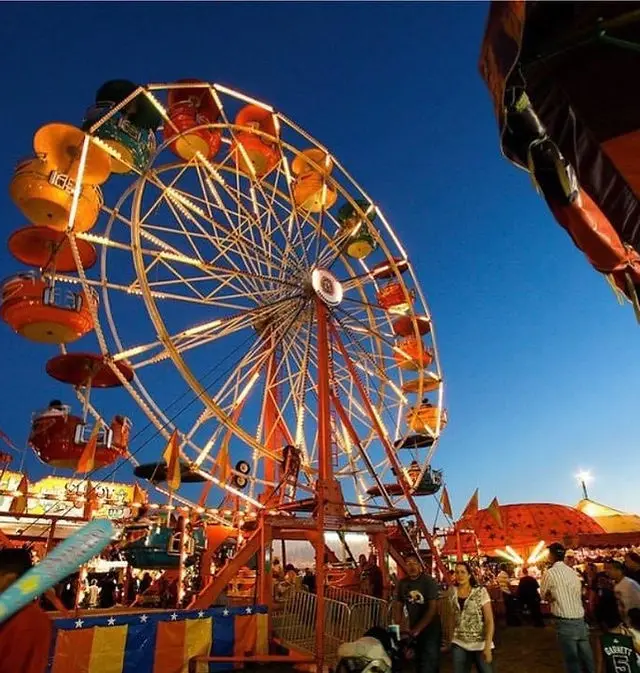
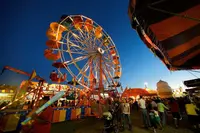
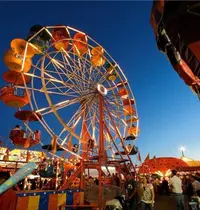
The Great Northern Fair sets up each July on the fairgrounds at 1676 US Highway 2 West in Havre, a railroad and farm town about 40 miles south of the Canadian border. It is Hill County’s fair. The 2026 fair ran Wednesday, July 15, through Sunday, July 19. Admission to the grounds was free, while rides, grandstand shows and food were paid. Parking was free before 1:00 pm. Fair staff told the Blaine County Journal that Friday and Saturday are usually the busiest days and that the evening draws the biggest crowds, and they urged people to come early for lunch. Volunteers collected the parking money, and one fair-week post asked visitors to “please be kind to the people taking your money.”
Five days on US Highway 2
On opening day the food and vendor booths opened at noon, along with the open-class exhibit building. The Junior Rodeo started at 3:00 with a $10 admission, and the carnival started at 4:00 and ran until midnight. Midway West Amusements brought the rides again. On Thursday and Friday the carnival opened at noon, and the RAM Rodeo went into the arena at 7:00. Saturday’s grandstand show was the truck and tractor pulls, with locals pulling from noon and professionals at 7:00. On Sunday the carnival closed at 9:00 and JC’s Demolition Derby started in the grandstands at 6:00 to end the fair.
Between the paid events came the free acts. Mad Chad, a chainsaw juggler, did stage shows at 3:00 and 6:00. Adam the Great, a magician, did stage shows at 2:00 and 5:00 and worked the crowd between them. The Living Zultar appeared at intervals through each day. The World’s Funnest Photo Booth took free pictures in the commercial building, where the vendor booths are. Adam the Great posted his own record of the week, calling up volunteers from the audience: “Two amazing volunteers, two amazing performances!” and, on Saturday morning, “Lucy was a STAR.” On the last day he wrote, “It’s the final countdown! Sharing the stage with Mad Chad.”
The 4-H program filled the livestock barns with animals, a junior livestock auction and a petting zoo, and open-class exhibits of all kinds went on display. Most of the food came from booths run by area civic groups, serving what the Havre Chamber of Commerce calls “gourmet delights.” The fair describes its concessions area as a fair-week staple “for decades.” Late on the Friday night the fair office posted what had been turned in during the previous half hour: two cell phones, a key on a lanyard, a wallet, and medication.
The grounds between fairs
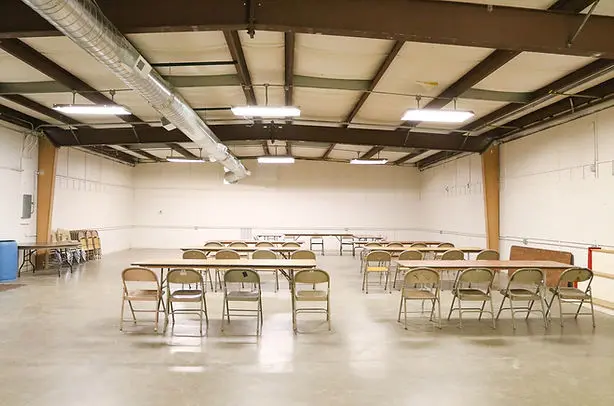
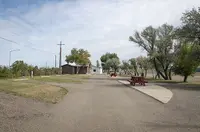
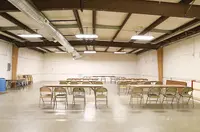
The fairgrounds is used all year. The Bigger Better Barn holds the MSU-Northern Rodeo, 4-H livestock exhibits, animal clinics and concerts. The Stockade, which locals also call the Beer Gardens, is rented for wedding receptions and graduations, and the community center has a full kitchen for reunions and trade shows. The Jordan World Circus played the grounds on May 13, 2026. The campground stays open year-round with 21 RV sites and a tent area. From October to May the Southeast Horse Barn becomes cold storage for campers, boats and cars waiting out the winter.
A board of seven runs the grounds: Michelle Burchard, Ken Erickson, Briana Warren, Robert (Bob) Kaul, Kaleb Fisher and Casey Tilleman, with Frank English as fair manager. The board meets monthly in the fairgrounds conference room. According to KRTV, the fairgrounds was at one time in danger of closing for lack of funds. English credited city and county officials and the community with keeping it open. “I got a fantastic board,” he told the station. “They’re backing me one hundred percent; they get in and do a lot of work. I got a lot of County employees, like the County Treasurer. She’s with me all along the way crunching numbers for me.” A nonprofit, the Great Northern Fair Foundation, raises money for improvements. The 2027 fair is set for July 14 to 18.
One corner of the grounds belongs to the H. Earl Clack Museum. It is an old homestead area that visitors can tour, with the old Faber School, a homestead house, and farm machinery from the 1920s.
Grain, gas light and a parachute: 1914
Hill County was holding a fair well before the homestead machinery was new. The Hill County Democrat of September 12, 1914, announced that the fair would open September 17 “with everything in shipshape and an altogether excellent exhibit of grains, grasses and vegetables gathered from every portion of the country.” The notice was signed by R. X. Lewis, secretary. It promised harness and running races and star riders from the Pendleton, Oregon, Roundup, who would perform between heats. There would be a balloon ascension with a parachute jump every day. A camp of people from the Belknap Indian Reservation would put on races and dances. Each evening the grounds would be lit with natural gas from the Havre gas well.
E. C. Sprague came down from Box Elder the night before the opening to set up the agricultural exhibit, which he ran. The Havre Promoter put the opening-day crowd at “from twelve to fifteen hundred.” It judged the parachute drop “exceptionally good” and the races “as usual the center of interest.” The free-for-all pace paid a $300 purse. The grain exhibit, the paper wrote, made it seem that “all the talk about a dry season and crop failure is simply a fairy story.” Visitors arrived from Gildford, Lothair, Hingham, Cottonwood and Burnham, and many of them registered at the Hotel Havre.
A stampede, a buffalo, and the women farmers: 1916
In July 1916 the fairgrounds, which then stood in what is now Havre’s East End, held the Great Northern Montana Stampede. The grandstands had just been built. The July 6 Havre Daily Promoter put the crowd at ten thousand, and there were rides for children and tents where families could get out of the sun. Two days later the paper reported that the crowds were as large as on the opening day and the cheering just as loud. The weather was “a little warm for comfort among some of the more obese of the spectators.”
George Francis, whom the Promoter called “the king of cowboys,” had missed Thursday’s show after an accident. He was back on Friday, and while he was bulldogging a longhorn Mexican steer, “the long sharp pointed horn ran across his stomach, taking with it a good piece of epidermis, but it failed to puncture the abdominal wall.” Saturday was Governor’s Day. Governor Stewart, described by the paper as “an old cowboy himself,” led the parade, and the Havre Rangers, a newly formed mounted company of veterans, rode as his bodyguard. The rider Powder River was to come out of the chute on a four-year-old buffalo. He had offered to bet that he would “ride and scratch the varmint every jump.” A four-year-old grizzly bear was to be roped the same day.
That September the Promoter covered the Fifth Annual Hill County Fair on its front page under the headline “Women Farmers make Magnificent Display of Agricultural Products.” Mrs. J. P. Engeberg of Kremlin showed 28 varieties of grain and grasses, asters and sweet peas, citrons, melons, squash and cucumbers. Dora Albrecht of Phipps showed corn, potatoes, and what the paper called the “finest samples of winter wheat and rye ever seen in Montana.” The center of the main building held work by city and rural schoolchildren, including basketry, mat weaving, penmanship and photography. Horse races ran outside.
The next summer’s Stampede survives in a diorama at the H. Earl Clack Museum in Havre. Figures of well-known locals sit in the grandstand of the 1917 Great Northern Montana Stampede. Below them, Long George Francis, “Havre’s gentle outlaw,” and Marie “Bucksin Mary” Gibson, a world champion woman bronc rider, ride in the arena.
Notable Events
- 1914The Hill county fair for 1914 will open September 17th with everything in shipshape and an altogether excellent exhibit of grains, grasses and vegetables gathered from every portion of the country. havredailynews.com
- 1916George Francis, the king of cowboys, was again in action and while bull dogging one of the long horn Mexican steers, the animal attempted to disembowel him, but the long sharp pointed horn ran across his stomach, taking with it a good piece of epidermis, but it failed to puncture the abdominal wall. havredailynews.com
- 1916The July 6, 1916 issue of The Havre Daily Promoter boasted "Great Northern Montana Stampede Witnessed by Then Thousand People," so people certainly attended. havredailynews.com
- 1916The Fifth Annual Hill County Fair was underway, reported on the front page of the Sept. 15, 1916, issue of The Havre Daily Promoter; the finest agricultural exhibits were raised and displayed by women farmers. havredailynews.com
- 1917The H. Earl Clack Museum features a 1917 Great Northern Montana Stampede diorama, with figures of well known locals in the grandstand as well as Havre's "gentle outlaw", Long George Francis and the world champion woman bronc rider, Marie, "Bucksin Mary" Gibson in action. hillcounty.us
People
- Frank English, Fair Manager.
- E. C. Sprague, In charge of the agricultural exhibit at the Fair.
- George Francis, King of cowboys; bull dogger (1916).
- Governor Stewart, Guest of honor and parade leader at the Stampede (1916).
- Powder River, One of the greatest riders of the world (1916).
- Dora Albrecht, Woman farmer of Phipps; exhibitor of farm, garden and floral exhibits.
- Mrs. J. P. Engeberg, Woman farmer of Kremlin; exhibitor of farm, garden and floral exhibits.
- Long George Francis, Havre's "gentle outlaw"; bronc rider (1917).
- Marie 'Bucksin Mary' Gibson, World champion woman bronc rider (1917).