Grape Day Festival
Escondido, San Diego County, California. Festival; Fall.
Details

- Where
- 321 North Broadway, Escondido, CA 92025. Directions
- When
- Last held September 5, 2026; next year’s date not yet stated.
- Fees
- Admission and parking are free.
- Hours
- 12-5 pm.
- Access
- Parking can be difficult at this well-attended event; arrive prepared.
- Walk-in or reserve
- All ages welcome.
- Phone
- 760-743-8207
- Website
- grapedayfest.org
- Managed by
- Escondido History Center.
- Established
- 1908.
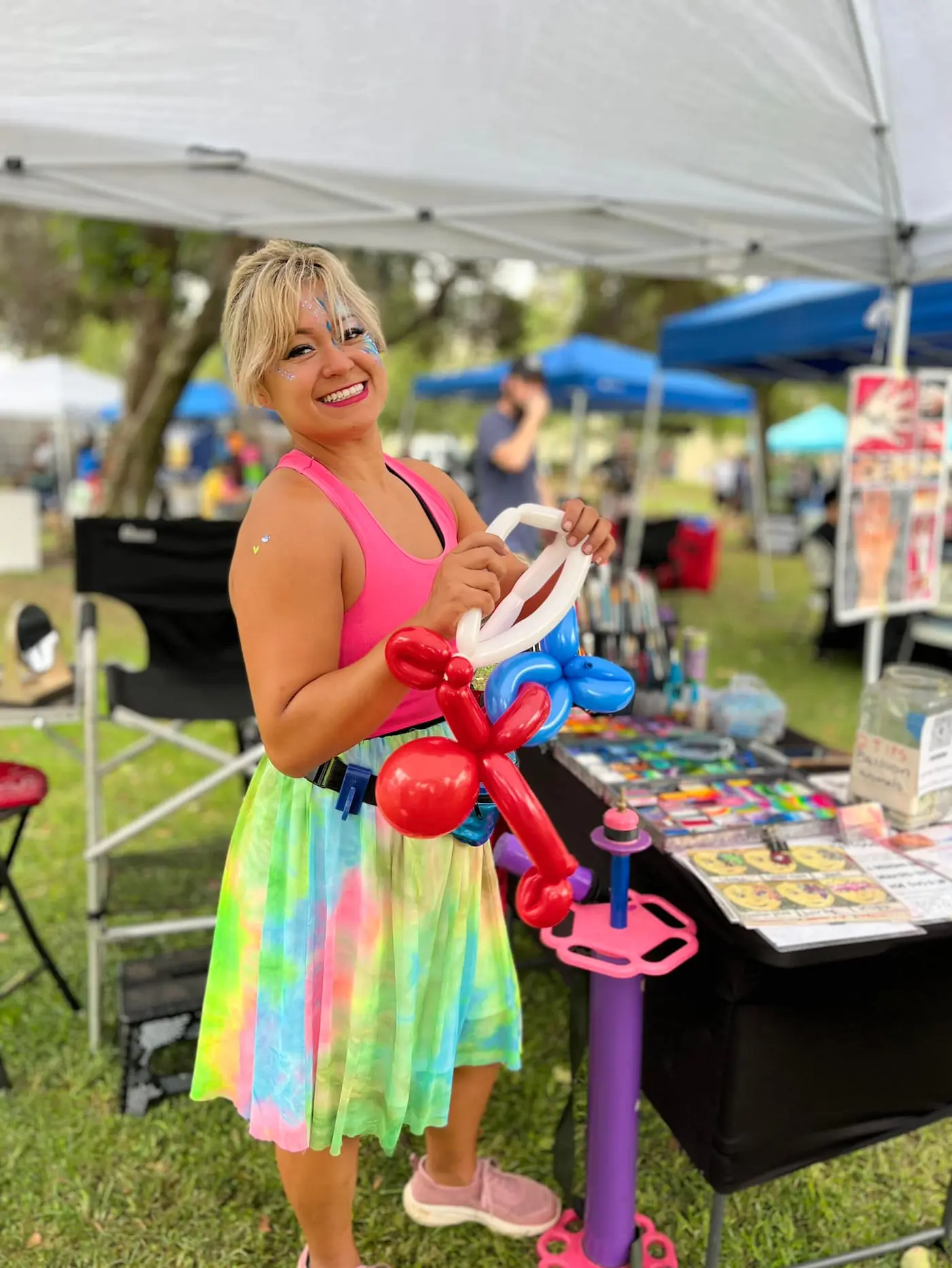
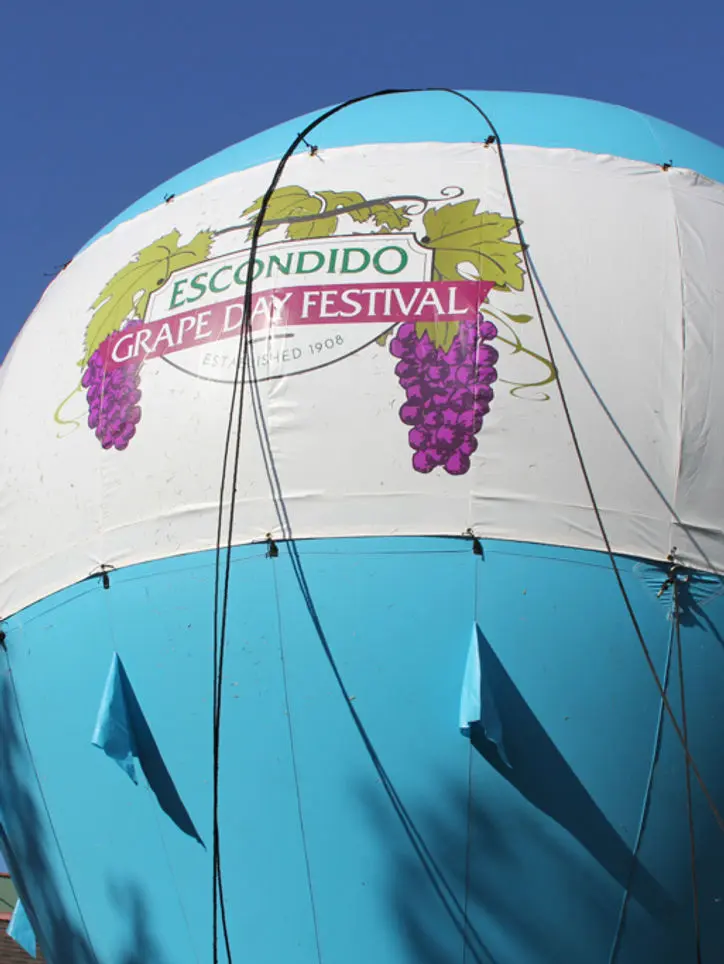
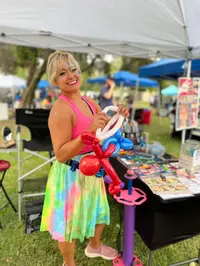
At the Grape Day Festival, the grapes go into a tub and the visitors go in after them, barefoot, to make juice the old-fashioned way. The festival is a free afternoon held each September in Grape Day Park, at 321 North Broadway in downtown Escondido. The 2026 festival ran on Saturday, September 5, from noon to 5 p.m. Around the grape stomp, the festival’s site lists goat milking, a Kids Zone of free activities, food from around the county, a wine and beer garden pouring local favorites, and rows of artisans’ booths. On the stage there is folk music and the twirling skirts of Folklórico dancers.
Grape Day Park and the History Center
The park is Escondido’s oldest. The city calls it the center for community events since the early 1930s, and it is a registered landmark. It holds a turn-of-the-century working barn, a Santa Fe Railroad depot, a blacksmith shop, and other historic buildings, museums and monuments. The Heritage Walk, set up for the nation’s Bicentennial in 1976, gathers buildings from the town’s early days.
The Escondido History Center runs the Heritage Walk and hosts the festival. It has collected the town’s history since 1956. Since the 2022 return it has put on Grape Day with Brothers of 6 Charities, a local group whose stated aims are preserving history, honoring veterans and serving the community.
Cynthia Castañeda, the Center’s executive director, described the 2025 program to the Escondido Times-Advocate. She said that after the post-COVID revival, “We started to focus on artisans and to include handmade items.” She added, “Many in the community were artisans, who made their own clothes.”
The 2025 demonstrations included:
- basket weaving, bobbin lace, appliques and corn grinding, the last by a local man who brought his own corn grinding machine
- glass blowing by The Collective, a group of women students from Palomar College
- cows from Hollandia Dairy for milking, tentatively scheduled
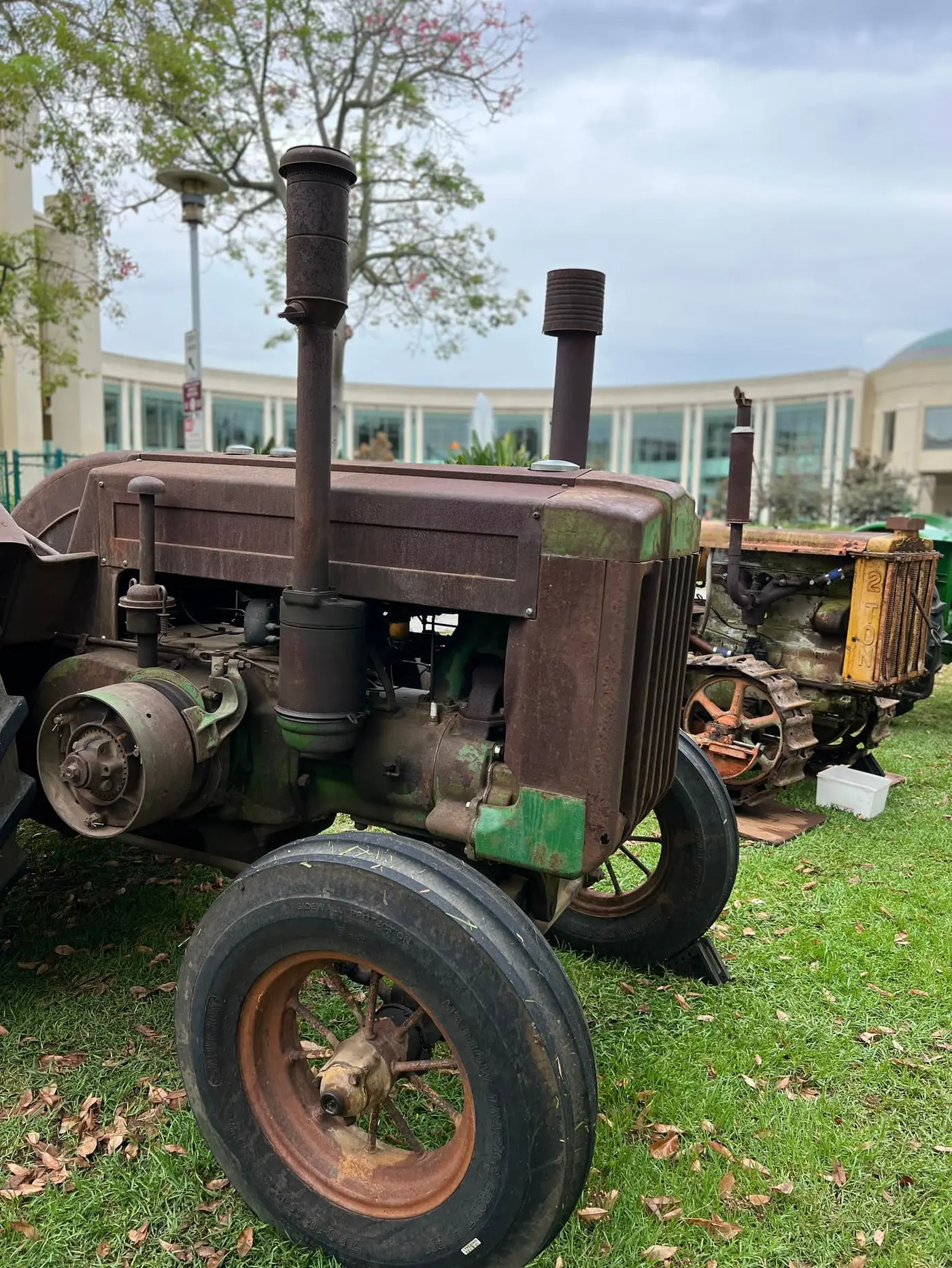
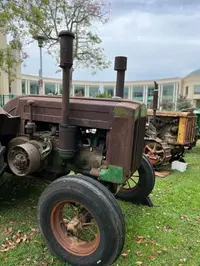
- several steam engines brought by the Antique Gas & Steam Engine Museum in Vista
The Center also recorded oral histories of Latinos in Escondido, working with the Pioneer Room of the Escondido Library. Food ran to Mexican food and snacks, dumplings, Southern comfort food, pastries, cookies, breads and cake pops. Lefty Martin and his Right Hand Band played. It is a country western band grounded in the 1990s that works through seven decades of the genre. The festival’s own 2025 page adds a petting zoo and antique vehicles.
The same morning in 2025, the 15th annual Grape Day 5K, put on by the Escondido Sunrise Rotary and Palomar Health, started around 7 a.m. Castañeda warned that parking at so well-attended an event can be difficult: “So people should be prepared.” Money left after the bills are paid is split between the two organizers. Brothers of 6 spend their share on holiday shopping for underserved communities. The Center spends its share on exhibits such as its displays in the mall.
Forge and lace by the depot
The 2022 festival, the first after the pandemic, drew thousands despite a threat of rain, The Coast News reported. In front of the old Bandy Blacksmith Guild, beside the train depot, professional blacksmith Fil Martinez shaped hooked steak prongs and other tools at his forge and anvil. Larry Fox, a novice blacksmith, explained the work to the people watching.
A wagon made by another Escondido blacksmith, Phil Ewing, was used for the first time that day. It had been ten years in the building and was made to pull in parades. In the 1990s Ewing helped design the reconstructed blacksmith shop, modeled on the Tom Bandy & Son shop established in 1908. In 2007 he helped add its wheelwright and woodworking extensions. According to Ewing, volunteers teach blacksmithing there through the year and are usually at the shop on Tuesdays and Saturdays.
At the depot his daughter, Jennifer Ewing, braided and twisted thread from bobbins into lace. “As a blacksmith’s daughter, what I make is based on the tools I use,” she said. Near her stood an antique knitting machine from 1904. Robin Fox, the Center’s director in 2022, called the festival a fun, free “one-day history lesson.”
Bonds burned for water
That history begins with water. The valley was home to the Luiseño and Kumeyaay people for thousands of years. In the mid-1880s the Escondido Land and Town Company bought Rancho Rincón del Diablo and laid out a town. Vineyards, orchards and farms spread across the valley, but there was no reliable water. The Escondido Irrigation District issued $350,000 in bonds to build the Bear Valley Dam, now Lake Wohlford. According to the History Center’s blog, the community repaid the debt at just 43 percent of the original amount due.
When the debt was settled, residents burned the bonds, but the sources give different dates:
- The Times-Advocate, quoting Castañeda, places Bond Burning Day on September 9, 1905. In this account the first Grape Day came three years later, in September 1908. Castañeda said the anniversary also sets the festival’s date: “That is why we try to keep the event to the 2nd Saturday of the month and keep it as close as possible to the actual anniversary.”
- The festival’s history page puts the burning in 1907, in front of Lime Street School, which stood in what is now Grape Day Park. In this account the first Grape Day followed the next year.
The day was named for the grape that mattered most in the valley: the muscat, which the festival site spells Muskat. It was a hardy variety that needed very little water.
A thousand on the Santa Fe special
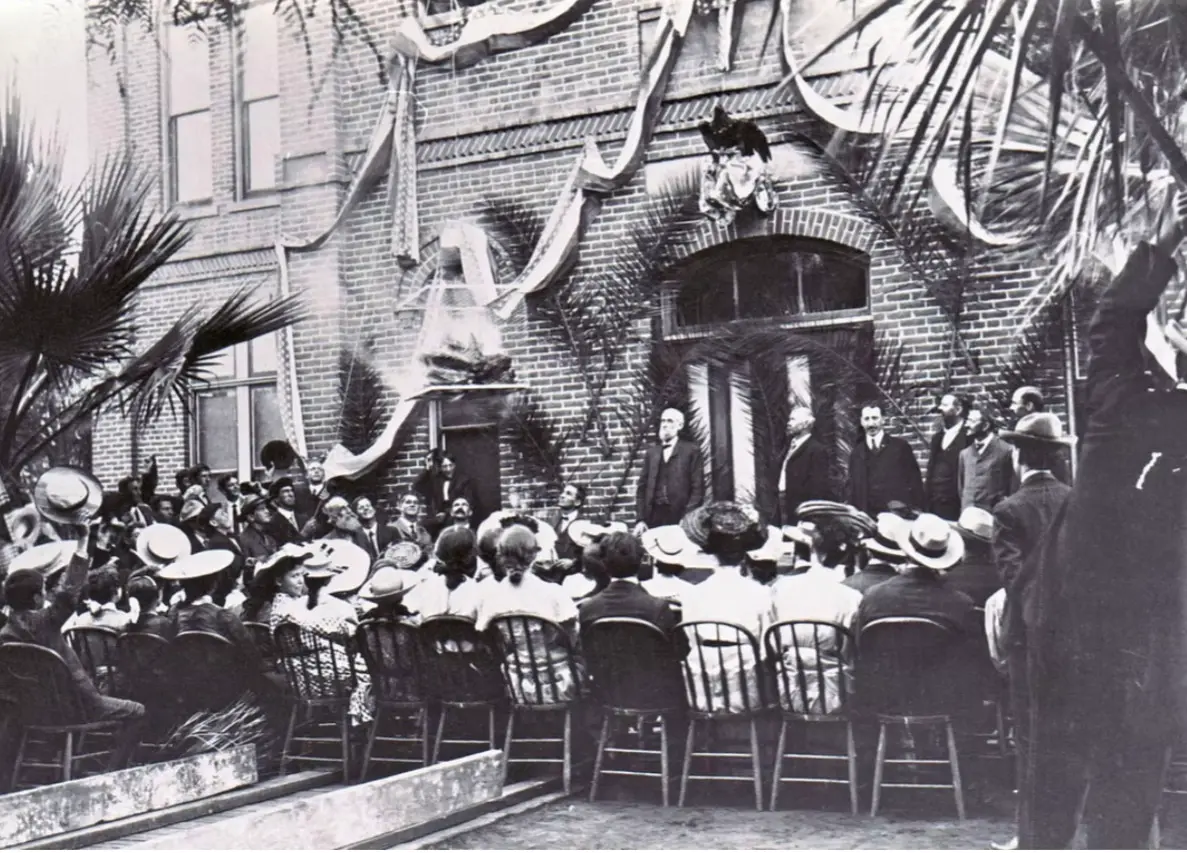
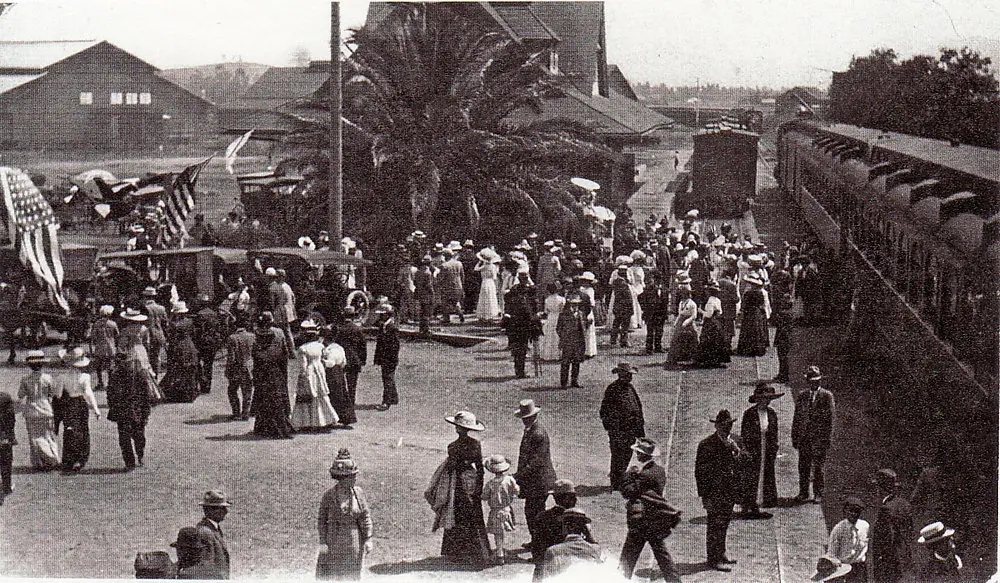
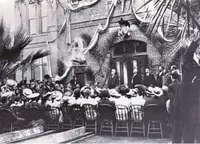
The festival names Sig Steiner as its founder. On September 9, 1908, he served on a reception committee with W.L. Damey, W.M. Bradbury, Arthur Jones, W.H. Baldridge and J.W. Heges. They met the excursion trains at Oceanside and pinned badges on the visitors: buttons bearing a bunch of grapes ringed with the words “Grape Day.”
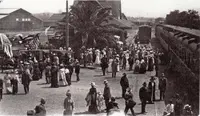
The San Diego Union gave the day nearly two pages. By its account, fully 1,000 excursionists from San Diego, and some from Los Angeles, loaded the Santa Fe specials “to the guards.” They had been on the cars since 8 in the morning, with a tedious wait at Oceanside. Three engines were needed to pull the trains over the grade. The second section did not arrive until 2 in the afternoon, so the program had to change.
The Knights of Pythias handed out badges with a small whistle attached and the words “All Knight Toot.” Another 300 people came by automobile and swamped the town’s eating places, yet “no one went hungry.” The correspondent wrote that there was “no longer any doubt but what it will hereafter be made an annual event.” The festival’s own history counts hundreds of visitors from across the county.
Queens, floats and two revivals
The festival did become annual, from 1908 to 1950, with a pause only for World War II. The city says people came every year from as far away as Los Angeles. The festival’s photograph collection shows 10 tons of grapes given away in 1913. That year Margaret Juny became the first Grape Day Queen. In 1923 the queen was the silent film star Agnes Ayres. Floats from the Borra and Mighetto wineries, a Safeway store’s entry, and the Escondido High School band appear in the parades of 1939, 1940 and 1947.
The two histories rank those years slightly differently. The festival’s history page says that at its height in the 1940s the festival rivaled the Rose Parade in Pasadena. The Coast News ranks it second in popularity only to Pasadena’s Festival of Roses.
After a quiet period, the History Center brought the festival back. The sources disagree on the year:
- 1990, according to The Coast News
- 1996, according to the Center’s sponsor page
- “the 1990s,” according to the festival’s history page
The Coast News says the Center ran it until 2018. The photographs from those years include a parade and queen in 2006, sack races in 2009, and in 2016 a crowd covered in Dr. Bronner’s Magic Foam. The Center says resources and the pandemic then stopped the festival for four years, until the 2022 return. The Center’s 2025 announcement called that September’s festival the 68th annual.
After the 2026 festival, Hollandia Dairy posted its thanks for “another year of success” and closed with: “We’ll see you out there.”
Notable Events
- 1905Bond burning celebrated paying off the bond of the dam that created Lake Wohlford. times-advocate.com
- 1907Residents gathered before Lime Street School and ceremoniously burned the bonds when the final debt was settled. grapedayfest.org
- 1908The first Grape Day's success led the contemporary report to say there was no longer doubt it would become an annual event. sandiegouniontribune.com
- 1913Margaret Juny was the first Grape Day Queen. grapedayfest.org
- 1950The festival's original run lasted from 1908 until 1950. thecoastnews.com
- 1990sThe festival was revived after a period of quiet. grapedayfest.org
- 2018The History Center's revived run lasted until 2018. thecoastnews.com
- 2022The festival was revived again after the COVID-19 pandemic. grapedayfest.org
- The festival paused during World War II; otherwise its popularity grew through the 1950s. grapedayfest.org
People
- Agnes Ayres, Silent film star and Grape Day Queen (1923).
- Margaret Juny, First Grape Day Queen (1913).
- Sig Steiner, Founder of Grape Day (1908).
- Arthur Jones, Member of the reception committee meeting Grape Day excursionists at Oceanside.
- J.W. Heges, Member of the reception committee meeting Grape Day excursionists at Oceanside.
- Sig. Steiner, Member of the reception committee meeting Grape Day excursionists at Oceanside.
- W.H. Baldridge, Member of the reception committee meeting Grape Day excursionists at Oceanside.
- W.L. Damey, Member of the reception committee meeting Grape Day excursionists at Oceanside.
- W.M. Bradbury, Member of the reception committee meeting Grape Day excursionists at Oceanside.
- Fil Martinez, Professional blacksmith demonstrating tool-making at the festival.
- Jennifer Ewing, Demonstrated bobbin lace at the train depot during the festival.
- Larry Fox, Novice blacksmith who explained Martinez's tool-making to festival onlookers.
- Phil Ewing, Escondido blacksmith who made the wagon used at the festival.
- Robin Fox, Director of the Escondido History Center; described the festival as a one-day history lesson.
- Cynthia Castañeda, Escondido History Center executive director explaining the festival's origins.
- Lefty Martin, Performer with his Right Hand Band at Grape Day Festival.
Sources
- escondidohistory.org/events-news
- grapedayfest.org
- grapedayfest.org/sponsors
- times-advocate.com/articles/grape-day-festival-recalls-glory-days-of-citys-history
- escondido.gov/facilities/facility/details/Grape-Day-Park-10
- grapedayfest.org/about
- grapedayfest.org/about/grape-day-festival-2025
- escondidohistory.org/about-1
- escondidohistory.org/post/grape-day-festival-2025-a-celebration-at-the-heart-of-escondido
- grapedayfest.org/vendors
- facebook.com/EscondidoHistoryCenterMuseum
- instagram.com/escondido_history_center
- facebook.com/events/1046161138072315
- times-advocate.com/articles/grape-day-festival-recalls-glory-days-of-citys-history
- thecoastnews.com/thousands-rediscover-escondido-history-at-grape-day-festival
- sandiegouniontribune.com/2019/09/10/escondido-celebrated-first-grape-day-in-1908
- sandiego.gov/digitalarchives/new-discoveries/escondido-grape-day