
Grangeville Border Days Rodeo
Grangeville, Idaho County, Idaho. Idaho's Oldest Rodeo Event; July (annual Fourth of July weekend).
Details

- Where
- 412 S COLLEGE ST, Grangeville, ID 83530. Directions
- When
- July 1-4, 2027.
- Fees
- $15,age 12 and older.
- Hours
- Street Sports 9 AM; Parades 2 PM; Rodeos 6 PM.
- Walk-in or reserve
- TICKETS ON SALE: JUNE 1, 2027.
- Phone
- 208-451-4416
- Website
- grangevilleborderdays.com
- Managed by
- Border Days Committee.
- Established
- 1912.
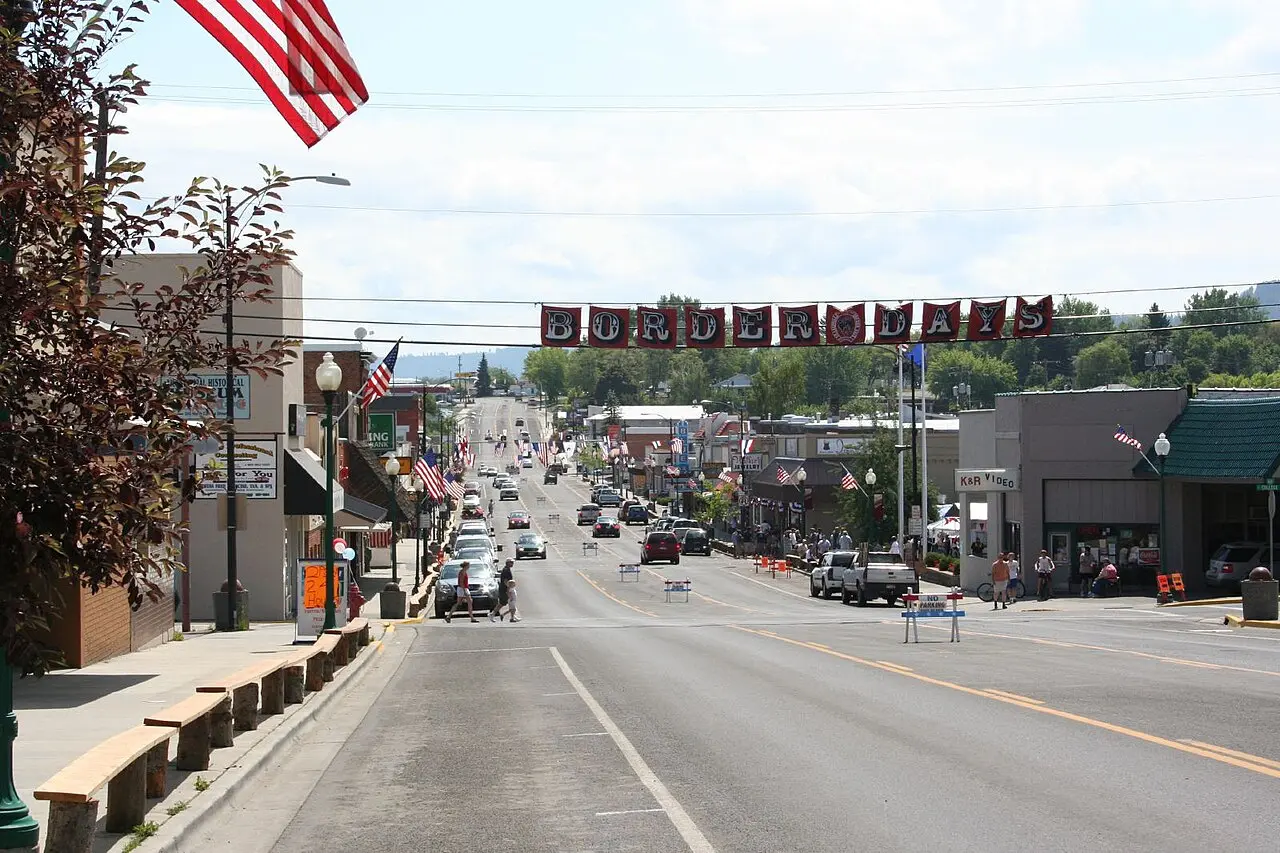
At nine on the morning of July 2, 2026, the street sports opened in downtown Grangeville, and the 115th Border Days was under way. Grangeville is the seat of Idaho County, a town of about 3,300 at 3,399 feet on the Camas Prairie. The mountains of the Nez Perce National Forest rise just to the south, and Main Street is State Highway 13. For three days the program kept the same clock: street sports at 9 a.m., a parade down Main at 2 p.m., and a rodeo at 6 p.m. in the Border Days arena, with a band after the last event. The theme for the 2026 celebration was “The American Way — 250 Years Strong.”
Eggs, pancakes, and goldfish
The street sports include children’s footraces and the Super Egg Toss, which the celebration bills as the World’s Largest Egg Toss. Two-person teams toss and catch eggs through a set of required throwing motions. Lorie Palmer Russell, a reporter for the Idaho County Free Press, described one year’s toss in IDAHO magazine. Some teams went out on the hook shot, some on the pirate toss, and some on the over-the-flag throw. Many walked away shaking their heads at an apologizing partner. By her count, 4,140 people flung eggs over three mornings, July 2 through 4. “We’ve been doing this our whole lives,” Scott Wilkins told her, laughing. His friend Garrett Dragonbourne added, “I cannot believe we finally won! This is our year.” In 2026 the Super Egg Toss Championship fell on Saturday, July 4. A cornhole tournament filled the morning of July 3.
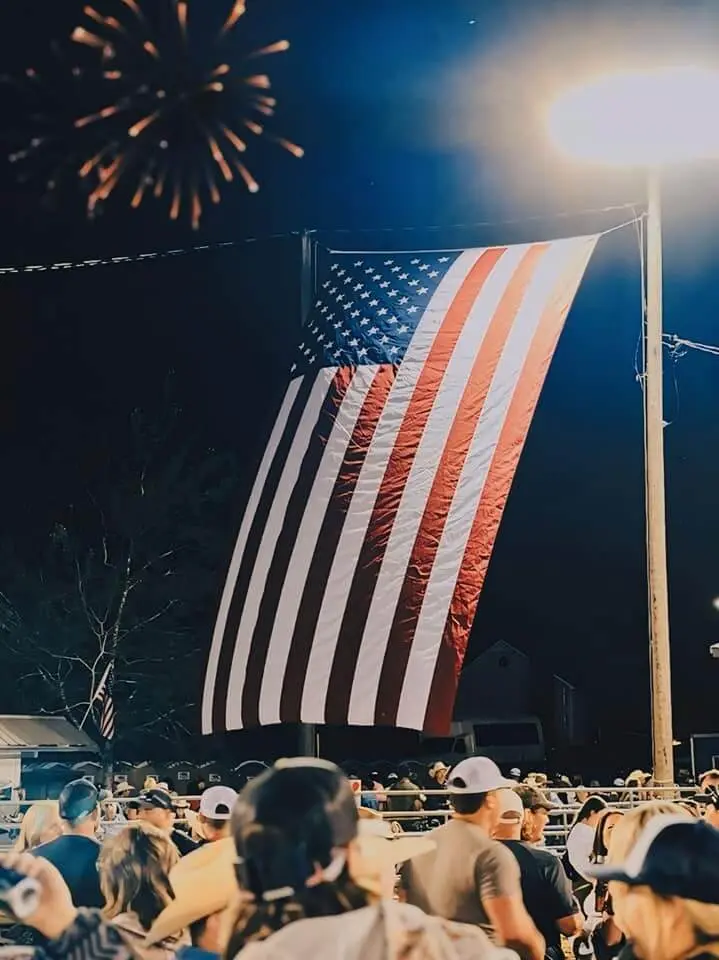
The Fourth is the longest day. It starts with a pancake breakfast in Grangeville City Park. Children get their own Kiddie Parade at 1:30 p.m., half an hour before the main one. In Pioneer Park, local artisans and crafters lay out handmade goods for Art in the Park, which runs July 4 and 5. Fireworks go up over the town that night. Food vendors work all weekend, and the Grangeville Volunteer Fire Department runs a fish pond where children win goldfish to carry home.
Six o’clock at the arena
The committee calls the rodeo Idaho’s oldest, and the regional tourism office repeats the line organizers use: “some are bigger but none are better.” The rodeo is sanctioned by the NPRA, and the Idaho Cowboys Association lists it as NPRA/ICA co-approved. Gold Buckle Rodeo of Roosevelt, Washington, supplies the stock, and Dr. Kim Heezen is the official rodeo veterinarian. Contestants compete in bull riding, barrel racing, steer wrestling, and other events. Slack runs at 10 a.m. on the opening day. In 2026 the first evening was Family Night and Pink Night, and a $40 ticket admitted two adults and two children. Wade Aylett played after the July 2 performance and the Tamarack Ridge Band after July 3. Jackson Sundown, the Nez Perce cowboy, performed at Border Days, and many other cowboys and cowgirls have followed him.
In recent years the Border Days Committee has built a stage and redone the bleachers at the arena. Aaron Tippin and Mark Chesnutt have both sung there after the rodeos. Anna Wren is the committee’s president and Tate Stowers its vice president.
The arena does not sit idle after July. On August 15, 2026, the committee staged Bulls, Barrels & Ropes, a free evening of mini bulls, open barrels, and team roping, with $5,000 added to the open bulls. Gates opened at 4:30 and the show began at 5:00. A beer garden and concessions were open, and the band Stumpgoat played after the last bull. The committee’s site gives July 1–4, 2027, as the dates of the 116th Border Days.
Frontier Days becomes Border Days
The celebration began in the summer of 1912 with a small committee of Grangeville’s town fathers. According to the Free Press account written by David Rauzi, they dreamed of an event unrivaled in the Northwest. It would have bucking and roping contests, pioneer stage demonstrations, and re-enactments of the clashes between settlers and Indians. They promised the public it would not be “that same old chestnut.” The Free Press of July 18, 1912, set the stakes: “Grangeville can get up such an event and from year to year improve it until it will be known from one end of the continent to the other and be the means of reviving the town and getting it on the map.”
Through that summer the paper’s publisher, L.A. Wisenor, reported each stage of the planning of what was then called Frontier Days. He wrote that people on the east coast were making travel plans and that the railroad was preparing for a sharp increase in passengers. Just weeks before the event, Wisenor began calling it Border Days. The Free Press, looking back in 2019, said the reason had been forgotten. Old-timers offered “a handful of answers, equally plausible”:
- Grangeville lies near the border of the Nez Perce Indian Reservation.
- The organizers marked a crossing of the border of time, between the old days and a new century then just 12 years old.
- The Nez Perce National Forest had been established in 1908, and the town lies on its border.
- Grangeville sits on the edge of a great scenic wilderness.
- The early celebrations honored pioneer life of the 1840s to 1860s, when the borders of the Oregon Territory were being redrawn, and Idaho lay on that territory’s eastern border.
Russell’s IDAHO magazine piece adds one more answer: the name refers to the towns bordering Grangeville, whose people come to the celebration.
Cut ‘Em Loose, September 1912
The first Border Days was held in September 1912 under the slogan “Cut ‘Em Loose!”, which is still in use. Newspaper accounts say herds were left unattended and fields abandoned as cowboys and farmers came into town. The parade ran a mile long. It included a 40-mule team, trappers and miners in authentic dress, floats, school children, and Indians and cowboys who pushed the crowds back from the curb. The Grangeville band and the Lewiston fife and drum corps played over cowboy yells and the discharge of six-shooters. After the parade, a stampede of 50 cowmen raced down the street.
Governor Hawley opened the first afternoon with a talk on pioneer life and Western ideals. A survivor of the battle of Cottonwood directed its re-enactment, with more than 54 participants, Nez Perce and white. Mining teams held a drilling contest in the hardest granite available. Between the frontier events, spectators could see a Bohemian glass blower, Hawaiian singers in native costume, African and South American wild animals, and Viola the Fat Girl, described as “about as big as the ordinary load of hay.” After dark the crowds moved to a dance pavilion downtown. The Free Press reported that cowboys rode into the bars and ordered from the “hurricane decks of wild-eyed cayuses.” An archive photograph in the paper shows the scene: cowboys on horseback inside a Main Street bar, waiting on a drink.
The fourth and last day was Salmon River Day. The crowd wore “Salmon River Savages” badges and watched 200 wild steers from the Snake and Salmon river country being herded through the streets.
The 1913 celebration was again held in September. It claimed the longest saddle horse parade in the world, including Chief Yellow Bull and his band of more than 100 “warriors and maidens.” The Free Press archive also holds a photograph of Nez Perce drummers at an early Border Days, an undated picture of the Grangeville Border Days Band on Main Street, and a rodeo advertisement from June 27, 1940. The paper keeps a slide show of Border Days queens from 1924 to 2019. The battle re-enactment and the cowboy stampede down Main Street have since been dropped. The celebration itself moved from September to the Fourth of July to accommodate farmers at harvest.
Notable Events
- 1912Teams drilled the hardest granite available. grangevilleborderdays.com
- 1912Directed by a survivor of the battle and included more than 54 participants, Nez Perce and white. grangevilleborderdays.com
- 1912The fourth and last day of the 1912 Border Days was Salmon River Day, when 200 wild steers from the Snake and Salmon river areas were herded through the streets. grangevilleborderdays.com
- 1912The first Border Days celebration was held in September 1912 using the “Cut ’Em Loose!” slogan. grangevilleborderdays.com
- 1913Again held in September, the 1913 event claimed the longest saddle horse parade in the world, including Chief Yellow Bull and his band of more than 100. grangevilleborderdays.com
People
- Chief Yellow Bull, led his band of more than 100 in the 1913 saddle horse parade (1913).
- Governor Hawley, opened the first afternoon’s events with a talk on pioneer life and Western ideals.
- Jackson Sundown, the famous Nez Perce Tribe cowboy who performed at Border Days, as have many other cowboys and cowgirls through the years.
- L.A. Wisenor, Idaho County Free Press publisher who reported each stage of the planning and began calling the celebration Border Days (1912).
Sources
- grangevilleborderdays.com
- grangevilleborderdays.com/border-days-history
- grangevilleborderdays.com/border-days-rodeo
- facebook.com/GrangevilleBorderDays
- web.archive.org/web/20191207034603/https://www.idahocountyfreepress.com/special_sections/why-is-it-called-border-days/article_b9599102-9f74-11e9-b358-335eff3d9978.html
- idahomagazine.com/article/grangeville-spotlight-city-idaho
- idahocountyfreepress.com/special_sections/why-is-it-called-border-days/article_b9599102-9f74-11e9-b358-335eff3d9978.html