Gordon Reese Cabin
Wisdom, Ravalli County, Montana. Hike-in cabin and warming hut for cross-country skiers.
Details

- Where
- Wisdom, Ravalli County, MT. No street address stated. Directions
- When
- 24 hrs.
- Season
- Open Seasonally, not available April 15 - June 15.
- Getting there
- From Wisdom, take highway 43 west approximately 25 miles to the Chief Joseph Pass parking area; the cabin is accessible by hiking (or skiing or snowshoeing in winter) about a half-mile from the parking area.
- Fees
- Overnight Use: $75 per night.
- Access
- On the north end of the Chief Joseph Pass parking area you will see a locked green gate. Using the foot path around the right side of the gate, walk/ski/snowshoe to the cabin. At that point, you will find a trail branching off to the right and a green "Hut" sign pointing to the cabin. All trails are well-signed. Access to the cabin is on foot only.
- Walk-in or reserve
- The cabin can be reserved for $75 per night.
- Phone
- 406-689-3243
- Website
- recreation.gov
- Managed by
- Wisdom Ranger District, Beaverhead-Deerlodge National Forest.
- Established
- 2001.
- Coordinates
- 45.69394444, -113.9341944.
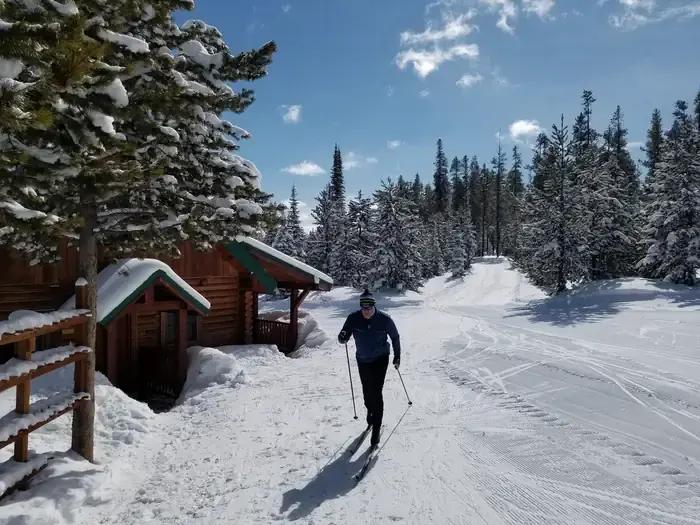
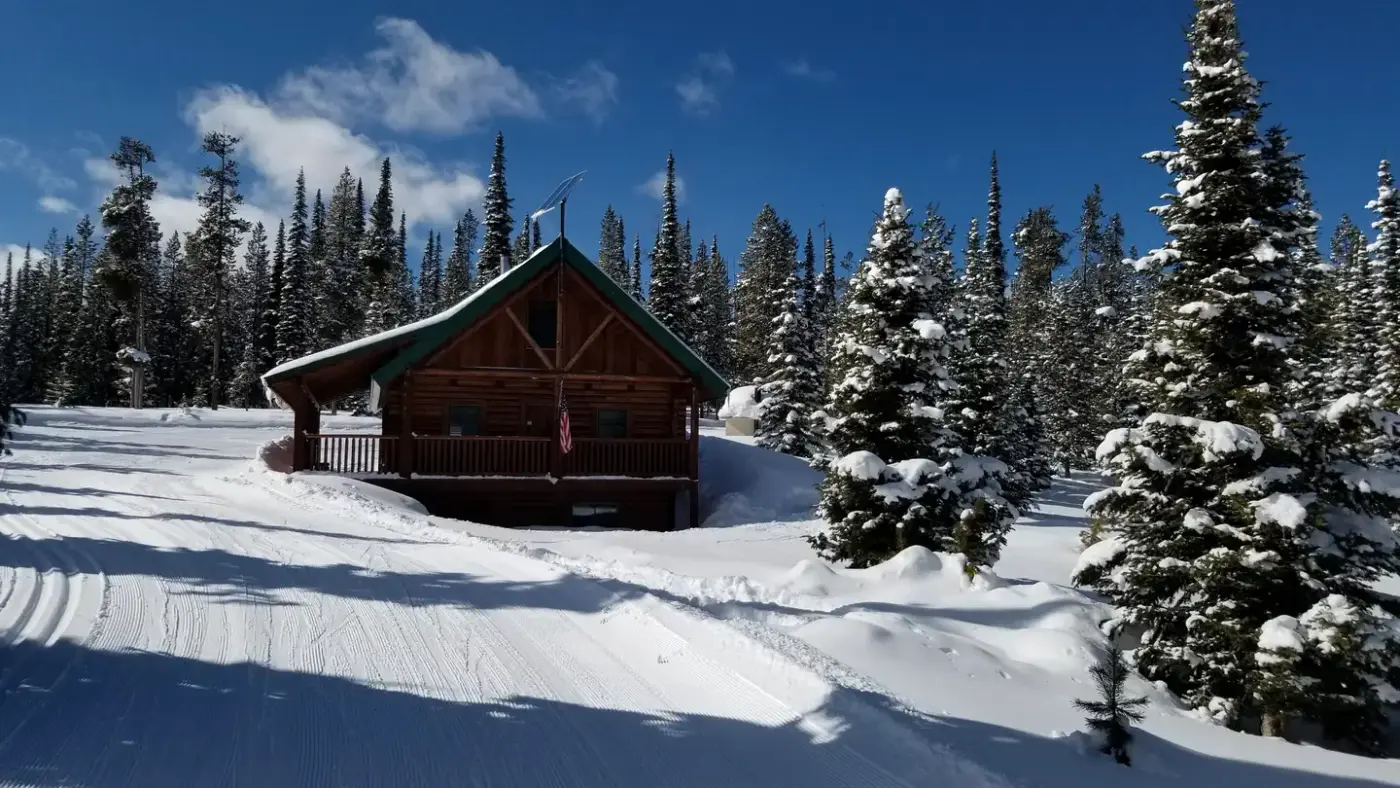
At the north end of the Chief Joseph Pass parking area, 25 miles west of Wisdom on Montana Highway 43, there is a locked green gate. A foot path goes around its right side, and from there the route follows the Continental Divide Trail about half a mile — the ski club measures it at seven-tenths — until a trail branches right under a green sign that says Hut. Everything is signed. Nothing drives in; you walk, ski, or snowshoe.
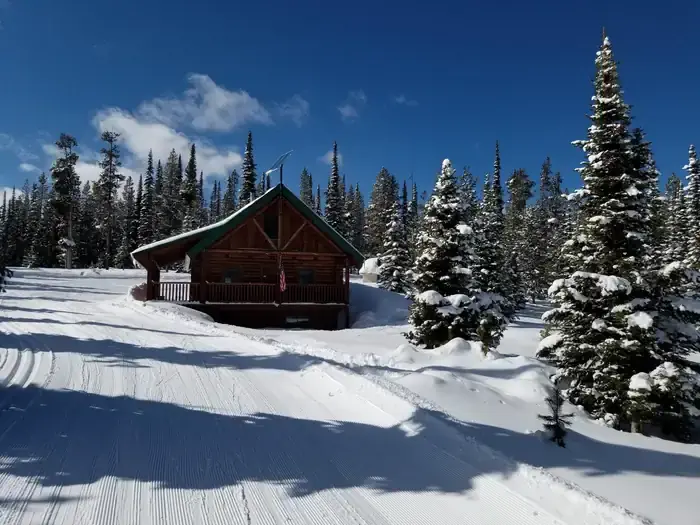
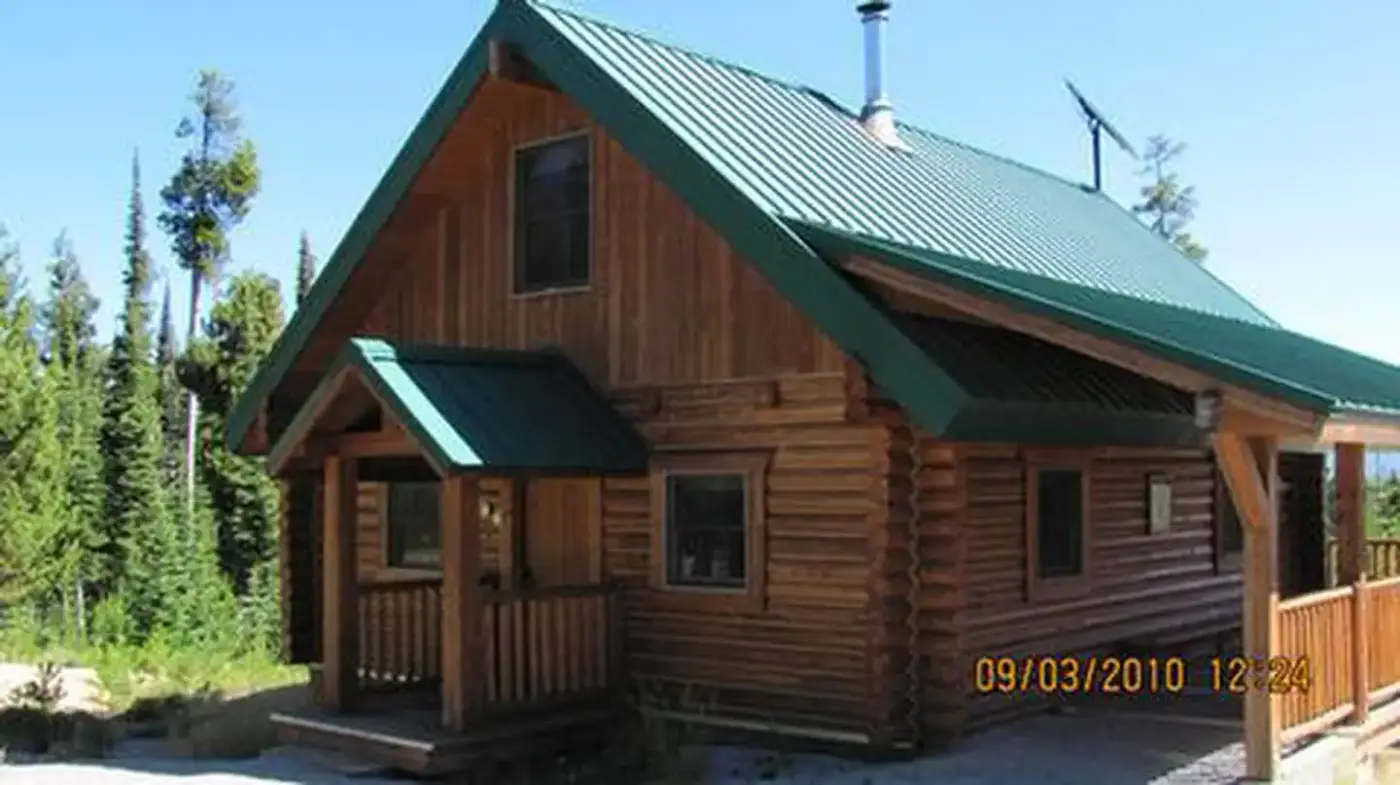
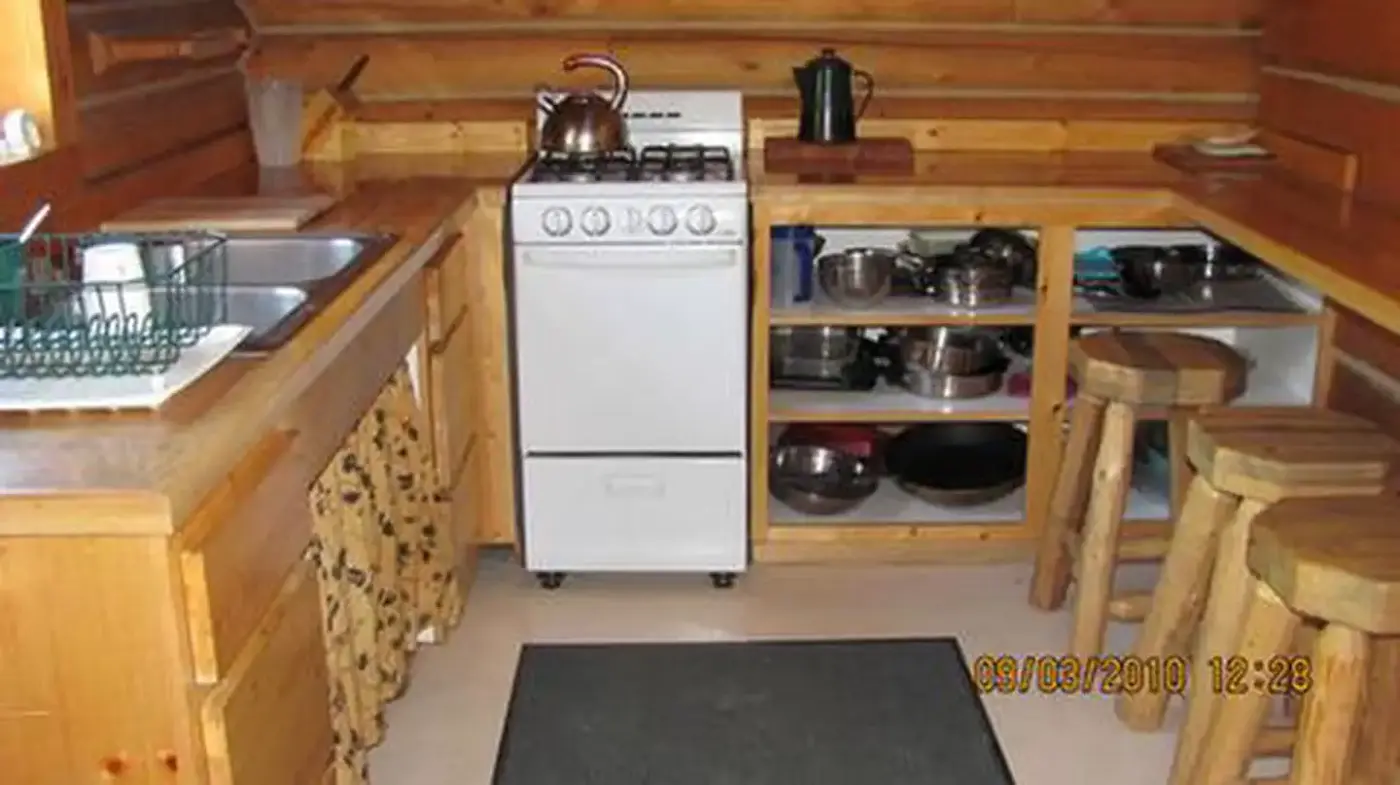
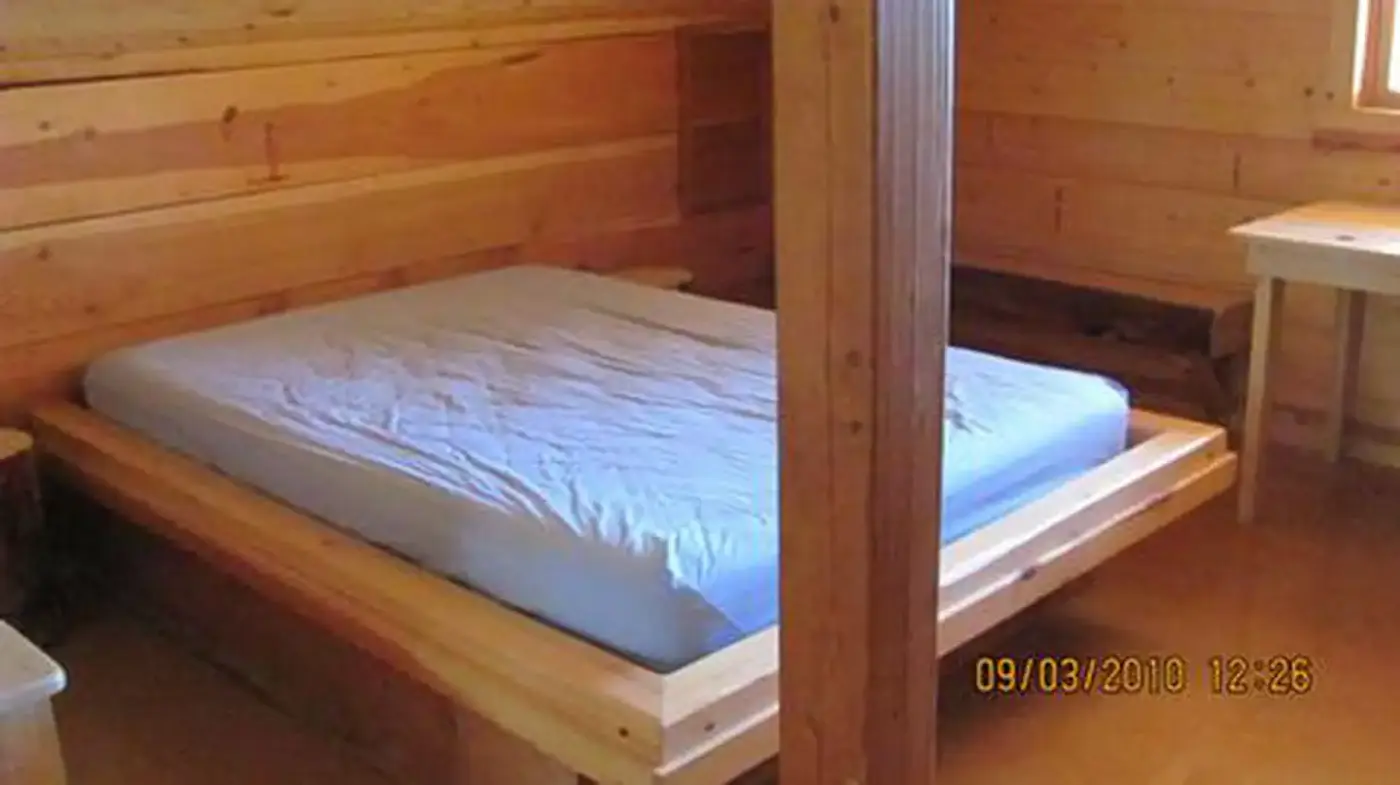
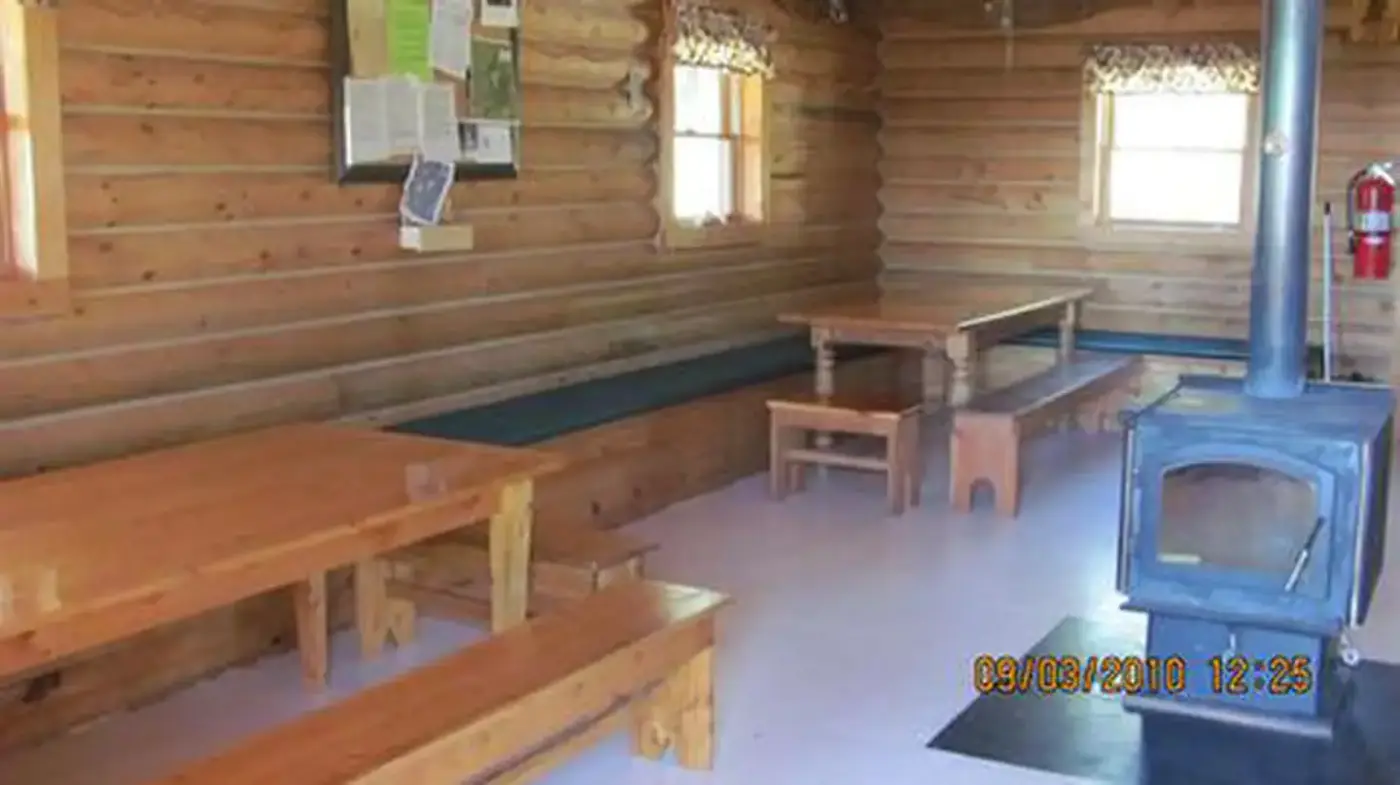
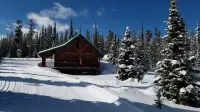
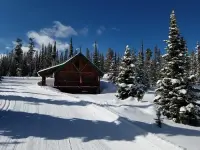
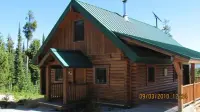
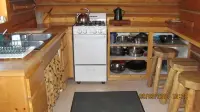
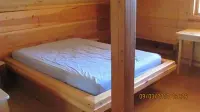
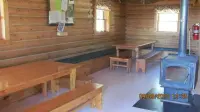
What the path reaches, in a stand of evergreen at the foot of the Anaconda Range in a place called Picnic Meadows, is a three-story cabin with a basement, a main floor, and a loft. The main floor has a wood stove, two tables with benches, cupboards and counters and stools, a propane cooking range, a sink that drains waste water, and cooking and eating utensils. Lights run on propane; there is no electricity. Firewood is kept in the basement with the solar and emergency equipment, and firewood is provided. The loft holds two double beds and four twin beds and sleeps up to eight. Outside is a vault toilet. There is no water at the cabin and no cell service in the area. A night costs $75, and the cabin is closed from April 15 to June 15.
Not your cabin between nine and four
A renter does not get the place to himself. In winter the main floor serves as a public warming shelter during the day, the overnight rooms are upstairs, and the loft can be closed off for what the Forest Service calls limited privacy. Renters “do not have exclusive use of the facilities and are expected to act in a welcoming manner.” From December 1 to April 15 snow can be melted for use in the cabin, though it should be treated for bacteria. Otherwise guests pack in their own water, bedding, towels, soap, matches, and garbage bags, and pack the garbage out.
The 32 kilometers of cross-country trails around the cabin are groomed from December 1 through April 14 with grant funds awarded to the Bitterroot Cross-Country Ski Club and Lost Trail Powder Mountain. The pass sits above 7,000 feet. “It gets anywhere from 6 to 10 feet every year,” the club’s grooming coordinator, Tony Neaves, told NBC Montana in March 2020, when he counted close to 11,000 users a season and roughly 14 miles of snowcat-groomed track plus 20 miles of multi-use trail. Dogs are asked to stay off the ski trails; Forest Road 1260 nearby is open to them. In summer the cabin is a waypoint for long-distance Continental Divide hikers, who pass daily, and the Big Hole National Battlefield, where war broke out in 1877, lies about 15 miles east.
A man from Alaska and a snowmobile in cardboard boxes
Gordon Reese had skied groomed trails in Alaska before he came to the Bitterroot. By the club’s account he picked Chief Joseph Pass for its elevation, its early and reliable snow, and its gently rolling ground. The Ravalli Republic, drawing on Henry M. Yaple’s book about the Lost Trail ski area, dates the start to 1985, when Reese of Victor dropped his son off at the downhill hill and drove on up the mountain to look at the top of the pass.
In the summer of 1985 he asked the Sula Ranger Station for permission to groom and was turned down at once, for reasons the club says remain obscure. In 1987 he asked the Bitterroot forest supervisor in Hamilton and was turned down again; a start-up commercial touring center on private land near Lolo Pass feared competition from a free area, and that operation soon failed for lack of snow. Early in 1989 Reese found Deb Gale, the resource assistant at the Wisdom Ranger Station, who skied. That March, George Corn wrote on behalf of the Bitter Root Nordic Ski Patrol asking Forest Supervisor Bertha Gillam for permission to set track. That summer Reese, Gale, Rebecca Konsanke-Cothran, and Bill Avery laid out and flagged the trails.
The Forest Service said it was uncomfortable dealing with one private individual. In November 1989 Reese, Corn, and Mike West placed an ad in the Ravalli Republic announcing a new club; about fifty people came to the first meeting and fourteen of them joined. In June 1990 Reese collected a thirteen-year-old surplus snowmobile from Montana Fish, Wildlife and Parks. It did not run and arrived with many of its parts in cardboard boxes; a little rehab work put it in order. Club members cleared and posted the first trails that summer, hung blue diamonds in the fall, and set maps at every junction. The club was officially formed in November 1990. Reese groomed alone through the first season, 1990–91, when 600 to 700 people skied a 6-kilometer system. Lou Lippert joined him the next year, and Art Shigley. Lessons were underway by January 1992. Within two years there were often 35 to 50 cars parked along the highway; a parking lot was built between 1994 and the late summer of 1995, and the trailhead outhouse went in with it.
5,500 hours and a name
Permission to build a warming hut came in 1999. The 2000 wildfires held the project back a year. Businesses donated materials, Trapper Creek Job Corps built the foundation, and club members put in more than 5,500 hours and drove nearly 30,000 miles. The Ravalli Republic reported the club raised more than $100,000 in cash and materials. The cabin was finished in 2001 and dedicated that September. Gordon and Mary Ellen Reese and Ed and Pat Hastings were the driving force; the club’s own history records that Ed Hastings and Sonny LaSalle “colluded (against the Forest Service) to make sure the Cabin was named for Gordon.”
The club donated the building to the Forest Service and kept operating it. In summer it was rented. In winter it went free to anyone who agreed to host — shoveling the paths to the outhouses, clearing the deck, restocking firewood, keeping the fire going, and making hot chocolate for skiers who came in to warm up.
The raffle, the ethics office, and $20 a night
For nineteen years the club’s annual fundraiser offered a night at the cabin and a gourmet meal as the grand prize. On February 2, 2012, seven days before the drawing, Beaverhead-Deerlodge officials told the club it could not. The USDA Office of Ethics in Arlington had ruled the use of government property in the fundraiser an infraction. Wisdom District Ranger Russ Riebe wrote that he strongly supported the club’s work and “I regret any inconvenience this may cause.” Ethics specialist Jack Fisher wrote Riebe that the agency had not done a good job of ensuring the agreement was ethically sound: “I attribute this to the fact that 20 years ago the agency did not have a dedicated ethics office.” Patty Bates, who oversees the forest’s recreation program, called the club an “amazing partner” and said no one knew who had lodged the complaint. Board member Corn said the club got no chance to respond. Gordon Reese drew the winning tickets at the meeting and was told afterward. “In my opinion, to not tell the club members about this was ethically challenged,” he said.
In August, Forest Supervisor Dave Myer signed a decision putting winter nights on the national reservation system at $20 a night plus a $9 reservation fee, as at the other 24 rental cabins on the forest. President Michael Hoyt called it “a slap in the face to the volunteers, the community, and the businesses that contributed to building the cabin.” The club voted to stop its volunteer host and maintenance services. On August 21 Senator Max Baucus wrote Forest Service Chief Thomas Tidwell asking him to weigh “the dedication and sacrifice that ski club members have offered for more than a quarter century.” Myer said no agreement to keep the cabin free had ever existed, that early members and officials simply decided not to charge and agreed that could change. “It’s still open to the public,” he said. “They can ski for free. They can warm up for free. It’s what the cabin was all about. It was a place to warm up.”
LaSalle, a retired Forest Service supervisor who had helped build the cabin and served six years as club president, urged members to keep the partnership. Dennis Havig, the Wisdom district ranger when the cabin went up, had promised to do what he could to keep it off the reservation system; he confirmed there was never anything in writing. “I always told that group that times change and people change,” Havig said. A splinter group called Friends of the Ski Hut began forming. “We’re not going to just sit back and let the cabin get rundown and go to pieces,” Reese said. By September 2015 the Forest Service was advertising for winter volunteers again, with Tuesdays and Fridays set aside for a free overnight in exchange for shoveling, stocking, and keeping drinking water and a fire going.
A four-by-three poster, hauled in
Karla West’s family skied in to the cabin one day and sat by the wood stove with cocoa, and a grandchild asked how the cabin in the middle of the woods came to be. West told the story of Gordon and Mary Ellen Reese. Mary Ellen died in 2019, and West, back home in Hamilton, decided the origin ought to be written down before it was lost. In February 2022 LaSalle arranged to meet Roger Anderson of the Forest Service and haul in a four-by-three-foot heavy plastic poster, history in words and photographs, naming the Reeses and Ed and Pat Hastings as leaders. “A lot of it just happened,” LaSalle said. “You had the right people in the right place at the right time.” West put it another way: “It really did take a village to make it happen.”
Notable Events
- 1985Gordon Reese asked the Sula Ranger Station for permission to groom trails at Chief Joseph Pass and was turned down. bitterrootxcskiclub.net
- 1987Reese again sought permission, this time from the Bitterroot Forest supervisor in Hamilton. bitterrootxcskiclub.net
- 1989Reese, Deb Gale, Rebecca Konsanke-Cothran, and Bill Avery laid out and flagged the trails that summer. bitterrootxcskiclub.net
- 1989George Corn wrote to Forest Supervisor Bertha Gillam requesting permission to set track at Chief Joseph Pass. bitterrootxcskiclub.net
- 1989Gordon Reese, George Corn, and Mike West advertised a new ski club; about 50 people attended the first meeting and fourteen later joined. bitterrootxcskiclub.net
- 1990Gordon was the lone groomer during the first season, 1990-1991; Lou Lippert and Art Shigley helped from the next season. bitterrootxcskiclub.net
- 1990Gordon and several other Club Members cleared and posted the first trails; blue diamond markers and junction maps followed in the fall. bitterrootxcskiclub.net
- 1990Gordon picked up a 13-year-old surplus Montana Fish Wildlife and Parks snowmobile for the Club; it needed rehab work to run. bitterrootxcskiclub.net
- 1990The Club was officially formed during November 1990 and eventually became a non-profit organization. bitterrootxcskiclub.net
- 1990First club members agreed to maintain and groom the trails at no expense to the federal government. westernslopenofee.org
- 1992The Club was already giving lessons during January 1992. bitterrootxcskiclub.net
- 2001After a wildfire delay, the warming hut was finished during 2001 and dedicated during September 2001. bitterrootxcskiclub.net
- 2001The club donated the cabin and continued maintaining and operating it. westernslopenofee.org
- 2001The cabin was built by the club and rented in summer, while winter hosts stayed free. westernslopenofee.org
- 2012The Forest Service put the cabin on the National Recreation Reservation System and charged a $9 administration fee and $20 a night, prompting the club's protest. bitterrootstar.com
- 2012For the first time in the 2012-2013 season, 12+ miles of new multi-use trails were groomed for skate skiing, shared with snowmobilers, dogsledders, and snowshoers. bitterrootxcskiclub.net
- 2012Forest officials informed the club it could no longer offer the cabin as a prize; officials said the USDA Office of Ethics ruled it an ethics infraction. westernslopenofee.org
- 2012A new group, mostly ski club members unwilling to give up maintaining the cabin, was forming. westernslopenofee.org
People
- Dennis Havig, Wisdom District Ranger who, according to LaSalle, promised to try to keep the cabin off the national reservation system.
- Michael Hoyt, Ski club president who objected to the ethics decision.
- Deb Gale, Wisdom Ranger Station resource assistant who helped Gordon Reese's trail vision move forward (1989).
- Ed Hastings, Driving force behind the cabin (Club president, 1994-2000).
- George Corn, Ski club board member who objected that the club had no opportunity to respond.
- Gordon Reese, Ski club founder who worked with the Forest Service to establish the ski area and build its warming hut (1990s).
- Lou Lippert, Began helping with grooming the season after 1990-1991 (Club president, 1993-1994).
- Sonny LaSalle, Retired Forest Service supervisor and former club president; helped build the cabin and urged compromise (Club president for six years starting in 1999).
- Tony Neaves, Bitterroot Cross-Country Ski Club grooming coordinator.
- Jack Fisher, Forest Service ethics specialist advising Riebe about ethics sanctions.
- Patty Bates, Oversees the Beaverhead-Deerlodge recreation program; described the club as an amazing partner.
- Russ Riebe, Wisdom District Ranger who notified the club that government property could not be associated with its fundraiser.
- Dave Myer, Forest supervisor who signed the winter rental decision.
- Denny Rehberg, Representative whose office contacted the club about the dispute, according to Hoyt.
- Jon Tester, Senator from whom the club had heard about the dispute, according to Hoyt.
- Max Baucus, Senator who asked the Forest Service chief to intervene in the cabin dispute.
- Thomas Tidwell, Forest Service Chief to whom Baucus appealed.
- Mike Hoyt, Current ski club president; maintained that the donation agreement required free public use.
- Myers, Beaverhead-Deerlodge National Forest Supervisor who put the cabin on the national reservation system after the ethics ruling.
- John Ericson, Wisdom Ranger District office contact for cabin volunteers.
- Lori Stevenson, Wisdom Ranger District office contact for cabin volunteers.
- Mikal Reese, Wisdom Ranger District office contact for cabin volunteers.
Sources
- fs.usda.gov/r01/beaverhead-deerlodge/recreation/gordon-reese-cabin
- recreation.gov/camping/campgrounds/234355
- bitterrootxcskiclub.net/club-history
- bitterrootxcskiclub.net/the-cabin
- americantrails.org/resources/volunteers-maintain-chief-joseph-ski-trail-system-in-montana
- bitterrootstar.com/2012/08/ski-club-protests-fees-for-cabin
- nbcmontana.com/news/montana-moment/chief-joseph-ski-trail-a-crossroads-of-winter-fun
- ravallirepublic.com/news/local/chief-joseph-pass-offers-something-for-everyone-this-winter/article_dfb507fa-7966-54c5-a16f-521227f2fa1e.html
- ravallirepublic.com/news/local/article_cdf7df95-2a4b-5294-964f-6e4099e21f7a.html