
Gold Rush Days
South Pass City, Fremont County, Wyoming. Celebration of South Pass City; Every second weekend in July.
Details

- Where
- 125 South Pass Main St., South Pass City, WY 82520. Directions
- When
- Last held July 11–12, 2026; next year’s date not yet stated.
- Fees
- $5; kids 2 years old and younger free.
- Hours
- 10 a.m. - 5 p.m. both days.
- Access
- Organizers run packed shuttle buses all weekend between the hilltop parking lot and town.
- Phone
- 307-332-3684
- Website
- southpasscity.org
- Managed by
- Department of State Parks & Cultural Resources.
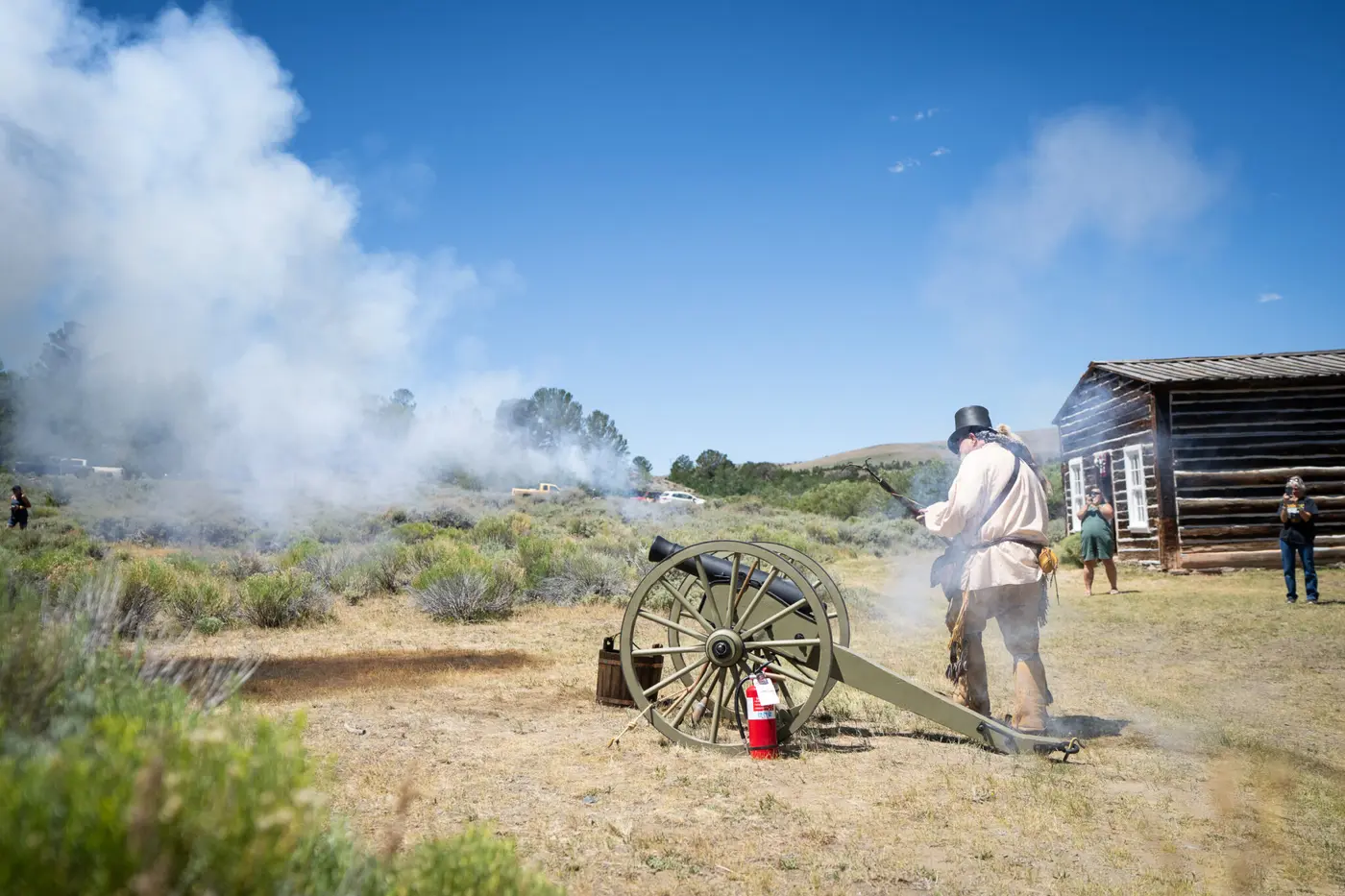
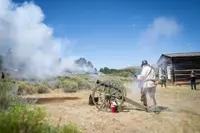
Every hour on the hour during Gold Rush Days, a crowd gathers early at the edge of South Pass City for the anvil blast. Two anvils are set upside down, one on top of the other. The foundry hole in one is filled with gunpowder and lit with a dynamite fuse, and the explosion sends an anvil several stories into the air with a sound, in the state’s description, much like a bell. Behind the town a man fires a cannon at the same hour, and the boom rolls across the hillside. The blast is a celebratory custom of the 1880s and 1890s. Joe Ellis, superintendent of the historic site, has said of it: “We’d probably get hung if we ever discontinued the anvil blast.”
The celebration runs over a July weekend at the state historic site, 37 miles southwest of Lander on Highway 28. Wind River Country gives the date as the second weekend in July. The 2026 celebration was held July 11 and 12, and the 2027 celebration is set for July 10 and 11. Visitors leave their cars in a hilltop lot and ride down to town. In 2026 organizers kept two shuttle buses running all weekend, and both were full.
Main Street, the creek, and the bridge
County 10 reported that the air at the 2026 celebration stayed cooler than down the hill in Lander, but the sun was still brutal. Visitors crowded into the shade along the building fronts and under canopies near the food trucks, which served meals all weekend while local bands played in rotation. Music also plays in the saloons, and there are billiards. The site’s own program lists sarsaparilla, mining demonstrations, tours, special hikes, and kids’ games. Wind River Country adds stamp-mill and printing-press demonstrations.
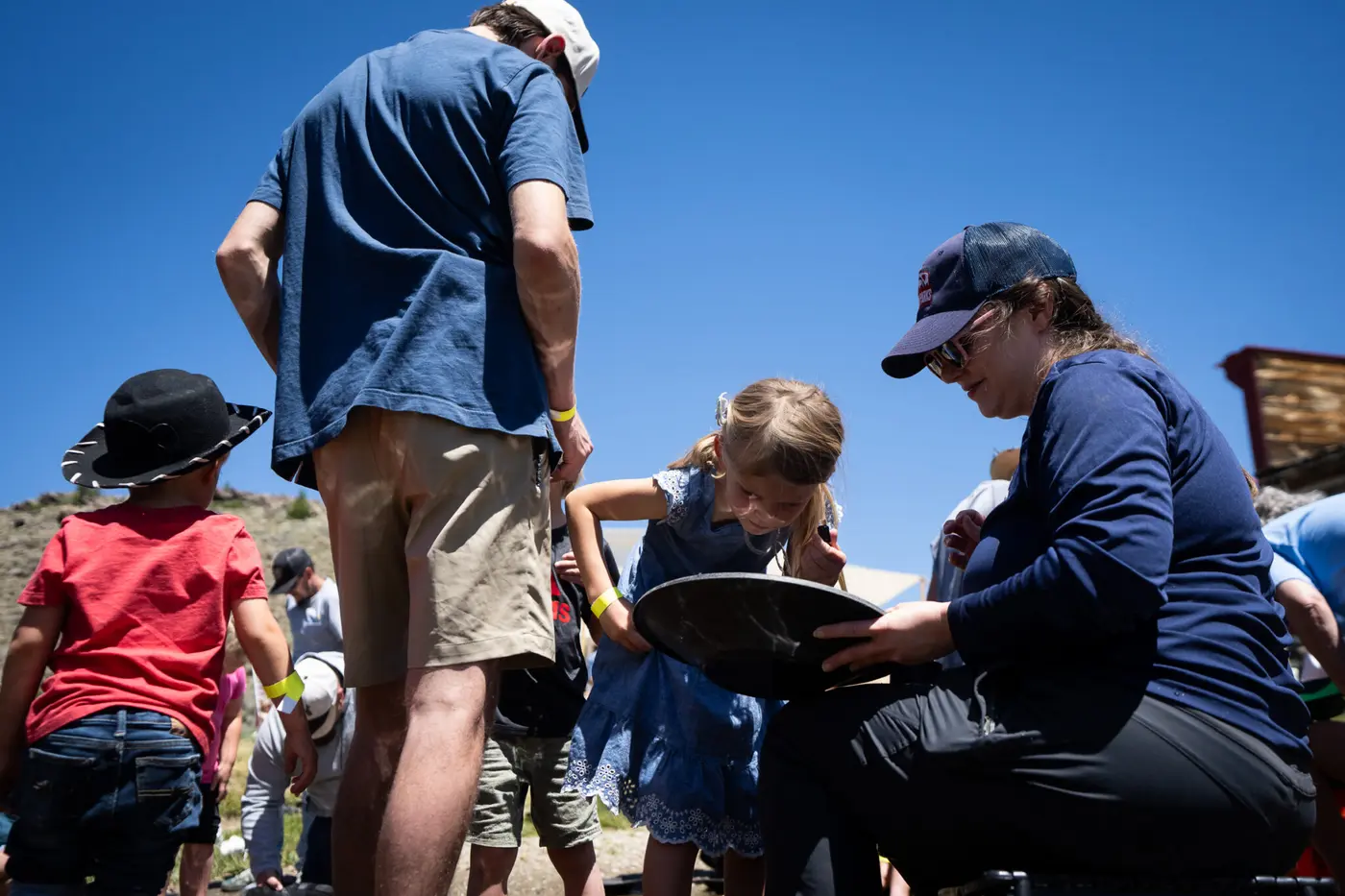
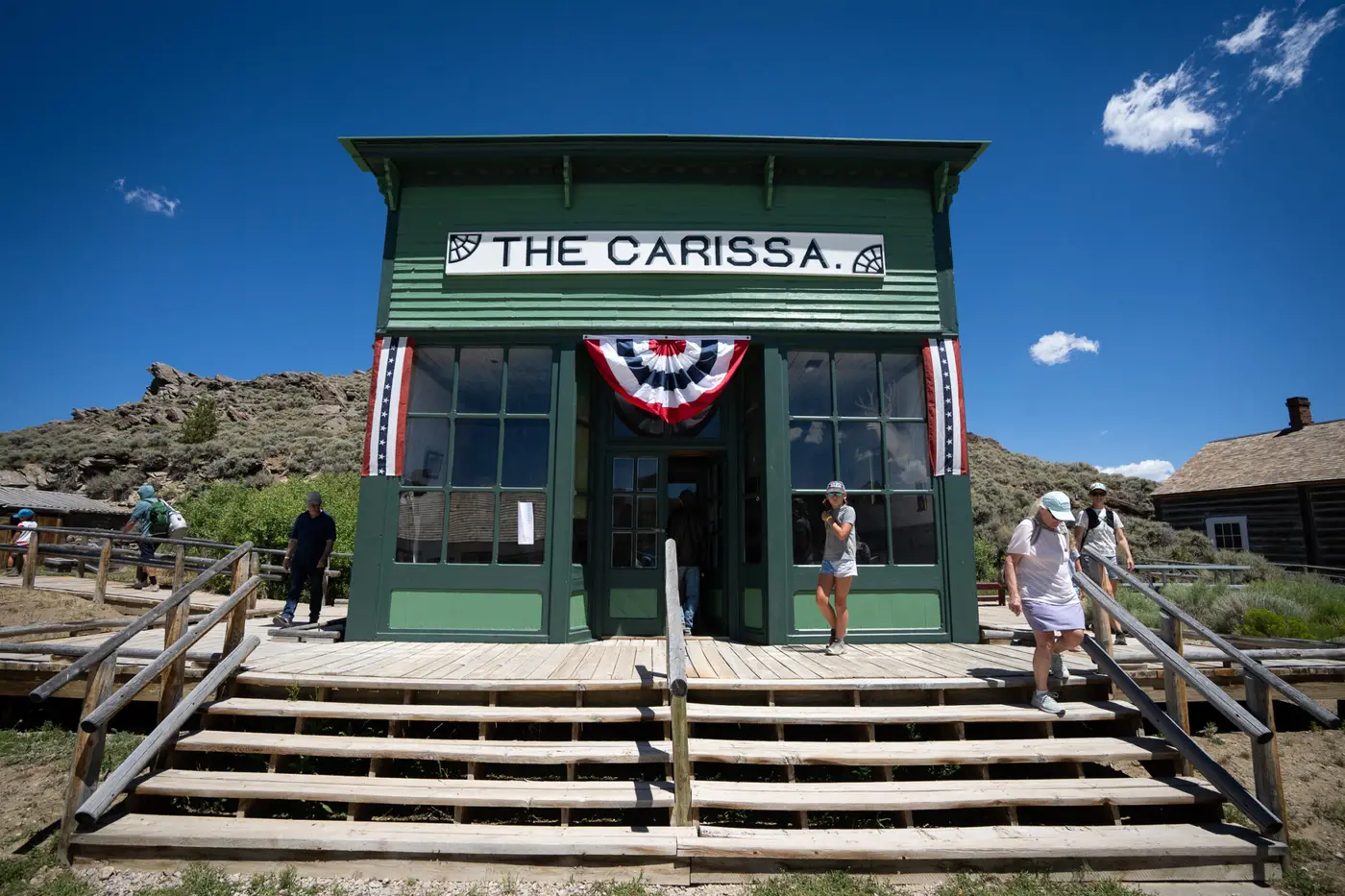
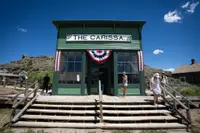
The town’s buildings are kept in their 1800s condition and stand open to walk through. At the Carissa drug store, visitors go in and out all day. Along the creek, children and their families pan for gold, and in 2026 one boy found tiny specks of it in his pan. Nearby, blacksmiths work at anvils and forges with period-correct tools, and they draw steady crowds.
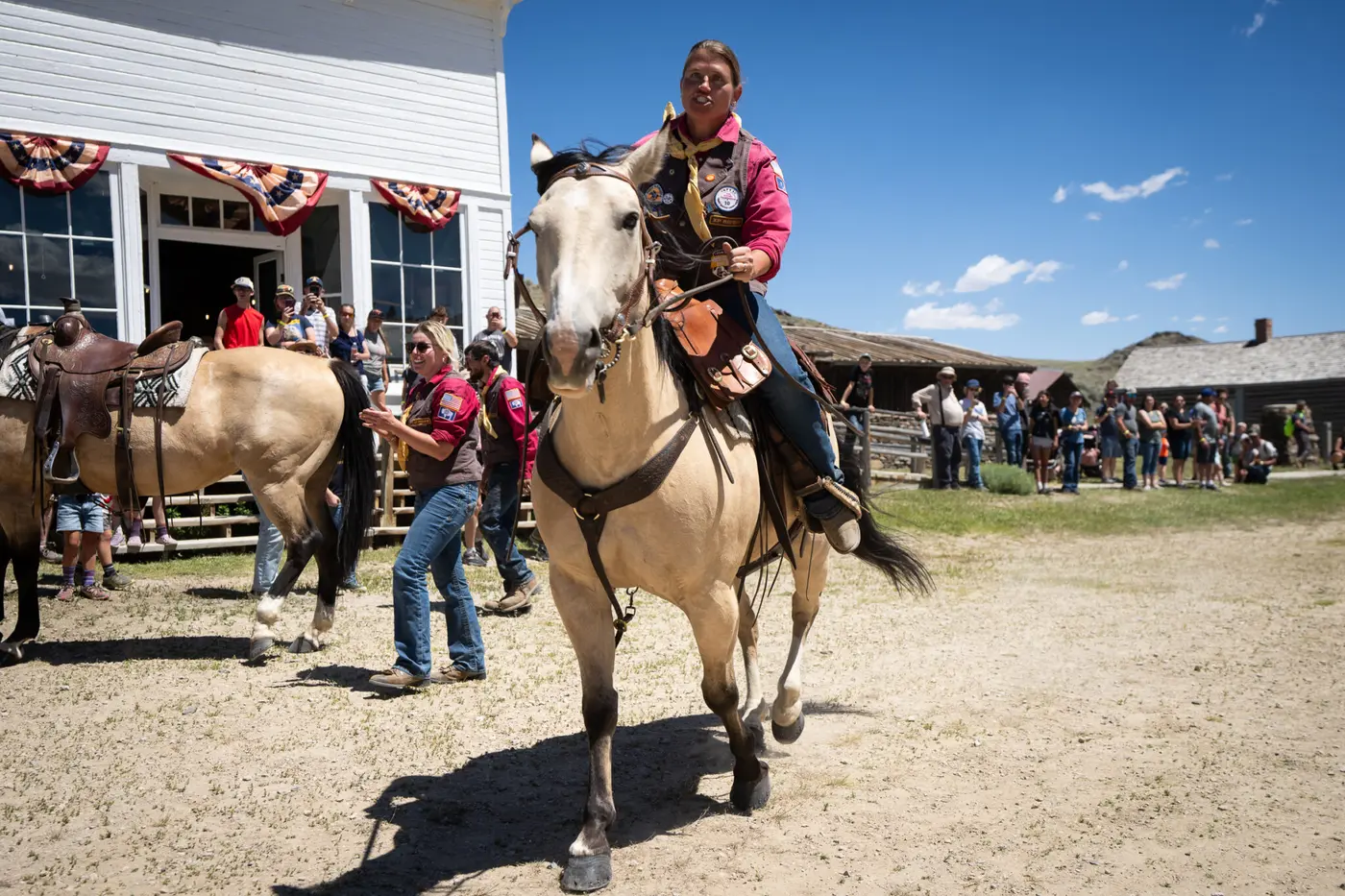
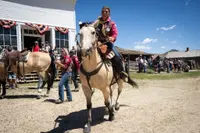
Every so often the street is cleared for the mail. A Pony Express rider gallops into town, changes horses in the middle of Main Street, and races off across the bridge by the gold-panning area, retracing the route the mail once took through South Pass. In 2026 the rider was a woman, and the crowd was told to stand clear. On the same bridge, three costumed men, Nicolous Brown, Dakota Madrid, and Eathen Cody Buslett, posed for the County 10 photographer. Each year they come to remember history and to mix with the crowd in costume.
Above town stands the Carissa Mine, which is open for tours. It closed for good in 1954. The state bought it in 2003 and restored it, and in 2013 the machinery was brought back to working order. Much of the equipment was still in place at the purchase, and the missing pieces were identified from an inventory list written in 1953. Visitors can hear the machines that crushed the rock and follow the ore through the mill until it became gold bricks. The tour stays above ground because the mine itself is flooded. “Most people’s experience with gold mining is splashing gold pans in a creek,” said Jon Lane, site curator.
Base ball by the 1906 rules
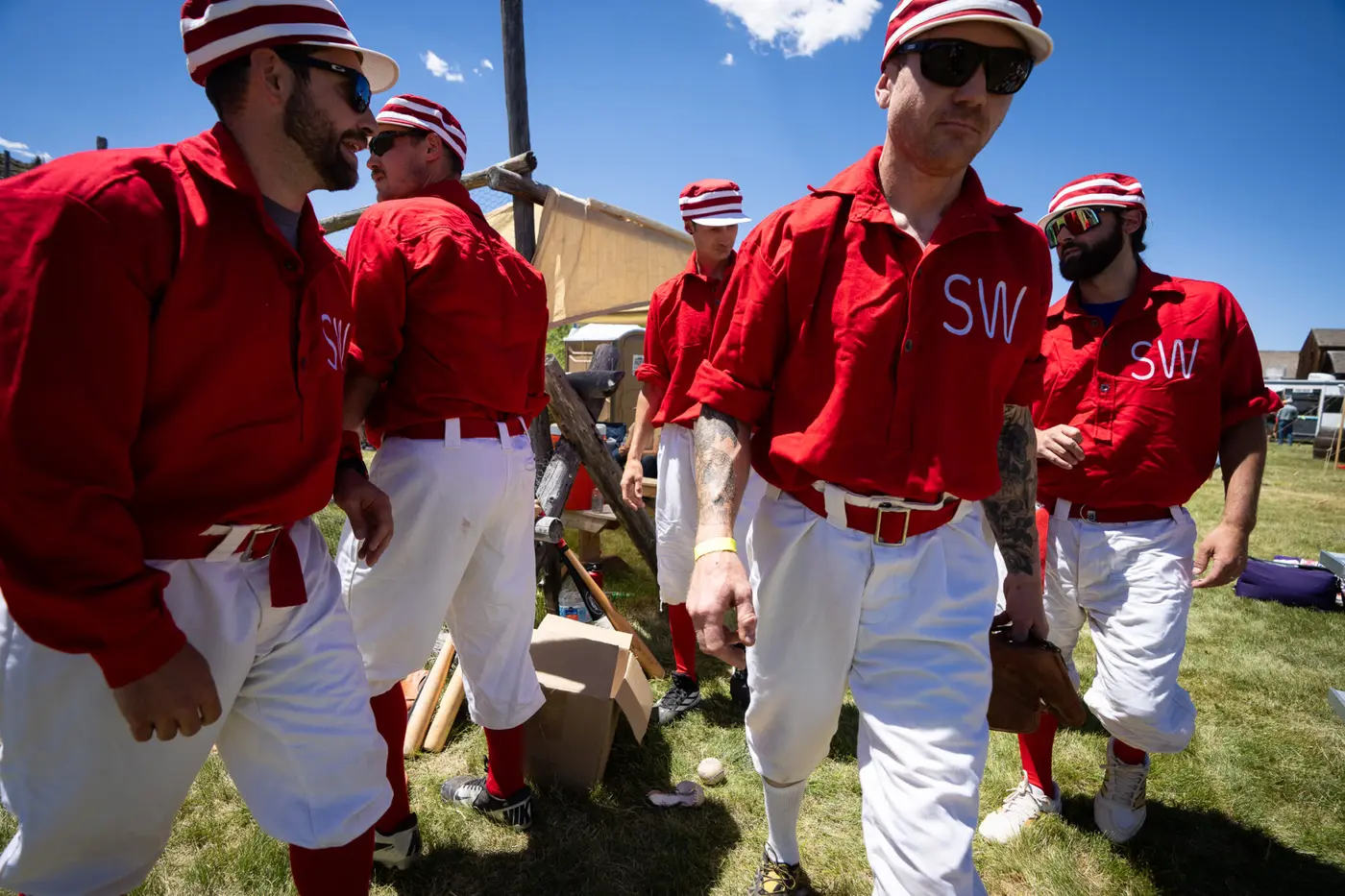
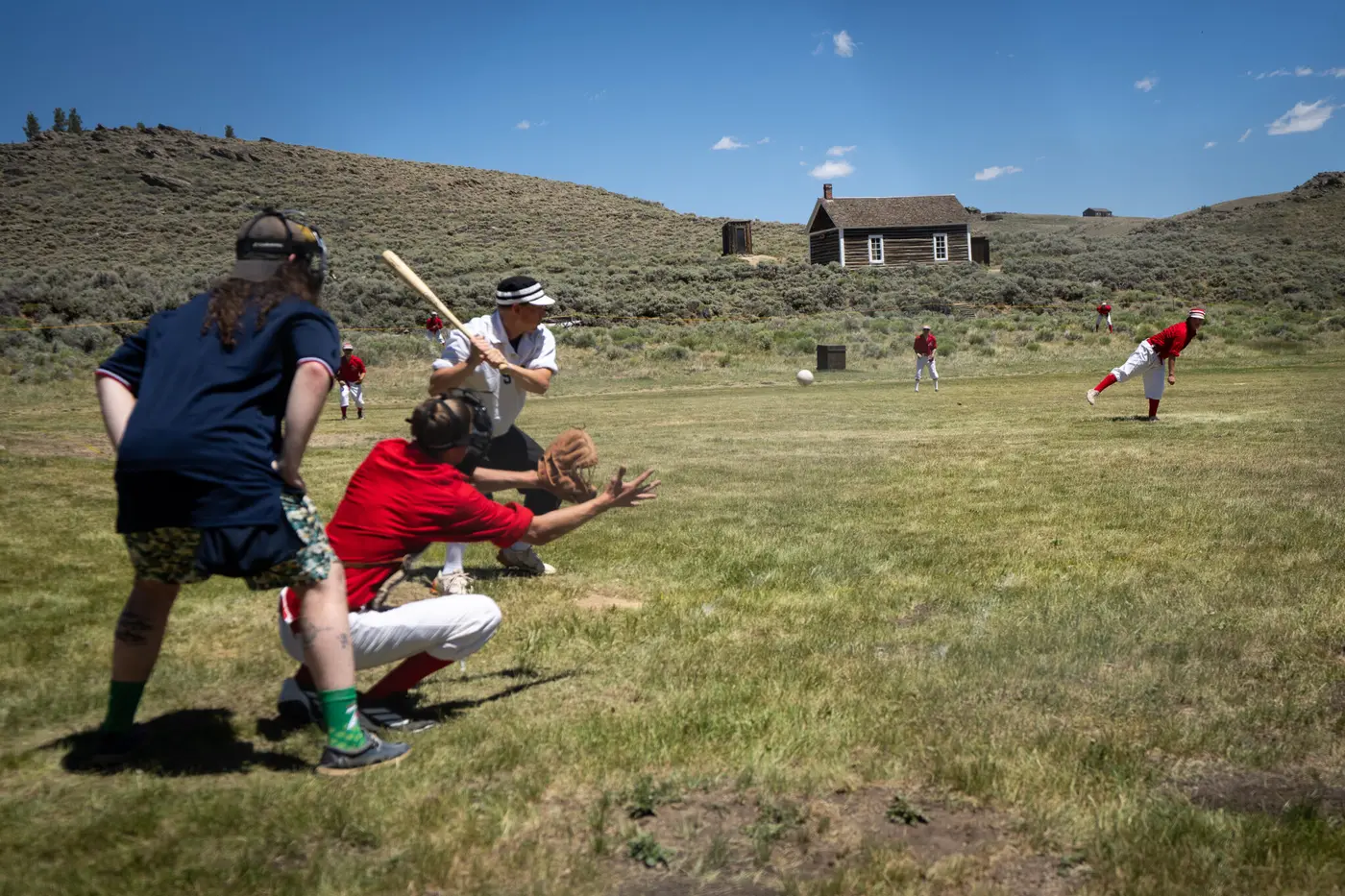
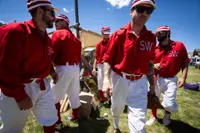
The site spells the game in two words. Vintage base ball is played on the field at the edge of town, and the 2026 celebration held a four-team tournament of local players of all ages. A 2023 state press release named the teams as Hudson, South Pass City, Riverton, and Lander. They play by 1906 rules, with 1906 equipment and heavy wool uniforms worn in the July heat. The players take up their gloves and go out to the field at each change of innings.
Tom Lindmier’s weekend
Then-Superintendent Tom Lindmier began Gold Rush Days in 2001 to showcase the vintage base ball tournament. It has been held every year since, except in the summer of 2020, when the pandemic stopped it. In the early years it fell in late July. It was later moved to the first weekend after the Fourth of July so it would not compete with Cheyenne Frontier Days, and Ellis says the move has helped. Visitors now come from Lander and Riverton, and also from Rock Springs, Green River, Pinedale, and Casper.
“We’ve had to evolve some so we didn’t get stagnant,” Ellis said. “We’ve incorporated some historic reenactments and activities that center around immigrant trails and mining.” In 2023 the program included reenactors from around the country who demonstrated the Pony Express, pack-mule trips, and Conestoga wagons. A Shoshone basket maker from Nevada showed his work, and six local bands played. “We try to bring in something new every couple of years,” Ellis said.
The Cariso Lode and the long sleep
The town the festival celebrates began in the summer of 1867. According to the site’s history, rumors of gold along the Sweetwater River went back to the 1840s, but gold seekers looked elsewhere. In the 1860s, small numbers of soldiers were posted in the South Pass area to guard the telegraph lines, the Pony Express stations, and the emigrant trails. In June 1867 a party of men from Fort Bridger located the Cariso Lode, later called the Carissa. The Wyoming Historical Society places the vein along Willow Creek and says it was likely named for a sweetheart or relative of one of the miners. The gold lay in hard rock, so getting it out took shafts, stamps, and heavy machinery.
By 1868, the Historical Society writes, South Pass City was the county seat of Carter County, with nearly 3,000 people and more than 300 buildings along Main Street, at almost 8,000 feet of elevation. The site’s history says the first boom lasted only a couple of seasons. By 1872 the easy gold near the surface was gone. The county seat moved to Lander in 1884. The Sherlock family stayed on and ran the hotel, the store, and the post office for nearly a century. Because no one tore the buildings down, they survived. In the 1960s the State of Wyoming bought the core of the town, which became a State Historic Site and was later added to the National Register of Historic Places.
A saloon keeper and a justice of the peace
In 1869 William Bright, a South Pass City saloon owner, introduced Council Bill #70 in Wyoming’s first Territorial Legislature. The bill gave women the vote and the right to hold office. After heated debate it passed, and on December 10, 1869, Territorial Governor John A. Campbell signed it into law. The Historical Society tells a story, which it notes is historically debated, of a tea party that fall in Esther Hobart Morris’s log cabin. There, it is said, Morris asked Bright to bring the bill to Cheyenne. Some say Bright had reasons of his own and wanted to draw more women to the territory.
Esther and John Morris had come to South Pass City early in 1869, drawn by the mining. When the town’s justice of the peace resigned, the Historical Society says in protest of the new law, Acting Governor Edward Lee appointed Esther Morris to the post on February 17, 1870. The site calls her the first woman to hold public office in the United States, and the Historical Society calls her the first female judge. She heard 27 cases over nine months. By the end of her term the bust was setting in, and she left South Pass City with the thousands of disappointed gold-rushers and settled in Cheyenne.
Notable Events
- 1867A party of men out of Fort Bridger located the Cariso Lode (later called the Carissa) in June 1867; the first boom only lasted a couple of seasons but helped establish mining as the foundation for Wyoming's economy. southpasscity.org
- 1869On December 10, 1869, Territorial Governor John A. Campbell signed into law a bill giving women the vote and the right to hold office; William Bright, a South Pass City saloon owner, introduced the bill. wyshs.org
- 1870In 1870, the South Pass City justice of the peace resigned in protest of the new law; Esther Hobart Morris was appointed to take his place, becoming the first female judge in the United States; she tried 27 cases during her tenure. wyshs.org
- 1960sIn the 1960s, recognizing the incredible historical value of the site, the State of Wyoming purchased the core of South Pass City; it became a State Historic Site and was later added to the National Register of Historic Places. wyshs.org
- 2001Begun in 2001 by then-Superintendent Tom Lindmier, Gold Rush Days has been held every year since except during the summer of 2020 due to the pandemic. wyospcr.wyo.gov
People
- Joe Ellis, Current Superintendent of South Pass City State Historic Site who oversees the annual Gold Rush Days (not stated).
- Tom Lindmier, Then-Superintendent of South Pass City State Historic Site who founded Gold Rush Days in 2001 (2001).
- Esther Hobart Morris, First female judge in the United States, appointed Justice of the Peace for South Pass City after the resignation of the previous judge (1870).
- William Bright, South Pass City saloon owner and Democratic member of the first Wyoming Territorial Legislature who introduced the suffrage bill (1869).