Glenwood Fish Hatchery
Glenwood, Catron County, New Mexico. State fish hatchery.
Details

- Where
- 9 Hatchery Road, Box 67, Glenwood, NM 88039. Directions
- Getting there
- About 45 miles north of Silver City and 35 miles south of Reserve.
- Access
- Fish hatchery visitors are welcome during business hours.
- Walk-in or reserve
- Call to schedule a tour.
- Phone
- (575) 539-2461
- Website
- wildlife.dgf.nm.gov
- Managed by
- New Mexico Department of Wildlife.
- Established
- 1938.
- Coordinates
- 33.32195, -108.87984.
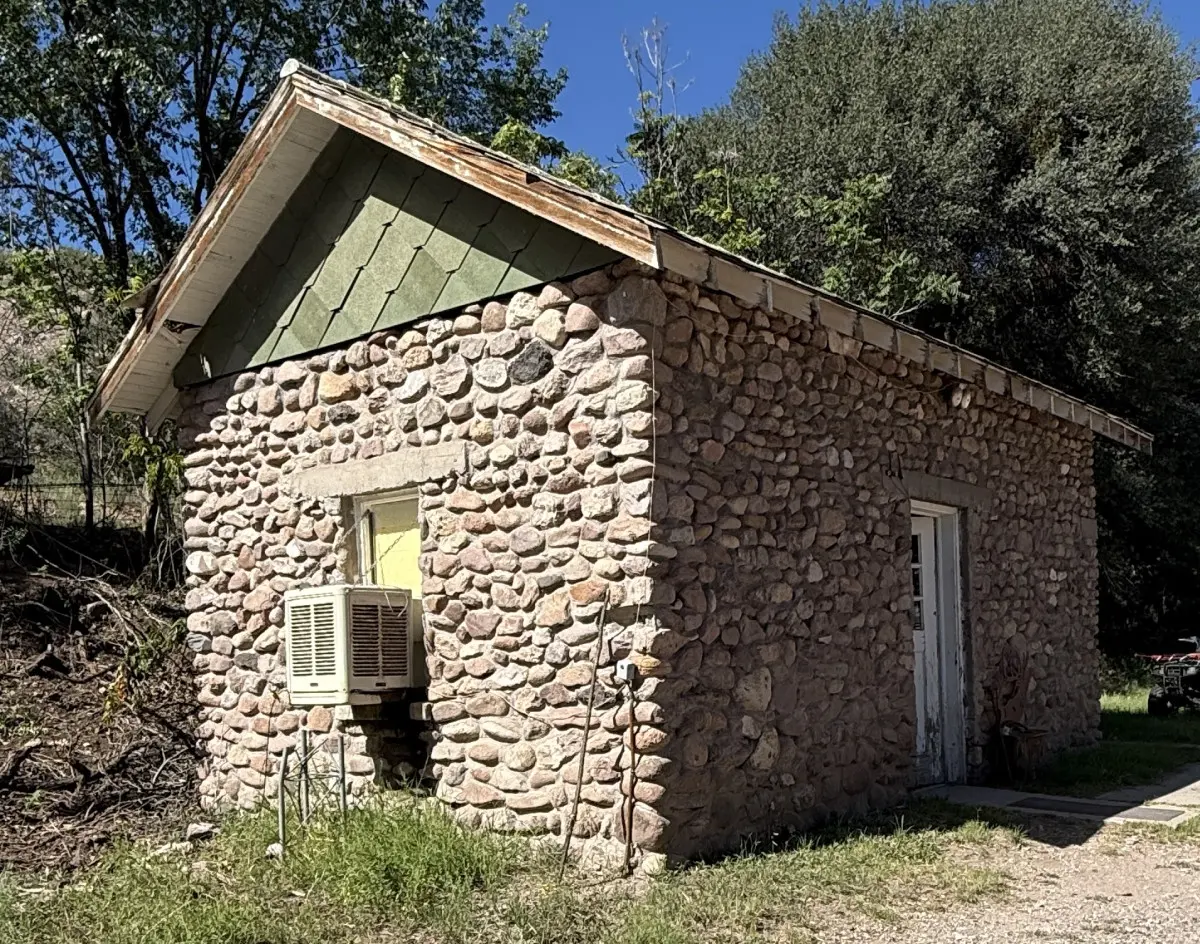
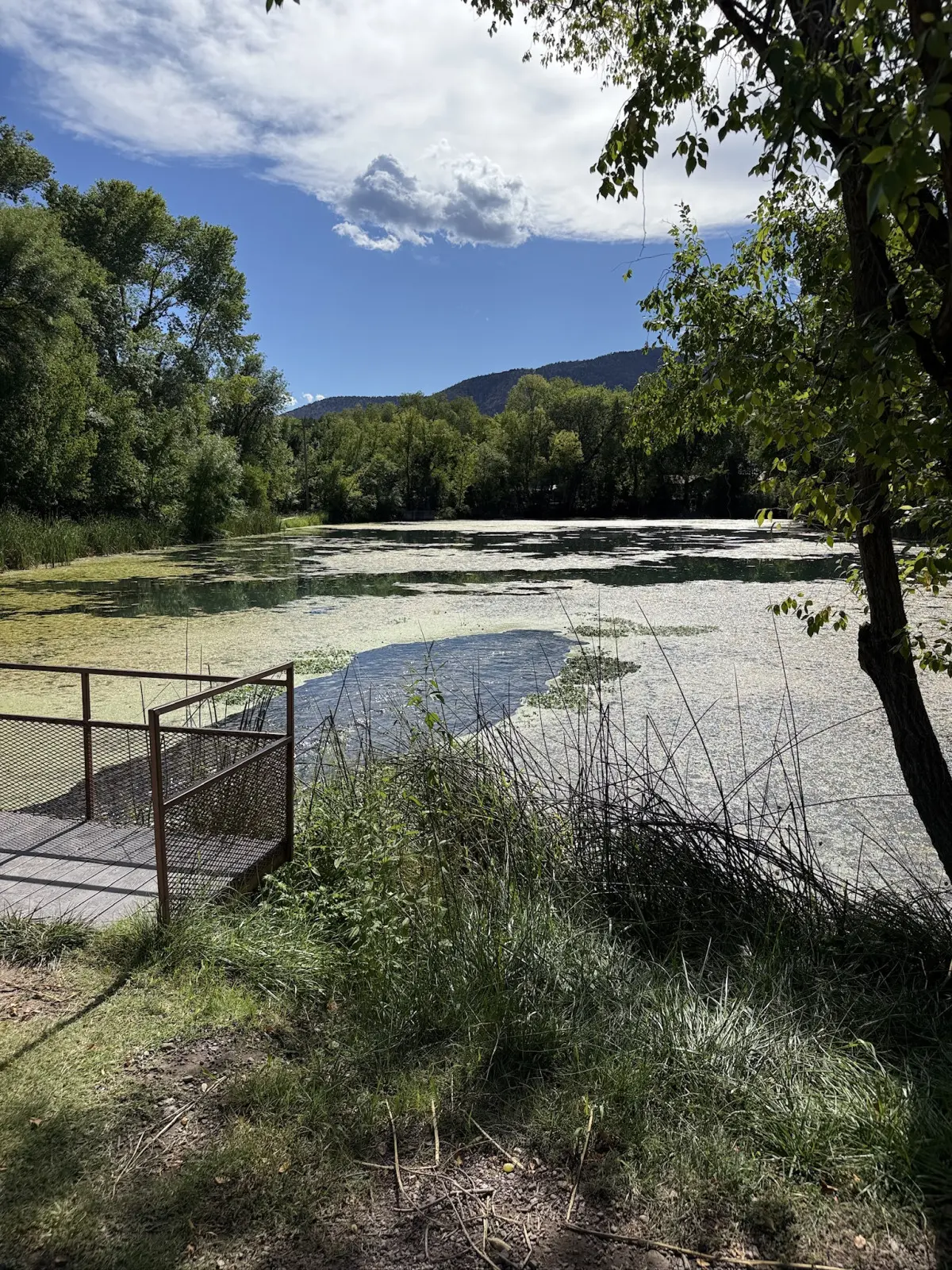
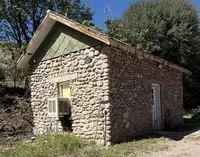
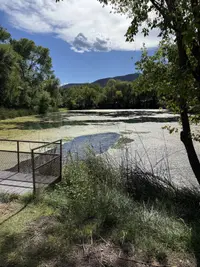
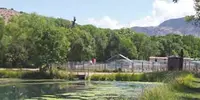
A Works Progress Administration marker dated 1938 stands at the entry to the Glenwood Fish Hatchery. The hatchery sits off Catwalk Road, about a mile northeast of Glenwood in Catron County, some 45 miles north of Silver City and 35 miles south of Reserve. Past the marker are the original administration building, a pond for trout, raceways for developing fish, the superintendent’s residence, and a transportation building with a vintage gas pump. Water leaving the hatchery runs to Glenwood Pond on the property, then through a privately owned irrigation system that includes Los Olmos Pond, into Whitewater Creek, and on to the San Francisco River.
The New Mexico Department of Wildlife runs the place and welcomes visitors during business hours. Older papers call it the Department of Game and Fish. The Glenwood library’s guide to the area says visitors can fish at the hatchery and walk it on a self-guided tour. The library also counts the grounds as a birding hotspot, with over 202 species identified to date. New Mexico Magazine advises calling ahead to schedule a guided tour. Since 2024 the department has raised one fish here, the native Gila trout.
Eggs in a drawer
“THIS IS WHERE EGGS GO,” manager Leonard Rice told New Mexico Magazine in 2025, pulling out a shallow drawer of water and tiny apricot-colored spheres. Rice had earlier managed the state’s Rock Lake hatchery at Santa Rosa. At Glenwood he is charged with spawning and raising Gila trout in the renovated facility. The work is done by hand. A team of four takes three-year-old fish, holds a male over a bowl of a female’s eggs, releases its sperm, and activates the eggs with a special solution. “Some years just don’t have a great spawn,” Rice said. “It’s partly the fish, partly the weather, partly voodoo.”
Mature fish wait in a new brood-stock building before release. The young are raised on the 20-acre site, then go out to lakes and streams along the Gila and San Francisco waterways. The magazine named Gwynn Tank Pond, Gilita Creek, and the meeting of the Gila River’s West and Middle Forks near the Gila Cliff Dwellings. Kirk Patten, chief of fisheries for the department, said the hatchery was designed to produce “around 85,000 catchable Gila trout per year, plus a smaller number of fish for recovery of Gila trout in the wilderness.” A new quarantine unit holds wild fish rescued from drought or wildfire.
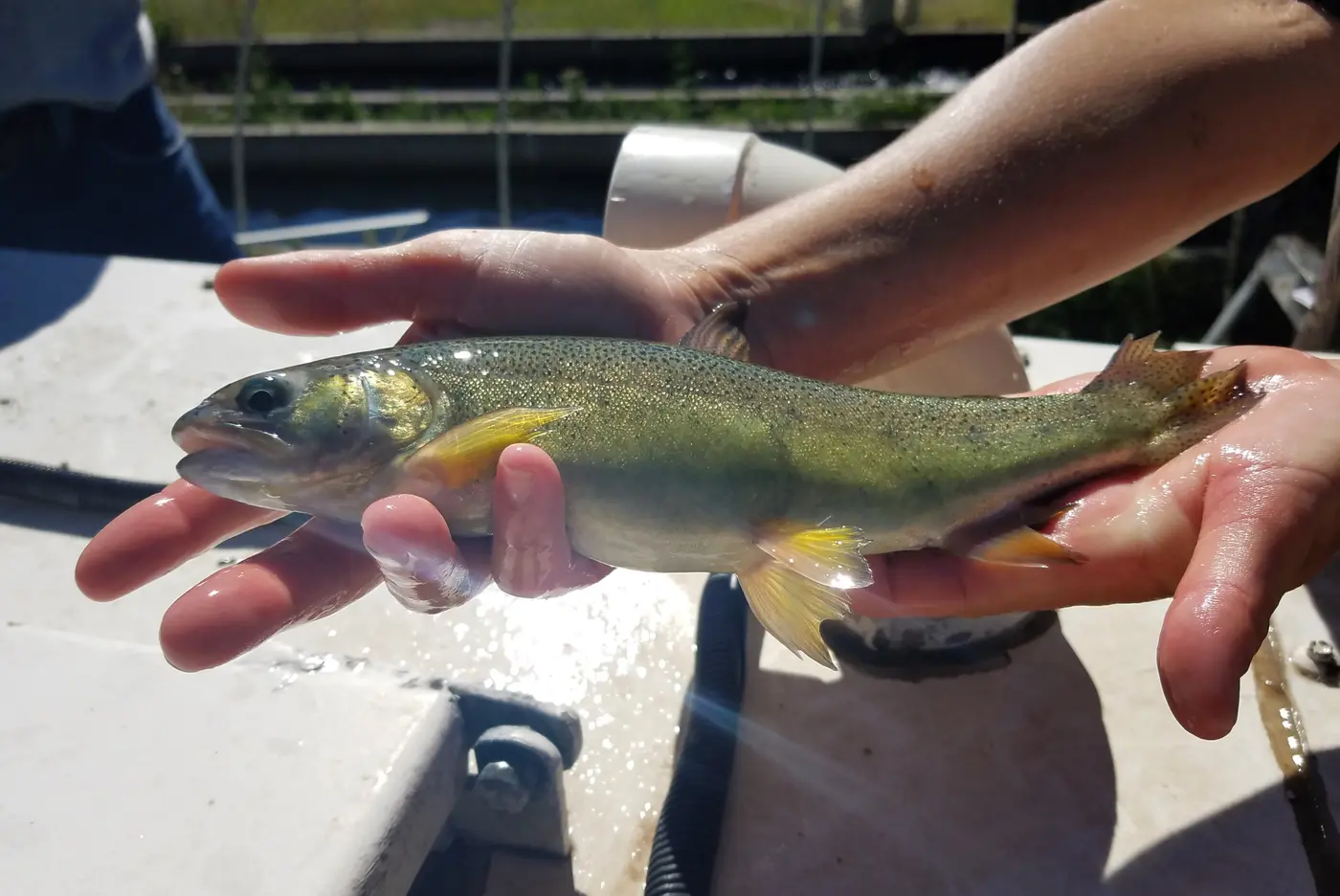
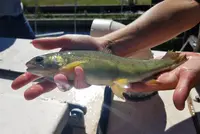
The Gila trout is olive-yellow with black spots. It once lived in hundreds of miles of water in what are now the Gila and Aldo Leopold wilderness areas. New Mexico Magazine writes that it came close to extinction in the 1960s through overfishing, habitat loss, and the stocking of non-native rainbows. The Santa Fe New Mexican puts its sharp decline by the 1950s and says it was declared endangered in the 1960s under the precursor to the Endangered Species Act. Wildfires in southern New Mexico have since cut the populations further. The species was moved from endangered to threatened in 2006, which allowed limited angling for it for the first time since the 1960s.
Pack animals and better roads
Glenwood began as a replacement for a hatchery deep in the wilderness. Roy E. Barker, chief of the department’s Fisheries Division, told the story in the 1962 golden anniversary issue of New Mexico Wildlife. In the fall of 1923 the state built the Gila Hatchery, later called Jenk’s Cabin Hatchery, at the junction of White Creek and the West Fork of the Gila, some 30 miles by trail from Willow Creek. Hauling fish 300 miles from Pecos over the dirt roads of the 1920s, then packing them twenty or more miles further, was “an impossible job.” The cabin hatchery had little water and could raise only fry, which pack animals carried to the streams. Once better roads allowed fish to travel long distances, Barker wrote, a more accessible hatchery became desirable.
The sources date that hatchery differently. Barker wrote that Glenwood “was established in 1937.” The department’s listing says it was built in 1938. The Living New Deal cites a 1994 survey by David Kammer for the New Mexico Historic Preservation Division and records it as a WPA project built from 1937 to 1938 “with the primary goal of raising trout,” at a federal cost of $37,276.41. Barker credited the WPA with “an important part” in building Glenwood and three other state hatcheries.
The springs did not hold. Barker wrote that Glenwood produced fish satisfactorily until the extreme drought of fall 1948. The springs dropped so far that the trout on hand had to be planted out. After that the hatchery ran only when water was available and served mainly as a redistribution point. In the fiscal year before Barker wrote, it raised 6,950 pounds of trout and redistributed 12,750 pounds brought from elsewhere. The Red River hatchery, he noted, could raise trout and truck them south for less than Glenwood could raise them. “Whether water conditions will ever return to make this a satisfactory hatchery is not known,” he wrote. In the same article he described visitors at the state’s five hatcheries who looked at the big fish in the show pond, fed them, and wished “they had a net to catch some of the ‘big ones.’”
Sterile rainbows, then the natives
For most of its life the state-owned hatchery raised mostly rainbow trout, although it stands in the heart of the Gila trout’s natural habitat. In the decade when whirling disease spread through New Mexico’s hatcheries, Glenwood and Rock Lake were the only state trout hatcheries that stayed free of it. A department article from that period describes a new kind of fish in its raceways: triploids, sterile female rainbow trout. A patented pressure treatment gives the eggs three sets of chromosomes instead of two, so the fish cannot breed with native trout. Manager Stan Long’s crews stocked them in the Gila River drainages. “So far they are doing tremendously,” Long said. He found they grew up to a third faster than regular rainbows. “Because they don’t reproduce, all that energy goes into growing and fending off disease.” The department described the switch as a step toward making Glenwood the state’s only producer of Gila trout. Its hatchery directory still carries that older description: triploid rainbows now, Gila trout to come.
The decision to make that change dates to the 2006 downlisting. “That’s when we started to have conversations about converting Glenwood over to all Gila trout,” Patten said. Gila trout had first been raised at what is now the Mescalero Tribal Fish Hatchery. From the 1990s the Mora National Fish Hatchery was the state’s only source. Planning for a $6 million renovation began in 2017. It was paid for by the Game Protection Fund, which comes from hunting and fishing license sales and fees. New Mexico Magazine describes a five-year construction project. The department calls it a decade-long renovation. The work added a new infiltration system, an aeration tower, the production building where eggs hatch and young trout grow to catchable size, the brood-stock building, and the quarantine unit. In 2024 the department announced in a Facebook post that Glenwood now produced only native Gila trout, alongside the federal hatchery at Mora.
The department marked the finished work with GilaFest on Saturday, May 9, 2026. The day opened at 8 a.m. with a guided birding hike on the new Glenwood Allred Wildlife Management Area, a 107-acre property bought for birding, recreation, and habitat conservation. Vehicles stop at its parking lot. At 9:15 the public helped carry and release Gila trout into Whitewater Creek at the Catwalk Recreation Area. Glenwood Community Park held archery, a bowfishing simulation, and wildlife identification, with help from the Gila Chapter of Trout Unlimited, the Nature Niños, the New Mexico Wildlife Federation, and the Bird Alliance of Southwestern New Mexico. Hatchery tours ran at 1, 2, and 3 p.m.
Department spokesperson Darren Vaughan called the renovation “a necessary step to continue recovery efforts for Gila trout in pursuit of delisting the species under the Endangered Species Act.” Patten stated the aim more plainly: “Our primary goal for Gila trout recovery efforts is to create a self-sustaining population that we don’t need to stock.”
Notable Events
- 1937The Glenwood Fish Hatchery was constructed as a Works Progress Administration project from 1937 to 1938 with the primary goal of raising trout. livingnewdeal.org
- 1937Glenwood hatchery was established as a more accessible hatchery after improved transport and roads made long-distance fish transport possible. web.archive.org
- 1938The state-owned hatchery opened as part of the New Deal. newmexicomagazine.org
- 1948Extreme drought in the fall of 1948 diminished the springs and the trout on hand had to be planted out; since then the hatchery has operated only when water was available and served more as a re-distribution point. web.archive.org
- 2006After Gila trout changed from endangered to threatened status, conversations began about converting Glenwood to all Gila trout. newmexicomagazine.org
- 2017Planning for the $6 million renovation, funded by the Game Protection Fund, started in 2017. santafenewmexican.com
- 2024The department announced that Glenwood was now only producing native Gila trout, joining the federal Mora hatchery in raising the species. santafenewmexican.com
- 2026On Saturday the department celebrated the renovation of the Glenwood State Fish Hatchery and the opening of the nearby Glenwood/Allred Wildlife Management Area with hatchery tours, Gila trout stocking at Whitewater Creek, and a birding hike. santafenewmexican.com
People
- Kirk Patten, Chief of fisheries for the New Mexico Department of Game and Fish; involved in discussions about converting Glenwood to Gila trout (2006).
- Leonard Rice, Glenwood Fish Hatchery manager, charged with spawning and raising Gila trout in the renovated facility.
- Darren Vaughan, Department spokesperson explaining the hatchery's expected role in Gila trout recovery and expanded angling opportunities.
- Curt Coffman, Assistant Chief of Education and contact for GilaFest partnership information.
- Stan Long, Glenwood Hatchery manager overseeing triploid rainbow trout production.
Sources
- wildlife.dgf.nm.gov/fishing/fish-hatcheries
- wildlife.dgf.nm.gov/home/contact/location-map
- santafenewmexican.com/news/local_news/earth-wind-and-fire-celebration-saturday-for-fish-hatchery-overhaul-new-wildlife-area/article_618de652-730c-41a8-be11-ceb38b24a8d8.html
- newmexicomagazine.org/blog/post/glenwood-fish-hatchery
- livingnewdeal.org/sites/glenwood-fish-hatchery-glenwood-nm
- glenwoodlibrary.com/glenwood-things-to-do
- livingnewdeal.org/sites/glenwood-fish-hatchery-glenwood-nm
- newmexicomagazine.org/blog/post/glenwood-fish-hatchery
- santafenewmexican.com/news/local_news/earth-wind-and-fire-celebration-saturday-for-fish-hatchery-overhaul-new-wildlife-area/article_618de652-730c-41a8-be11-ceb38b24a8d8.html
- web.archive.org/web/20200116010855/http://magazine.wildlife.state.nm.us/new-mexico-builds-hatcheries
- wildlife.dgf.nm.gov/download/revitalized-nm-hatcheries-see-bright-future/?wpdmdl=44424&refresh=637b0122c0ca01669005602
- wildlife.dgf.nm.gov/2026-gila-fest