Gilcrease Orchard
Las Vegas, Clark County, Nevada. Pick and pay orchard.
Details

- Where
- 7800 North Tenaya Las Vegas NV 89131, Las Vegas, NV 89131. Directions
- When
- Fall Harvest begins Saturday 9/26.
- Season
- No, Gilcrease Orchard is not open year round and is only open seasonally.
- Getting there
- Yes! We have several parking areas conveniently located off Whispering Sands Drive.
- Fees
- TICKET PRICE: $4 weekdays + transaction fees, $6 weekends + transaction fees.
- Hours
- 7:00am-2:00pm.
- Access
- No. Due to food safety purposes, we do not allow pets.
- Walk-in or reserve
- Tickets are to be purchased online, no refunds, no rescheduling, and no onsite/walk in tickets are sold.
- Phone
- 702-409-0655
- Website
- thegilcreaseorchard.org
- Managed by
- Gilcrease Orchard Foundation.
- Established
- 1997.
Pumpkins by the pound on North Tenaya
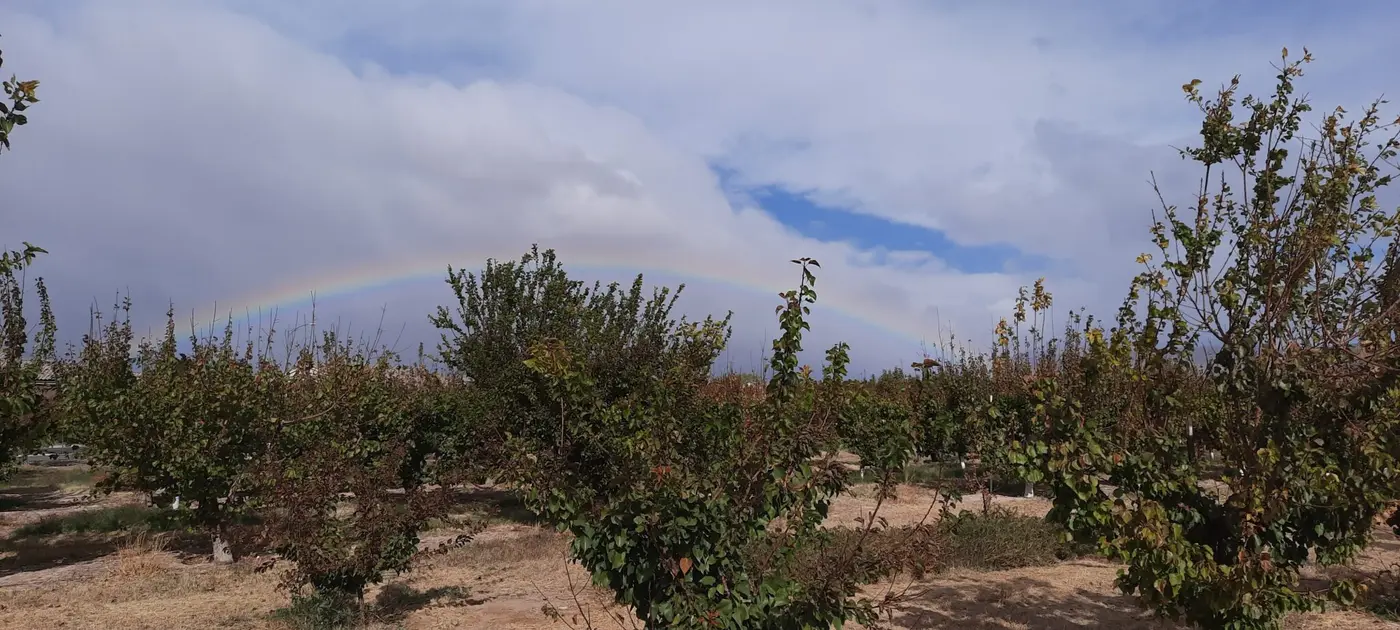
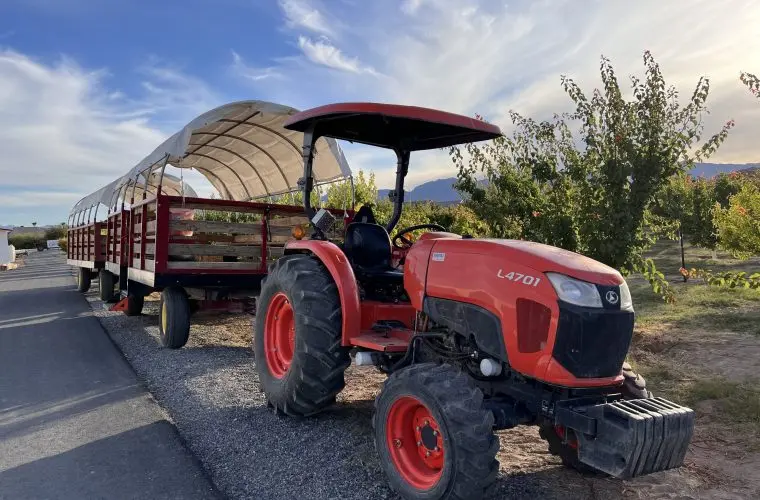
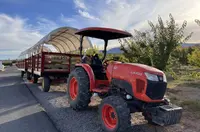
During Fall Harvest at Gilcrease Orchard, a wagon leaves every five to ten minutes and carries about fifty people out through the fruit trees. The orchard lies at 7800 North Tenaya in the northwest part of the Las Vegas Valley, with its parking lots off Whispering Sands Drive. The 2026 Fall Harvest runs September 26 to October 31 on Tuesdays, Thursdays, Saturdays and Sundays, with a bonus Friday on October 30. Entry is by timed ticket bought online in advance. None are sold at the gate.
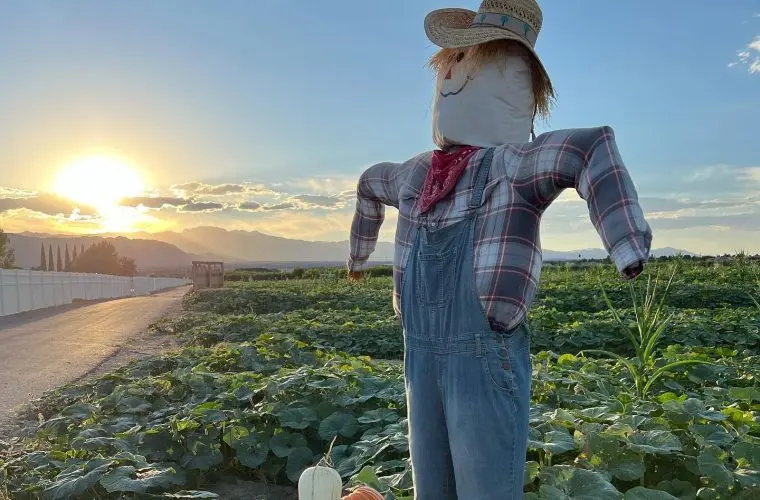
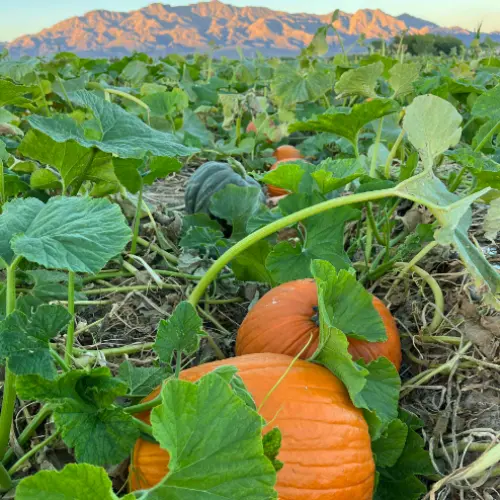
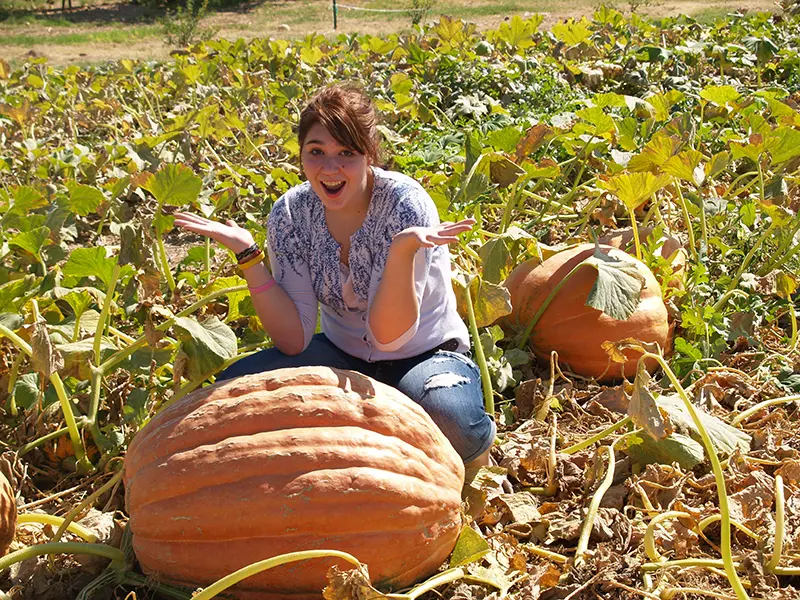
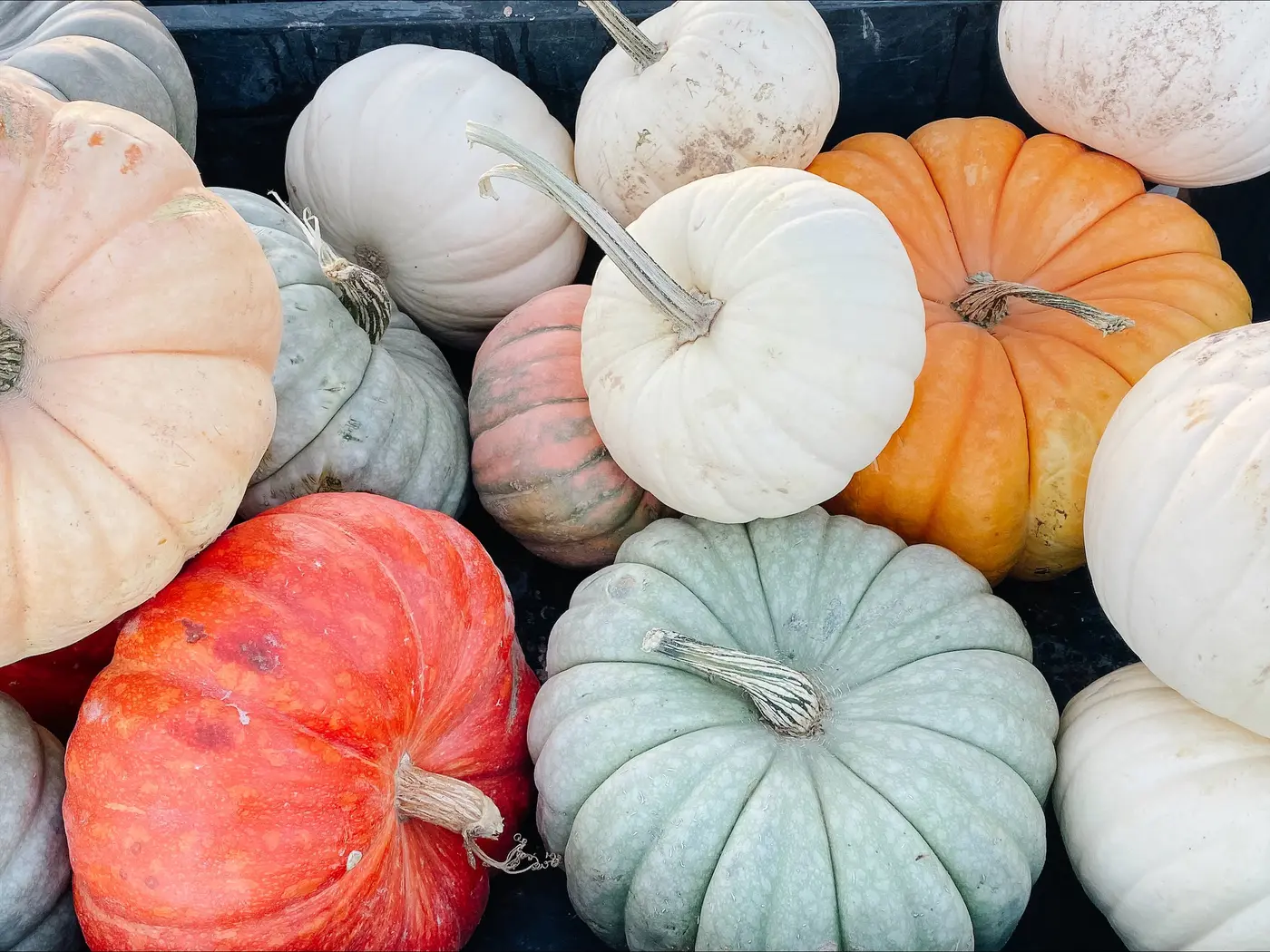
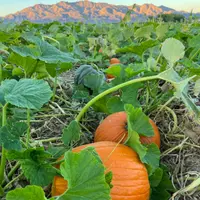
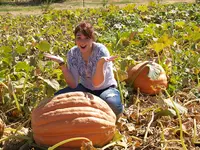
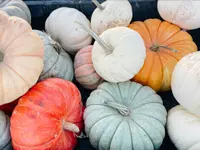
The pumpkin patch is a growing field, and pumpkins are weighed and sold at 75 cents a pound. Corn stalks are $2 each. Visitors may bring their own shears to cut pumpkins from the vine and their own wagons to haul them. Wheelbarrows wait near the entrance, and the orchard asks that children not ride in them because they tip quickly. Signs at the ends of rows say whether a crop is ready. Other signs repeat the rule: do not pick the leaves, the vines or the flowers. The corn maze, a straw maze and photo backdrops fill out the grounds. In the large garden under shade cover, butternut and spaghetti squash go for $1.50 a pound, and in late September the orchard reported kabocha “beginning to color up for picking.” The pomegranates on the trees were still sour, the harvest page said, with picking expected in mid-October.
The apples are short. The orchard’s harvest page reports that a winter without enough chilling hours, the cold spell trees need during dormancy to set fruit, left many trees with far less fruit, the apple trees among them. Bottled Gilcrease cider was expected to sell out early, and some cider was being held back so the donut tent could keep making apple cider donuts through the holiday events.
The farm stand and the donut tent
The farm stand fills in with pre-picked produce from other growers. It has carried Honeycrisp apples from Cherry Hill Farms in Utah, Fuji and Pink Lady apples from Washington, red and russet potatoes from Jorgensen Farms in Idaho, and Crimson Sweet watermelons from Pioche, Nevada. The orchard’s own goods include Beauregard sweet potatoes, peppers, okra, herbs, chicken eggs and strawberry or blackberry freezer jam. The cashier’s counter holds peanut butter, kettle corn, Stephenson honey from southern Utah and olive oil cold-pressed in Murrieta, California. All produce is paid for there, and the receipt is shown at the exit.
In the concessions area, Chef Nate and his crew serve breakfast and lunch, and live music plays over the picnic tables under a shaded canopy. On weekends Party Princess Place stages “Spellbound Spectacular,” an interactive musical show, at 8:30, 9:45, 11:00 and 12:15. The donut tent sells apple cider donuts six to a box, one flavor per box: plain, cinnamon sugar or cream-cheese frosted. It also sells caramel apples rolled in cinnamon sugar, peanuts or sprinkles, along with Joy Popsicles. The orchard shirts and hats carry art by a staff artist. Around the grounds are a chicken coop, a desert tortoise habitat and an owl habitat for burrowing owls, and working beehives stand behind caution tape. Pets are not allowed, for food safety.
Fall is the busiest stretch of the year. In spring and summer the gate opens Tuesdays, Thursdays and Saturdays from 7 to 10 a.m., and no ticket is needed to pick. In winter the orchard opens only for a Christmas tree sale and Christmas wagon rides. The orchard is not certified organic, and it says pesticides are rarely used. It accepts SNAP benefits and Senior Farmers’ Market coupons. In 2003 the Las Vegas Sun reported that the orchard had long sold its goods at two-thirds of supermarket prices.
Lower Tule Springs and a grand piano
The family behind the orchard came south from Reno. Leonard Gilcrease grew up on the Gilcrease Ranch at Lemoore, California, south of Fresno, but at the University of Nevada, Reno he studied mechanical engineering. According to Corinne Escobar’s history of the family farmstead, his attention there went to “auto mechanics, machinery and a young lady named Elda Ann Orr.” The Sun wrote that he had been an engineer for General Electric in California. Elda was the daughter of John Orr, a ‘49er from San Francisco who became a miner, attorney and district court judge in Reno. She studied music. According to her son Bill, she had once thought of playing piano for the Boston Pops.
When Elda’s mother died and left her a sizable inheritance, the couple moved to the Las Vegas Valley. Escobar writes that a UNR mentor, a Professor Scroggum, had told Leonard that land and water in southern Nevada were good investments. The family arrived in 1920. Escobar gives the boys’ ages then as three for John Theodore (Ted) and one for William Orr (Bill). The Made in Nevada profile says Ted was four and Bill not yet a year old. The accounts of the land differ as well. The Las Vegas Review-Journal and Made in Nevada say the family used Elda’s inheritance to buy more than 900 acres that took in the artesian springs called Lower Tule Springs. Escobar says the first purchase was 80 acres bought from Bill Morgan, including Lower Tule Springs but not the Upper Tule Springs owned by the Nays, and that Elda and Leonard’s holdings later grew to 960 acres.
The house that came with the springs burned to the ground in 1922. Elda lost her grand piano and other belongings, though the family photograph albums survived. The family moved into a storage shack to the southeast, near what are now Elkhorn and Rainbow. Escobar writes that over the years it was pieced together into a three-bedroom ranch house.
The Gilcreases first tried grapes. When those failed, they turned to chickens, and the coops Leonard built in the 1920s were still standing at the farmstead when Escobar wrote. The Sun says the farm first grew alfalfa to feed cattle on trains bound from Salt Lake City ranches to Los Angeles slaughterhouses. Ted’s first job, at four, was feeding the farm’s 1,600 chickens. Turkeys followed and were sold to townspeople and to the military post that became Nellis Air Force Base. The house got indoor running water from a gravity-fed tank in 1932, its first indoor toilet in the 1940s and electricity in 1950. Until then the family used propane lamps and a small power plant on the property.
The Depression hurt the business. Escobar writes that Leonard wanted to go back to California, traveled between the two states for a time, and finally divorced Elda, remarrying in 1932. The Sun puts his leaving in Ted’s teenage years. Elda stayed and worked the ranch with her sons until she died in 1968 at 78. The brothers later gave land to the Clark County School District for a high school, and they asked that it be named for her.
Machinery, quail and an orchard
Ted took after his father. He built much of the farm’s equipment, and in the 1940s, Escobar writes, he bought land until the family held as much as 1,500 acres. The Review-Journal dates that peak to the 1950s. Made in Nevada says about 200 acres were cultivated. Over time, parcels were sold to pay taxes and other debts.
Bill went to art, birds and grafting. Escobar writes that he was seven when his mother let him hand-raise a quail he found on the property. The Review-Journal, citing the sanctuary’s website, puts that age at nine. Pecan trees he planted at seven, in 1926, still stood at the farmstead in 2009. In 1970, according to the Review-Journal, he founded what began as the Gilcrease Bird Sanctuary and later became the Gilcrease Nature Sanctuary, next to the orchard. Lorraine DeBusk, a friend, recalled his “funny and skittish” quail call and the quail calling back. She also said he painted in oils and once found mammoth fossil bones.
About 1977, Bill helped Ted plan and plant the apple orchard at Whispering Sands and Tenaya. The Review-Journal gives the year as 1977, and the orchard’s own site says the 1970s. Ted stopped growing alfalfa to run the orchard for the public, and Bill experimented with apple strains that could stand the dry climate. The two sources disagree on the orchard’s size. The orchard’s current site says valley residents have had 60 acres of what Ted called his “pick and pay” orchard for nearly 50 years. The Made in Nevada profile says residents had 100 acres for over twenty-five years.
Ted lived in the same house for more than 80 years and spent most healthy days tinkering in a large work shed he had built. He said he often worked twelve-hour days and never had time for a wife. “What woman wants a man who works so many hours for so little money?” he asked. Bill never married either. In 2001 Ted told the Sun, “People ask why I don’t buy a yacht and see the world. I’ve visited Alaska, Hawaii and other places — I’ve seen the world. But hundreds of people here have told me how important this farm is to them … It is recreation for them to come here with their children and get away from the city. I feel I have a purpose here.” The city proclaimed June 29, 2001, his 85th birthday, as Ted Gilcrease Day. He died in 2003 at 87, after a lengthy illness.
A foundation, a trust and a settlement
As his health failed, Ted moved to protect the orchard. In 1996 he placed several acres, including the farmstead, in a trust whose heirs were Bill, the ranch hand Bill Allen, and Mary Ellen Racel. Elda had hired Allen in the 1950s, when he was 14, and he was still working the farmstead and orchard when Escobar wrote. In 1997, with Bill’s support, Ted set up the nonprofit Gilcrease Orchard Foundation, governed by a board of trustees.
Racel had started at the orchard as a volunteer, then became an employee, and took over its management as Ted grew infirm. She became executive director, and she and her two children sat on the foundation board. Escobar writes that Bill, whom Ted had appointed a lifetime trustee, asked them to step down so he could choose his own trustees. They refused, saying “it wasn’t what Ted wanted,” and lengthy litigation followed. The settlement gave the orchard a new board and divided the farmstead among the three heirs. Racel received the ranch house. She once promised to make it a museum, a plan Escobar judged “not likely.”
Bill Gilcrease turned 98 on June 21, 2017, and died on October 24 of that year. Apache dancers performed a blessing at his funeral, as he had wished. “We built the Orchard with the intention it would be around for a very long time,” he said. Mark Ruben, then the orchard’s director, told the Review-Journal: “There isn’t any other one of this size that has this much variety and is open to the public.” The foundation’s current board includes Corinne Escobar, author of the farmstead history. Her photographs of February 2009 show the pecan trees Bill planted in 1926.
Notable Events
- 1920The family arrived with sons John Theodore (Ted) and William Orr (Bill), starting what became the valley's longest-running family-operated ranch. thegilcreaseorchard.org
- 1922The home on the Lower Tule Springs purchase burned, and the family moved into a storage shack nearer the land they cultivated. thegilcreaseorchard.org
- 1929The Great Depression caused the profitable family ranch business to suffer. thegilcreaseorchard.org
- 1932The family acquired indoor running water from a gravity-fed tank. lasvegassun.com
- 1940sThe first indoor toilet was not installed until the 1940s. lasvegassun.com
- 1940sTed acquired acreage until the family owned as much as 1500 acres. thegilcreaseorchard.org
- 1950Electricity was brought to the farm property in 1950, though the family had long used propane-generated lamps and a small power plant on the property. lasvegassun.com
- 1950sThe Gilcrease family land empire peaked in the 1950s at more than 1,500 acres. reviewjournal.com
- 1968The brothers' mother Elda Gilcrease died in 1968 at age 78; the brothers later donated land for a high school they requested be named for her. lasvegassun.com
- 1968Elda stayed and worked the ranch with her sons until her death. thegilcreaseorchard.org
- 1977William Gilcrease and his brother Ted founded the orchard. reviewjournal.com
- 1996Ted placed several acres in a trust shared by Bill Gilcrease, Bill Allen and Mary Ellen Racel rather than leaving the Farmstead solely to Bill. thegilcreaseorchard.org
- 1997Ted, supported by Bill, established a nonprofit foundation governed by trustees. thegilcreaseorchard.org
- 2001Las Vegas honored Ted Gilcrease for his community service by proclaiming June 29, 2001, as Ted Gilcrease Day. lasvegassun.com
- 2017Bill passed away October 24, 2017 after turning 98 that June. thegilcreaseorchard.org
People
- Elda Gilcrease, co-founder of the Gilcrease family ranch; her inheritance helped purchase the 900 acres including the Lower Tule Springs (arrived 1920).
- Leonard Gilcrease, Ranch owner and operator with Elda.
- Ted Gilcrease, co-founder of Gilcrease Orchard; showed the greater interest in farming (died 2003).
- William Gilcrease, co-founder of Gilcrease Orchard; founder of the Gilcrease Nature Sanctuary (resident of Las Vegas since 1920).
- Bill, Developed the Orchard with Ted; experimented with apple strains (died October 24, 2017).
- Brad McDonald, Current Orchard Foundation trustee.
- Corinne Escobar, Current Orchard Foundation trustee.
- Dennis Swartzell, Current Orchard Foundation trustee.
- Dr. Larry Allen, Current Orchard Foundation trustee.
- Tara Pike, Current Orchard Foundation trustee.
- Ted, Ranch manager; developed the Orchard with Bill.
- Bill Allan, Ranch hand hired by Elda; continued working the Farmstead and Orchard (hired in the 1950s).
- Bill Morgan, Sold the family its first acreage.
- Elda, Worked the ranch with her sons until her death (died 1968).
- Mary Ellen Racel, Orchard volunteer, employee, then manager when Ted became infirm.
- Professor Scroggum, UNR mentor who influenced Leonard to move to Las Vegas.
Sources
- thegilcreaseorchard.org
- thegilcreaseorchard.org/about
- thegilcreaseorchard.org/fall-harvest
- thegilcreaseorchard.org/faqs
- thegilcreaseorchard.org/wp-content/uploads/2025/06/The-Gilcrease-Farmstead-by-Corinne-Escobar.pdf
- reviewjournal.com/local/local-las-vegas/founder-of-las-vegas-gilcrease-sanctuary-orchard-dies-at-98
- madeinnevada.org/places/gilcrease-orchard
- lasvegassun.com/news/2003/dec/01/orchard-owner-gilcrease-dies-at-87