Fry Meadows Guard Station
Elgin, Union County, Oregon. Two-room guard-station cabin; May 15 through November 20.
Details

- Where
- Elgin, Union County, OR. No street address stated. Directions
- When
- Check-in 2:00 PM; check-out 12:00 PM.
- Getting there
- From Weston, Oregon: Travel 20 miles east of Weston on Highway 204. Turn left (north) onto Forest Service Road 64 and follow it for approximately 11 miles to the junction with Forest Service Road 63. Turn right onto Forest Service Road 63 and travel about 8.8 miles to the junction with Forest Service Road 62.
- Fees
- $40 per night per group, maximum four occupants.
- Access
- Pets are welcome but must be leashed and outside; there is additional space in the yard for tent camping.
- Walk-in or reserve
- Maximum stay is fourteen consecutive nights; reserve at Recreation.gov or by calling 1-877-444-6777.
- Phone
- 509-522-6290
- Website
- fs.usda.gov
- Managed by
- Umatilla National Forest.
- Established
- early 1930s.
- Coordinates
- 45.78667, -117.83167.
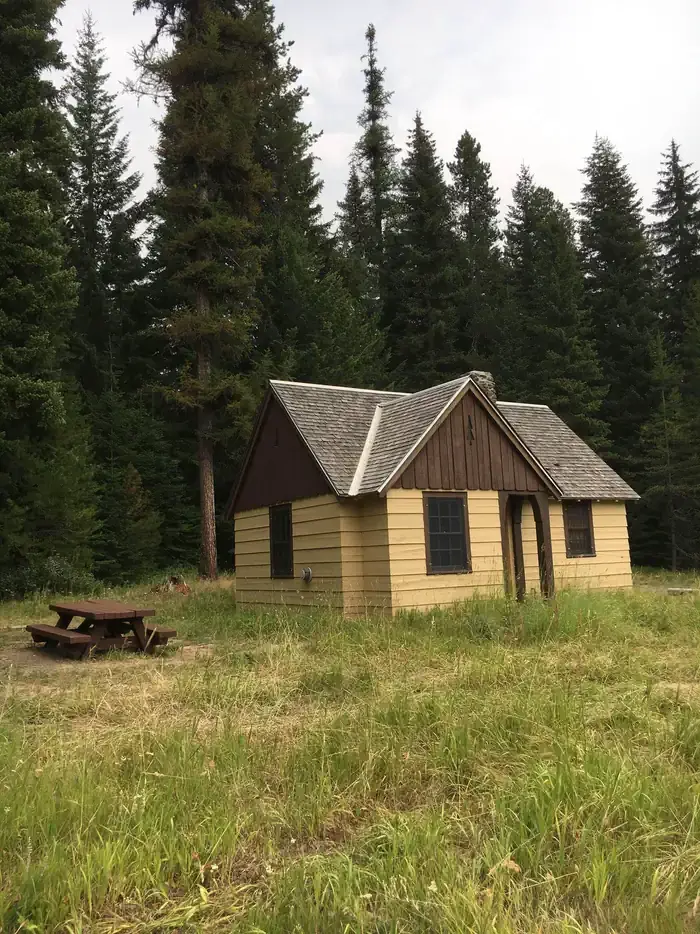
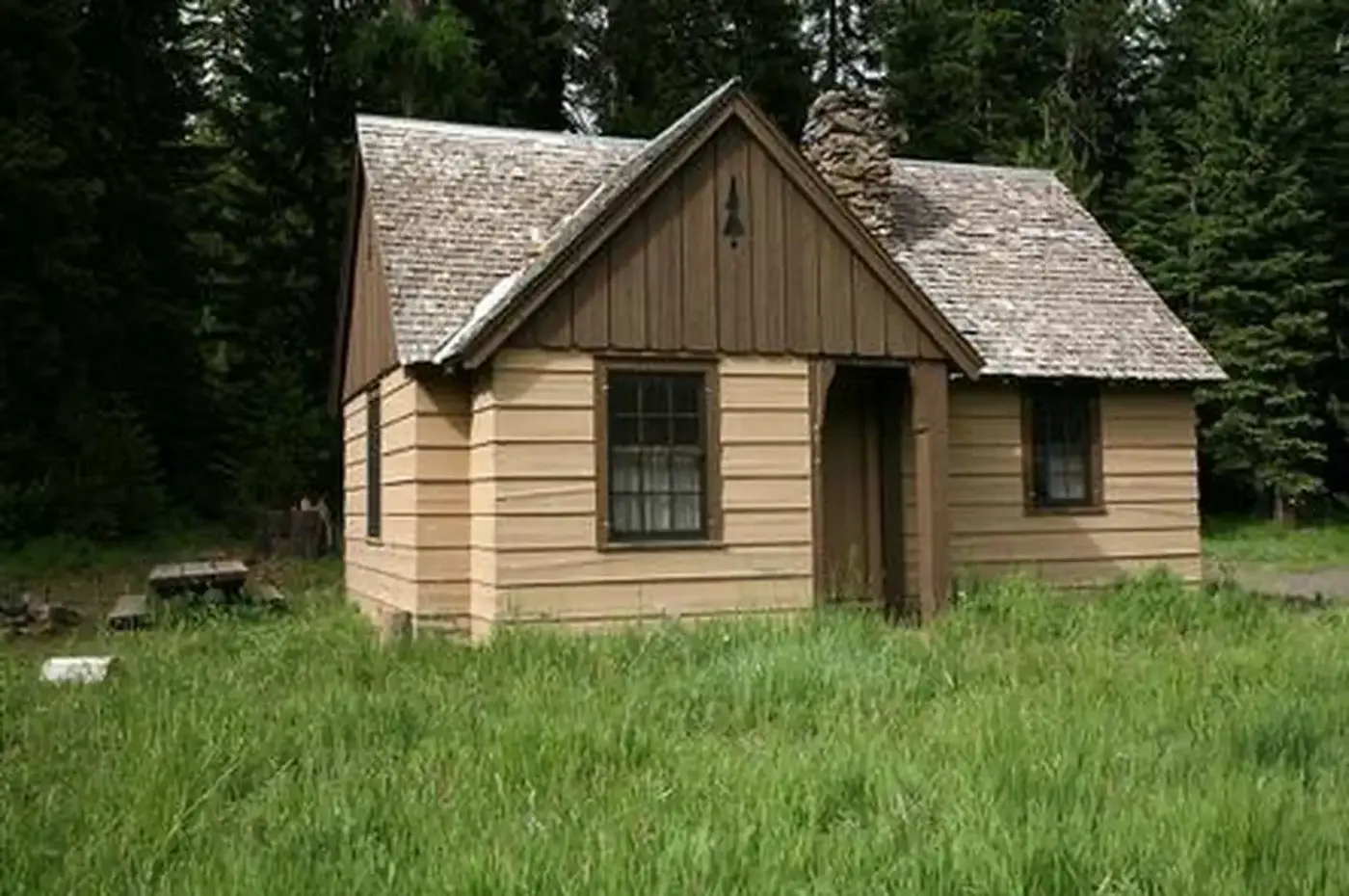
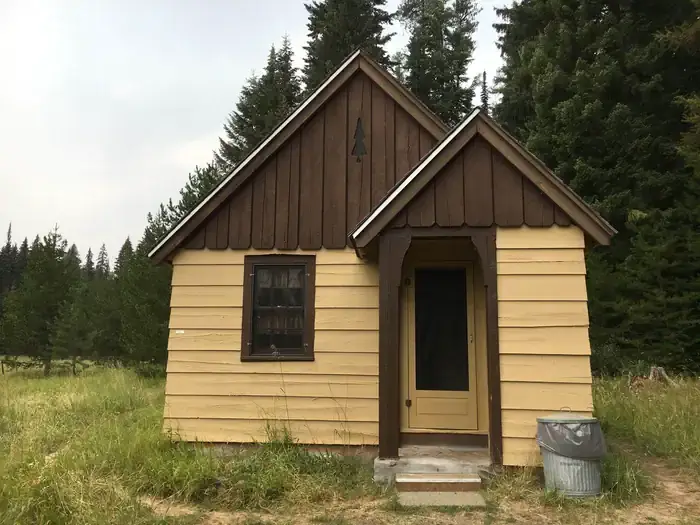
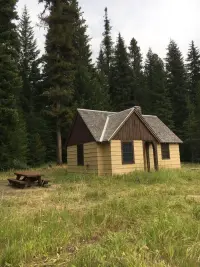
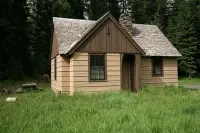
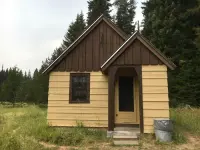
Seven miles past Palmer Junction, County Road 43 crosses the forest boundary and becomes Forest Service Road 6231. Fry Meadow Guard Station then comes into view across a meadow on the left. The cabin stands where grass meets a canopy of spruce and fir, and in season the meadow holds lupine, larkspur, monkey flower and orchids. A turn onto Forest Service Road 6235 runs about 300 feet. The cabin entrance is the next left, on a gravel driveway with room for three vehicles. In the peak of the gable is the outline of a pine tree, a mark the Living New Deal identifies as common to cabins of Civilian Conservation Corps design.
The station stands in Union County, about 25 miles northeast of Elgin by Recreation.gov’s reckoning. It lies just south of the Wenaha-Tucannon Wilderness and west of the Grande Ronde Wild and Scenic River. The Walla Walla Ranger District manages it as one of thirteen rental cabins on the Umatilla National Forest. The sources do not agree on the spelling: the Forest Service writes Fry Meadow, and Recreation.gov writes Fry Meadows.
Two rooms and a combination lock
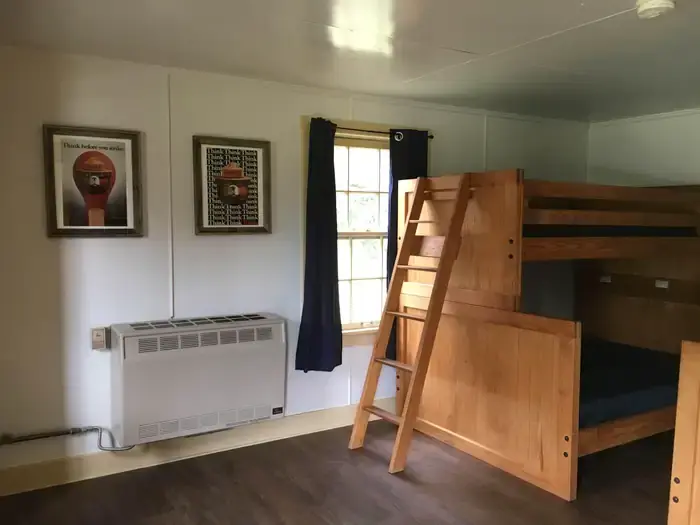
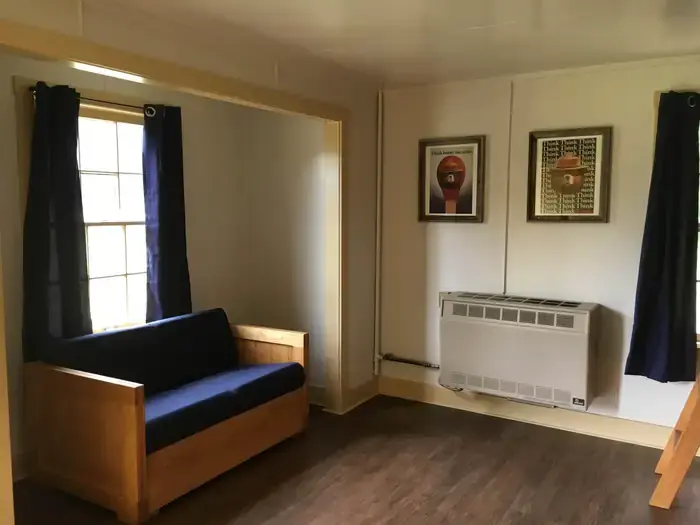
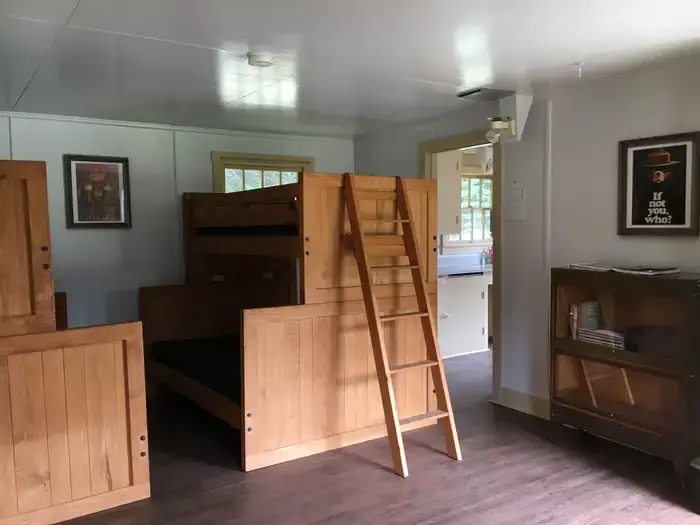
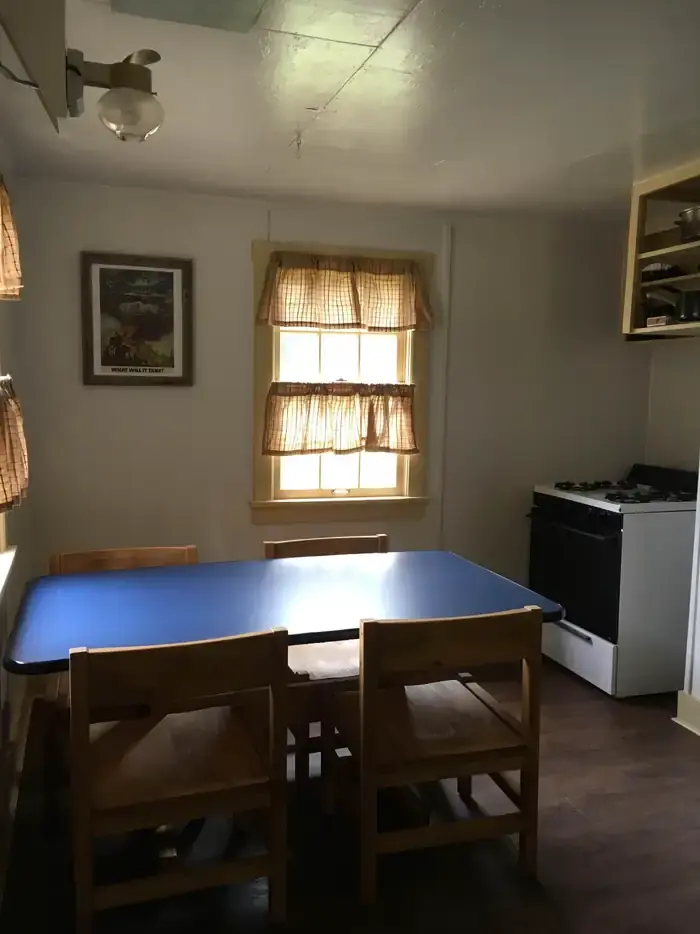
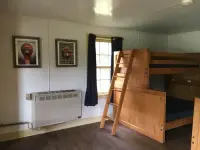
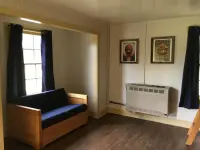
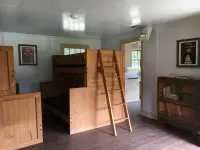
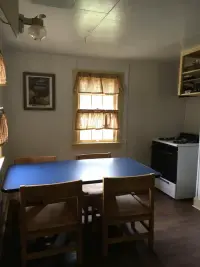
The place is unstaffed. Guests call the Walla Walla Ranger District before arrival for the code to the combination lock. Inside are two rooms: a kitchen, and a combined living and sleeping room.
The two official listings describe the furnishings differently.
The Forest Service lists four beds with mattresses, a table and chairs, a propane cook stove in the kitchen, propane lights in both rooms, and no heat. It sets the maximum at four occupants. Recreation.gov counts two full beds and two twin beds. It adds a propane heater, cooking pots and utensils, and limited cleaning supplies, and it puts capacity at six guests.
Both listings agree that there is no water. Visitors haul in what they need for drinking, cooking and washing, carry out their own garbage, and walk a short distance to the vault toilet. Leashed pets may stay outside in the yard, which has room for tents. Pack and saddle stock are not allowed. Recreation.gov advises that remote cabins carry a risk of hantavirus exposure.
The Forest Service says cars can generally reach the cabin from June 1 to November 1. Recreation.gov puts vehicle access at mid-May to mid-November. When snow closes the road, the Forest Service describes a way in by ski or snowshoe from Lookingglass Creek: about 7 miles, including a 3-mile climb, on roads built for passenger cars. Snowmobilers can start instead from sno-parks along Highway 204 and ride about 25 miles of trail to the door.
Elk at evening, finches at morning
As afternoon slides into evening, Recreation.gov reports, deer and elk come out to graze. Hawks perch in the treetops or glide over the meadow, watching the grass for field mice. Mornings bring a long list of birds: flycatchers, hummingbirds, swallows, chickadees, creepers, wrens, kinglets, thrushes, sparrows, warblers, tanagers and finches.
The country around the cabin offers more of the same. The Wenaha-Tucannon Wilderness has more than 200 miles of managed trail for hiking and horseback riding in summer. The Grande Ronde is floated by boat and fished for salmon and steelhead. The area is hunted, and huckleberries, blackberries and morel mushrooms are picked in season.
A ranger station before 1908
The Forest Service writes that this country, particularly the Grande Ronde River and Valley, was home to the Nez Perce, Umatilla, Walla Walla and Cayuse. The tribes raised strong, wiry little horses on the Grande Ronde Valley range, and white settlers praised the horses for their ability to herd cattle. The tribes also hunted and dug camas roots in the area.
The site was first established as a ranger station before 1908, as part of the former Wenaha National Forest. The sources date the present cabin differently:
The Forest Service dates it to the early 1930s. Recreation.gov and the Living New Deal give 1935.
The Living New Deal lists Glenn Voelz’s 2025 book on the Civilian Conservation Corps in Oregon among its sources. It names the builders as enrollees from CCC Camp Mottet Creek. It says the cabin served as shelter for forest management and firefighting in this remote part of the forest.
The sources also differ on when that service ended. The Forest Service says the building was used as a guard station until about 1980, and the Living New Deal says until 1980. Since then it has been rented to the public, with the fees used for the station’s maintenance and preservation.
Alva Day’s photograph
In April 2018 the History Museum of Hood River County posted a photograph of the station with a short note: Alva Day had visited the Fry Meadow guard station in 1947. “I am happy to see this beautiful building still exists,” the note’s writer added.
Readers studied the picture. One, signing as nels, thought it “rather looks like fire hose laying in the road.” Another, L.E., called it country “where winter arrives early and spring arrives late.” A third, Arthur, looked at the car in the frame: “I’m going to say a 1937 Chevy sedan.”
Notable Events
- 1930sThe Civilian Conservation Corp constructed the existing cabin. fs.usda.gov
- 1935The Civilian Conservation Corps constructed the existing cabin. recreation.gov
- 1947Alva Day visited Fry Meadow Guard Station. hoodriverhistorymuseum.org
- 1980Its use as a remote guard station lasted until about 1980. recreation.gov
People
- Alva Day, visitor to Fry Meadow Guard Station (1947).
Sources
- recreation.gov/camping/campgrounds/234462
- recreation.gov/camping/campsites/81616
- fs.usda.gov/r06/umatilla/recreation/camping-cabins
- fs.usda.gov/sites/nfs/files/legacy-media/umatilla/Cabin%20Rentals%20-%202013.pdf
- fs.usda.gov/r06/umatilla/recreation/fry-meadow-guard-station
- fs.usda.gov/r06/umatilla/recreation/fry-meadow-guard-station
- recreation.gov/camping/campgrounds/234462
- hoodriverhistorymuseum.org/fry-meadow-guard-station
- livingnewdeal.org/sites/fry-meadows-guard-station-umatilla-national-forest-or