Forestiere Underground Gardens
Fresno, Fresno County, California. Underground garden and hand-excavated home; March through November.
Details

- Where
- 5021 W. Shaw Ave, Fresno, CA 93722. Directions
- When
- Tour times vary; check Book Online calendar.
- Fees
- Adult $25; Senior $23; Youth $14; Small Child Free; College $23; Military $23.
- Hours
- Guided tours require about 60 minutes of gentle walking, with approximately 20 stairs (with hand rails).
- Access
- Street parking only on Shaw Avenue and Forestiere Avenue. Parking is free. Extensive High-Speed Rail road construction surrounding the site.
- Walk-in or reserve
- Access by guided tour only; reservations highly recommended.
- Phone
- 559-271-0734
- Website
- undergroundgardens.com
- Managed by
- Forestiere Underground Gardens.
- Established
- California Registered Historical Landmark No. 916 in 1979.
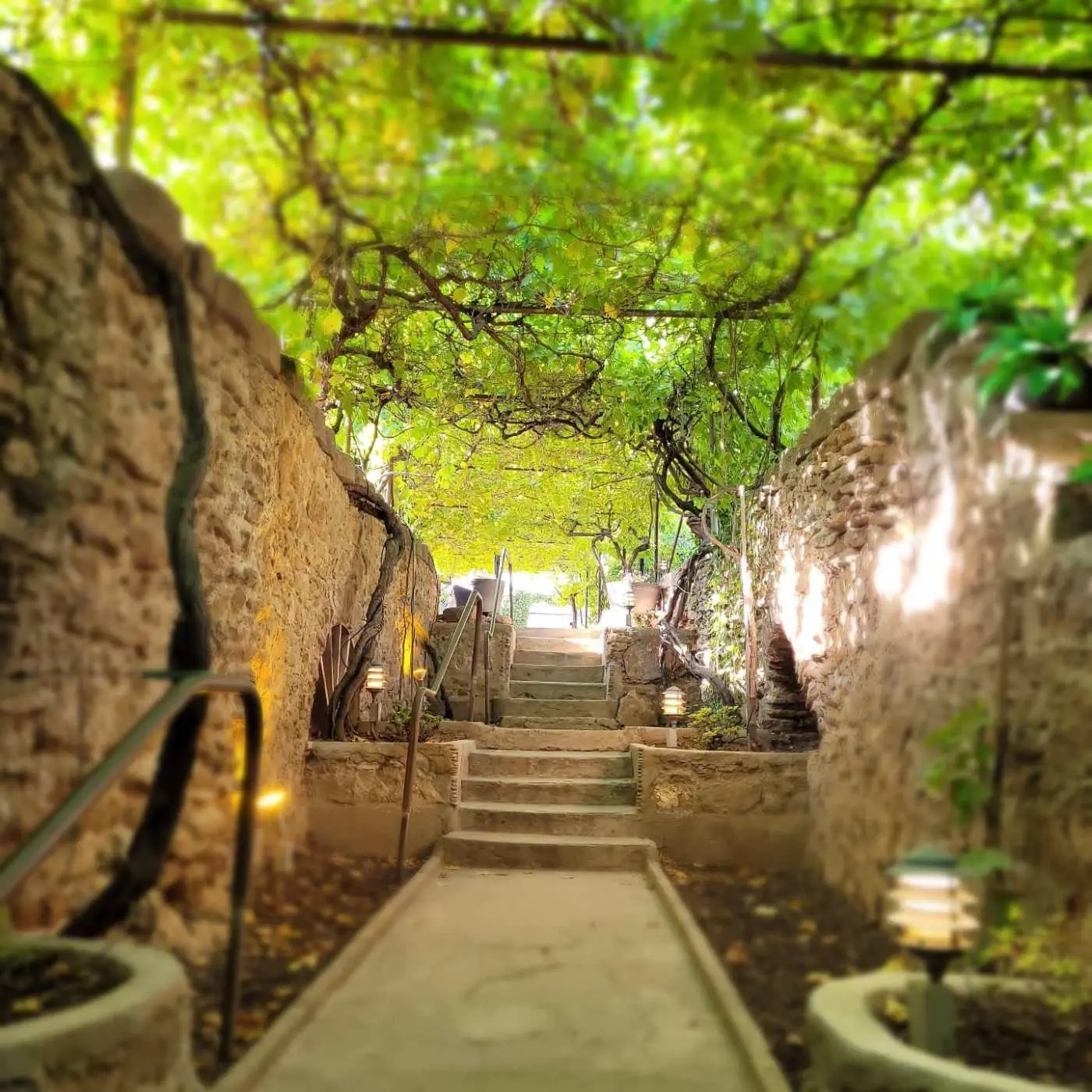
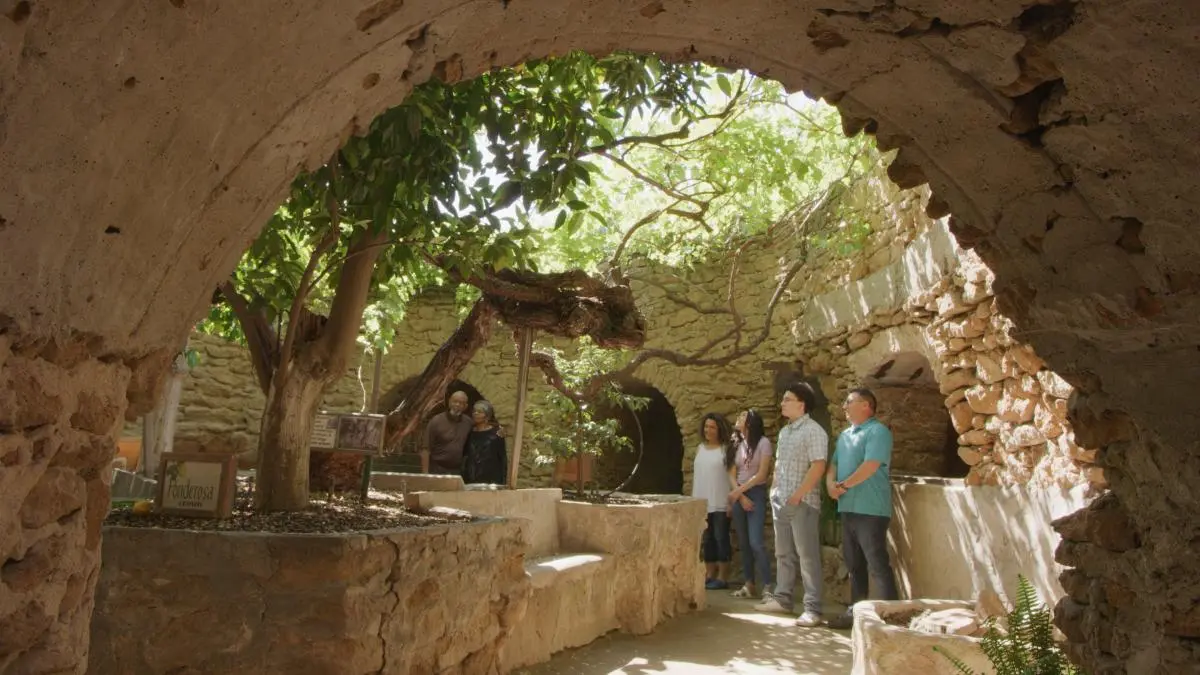
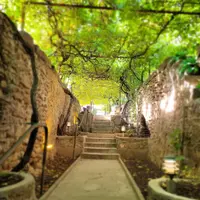
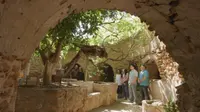
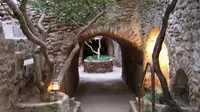
The way in is from Shaw Avenue, on the west side of Fresno, a short distance east of Highway 99. For the 2025 and 2026 tour seasons the operators warned of extensive High-Speed Rail construction around the site, traffic patterns that change from day to day, and parking only along Shaw and Forestiere avenues. Below the street, a guide leads a small group for about an hour through passageways, rooms, and courtyards cut from hardpan, a native sedimentary stone. The route crosses earthen ground and about 20 stairs with hand rails. At several stops along the way the guide gives a short talk on the life of the builder, Baldassare Forestiere.
The air changes on the way down. The gardens’ home page puts the drop from surface temperature at 10 to 20 degrees. Its FAQ says 10 to 15 and advises a light jacket in spring and fall. One visitor, Lisette Pedraza, wrote that “it was a little chilly underground.” The season runs March through November, and the gardens close on some days of extreme heat or wet weather. Tours in Spanish are given when booked ahead, and an alternate route takes standard wheelchairs.
Arches, skylights, and a fish pond
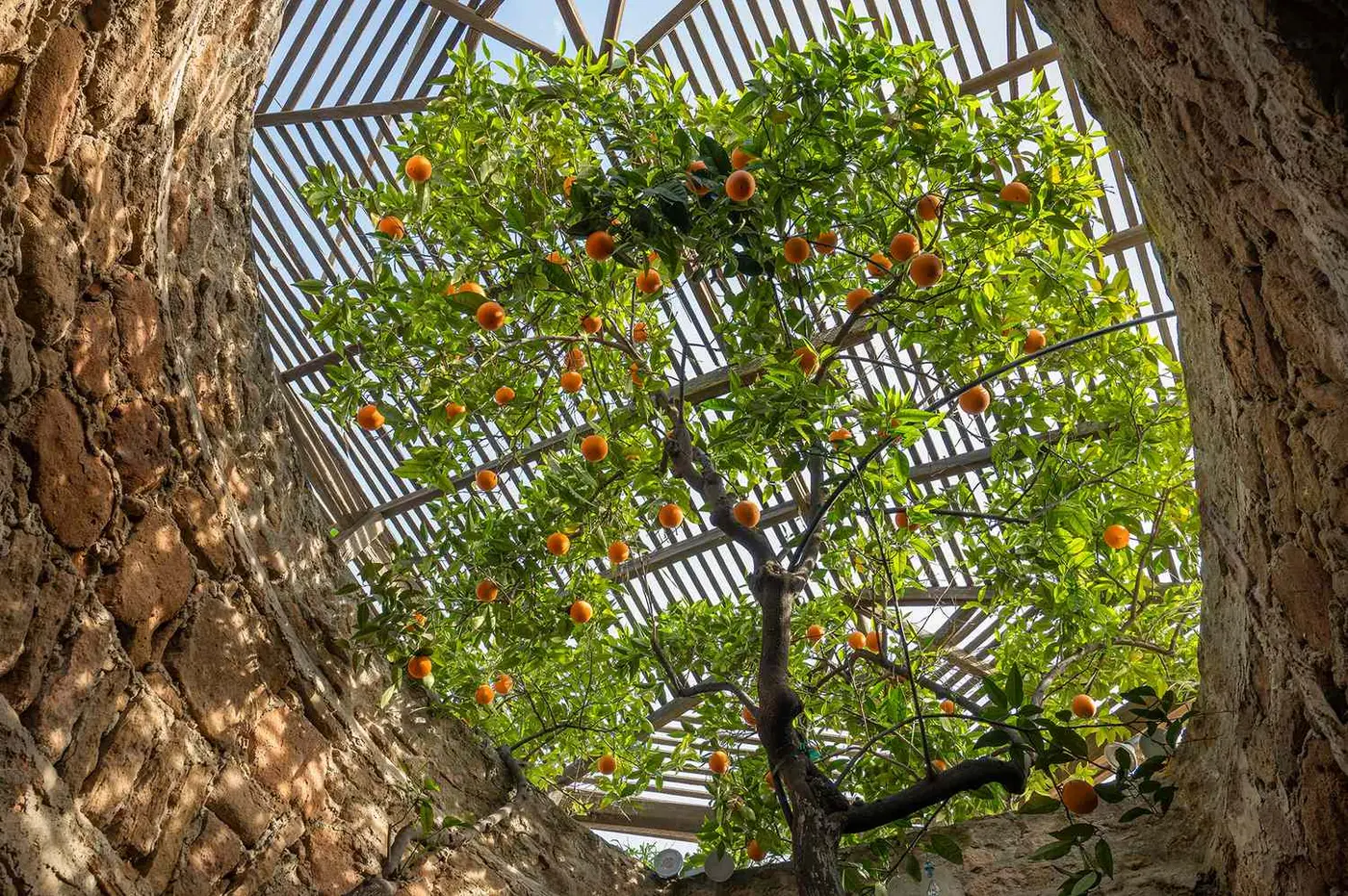
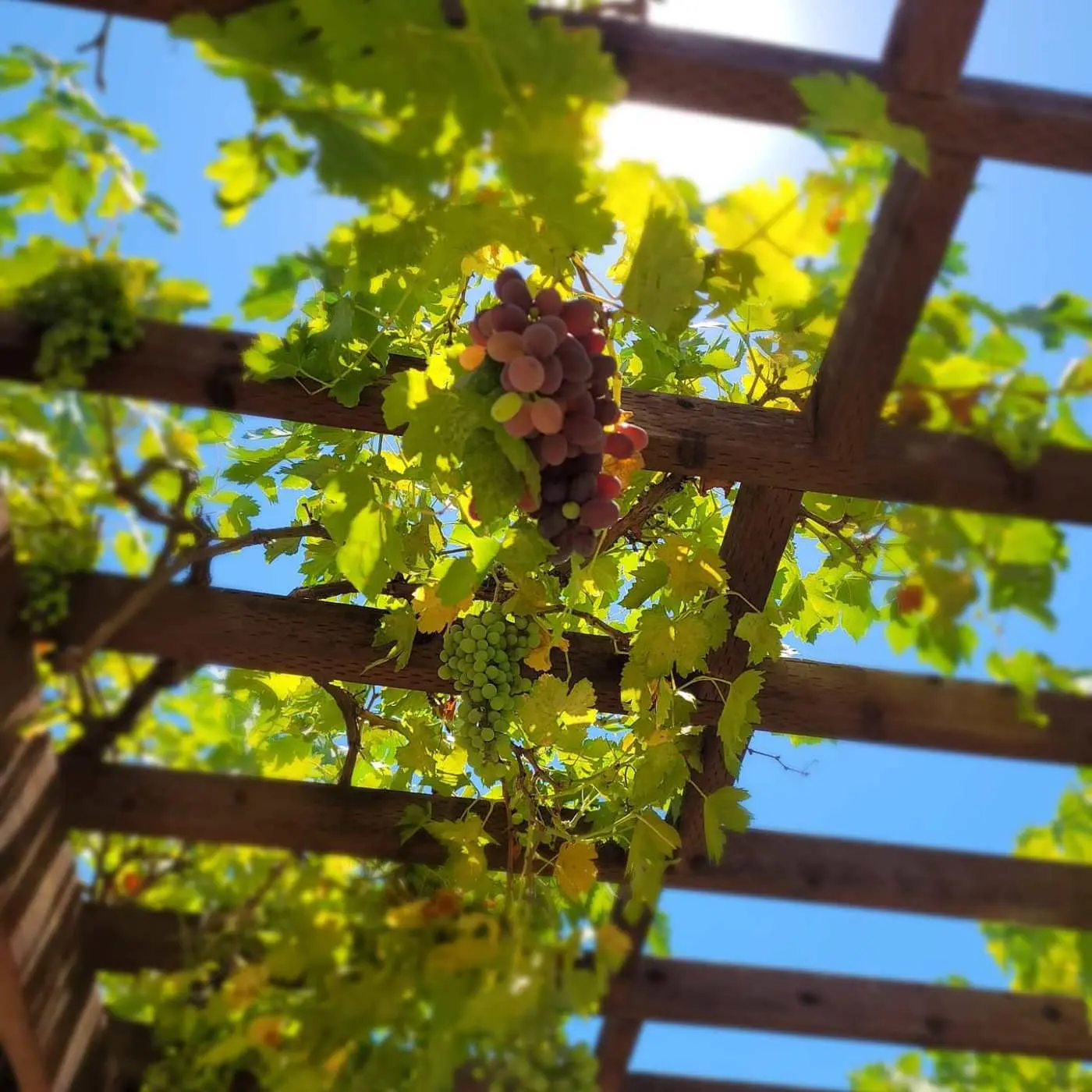
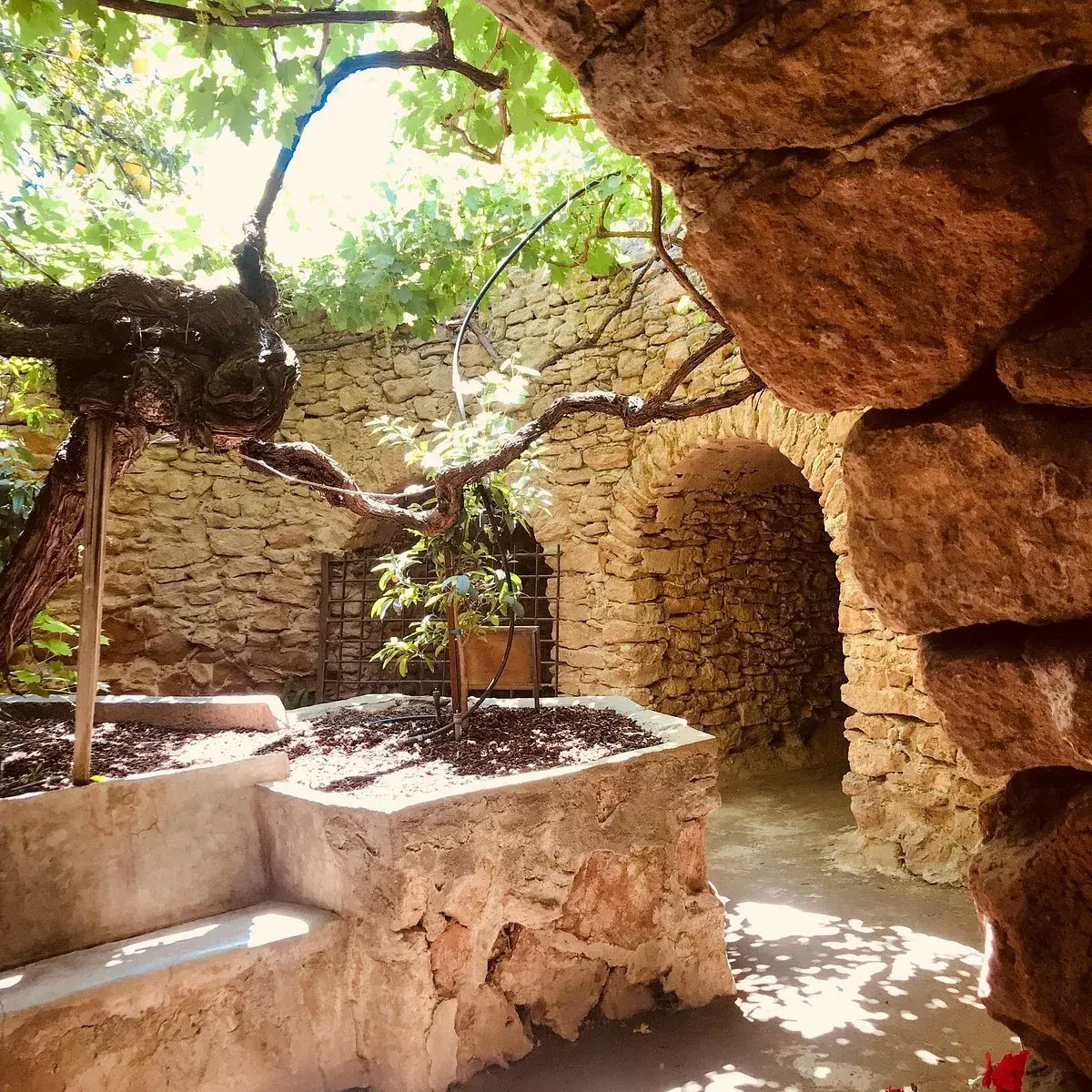
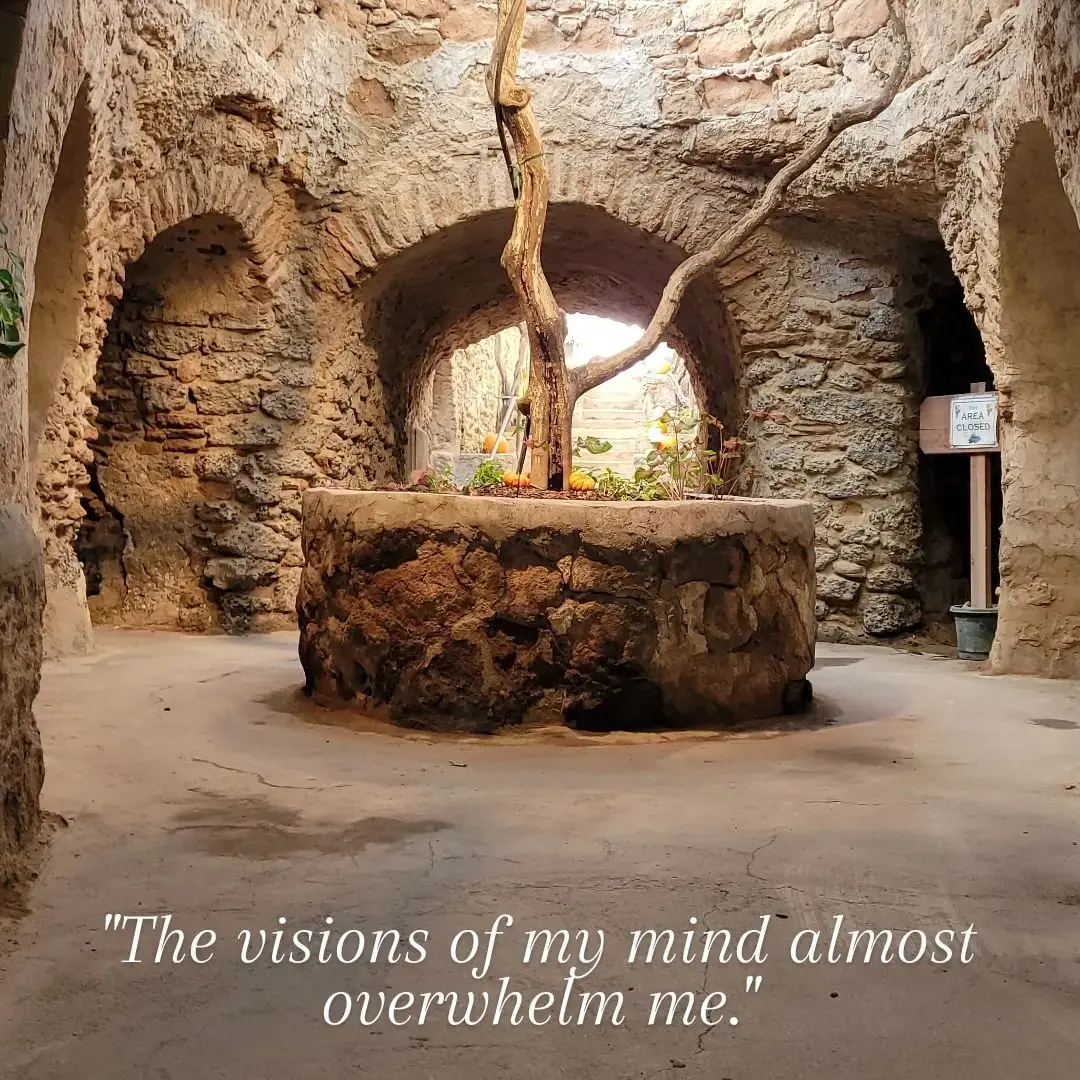
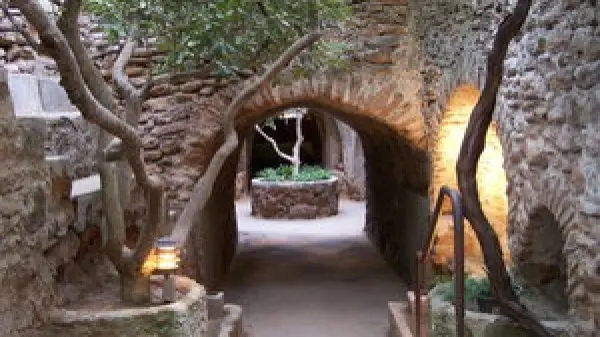
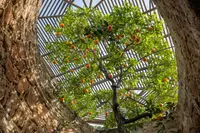
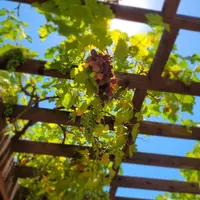
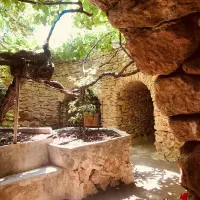
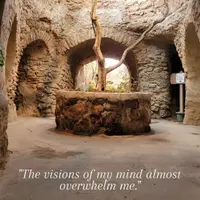
Forestiere held up the weight of the earth with Roman arches, columns, and domes. He worked hardpan, mortar, and cement into structure and also into surface texture. According to the National Register description, some ceilings are vaulted and carved “like inverted tea cups.” Others open to skylights hung with redwood arbors and pergolas, with grapevines cascading through them. Over his living quarters he fitted the skylights with glass in winter, to keep out rain and let in light. Planters of many shapes line the passageways, many with recessed seats built into them, and an auto tunnel about 800 feet long winds through the gardens.
A collection page at the University of North Dakota counts three levels and 65 rooms, including two bedrooms, a bathroom, and a working kitchen. The garden court off the kitchen and bedrooms held a small fish pond crossed by a footbridge. Elsewhere there was an aquarium with a circular glass bottom for watching tropical fish from below. A small lake once lay at ground level; the register description says it has been filled in for a parking lot. Photographs James Smith Pierce made in June 1976 show a large room with a wheelbarrow on display and an outdoor bathtub among plants.
Fruit twenty feet down
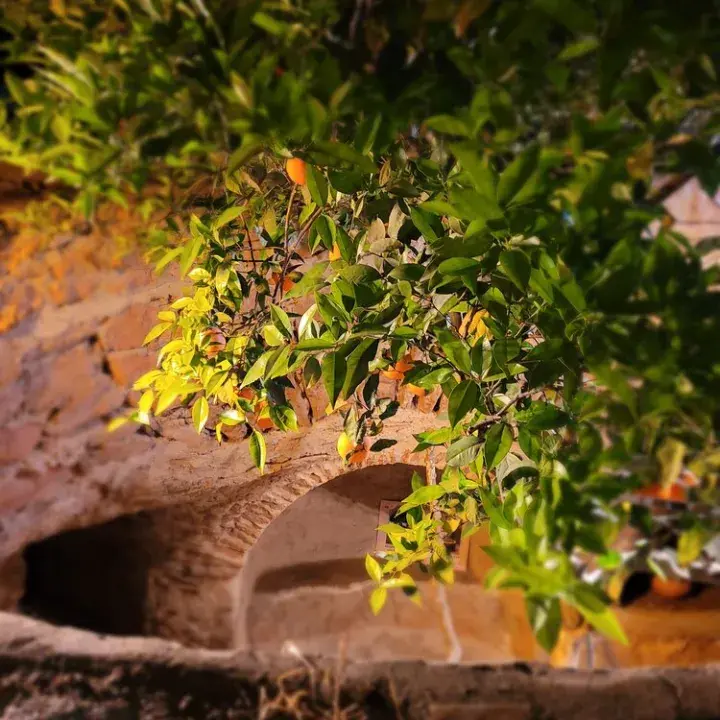
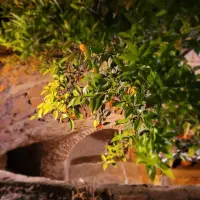
The sources disagree on how deep the trees go. The gardens’ About page says up to 20 feet underground, and the register description says as deep as 22 feet. The home page says Forestiere dug as deep as 25 feet. He grafted his citrus so that one tree bore several kinds of fruit, and the register notes one tree with some seven varieties. Besides orange, lemon, and grapefruit, he planted kumquat, loquat, jujube, carob, quince, dates, and wine and table grapes. The register list adds almond, pomegranate, Italian and Bartlett pear, olive, persimmon, avocado, arbutus, black fig, tangerine, and mulberry. The age of the oldest plantings varies by source too: the home page says some are over 90 years old, the North Dakota page over one hundred. Because many trees were sunk in pits, fruit could be picked from the surface by bending down.
Visitors may not pick it. The tour rules call every piece on the grounds “forbidden fruit.” The staff harvest much of the crop in season and leave some on the trees for show, since some visitors from abroad are not used to seeing fruit grow on a tree. The gift shop sometimes sells it. On October 23, 2025, Joseph Leonguerrero took the tour for the first time since 1981 and bought a few limes and pomegranates on the way out.
A pick, a shovel, a wheelbarrow
Forestiere was born on June 8, 1879, in Filari, Sicily, according to the North Dakota page. He came to America in 1901 meaning to farm citrus and settled in Fresno. The gardens’ home page describes his land as useless farmland, and he began digging into it to escape the Central Valley’s summer heat. The North Dakota page dates the first work to 1906, the SPACES Archives to 1904, and the state marker says only “the early 1900’s.” He modeled the work on catacombs he had admired as a boy near Filari. He put no plans on paper; the register says he followed the “visions stored in my mind.”
He dug in his spare time with a pick, a shovel, and a wheelbarrow, chipping at the hardpan for forty years. By the gardens’ account, he had excavated and planted more than ten acres by the age of 44. He is quoted as saying, “To make something with a lot of money, that is easy; but to make something out of nothing - now that is something.” According to the home page, he never officially opened the Mediterranean resort he had in mind. He died in 1946 at sixty-seven, still adding to the place, and after his death the gardens opened to the public as a museum. His given name appears as Baldassare on the gardens’ own pages and as Baldasare on the state marker and in the register.
Plaques and a family
Forestiere had no children. The North Dakota page says care of the gardens passed to his brother Giuseppe and then to Giuseppe’s children and grandchildren. In 2011 a Fresno contributor to the Historical Marker Database wrote that the property had gone to the nephews and that a third generation was keeping it open.
Lorraine Faulks Forestiere prepared the National Register nomination. The dedication pamphlet dates the nomination to July 14, 1977, and the listing to October 28, 1977. It gives January 6, 1978, for the state’s approval of the site as a California Registered Historical Landmark. The state Office of Historic Preservation gives a registration date of January 31, 1978, and the gardens’ own pages say 1979. The bronze plaque for Landmark No. 916 was dedicated at 8:00 p.m. on Friday, October 12, 1979. The State Department of Parks and Recreation placed it “in cooperation with the Rick Forestiere Family.” The pamphlet marked a centennial, 1879 to 1979, and billed him as “Self-taught Designer, Engineer, Architect, Sculptor, Ecologist, Horticulturist and Builder.” It quoted the architect Malcolm Wells: “Rodia of Watts. Gaudi of Barcelona. Forestiere.”
On April 30, 2015, KFSN reported two lawsuits in the family. It named Ric Forestiere, Baldasare’s nephew, as the man in charge of the museum. His son Andre had helped his parents run the gardens for years, but by the time Lorraine Forestiere died in September 2012, Ric had taken full control. According to the court filings, Andre claimed his father and five siblings had shut him out. Ric countersued, and a judge had already dismissed some of Andre’s claims, including financial elder abuse. That same year Jo Farb Hernández wrote for SPACES that the family maintained the site “although threatened on all sides by urbanization.”
The plaque stands on Shaw Avenue near Forestiere Avenue, on the right for traffic heading east.
Notable Events
- 1901Immigrated with the dream of becoming a citrus farmer and moved to Fresno. commons.und.edu
- 1901Baldassare Forestiere, a Sicilian immigrant, came to America in 1901 to pursue his dreams of becoming a citrus farmer. undergroundgardens.com
- 1906Began work to escape the heat. commons.und.edu
- 1946Worked on the tunnels and gardens until his death. commons.und.edu
- 1977This property was also listed in the National Register of Historic Places on 10/28/77. ohp.parks.ca.gov
- 1977The pamphlet states the nomination date as July 14, 1977. spacesarchives.org
- 1978The California Historical Landmark listing gives a registration date of 1/31/1978. ohp.parks.ca.gov
- 1979The landmark plaque was placed in 1979. hmdb.org
- 2012By Lorraine's death, Ric had taken full control after Andre had helped his parents run the gardens for years. abc30.com
People
- Andre Forestiere, Helped parents run gardens; disputed control after mother's death.
- Lorraine Forestiere, Mother of Andre; her death preceded Ric's full control (died September 2012).
- Ric Forestiere, Baldasare's nephew, in charge of museum.
- Giuseppe, Baldassare's brother; took care of gardens after his death and passed duty to children and grandchildren.
- Lorraine Faulks Forestiere, Prepared the National Register of Historic Places nomination.
- Baldasare Forestiere, Excavated and sculpted the underground rooms, passages, and gardens by hand (1879-1946).
- Egbert de Vrles, University of Pittsburg expert quoted in pamphlet.
Sources
- undergroundgardens.com
- undergroundgardens.com/garden-tours-in-fresno-ca
- visitfresnocounty.org/things-to-do/attractions/forestiere-underground-gardens
- undergroundgardens.com/about-us
- undergroundgardens.com/faq
- spacesarchives.org/explore/search-the-online-collection/underground-gardens
- hmdb.org/m.asp?m=41003
- spacesarchives.org/assets/2015/10/07/ca332forestiere008.pdf
- ohp.parks.ca.gov/ListedResources/Detail/916
- historicfresno.org/nrhp/forest.htm