Forest Glen Guard Station
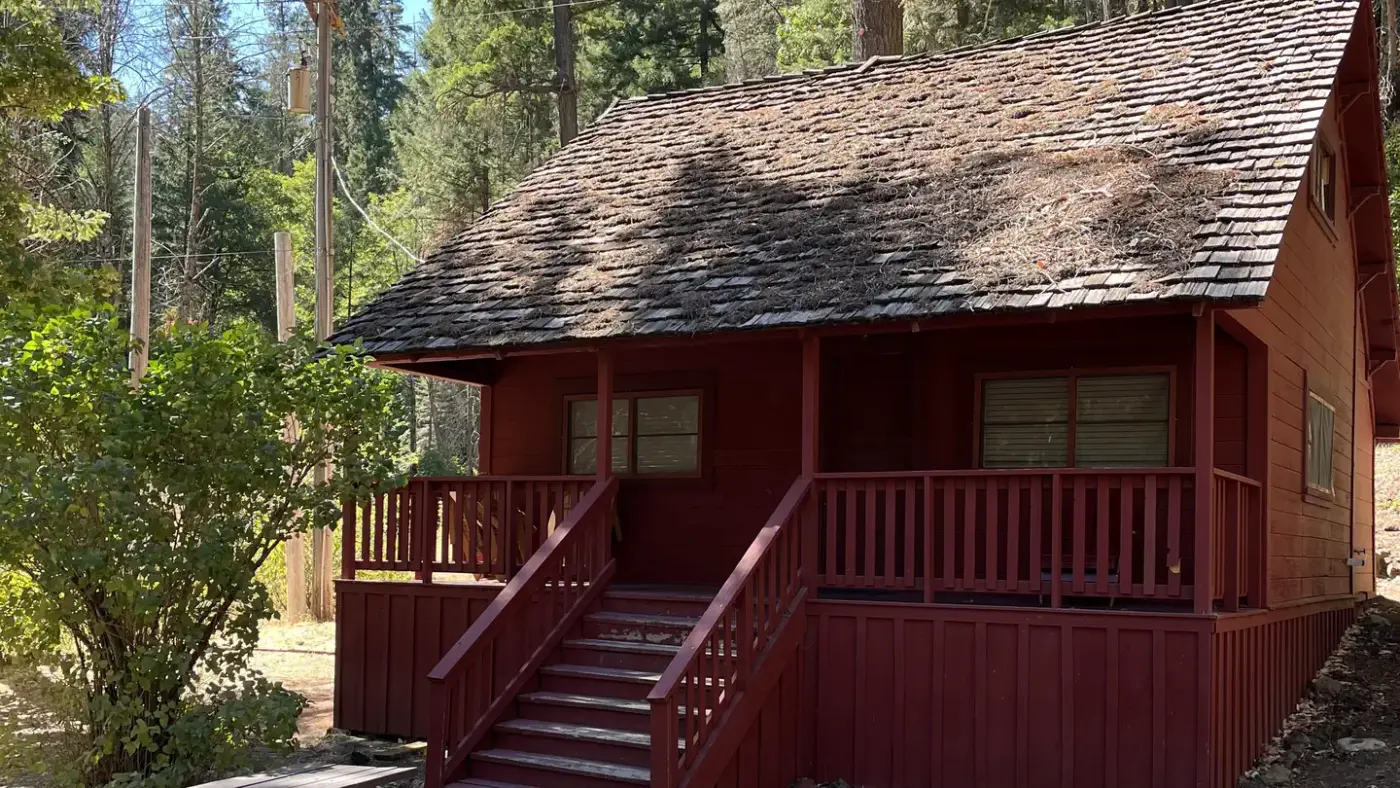
Forest Glen, Trinity County, California. Forest Glen Cabin (Guard Station).
Details

- Where
- Forest Glen, Trinity County, CA. No street address stated. Directions
- When
- Open 24 hours/day.
- Season
- Forest Glen is available for rent from mid-April to the beginning of December.
- Getting there
- Coming from the south on I-5, take California State Highway 36 West at Red Bluff. Continue on CA-36 West for approximately 75 miles to Forest Glen. Pass Forest Glen Campground on the north (right), cross the South Fork Trinity River Bridge and turn south (left) directly after crossing the bridge onto Forest Road 1S26.
- Fees
- Fee: $75 per night.
- Access
- A short distance away is the South Fork Trinity River and the swimming is great! Close by, at Scott Flat Campground, there is the trailhead for the South Fork National Recreational Trail. The trail is a total of 21 miles, but the first 7.2-miles that parallel the South Fork Trinity River are the most traversed.
- Walk-in or reserve
- Reservations are required and can be obtained through the National Recreation Reservation System (NRRS) @ recreation.gov or by calling 1-877-444-6777.
- Phone
- (530) 623-2121
- Managed by
- Shasta-Trinity National Forest.
- Established
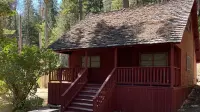
- This charming two-story structure was built in 1916 under the direction of John T. Grey, District Ranger of the Mad River Ranger District on the old Trinity National Forest.
- Coordinates
- 40.37367, -123.32788.
The turn comes on California Highway 36, at the bridge where the road crosses the South Fork Trinity River in Trinity County. Eastbound travelers turn south onto Forest Road 1S26 just before the bridge. Westbound travelers pass Forest Glen Campground, cross, and turn left. The guard station is the first cabin on the right, a short way down a road the Forest Service warns is the only dirt a visitor should follow. Phones that route drivers onto other forest roads can lead them where not every vehicle can go. The door is on a combination lock, and the Weaverville Ranger Station gives out the combination four days ahead of arrival.
Two floors, 24 by 18
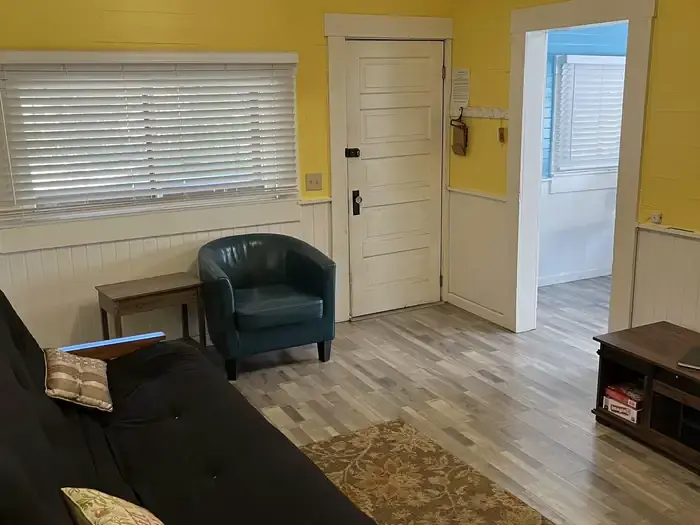
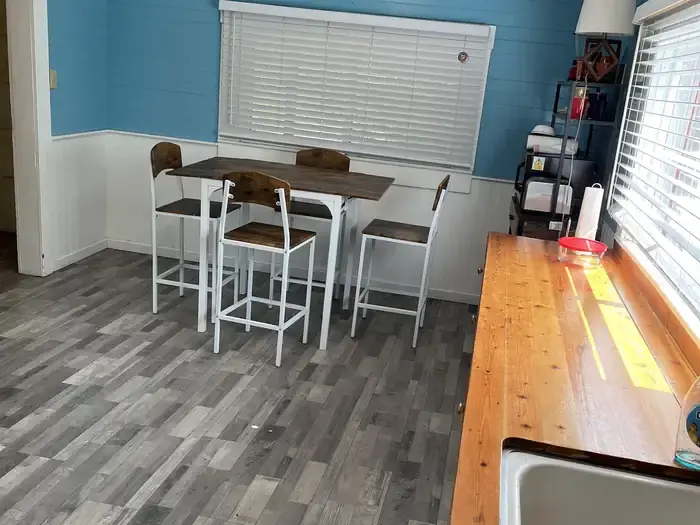
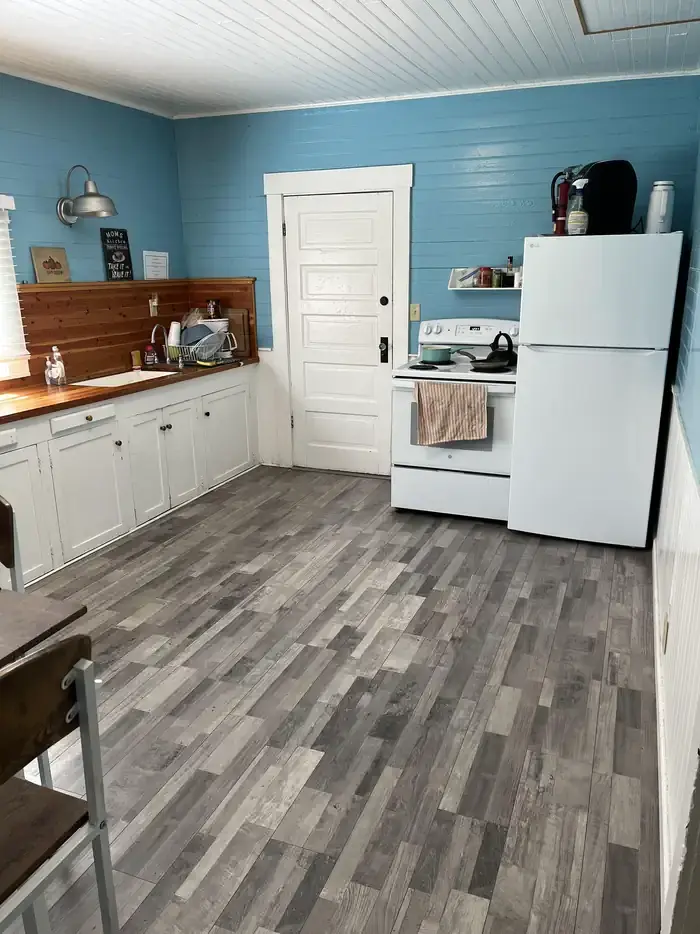
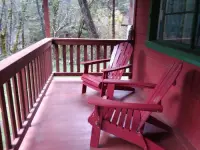
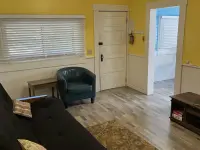
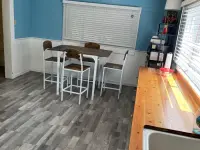
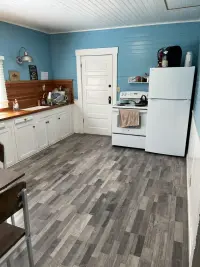
The station is a two-story building. Each level measures 24 by 18 feet, and a porch five feet high runs across the front. Downstairs is a living area with two barrel chairs and a double futon, and a large kitchen with an electric range, a refrigerator, a dining table and chairs. The kitchen is stocked with dishes, pots, pans and utensils. There is an indoor bathroom with a flush toilet. The cabin has electricity, potable water, and space heaters.
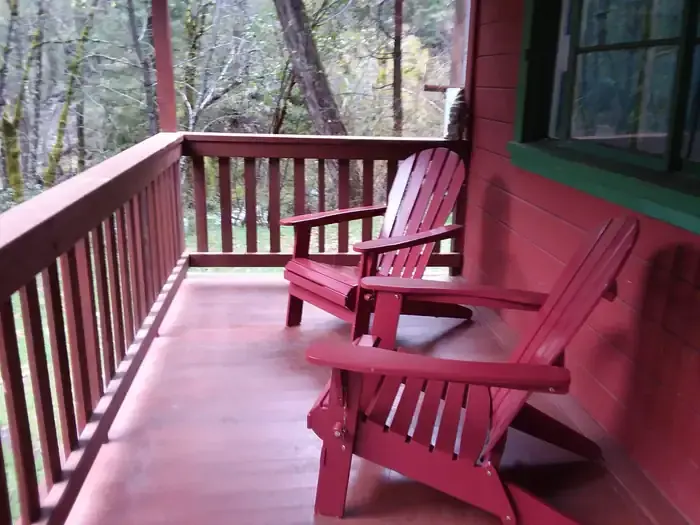
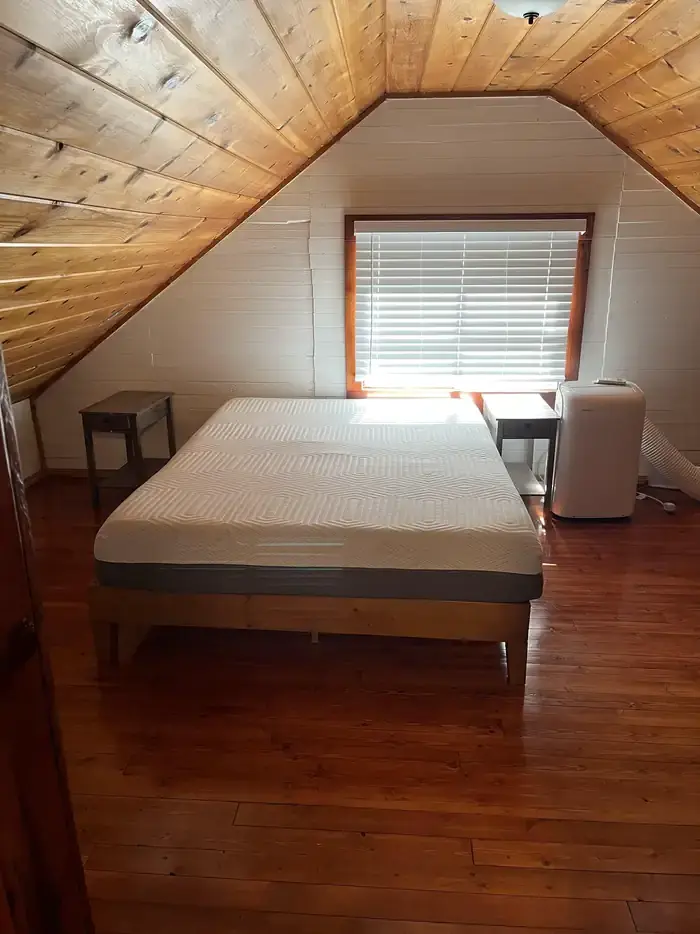
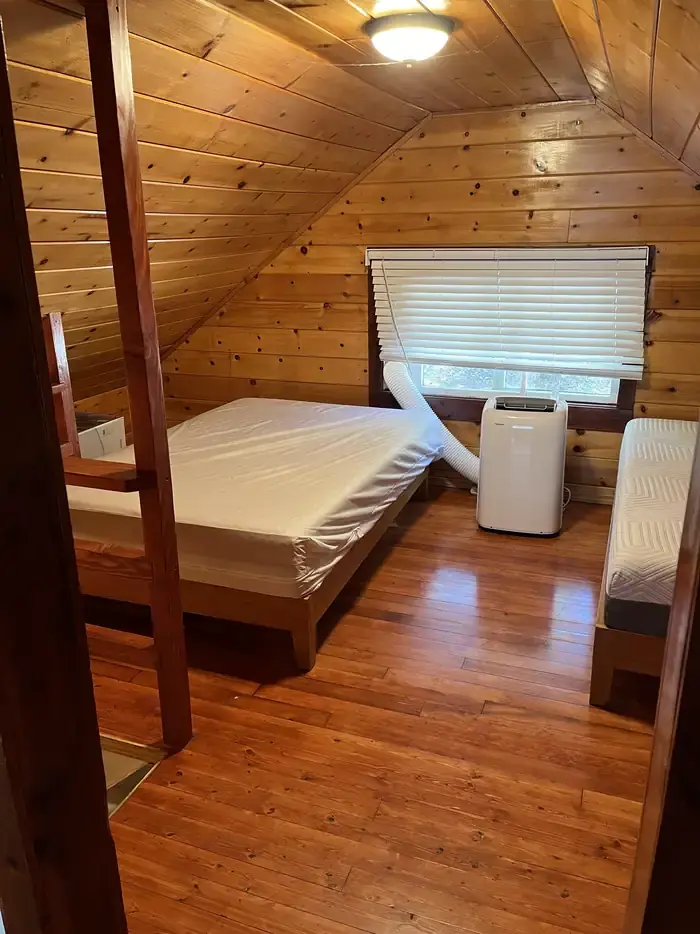
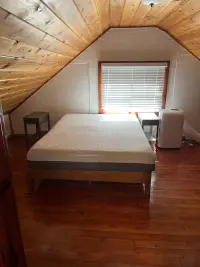
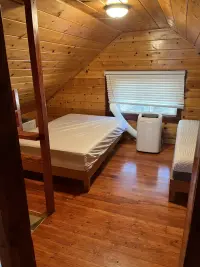
The upper level is finished in pinewood and divided by a partition wall into two rooms. The Forest Service’s description puts a king bed in one room and two twin beds in the other. Its own facilities list, and the recreation.gov listing, count four twin beds and the double futon, with sleeping bags on the floor bringing the total to eight people. Guests bring their own sheets, blankets, pillows, towels and kitchen linens. Outside are a fire pit, Adirondack chairs and a picnic table.
The cabin rents from mid-April to the beginning of December, at $75 a night on the Forest Service page. The nearest groceries and fuel are in Hayfork, about 30 minutes away, and the stores keep limited hours. Coming west from Interstate 5, the last supply town is Red Bluff, about 75 miles back. Coming east from US 101, it is Fortuna. Firewood for the ring has to be bought on the way.
Glen Creek and the South Fork
Glen Creek runs year round beside the cabin. The South Fork Trinity River is adjacent, and the Forest Service counts it among the wildest and most scenic waterways in northern California. Ponderosa pine, Douglas fir and oak cover the slopes, with open meadows among them. There are swimming holes on the river and at the campgrounds along it.
The South Fork National Recreation Trail starts a mile and a half up the road from the cabin. It can also be reached from Scott Flat Campground when conditions allow a crossing of the swinging footbridge. The trail runs 21 miles, but most hikers use the first 7.2, which follow the river. Ruth Lake, about 45 minutes’ drive west, is the usual place for a picnic and more hiking.
The forest’s history page records that the river’s first visitors were Native Americans who lived, hunted and fished there. In those years salmon crowded the river, and the oak forests gave a large harvest of acorns.
John T. Grey’s station on the Mad River District
The Trinity National Forest was established on April 26, 1905, under President Theodore Roosevelt’s proclamation, with its headquarters in Weaverville. In 1916 the station at Forest Glen was built under the direction of John T. Grey, District Ranger of the Trinity’s Mad River Ranger District. The dossier pages record nothing more about Grey than his name, his title, and this building.
Later decades on that district appear in the forest records only in outline. In the depression years, construction crews put up new ranger station compounds, guard stations, lookouts, roads and trails on the Mad River and Orleans districts. In 1944 the Red Rock Fire on the Mad River District burned more than 10,000 acres. On June 3, 1947, President Harry S. Truman signed the proclamation creating the Six Rivers National Forest from parts of the Siskiyou, Klamath and Trinity forests. The Trinity’s Mad River and Lower Trinity districts went to the new forest.
In 1954 the Trinity and Shasta national forests were combined into one. The 1916 guard station at Forest Glen is now the oldest Forest Service building on the Shasta-Trinity National Forest.
Notable Events
- 1905The forest that would build the guard station was established by President Theodore Roosevelt's proclamation of 1905. fs.usda.gov
- 1944The Red Rock Fire on the Mad River District of the Trinity National Forest, the district that built the guard station, burned over 10,000 acres. npshistory.com
- 1954The Trinity and Shasta national forests were combined into one, the forest on which the guard station now stands. fs.usda.gov
People
- John T. Grey, District Ranger of the Mad River Ranger District, directed the building of the guard station.