Fish Creek State Park swimming beach
Alberton, Mineral County, Montana. Swimming hole; Open year round.
Details

- Where
- 851 Rivulet Road, Alberton, MT. Directions
- When
- Open daily all year.
- Getting there
- About 35 minutes west of town, in the Alberton area.
- Fees
- $8 day use with a vehicle.
- Access
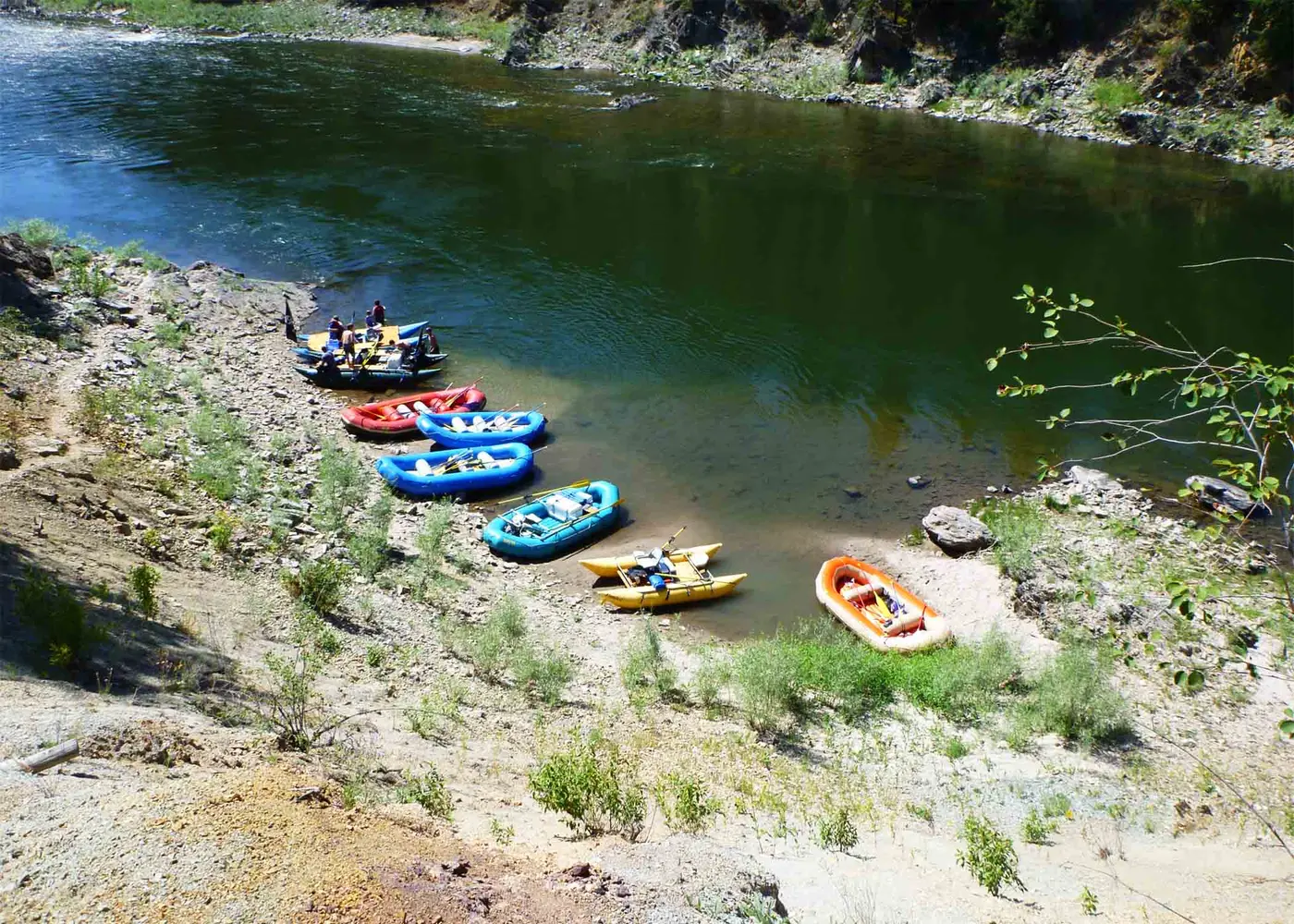
- The park offers access to Fish Creek in multiple locations and is home to the confluence of the creek and the Clark Fork River in the Alberton Gorge, known for its first-rate whitewater rafting.
- Phone
- (406) 542-5533
- Website
- fwp.mt.gov
- Managed by
- Montana Fish, Wildlife and Parks (FWP).
- Coordinates
- 46.99, -114.716.
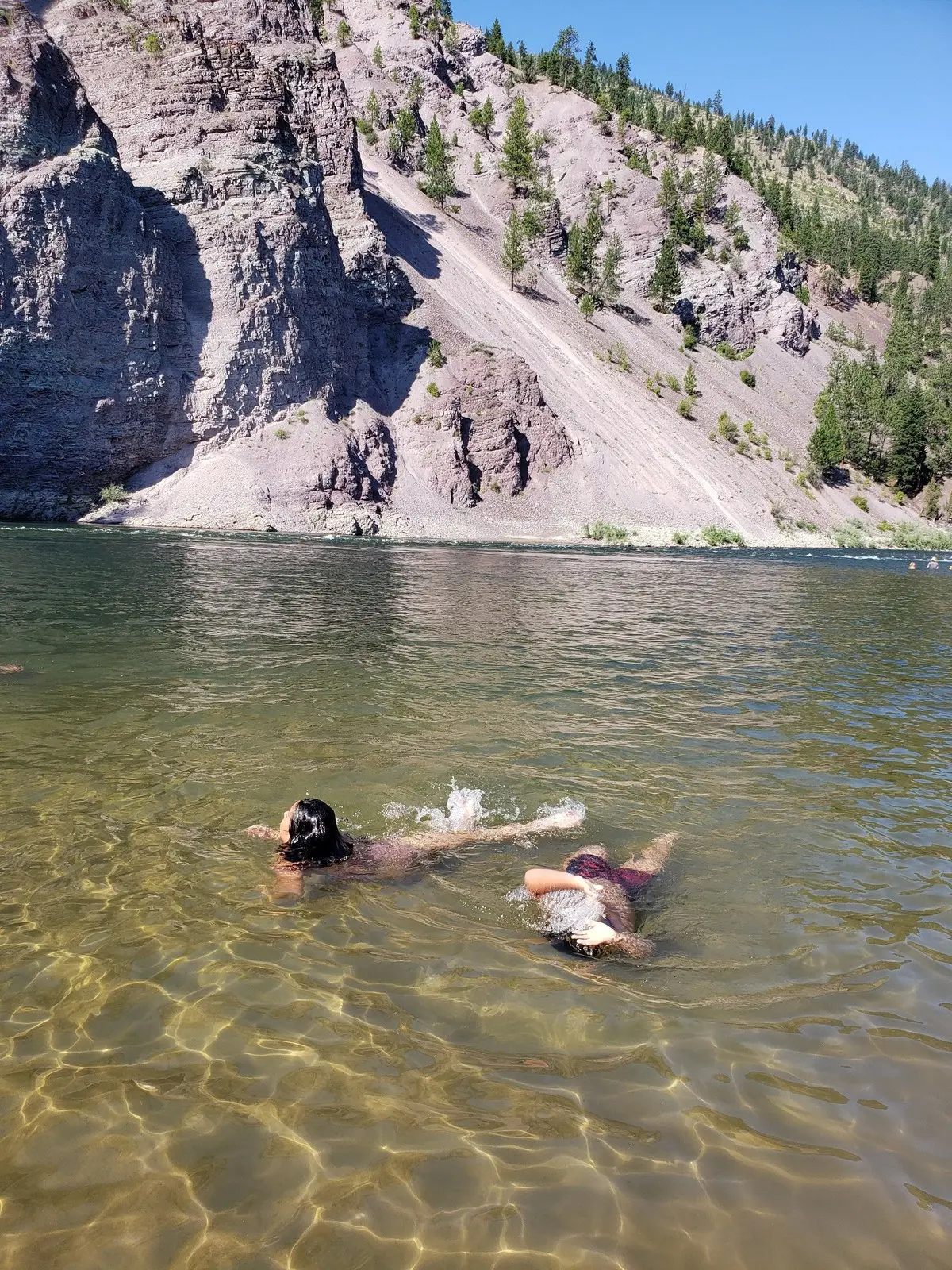
Fish Creek runs down out of logged-over hills near Alberton to meet the Clark Fork River in the Alberton Gorge. Somewhere along it is a beach that a Missoula radio writer named as a favorite. “My very favorite summer swimming hole is Fish Creek, which is about 35 minutes west of town, in the Alberton area,” Angel wrote for Alt 95.7 in June 2021. “It’s absolutely gorgeous out there if you can find it, there’s a great little beach, and the view is exactly what people think swimming in a Montana river is like.”
Finding it means finding the park first. Fish Creek State Park lies off Interstate 90, about 41 miles west of Missoula by the count of Montana Fish, Wildlife and Parks. FWP’s planning office puts it at about 40 miles from Missoula and 25 miles east of Superior. The park reaches the creek in several places, and the creek’s mouth at the Clark Fork falls within its bounds. Montana Fish, Wildlife and Parks describes the water as “crystal-clear emerald pools.” The Montana State Parks Foundation calls them “crystal clear blue pools.”
Pools, trout, and logging roads
The creek is a stronghold for Montana’s native bull trout and westslope cutthroat trout. It also holds wild rainbows and browns. The State Parks Foundation names fishing as one of the most popular things to do in the park. For a visitor who wants rougher water, the Alberton Gorge at the creek’s mouth carries whitewater the Foundation rates class 3 to 4.
The park covers more than 5,600 acres; the Foundation gives the figure as 5,603. FWP calls it the largest state park in western Montana. The ground runs to timbered draws, ridges, flat stretches, riparian bottoms, and steep, narrow canyons. FWP writes that decades of logging shaped the forest and left “dramatic views of the industrial past and its recovering present.” The roads from that era remain. FWP counts a 70-mile series of “open” roads where motor vehicles may run, plus “closed” roads kept for hiking and other nonmotorized use. The Foundation puts the total at around 60 miles of old logging roads.
FWP estimates the park supports 47 kinds of mammals, 113 of birds, three of amphibians, and four of reptiles. Moose, elk, black bear, mountain lions, and wolves are among them. The agency’s 2024 recreation strategy, which covers the wider drainage, raises those counts to 57, 115, five, and five.
The park is open all year. Visitors fish, hunt, hike, ride horses, and run OHVs and snowmobiles on the open roads. The Foundation lists hunting there as shotgun or bow. One visitor review quoted on the Foundation’s page reads: “A new park, my first experience was cross country skiing.” Another reads: “Great boon-docking spot. Lots of wildlife and views.” Pets are allowed.
The Foundation describes an undeveloped park with no visitor center, no camping facilities, and no regular staff. “You won’t find camping at Fish Creek, yet,” it says. FWP runs campgrounds nearby at the Big Pine and Forks fishing access sites, along with day-use sites on the Alberton Gorge. The park’s manager is Cody Kenyon, who grew up in Missoula floating, fishing, camping, and backpacking with his family. He began with FWP as a river ranger on the Smith River, then worked in the Region 2 access program and as a full-time river ranger. He became a recreation manager in 2024. Fish Creek is one of four state parks in his charge, with Milltown, Council Grove, and Frenchtown Pond.
The lookout on Williams Peak
A historic fire tower stands on Williams Peak, above the creek. FWP says it is closed to the public. From the summit, by FWP’s account, the view takes in the park, the Bitterroot Range, and the Great Burn proposed wilderness. The State Parks Foundation tells it differently. It says many visitors hike up to the lookout for views of the Mission Mountains to the northeast and the Bitterroots to the southwest. FWP’s 2024 strategy includes a section on rehabilitating and maintaining the lookout.
The wilderness on that skyline takes its name from 1910. That year the Great Burn crossed northwestern Montana, Idaho, and Washington. It burned three million acres in less than three days, including the Fish Creek drainage. FWP calls it the largest fire in the region’s history.
From Plum Creek to the state
The land belonged for years to the Plum Creek Timber Company. Between 2008 and 2010, through the Montana Legacy Project, Plum Creek sold 320,000 acres to The Nature Conservancy, Fish Creek among them. The State Parks Foundation says The Nature Conservancy and the Trust for Public Lands bought the 41,000 Fish Creek acres from Plum Creek for $17 million. In 2010 FWP paid The Nature Conservancy $14,350,000 for about 41,000 acres. Fifty-eight percent of that money came from the federal Wildlife Restoration Act, known as Pittman-Robertson.
The purchase was made for a wildlife management area. Laura Lundquist, reporting for the Missoula Current in March 2026, explained how the park came out of it. To raise enough money, she wrote, FWP Director Joe Maurier “carved 5,600 acres out of the middle of the 42,000-acre wildlife management area for a state park.” Lundquist went on: “It was like putting an amusement park in the middle of a wildlife refuge.” Today the state-managed lands of the drainage, with state trust lands included, add up to more than 45,000 acres. A much larger tract of national forest borders them.
Fifteen years of plans
Public scoping for a park management plan began in September 2012. FWP released a draft in December 2013. According to the Missoula Current, the draft proposed recreational amenities that reached into the wildlife management area, and sportsmen and wildlife advocates pushed back. The plan was never finalized. “We had a very engaged public. A lot of tension on that plan. And a huge volume of comments and concern about a lot of new recreational amenities and development,” Randy Arnold, a former Region 2 supervisor, said in March 2023. “A lot of questions were raised about how does that relate to the wildlife management area. So we thought it best if we paused on that.”
The Current reports that the next attempt followed the crowds that came to Montana during the pandemic. In 2022 FWP hired the University of Montana’s Center for Natural Resources and Environmental Policy to lead a looser “recreation strategy.” Arnold said the strategy would let the agency “manage across major themes, some really clear specifics, but then give us space where individual project actions can be handled when we have capacity and time.” A public survey that fall drew more than 675 responses. Most people interviewed during scoping wanted wildlife habitat put ahead of recreation, the Current reported, noting that law enforcement in the area was almost nonexistent.
Motorized riders wanted more. “I hear Region 2 say we have a lot of human waste. Maybe we put some latrines up,” Kerry White of Citizens for Balanced Use said of the September 2023 draft. “But I think if we’re going to concentrate all the use on the gravel roads, that’s not a desirable opportunity for recreation.” FWP finalized the strategy in September 2024, to run for ten years. Campground expansion was shelved until money could be found for an environmental assessment.
FWP then turned to trails. It chose ten citizens for a Fish Creek Collaborative, among them Jane Whetzel of Alberton and Sharon Sweeney of Huson. The group toured the complex by bus and met in workshops on October 30 and November 6, 2025. With too little time to reach agreement, the members filed separate recommendations. Mountain bikers and horseback riders said they would keep to trails inside the state park. Jim Merifield mapped six OHV routes over existing roads, 80 percent of them now closed. Jerry Hatcher, speaking for side-by-side drivers, proposed opening every road and turning the roads into trails. Others asked FWP to close dead-end spurs and shut the wildlife management area to all but foot traffic in winter.
Public comment on the recommendations closed April 17, 2026. FWP said it would weigh every trail proposal for its effects on fish and wildlife.
Notable Events
- 1910The regional wildfire burned three million acres, including across the Fish Creek drainage. fwp.mt.gov
- 2008Plum Creek Timber Company sold 320,000 acres, including land in the Fish Creek drainage, to The Nature Conservancy through the Montana Legacy Project. fwp.mt.gov
- 2010In 2010 the state of Montana officially gained ownership of the land, setting aside a share for the state park. montanastateparksfoundation.org
- 2012Public scoping began for a draft plan intended to replace the preliminary management plan. fwp.mt.gov
- 2013The draft management plan was released for public comment; extensive feedback resulted in it not being implemented. fwp.mt.gov
- 2013When FWP proposed more recreational amenities that encroached into the wildlife management area in its first management plan in 2013, sportsmen and wildlife advocates pushed back, and the plan was never finalized. missoulacurrent.com
- 2022A new strategic approach was initiated to revive planning and respond to public concerns. fwp.mt.gov
- 2024The strategy established long-term recreation-management guidance for state-managed lands in the Fish Creek drainage. fwp.mt.gov
- 2025Workshop themes and draft recommendations were refined with facilitator support; the FCC advisory role concluded after the package was completed. fwp.mt.gov
- 2025FWP formed a citizen advisory group; members were selected through an application process to develop trail-planning recommendations. fwp.mt.gov
People
- Amy Helena, DNRC representative on the Collaborative advisory team.
- Ben Deeble, Fish Creek Collaborative member.
- Christopher Gauger, USFS representative on the Collaborative advisory team.
- Denley Loge, State Legislature representative on the Collaborative advisory team.
- Hayley Newman, Fish Creek Collaborative member.
- Jane Whetzel, Fish Creek Collaborative member.
- Jerry Hatcher, Fish Creek Collaborative member.
- Jim Merifield, Fish Creek Collaborative member.
- Jody Loomis, State Parks and Recreation Board representative on the Collaborative advisory team.
- John Kittelson, Fish Creek Collaborative member.
- John Stegmaier, Fish Creek Collaborative member.
- Ken Brown, Fish Creek Collaborative member.
- Laura Johnson, USFS representative on the Collaborative advisory team.
- Paige Boyer, Fish Creek Collaborative member.
- Sharon Sweeney, Fish Creek Collaborative member.
- Sierra Farmer, DNRC representative on the Collaborative advisory team.
- Willy Peck, County representative on the Collaborative advisory team.
- Cody Kenyon, Recreation Manager managing Fish Creek State Park and three other parks (2024).
- Joe Maurier, former FWP Director who carved 5,600 acres out of the wildlife management area for a state park.
Sources
- fwp.mt.gov/fish-creek
- alternativemissoula.com/a-missoulian-made-a-handy-map-showing-the-best-places-to-go-river-swimming
- fwp.mt.gov/binaries/content/assets/fwp/aboutfwp/regions/r2/fish-creek-planning/fish-creek-recreation-strategy_final_2024.pdf
- montanastateparksfoundation.org/parks/fish-creek-state-park
- missoulacurrent.com/fish-creek-trails
- fwp.mt.gov/stateparks/fish-creek