Elk Creek Cabins
Lowman, Valley County, Idaho. Winter rental cabins; Nov. 1 - April 30.
Details

- Where
- Lowman, Valley County, ID. No street address stated. Directions
- When
- Generally November - April.
- Getting there
- From Lowman, take State Highway 21 east approximately 40 miles to Cape Horn, park in the plowed lot, then snowmobile/ski/snowshoe the Stanley-Landmark Road approximately fifteen miles to Elk Creek.
- Fees
- $50 per night (1-10 people).
- Access
- Neither cabin has electricity or water. Guests must bring their own water as well as garbage bags for packing out trash. Bedding, lighting and emergency supplies are not provided.
- Walk-in or reserve
- Combination to the door lock will be provided with the reservation confirmation notice.
- Phone
- 208-259-3361
- Managed by
- Boise National Forest.
- Coordinates
- 44.42088, -115.40496.
In winter the car stops at Cape Horn. A large plowed lot sits just off State Highway 21, about 40 miles northeast of Lowman, at the turn onto Forest Service Road 579, the Stanley-Landmark Road. From the lot, the way to Elk Creek runs about fifteen miles through Bear Valley by snowmobile, skis, or snowshoes. The Boise National Forest states that guests are responsible for their own travel arrangements and safety.
When Highway 21 is closed between Grandjean and Banner Summit, a second route runs north from Lowman on the Clear Creek Road for about 34 miles, then west about 3 miles on the Stanley-Landmark Road to the cabins. The Forest Service numbers the Clear Creek Road 482. Recreation.gov numbers it 582.
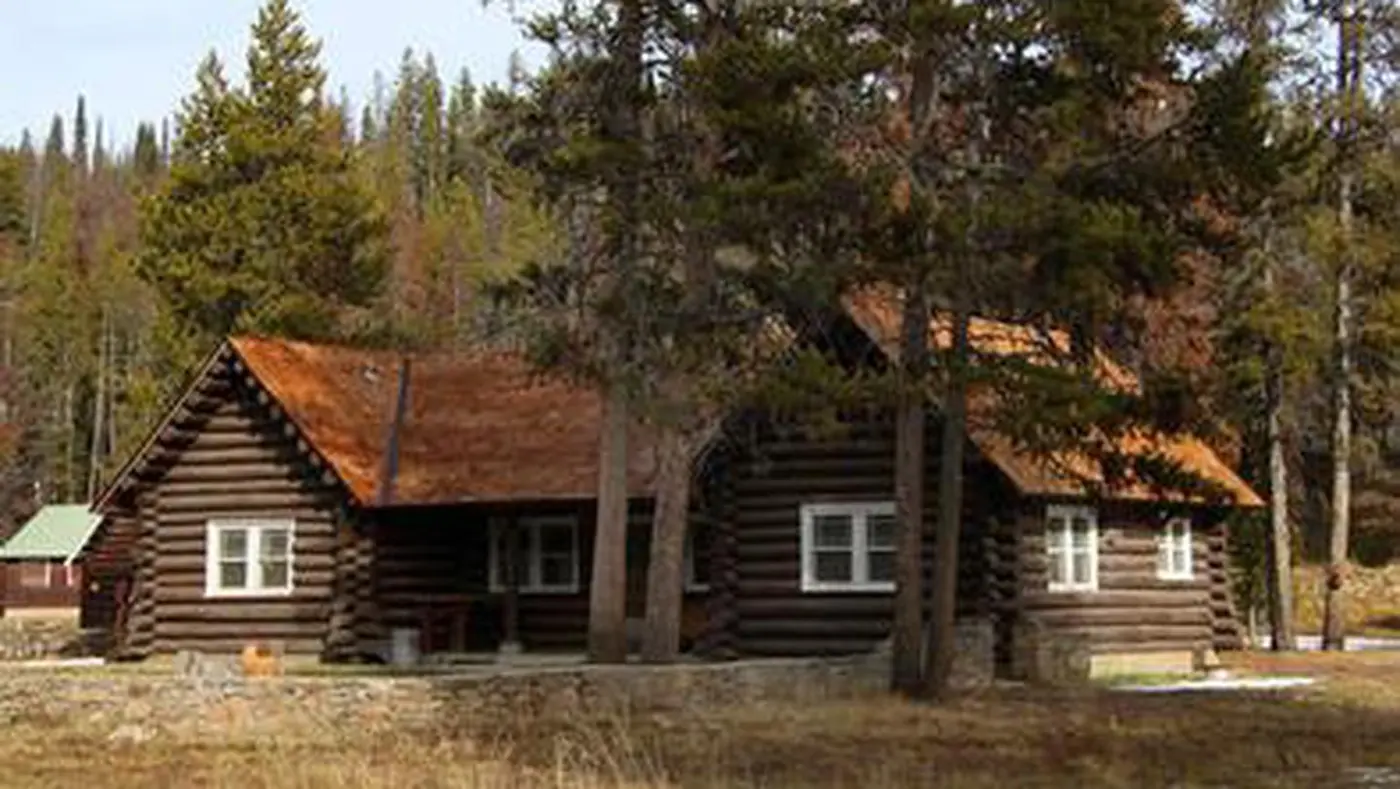
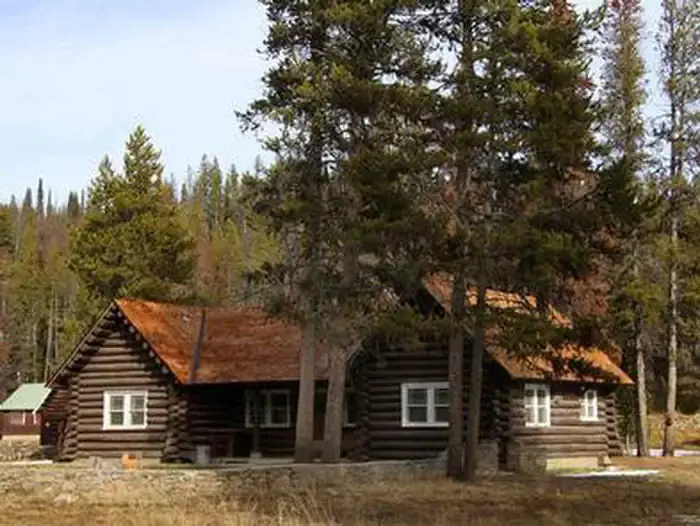
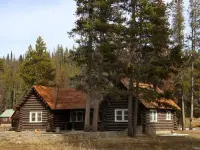
Two cabins in a meadow at 6,400 feet
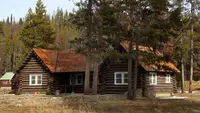
The cabins stand in a high mountain meadow at 6,400 feet beside Elk Creek, among Douglas fir and lodgepole pine, with the peaks of the Sawtooth Range around them. Winter highs typically run from 20 to 30 degrees. Lows average from 15 below zero to 5 above. Deep snow covers the valley through the season. Snowshoe hares and ermine go about in white winter coats, and deer, elk, moose, red squirrels, coyote, and lynx stay active through the cold.
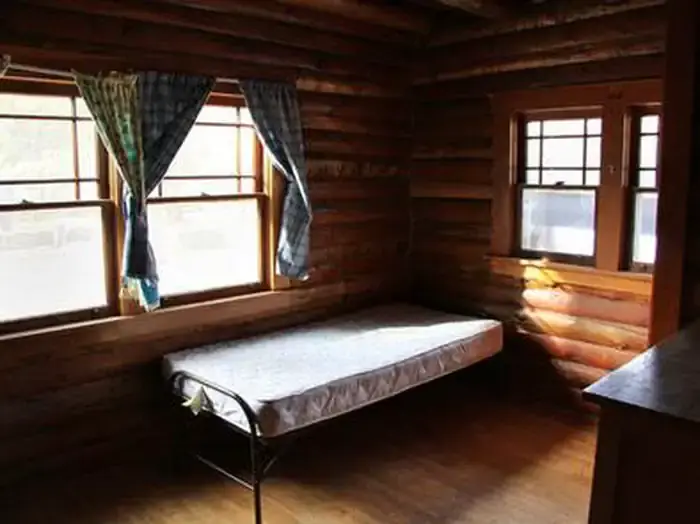
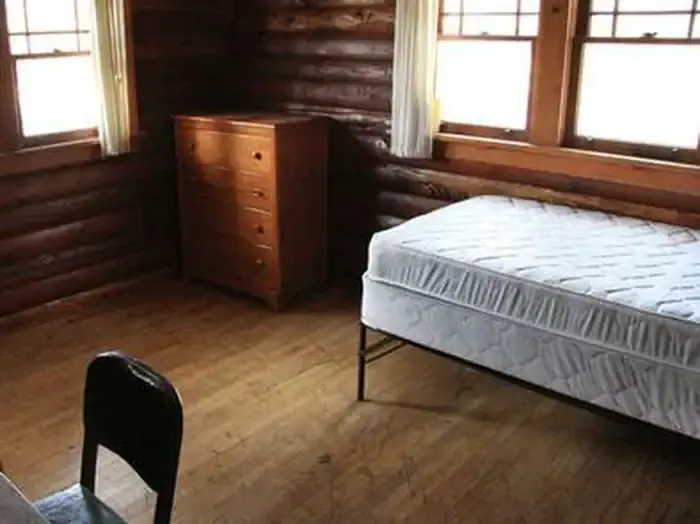
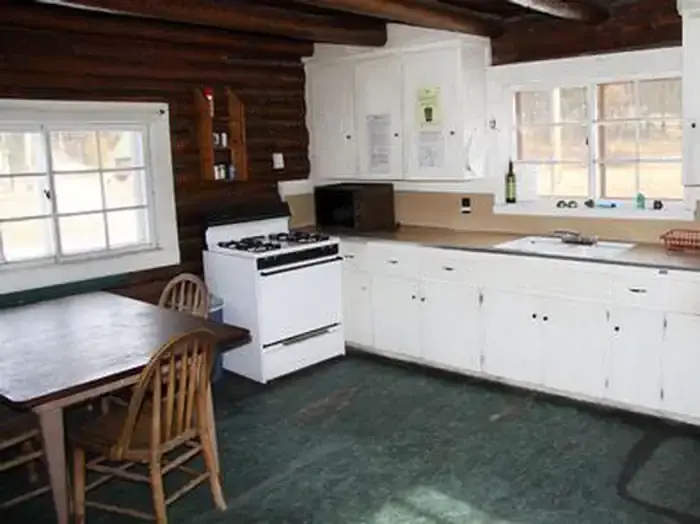
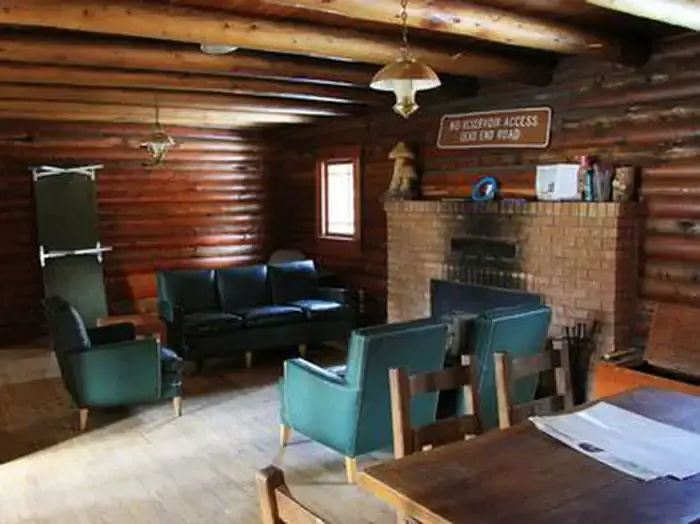
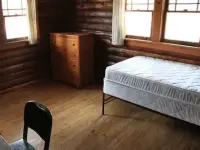
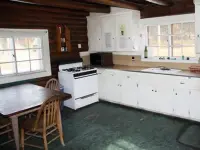
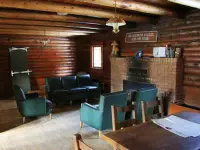
The larger building, the Ranger Cabin, appears on Recreation.gov as Cabin 1. It sleeps up to ten on three double beds and four cots with mattresses. Its front room holds a fireplace, a couch, chairs, and a dining table. The kitchen has a dry sink, a propane stove, and a refrigerator, and a wood stove off the kitchen heats the building.
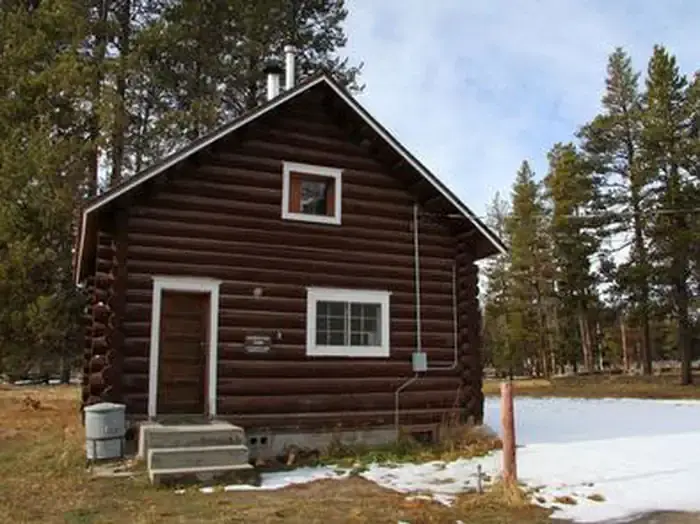
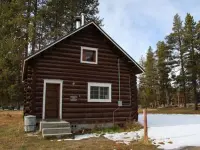
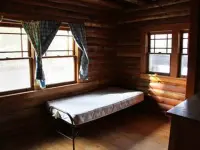
The Fish Cabin, or Cabin 2, has two bedrooms for eight people. It holds one single bed, three cots, and two loose mattresses, along with a dry-sink kitchen, a couch, a table, and a wood stove. The propane stoves and refrigerators in both cabins are disconnected for the winter months. Firewood waits in a woodshed, sometimes unsplit, with an axe and a splitting maul. Outside are a picnic area and an outhouse with a vault toilet, set between the cabins and the creek.
Neither cabin has electricity or water. Guests bring their own water, bedding, lighting, and emergency supplies, along with garbage bags to pack out their trash. Each cabin keeps some cookware and utensils. The door lock opens on a combination sent with the reservation, and the season runs November 1 to April 30.
Groomed trail and the wilderness line
Thirty miles of groomed trail surround the cabins for snowmobiling, cross-country skiing, and snowshoeing. The meadow borders the Frank Church-River of No Return Wilderness, and skiers and snowshoers may go on into it from the cabin. Snowmobiles are not allowed in the wilderness, and campfires are not permitted outside the cabins.
A ranger station of 1939
The University of Idaho’s Civilian Conservation Corps collection lists the place as the Elk Creek Ranger Station. The collection records that CCC Camp Red River, F-102, built it in 1939, and gives its present name as the Elk Creek Guard Station.
By 2004 the rangers’ buildings had become rentals. That year the Forest Service’s Intermountain Region, from its office in Ogden, Utah, revised and reprinted a brochure called Rustic Cabins of the Intermountain Region. It listed guard stations and cabins “once used by Forest Rangers” that visitors could now rent.
The Boise National Forest table in the brochure gave Elk Creek No. 1, 35 miles northeast of Lowman, for ten or more people at $40 a night. It gave Elk Creek No. 2 for six to ten people at $35. Both were open November 15 to May 15, with access by cross-country ski or snowmobile “only on popular snowmobile trail.” No. 1 had a fireplace insert and wood cook and heat stoves. No. 2 had wood cook and heat stoves, and both relied on an outdoor privy.
Regional Forester Jack G. Troyer wrote the brochure’s introduction. He called such buildings “our treasures of times past–a direct link to the very environment their users worked so hard to protect.” The Elk Creek listings ended on a line that still holds: firewood is provided, but must be split.
Notable Events
- 2004The Intermountain Region rustic cabins brochure lists Elk Creek No. 1 for 10 or more people at 35 mi. northeast of Lowman, in use 11/15 to 5/15, reached by cross-country ski or snowmobile only on the popular snowmobile trail. govinfo.gov
Sources
- recreation.gov/camping/campgrounds/232401
- fs.usda.gov/r04/boise/recreation/elk-creek-guard-station-rental-cabins
- lib.uidaho.edu/digital/cccidaho/items/cccidaho432.html
- govinfo.gov/content/pkg/GOVPUB-A13-PURL-LPS68696/pdf/GOVPUB-A13-PURL-LPS68696.pdf
- lib.uidaho.edu/digital/cccidaho/structures/extantccc043.html
- fs.usda.gov/r04/boise/recreation/elk-creek-guard-station-rental-cabins