El Rancho de Las Golondrinas
La Cienega, Santa Fe County, New Mexico. Living history museum; June 3 – November 8 (Regular Season).
Details

- Where
- 334 Los Pinos Rd, Santa Fe, La Cienega, NM 87507. Directions
- When
- Open Wednesday–Sunday, 9a–3p; hours may vary on festival weekends.
- Getting there
- I-25 Exit 276, follow the Las Golondrinas signs; 15 minutes south of Santa Fe and 45 minutes north of Albuquerque.
- Fees
- Adults $10; Seniors (62+), Teens (ages 13–17), Veterans and Students with ID $8; children 12 and under free; museum members free.
- Access
- Bring sun protection, walking shoes and water; some parts of the property have hilly, rugged terrain; elevation approximately 6,000 ft.
- Walk-in or reserve
- Walk-in admission; daily 9:30am tour included with admission, first-come first-served sign-up in the Museum Store.
- Phone
- (505) 471-2261
- Website
- golondrinas.org
- Established
- 1972.
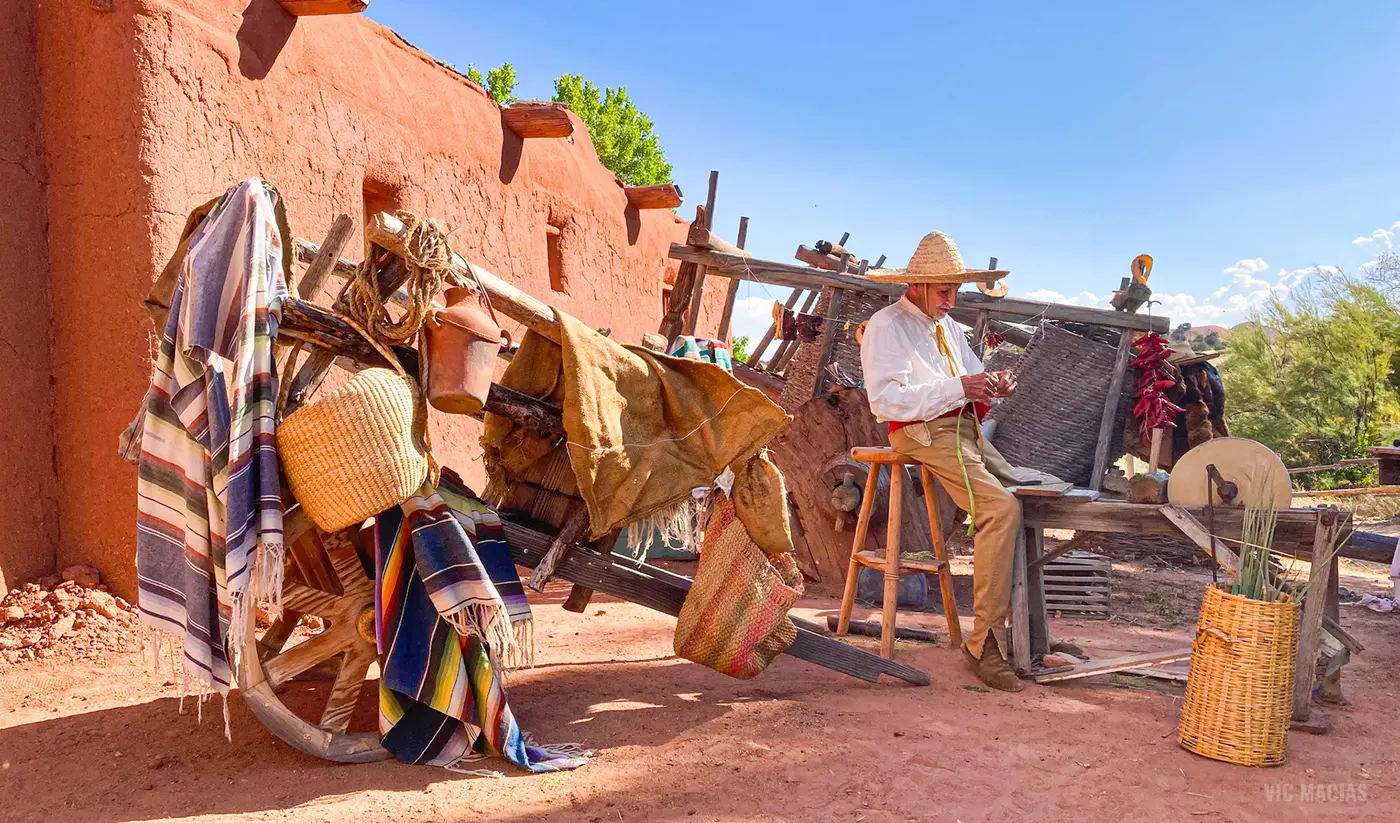
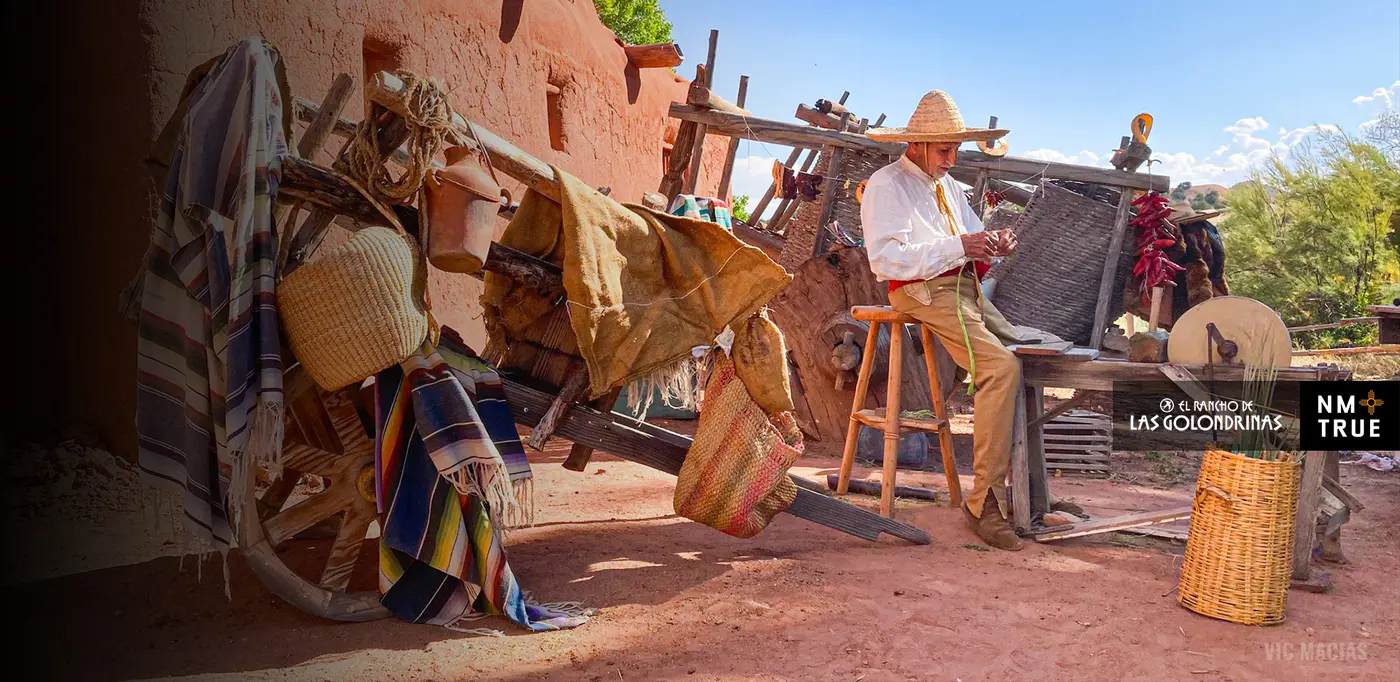
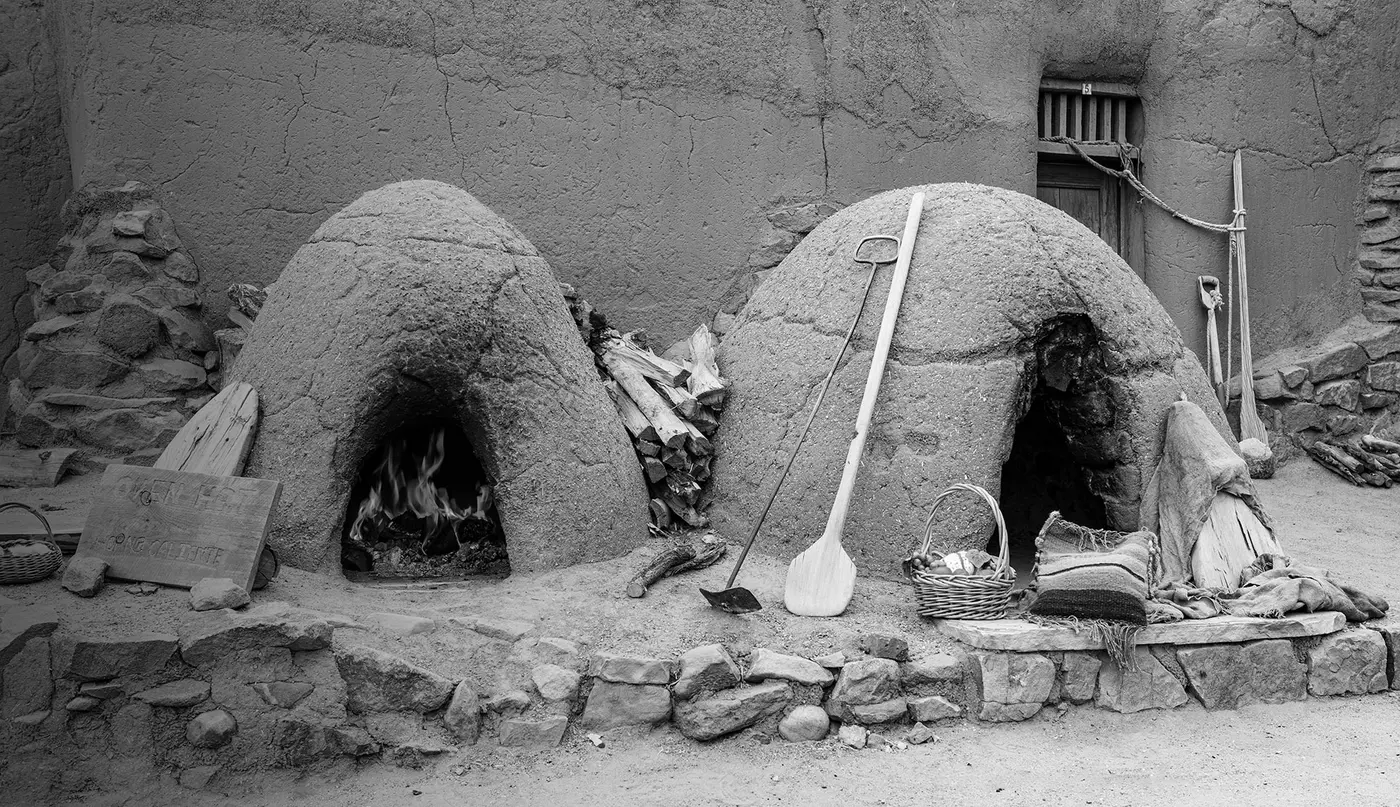
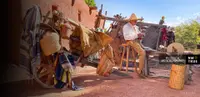
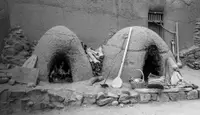
Outside the large wooden double doors of the Golondrinas Placita stand carretas, carts with wooden wheels, piled with goods for the road south. The big door, the puertón, was made for wagons and livestock. The small one, the puerta de zambullo, was for people on foot. Through the covered entry, the zaguán, is a reconstructed 18th-century Spanish Period home of twelve rooms around a little plaza: a well and beehive-shaped hornos in the open yard, then a kitchen, a reception room, a family room, a chapel and a watchtower, the torreón. The museum’s guidebook asks visitors to watch for low doors and high thresholds. The doors were kept small, it explains, to save material, hold heat, keep out rain, mud and leaves, and make anyone entering stoop and step over.
This is El Rancho de Las Golondrinas, the Ranch of the Swallows, on 500 acres in the La Cienega valley, about 15 minutes south of Santa Fe by Exit 276 off I-25. A 1985 Chicago Tribune account says the name comes from the swallows that nest under the eaves. The elevation is about 6,000 feet, and parts of the property are hilly and rough. More than 30 historic buildings dating from the 18th to the 20th centuries stand here. Some are original, some were rebuilt, and some were carried in from elsewhere in New Mexico. The regular season runs June 3 to November 8, Wednesday through Sunday.
The placita, the chapel and the tower
The Tribune writer was told the names of the yard’s ovens. The largest, papa, baked sweet breads. Mama baked everyday bread. The small niño burned incense. The guidebook lists what came out of hornos generally: bread, panocha of sprouted wheat and sugar, corn for chicos, roasted green chile, roasted meat. The kitchen behind them holds mano and metate, majolica and pewter, and a log harinero for grain. Across the zaguán is the reception room, which served the ranch owner as office, storeroom and guest room. Its windows onto the placita are large. Its outer windows are small and glazed with selenite.
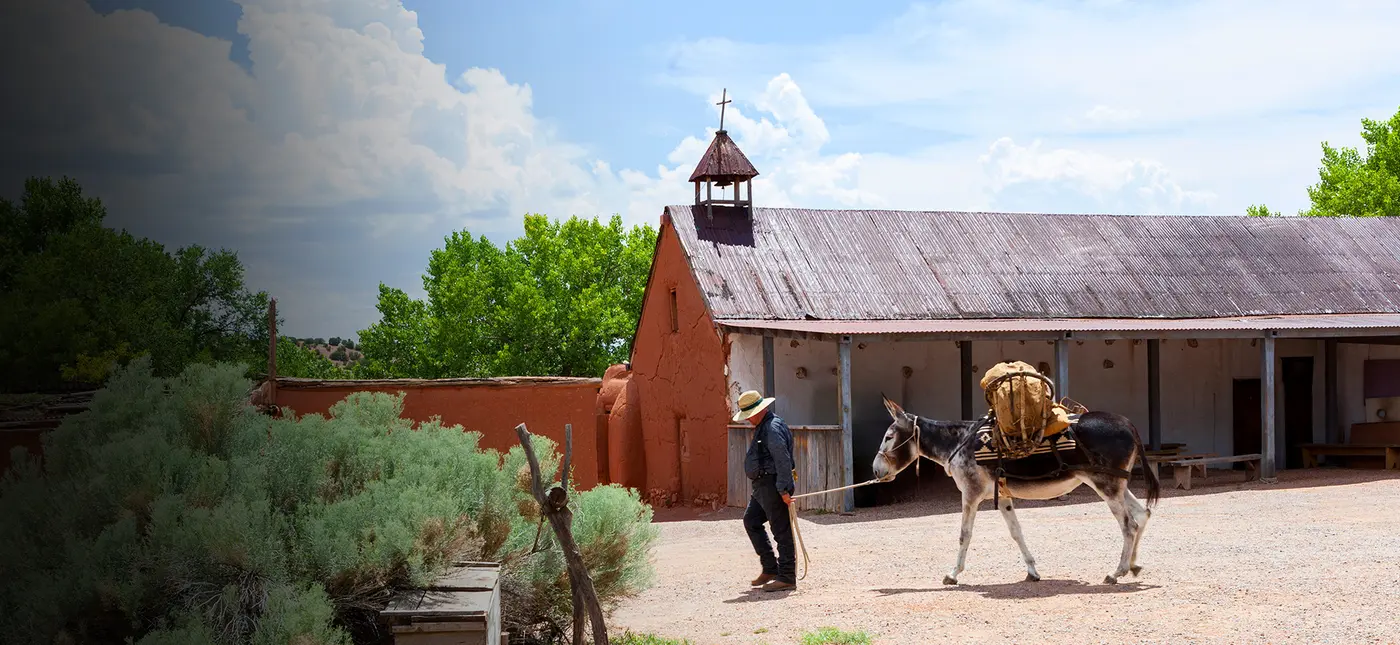
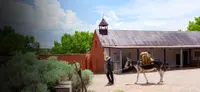
The stone-walled chapel is believed to date from the 18th century and is among the oldest buildings on the ranch. It was a barn before it was a chapel. The peaked tin roof went on sometime after 1880, when the railroad brought building materials, and the vigas of the old flat roof still jut from the wall. In 1994, 11 artists working in traditional styles built the main altar screen. Later, 14 santeros and 2 tinsmiths made the Stations of the Cross. The sacristy behind the altar is also called the Founder’s Room, because the first meeting of the Colonial New Mexico Historical Foundation was held there in 1971.
From the upper level of the torreón, according to the guidebook, a sentinel watched for raiders and gave warning by horn, drum, shout or bell. Field hands then ran for the walled placita.
Mills, fields and a morada on the hill
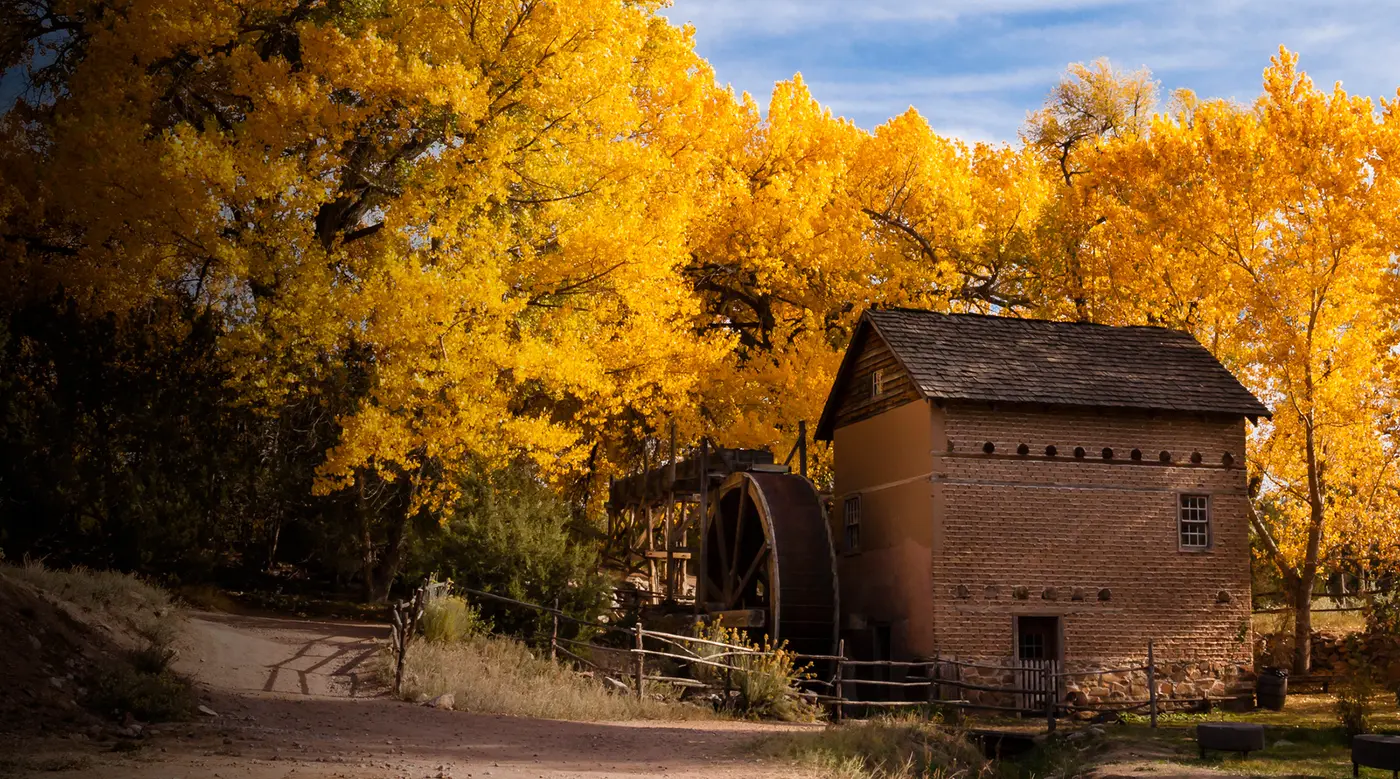
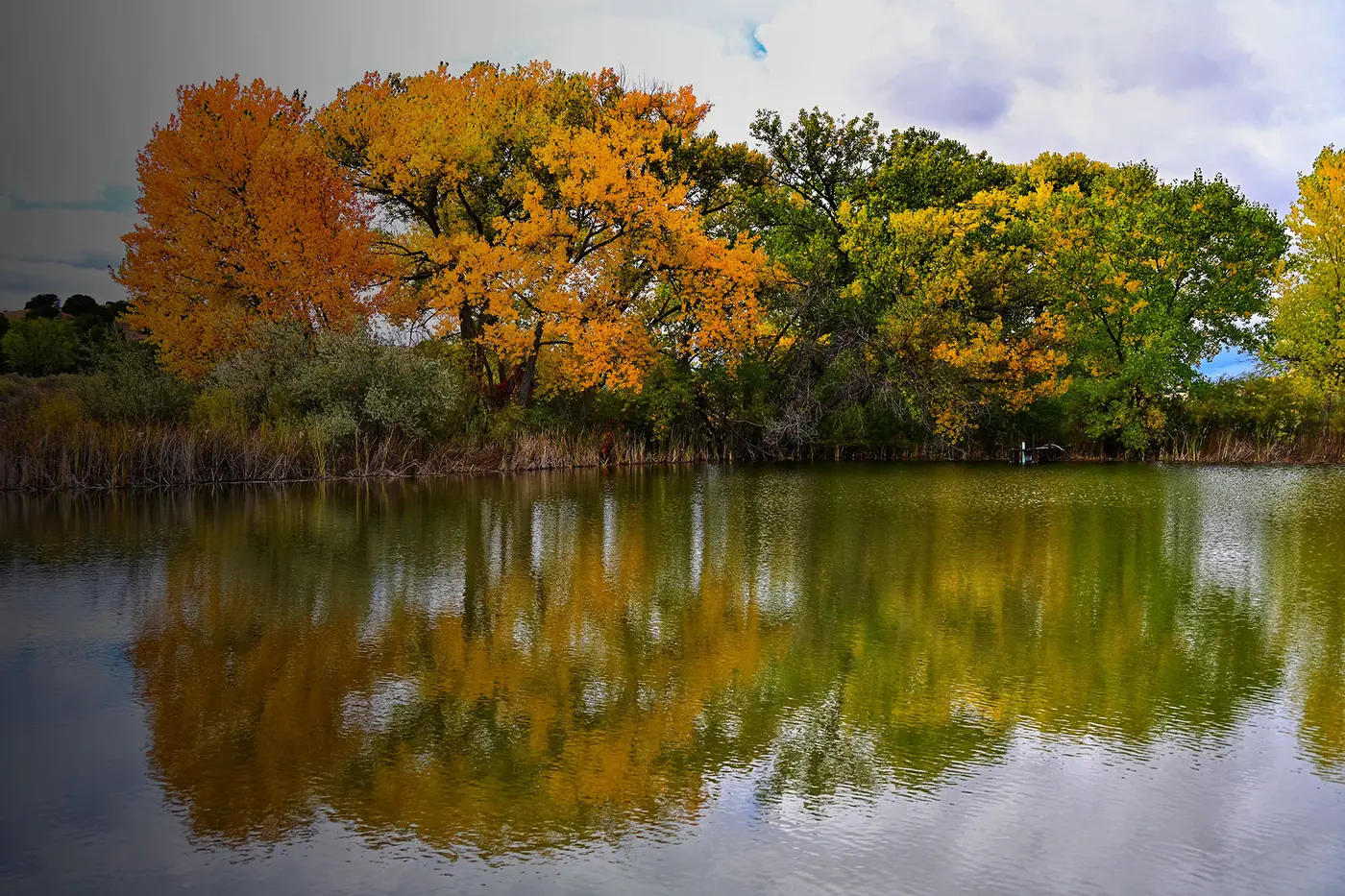
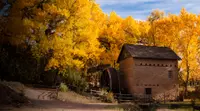
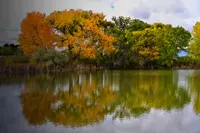
Paths lead out from the placita across the valley. The Baca Placita centers on a two-room Northern New Mexico house of 1821 to 1880 and portrays Mexican Period and Territorial life. El Molino Grande de Sapelló, the ranch’s largest mill, stands beside a tree-lined millpond and grinds wheat flour during certain programs. In 1985 the Tribune counted four mills, among them a restored mid-1800s mill from Truchas set on the site of the ranch’s original water mill. La Escuela de Ratón is a log schoolhouse built in 1878 in Ratón. It was dismantled and moved here in 1980. On the hill above the ranch is the Morada de Nuestra Señora de La Paz, a Penitente meeting house built with the Hermanos Penitentes of Abiquiu. Photography is not allowed inside.
The Sierra Homestead is a high-country village of the Mora House, Grandmother’s House, the Casita Primitiva, outbuildings, a chapel and mills. In 1985 it was the center of the Paloheimo family’s effort to breed back the original churro sheep, a breed with long, low-lanolin wool that the Merino displaced. “We’ve tried keeping apples the old way, covering them with sand,” George Paloheimo Jr. told the Tribune that year, “and we found we can eat them through February.”
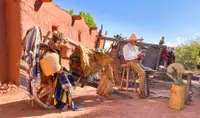
Historical interpreters work in the trades buildings at weaving, blacksmithing, carpentry, milling, tinstamping and hide tanning. The ranch keeps churro sheep, goats and burros. It grows traditional crops in traditional ways, keeps more than 100 fruit trees and a wine-grape vineyard, and tends a garden of medicinal, culinary and dye plants. The spring-fed Acequia Madre runs through the property and is listed on the National Register of Historic Places. The crops go several places. Fresh zucchini, green chile and dry beans are sold in the Museum Store. On average, thousands of pounds of produce go to the Food Depot each year. New Mexico Hard Cider presses the ranch’s apples. Beer Creek Brewing Company uses its hops in a Golondrinas Gold Ale. Tumbleroot Distillery grinds blue corn at the historic mill for its Farmhouse Whisky.
A daily docent tour leaves at 9:30 a.m. and lasts up to two hours, moving through the Spanish colonial, Mexican and Territorial periods. The springs that formed the ciénegas, the marshlands that gave the valley its name, now feed the Leonora Curtin Wetland Preserve. Its entrance is a 15- to 20-minute walk from the museum gate, and a trail of about a mile loops through it. On Early Bird Wednesdays, October 7 and November 4, 2026, the preserve opens from 7 to 10 a.m. for fall birding.
Harvest weekend, 2026
September 2026 was wet. Flooding closed the far side of the ranch, past the creek, on September 17. Weather closed the whole ranch on September 30, and it stayed shut until Saturday, October 3, while staff readied the grounds for the Santa Fe Harvest Festival. The museum says the festival has been held for over five decades and is its most popular event. Its social media calls it Santa Fe’s oldest harvest festival. In 1985 the Tribune recorded folk art festivals here on the first weekends of May and October.
The 2026 festival ran October 3 and 4, from 10 a.m. to 4 p.m. Saturday opened with the traditional San Ysidro procession and mass, open to all. A profile of the museum notes that the Reverend Larry Brito sprinkles holy water on the ranch fields during the procession. The afternoon brought La Llorona as musical storytelling by Rosalía Pacheco, Spanish folk dances by Los Coloniales, and Mexican dances by Los Niños de Santa Fe. Sunday brought Mariachi Kraken, Tíos Míos, lessons in New Mexico bailes de salón, and the Zuni Olla Maidens.
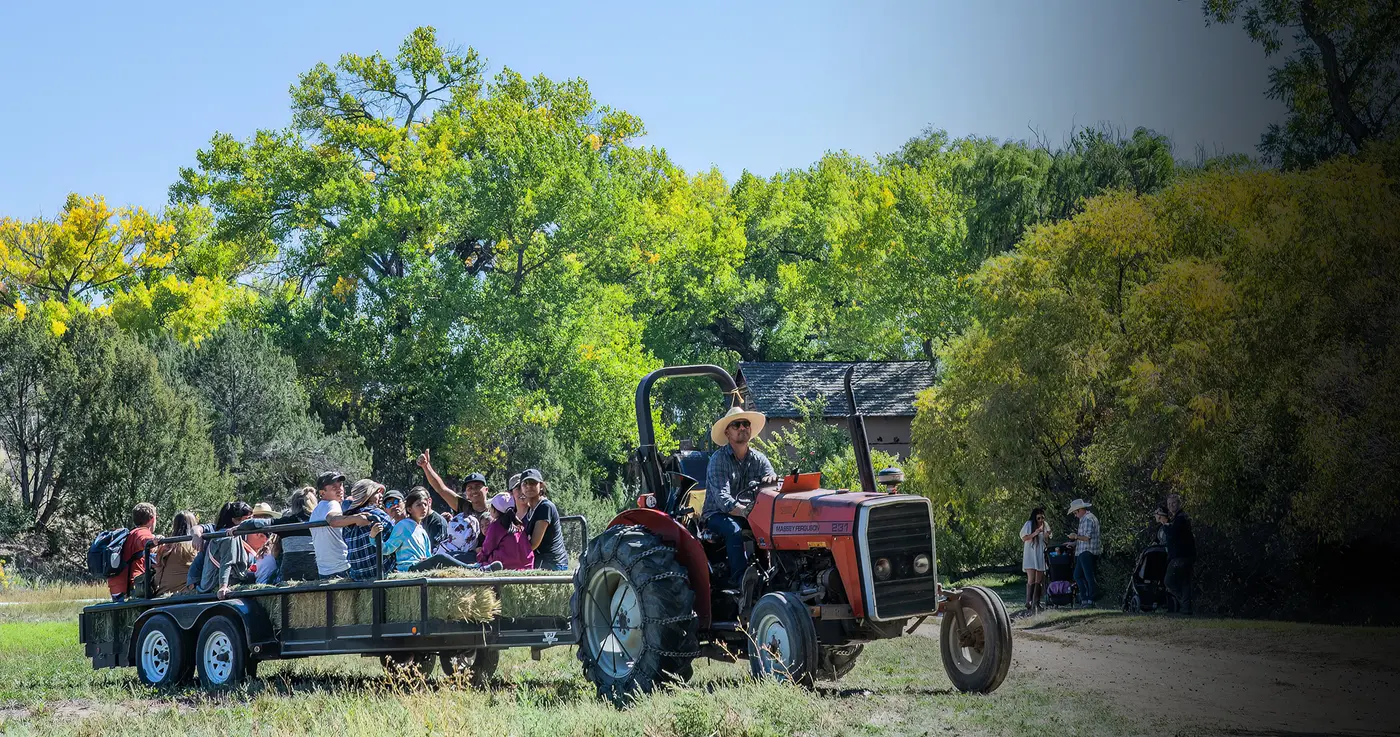
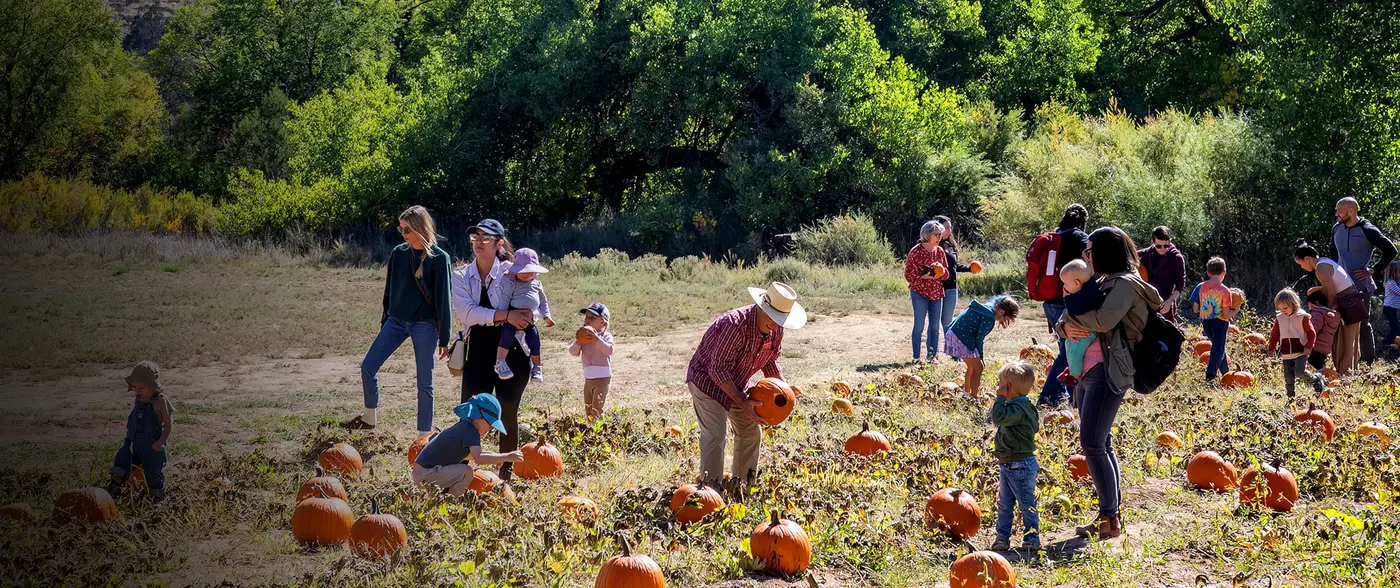
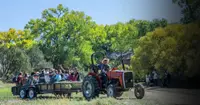
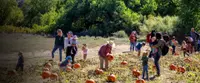
Between performances, visitors strung red chile ristras, picked from the pumpkin patch, watched grapes stomped at the old winery, made corn husk dolls, and rode one-way harvest hayrides. Harley “the Buffalo” received visitors from 11 to 3. Emily Trujillo, an eighth-generation Rio Grande/Chimayo weaver from Chimayo, had her booth at the front. Food trucks included Il Incanto, Vixs BBQ, Jesushi, Hot Stuff, Strawberries and More, Loaded Lemon and Flamingo Steves, and the Golondrinas Café was open. Drinks came from Beer Creek Brewing Company, New Mexico Hard Cider and Sheehan Winery, two of them made in part from the ranch’s own hops and apples.
On October 23 and 24, 2026, the grounds open from 5 to 9 p.m. for Spirits of New Mexico, a staged evening of spirits returning from the state’s past. “The veil is very thin here at the ranch,” said museum director Daniel Goodman. Talks on a New Mexican burial and on Día de Muerto follow on October 27 and November 3.
A paraje on the Camino Real
People farmed this valley long before the Spanish came, planting corn, beans and squash and hunting in the mountains and on the eastern plains. Spanish settlement arrived with Juan de Oñate in 1598. The Pueblo people drove the Spanish out in 1680. Remnants of a pre-revolt Spanish rancho survive in the area, but according to the guidebook, lasting settlement in La Cienega began only after Diego de Vargas returned in the early 1690s.
Accounts of the first owners differ. The Tribune says Manuel Vega y Coca bought the land from the Spanish crown early in the 18th century, on condition that he build a torreón against raids. Its foundations were still there in the 1940s. The National Register nomination names Miguel Vega y Coca, a Mexico City native who came with de Vargas’s forces in 1693, as the first recorded La Cienega landholder. Another history traces a 1710 land grant to Sebastian de Vargas, who conveyed it to Captain Tomás de Sena. That history also records that José Riano Tagle, who died in 1743, left a portion named El Rancho de las Golondrinas to his foreman, Antonio Sandoval. It calls this the earliest known reference to the ranch by that name. One newspaper account gives 1740 as the name’s first appearance. The nomination instead credits Governor Juan Bautista de Anza’s account of his stay. The acequia also has two dates: the guidebook says it was built before 1739, and the other history says most likely by about 1764, under the Sandovals.
The ranch was a paraje, an official rest stop for caravans on the Royal Road between Mexico City and Santa Fe. It also supplied goods for trade. The Tribune notes it lay an easy day’s ride from Santa Fe and was known for its hospitality, so travelers often spent the first night south or the last night north here. Fray Francisco Atanasio Domínguez visited in 1776 while inspecting New Mexico’s missions. “Gov. Anza slept here,” George Paloheimo Jr. told the Tribune. Anza spent Thursday night, November 9, 1780, at the ranch, the first night of an expedition. The Tribune says it was a scout for a route to Guadalajara. Another history says it was a trade route from Santa Fe to Arispe, and the nomination calls it a reconnaissance to Sonora.
Manuel Francisco Delgado, a Santa Fe merchant and rancher, began acquiring the ranch from the Sandoval family in 1795. When he died in 1815, it passed to his twins, Manuel and Manuela. Manuela’s husband was José Francisco Baca y Terrus, who opposed the United States occupation of 1846 and withdrew from public life to Las Golondrinas. He died in 1856, and a decade later the ranch was divided among his children and a son-in-law. On April 5, 1877, Nasario Gonzales announced the land’s pending sale on the front page of the Santa Fe New Mexican.
The last house built on the old ranch belonged to Elfego Pino, who ran sheep here. Goodman dates the Pino House to around 1916. A preservation report gives 1919 to 1920. In 1932 and 1933, Elfego Pino and Imelda Baca de Pino sold 400 acres to Leonora Muse Curtin and her daughter, Leonora Frances Curtin. The Pino House became the foreman’s quarters, occupied by the Blackwelder family. In 2019 a preservation trades intern, Ramon Dorado, returned it to a mud-plaster finish, and the Historic Santa Fe Foundation entered it as the 100th property on its register.
A Finn among the ruins
The museum’s own history dates the Curtin purchase to 1932. Its guidebook says 1933, and another account says the family bought the ranch as a summer retreat in 1934. The daughter had founded Santa Fe’s Native Market during the Depression to keep traditional crafts alive and give artisans an income.
Yrjö Alfred Paloheimo came from Järvenpää, near Helsinki, the town where Jean Sibelius also lived. He emigrated to America in 1929, represented Finland at the 1939 World’s Fair in New York, and raised money for Finnish relief after the war. Through that work he met Leonora Curtin of Colorado Springs, and they married in 1946. Two years later they toured her family’s New Mexico ranch, then running cattle, with an architect friend. “That’s such a beautiful thing, really worth saving, although saving it will be expensive,” the architect said of one house, as Paloheimo recalled it. The chapel floor lay 3 feet deep in manure. “In Scandinavia there is a tradition of trying to preserve the past in outdoor museums,” Paloheimo told the Tribune. “There probably are more such museums in Finland than in any other country in the world.” On trips back to Europe he filmed outdoor museums to show Americans what he meant to build.
On July 5, 1965, the scholar E. Boyd sent the Paloheimos a plan for a New Mexican village plaza at Las Golondrinas. Craftsman Elias Sena directed construction of the museum buildings from 1967 to 1972. Supporters met at the ranch in the summer of 1971 to form the Colonial New Mexico Historical Foundation, and the museum opened in the spring of 1972. Leonora Muse Curtin died the same year. In 1982 the Paloheimos formed a charitable trust to run the museum. Y.A. Paloheimo, its director and public face for its first ten years, died in 1986. Leonora Curtin Paloheimo, the last of the founders, died in 1999.
The museum marked its 50th anniversary in 2022 with fifty events, among them a half marathon, an archaeological symposium and a Fiesta Matanza. That October 14, the state’s Cultural Properties Review Committee voted unanimously to list the ranch, and it entered the National Register on December 5. Daniel Goodman, who came as curator, became director in 2017.
In 1985, at 85, Paloheimo quoted the sign at the museum’s entrance: “Quien ignora el pasado no construira nada nuevo y permanente.” He who does not know the past cannot build anything new and permanent.
Notable Events
- 1690sDe Vargas re-established settlement in the Ciénega Valley, which became an official Camino Real rest stop. newmexicomagazine.org
- 1710In 1710 Sebastian de Vargas obtained a land grant and later conveyed it to Captain Tomas de Sena. irp.cdn-website.com
- 1740El Rancho de Las Golondrinas first showed up by name in 1740; the La Cienega area was inhabited by Indigenous people for thousands of years before Spanish settlers built the ranch. santafenewmexican.com
- 1743Jose Riano Tagle, who died in 1743, left a portion of his property named El Rancho de las Golondrinas, the earliest known reference to Golondrinas as a ranch, to his foreman, Antonio Sandoval. irp.cdn-website.com
- 1750sThe rancho passed to Juan Estevan Baca, who married Maria Teodora Terrus of Santa Fe in the 1750s. npgallery.nps.gov
- 1764During the Sandoval family ownership, the acequia was constructed, most likely by c.1764. irp.cdn-website.com
- 1776Fray Francisco Atanacio Domlnguez visited the village during an inspection of New Mexico missions. npgallery.nps.gov
- 1780Juan Bautista de Anza spent a Thursday night at the ranch. chicagotribune.com
- 1795Merchant, trader, and rancher Manuel Francisco Delgado of Santa Fe acquired the ranch from the Sandoval family beginning in 1795. irp.cdn-website.com
- 1815After Delgado's death, his twins Manuel and Manuela inherited the rancho; Manuela was married to Baca y Terrus. npgallery.nps.gov
- 1821The ranch played an important role on the Santa Fe trade route, circa 1821, before falling into disuse over time. newmexicomagazine.org
- 1846Opposing United States occupation of New Mexico, Baca y Terrus withdrew from public life and retired to the rancho. npgallery.nps.gov
- 1856Francisco Baca y Terrus died in 1856 and a decade later the ranch was divided among his children and a son-in-law. irp.cdn-website.com
- 1877Nasario Gonzales announced the pending sale of the land of El Rancho de las Golondrinas on the front page of the Santa Fe New Mexican. irp.cdn-website.com
- 1916The Pino Family constructed the Pino House around 1916. golondrinas.org
- 1919The preservation report gives the house's construction date as 1919-20. historicsantafe.org
- 1919The Pino Ranch House served as Elfego Pino's home on his sheepherding ranch. historicsantafe.org
- 1932Leonora Curtin and her mother purchased the ranch property. golondrinas.org
- 1932Buildings and structures were created for the museum's open-air exhibits over this period. nmhistoricpreservation.org
- 1934The Curtin-Paloheimo family purchased Las Golondrinas as a summer retreat. historicsantafe.org
- 1946Paloheimo met Leonora during his Finnish relief activities and married her. chicagotribune.com
- 1946After their marriage, Leonora and her Finnish husband saw the old ranch's potential as an outdoor living history museum. golondrinas.org
- 1965E. Boyd sent Leonora and Y.A. Paloheimo an expansive plan for a New Mexican Village Plaza at Las Golondrinas. irp.cdn-website.com
- 1968The family turned the ranch into a museum interpreting rural Hispanic life. historicsantafe.org
- 1971Supporters met at Las Golondrinas and established the Colonial New Mexico Historical Foundation. irp.cdn-website.com
- 1971The museum established its mission to educate using historic and recently constructed buildings and collections of arts and crafts. nmhistoricpreservation.org
- 1972The museum officially opened to visitors. golondrinas.org
- 1980A 102-year-old schoolhouse was dismantled in Raton and moved to the ranch. chicagotribune.com
- 1982Leonora Francis Curtin Paloheimo and Y.A. Paloheimo formed a charitable trust for the museum's administration and future financial sustainability. irp.cdn-website.com
- 2017After joining as curator, Goodman became director and pursued strategic planning and expansion. newmexicomagazine.org
- 2019Preservation trades intern Ramon Dorado restored the Pino House to a mud plaster finish. historicsantafe.org
- 2022El Rancho celebrated its 50th anniversary as a living history museum. golondrinas.org
- 2022The committee unanimously passed the motion for state-register listing and forwarding the nomination to the national register. nmhistoricpreservation.org
- He came to help his father for a few months and never got around to leaving. chicagotribune.com
- Two years after their marriage, the Paloheimos visited the New Mexico property Leonora's family owned. chicagotribune.com
- The staff added online educational content and web events, increased Food Depot contributions, and arranged food pickup with YouthWorks. newmexicomagazine.org
- The rancho became the property of a Santa Fe presidio officer who later became a prominent merchant. npgallery.nps.gov
- Governor de Anza stayed overnight during a reconnaissance to Sonora; the nomination calls his account the first known reference to Las Golondrinas. npgallery.nps.gov
- The museum entered the national register shortly after entering the state's register in the fall. santafenewmexican.com
People
- George Paloheimo Jr., Came to the ranch to help his father and stayed (bicentennial year).
- Juan Bautista de Anza, New Mexico governor who stayed at the rancho with his reconnaissance party.
- Manuel Vega y Coca, Bought the ranch property from the Spanish crown (early in the 18th Century).
- Y.A. ”George” Paloheimo Sr., Museum founder.
- Allen Affeldt, Gold Individual Sponsor of the 50th Season.
- Allen Lewis, Gold Individual Sponsor of the 50th Season.
- Bernie Rivera, Gold Individual Sponsor of the 50th Season.
- Carla Aragon, 50th Anniversary Task Force co-chair.
- Daniel Goodman, Museum Director.
- George Paloheimo, 50th Anniversary Task Force member.
- Heidi Hahn, Gold Individual Sponsor of the 50th Season.
- Henry Rivera, Board Chair, 50th Anniversary Task Force.
- Jackie Camborde, 50th Anniversary Task Force member.
- John Bingaman, Gold Individual Sponsor of the 50th Season.
- Laura Griego, 50th Anniversary Task Force member.
- Leonora Curtin, New Mexico folklorist who purchased the rancho; mother of the woman who developed it with Y. A. Paloheimo (1932).
- Marie Gutierrez y Alarid, 50th Anniversary Task Force member.
- Meredith Machen, Gold Individual Sponsor of the 50th Season.
- Phil Goldstone, Gold Individual Sponsor of the 50th Season.
- Ryan Salmon, 50th Anniversary Task Force member.
- Sean Paloheimo, 50th Anniversary Task Force member.
- Stephen Machen, 50th Anniversary Task Force co-chair.
- Steve Machen, Gold Individual Sponsor of the 50th Season.
- Tina Mion, Gold Individual Sponsor of the 50th Season.
- Yrjö Alfred (Y.A.) Paloheimo, Opened the museum with Leonora Curtin (spring of 1972).
- Ramon Dorado, Preservation trades intern who restored the Pino House to a mud plaster finish (2019).
- Elfego Pino, Sheepherding ranch resident in the Pino Ranch House (1919 to 1934).
- Antonio Sandoval, Tagle's foreman, who received the portion named El Rancho de las Golondrinas.
- E. Boyd, Contributed to development of the museum.
- Elias Sena, craftsman who directed construction of the museum buildings (1967-1972).
- Leonora Francis Curtin Paloheimo, co-purchaser of the ranch and patron of the museum; the last of the museum founders (1903-1999).
- Leonora Muse Curtin, Contributed to development of the museum.
- Manuel Francisco Delgado, merchant, trader, and rancher of Santa Fe who acquired the ranch from the Sandoval family (beginning in 1795).
- Y.A. Paloheimo, recognized visionary of the museum, its director and public face for its first ten years (died 1986).
- Amanda Mather, Curator of collections who checks exhibits for historical, temporal and cultural appropriateness.
- Don Diego de Vargas, General whose recolonizing forces brought the first recorded landholder to New Mexico (1693).
- Doug Lonngren, Rope maker and 2012 Volunteer of the Year (2012).
- Larry Brito, Reverend who sprinkles holy water on the ranch fields during the procession.
- Laura Gonzales, Director of Education and Volunteer Services.
- Lynn Cantwell, Volunteer demonstrating a woven bracelet.
- Pedro Martinez, Portrays a soldier at Las Golondrinas.
- Sandra Miner, Longtime museum volunteer.
- Amy Kostine, National trails program coordinator whose Middle Tennessee State University historic preservation office worked on the nomination.
- Dan Goodman, Museum Director, speaking in support of the nomination.
- Kelly Jenks, Takes field-school students to the museum to study preservation.
- Leonora Frances Curtin Paloheimo, Acquired the ranch with her mother (1903-1999; acquired in 1932).
- Mike Taylor, Former museum board member, La Cienega resident and founding-family descendant who helped coordinate the nomination.
- Steven Moffson, Presented the museum listing to the Cultural Properties Review Committee.
- Diego Manuel Baca, Lived at Las Golondrinas with his wife Mar£a Vega y Coca.
- Fray Francisco Atanacio Domlnguez, Visited the village during a mission inspection (1776).
- Jos£ Francisco Baca y Terrus, Manuela's husband, tied to the rancho's return to the Baca family.
- Juan Estevan Baca, Inherited the rancho and married Maria Teodora Terrus (1750s).
- Manuel Delgado, Rancho owner, Santa Fe presidio officer and later merchant (Around the turn of the century).
- Manuel, Delgado's son and twin of Manuela; inherited the rancho (1815).
- Manuela, Delgado's daughter, twin of Manuel and wife of Baca y Terrus; inherited the rancho (1815).
- Mar£a Vega y Coca, Lived at Las Golondrinas with her husband Diego Manuel Baca.
- Maria Teodora Terrus, Wife of ranch heir Juan Estevan Baca (1750s).
- Miguel Vega y Coca, First recorded La Cienega landholder, a Mexico City native who arrived with the recolonizing forces (1693).
- Eva Scott Fényes, Mother of Muse Curtin, the ranch purchaser (1849-1930).
- Joe Hayes, Santa Fe storyteller scheduled to perform at the museum's Spirits event.
- Leonora Scott Muse Curtin, Acquired the ranch with her daughter (1879-1972; acquired in 1932).
- Yrjö Alfred Paloheimo, Curtin Paloheimo's Finnish husband and co-founder of the outdoor museum (1946).
Sources
- golondrinas.org
- golondrinas.org/wp-content/uploads/2024/07/ERDLG_Guidebook_En_2024_final.lr_.pdf
- golondrinas.org/visit
- golondrinas.org/plan-your-visit/hours-fees
- golondrinas.org/plan-your-visit/directions
- golondrinas.org/about/history
- facebook.com/sfgolondrinas
- nps.gov/places/el-rancho-de-las-golondrinas.htm
- santafenewmexican.com/news/local_news/el-rancho-de-las-golondrinas-added-to-national-register-of-historic-places/article_b6d7b0c8-7c91-11ed-9b3a-b726d3c5ba07.html
- hmdb.org/m.asp?m=280228
- newmexicomagazine.org/blog/post/las-golondrinas-brings-the-past-to-life
- historicsantafe.org/property-portfolio-2/pino-ranch-house
- nmhistoricpreservation.org/assets/files/cprc-documents/minutes/23012726.2022-10-14-CPRC-Minutes.pdf
- nmhistoricpreservation.org/assets/files/markers/2017%20-%20Historic%20Markers%20Database_web.pdf
- npgallery.nps.gov/GetAsset/a906b7dc-a32d-432a-9643-6db2f0486b00
- chicagotribune.com/1985/04/28/spanish-colonial-days-come-to-life-on-a-new-mexico-ranch
- historicsantafe.org/545-hsff-blog/2019/11/5/a-fresh-face-for-the-pino-house
- golondrinas.org/history-culture/historic-sites/pino-house
- santafenewmexican.com/pasatiempo/meet-historic-ghosts-and-spirits-at-las-golondrinas/article_ed178368-87f0-11ef-81e2-33ff5d0be290.html
- irp.cdn-website.com/2c253136/files/uploaded/NM_Santa%20Fe%20County_El%20Rancho%20de%20las%20Golondrinas_form.pdf
- nps.gov/elca/learn/historyculture/upload/La-Cienega-Valley-English-and-Spanish-508.pdf