
EBR-I Atomic Museum, world's first nuclear power plant
Arco, Butte County, Idaho, Idaho. Breeder reactor.
Details

- Where
- Arco, Butte County, Idaho, ID. No street address stated. Directions
- When
- seven days a week, from 9 a.m. to 5 p.m.
- Season
- Memorial Day weekend through Labor Day weekend.
- Getting there
- located on Highway 20-26 between Idaho Falls and Arco.
- Fees
- Admission is free.
- Access
- Self-guided and guided tours are available depending on the season; call or visit the website to confirm hours and fees.
- Walk-in or reserve
- No reservations are necessary for the available guided and self-guided tours.
- Phone
- 208-526-0050
- Website
- inl.gov
- Managed by
- Battelle Energy Alliance manages INL for the U.S. Department of Energy’s Office of Nuclear Energy.
- Established
- 1951.
- Coordinates
- 43.511300, -113.006000.
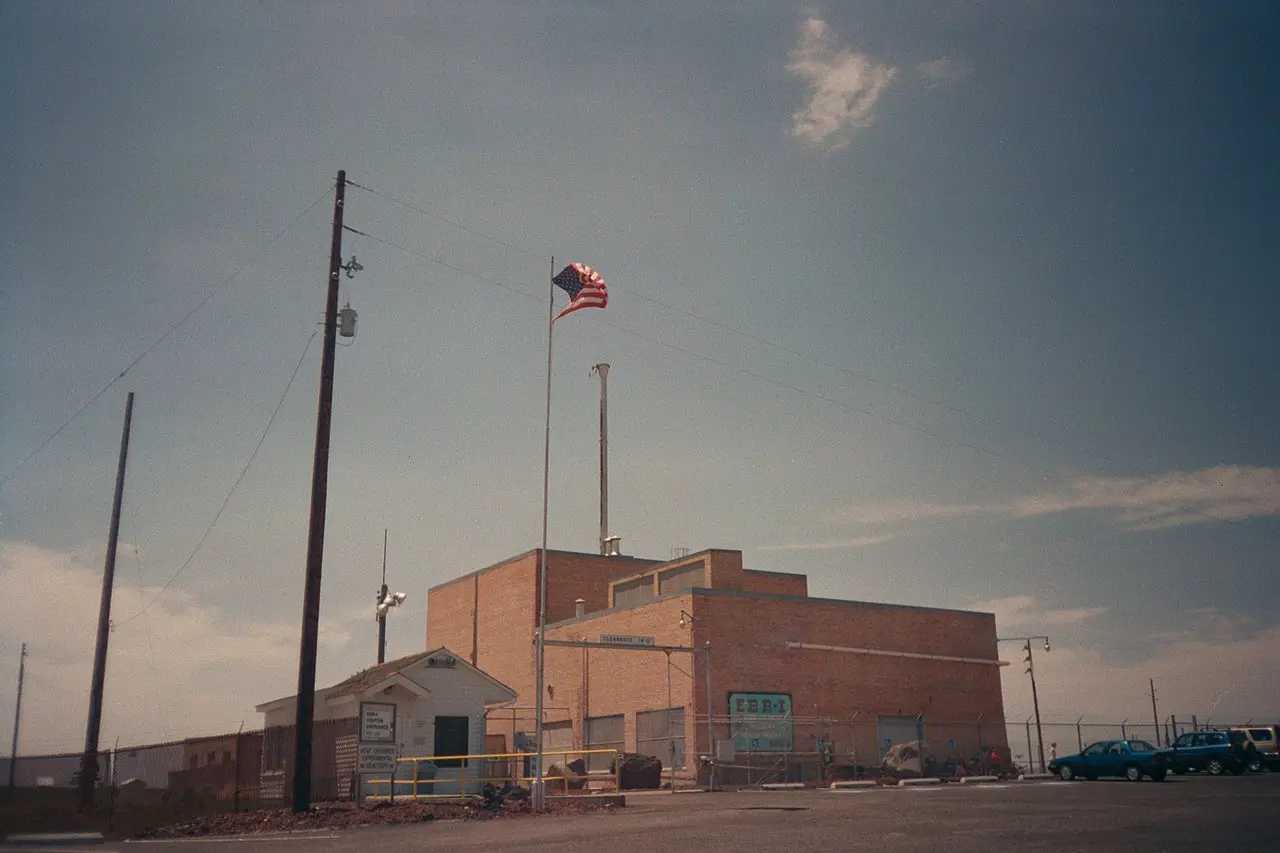
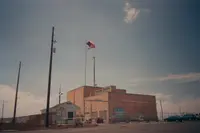
A faded brick building stands alone in the sagebrush of the eastern Idaho desert, near the base of the Big Southern Butte. It sits 50 miles west of Idaho Falls and 18 miles east of Arco, reached from U.S. Highways 20/26. Two aircraft nuclear propulsion prototypes rest in its parking lot. The brochure Idaho National Laboratory gives visitors calls them “an idea that never really took off.” The building behind them is Experimental Breeder Reactor-I. On December 20, 1951, it became the first power plant to produce electricity using atomic energy.
Four reactors and a control room
Visitors enter through the facility’s former machine shop. Near the front door is a mounting board with a plaque from the IEEE. The plaque records the December 1951 electricity and the 1953 proof of “breeding,” in which the reactor produced one atom of nuclear fuel for each atom burned. INL says the museum is the only place in America where a visitor can see four nuclear reactors at one site. The two aircraft prototypes are among them. Beyond the reactors are the original control room, remote handling devices for radioactive materials, and radiation detection equipment. Walter Zinn’s logbook is on display. Zinn was the EBR-I scientist who catalogued the reactor’s major milestones in it.
Colorful interactive displays tell the story of EBR-II, the second breeder reactor. It once powered much of the site, operated with a closed fuel cycle, and demonstrated its inherent safety. Argonne National Laboratory built it and ran it from 1964 to 1994.
Liza Raley, an INL ambassador, described the displays in family terms. “I’m always surprised when I find out local people have never been to EBR-I,” she said. “I used to take my kids every summer. We’d drive out, spend a couple hours pushing buttons at the museum, get some lunch in Arco, and then explore Craters of the Moon and Hell’s Half Acre.” Craters of the Moon National Monument lies 46 miles farther west on the same highway.
The summer season
The museum is a summer place. The 2026 season opened Friday, May 22, and ran daily from 9 a.m. to 5 p.m. through Labor Day. Admission was free and no reservation was needed. Summer tour guides led visitors through the building. Others walked it alone with printed self-guided instructions in English, Spanish, or French.
The free TravelStorys app gives a narrated tour of the highway across the desert, followed by a tour of the building itself. In the off season, INL arranges group tours in person or online.
The 2026 season added a penny press, and visitors were asked to bring loose pennies. America 250 posters on the theme “Moments That Made Us” were also on hand. National Parks Passport holders could have their booklets stamped.
On seven days between June 5 and August 28, architectural historian Libby Cook was on site from 9 a.m. to 2 p.m. to answer questions. At noon on each of those days she led a tour on EBR-I’s evolution and the decisions of the people who built it.
Zinn’s Infernal Pile
Before 1949, according to the INL brochure, the Arco desert was known as an isolated, windswept haven for sagebrush, antelope, and rattlesnakes. That year the National Reactor Testing Station was founded, the forerunner of today’s Idaho National Laboratory. The Atomic Energy Commission began work there in May 1949 by drilling the EBR-I well. Construction of the reactor building followed late that year. It was the first reactor built at the station. It was also the first of 52 reactors built on what became an 890-square-mile site.
The choice of a breeder reactor followed from scarcity. The IEEE record states that uranium was then in very short supply, and the large ore bodies of the 1950s were still unknown. The commission therefore decided its first power reactor would try to prove that a reactor could make more fuel than it used.
Early in 1951, a few months before the building was finished, nine staff members from Argonne National Laboratory arrived. They came to install the reactor they had designed at their laboratory near Chicago. Argonne’s records give the reactor two other names, CP-4 and “ZIP,” short for “Zinn’s Infernal Pile.” Seven years earlier, in 1944, Walter Zinn had started Chicago Pile 3, the world’s first heavy-water-moderated reactor.
The first attempt to run the new reactor, in May 1951, failed because there was not enough fuel in the core. Getting more uranium and fabricating slightly larger fuel rods took nearly three months. On August 24, Zinn and his Argonne staff brought EBR-I to criticality with a core about the size of a football. Four months of low-power operation followed while the operators studied the machine.
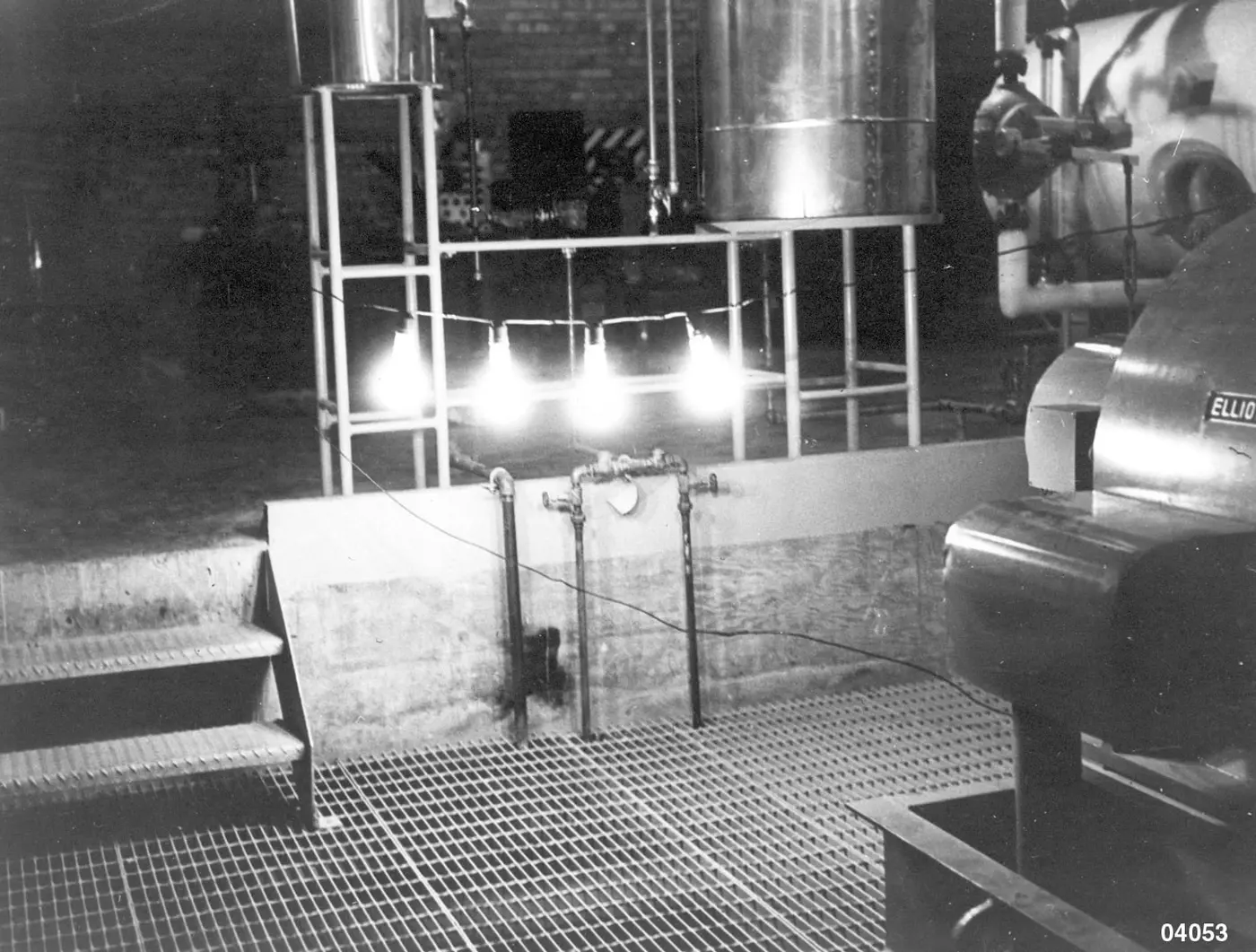
On December 20 the reactor was started up, and its power was raised gradually over several hours. At 1:50 p.m., electricity began flowing from the turbine generator. In the machine room, four 200-watt light bulbs came on. The next day the crew repeated the experiment and lit the entire building, along with the lights in the parking lot. INL calls the output “this mere 400 kilowatts.” Zinn signed his name in chalk on the wall with the workers, and so did Jolley, the facility custodian. The brochure credits the result to “a relatively small group of scientists, engineers and technicians using slide rules and chalkboards.”
Breeding fuel, and an airplane never built
The IEEE account holds that electricity was not the reactor’s real mission. Scientists already knew a reactor was a kind of furnace. The open question was breeding.
EBR-I was cooled by a sodium-potassium alloy. Early in 1953, a painstaking laboratory analysis showed it was making one new atom of fuel for each atom it consumed. The Atomic Energy Commission announced the result on June 4, 1953. Over the next ten years Argonne built three improved cores. The last, Mark IV, produced 1.27 new atoms for each one burned.
During a coolant flow test the reactor suffered an unexpected partial core meltdown. The Department of Energy says the event taught scientists more about the thermal capacity of the materials under test.
The reactor also pioneered the use of plutonium. Argonne’s milestone list dates its first electricity from a plutonium core to November 27, 1962. Another historical account places its first self-sustaining chain reaction using plutonium as the major fuel component in July 1963. INL says the reactor operated for 12 years and was shut down for the last time in December 1963. It was decommissioned early in 1964 for lack of further assignments.
The aircraft prototypes outside came from a separate Air Force program. In a ground test, a heat-transfer reactor reached full power in January 1956 and demonstrated the principle of nuclear-powered turbojet engines. A lead-shielded diesel locomotive on the site would have towed the radioactive airplane inside its hangar. The airplane was never built. The hangar was built, then demolished when the project was cancelled in 1961.
The Atomic City
Arco takes its nickname from the reactor down the road. In the town’s own words: “Arco calls itself the Atomic City for a reason. In 1951, our community was the site where Experimental Breeder Reactor I generated the first usable electricity from a nuclear reactor anywhere in the world. In 1955, we became the first town on the planet lit entirely by nuclear power.” Argonne dates that second event to July 17, 1955. Arco then had a population of 1,200, and the power came from Argonne’s BORAX III reactor.
President Lyndon B. Johnson and Glenn T. Seaborg, chairman of the Atomic Energy Commission, made EBR-I a National Historic Landmark in 1966. The sources disagree on the day. The landmark plaque at the site gives August 24. The Idaho State Journal and INL give August 25. A photo caption in the IEEE record gives August 26.
In the summer of 1975, the reactor building and its guard shack opened to the public as a museum, interpreted by the National Park Service.
Notable Events
- 1949Construction work by the AEC at the Station began in this area in May 1949 with the drilling of the EBR-I well. npgallery.nps.gov
- 1951The day after lighting four 200-watt lightbulbs, the reactor generated enough energy to light the entire building and the lights outside in the parking lot. inl.gov
- 1951After a failed first attempt in May 1951 for lack of fuel, on August 24 Dr. Walter Zinn and his Argonne staff brought EBR-I to criticality. npgallery.nps.gov
- 1951At 1:50 p.m. the first electricity ever generated from a nuclear reaction began flowing from the EBR-I turbine generator and four light bulbs were lit by its power. npgallery.nps.gov
- 1953In 1953 a laboratory analysis indicated that EBR-I was producing one new atom of nuclear fuel for each atom consumed. npgallery.nps.gov
- 1956In a ground test the reactor went to full power in January 1956 and demonstrated the principle of nuclear-powered turbojet engines; it was part of the Air Force effort to develop a nuclear-powered aircraft. hmdb.org
- 1961The lead-shielded diesel locomotive on the site would have towed the radioactive airplane, never built, inside the hangar, which was built and then demolished when the project was cancelled in 1961. hmdb.org
- 1962Argonne's milestone list dates EBR-I becoming the world's first reactor to produce electricity with a plutonium core to November 27, 1962. anl.gov
- 1963The reactor operated for 12 years before being shut down for the last time in December 1963. inl.gov
- 1963The reactor was the first to achieve a self-sustaining chain reaction using plutonium instead of uranium as the major component in the fuel, in July 1963. npgallery.nps.gov
- 1964EBR-I was decommissioned early in 1964 for lack of further assignments. npgallery.nps.gov
- 1966A photo caption in the IEEE milestone record places Atomic Energy Commission Chairman Dr. Glenn Seaborg and President Lyndon B. Johnson at the designation of EBR-I as a National Historic Landmark on August 26, 1966. ethw.org
- 1975The EBR-I building and guard shack were open to the public as a museum and interpreted by the National Park Service during the summer of 1975. npgallery.nps.gov
- 2004The IEEE milestone record for this reactor gives date dedicated 2004-06-04, dedication #51, location Idaho Falls, Idaho, and IEEE sections Eastern Idaho. ethw.org
People
- Glenn T. Seaborg, Chairman of the United States Atomic Energy Commission named on the site's National Historic Landmark plaque (1966).
- Jay Kuntze, Aircraft Nuclear Propulsion physicist and engineer quoted on the marker page about the reactor hardware displayed at the site.
- Shelly Norman, tour ambassador at Idaho National Laboratory speaking about the museum's return after the pandemic closures.
- Lyndon Johnson, President who dedicated EBR-I as a National Historic Landmark (1966).
- Jolley, facility custodian of EBR-I who signed the wall in chalk with the team.
- Walter Zinn, team leader who signed his name in chalk on the EBR-I wall with the workers.
- Dr. Walter Zinn, led the Argonne staff that brought EBR-I to criticality.
Sources
- inl.gov/ebr
- inl.gov/news-release/experimental-breeder-reactor-i-atomic-museum-opens-for-2026-season-75th-anniversary-approaches
- inl.gov/visitors
- inl.gov/tours
- inl.gov/content/uploads/2023/06/EBR_1_hotel_brochure.pdf
- facebook.com/IdahoNationalLaboratory
- visitidaho.org/things-to-do/museums-exhibits/experimental-breeder-reactor-i-ebr-i-atomic-museum
- instagram.com/idaho_national_lab
- ethw.org/Milestones:Experimental_Breeder_Reactor_I,_1951
- anl.gov/nse/argonnes-major-nuclear-energy-milestones
- hmdb.org/m.asp?m=103900
- idahostatejournal.com/community/ebr-i-atomic-museum-opens-for-first-time-since-before-pandemic/article_de02aa29-13cc-5026-9192-ae1015ee45f4.html
- postregister.com/freeaccess/opinion-butte-county-has-been-ready-for-this-moment-since-1951/article_b43268f0-2446-42c3-914b-d11db706a3e1.html
- inl.gov/history
- inl.gov/feature-story/70-years-of-nuclear-research-on-display-at-ebr-i