.jpg)
.jpg)
.jpg)
Eastern Idaho State Fair
Blackfoot, Bingham County, Idaho. Fairground.
Details

- Where
- 97 Park St, Blackfoot, ID 83221. Directions
- When
- September 4- September 12.
- Season
- Friday before Labor Day through the Saturday after Labor Day each year.
- Getting there
- 97 Park Street Blackfoot, ID 83221 (off Broadway Street by the Main Entrance).
- Fees
- Each Night Event Ticket includes FREE Fair gate admission the day of the event.
- Hours
- OFFICE Friday, September 4 – Saturday, September 12 8:00 am – 8:00 pm; TICKET OFFICE 8:00 am – 10:00 pm; All 9 days of fair.
- Access
- No animals except ADA service animals are permitted on the fairgrounds.
- Walk-in or reserve
- Night event tickets starting at $55.
- Phone
- (208) 785-2480
- Website
- funatthefair.com
- Managed by
- Eastern Idaho Fair District.
- Established
- 1902.
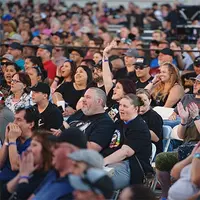
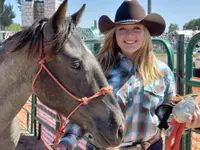
For nine days at the turn of September, from the Friday before Labor Day through the Saturday after, the Eastern Idaho State Fair fills its grounds off Broadway Street in Blackfoot with more than 2,000 animals: beef cattle, draft horses, sheep, pigs, goats, rabbits, poultry and pigeons. The Rabbit Barn alone holds dozens of breeds. The exhibit buildings take in more than 6,000 entries in 26 categories, among them canning, baking, needlecraft, flowers, photography, fine arts, antiques and a Native American division. Children in 4-H and FFA bring prize-winning projects up from their county fairs to compete at the larger show. Pumpkin tables run from giant prize-winners to pie pumpkins, and the craft hall holds woodworking and ceramics. The fair’s history page puts Blackfoot’s population at 15,000. The 2026 fair drew 253,906 people, its fifth straight year above 250,000.
The fair counted its Antique building in 2026 as the third-oldest exhibitor building on the grounds: “It’s an antique itself.” Judy Kirkham, a volunteer in the antiques department who took over the porcelain division, is credited with 50 years there. Mike Kirkham ran the gates and parking as superintendent for nearly 40.
In the West Events Area, Cowtown keeps a museum and an old-time creamery. Visitors help prepare a cow for milking, milk by hand or by machine, and follow the milk through pasteurizing. The demonstrations are given in two languages. Children churn butter and make ice cream with historic tools and machines, and the cows are milked at noon, 3 and 6 p.m.
The district behind the fair now takes in 16 counties, and the fair calls itself the only multi-county district fair in Idaho. It was once one of three state fairs, with those in Boise and Coeur d’Alene. “Today, however, the Eastern Idaho State Fair in Blackfoot is the main one,” Ron Patterson, a University of Idaho Extension educator in Bonneville County, told the Post Register in 2024.
Turkey legs and the Golden Corndog
“Of all the excitement found at the Eastern Idaho State Fair, the biggest overall attraction has always been the food,” the fair’s food page says. Nearly 70 vendors work the grounds, selling corn dogs, giant turkey legs, funnel cakes and tiger ears. A few take cash only.
Each year judges choose a Best New Sweet Item, a Best New Entrée and a grand champion called the Fairest of Them All. Winners hang a banner in their booth, and the grand champion keeps the traveling Golden Corndog trophy for the week. The same names return across the lists. Creamy Creations has won with a Manna Banana Coconut Cone and a Raspberry Cream Cheese Brownie. Smokin’ B’s took the entrée crown in 2021 and 2023 with a dish called The Whole Dam Farm. In 2016 the People’s Choice went to the Grand Teton Council’s Tiger Ear.
The 2026 theme, “Red, White and Blue Jeans,” marked the country’s 250th year, and the vendors cooked to it. Camille’s Crepes filled a red velvet crepe with white chocolate and fresh blueberries under whipped cream. Creamy Creations swirled an apple cider slush with vanilla ice cream and called it the Freedom Freeze. A Volcano from Morales homemade tacos took first in the Most Patriotic Entry class. Sweet Temptations won the sweet championship with The Campfire Secret, Mexican Crazy Corn won the entrée championship with Pulled Pork Nachos, and the People’s Choice went for a second year to BlackHawk BBQ’s Warhawk.
Grandstand, infield and midway
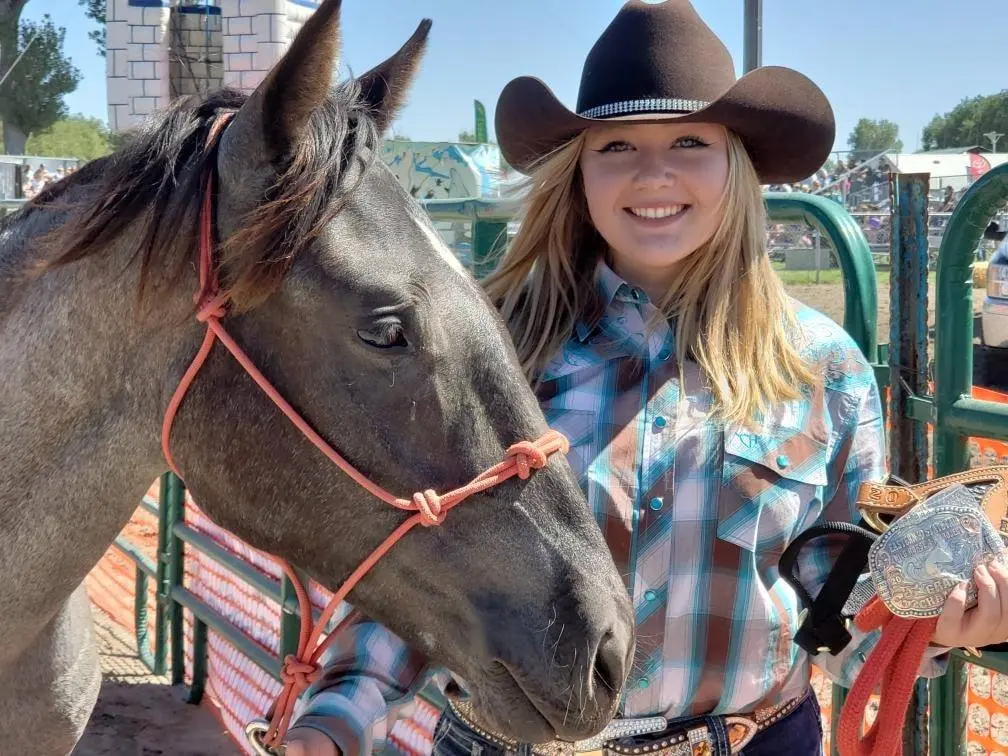
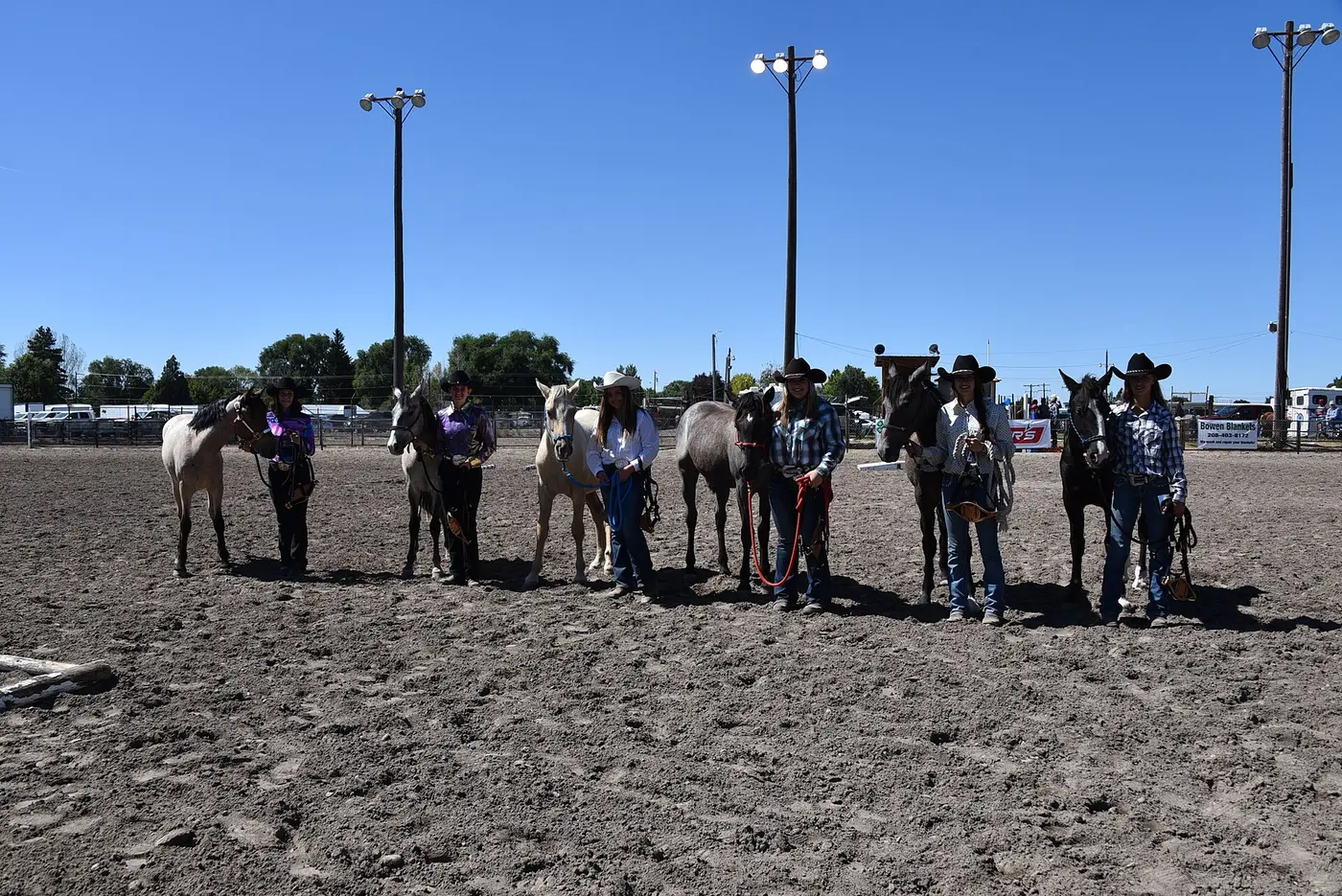
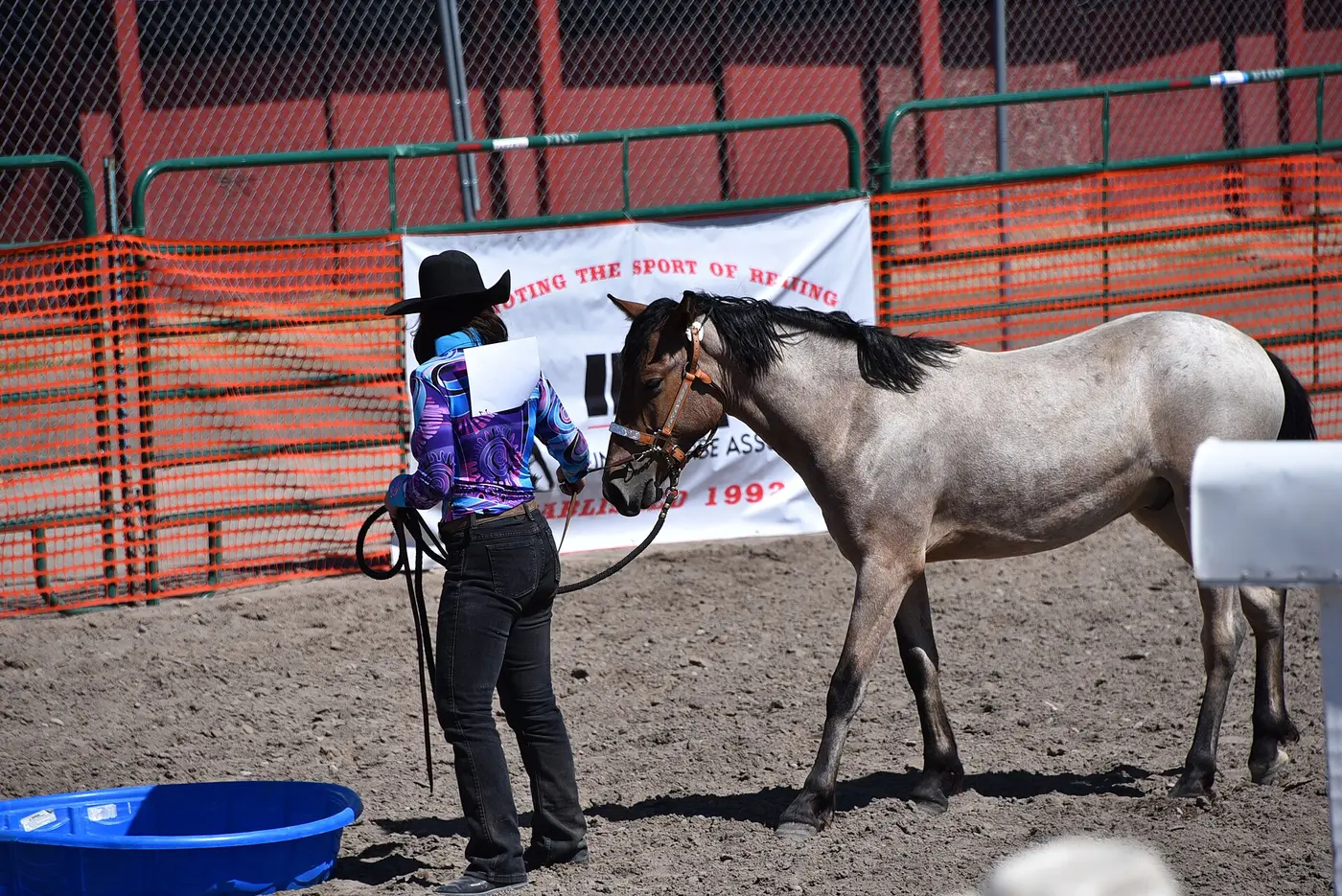
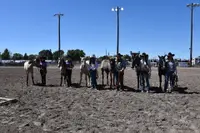
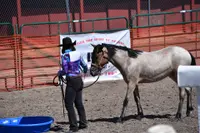
The Bank of Commerce Grandstand stands at the center of the grounds. Addie Trussell ran it for decades; the fair’s list of parade grand marshals gives an Addie Tressl for 1971. By day, the arenas and infield hold working-horse events free with gate admission. Draft horse hitches lap the track while judges watch the horses’ conformation and manner of going, in classes for braided and unbraided carts and for youth, ladies and men. In horse pulling, horses drag a stone-boat or weighted sled until it sticks. The lights start at 3,000 pounds, the middles at 3,500 and the heavies at 4,000. Barrel racers come into the arena at full speed, round three barrels in a cloverleaf, and leave by the gate they entered. In the West Events Arena, team penning, branding and sorting, drawn from ranch work, runs against the clock. In 2026 the Gem State Classic Pro Rodeo held daytime slack for the first time, for contestants who missed the blind draw for the night shows.
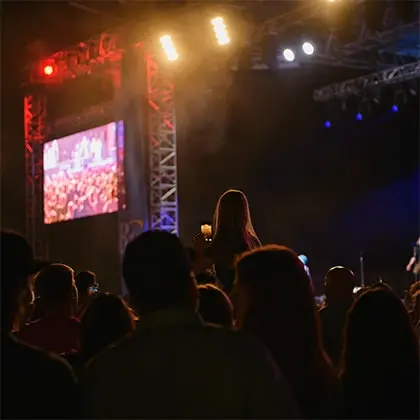
The 2026 nights opened with Flo Rida, who set an opening-night attendance record. Bull riding, truck and tractor pulls, three nights of the rodeo, Gabriel Iglesias and the country singer Nate Smith followed, and the Navy Leap Frogs parachuted into the grandstand. The rodeo had been voted “2019 Small Rodeo of the Year.” On the last Saturday the September Slam Demolition Derby closed the fair at 7:30 p.m.
On race days the card starts at noon, with seven to ten pari-mutuel races. Three to five Indian Relay races follow the fourth, sixth and eighth. Each relay team has three horses and four members: a rider, a catcher called the Mugger, and two holders. The rider takes a lap bareback on each horse and must get off without help from teammates and without losing control of the horses. Teams race for more than $50,000 in added purse. The fair calls the relay a centuries-old tradition of the Shoshone-Bannock Tribes and says the sport began on the Fort Hall Indian Reservation more than 100 years ago, with families passing it down. The Birdinground Team won the 2026 national championship.
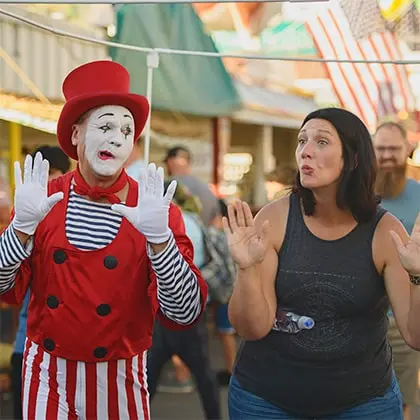
Butler Amusements has run the carnival since the 1990s, with more than 30 rides, a coaster and a Ferris wheel paid for on a reloadable wristband. Free acts work the grounds and the free stages: divers of the Off Axis High Dive Show, Megan the Bubbleologist, Mimealot, Fairly Bigfoot, Magic Ben, and Rebecca Fireplug strolling among the crowds. Visitors can enter the Dirt Road Dancing Swing Competition, which is for non-professionals, the Idaho State Arm Wrestling Championship, or, for children, the Kids’ Ultimate Pie Eating Challenge. On the first Saturday morning the parade runs north on Shilling Street from Rich Street to Alice Street, with high schools, dance teams, firefighters and police. The fair advises getting there early, since the sidewalks fill with families.
Cattlemen, a steam carousel and the governor of Maine
The fair began in 1902, when a group of cattlemen in Blackfoot pooled their money to buy land for a livestock show. The Post Register calls them several cattle ranchers. The Pocatello Tribune covered the show on October 9, 1902: “This is a great day in the history of Blackfoot.” Floral and agricultural exhibits stood beside the cattle. Under the name Southeastern Idaho Fair it ran for 16 years. A merry-go-round driven by a steam engine arrived in 1906, and in 1912 the fair board spent $900 to bring Teddy Roosevelt in by train for a campaign speech.
Money ran out in 1918, and the fair shut down. In 1920 county leaders and the Farm Bureau bought the land and reopened it. In 1925 it became a four-day event. That same year the legislature passed the multi-county fair district laws, and Bingham, Bonneville and Bannock counties formed the Eastern Idaho Fair District. Clark County joined in 1930.
In the late 1930s the Utah State Fair moved its dates to coincide with Blackfoot’s. The board kept its dates and renamed the event the Eastern Idaho State Fair. The district then had 12 counties and drew nearly 40,000 visitors a year. The grandstands went up in those years, raised with horses and a pulley system, and an Arts & Crafts department was added. In 1939 the governors of Idaho and Maine met in a potato picking contest. In the fair’s own account: “Sadly, the Governor of Maine emerged victorious.” In 1940 the Corps of Engineers helped build the arch sign and the administrative offices, each office marked with a plaque. Attendance that year passed 66,000, with 25,000 more student admissions over six nights and five days.
Italian prisoners in the exhibit halls
The fair shut down after the United States entered World War II; the Post Register dates the closing to July 1942. Its buildings stored surplus food and equipment for the county. The commercial building held a potato dehydration plant, and in 1942 it burned with 250,000 pounds of potatoes, 50 tons of coal and all the equipment inside. The Post Register gives the date of the fire as December 10. By the fair’s account, the building took more than ten years to rebuild.
The fair’s history says the fair resumed in 1944. On September 22, less than a week after that year’s fair closed, the U.S. Army set up headquarters on the grounds to guard about 500 Italian prisoners of war. They stayed a little over a month and dug sugar beets and potatoes in what was called the “acute harvest labor crisis in the country.” A 2026 EastIdahoNews.com article, carried by KSL, also says the prisoners arrived just after that year’s fair, though it describes the fair as canceled during the war years. The Post Register places the prisoners in the shutdown and the fair’s return “after the war,” and calls their work forced labor. Bingham County historian Leslie Mickelsen confirmed the fairgrounds’ use but said photographs and detailed firsthand accounts are hard to find. A rumor persists locally that the grounds held a concentration camp or a civilian internment camp. Idaho State Historical Society records class the site as a prisoner-of-war branch camp under the base camp at Rupert.
Old papers kept by the fair quote Claude Johnson, then the Bingham County extension agent: “They (the POWs) were no different than our boys. They were just fighting a different army.” Ruth Hartkopf, the fair’s secretary, is reported as saying, “I always gave them a greeting when I passed; however, sometimes they made suggestive or lewd remarks toward women.” Richard Lindsay, a county historian who was about 7 or 8 that fall, remembered the trucks: “There were groups of the POWs that were brought from the fairgrounds out to Thomas to work. I was very curious about them. I remember watching them come in and out of the beet and potato fields.”
Betting, the derby and a ninth day
After the war, first-day crowds reached 15,000, drawn by grandstand shows, aerial acrobats, a Disappearing Water Ballet and Pete Siebrand’s Carnival. By 1948 attendance passed 82,000 over five days, and Blackfoot ran short of rooms. A new midway opened on the west side, along with a steel exhibit building, four livestock barns and 50 stalls for racehorses. The fair took bets on horse racing from 1946 to 1948, then stopped. The board lobbied for a racing law through repeated vetoes by the governor until it passed in 1964 and pari-mutuel racing began. That year the new racing commission and the fair board cancelled the Indian Relay, which the Shoshone-Bannock Tribal Council ran and which had been part of the fair since its early years. Critics called the relay “the most popular part of the racing program,” and it returned in 1965.
In 1968 KIFI-TV made its first live broadcast from the fair, with weatherman Lloyd Lindsey Young. A 4-H building, the $500,000 Goddard Livestock Pavilion and a Hobbies & Crafts building went up in the 1970s and 1980s. The first annual theme, in 1972, was “Six Big Days and Nights: Spectacular Fun for Everyone!” The Demolition Derby began in 1974 as a benefit for the Blackfoot Elks Club’s youth programs and became the closing night. By the mid-1980s about 50,000 came on opening day and nearly 220,000 over the run, and in 1989 the fair stretched to eight days. In the 1990s a permanent stage was built for night shows, with Charlie Daniels and Travis Tritt among the performers.
The ninth day came in 2017 under the theme “Bigger is Better.” The Post Register counted 239,103 visitors that year, a record that broke 2016’s. The fair counts nearly 249,000 in 2018 as its all-time high. In 2020 the regular fair was not held for the first time in 75 years. In its place a modified fair held 4-H competitions, with the most young exhibitors and animals in more than a decade, along with two nights of rodeo and a “Fair Food Frenzy” of 15 vendors. No parade grand marshal was named that year. Brandon Bird is now the general manager.
Between fairs, the main office on Park Street keeps a souvenir shop with a penny press stamping four designs and maps for a penny-press scavenger hunt across the 16 counties. The Fairway RV Park on Wooton Way keeps horse stalls and in 2026 closes for the winter on October 9. The 2027 fair, marking 125 years, is set for September 3 through 11.
Notable Events
- 1906The fair introduced its first merry-go-round, powered by a steam engine. funatthefair.com
- 1912The Fair Board spent $900 to bring Teddy Roosevelt to the fairgrounds by train for a campaign speech. funatthefair.com
- 1918Financial difficulties forced the fair to shut down for several years. funatthefair.com
- 1920County leaders and the Farm Bureau purchased the land and reopened the fair. funatthefair.com
- 1930Clark became the fourth county in the Eastern Idaho Fair District. funatthefair.com
- 1939The governors of Idaho and Maine competed in a Potato Picking Contest, which Maine's governor won. funatthefair.com
- 1940The fair built its iconic arch sign and administrative offices with assistance from the Corps of Engineers. funatthefair.com
- 1942The fair shut down after the United States entered World War II, and fairground buildings stored surplus materials. postregister.com
- 1944The fair resumed, and on September 22 the U.S. Army established headquarters at the fairgrounds to guard and manage 500 Italian prisoners of war for more than a month during the harvest labor crisis. funatthefair.com
- 1946The fair introduced betting on horse racing and discontinued it after two years. funatthefair.com
- 1964Enabling legislation passed and pari-mutuel racing began; the racing commission and Fair Board also canceled the Indian Relay races. funatthefair.com
- 1968KIFI-TV chose the fair as the site for its first live broadcast, featuring weatherman Lloyd Lindsey Young. funatthefair.com
- 1970sA new 4-H building, Goddard Livestock Pavilion, and dedicated Hobbies & Crafts building improved the fairgrounds. funatthefair.com
- 1972The fair adopted annual themes, beginning with Six Big Days and Nights: Spectacular Fun for Everyone! funatthefair.com
- 1974The Demolition Derby began and became a benefit for Blackfoot Elks Club youth programs and later the fair's grand finale. funatthefair.com
- 1989The fair expanded to an eight-day event. funatthefair.com
- 1990sThe fair brought in Butler Amusements to provide the carnival. funatthefair.com
- 2010The fair enhanced online Grandstand Event Ticket ordering to make advance purchase more convenient. funatthefair.com
- 2017Under the Bigger is Better theme, the fair expanded to nine days, from the Friday before Labor Day through the following Saturday. funatthefair.com
- 2017The 115-year anniversary set a record of 239,103 attendees, breaking the 2016 record. postregister.com
- 2018The fair welcomed nearly 249,000 visitors, an all-time record. funatthefair.com
- 2020No Grand Marshal was selected due to the COVID pandemic. funatthefair.com
- 2020The regular fair could not be held for the first time in 75 years because of the COVID-19 outbreak. funatthefair.com
- After Idaho passed Multi County Fair District laws, Bingham, Bonneville, and Bannock counties created the Eastern Idaho Fair District. funatthefair.com
People
- Addie Tressl, Grand Marshal (1971).
- Addie Trussell, ran the grandstand for decades; former Grand Marshal.
- Albert Johnson, Grand Marshal (1974).
- Alden Judge, Grand Marshal (1981).
- Amy Gough, Grand Marshal (2023).
- Barry Adams, Grand Marshal (2023).
- Bill Coon, Grand Marshal (2024).
- Bill Yoden, Grand Marshal (1989).
- Bobbette Wright, Grand Marshal (2017).
- Brandon Bird, General Manager.
- Chief LaSalle Pocatello, Grand Marshal (1970).
- Claude Johnson, Bingham County extension agent during the fairgrounds' POW-camp period (1944).
- Cliff Brady, Grand Marshal (2006).
- Clyde Twitchell, Grand Marshal (1999).
- Darlene Hatch, Grand Marshal (2013).
- Darrell Callison, Grand Marshal (2014).
- Don Dixon, Grand Marshal (2009).
- Doris Wallace, Grand Marshal (2011).
- Dr. J.C. Sorensen, Grand Marshal (1975).
- Dwain Stufflebeam, Grand Marshal (2005).
- Elmer Terry, Grand Marshal (1979).
- Floyd Crystal, Grand Marshal (1997).
- Frank Fullmer, Grand Marshal (1993).
- Frank Pratt, Grand Marshal (1982).
- Gary Adams, Grand Marshal (2023).
- Gary Fuller, Grand Marshal (1983).
- Gary Judge, Grand Marshal (2012).
- Gene Bowman, Grand Marshal (1996).
- Gene Womack, Grand Marshal (2025).
- George Brower, Grand Marshal (1972).
- Gerald Johnson, Grand Marshal (2001).
- Glen Clark, Grand Marshal (2010).
- Glen Talley, Grand Marshal (1984).
- Gloria Dillard, Grand Marshal (1998).
- Gust Morris, Grand Marshal (1991).
- Hilda Goddard, Grand Marshal (2001).
- Hyrum Adams, Grand Marshal (1992).
- Ival Wartchow, Grand Marshal (1977).
- J.R. Simplot, Grand Marshal (1985).
- Jack Moir, Grand Marshal (1973).
- Jack Olney, Grand Marshal (2016).
- Jeff Wright, Grand Marshal (2017).
- Jerry Hong, Grand Marshal (2008).
- Juanita Teton, Grand Marshal (2004).
- Judy Kirkham, antiques-department volunteer who took over porcelain division (50-year tenure).
- Karl Anderson, Grand Marshal (2007).
- Karole Honas, Grand Marshal (2022).
- Kathy Gavin, Grand Marshal (2002).
- Kathy Raybould, Grand Marshal (1983).
- Keno Coby, Grand Marshal (1990).
- Larry Caldwell, Grand Marshal (1995).
- Leland Barney, Grand Marshal (2003).
- Leo Teton, Grand Marshal (2021).
- Leo Wallace, Grand Marshal (2018).
- LeRoy Reed, Grand Marshal (2019).
- Lynn Morgan, Grand Marshal (1994).
- Marietta Womack, Grand Marshal (2025).
- Mike Kirkham, longtime Gate and Parking Superintendent (nearly 40-year run).
- Minnie Hall, Grand Marshal (1987).
- Mona Hamilton, Grand Marshal (1997).
- Muriel Judge, Grand Marshal (2012).
- Nancy Palmer, Grand Marshal (2013).
- Norma Howell, Grand Marshal (2002).
- Randy 'L Teton, Grand Marshal (2000).
- Roy Howell, Grand Marshal (1988).
- Ruth C. Hartkopf, Grand Marshal (1966).
- Sharol Coon, Grand Marshal (2024).
- Tom Chester, Grand Marshal (1980).
- Vernon Bird, Grand Marshal (1994).
- Wells Barney, Grand Marshal (1986).
- Willie George, Grand Marshal (1968).
- Zavan Green, Grand Marshal (1978).
- Charlie Daniels, nighttime entertainment performer.
- Lloyd Lindsey Young, weatherman featured in KIFI-TV's first live broadcast from the fair (1968).
- Teddy Roosevelt, campaign speaker at the fairgrounds (1912).
- Travis Tritt, nighttime entertainment performer.
- Leslie Mickelsen, Bingham County Historian who confirmed the fairgrounds' POW use.
- Richard Lindsay, historian and childhood witness to fairgrounds POWs being transported to farm work.
- Ruth Hartkopf, fair secretary during the POW-camp period (1944).
Sources
- funatthefair.com/night-grandstand
- funatthefair.com/pari-mutuel-racing-and-indian-relay-races
- funatthefair.com/other-daytime-events
- funatthefair.com/entertainment
- funatthefair.com/about
- funatthefair.com/best-fair-food
- funatthefair.com/eisf-parade
- funatthefair.com/carnival
- funatthefair.com/rv-park
- funatthefair.com/general-guidelines-and-policies
- funatthefair.com/cowtown
- eastidahonews.com/2026/09/loud-and-clear-the-eastern-idaho-state-fair-is-here-to-stay-and-economic-boon
- funatthefair.com/history
- funatthefair.com
- postregister.com/farmandranch/history-of-the-eastern-idaho-state-fair-in-blackfoot-and-a-look-at-current-attractions/article_0d58bb10-6019-11ef-b910-a75455019f41.html
- ksl.com/article/51438086/fact-or-folklore-did-the-eastern-idaho-state-fairgrounds-once-house-pows
- members.pocatelloidaho.com/list/Details/eastern-idaho-state-fair-1862188