


Deer Creek Guard Station Cabin
Dayville, Grant County, Oregon. Guard station cabin; May 6 - October 31.
Details

- Where
- Dayville, Grant County, OR. No street address stated. Directions
- When
- Check in is 4 pm and check out is 12 pm.
- Getting there
- From John Day travel south on Highway 395 about 17 miles to County Road 63 (Izee Highway), right on County Road 63 to Forest Service Road 24, right about 10 miles, left on Forest Service Road 514 about 1/4 mile to the locked facility gate.
- Fees
- $60 per night.
- Access
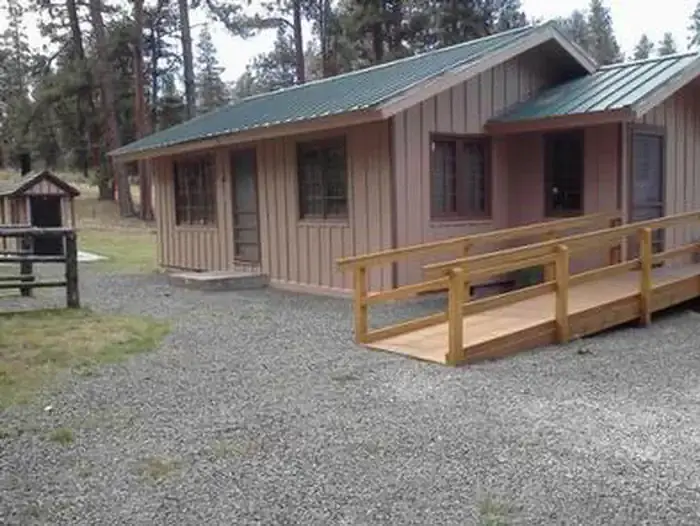
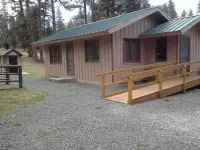
- Rustic three-room cabin with kitchen, living room/bedroom, and separate bedroom. No smoking, no pets. Parking is only allowed outside of the fence. The back door is equipped with a ramp. No potable water; visitors must bring plenty for drinking, cooking and washing.
- Walk-in or reserve
- To make reservations call 1-877-444-6777 or visit www.recreation.gov online.
- Phone
- 541-820-3800
- Managed by
- Malheur National Forest.
- Established
- 1956.
- Coordinates
- 44.187496, -119.322123.
Forest Service Road 514 runs about a quarter mile off Forest Road 24, bearing right, to a locked gate. Cars stay outside the fence. The combination to the lock comes in the reservation confirmation letter. Inside the fence stands Deer Creek Guard Station, a three-room cabin on a broad, flat expanse at 5,100 feet, with Douglas-fir and ponderosa pine scattered across the ground around it. The Malheur National Forest rents it by the night. John Day lies about 31 miles away by Highway 395 south, the Izee Highway and Forest Road 24. The station has no mobile phone coverage.
Three rooms and propane light
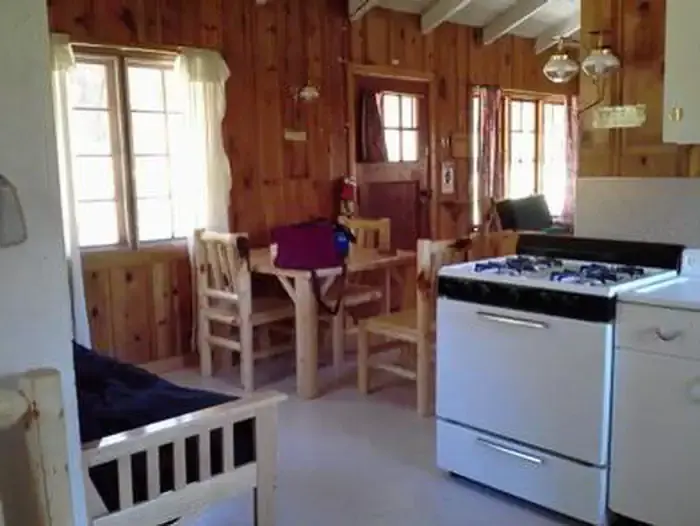
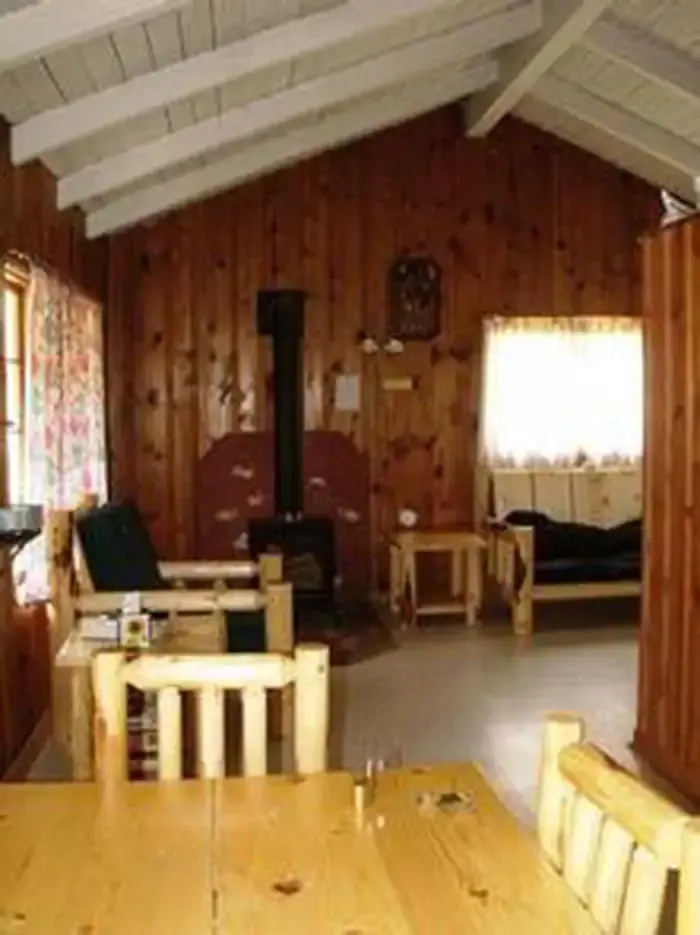
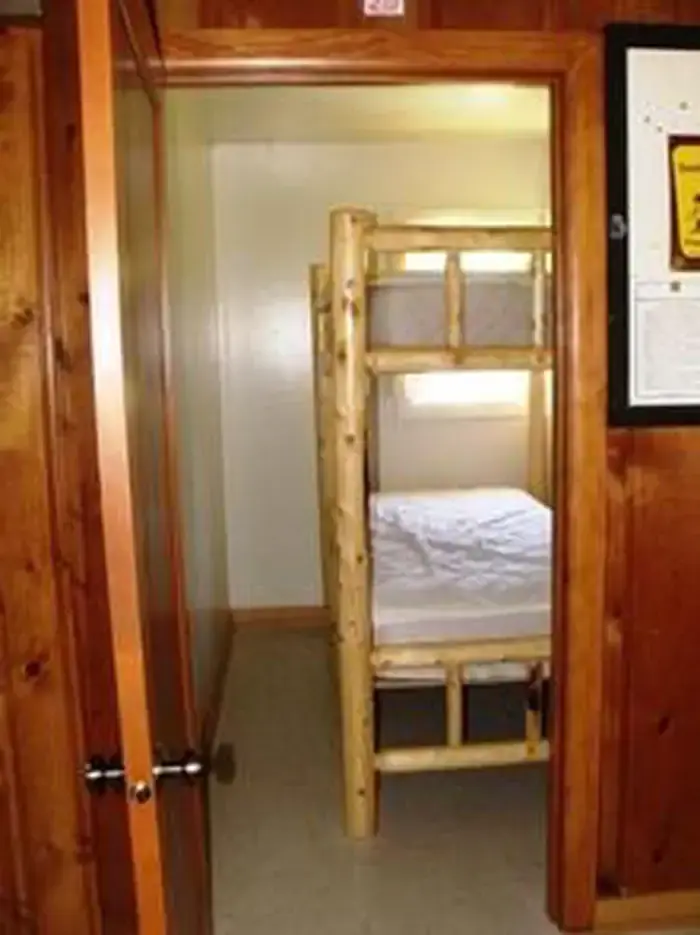
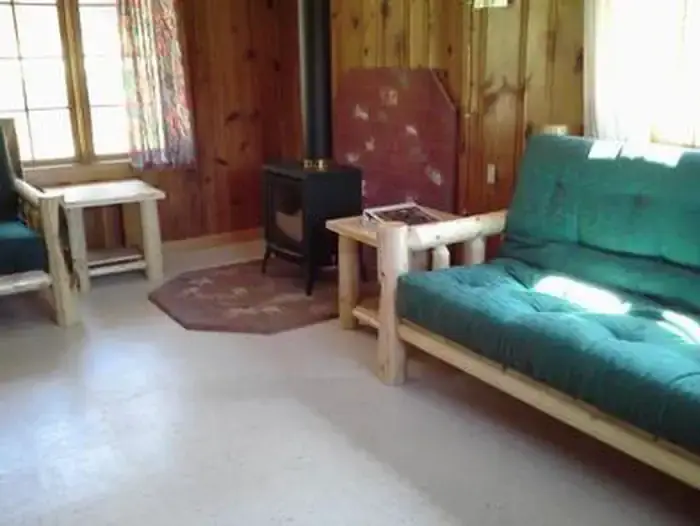
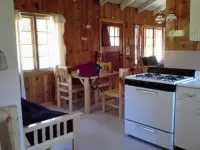
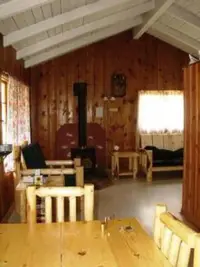
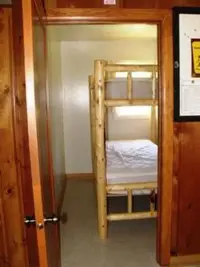
The living room serves also as a bedroom. It holds rustic log furnishings, a couch, a chair and end tables, a propane stove for heat, and a Murphy bed that folds away during the day. A full futon and a table with four chairs stand in the dining area. A small room off the dining area holds a log bunk bed that sleeps two, and the cabin sleeps six in all. The kitchen has a propane cook stove, a propane refrigerator, counter space, and pots, pans, plates, bowls, cups and flatware. Propane lamps light the whole cabin.
There is no potable water on site. Guests carry in water for drinking, cooking and washing, along with bedding, flashlights or a lantern, towels, dish soap and garbage bags. They clean the cabin before leaving and carry out their trash. An accessible vault toilet stands near the station at the end of a dirt and compacted gravel path, and the back door has a ramp.
Along Deer Creek
The creek runs year-round through the fenced grounds, and a picnic table and campfire ring sit beside it. Creek water must be boiled or treated before drinking. The recreation.gov listing notes that by mid-August the stream water grows scarce. Firewood may be gathered from the surrounding country.
The Forest Service’s own page describes the flat in spring and summer. Chickadees and other songbirds flit and chatter, and hummingbirds whir among wildflowers and berry bushes in bloom. Elk, black bears, deer and wild turkeys range the area, and the forest warns that wild horses live in this part of it. Anglers fish Deer Creek and the South Fork John Day River for redband trout and Mid-Columbia River steelhead, among others. Big game hunting is popular, and nearby trails carry hikers and riders on horseback.
The Forest Service page gives the season as May 6 to October 31. The forest’s list of rental cabins says the station is open May to November. Snow can keep the access road closed past the opening date or close it early.
Smoke chasers, 1956
The cabin was built in 1956 as a work station for fireguards. Before satellite surveillance, fireguards were the smoke chasers. When someone reported smoke, they rushed to the site and tried to put out the flames.
The forest the station served was half a century older. The Blue Mountain Forest Reserve was created in 1906, at the time the Forest Service itself was born. The forest’s first supervisor, Cy Bingham, designed and patented a special folding plow for fighting fire. The forest’s heritage timeline places the building of many of its roads, campgrounds, lookouts and guard stations in the Civilian Conservation Corps era, when Forest Service administration got into full swing and large-scale fire suppression came into its own. Deer Creek was built after that program.
The forest lies in the southern Blue Mountains, in watersheds that feed the John Day, Silvies and Malheur river systems. Members of the Burns Paiute Tribe, the Confederated Tribes of the Umatilla Indian Reservation and the Confederated Tribes of the Warm Springs Indian Reservation, and their ancestors, used these lands and continue to use them. The forest’s heritage program has identified more than 3,000 archaeological and historic sites. They range from an obsidian tool workshop more than 7,500 years old to Forest Service lookout towers and guard stations.
Deer Creek is one of four former guard stations, along with one lookout, that the forest now rents to the public. The others are the Murderers Creek, Short Creek and Sunshine guard stations and Fall Mountain Lookout. Rent at Deer Creek is $60 a night for a party of up to six, and the forest states that the fees go directly to the maintenance and preservation of the guard station.
Notable Events
- 1906The Forest Service was born at this time and the Blue Mountain Forest Reserve was created in 1906, the forest whose lands later held this guard station. fs.usda.gov
- 1921The forest's heritage timeline puts the building of many roads, campgrounds, lookouts, guard stations and other Forest buildings in the Civilian Conservation Corps era, when Forest Service administration got into full swing and large scale fire suppression came into its own; this station itself postdates that program. fs.usda.gov
- 1956The three-room cabin was built in 1956 and was originally used as a work station by fireguards. recreation.gov
- 2026The forest's site page charges $60 per night per group for up to six occupants and says the fees go directly to maintaining and preserving the guard station. fs.usda.gov
People
- Cy Bingham, first Malheur Forest Supervisor, who designed and patented a special folding plow for use in fire fighting, the fire-suppression work the guard stations were built to serve.