
Danner boot factory tours
Portland, Multnomah County, Oregon. In-person factory tour.
Details

- Where
- 18201 NE Portal Way, Suite 101, Portland, OR 18201. Directions
- Getting there
- The factory is located in NE Portland, Oregon.
- Fees
- Free; parking is free.
- Access
- Closed-toe shoes required on the factory floor; safety glasses and earplugs provided.
- Walk-in or reserve
- Scheduled tours only; no drop-ins.
- Website
- danner.com
- Managed by
- Danner, the Portland-based boot company.
- Established
- 1932 (company founded; first Danner boots reached the Pacific Northwest in 1936).
The factory occupies a suite at 18201 NE Portal Way in Northeast Portland. It opens to the public only for scheduled tours. The tours are free, parking is free, and each tour takes six people. Each visitor signs up separately and signs a waiver on arrival. No one under 16 is admitted, and anyone under 18 comes with an adult. Closed-toe shoes are required on the factory floor, and the company hands out safety glasses and earplugs. Danner puts the walk at about an hour and fifteen minutes. The Oregonian, which went along on August 7, 2024, gave it about an hour and a half.
The building covers 59,000 square feet. More than 200 people work there in production and support roles, according to Dave Sonsteng, vice president of human resources and manufacturing operations, who called it the company’s sixth factory in the United States. The boots made there go to construction work, the military, hiking, and everyday wear.
Five tests on a hide
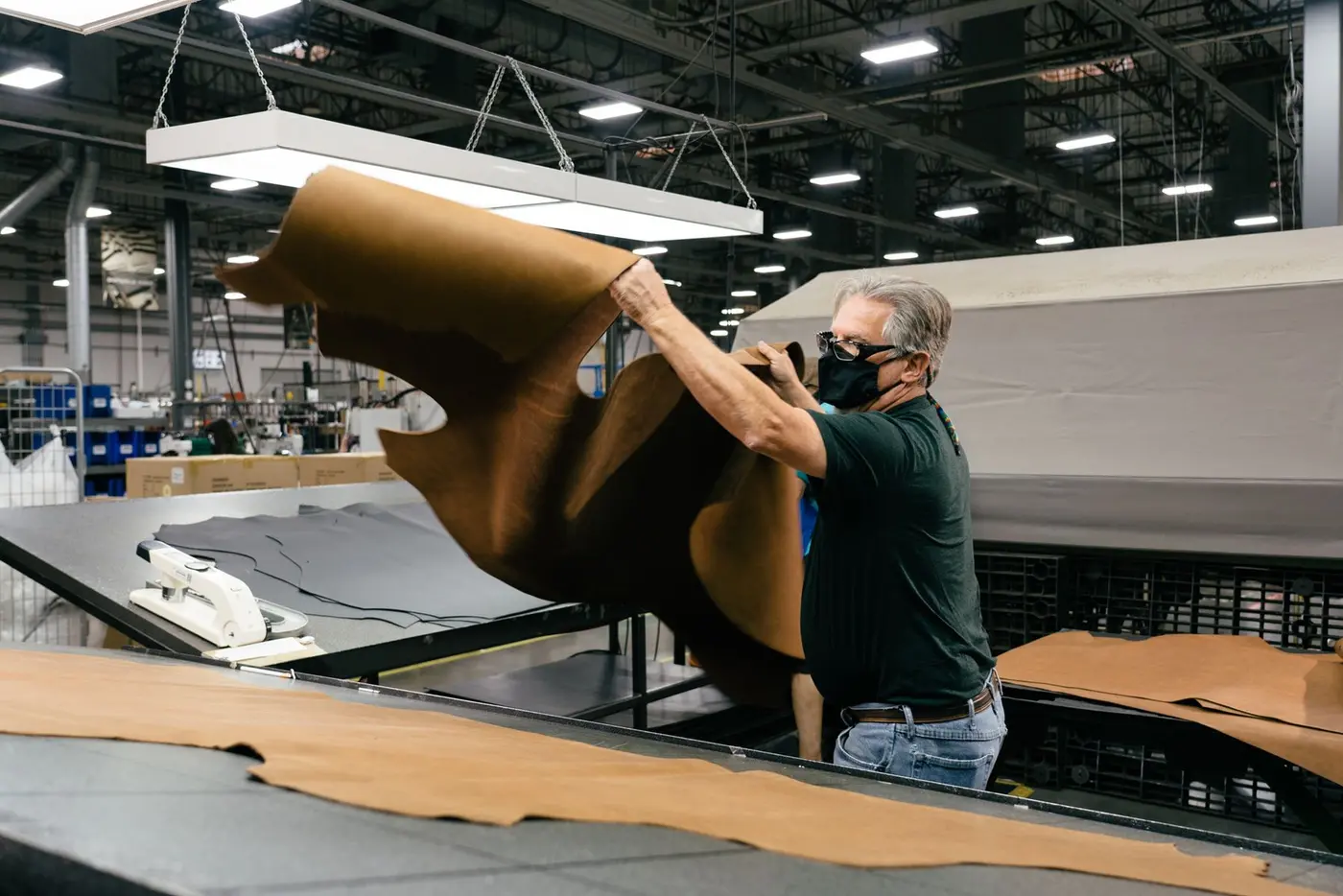
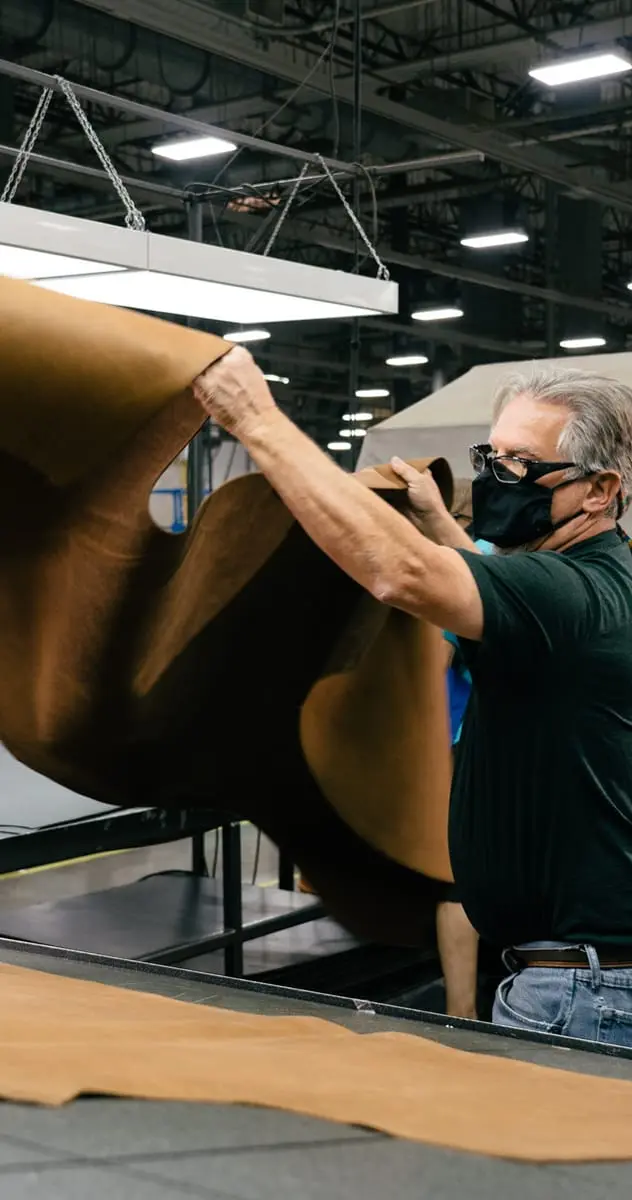
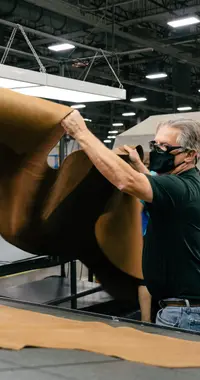
The walk starts with the leather. Every hide used in the Portland factory is inspected by hand and must pass five checks before it goes into production:
- Tension. A lastometer shows whether the hide can bear the strain of construction.
- Thickness. A handheld gauge with a circular dial is moved across the hide to check that it is even.
- Softness. A tester presses a metal head into the leather. Leather too stiff makes a boot uncomfortable and noisy, and leather too soft gives it no structure.
- Color and finish. A worker scores the surface with a small serrated blade, presses clear tape over the mark, and lifts it to look at what came away.
- Strength. A T-shaped hook is set into a small cut at the hide’s edge and pulled to test for tearing.
“You have to start with the best materials, because you can’t build quality in later,” says Jay Bosshart, leather specialist. In 2018 a writer for Women’s Outdoor News met a man named Jay, whom the factory called its “leather jockey.” He had then been 26 years with the company, and he was testing whether leather would stretch over a boot’s toe.
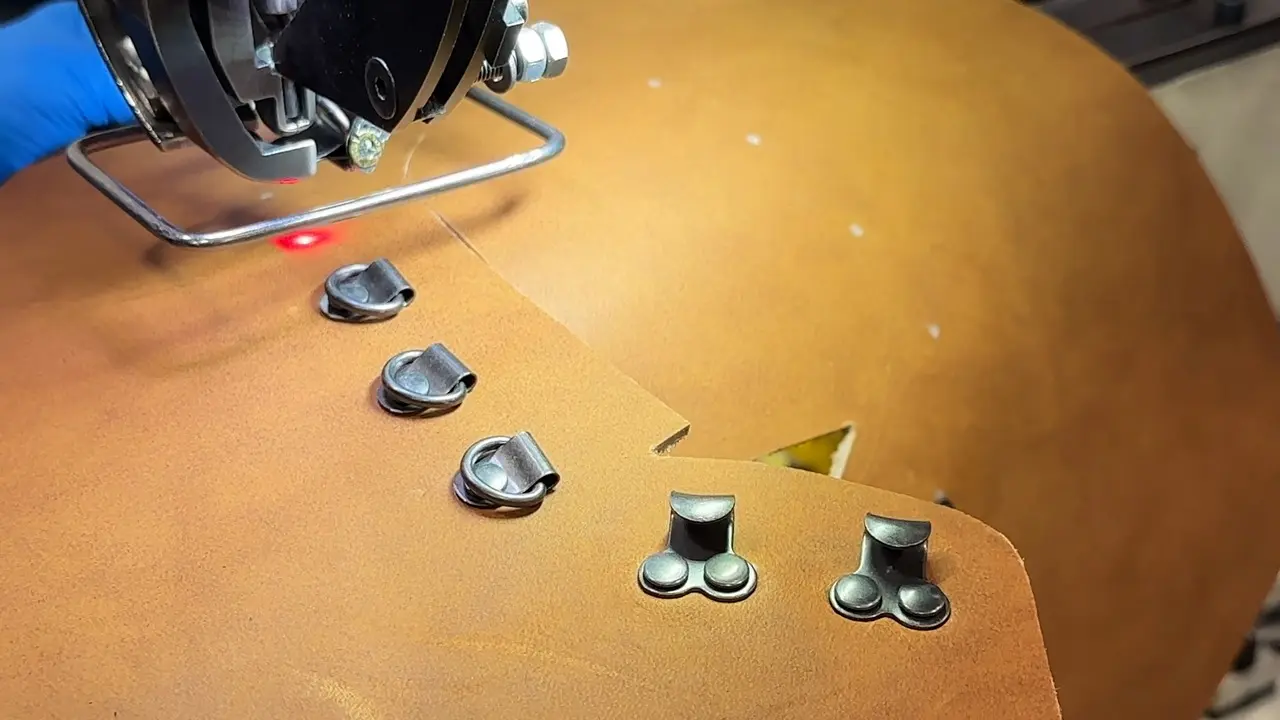
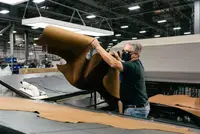
Hides that pass go to a table under an overhead camera. There a worker traces each flaw with a laser pen while a screen builds a colored map of the hide. Leather for the Mountain Light Cascade, the boot Reese Witherspoon wore in the film “Wild,” is still cut by hand. A worker sets a green metal die on the hide, swings a pneumatic press over it, and stamps out the piece. Machine arms cut other styles from digital patterns. A flat press comes down on a piece of dark leather and lifts away to show the Danner logo. Stamping machines punch eyelets, hooks, and vents through, and the flat pieces are sewn into an upper.
Stitchdown and the water tank
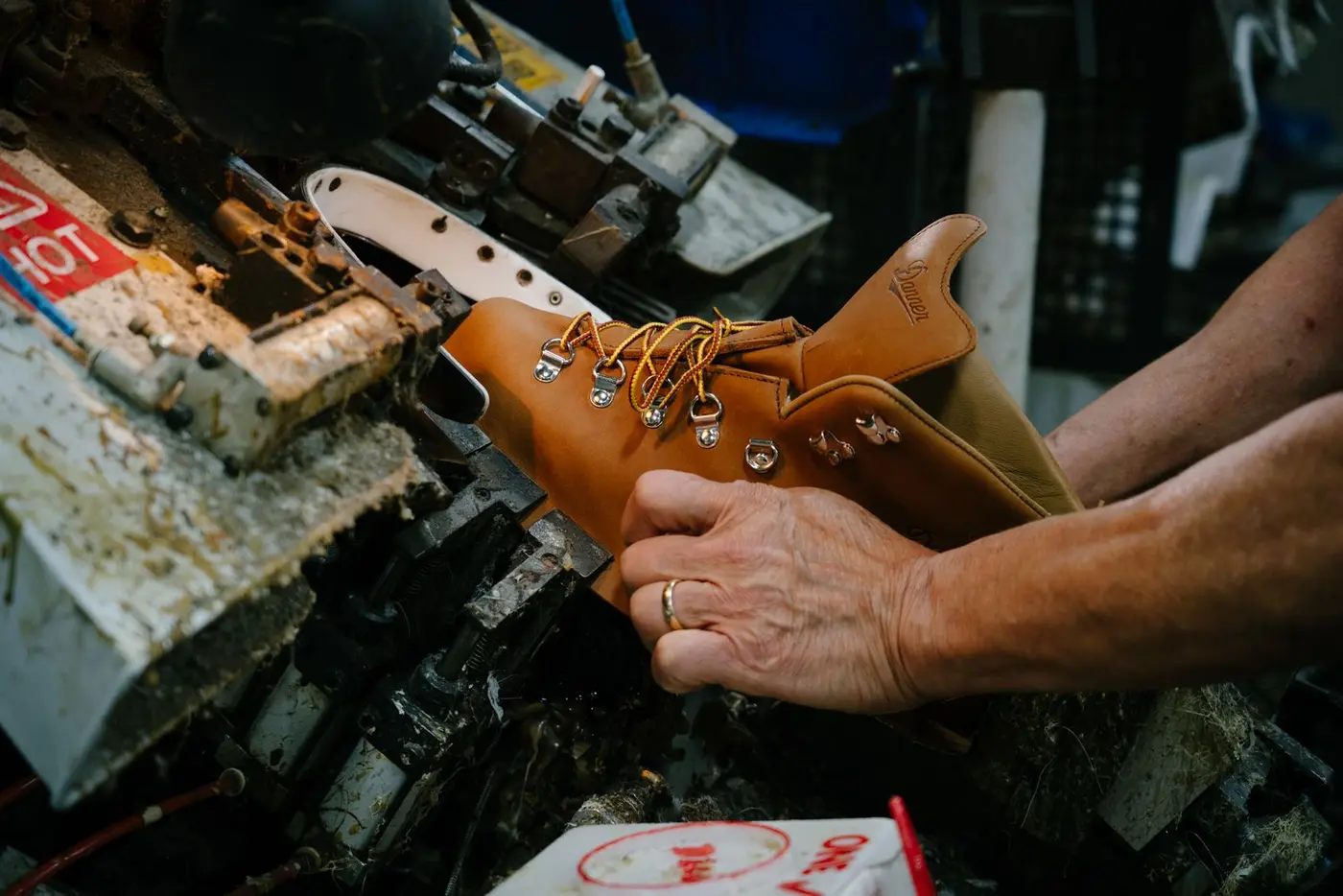
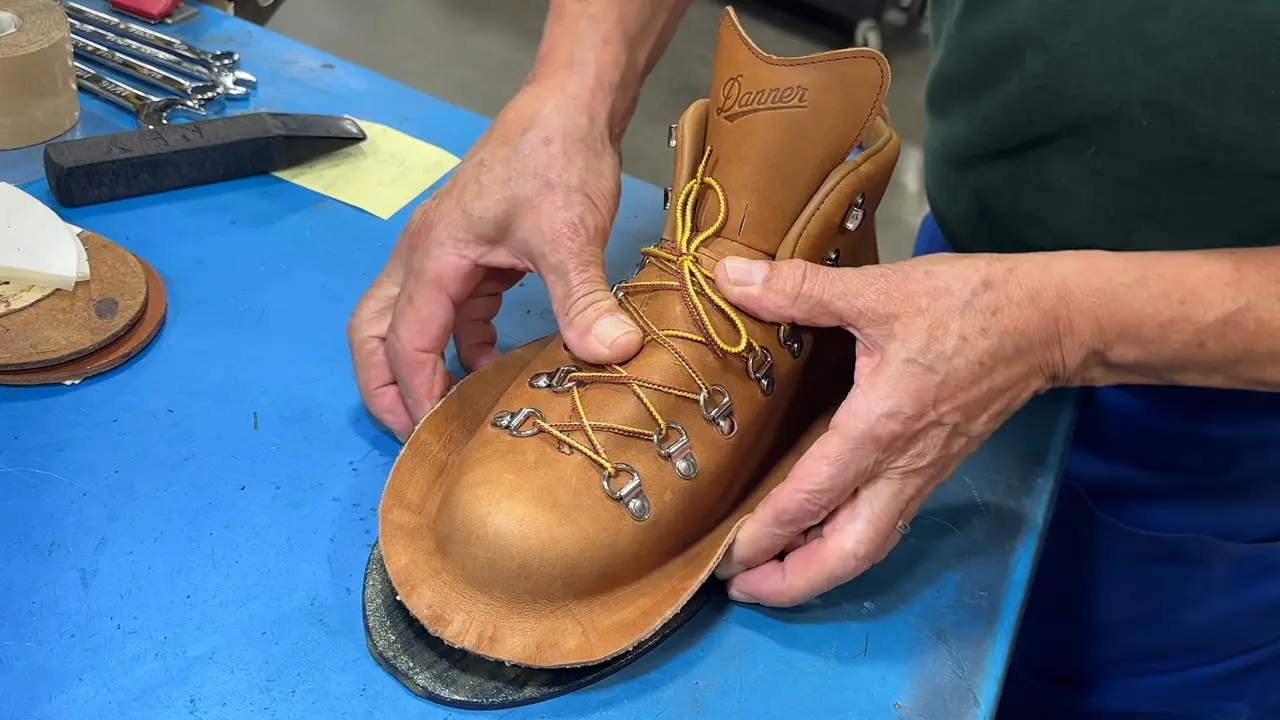
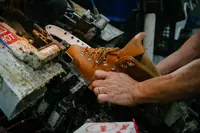
Wire racks hold the lasts, cream-colored hinged forms of the foot. The plant uses 848 of them, one for every style, size, and width it builds. Toe-lasting machines stretch the upper over a last. A shank of metal or fiberglass goes in as the boot’s spine. A worker then pounds around the edge with a blunt tool to “spot,” or bond, the upper to the midsole.
The next step is stitchdown construction. The upper is sewn directly to the midsole with a lockstitch, which lets the boot be rebuilt when its parts wear out. Danner calls the Portland plant one of the leading makers of stitchdown boots in the world. The 2018 visitors were shown a triple-stitching machine said to date to the early 1900s.
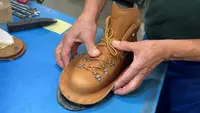
Stitched uppers rest on a metal grate over heating elements that light them red from below. A press then bonds on the outsole. A cutting wheel called the Rough Rounder trims the excess sole, and the final sanding is done by hand. Each boot is then checked on its own, laced, and boxed.
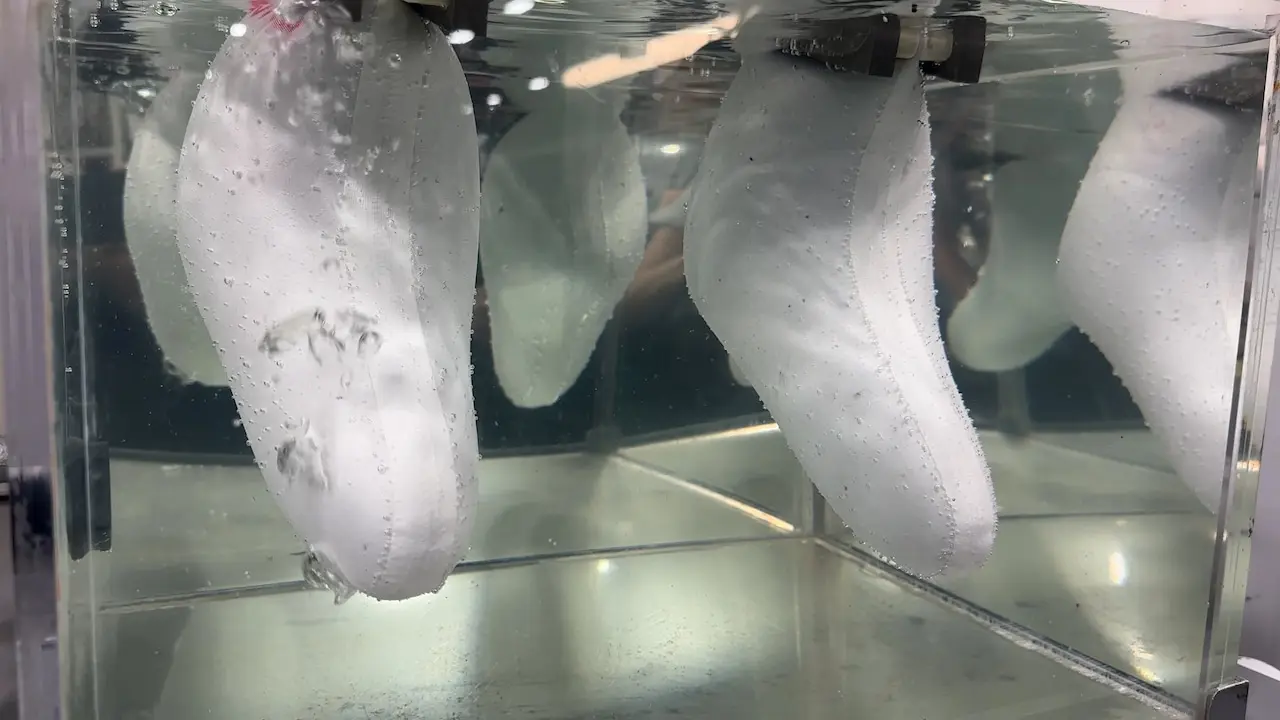
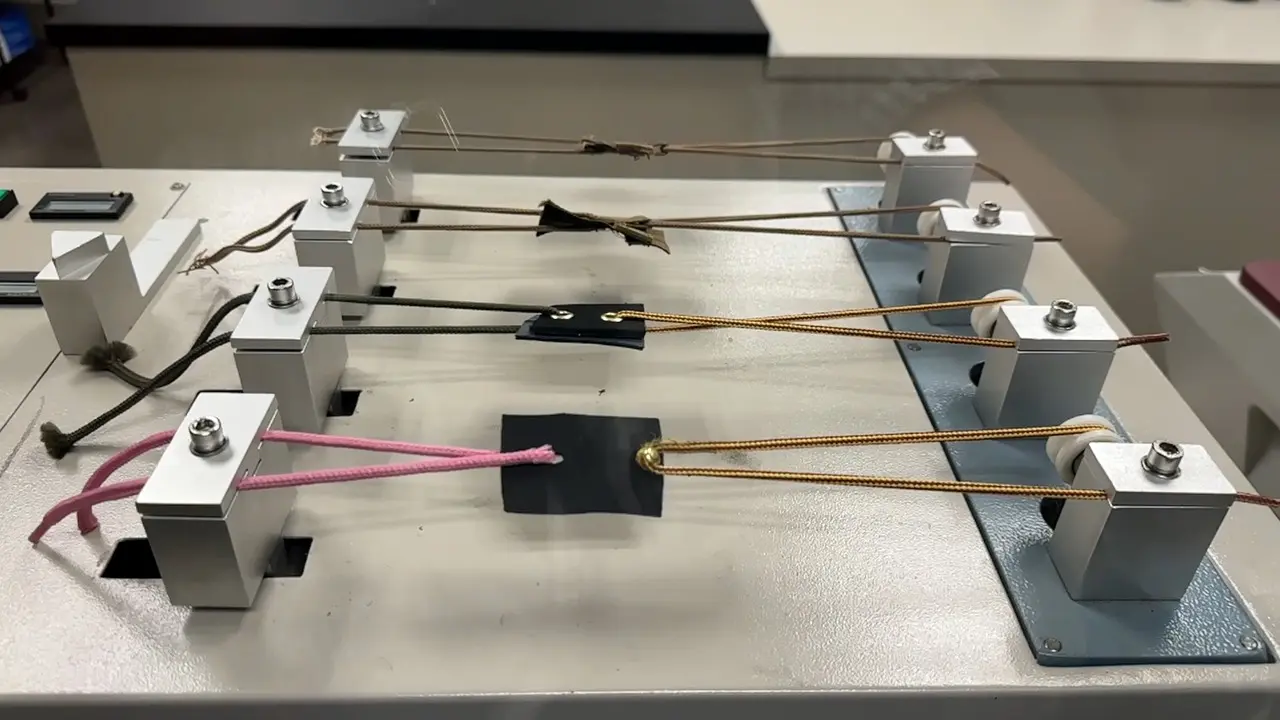
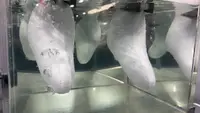
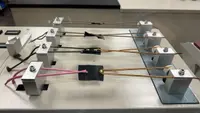
The waterproof liners are tested separately. Danner seals each GORE-TEX liner with a single taped seam running all the way around, a method it calls “around the world” construction. A machine lowers air-filled liners into a tank of water and holds them under. If the tester sees bubbles, the liner is rejected. Laces are put through more than 100,000 cycles of abrasion, and the 2024 tour stopped at a shoelace stress test. “There is a pride in craftsmanship here, a pride in knowing our boots will live up to the Danner name,” says Carmel Clark, sample manager.
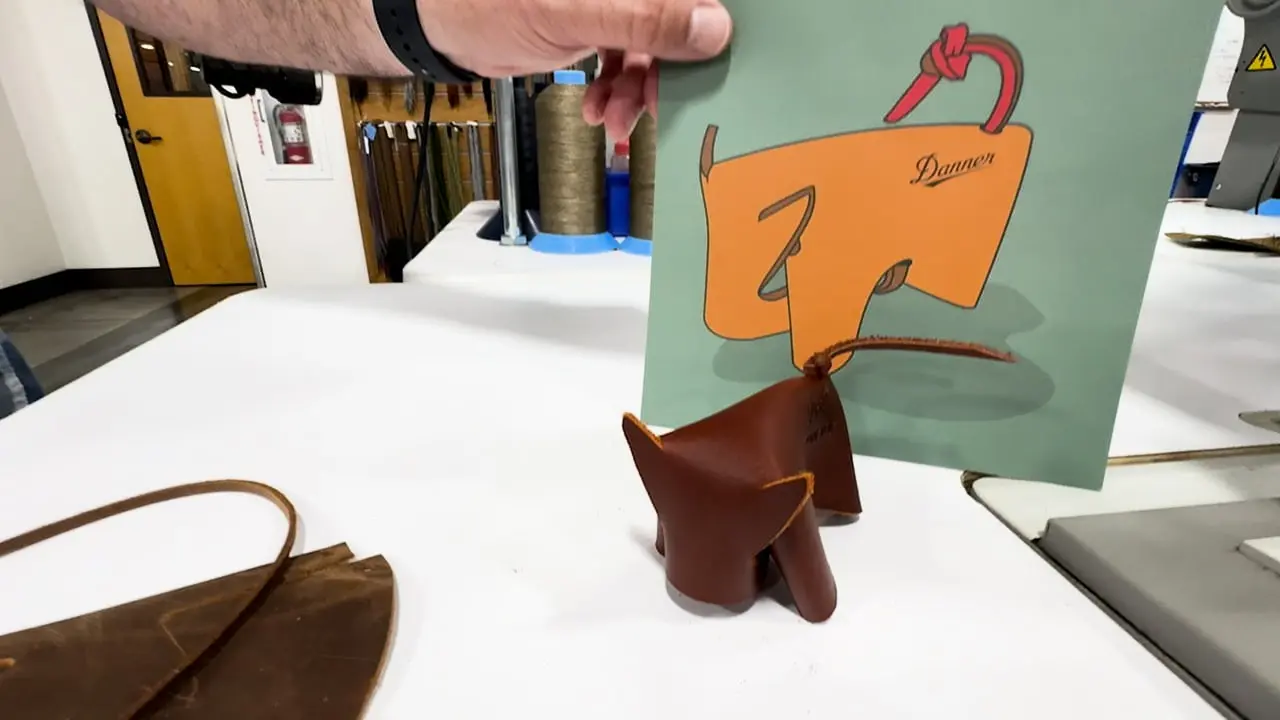
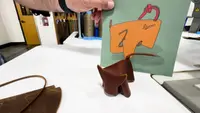
Each visitor presses a button on a machine that embosses a piece of leather. The piece goes home to be assembled into a small toy bull. The Danner Factory Store is a few miles off. In 2018 the outlet store also held the recrafting workshop, where the recrafting manager, Marci Uselman, photographed each pair before and after it was rebuilt and sent the pictures to the owner. The workshop handled roughly 3,000 pairs a year.
Chippewa Falls to the timber country
The tour covers a little of the company’s history, and the sources disagree about where it began. Flat Out Magazine, Women’s Outdoor News, and The Oregonian’s 2016 obituary of Bill Danner place it in 1932 at Chippewa Falls, Wisconsin, a logging town. There Charles Danner founded the Danner Shoe Manufacturing Company in the middle of the Great Depression. Sonsteng, speaking for the company in 2024, named Lacrosse, Wisconsin. A 2012 Oregonian business story had Danner Boots founded in Portland.
According to Women’s Outdoor News, a pair of logging boots then cost about $4. Danner found he could sell boots to Pacific Northwest loggers for $10, and in 1936 he moved his family to Portland. During the Second World War the company supplied the local shipyards.
Bill Danner on Mount Hood
Charles’s son William was born in Chippewa Falls in 1919. He worked in the boot factory before the war and graduated from the University of Portland. In the war he was a sergeant in the Army Air Corps, operating the top turret gun of a B-17 on dozens of missions out of North Africa. In 1945, back from the war, he and his brother John took over the struggling company from their father. Bill later bought out John’s stake.
The company had made its name on heavy-duty work boots. In 1964 Bill Danner climbed Mount Hood in hiking boots designed for the purpose. By the 1960s Danner was the only domestic maker of hiking boots, and its partnership with Vibram dates from that decade. The Mountain Light followed in 1973, according to Flat Out Magazine. By the mid-1970s backpacking had caught on, and Backpacker magazine named the boot the No. 1 value in the country. His adopted son, Bill Crary Jr., recalled that production and orders tripled and the plant turned out 180 pairs a day.
The Oregon Historical Society holds a pair of hiking boots from 1975. They have brown leather uppers, white stitching, thick black soles, and twelve metal hooks and four loops on each boot, and no laces. The company gave them to the donor, and they were worn on an Outward Bound program for people with disabilities.
In 1978 Bill Danner said, “We are going to give you boots that you can be proud to wear, boots that can claim the best quality available anywhere.” The next year, by the company’s account, the Danner Light became the first footwear to use GORE-TEX liners. Women’s Outdoor News says that in 1979 Danner was the first brand to patent a waterproof boot.
He sold the company in 1983. The Oregonian names the buyer as Eric Merk, and Women’s Outdoor News names him as Eric Mark, adding that the sale was made on condition that the new owner keep the company’s standards. Crary Jr. always thought his father regretted selling when he did. “My dad never understood the value of his name,” he said. Bill Danner died at his home in Milwaukie on Christmas Eve 2016, aged 97.
A mile from headquarters
LaCrosse Footwear, founded in Wisconsin in 1897, bought Danner in 1994. At the time Danner had more than 160 employees and $15 million in sales. LaCrosse moved its own headquarters to Portland in 2001.
In February 2010 LaCrosse announced the present factory, twice the size of its old Portland plant and about a mile from its headquarters. Its president, Joseph P. Schneider, said the plant would incorporate “the latest lean manufacturing techniques.” The Portland Development Commission and Business Oregon helped fund the project. Area Development reported it open in September 2010, while Women’s Outdoor News dates the opening to 2012.
In January 2012 the United Food and Commercial Workers ratified a three-year contract at Danner. That July the Tokyo retailer ABC-MART agreed to buy LaCrosse for about $138 million, planning to sell Danner boots across Asia and Europe. Schneider said the Portland factory would continue operations. The military was then one of its biggest customers, buying combat hikers in droves.
In August 2024 The Oregonian reported that the factory was offering free public tours for the first time. Among the boots shown that week was one made for the Japanese market.
Notable Events
- 1936Charles Danner moved to Portland in 1936 to sell his sturdy work boot to loggers. museumcollection.ohs.org
- 1945Bill Danner and his brother took over the struggling Danner Shoe Mfg. Company in 1945 and transformed it into the iconic brand it is today. oregonlive.com
- 1960sVibram has been a trusted partner of Danner since the 1960s. danner.com
- 1960sBy the 1960s, Danner had reached from the industrial market to the hiking world, becoming the only domestic maker of hiking boots. womensoutdoornews.com
- 1964In 1964, he climbed Mt. Hood with specially designed hiking boots. oregonlive.com
- 1970sBy the mid-1970s, backpacking became a popular pastime and the boot was featured in Backpacker magazine as the No. 1 value in the country. oregonlive.com
- 1970sProduction and orders tripled, Crary Jr. said, and the plant started cranking out 180 pairs a day. oregonlive.com
- 1979Danner became the first footwear company to utilize GORE-TEX liners, in its Danner Light, in 1979. danner.com
- 1979By 1979, the company was exploring technology to keep hiking feet dry, and becomes the first brand to patent a waterproof boot. womensoutdoornews.com
- 1983Danner sold the company on the condition that the new owner, Eric Mark, follows the traditions instilled for solid quality and craftsmanship. womensoutdoornews.com
- 1994In 1994, LaCrosse Footwear Inc. bought Danner. oregonlive.com
- 2001LaCrosse relocated to Portland in 2001. nwlaborpress.org
- 2010LaCrosse Footwear opened a 59,000-square-foot facility in Portland, Oregon, about a mile from the company's corporate headquarters and twice as large as LaCrosse's old Portland factory, with help from the Portland Development Commission and Business Oregon. areadevelopment.com
- 2012ABC-MART announced plans to buy LaCrosse Footwear Inc. with an eye toward expanding the company's Danner Boots brand globally. bizjournals.com
- 2012UFCW ratified a new three-year contract at Danner in January 2012. nwlaborpress.org
- 2012ABC-MART said in a news release it would acquire all outstanding LaCrosse shares for $20 or approximately $138 million. oregonlive.com
- 2012One of the biggest customers for the Danner Boot Factory, owned by LaCrosse Footwear, Inc., has been the military, which purchases combat hikers in droves. oregonlive.com
- 2024For the first time, Danner, the iconic Portland-based boot company, offers free tours to the public at their 59,000-square-foot facility in Northeast Portland. oregonlive.com
- During WW2, Danner supplied the local shipyards with well-made, durable boots. womensoutdoornews.com
People
- Andrea Maruya, Materials Coordinator, quoted on preparing the hides and components for the factory's boots.
- Carmel Clark, Sample Manager, quoted on the finishing touches and the pride of craftsmanship at the factory.
- Chris Perotti, Senior Manager, Quality & Commercialization, quoted on the construction step.
- Jay Bosshart, Leather Specialist at the Portland factory, quoted on starting with the best materials.
- Charles Danner, founder of the family boot company in Chippewa Falls, Wisconsin; he moved it to Portland in 1936 to sell his work boot to loggers (born 1919; moved the company to Portland in 1936).
- Jeff Anderson, secretary-treasurer of the local union whose members make and sell Danner boots at the Northeast Portland factory.
- Joseph P. Schneider, president and CEO of LaCrosse Footwear, which announced the new Portland factory for Danner boots production.
- Bill Crary Jr., one of Bill Danner's three adopted children; worked for years at the family business before starting his own shoe company in Portland.
- Bill Danner, longtime president of the Portland-based boot manufacturer that bears his name; he and his brother took over the company in 1945 and he led its growth until selling the brand (died Christmas Eve, aged 97).
- Eric Merk, businessman to whom Bill Danner sold the brand (1983).
- John Danner, Bill Danner's brother; with him he took over the company from their father Charles after returning from World War II, and Bill later bought out his stake.
- Dave Sonsteng, vice president of human resources and manufacturing operations; the company's source for its founding history and for the Northeast Portland facility being the sixth factory in the U.S., where over 200 people work onsite.
- Minoru Noguchi, president of ABC-MART, the Tokyo-based retailer that agreed to buy LaCrosse Footwear and with it the Portland Danner Boots factory, and said he would push LaCrosse and Danner footwear abroad.
- Eric Mark, the new owner of Danner, who bought the company on the condition that he follows the traditions instilled for solid quality and craftsmanship (1983).
- Jay, Danner's 'leather jockey', who tests the leather at the factory, especially for the toe area (26 years with the company).
- Marci Uselman, Recrafting manager at the Danner recrafting workshop, the liaison between a customer and his or her boots.
Sources
- danner.com/factory-tour-sign-up
- danner.com/factory-tour
- danner.com/about-danner
- support.danner.com/hc/en-us/articles/23239464611095-Tour-Our-Portland-Oregon-Factory
- oregonlive.com/business/2024/08/watch-how-danner-boots-are-made-in-ne-portland-factory.html
- facebook.com/Danner1932
- web.archive.org/web/20120710000000/https://www.bizjournals.com/portland/blog/threads_and_laces/2012/07/lacrosse-footwear-to-be-acquired-for-13.html
- oregonlive.com/playbooks-profits/2012/07/japan-based_shoe_retailer_anno.html
- bizjournals.com/portland/blog/threads_and_laces/2012/07/lacrosse-footwear-to-be-acquired-for-13.html
- danner.com/factory-tour
- danner.com/lifestyle/portland-select
- museumcollection.ohs.org/argus/ohs/Portal/Portal/portal.aspx?component=AAAI&record=515e8c33-4817-4efe-9dd1-ba33f8028651
- womensoutdoornews.com/2018/09/danner-boot-company-portland
- flatoutmagazine.com/gear/danner-boots-oregons-finest-footwear
- oregonlive.com/business/2010/02/lacrosse_moving_danner_boot_pr.html
- areadevelopment.com/newsitems/9-7-2010/lacrosse-footwear-portland-oregon490745.shtml
- nwlaborpress.org/2012/08/danner-2
- oregonlive.com/business/2016/12/bill_danner_longtime_boot_comp.html
- oregonencyclopedia.org/articles/?q=Danner
- files.eric.ed.gov/fulltext/ED110770.pdf
- danner.com/factory-tour-sign-up
- museumcollection.ohs.org/argus/ohs/Portal/portal.aspx?component=AAAI&record=515e8c33-4817-4efe-9dd1-ba33f8028651